NICOSIA, Cyprus — The European Union’s top energy official has issued a cautious update on global jet fuel supplies amid escalating geopolitical tensions from the ongoing Iran war, acknowledging that while no immediate scarcity is imminent, the risk of a prolonged shortage remains a distinct possibility.
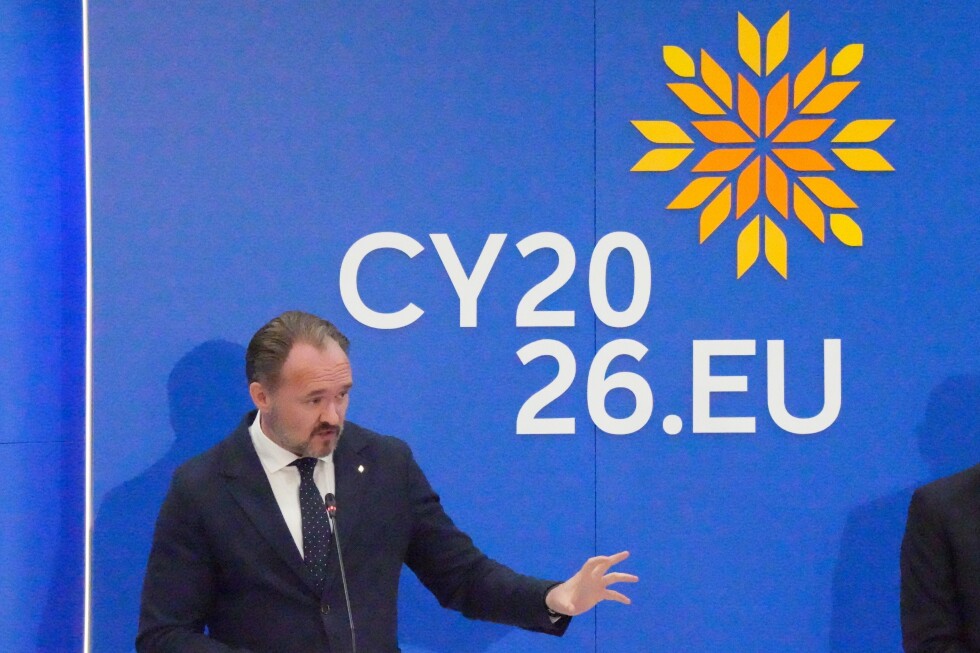
Speaking to reporters on Wednesday, EU Energy Commissioner Dan Jørgensen explained that the trajectory of any potential shortage hinges on two key variables: how the conflict in Iran and related disruptions around the Strait of Hormuz develop, and how commercial airlines adjust their operations in response. Already, several major carriers, including Lufthansa’s German parent company, have cut a substantial number of flights to offset mounting costs.
The Strait of Hormuz, a critical maritime chokepoint through which roughly one-fifth of the world’s daily oil supply transits, has seen shipping and supply networks thrown into chaos by surrounding fighting, pushing jet fuel prices sharply higher across every major global market. Jørgensen confirmed that a shortage has not yet materialized, but revealed that the European Commission, the EU’s executive branch, will open discussions with member state governments to coordinate potential policy responses, though no concrete measures have been finalized to date.
Data from the bloc underscores the severity of the current cost shock: since the outbreak of the Iran war, EU countries have paid an extra €35 billion ($41 billion) to secure the same volume of fuel as they used previously. Airlines are disproportionately hit by this volatility, as jet fuel makes up one of the largest single components of their total operating costs, with prices more than doubling in some regional markets since late February.
The warning from the EU follows a stark assessment from International Energy Agency Director Fatih Birol, who told The Associated Press in an exclusive interview last month that Europe holds only roughly six weeks of commercially available jet fuel stockpiles. Birol also cautioned that widespread flight disruptions could begin “soon” if oil exports remain blocked by war-related disruptions in the Middle East.
Jørgensen used the current crisis to reinforce the EU’s long-term policy push for decarbonization, arguing that the current disruption is not a broad energy crisis but specifically a crisis rooted in global reliance on fossil fuels. He noted that the bloc has already made significant progress in reducing fossil fuel dependence since the 2022 Russian invasion of Ukraine, diversifying supply sources, boosting energy efficiency, and scaling up renewable energy capacity.
For his part, Cypriot Energy Minister Michael Damianos — whose country currently holds the EU’s rotating six-month presidency — acknowledged that fossil fuels including natural gas will remain part of the bloc’s energy mix for the foreseeable future, even as the EU reaffirms its binding target of cutting greenhouse gas emissions by 90% by 2050. Damianos added that new natural gas reserves discovered off Cyprus’ southern coast could begin exporting to European markets as early as late 2027 or early 2028, adding a new supply source to the bloc’s diversified portfolio.
Jørgensen stressed that the EU remains fully committed to rapid decarbonization, emphasizing that “the climate crisis will not go away” even amid immediate energy security concerns. Looking ahead to a post-conflict future, the commissioner confirmed the EU is already in preliminary discussions with Gulf Cooperation Council nations to rebuild stable energy export flows from the region once a negotiated peace settlement is reached with Iran.
That outreach aligns with earlier statements from top EU leaders. Last month, European Council President Antonio Costa and European Commission President Ursula von der Leyen announced the bloc was prepared to partner with Persian Gulf nations on new energy infrastructure projects that would deliver supplies to global markets without the risk of disruption from war or geopolitical conflict.