作者: admin

  • Don’t use GDP to judge China’s strength – look at this instead

    Don’t use GDP to judge China’s strength – look at this instead

    As U.S. President Donald Trump prepares to touch down in Beijing on May 14 for a high-stakes bilateral summit with Chinese President Xi Jinping, Chinese officials are ready to lead with one key economic figure to showcase the country’s perceived resilience: an official 5% GDP growth target and performance figure for 2025. But while the 5% target is a stated policy goal, analysts argue that a far more telling indicator of China’s actual economic health lies in an unpublicized metric that reveals deep structural inefficiencies: the Incremental Capital Output Ratio, or ICOR.

    ICOR measures how much new investment is required to generate one additional unit of economic output. In a healthy, efficient economy, this ratio remains low, as capital flows to productive, high-return projects. When capital is misallocated — flowing into unneeded infrastructure, unprofitable projects, and overcapacity that cannot be absorbed by domestic demand — the ratio climbs, and in China, it has been rising sharply for decades.

    Calculated as gross capital formation as a share of GDP divided by real GDP growth, ICOR is not an official Chinese data point, but it can be derived from public data released by China’s National Bureau of Statistics. During China’s high-growth era between 2000 and 2007, ICOR held steady at around 3.9, meaning 3.9 percentage points of GDP in investment was required to generate 1 percentage point of GDP growth. For comparison, during their own rapid growth periods, South Korea and Taiwan posted far lower ICORs of 3.2 and 2.7 respectively, indicating that even at its economic peak, China’s investment efficiency lagged behind its regional peers.

    China’s investment productivity began a steady decline after the 2008 global financial crisis, when Beijing rolled out a massive large-scale stimulus package to offset falling export demand. Between 2008 and 2019, China’s ICOR climbed from roughly 4.5 to 7.2, nearly doubling the pre-crisis baseline. Economists attribute this shift to the exhaustion of China’s easy growth drivers: the most productive coastal manufacturing expansion, cross-regional infrastructure buildout, and rural-to-urban labor migration had largely run their course by the 2010s, leaving less high-return opportunities for new investment.

    The upward trajectory of ICOR has only accelerated since 2020. Using China’s official GDP figures, the country’s current annual ICOR stands at approximately 8.5, with a five-year rolling average approaching 9. When adjusted using more conservative, independent growth estimates from the Rhodium Group, a U.S.-based independent research firm that pegs China’s 2025 actual growth between 2.5% and 3%, the implied ICOR jumps to between 14 and 17. Even the most favorable interpretation of official Chinese data confirms a clear trend: the Chinese economy is rapidly losing investment efficiency, fueled by a flood of subsidized credit directed to politically prioritized projects rather than commercially viable opportunities.

    Beijing has built a reputation for consistently hitting its pre-set GDP growth targets, so much so that even senior Chinese officials have publicly questioned the legitimacy of the official numbers. Rather than treating GDP as a natural economic output, Chinese authorities treat the target as a non-negotiable policy goal, achieved through directed credit allocation to state-linked entities. State-owned enterprises, local government financing vehicles, and politically connected real estate developers access below-market-rate borrowing that does not reflect underlying project risk, and pour capital into ventures that would fail basic commercial return tests. The end result is a growing pile of excess production and unused capacity that Chinese consumers do not want, created solely to hit arbitrary growth metrics.

    Unable to absorb this surplus domestically, Beijing redirects it to global markets, selling goods below production cost and effectively exporting the losses from its domestic capital misallocation to trading partners around the world. This dynamic has major implications for the agenda of the upcoming Trump-Xi summit, challenging the conventional narrative that frames U.S.-China economic relations as a competition between a declining U.S. and a dynamically rising China.

    Over the past two decades, the U.S. has maintained a relatively stable ICOR, reflecting an economy where investment and output grow in rough, sustainable proportion. By contrast, China’s economy now requires exponentially more investment to generate every additional yuan of GDP, a structural weakness that undermines claims of inherent Chinese economic strength. China is now structurally dependent on continuous credit expansion and steady export revenues to service its growing debt load and maintain domestic political stability. This means that U.S. trade policy tools such as targeted tariffs can apply direct pressure to the core mechanisms Beijing relies on to manage domestic order, particularly the export revenues that keep its debt system functioning.

    That does not mean unilateral U.S. trade action is the most effective strategy, the analysis argues. Instead of walling the U.S. off from global trade alone, Washington should pursue coordinated action with like-minded allies to address the root of the problem: Beijing’s subsidized overcapacity model. Every major global economy is already coping with a flood of underpriced Chinese exported surplus, so a coordinated multilateral framework that targets subsidized overproduction at its source will create far more sustainable leverage than unilateral tariffs, which risk isolating the U.S. from the global partners it needs to enact meaningful change.

    None of this data suggests China is on the brink of imminent economic collapse. China’s governing system has already demonstrated a striking ability to manage gradual deterioration: rolling over bad debt, extending repayment timelines, and pushing underlying imbalances into the future rather than addressing them. But managed gradual decline is not the same as economic strength, and Beijing has so far shown no willingness to tackle the core structural imbalances driving falling investment efficiency on its own. While Beijing will continue to tout its 5% official growth figure as proof of economic resilience ahead of the summit, the real metric to watch is the one Chinese officials will not discuss: the rising hidden cost of generating every unit of that growth. This analysis comes from Daniel Swift, a senior research analyst for economics, finance and trade at the Center on Economic and Financial Power at the Foundation for Defense of Democracies, and a retired U.S. diplomat.

  • Philippine senator wanted by the International Criminal Court flees from Senate

    Philippine senator wanted by the International Criminal Court flees from Senate

    MANILA, Philippines — A high-stakes political crisis has gripped the Philippines this week, after a sitting Philippine senator facing International Criminal Court (ICC) charges of crimes against humanity slipped out of the heavily guarded Senate compound amid chaotic gunfire between security personnel and government law enforcement agents, senior government officials confirmed Thursday.

    Ronald dela Rosa, 64, a former national police chief under ex-President Rodrigo Duterte, had taken shelter inside the Senate compound Wednesday to avoid execution of an ICC arrest warrant unsealed just days earlier. The chaos that cleared his escape path began Wednesday night, when Senate security personnel opened multiple volleys of gunfire during a heated confrontation with a National Bureau of Investigation (NBI) agent assigned to serve the warrant. In the confusion that followed the shootout, dela Rosa managed to slip past security and leave the compound undetected.

    Shortly after the incident, President Ferdinand Marcos Jr. addressed the nation in a late-night televised broadcast, urging the public to avoid panic and stressing that authorities would conduct a full, transparent investigation into the escape. Law enforcement sources confirmed that one line of active inquiry centers on suspicions the gunfight was deliberately orchestrated to create a diversion and cover for dela Rosa’s exit.

    In a public press briefing Thursday, Senate President Alan Cayetano — a close political ally of the Duterte family — pushed back against claims of foul play, insisting “there is no obstruction of justice” in the incident. Cayetano argued that because no ICC arrest warrant had been officially presented to the Senate leadership, dela Rosa was under no legal obligation to remain on the premises and was free to leave at his own discretion. Political critics have rejected this explanation, however, and are calling for Cayetano and the Senate’s top security official to be held legally and politically accountable for facilitating the fugitive senator’s escape.

    Dela Rosa’s legal troubles are directly tied to the deadly national anti-drug crackdown launched by Duterte when he held the presidency from 2016 to 2022. Duterte himself was taken into ICC custody last March to face trial in The Hague on separate charges of crimes against humanity stemming from the same campaign. The unsealed ICC warrant against dela Rosa, made public Monday, accuses him of direct responsibility for the crime against humanity of murder, linked to the killings of no fewer than 32 people between July 2016 and April 2018 — the period when dela Rosa led the Philippine National Police and oversaw implementation of Duterte’s anti-drug initiative.

    Both Duterte and dela Rosa have repeatedly denied authorizing extrajudicial killings, though Duterte openly publicly threatened drug suspects with death throughout his time in office.

    The escape comes amid escalating open political conflict between the Duterte political bloc and the Marcos administration, a rift that lays bare deep enduring divisions within Philippine politics. The tension has escalated rapidly in recent days: Vice President Sara Duterte, Rodrigo Duterte’s daughter and current second-in-command of the country, has openly accused Marcos of orchestrating the “kidnapping” of her father and his illegal transfer to the international court. On Monday, the Marcos-allied majority in the House of Representatives voted to impeach Sara Duterte over allegations of unexplained illicit wealth, misuse of public funds, and a public threat to assassinate President Marcos, his wife, and the House speaker if she were killed amid the deepening political feud. Sara Duterte has denied all wrongdoing, but has declined to respond to the specific allegations against her in detail. Cayetano announced Thursday that the Senate will convene as an impeachment trial court as early as next Monday to begin preparations for the vice president’s trial.

    The current Senate leadership shakeup that set this chain of events in motion also ties directly to the dela Rosa case. Just this Monday, Cayetano reclaimed the Senate presidency after securing the support of 13 out of the body’s 24 senators. His razor-thin majority was secured after dela Rosa — who had been absent from Senate proceedings for months over fears of imminent arrest — made a surprise appearance at Monday’s leadership vote, arriving at the compound in Cayetano’s own vehicle. After the vote concluded, NBI agents moved to serve the ICC arrest warrant on the senator, who immediately fled to the Senate plenary hall and was taken into protective custody by his allied senators before the Wednesday night escape.

  • In pictures: Trump hosted by Xi Jinping in Beijing on two-day summit

    In pictures: Trump hosted by Xi Jinping in Beijing on two-day summit

    On a landmark diplomatic visit to China’s capital Beijing, former U.S. President Donald Trump held a series of formal talks and scheduled engagements with Chinese President Xi Jinping across Thursday and Friday, marking a high-profile gathering that drew global attention to the trajectory of U.S.-China relations.

    Trump touched down in Beijing Wednesday evening aboard Air Force One, where he was received on the red carpet by Chinese Vice President Han Zheng, alongside local youth waving both U.S. and Chinese national flags in a display of ceremonial welcome. The following day, a formal arrival ceremony was co-hosted by Xi and Trump at Beijing’s Great Hall of the People, where the two leaders exchanged an opening handshake before walking the red carpet together and conducting a formal inspection of impeccably drilled Chinese honor guard troops. Rows of cheering children lined the route, waving small national flags and carrying floral bouquets to greet the visiting delegation. Following the ceremony, the U.S. leader was treated to a guided tour of the 15th-century Temple of Heaven, one of China’s most iconic historic landmarks, alongside Xi.

    A standout detail of Trump’s delegation is the roster of top American technology and finance leaders joining the trip, signaling a focus on commercial and technological ties between the two global powers. Attendees include Apple CEO Tim Cook, Tesla and SpaceX founder Elon Musk, BlackRock CEO Larry Fink, and Nvidia co-founder and CEO Jensen Huang, who was confirmed as a last-minute addition to the delegation. Huang’s presence carries particular weight, as Nvidia has been at the center of ongoing U.S.-China technology trade tensions in recent years. Trump’s son Eric Trump also accompanied the delegation.

    In his opening remarks to kick off the highly anticipated bilateral talks, Xi emphasized that the entire world was closely monitoring the outcomes of their meeting, noting that “currently transformation not seen in a century is accelerating across the globe and the international situation is fluid and turbulent.” Responding in his own opening comments, Trump called the opportunity to meet with Xi “an honor,” reflecting on the productive working relationship the two leaders built in the past. “We’ve gotten along, when there were difficulties we worked it out. I would call you and you would call me,” Trump said. “People don’t know, whenever we had a problem we worked it out very quickly.”

    After two hours of closed-door discussions, the two leaders traveled together to the Temple of Heaven, a 600-year-old imperial religious complex that once served as the site where Ming and Qing dynasty emperors held annual rituals to offer sacrifices and pray for abundant harvests. Now a UNESCO World Heritage Site and top international tourist destination, the ancient landmark provided a symbolic backdrop for the diplomatic meeting. Posing for photos in front of the complex’s iconic main prayer hall, Trump praised the site and the country, telling Xi “Great place, incredible. China’s beautiful.”

  • Angus Taylor eyes ‘generational’ change, but Pauline claims he’s seeing orange

    Angus Taylor eyes ‘generational’ change, but Pauline claims he’s seeing orange

    In a high-stakes address to Australia’s House of Representatives delivered shortly after 7:30 pm Thursday, Opposition Leader Angus Taylor laid out the Coalition’s far-reaching policy blueprint for tackling the country’s soaring cost of living, locking in a series of contentious pledges that have already divided political circles across the nation.

    Against a backdrop of a federal budget shaped by global volatility stemming from the Middle East conflict – one where the ruling Labor government has pushed forward sweeping reforms to housing investor tax breaks including changes to capital gains tax and negative gearing, policies the Coalition has already promised to reverse if elected – Taylor’s reply positioned the opposition as a sharp alternative to Labor’s agenda. Prime Minister Anthony Albanese has framed Labor’s tax changes as a critical step to rebalance Australia’s increasingly unaffordable housing market and improve equity for first-time buyers, but Taylor rejected that framing outright, labeling the new levies on housing and small business a “stealth raid” on hardworking Australians striving to improve their financial standing, an unfair assault on personal aspiration.

    The most eye-catching proposal in the Coalition’s plan is a hard cap on net overseas migration, tied directly to the annual number of new housing completions across the country. Taylor stressed that under a future Coalition government, “Never again will a government be able to bring in more people than our housing can support. That’s our commitment.” To address the current national housing shortfall, Taylor confirmed migration levels would be held “significantly below” the cap for the first several years of a Coalition term, delivering what he called “one of the biggest cuts to immigration in Australian history.” He declined to release a precise numerical target ahead of the next election, arguing that setting a fixed figure now would be reckless, and hit out at Labor for consistently overshooting its own migration targets, drawing jeers from government benches in response.

    Beyond the migration cap, the Coalition laid out a suite of further border and visa policy changes: the existing Australian Values Statement will become an enforceable condition for visa approval, permanent visa holders will be legally required to learn English, enhanced border screening will be implemented to block radical extremists, Temporary Protection Visas will be reinstated to crack down on what Taylor called “frivolous protection claims” via a formal list of safe countries deemed free of persecution, and the government will move to process and deport 70,000 visa overstayers who have no legal right to remain in the country. “Those who criticise the law being enforced must explain why their sympathies lie with illegal overstayers instead of with migrants and Australians who abide by the law,” Taylor said.

    On housing, the Coalition plans to unblock stalled residential construction projects and inject $5 billion into supporting core infrastructure including new roads, water networks and sewage systems. Taylor said these investments, paired with deep cuts to burdensome regulatory red tape, will unlock 400,000 new homes and reduce the cost of a newly built home by as much as $70,000. Taylor also targeted the 2,000-page National Construction Code introduced under Labor, arguing its thousands of overlapping rules add tens of thousands of dollars to new build costs, with the Coalition aiming to shrink the code to roughly 200 pages. Additional deregulation is planned for the Environmental Protection and Biodiversity Conservation Act as well.

    On tax policy, the Coalition introduced its Tax Back Guarantee, which will index the two lowest income tax thresholds to inflation starting in the 2028-29 financial year. Taylor explained this reform will fully protect 85% of Australian income earners, delivering an estimated $250 in relief in the first year of the policy, growing to more than $1,000 annually by the fourth year. Starting in 2031-32, the two highest tax thresholds will also be indexed to inflation, extending full protection from bracket creep to all Australian taxpayers, a change Taylor described as once-in-a-generation tax reform. For small businesses with annual turnover under $10 million, the policy makes the immediate asset deduction of up to $50,000 a permanent measure, to encourage ongoing business investment.

    In a further contentious shift, Taylor confirmed the Coalition will restrict access to the National Disability Insurance Scheme (NDIS) and 17 other welfare programs exclusively to Australian citizens, excluding permanent residents from accessing these benefits. “My message is this: If you commit to Australia, then Australia will commit to you,” Taylor said. “After all, the taxes paid by hard working Australians should support Australians.” The policy drew immediate mixed reactions even across the political sphere: One Nation leader Pauline Hanson quickly claimed the entire budget reply was “replete with One Nation policies,” arguing the Coalition had stolen longstanding One Nation proposals after previously dismissing the minor party as having no workable ideas. But senior Coalition figures defended the plan, with Shadow Treasurer Tim Wilson telling the ABC the policy aligns with a growing global shift among European nations, arguing “it has to be on the basis of they come, commit and contribute” to access public benefits. Liberal Senator Sarah Henderson told Sky News the policy of restricting welfare to citizens is “right and proper,” though she declined to specify how much taxpayer money the change would save.

    On economic and fiscal policy, Taylor announced that a future Coalition government would deposit 80 cents of every dollar in resource revenue that exceeds forecast projections into a new Future Generations Fund. The fund will be used to pay down Labor’s projected $1 trillion in national debt and fund new nation-building infrastructure projects, with 25% of fund allocations directed to regional communities that Taylor said have been neglected by the current Labor government. Taylor also rejected Labor’s tax breaks for electric vehicles, noting the majority of benefits flow disproportionately to high-income households, and confirmed the Coalition would collaborate with the Albanese government on NDIS reform, an unusual point of bipartisan agreement in an otherwise combative address.

    On national security, Taylor argued that in an era of global “coercion, crisis, and conflict,” Australia must prioritize greater self-reliance. A Coalition government will develop a formal National Security Strategy and appoint a dedicated National Security Adviser, with defense as the central pillar of the strategy. Unlike Labor, which projects to hit the 3% of GDP defense spending target by 2033 via a planned $53 billion spending increase over 10 years, Taylor committed the Coalition would meet the 3% of GDP target immediately, accusing Labor of accounting trickery to delay the investment.

    Overall, Taylor’s address stayed largely aligned with the Coalition’s longstanding policy priorities: pushing back against high mass migration levels, criticizing big government overspending, and highlighting the growing cost of living crisis that has made the traditional Australian dream of a single-income earner saving for a home deposit increasingly out of reach for many. Taylor closed by outlining his core vision for the country: “to revive the freedom that Australians have lost under Labor. Not a government-directed economy – a free-enterprise economy. Not bigger government – better government.”

  • British PM battles to stay in power amid rebellion

    British PM battles to stay in power amid rebellion

    Just months after ending 14 years of Conservative Party rule with a historic 2024 general election victory, Britain’s Prime Minister Keir Starmer finds himself locked in a desperate battle to retain his job, as internal party unrest triggered by disastrous local election results paves the way for a potential leadership challenge from his former deputy, Angela Rayner.

    The crisis erupted last week when Labour suffered catastrophic losses across regional and local polls. Voter backlash stripped the party of its decades-long control of the devolved Welsh Parliament for the first time in history, while it failed to close the gap with the pro-independence Scottish National Party at the Scottish Parliament in Edinburgh. Far-right Reform UK and left-wing Green Party made massive gains at Labour’s expense, reflecting widespread public discontent with Starmer’s performance over his 22 months in office. To date, four junior government ministers have resigned, more than 80 Labour members of Parliament have publicly called for his departure, and yet Starmer has remained defiant, vowing to hold onto power despite the growing mutiny within his own party. “I know I have my doubters, and I know I need to prove them wrong, and I will,” he stated during a defiant appearance earlier this week.

    A major new development upended the crisis on Thursday, when Rayner announced that UK tax authority HM Revenue & Customs (HMRC) had cleared her of allegations of deliberate wrongdoing connected to a past tax affair. The 46-year-old left-wing working-class champion was forced to step down from her posts as deputy prime minister and housing secretary in September over an underpayment of property duty on a southern England flat purchase, which also found her in breach of the ministerial code. On Thursday, she confirmed that HMRC had exonerated her of claims she intentionally sought to evade tax, after she settled £40,000 ($54,000) in outstanding tax obligations. “I welcome HMRC’s conclusion, which has cleared me of any wrongdoing,” Rayner said in an official statement. “I set out to pay the correct amount of tax. I took reasonable care and acted in good faith, based on the expert advice I received, and HMRC has accepted this.”

    The clearance removes a major barrier to Rayner entering a leadership contest, prompting widespread speculation that she could soon throw her hat into the ring. While she has stopped short of directly calling for Starmer’s resignation and told media she would not be the one to trigger a leadership race, she told *The Guardian* that she would step into “whatever role I can” to deliver the change party members and voters demand. Earlier this week, she issued a blunt assessment of Labour’s electoral collapse, writing “What we are doing isn’t working, and it needs to change.”

    Beyond Rayner, other potential challengers are also positioning for a run. Multiple UK media outlets reported Thursday that Health Secretary Wes Streeting, a 43-year-old figure popular with Labour’s centrist and right-wing factions, was preparing to resign imminently to launch a leadership bid. Streeting is unpopular with the party’s left-wing base, which broadly favors Rayner or Greater Manchester Mayor Andy Burnham for the top job. However, Burnham is currently ineligible to run, as he does not hold a seat in the Westminster Parliament.

    Under Labour Party rules, any candidate seeking to challenge Starmer must secure the backing of 81 Labour MPs – equal to 20% of the party’s parliamentary cohort – to trigger a formal leadership contest. With more than 80 MPs already having called for Starmer to step down, the threshold is within reach for a coordinated challenge, leaving Britain’s government facing a period of unprecedented political instability just six months into its first term after ousting the Conservatives.

  • Hungary summons Russian ambassador to protest attack in Ukraine near its border

    Hungary summons Russian ambassador to protest attack in Ukraine near its border

    BUDAPEST — In a move that signals a sharp break from the pro-Kremlin policies of Hungary’s previous administration, new Prime Minister Péter Magyar has summoned Russia’s top envoy to Budapest to answer for a massive Russian drone assault that struck western Ukraine’s Transcarpathia region, just across Hungary’s northern border.

    The Wednesday attack was part of one of the longest and largest Russian air barrages of the war to date. Ukrainian President Volodymyr Zelenskyy confirmed that Moscow launched more than 800 drones across 20 Ukrainian regions, hitting Transcarpathia directly. The multi-hour assault left at least six civilians dead and dozens more injured, among them multiple children.

    Transcarpathia hosts a large ethnic Hungarian community, making the strike a direct matter of national concern for Budapest. Russian Ambassador Evgeny Stanislavov was scheduled to meet with Hungarian Foreign Minister Anita Orbán at the foreign ministry at midday Thursday, where top Hungarian officials will deliver a formal rebuke of the attack.

    “The Hungarian government strongly condemns the Russian attack on Transcarpathia,” Magyar announced publicly during a Wednesday press briefing in southern Hungary’s Ópusztaszer, confirming the diplomatic summons. “She will tell him the same and ask for information on when Russia and Vladimir Putin plan to finally end this bloody war that began more than four years ago,” the prime minister added.

    As of Thursday morning, the Kremlin has not issued any public response to the summons.

    The diplomatic action is widely viewed as a defining turning point in Hungarian foreign policy. For 16 years, former Prime Minister Viktor Orbán maintained unusually close ties to Moscow, even after Russia’s 2022 full-scale invasion of Ukraine, defied widespread EU and NATO consensus to isolate the Kremlin. That era ended in April, when Magyar defeated Orbán in a historic general election, ending the former leader’s long hold on power. Since taking office, Magyar has pledged to roll back Orbán’s legacy, prioritizing rooting out systemic corruption and aligning Hungary more closely with EU and NATO collective security goals.

    Zelenskyy welcomed Hungary’s new stance, calling the summons a powerful, important signal from Budapest. “Moscow has once again shown itself to be a common threat not only to Ukraine, but also to neighbouring countries and Europe as a whole,” Zelenskyy wrote on social media, thanking Magyar for his firm stance.

    The diplomatic summons comes amid already heightened tensions between Moscow and Budapest. In March, ahead of the election that unseated Orbán, Ambassador Stanislavov published a public Facebook open letter to Magyar, denying Russian interference in Hungarian politics to support Orbán, a long-time Kremlin ally. “It’s really not worth scaring Hungarians with imaginary Russian threats,” Stanislavov wrote at the time, adding that the Russian embassy’s only goals were maintaining normal bilateral relations, pursuing mutually beneficial cooperation where possible, and protecting the interests of Russian and Hungarian citizens.

    This report includes contributions from correspondent McNeil in Brussels.

  • Latvian prime minister resigns after controversy over stray Ukrainian drones

    Latvian prime minister resigns after controversy over stray Ukrainian drones

    RIGA, Latvia – A dramatic political shift unfolded in the Baltic state of Latvia this week, as center-right Prime Minister Evika Silina tendered her resignation Thursday after her left-leaning coalition partner, the Progressives Party, withdrew its parliamentary support, stripping the ruling government of its working majority.

    The collapse of the three-party ruling coalition traces back to growing tensions over a series of high-profile incidents involving stray drones, which Latvian officials have linked to Ukraine’s ongoing conflict with Russia. The crisis first boiled over last week, when Defense Minister Andris Spruds, a Progressives Party member appointed through the coalition agreement, was forced to step down after losing confidence from both the prime minister and the Latvian public.

    Explaining her decision to remove Spruds over the weekend, Silina stated that the repeated drone incursions had exposed a critical failure at the top of the defense sector. “The drones incidents clearly demonstrated that the political leadership of the defense sector has failed to fulfill its promise of safe skies over our country,” she said Sunday.

    The most notable of the incursions occurred on May 7, when two drones presumed to be Ukrainian crossed the Latvian border. One of the unmanned aerial vehicles crashed at a domestic fuel storage facility, triggering widespread public alarm over border security gaps. Spruds had argued that the drones, originally targeting Russian positions, strayed into Latvian territory by accident. But critics pushed back on that assessment, pointing out that this incursion was just one of several similar events across the three Baltic states that have occurred since March. Every incident, critics argue, has laid bare critical weaknesses in Latvia’s ability to detect and respond to cross-border military threats, eroding public trust in the government’s national security commitments.

    Long before the drone crisis, the tripartite coalition – which also included a agrarian political party – had already been fraying for months, strained by disagreements across a range of policy and political issues. Silina’s exit from office also comes just five months ahead of Latvia’s scheduled general elections this October, leaving a period of political uncertainty as the country moves toward a national vote.

    In a public post on X Thursday announcing her resignation, Silina emphasized her commitment to national interests, saying, “My priority has always been, and remains, the well-being and security of Latvia’s people. Parties and coalitions change, but Latvia endures. And my responsibility to society comes above all else.”

    Latvian President Edgars Rinkevics, who holds the constitutional authority to appoint a new prime minister, will convene talks with representatives of all parliamentary political parties on Friday to chart a path forward for forming a new government.

    In a recent comment on the drone incidents, Ukrainian Foreign Minister Andrii Sybiha offered a counter-explanation for the incursions. Speaking Sunday, Sybiha claimed that the stray drones were the result of Russian electronic warfare operations intentionally diverting Ukrainian drones away from their intended targets inside Russia. To help prevent similar future events, Sybiha offered Ukraine’s full technical and intelligence support to Baltic states and Finland to shore up their airspace security.

    Related cross-border security issues have been rising in the region in recent months: Latvia’s security service recently reported that two individuals had set fire to train infrastructure connected to Russian logistics, and a prominent Russian academic specializing in North Korea studies was expelled from the country following a short detention period.

  • Rescuers search rubble of Kyiv flats after massive Russian strikes kill two

    Rescuers search rubble of Kyiv flats after massive Russian strikes kill two

    Three straight days of deadly Russian aerial assaults have rocked Ukraine, leaving at least two people dead and 40 others injured after a massive overnight barrage of missiles and drones targeted multiple cities across the country, including the capital Kyiv. Ukrainian officials confirmed the attacks marked a sharp escalation of hostilities that began immediately after a three-day US-brokered ceasefire expired late Monday. The truce, which saw only minor violations along the frontline and no large-scale air attacks, gave way to renewed violence on Tuesday, when nine Ukrainians were killed. An additional six people lost their lives in strikes across the nation on Wednesday, three of them in the western city of Rivne.

    In Kyiv, one of the hardest-hit targets in the latest overnight wave of attacks, a nine-story residential apartment building suffered partial collapse after being directly hit. Emergency rescue teams launched a search operation at dawn Thursday to pull any remaining survivors trapped under the rubble of the destroyed structure. Kyiv Mayor Vitaliy Klychko, who toured the damaged site early Thursday, confirmed that 18 apartments were completely destroyed in the strike, and critical civilian infrastructure was also damaged, disrupting the capital’s municipal water supply for local residents. As of Thursday morning, Ukrainian President Volodymyr Zelensky announced that dozens of people had already been pulled from the rubble, though emergency workers still hold fears that more victims remain trapped beneath the debris.

    Beyond the partially collapsed apartment block, the overnight attack left damage to multiple other civilian sites, including additional residential buildings, a local school, and a veterinary clinic, Zelensky added. In a public statement following the strikes, Zelensky pushed back against any suggestions that Russia is seeking to de-escalate the conflict, saying the large-scale assault was “definitely not the actions of those who believe the war is coming to an end.” He called on Ukraine’s international allies to speak out firmly against the renewed attacks, rather than remaining silent.

    Ukrainian Prime Minister Yulia Svyrydenko described the assault as an “especially difficult night for Kyiv,” and noted that Russian drones and missiles targeted regions far beyond the capital. Strikes were also reported in Kremenchuk, Bila Tserkva, Kharkiv, Sumy, and Odesa, spread across central, eastern, and southern Ukraine. In a social media post, Svyrydenko made an urgent appeal for international support: “Ukraine needs help in strengthening its air defense. This is the only way to save our people and our cities.”

    Ukrainian Foreign Minister Andriy Sybiha condemned the attack as “barbaric” and accused Russian President Vladimir Putin of prioritizing aggression and terror over diplomatic efforts to end the war. He pointed out that the large-scale assault coincided with a high-stakes summit between US President Donald Trump and Chinese President Xi Jinping, and urged the two world leaders to use their diplomatic leverage to force Moscow to end its invasion. “I am certain that the leaders of the United States and China have enough leverage over Moscow to tell Putin to finally end the war,” Sybiha said.

    The latest round of military escalation comes as Ukrainian officials are also grappling with a domestic political corruption scandal. In a separate development in Kyiv on Thursday, a Ukrainian court ordered 60 days of pretrial detention for Andriy Yermak, formerly one of Zelensky’s closest top aides. Yermak is currently a suspect in a money laundering investigation tied to a £7.5 million luxury construction project built outside Kyiv, according to Ukraine’s national anti-corruption agencies. The court ruled that Yermak could be released on bail of £2.35 million ($3.2 million) if he wears an electronic monitoring tag, but Yermak says he does not have the funds to cover the bail amount and will seek financial support from friends and acquaintances. Yermak has forcefully denied all the allegations against him, calling them baseless. He says he will appeal the ruling, and has no plans to leave Ukraine, stating publicly: “I’m staying in Ukraine. I have nothing to hide.”

  • Dust storms and lightning kill at least 96 people in northern India

    Dust storms and lightning kill at least 96 people in northern India

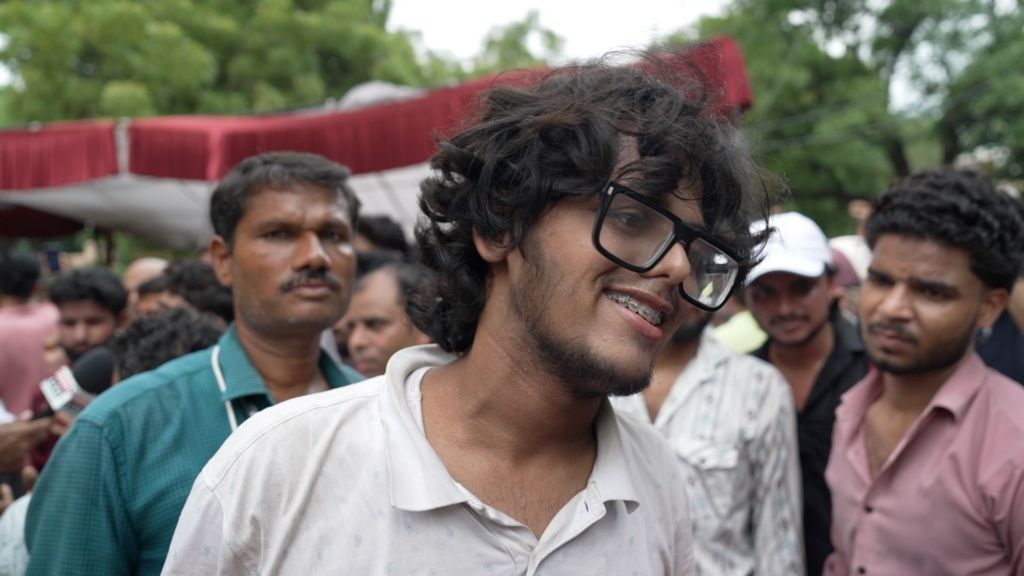
    Deadly extreme weather has left northern India reeling, with official confirmation Thursday placing the death toll from a wave of dust storms, heavy rainfall and lightning at no less than 96, with dozens more injured. The destructive weather system swept across multiple districts of Uttar Pradesh, India’s largest state by population, late Wednesday, leaving a trail of destroyed property and disrupted communities in its wake.

    According to local officials, most fatalities stemmed from falling trees, collapsing poorly built structures, and direct lightning strikes, common hazards during pre-monsoon storm events. Emergency response teams including police and disaster management units quickly mobilized, deploying chainsaws and heavy cranes to clear fallen vegetation that blocked critical road and railway links across hard-hit districts.

    Pre-monsoon storms are a routine seasonal occurrence across northern India between March and June, when hot summer temperatures give way to the annual south Asian monsoon rains that replenish the region’s water supplies. But this latest event brought unusually intense and destructive conditions that have caused widespread harm.
    Narendra N. Srivastava, a senior local administrative official, noted that emergency crews have already been deployed across all impacted areas. Damage assessments confirm widespread destruction to residential buildings, agricultural crops, and electrical power infrastructure, with rural communities bearing the brunt of the impact.

    Residents of the hardest-hit districts described sudden, terrifying onslaughts of extreme wind that upended daily life in minutes. In Prayagraj district, local resident Ram Kishore recalled the rapid onset of the storm, saying that within just a few minutes of the storm’s arrival, the entire sky turned pitch black. Flying tin roofing sent residents scrambling for shelter indoors, he added, with the sound of falling trees echoing through neighborhoods throughout the evening.

    In neighboring Bhadohi district, another local resident, Savitri Devi, shared her family’s narrow escape after their mud-built home was severely damaged by strong winds. Devi said the family fled outside immediately when their home’s walls began shaking from the force of the wind; the roof collapsed just moments after they escaped. The family spent the night taking shelter at a relative’s home, left homeless by the storm.

    In response to the disaster, Uttar Pradesh Chief Minister Yogi Adityanath has issued urgent orders for all involved agencies: complete full relief operations across affected areas within 24 hours, and expedite the distribution of financial compensation and emergency life-saving aid to all families impacted by the extreme weather.

  • Madonna, Shakira & BTS to headline World Cup half-time show

    Madonna, Shakira & BTS to headline World Cup half-time show

    In a groundbreaking announcement that has sent shockwaves through both the sports and entertainment worlds, three of the biggest names in global music — pop icon Madonna, Colombian superstar Shakira and K-pop phenomenon BTS — have been confirmed as co-headliners for the first-ever half-time show at a men’s FIFA World Cup final. The 2026 tournament, a historic first co-hosted by the United States, Canada, and Mexico, will wrap up its month-long competition with the final match at New Jersey’s MetLife Stadium on 19 July, where the 11-minute star-studded performance will take place.

    This production marks a major shift in how FIFA approaches entertainment at its flagship event. While pre-match musical performances have long been standard at high-profile football showpieces including the UEFA Champions League final, this will be the first time a dedicated half-time spectacle, modeled after the iconic Super Bowl halftime tradition, has been staged for the World Cup final. The show was curated by Coldplay frontman Chris Martin, and all proceeds from the event will go toward the FIFA Global Citizen Education Fund, an initiative with a goal of raising $100 million to expand educational access for children across the globe.

    Shakira, no stranger to the World Cup stage, is set to release her official 2026 World Cup anthem *Dai Dai* this Thursday. The track, which features Afrobeats star Burna Boy, takes its name from an Italian phrase meaning “let’s go” or “come on.” This is not the 49-year-old singer’s first World Cup collaboration: she delivered the global hit Waka Waka (This Time for Africa) as the official song for the 2010 World Cup hosted in South Africa, which remains one of the best-selling World Cup anthems of all time.

    Known worldwide as the Queen of Pop, 67-year-old Madonna holds the title of the best-selling female recording artist in history, and she is gearing up to drop her 15th studio album, *Confessions II*, just two weeks before the final on 3 July. The iconic performer made headlines earlier this year with a surprise guest appearance at the 2025 Coachella Valley Music and Arts Festival, where she joined headliner Sabrina Carpenter for energetic renditions of her classic hits *Vogue* and *Like A Prayer*.

    For BTS, the performance comes in the middle of the group’s highly anticipated global comeback. The seven-member boy band, which holds the title of South Korea’s best-selling musical act of all time with over 45 million albums sold worldwide, is returning to full group activities after a three-year hiatus, during which members completed their mandatory South Korean military service. At the time of the World Cup final performance, the group will be in the middle of a massive 85-date world tour. The group previously earned a UK top three hit in 2021 with their Coldplay collaboration *My Universe*.

    FIFA president Gianni Infantino previously framed the event as a milestone for the tournament back in March, saying the half-time show “will be a historic moment for the FIFA World Cup, befitting the biggest sporting event in the world.” The unprecedented pairing of three global superstars from different genres and regions reflects the 2026 tournament’s status as the most expansive and widely accessible World Cup in history, marking a new era of blending elite sport and world-class entertainment for the global football community.