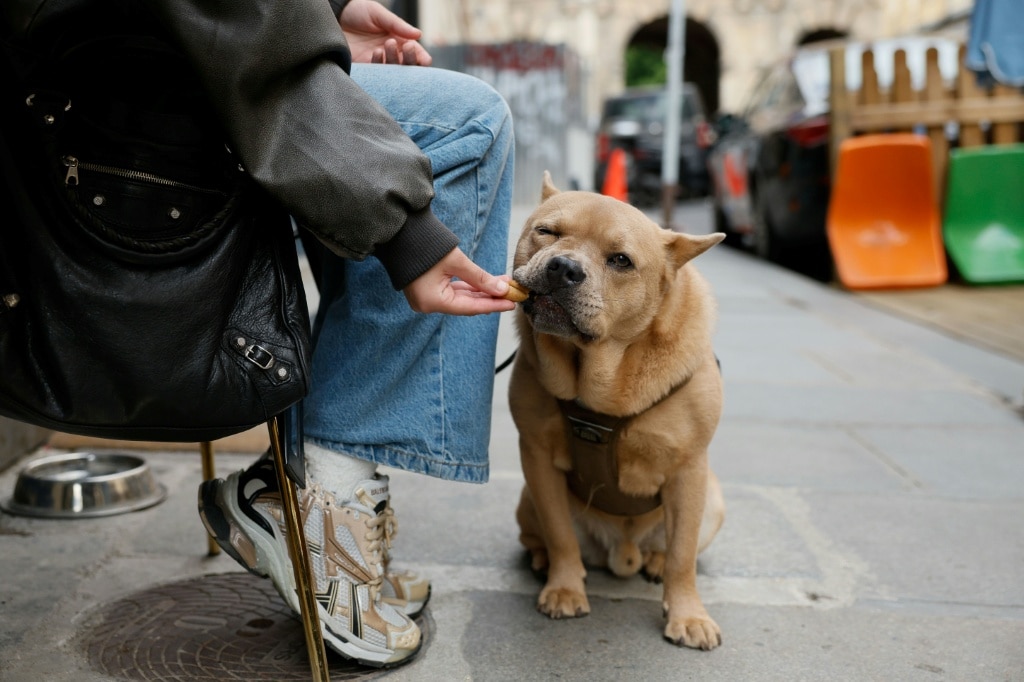
Paris, the global capital of culinary art, is expanding its gourmet tradition beyond two-legged patrons, welcoming a wave of new establishments that cater first and foremost to the city’s four-legged canine residents, filling a long-unmet need for local pet owners.
At Casa del Doggo, a canine-focused patisserie run by Parisian entrepreneur Clara Zambuto, fluffy one-year-old Pomeranian Loulou is a regular face. After finishing his €5 “Le Merveilleux” treat—crafted with dog-safe ingredients including banana puree, cream cheese, apple, and beef—Loulou lets out a satisfied woof, a response any restaurant owner would be thrilled to receive. Nearby, the glass display case holds a lineup of pet-friendly sweets that look nearly indistinguishable from human pastries, from heart-shaped “Le Mignon” made with sweet potato, cream cheese, and blueberry to croissant and baguette-shaped treats for pups who crave a classic Parisian snack vibe.
Zambuto’s journey into opening the dog bakery grew out of her own experience as a dog owner. After adopting her three-year-old Pomeranian Hulk, she grew frustrated that she couldn’t bring her pet along for the quintessential Parisian ritual of stopping for coffee and a snack. “I’d often go for walks with him… pop into a cafe like a proper Parisian, but he’d soon get bored,” the 26-year-old explained. “I thought it was a shame there weren’t places in Paris where, while you’re having a quick coffee, you can also treat your pet. Now dogs are really like our children for most of us—we want to be able to take him everywhere.”
What began as homemade treats in Zambuto’s kitchen eventually grew into a full storefront, with a trained professional pastry chef now helping craft pet-safe recipes that strictly avoid ingredients toxic to dogs, including chocolate, avocado, grapes, and onions. That doesn’t mean unlimited snacking, though: Lolita Sommaire, a veterinarian specializing in canine and feline nutrition, notes that moderation is just as important for dogs as it is for humans to prevent unhealthy weight gain. “If they’ve been to a patisserie, you need to adjust their next meal, cut back a little, or get them doing more exercise,” she advised. “But if it’s once a month, it’s not a big deal.”
Casa del Doggo is far from the only dog-first spot popping up across the city, which is home to an estimated 100,000 registered and unregistered canines. At Le Bone Appart, a dog cafe named as a playful nod to French emperor Napoleon Bonaparte, dogs can roam freely across a bench-lined outdoor terrace while their owners relax. On a recent afternoon, Marley, an American shepherd sporting a tiny fashion beret, could be found lapping up the last bits of a chantilly-based “pup cup” off the pavement.
Le Bone Appart owner Rebecca Anhalt, a US native who moved to Paris, launched her space after she received a steep fine for letting her five-year-old whippet Napoleon off-leash in a public park. “I wanted to create a place where people could come and not fear… being scolded for having your dog,” she said.
Local advocacy groups have long pushed for more pet-friendly public spaces in Paris. The organization Paris Condition Canine points out that while the city does offer more than 40 off-leash areas for dogs, these existing spaces are “insufficient, unevenly distributed, and sometimes ill-suited” to meet the needs of the city’s large dog-owning population. The demand for more pet-friendly amenities has even seeped into local politics: during Paris’ 2026 mayoral race, incumbent mayor Emmanuel Gregoire launched an Instagram account dedicated to photos with local dogs, while rival candidate Rachida Dati hosted a dog-focused social aperitif to win over pet owners.
For many regulars, these dog-centric spots offer more than just treats for their pups—they create a welcoming third space outside of work and home that strengthens bonds between owners and their pets, and builds community among fellow dog lovers. Sarah Elgamal, Loulou’s owner, describes herself as the Pomeranian’s “mother,” and says trips to the patisserie boost her connection with her pet. It “improves our connection, because we’re both in a third place that’s neither work nor home,” the 32-year-old pharmacist explained.
Anhalt notes that even with dogs as the top priority, many human visitors come for the social connection with other pet owners as much as for their pups. “Dogs are a really good connector,” she said. One recent transplant to Paris now visits the cafe every day with his 17-year-old dachshund, just to “be part of the group and meet people.” After all, Anhalt adds: “you’ll talk to anybody about your dog.”