作者: admin

  • Coalition would ‘rip the guts out’ of social housing but mum on tax costs, Albanese claims

    Coalition would ‘rip the guts out’ of social housing but mum on tax costs, Albanese claims

    Australia’s political landscape has erupted into fresh tensions over the 2024 federal budget, with Prime Minister Anthony Albanese launching a scathing attack on the federal opposition Coalition’s policy agenda, which he claims will dismantle critical affordable housing initiatives while refusing to disclose the full cost of its planned tax cuts.

    The verbal clash followed Opposition Treasurer Angus Taylor’s Thursday budget reply speech, where he outlined what he framed as ‘generational’ tax reform for Australia. The centrepiece of Taylor’s proposal is indexing the nation’s two lowest income tax brackets to inflation to curb the impact of bracket creep – the process that pushes workers into higher tax brackets as wages rise with inflation, acting as a stealth tax increase. The plan also includes repealing Labor’s recently passed changes to capital gains tax and negative gearing rules, with the indexation policy set to expand to higher tax brackets in coming years.

    Speaking to media on Friday, Albanese slammed the Coalition for failing to put a clear price tag on the reform, noting Taylor had only stated the total cost would ‘depend on inflation’ without offering a concrete figure. He went further to accuse the opposition of directly targeting Australia’s affordable housing supply: his core criticism is that the Coalition plans to scrap Labor’s signature Housing Australia Future Fund, a AUD 10 billion initiative designed to accelerate the construction of desperately needed social and affordable housing across the country. ‘He doesn’t say how much these measures would cost but could say that he would rip the guts out of essential housing programs,’ Albanese told reporters.

    Drawing a clear distinction between his government’s priorities and the opposition’s, Albanese argued that Taylor and the Coalition are singularly focused on countering the rising electoral threat of One Nation, rather than advancing national development. ‘We’re interested in building our nation. That’s the difference,’ he said. Albanese dismissed the entire Coalition tax plan as unserious, adding ‘Angus Taylor has no solutions. He comes up with a whole range of things without any costings that can’t be taken seriously.’

    For his part, Taylor defended the Coalition’s proposal in an interview with the ABC, arguing that targeting lower tax brackets delivers broad benefits to all working Australians, regardless of their total income. ‘We think the most important tax brackets are the lower ones which by the way benefits absolutely everybody. Everyone gets access to that, to those lower tax brackets, even if you’re in higher tax brackets,’ he explained. Taylor pushed back against criticism of the staggered rollout of indexation, noting that responsible budget management requires a phased approach, and claimed that savings from cutting what the Coalition calls Labor waste would offset the cost of the tax changes.

    He argued that bracket creep under Labor has eroded living standards for working and middle-income Australians, calling the policy a ‘sneaky tax’ that allows the government to expand its size without explicit public approval. Beyond tax reform, Taylor also announced a suite of other Coalition policies if elected: a AUD 50,000 instant asset write-off for small businesses with annual turnover below AUD 1 million, a policy to tie net permanent migration levels directly to annual housing completions to ease housing market pressure, and a restriction blocking new permanent residents from accessing social welfare.

    The budget response was not limited to the major parties: One Nation leader Pauline Hanson delivered her own separate reply to the Senate on Thursday night, echoing criticism of bracket creep as a stealth tax that erodes working Australian incomes. Hanson argued that Labor’s AUD 250 Working Australians Tax Offset would be completely wiped out by bracket creep driven by high inflation, calling the policy a political trap designed for future elections. One Nation has put forward its own proposals to end bracket creep via full indexation of all tax brackets, and to remove Goods and Services Tax from insurance and housing construction materials to ease cost of living pressures.

    The political clash comes as the Coalition faces growing pressure from the resurgent One Nation, which is siphoning support from conservative voters ahead of the next federal election, making the opposition’s policy positioning on cost of living and housing a critical electoral battleground.

  • Romanian metal, Aussie star through to Eurovision final

    Romanian metal, Aussie star through to Eurovision final

    The world’s most-watched live televised music competition has narrowed its field, as the second semi-final of the 70th Eurovision Song Contest concluded Thursday night at Vienna’s Wiener Stadthalle, locking in the final 10 spots for Saturday’s grand finale. Among the advancing acts are Romania’s boundary-pushing heavy metal entry, Denmark’s love letter to nightclub culture, and Australian pop icon Delta Goodrem, joining 15 other countries already qualified for the 25-act final showdown.

    Fifteen competing artists from across Europe and beyond took the iconic stage Thursday, each vying for a chance to compete for Eurovision’s highest honor in front of a global audience expected to top 150 million viewers. Joining front-runners Australia, Denmark, and Romania in the final line-up are Albania, Bulgaria, Cyprus, the Czech Republic, Malta, Norway and Ukraine. Five nations saw their Eurovision 2025 journeys end on Thursday: Armenia, Azerbaijan, Latvia, Luxembourg and Switzerland failed to earn enough support to advance. Like the final, semi-final results are determined by a combination of public televoting and scores from professional industry juries. As crowds waited for the tense result announcement, they marked the Vienna host city with a mass, audience-wide Viennese waltz, turning the arena into a giant dance floor.

    The semi-final was packed with the over-the-top spectacle and emotional storytelling that Eurovision is famous for. Bulgaria’s pop star Dara kicked off the party energy with her choreography-heavy performance of “Bangaranga”, while Cyprus’ Antigoni delivered a sultry rendition of her track “Jalla”. The Czech Republic’s Daniel Zizka turned in an intimate, visually striking performance of “Crossroads”, filmed in close-up against a swirling hall of mirrors that evoked the effect of a vintage zoetrope. Armenia’s Simon brought high energy to “Paloma Rumba”, a track about working-class frustration, with a staging that saw him trapped inside a lift wearing a jacket plastered with yellow sticky notes. Ukraine’s Leleka earned cheers for her powerful, ear-splitting high notes, while Switzerland’s Veronica Fusaro performed tangled in dramatic red stage webbing, and Latvia’s Atvara delivered a soft, haunting performance of “Ena” against a backdrop evoking broken glass.

    Romania’s entry “Choke Me” sparked minor controversy in the lead-up to the contest over its provocative title and lyrical themes, but the heavy rock act turned in a showstopping performance that won over voters. Singer Alexandra Capitanescu, a master’s student in physics at the University of Bucharest, has defended the track’s artistic meaning, explaining that “Unlike the classic heart, which represents romance or cute love, the anatomical heart suggests vulnerability… and emotions that feel intense, physical and almost painful.”

    Albania’s entry offered one of the night’s most moving quiet moments: Alis performed “Nan”, a heartfelt ballad about grieving a lost mother, with a cameo from 67-year-old veteran Albanian actress Rajmonda Bulku playing the fleeting maternal figure. Alis shared after the performance that he originally planned to have his own mother appear on stage, but scrapped the idea because “I would get so emotional” performing with her.

    Australia, which has competed as an invited guest at Eurovision since 2015, advanced with Goodrem, the 41-year-old singer who rose to global stardom with a string of hits in the early 2000s. Her performance of “Eclipse”, a track inspired by the astronomical alignment of planets, wowed the more than 10,000 fans packed into the Wiener Stadthalle. Goodrem performed atop a glittering grand piano before rising into the air on a hydraulic lift as sparks rained down from the arena ceiling. “It’s higher than it looks! I can see the whole room. I definitely get a great vantage point up there,” she said after her set.

    Denmark’s Soren Torpegaard Lund, a former musical theatre performer, brought the crowd to its feet with “For Vi Gar Hjem” (Before We Go Home), an ode to late-night club nights that has quickly become a fan favorite. “I did a little wave around and just hearing the roar is crazy. I’ve never played for so many people,” Lund said after advancing.

    This year’s contest also included a pre-taped segment addressing common misperceptions about Eurovision’s long ties to the LGBTQ community. Presenter Victoria Swarovski took to a fictional lecture hall to respond to the question: “Why are there only gays at the Eurovision now? Have they taken over?” She walked through the contest’s 70-year history of embracing queer communities and concluded with a joke: “No takeover detected”. Eurovision director Martin Green told reporters the segment was a timely statement of the contest’s values. “It’s timely, and I think it is a message to the world that we, for 70 years, have given a voice to the voiceless and welcomed the disenfranchised,” he explained.

    Going into Saturday’s grand final, Finland remains the bookmakers’ overall favorite to take home the Eurovision trophy, with Romania and Australia ranked among the top contenders. Fans around the world are now gearing up for the glitzy, drama-filled final that has become a cultural staple for more than half a century.

  • Israelis chant threats, anti-Palestinian slogans at Jerusalem Day march

    Israelis chant threats, anti-Palestinian slogans at Jerusalem Day march

    On Thursday, tens of thousands of Israeli nationalists poured through the winding cobblestone alleyways of Jerusalem’s Old City for the annual Jerusalem Day parade, an event marking Israel’s 1967 capture and unilateral annexation of East Jerusalem that has a long history of escalating into conflict. As hardcore ultranationalist marchers chanted virulently anti-Palestinian slogans including “Death to Arabs” and “May your villages burn,” most Palestinian residents of the historically contested neighborhood locked themselves inside their homes, boarding up storefronts to avoid targeted intimidation and violence.

    Jerusalem Day commemorates what Israeli officialdom calls the “reunification” of the city after the 1967 Arab-Israeli War, a conflict that left Israel in control of East Jerusalem – a territory home to a majority Palestinian population that the United Nations and much of the international community have never recognized as legally annexed by Israel. For decades, the annual parade has been a flashpoint for intercommunal tension, with young ultranationalist participants regularly targeting local Palestinian communities with verbal abuse, threats, and physical assault. This year’s march unfolded against a fragile regional backdrop, coming just weeks after a ceasefire halted fighting between Israel and Hamas in Gaza that has been violated by near-daily incursions and strikes on both sides.

    Local Palestinian residents described scenes of deliberate harassment and property damage during the 2024 march. Mustafa, a resident of the Old City’s Via Dolorosa, told Agence France-Presse that a group of roughly 20 ultranationalist Israeli youth forced their way into his home’s courtyard, shattering glass and breaking down doors while screaming racist chants. “If you push them, you’ll go to prison… you can’t do anything,” he explained, describing the helplessness many residents feel amid the annual show of force. Most Palestinian shop owners closed their businesses for the day, pulling down metal shutters and abandoning the busy commercial lanes of the Old City.

    A small group of grassroots activists from the joint Israeli-Palestinian movement Standing Together deployed across the neighborhood to protect remaining open shops and residents from attack, but social media footage and on-the-ground reporting showed activists being shoved and surrounded by aggressive marchers. In one viral clip, young marchers hurled plastic chairs at a Palestinian shopkeeper while screaming anti-Arab slurs, before the shopkeeper responded by throwing one chair back and brandishing a stick in self-defense. One anonymous Palestinian shop owner told AFP that tensions and aggression have escalated annually: “The situation gets worse every year.”

    Among the march’s high-profile participants was Israeli far-right National Security Minister Itamar Ben Gvir, who used the occasion to visit the contested Al-Aqsa Mosque compound – the third-holiest site in Islam, known to Jews as the Temple Mount and Judaism’s most sacred site. “Fifty-nine years after the liberation of Jerusalem, I raised the Israeli flag on the Temple Mount, and we can say with pride: we have restored sovereignty over the Temple Mount,” Ben Gvir wrote on his Telegram channel, as he was photographed marching alongside crowds flanked by a heavy security detail.

    Many participating marchers expressed openly exclusionary views about Palestinian and non-Jewish presence in the city. Reuven, a 37-year-old who attended the parade with his young son, told AFP: “Christians and Muslims can stay here, but this city, one united city, belongs to the Jews.” The crowd also included members of Hilltop Youths, a hardline settler movement linked to routine attacks on Palestinian communities in the Israeli-occupied West Bank, one of whom stated “They have no place here” when asked about Palestinian residents. Marchers also targeted journalists covering the event, shoving reporters and blocking them from filming the unrest.

    AFP correspondents on the ground confirmed that racist chants and vandalism unfolded under the direct observation of Israeli police deployed heavily across the area, with marchers pounding on the closed shutters of Palestinian shops in a deliberate show of intimidation. Not all attendees supported the aggressive rhetoric, however: a small contingent of Israeli peace activists handed out flowers to local residents to show solidarity with the Palestinian community. “It was important for me to come in order to show some solidarity with the local community and say that as a Jew, as a Zionist, as someone who wants a Jewish state here, I want them to be part of it and be part of the nation with equal rights,” said 52-year-old tech worker Ilan Perez, who traveled from the Tel Aviv suburb of Raanana to participate in the counter-protest.

  • Mbappe, Dembele head up France squad for 2026 World Cup

    Mbappe, Dembele head up France squad for 2026 World Cup

    As football fans across the globe gear up for the 2026 FIFA World Cup co-hosted by the United States, Canada and Mexico, France head coach Didier Deschamps has confirmed his 26-man squad for the tournament, marking his final major international selection before stepping away from the role. The four-time World Cup winning manager’s roster holds few surprises, built around tactical cohesion rather than simply picking the 26 highest-rated individual players, he explained.

    Kylian Mbappe, the team’s star captain-elect, will lead Les Bleus into the tournament despite sustaining a thigh injury last month that forced him to sit out critical late-season fixtures for Real Madrid in La Liga. The 27-year-old frontman will spearhead one of the most exciting attacking lines in the competition, joined by reigning Ballon d’Or winner Ousmane Dembele, Paris Saint-Germain’s rising star Desire Doue, and Bayern Munich dynamic winger Michael Olise. 22-year-old playmaker Rayan Cherki, who turned in a standout debut season at Manchester City in the Premier League, will make his first World Cup appearance for France.

    In defense, Arsenal’s William Saliba, who has cemented his status as one of the league’s top center-backs, will bring solidity to the French backline, widely expected to line up alongside Bayern Munich and Bundesliga champion Dayot Upamecano in the heart of defense. Liverpool’s Ibrahima Konate and Crystal Palace’s Maxence Lacroix have also earned selection to Deschamps’ defensive cohort.

    Only four players – Mbappe, Dembele, full-back Lucas Hernandez and midfielder N’Golo Kante – remain from Deschamps’ 2018 World Cup-winning squad that lifted the trophy in Russia. Lens goalkeeper Robin Risser is the only uncapped player called up to this year’s roster.

    Several high-profile players have missed out on selection, headlined by Real Madrid midfielder Eduardo Camavinga and Paris Saint-Germain shot-stopper Lucas Chevalier. Deschamps acknowledged Camavinga’s likely disappointment, noting the midfielder struggled through an injury-hit season with limited minutes at club level. Liverpool striker Hugo Ekitike was also forced to rule out of contention after suffering a season-ending Achilles injury in April.

    Speaking to reporters after the announcement, Deschamps reflected on his 14-year tenure in charge of the French national team, ahead of his seventh and final major tournament as head coach. “It’s been part of my life for 14 years running. But if people are worried, I’m not retiring. I’ll have a life of my own. The World Cup is the most important thing,” he said.

    France will kick off their Group I campaign against Senegal on June 16, before facing off against Iraq and Norway to close out the group stage. The full squad is as follows:

    **Goalkeepers**: Mike Maignan (AC Milan), Robin Risser (Lens), Brice Samba (Rennes)
    **Defenders**: Lucas Digne (Aston Villa), Malo Gusto (Chelsea), Lucas Hernandez (Paris Saint-Germain), Theo Hernandez (Al Hilal), Ibrahima Konate (Liverpool), Maxence Lacroix (Crystal Palace), Jules Kounde (Barcelona), William Saliba (Arsenal), Dayot Upamecano (Bayern Munich)
    **Midfielders**: N’Golo Kante (Fenerbahce), Manu Kone (Roma), Adrien Rabiot (AC Milan), Aurelien Tchouameni (Real Madrid), Warren Zaire-Emery (Paris Saint-Germain)
    **Forwards**: Maghnes Akliouche (Monaco), Bradley Barcola (Paris Saint-Germain), Rayan Cherki (Manchester City), Ousmane Dembele (Paris Saint-Germain), Desire Doue (Paris Saint-Germain), Michael Olise (Bayern Munich), Kylian Mbappe (Real Madrid), Jean-Philippe Mateta (Crystal Palace), Marcus Thuram (Inter Milan)

  • How the fall of Starmer will reshape British policy on Israel

    How the fall of Starmer will reshape British policy on Israel

    As speculation builds over the race to replace Keir Starmer as British prime minister, one critical issue has so far been sidelined by political commentators: Starmer’s controversial handling of Israel’s military campaign in Gaza and ongoing settlement expansion in the occupied West Bank. For now, media coverage has fixated on candidate horse-trading and critiques of Starmer’s governing style, but political insiders agree this dynamic will shift dramatically once the leadership contest formally gets underway. When it does, Starmer’s approach to the Gaza crisis will emerge as one of the race’s defining flashpoints.

    Across the Labour Party, a growing consensus holds that whoever succeeds Starmer will need to adopt a far more uncompromising stance toward Israel, with potential policy shifts ranging from targeted sanctions on illegal West Bank settlements and a ban on settlement goods to sweeping, state-level sanctions against Israel itself. Senior Labour figures have already framed the issue as a critical electoral and moral turning point for the party. “Labour’s refusal to properly oppose Israel’s actions in Gaza is one of the key issues that has appalled huge numbers of former Labour voters and driven them away from the party,” Labour MP Richard Burgon told Middle East Eye. Fellow MP Kim Johnson echoed that sentiment, noting: “Any future leader must demonstrate a clear willingness to challenge the Israeli government over the continued violence in Gaza and illegal settlement expansion in the West Bank. I will be looking closely at where any future leader stands on these issues. This includes their willingness to take tough, principled action and their independence from foreign interests in the form of financial backing.”

    The field of likely contenders has begun to take shape, with former Health Secretary Wes Streeting, Deputy Prime Minister Angela Rayner, and Energy Secretary Ed Miliband all tipped as potential candidates. Currently, Greater Manchester Mayor Andy Burnham has emerged as the early frontrunner, should he win the upcoming by-election in Makerfield — a seat vacated by former Starmer ally Josh Simons. Burnham holds overwhelming popularity among Labour’s grassroots membership, but his record on Israel and Middle East policy is nuanced.

    As a regional mayor, Burnham has not shaped national Labour policy on the conflict, and he has never positioned himself as a strident pro-Palestine advocate in the mold of former leader Jeremy Corbyn. He joined Labour Friends of Israel (LFI) in 2015, during his first unsuccessful run for the party leadership, when he stated his first overseas visit as leader would be to Israel and described the Boycott, Divestment, Sanctions (BDS) movement as “spiteful.” Yet even then, Burnham criticized Israeli leadership, calling Benjamin Netanyahu’s 2015 re-election “depressing” and noting that Palestine would require increased international support. After the October 7 2023 Hamas attack, Burnham broke sharply with Starmer’s pro-Israel line, calling for an immediate ceasefire just weeks into the war — at a time when Labour MPs were ordered not to support parliamentary ceasefire votes. He has since cited lessons from the 2003 Iraq War, which he voted for as a young MP, to justify his stance: “the US-UK action resulted in huge harm to innocent civilians,” he has said, adding that those experiences shaped his opposition to the Gaza campaign. Most analysts agree that as prime minister, Burnham would almost certainly toughen Britain’s stance on Israeli violations of international law.

    Ed Miliband, Labour leader between 2010 and 2015, has also signaled he would take a harder line than Starmer. Like Burnham, Miliband has long identified as a friend of Israel and opposed boycott campaigns, but he broke with Conservative government policy during the 2014 Israeli bombing of Gaza, which killed more than 1,400 Palestinian civilians. He sharply criticized then-Prime Minister David Cameron’s “inexplicable silence” on “the killing of innocent Palestinian civilians caused by Israel’s military action,” calling Cameron’s position outright wrong. That same year, Miliband backed unilateral recognition of Palestinian statehood, a policy rejected by the Tories. Within Starmer’s cabinet, sources confirm Miliband was a leading voice pushing Starmer to formally recognize a Palestinian state, a step Starmer ultimately took in September 2025. He also successfully lobbied Starmer privately to block the U.S. from using British bases to strike Iran in February 2026, before Starmer partially reversed his decision. For her part, Angela Rayner has been publicly tied to Starmer’s Gaza position as deputy prime minister, but has a longstanding record of supporting Palestinian statehood recognition.

    The most politically ambiguous contender is Wes Streeting, whose stance on the issue has shifted dramatically in recent years. A longstanding member of LFI who meets regularly with the group in Westminster, Streeting has received more than £20,000 in donations between 2021 and 2025 from Trevor Chinn, a 90-year-old philanthropist awarded the Israeli Presidential Medal of Honour in 2024 for his service to the state. Immediately after October 7, Streeting followed the official Labour line, repeating Israel’s unsubstantiated claim that Hamas used civilians as human shells and refused to back a ceasefire. In January 2024, he even dismissed South Africa’s genocide case against Israel at the International Court of Justice as a “distraction” from diplomatic efforts.

    But in recent months, Streeting has rebranded himself as a critic of Israel. Anonymous Labour sources claim he privately pushed Starmer for a more pro-Palestinian stance while serving in cabinet. Last September, he stated that Israel’s actions in Gaza were “leading Israel to pariah status.” Then in February 2026, private text correspondence between Streeting and former U.S. ambassador Peter Mandelson was leaked — a move multiple Labour sources believe Streeting orchestrated to boost his leadership prospects. In the July 2025 texts, Streeting warned he could “become toast at the next election” in his marginal Ilford North seat, admitting: “Israel is committing war crimes before our eyes … the Israeli government talks the language of ethnic cleansing, and I have met with our own medics out there who describe the most chilling and distressing scenes of calculated brutality against women and children.” He called Israel a rogue state, arguing: “Let them pay the price as pariahs with sanctions applied to the state, not just a few ministers.”

    Critics have slammed Streeting for hypocrisy, noting he remained in a cabinet that cooperated with Israel even while holding these private beliefs. But the leak itself signals a key political shift: Streeting calculates that taking a hard line against Israel will benefit his campaign, a calculation rooted in his own 2024 election experience, where he held Ilford North by fewer than 600 votes against a pro-Palestine independent challenger.

    This shift reflects broader pressure across the party: grassroots Labour members are far more critical of Israel than the parliamentary party, with a June 2025 poll finding nine out of ten rank-and-file members believe the UK should take a much harder line against Israel than the current government. Once the contest begins, all candidates will face intense pressure from members to publicly address Starmer’s handling of Gaza, a record marked by inconsistency and criticism from the left.

    Under Starmer, the UK has conducted at least 518 spy flights over Gaza during Israel’s campaign, sharing intelligence with Israel despite government claims the flights were solely for locating hostages. The Starmer government has also permitted British dual nationals to serve in the Israeli military, and approved $169 million in military exports to Israel in the three months after imposing a partial arms embargo — more than the entire volume of military exports approved by the Conservative government between 2020 and 2023. While Starmer broke with previous Tory policy by dropping the UK’s objection to International Criminal Court jurisdiction over Israel, imposing a partial arms embargo, and sanctioning far-right Israeli ministers Itamar Ben Gvir and Bezalel Smotrich, he has walked back repeated attempts to label Israeli actions a breach of international law, refused to accuse Israel of war crimes, and allowed the U.S. to use British bases for 2026 strikes on Iran, a move legal experts describe as illegal. Domestically, Starmer’s government outlawed pro-Palestine direct action group Palestine Action as a terrorist organization, arresting thousands of supporters — including many elderly activists — despite a High Court ruling that the ban was unlawful.

    All of these policies will be put to the test during the leadership contest, with candidates forced to answer tough questions: Does Israel qualify as an apartheid state? Has it committed genocide in Gaza? Will they continue to support Labour Friends of Israel? Will they ban settlement goods, impose a full arms embargo, reverse the Palestine Action ban, or block U.S. use of British bases for future strikes against Iran?

    These questions are not just internal party business. Labour faces growing electoral pressure from the left from the Green Party, which has positioned itself as the leading UK political voice opposing British support for Israel and participation in U.S.-led Middle East wars. Leading pollster John Curtice noted after recent local elections that the Greens have done far more damage to Labour’s vote share than the right-wing Reform Party, with Gaza a top driver of that defection.

    The next Labour leader will face a clear choice: double down on Starmer’s strategy of courting right-leaning voters, or shift left to recoup disaffected voters lost to the Greens by returning to Labour’s historic roots of supporting marginalized and occupied populations. Even candidates with long pro-Israel records like Streeting now recognize that taking a harder line on Israel is politically beneficial, as his leaked texts make clear.

    The end result is inevitable: whoever wins the contest will rewrite Britain’s Israel policy. Even if Starmer survives his current leadership crisis, he will likely be forced to adjust his stance to shore up support from the party’s left. For Labour, a break from Starmer’s approach is not just morally necessary, it is politically smart, argues Burgon: “Sanctioning Israel to bring the government into line with its legal obligations under international law would not only be the right thing to do, it would also be popular. And if Labour under a new leader wants to convince people it has genuinely changed, then such a clear break with the failures of the Starmer era on Gaza will be essential.”

  • Brutal raid on woman’s birthday party highlights rise of Russian vigilante group

    Brutal raid on woman’s birthday party highlights rise of Russian vigilante group

    It was meant to be a celebration: Katya, a 30-year-old events organizer from the northern Russian city of Arkhangelsk, was moments away from blowing out the candles on her birthday cake at a rented nightclub when the attackers arrived. Dressed in masks, the group stormed the venue, launching a violent physical and verbal assault on Katya and her guests. “They called us faggots and lesbians. I could hear violence from every corner,” Katya recalled in an interview with BBC World Service’s investigative team. Her own mother, she added, was forced to get down on all fours during the attack.

    The raid was not the work of random thugs. It was coordinated by Russkaya Obshina, the largest and most active nationalist vigilante network in Russia, which operates to advance President Vladimir Putin’s political agenda of erasing Western liberal influences and cementing so-called traditional family values across the country. In a striking pattern documented by the investigation, local law enforcement officers joined the vigilantes during the operation.

    The group claimed the raid was carried out to search for evidence of illegal LGBT “propaganda,” a criminalized offense under Russian law. No such evidence was ever found, but Katya was still taken into custody for interrogation. Nine months after the attack, she was convicted of blasphemy, with the prosecution pointing to a single red neon light shaped like a crucifix hanging on the nightclub wall as evidence of her crime. She was sentenced to 200 hours of court-ordered community service.

    During her interrogation, Katya says a law enforcement officer told her she did not align with traditional Russian values and that there was “something wrong with her.” The case was amplified by local media and the group’s social media channels, triggering waves of severe online harassment that have left Katya living in constant fear. “For 10 years, I lived in a certain rhythm. It made me happy, it was my life. What do you feel when a part of you is taken away? You feel loss,” she told the BBC. Despite the risk of further targeting, Katya chose to share her story to expose the group’s tactics.

    Over 12 months of reporting, the BBC World Service spoke to six current and former members of Russkaya Obshina, as well as dozens of people harmed by the group’s actions. The investigation, which also incorporated analysis of more than 21,000 social media posts from the group’s public channels between 2020 and 2025, paints a clear picture of a rapidly expanding movement of ideologically driven nationalist and religious activists who carry out coordinated raids on private businesses, event venues, migrant communities, abortion clinics and other spaces they claim violate their strict traditional worldview. After launching their raids, the group pressures law enforcement to prosecute their targets.

    Migrants are among the group’s most frequent targets: the BBC’s analysis found that one in four of the group’s social media posts focus on migrants, and often include virulent racist language. In videos posted online, group members can be seen confronting migrants at their workplaces and public spaces, publicly accusing them of criminal activity.

    When contacted by the BBC for comment, Russkaya Obshina did not directly respond to the investigation’s specific claims, instead disputing the BBC’s ability to contact current and former members. “Even though Russkaya Obshina is an informal community of people, with no legal entity and no formal membership, the BBC’s great thinkers have somehow ‘found’ former and current members of the Obshina… If you grab anyone off the street and call them a member of the Obshina, you can put any nonsense you like into their mouth,” the group said in a social media post addressing the investigation.

    One former member, a wounded ex-soldier who left the group just two months before the BBC’s interview and asked to be identified only as Dimitry, fits the profile of many members. After returning from the front lines in Ukraine, he said he joined the group to find a new sense of purpose, channeling his military training into what he frames as defending Russian culture from “foreign intrusion.” “People from other cultures come in and Russkaya Obshina responds like an antibody, stopping them harming the organism. You could say Russkaya Obshina is like a kind of doctor,” he explained.

    The group has received explicit backing from influential Russian institutions. Last year, the Russian Orthodox Church, a close political ally of the Putin government, formally advised all of its bishops to build partnerships with Russkaya Obshina, codifying existing informal ties and granting the unregistered vigilante group greater public legitimacy.

    Political analysts broadly agree that the group could not operate at its current scale without implicit approval from the Kremlin. For years, the Russian government has framed the country as a guardian of traditional conservative values in contrast to Western liberalism, a policy that hardened dramatically after Putin launched the full-scale invasion of Ukraine in February 2022. In November 2022, Putin signed a formal decree dedicated to preserving “traditional Russian spiritual and moral values” nationwide. Russkaya Obshina has been a vocal supporter of the war in Ukraine, and in December 2024, the group formed a joint military unit deployed to the front lines alongside the far-right Espanola brigade, which has already been sanctioned by the UK government.

    Contrary to the group’s claims that it operates without formal financial backing, documents reviewed by the BBC’s investigative unit BBC Eye link the network to funding from two high-profile figures with close ties to the Kremlin, routed through multiple charitable foundations. The first major funder identified in the documents is a foundation run by Igor Khudokormov, a Russian sugar magnate whose agriculture conglomerate Prodimex is a leading Russian food producer and a major trading partner with the European Union, according to U.S. trade data. Khudokormov has close personal ties to Deputy Prime Minister Dmitry Patrushev, son of former Federal Security Service director Nikolai Patrushev, a core member of Putin’s inner circle.

    Tom Keatinge, a finance and security expert at the UK-based Royal United Services Institute, said that Khudokormov’s backing of a group engaged in human rights abuses and military activity in Ukraine raises urgent questions for European companies and governments that trade with his firm. “Do you want… a Russian company providing critical materials into the food chain, especially [one run by someone]… funding the sort of activity he’s funding? That’s a question governments and companies have to answer,” Keatinge said. Khudokormov did not respond to the BBC’s request for comment.

    The second funder named in the documents is Sergei Mikheev, a prominent pro-Kremlin media commentator who has reportedly collaborated with the Kremlin and Russian intelligence on election campaigns across former Soviet states. Mikheev denied the claim, telling the BBC, “The charitable foundation I established, the ‘Sergei Mikheev Charity Foundation,’ has never transferred any funds to Russkaya Obshina. Any documents allegedly confirming this are fake.”

    The BBC’s analysis of the group’s social media content found that the first recorded raid was carried out in May 2023. Between that date and the end of 2025, the group documented more than 900 raids across Russia, with local law enforcement joining roughly 300 of those operations. Reporters note the total number is almost certainly an undercount, as the group does not publicize all of its activity on public channels. To map the activity of Russian nationalist groups, the BBC built a custom multi-agent AI system, which cross-analyzed social media content from more than 10 similar nationalist networks, finding that Russkaya Obshina maintains a far larger street-level presence than any comparable group.

    While Russkaya Obshina has attempted to frame itself as part of Russia’s official network of registered civilian patrol groups that assist police with public order, the group remains unregistered, despite police participation in its raids. Sergei Ognerubov, who leads a registered civilian patrol in St. Petersburg that has allowed some Russkaya Obshina members to join his organization, criticized the group for its unregulated, extralegal tactics. “If you want to tackle migration, join us and do it legally. Simply running into some market in masks isn’t fighting migration – that’s more like petty hooliganism,” he said.

    Alexander Verkhovsky, a Moscow-based researcher focused on Russia’s far right, noted that the group’s extralegal intimidation tactics themselves violate Russian law, despite its claims to uphold order. “Russkaya Obshina – which claims to uphold law and order – mainly operates through intimidation which is itself illegal” in this context, he said.

    In response to the BBC’s investigation, the Russian Embassy in London defended the group, saying “The broad public support [Russkaya Obshina] enjoys reflects the… growth of interest in national culture and historical traditions” and “it would appear that… civic engagement in Russia provokes irritation among those who seek to denigrate and discredit our country.”

    For Katya, the consequences of the raid have been irreversible. She has stopped hosting the alternative community events that defined her career and personal life for a decade, and her daily routine remains upended by the harassment and conviction. Today, she lives with constant fear of further targeting, but remains one of the few voices willing to publicly speak out about the vigilante network’s growing power.

  • Trump insists US-China relations are in a good place despite differences as he wraps up Beijing trip

    Trump insists US-China relations are in a good place despite differences as he wraps up Beijing trip

    BEIJING – As U.S. President Donald Trump concluded his fast-paced diplomatic visit to China on Friday, he remained steadfast in his public framing that relations between the world’s two largest economies are strong and improving, even as deep, unresolved divisions over flashpoint issues from Taiwan to the Iran conflict continue to test bilateral ties.

    On his final day in the Chinese capital, Trump took to social media to claim that Chinese President Xi Jinping had praised his “tremendous successes” in office. He also sought to clarify Xi’s recent comment describing the U.S. as a potentially declining power, arguing the remark was directed exclusively at his predecessor Joe Biden, not his own administration.

    Yet Trump’s upbeat assessment of the U.S.-China relationship runs headlong into tangible disagreements that dominated closed-door negotiations this week, with no sign of breakthrough on the most contentious items on the agenda.

    ### Taiwan: Core Interest Sparks Sharp Warnings
    The Taiwan question emerged as the most sensitive topic of this week’s talks, with Chinese officials confirming that Xi privately warned Trump that mishandling differences over the self-governing island could push the two global powers into open confrontation.

    For Beijing, Taiwan has long been framed as an non-negotiable core national interest, and Chinese leaders have ramped up this messaging in recent weeks amid growing defense cooperation between Washington and Taipei. Secretary of State Marco Rubio, who joined the U.S. delegation for negotiations, emphasized that longstanding U.S. policy toward Taiwan remains unchanged, warning that any attempt to seize the island by force would be a catastrophic error, while also noting that Beijing’s tough rhetoric on the issue follows longstanding diplomatic norms.

    The current state of play on Taiwan exposes conflicting strands of Trump’s policy toward the island. In December, his administration approved a record $11 billion arms package for Taiwan – the largest ever offered to the democracy – but the deal has yet to be implemented, and Trump has publicly questioned the value of U.S. security commitments to Taipei. He has complained that Taiwan “stole” the U.S. semiconductor industry and repeatedly demanded the island pay full cost for American military protection, while using tariff threats and incentives inherited from the Biden administration to pressure Taipei into committing to massive new investments in U.S. semiconductor manufacturing and multi-billion dollar purchases of American crude oil and liquefied natural gas. These inconsistent stances have fueled widespread speculation that Trump could be willing to scale back U.S. support for Taiwan in exchange for concessions on other issues.

    Ma Chun-wei, a specialist in cross-strait relations at Taiwan’s Tamkang University, explained that growing defense ties between Washington and Taipei have directly prompted Beijing’s harder line on the issue. “For Xi Jinping, he must show that the Taiwan issue is in China’s hands. He must demonstrate this image, or else he would be criticized,” Ma noted.

    ### The Iran Conflict: Disagreement Over Global Energy Security
    The ongoing war in Iran, which has effectively closed the critical Strait of Hormuz chokepoint for global oil trade, also featured prominently in Thursday’s two-hour talks between the two leaders at Beijing’s Great Hall of the People.

    Trump told Fox News in an interview that both he and Xi agreed the Strait of Hormuz – which carried roughly 20% of the world’s global oil supplies before the war began in February – must be reopened to meet global energy demand. Trump claimed that Xi privately offered to mediate to help end the conflict, though details of any potential Chinese role remain unclear, particularly given Beijing’s longstanding strategic partnership with Tehran. The U.S. has repeatedly pressed China to use its unique leverage as Iran’s largest trading partner to pressure Tehran into negotiating an end to the war, but Beijing has shown little public willingness to take steps that would damage its relationship with the Iranian government.

    “He’d like to see the Hormuz Strait open,” Trump said of Xi. “He said if I can be of any help whatsoever, I would like to help.” Trump added that Xi also opposes the imposition of tolls on ships transiting the strait and signaled China could increase purchases of American oil to reduce its reliance on Gulf energy supplies in the future.

    Just days before arriving in Beijing, Trump downplayed the urgency of resolving the Iran conflict during talks with Xi, telling reporters “we have Iran very much under control” and framing the issue as a lower priority. But senior administration officials struck a different tone ahead of the meetings, arguing that it is directly in China’s economic interest to help end the war. Rubio noted that the conflict has driven up global energy prices, slowing consumer demand around the world and leading to fewer purchases of Chinese goods, which harms China’s export-driven economy. While Beijing has so far cushioned the impact of the energy crisis using its strategic oil reserves, economists warn that that buffer is not unlimited, and prolonged disruption to global energy markets could cause significant damage to Chinese economic growth.

    On another longstanding point of friction, the White House still maintains that China could do more to crack down on the flow of Chinese-made precursor chemicals to Mexican drug cartels, which are used to produce illicit fentanyl that has caused a public health crisis across thousands of American communities.

    ### Trade and Business: Expectations of Potential Deals Ahead of Departure
    Heading into the visit, White House officials signaled that Trump would not conclude the trip without tangible progress on trade, suggesting new announcements could be coming before his departure for Washington. The U.S. side is pushing for formal Chinese commitments to increase purchases of American soybeans and beef, while Trump confirmed Friday that Xi had indicated China would move forward with a purchase of 200 Boeing commercial jets.

    According to a White House readout of Thursday’s talks, the two leaders discussed expanding Chinese agricultural imports from the U.S. and exploring opportunities for reciprocal investment expansion. The Trump administration is also pushing to establish a new bilateral Board of Trade to address ongoing commercial disputes between the two countries.

    Chinese Premier Li Qiang struck a conciliatory tone during separate talks with American business leaders, including Elon Musk of Tesla, Tim Cook of Apple and Nvidia CEO Jensen Huang – all of whom joined Trump’s delegation for the visit. “China and the United States have been able to maintain frank and smooth dialogue and communication and actively safeguard a stable and healthy bilateral relationship” despite global upheaval, Li said.

    As Friday wraps up, Trump and Xi are scheduled for additional informal talks at Xi’s official Beijing residence before the U.S. president departs for the return trip to Washington, with no clear sign that the two sides have bridged the deep divides that continue to shape the world’s most important bilateral relationship.

  • LGBTQ campaigners denounce Eurovision ‘pinkwashing’ ahead of final

    LGBTQ campaigners denounce Eurovision ‘pinkwashing’ ahead of final

    As the 2026 Eurovision Song Contest prepares to crown its winner in Saturday’s grand final in Vienna, the long-running European music spectacle has been plunged into unprecedented controversy, with queer activists leading global calls to boycott the event over what they label deliberate “pinkwashing” of Israeli state violence against Palestinians.

    The controversy traces back to December 2024, when the European Broadcasting Union (EBU), Eurovision’s governing body, voted to allow Israel to compete in this year’s contest. That decision has sparked sustained protests across Europe, from mass demonstrations on the streets of host city Vienna to the expulsions of pro-Palestine campaigners who disrupted live shows, and loud public booing and chants of “stop the genocide” during Israel’s qualifying performance. Five countries — Spain, Ireland, Iceland, Slovenia and the Netherlands — have already withdrawn from the contest entirely in protest, and multiple national public broadcasters have refused to air Saturday’s final.

    A flashpoint for queer criticism came in Thursday’s live semi-final broadcast, which included a pre-taped segment celebrating the contest’s long history of inclusivity for the LGBTQ+ community, a demographic that has long formed one of Eurovision’s core global audiences. For activists, the segment laid bare what they call the EBU and Israel’s coordinated campaign of reputation laundering: using the language of queer inclusivity to distract from ongoing military violence against Palestinians.

    Omar Khatib, a queer Palestinian writer and organiser based in Jerusalem, framed the moment as a clear moral test for global audiences. “Either you are against genocide and against the mass killing of Palestinians, or you are willing to normalise and coexist with it,” Khatib told Middle East Eye. He argued that the myth of Eurovision’s political neutrality no longer holds up, noting that the event has become a stage where “liberalism, nationalism and colonialism intersect under the language of diversity and inclusion.” For queer Palestinian organizers, Khatib added, Israel’s participation is not just a minor entry in a music contest: it is part of a broader state propaganda push that weaponizes queer identity to legitimize state violence against Palestinian people.

    In response to the EBU’s decision, thousands of LGBTQ+ viewers who have watched Eurovision for decades are now breaking that long-held habit and boycotting Saturday’s final. Queers for Palestine, a UK-based activist group that held a pro-Palestine symposium in London last month, is urging queer viewers to skip the broadcast and instead join the queer contingent at London’s annual Nakba Day demonstration, which commemorates the forced displacement of hundreds of thousands of Palestinians during the 1948 creation of the State of Israel. For those who stay home, group member Tara suggests organizing local actions: asking local queer venues to cancel their Eurovision screenings, or distributing educational leaflets to attendees explaining how the event enables what activists call Israeli settler-colonialism and genocide.

    “Find those around you who want more from their queerness than annual shows of opulence dripping with blood, and set your sights again on what queerness is really all about: liberation,” Tara said. Addressing claims of hypocrisy from pro-Israel commentators, who often point to anti-LGBTQ+ policies from Palestinian political groups like Hamas, Tara pushed back on the false binary. “As queer activists, we love freedom and dignity for everyone and we want to contribute to the end of this oppression,” she said. “We, of course, also support our queer Palestinian friends and siblings when they struggle against the violence of patriarchy in their own society, as all queer people do everywhere in the world… there is quite obviously nothing hypocritical about this.”

    Mainstream reporting has backed up activists’ pinkwashing claims: The New York Times revealed earlier this week that Israel has spent more than $1 million on its Eurovision participation, framing the contest as a key soft power tool to repair the country’s damaged international reputation and rally global support amid widespread condemnation of its military operations in occupied Palestinian territories. Records show Israel launched this formal promotional campaign back in 2018, as criticism of its participation grew alongside its ongoing settlement expansion and military operations.

    For decades, Israel has positioned itself as a regional LGBTQ+ haven compared to neighboring countries: same-sex relations and same-sex adoption are legal in the country, and Tel Aviv has cultivated a global reputation as a leading queer travel and culture hub. But that reputation has long been challenged by critics, who note that same-sex marriage remains unlegalized in Israel, that powerful Jewish fundamentalist groups routinely push back against LGBTQ+ rights advances, and that a 2025 Pew Research Center survey found 47 percent of Israelis view homosexuality as morally unacceptable. Most notably, queer Palestinians have documented being targeted by Israeli intelligence, who routinely blackmail queer Palestinians into collaborating with Israeli occupation forces.

    The boycott campaign has drawn widespread support from artists across the globe, with more than 2,000 musicians signing the “No Music For Genocide” petition calling for a full boycott of the 2026 contest. UK feminist punk band Big Joanie, which centers the experiences of Black and queer women in its work, was one of those signatories. Lead singer Stephanie Phillips said the desire to enjoy a beloved cultural event cannot override the reality of violence facing Palestinians. “I think there is definitely merit for an accusation of pinkwashing,” she said. “While I fully understand that Eurovision means a lot to the LGBTQ+ community, I also think it does not cancel out the reality that many Palestinians are living right now – there are LGBTQ+ Palestinians as well and I doubt they feel represented or seen by the choices of Eurovision.” Phillips noted that the band’s audience has been overwhelmingly supportive of their pro-Palestine stance, with only one negative incident after a show in Cologne, Germany, where an attendee aggressively confronted her for dedicating a song to the Palestinian people.

    The controversy has already had a measurable impact on the contest’s global reach. Typically, Eurovision’s 25-country grand final draws more than 150 million viewers worldwide, but this year’s final is on track to be the least-watched in the event’s history. Alongside the five withdrawing countries, Spanish public television has already confirmed it will not air the final, and Slovenian and Irish public broadcasters have also pulled their broadcasts. Semi-final viewership in countries still airing the contest has already slumped sharply from previous years. As final rehearsals wrapped up in Vienna on Friday, a parallel pro-Palestine event featuring speeches and a concert was held in the city center, drawing hundreds of attendees.

    Even former contest winners have sounded the alarm over the long-term damage the controversy has done to Eurovision’s reputation as a unifying cultural event. Emmelie de Forest, the Danish singer who won the 2013 contest, told Middle East Eye that the EBU’s decision has left her heartbroken. “I think it has already done a lot of damage to Eurovision, and that makes me genuinely sad to say because the contest has been such a meaningful part of my life,” she said. “I sadly think the contest is creating more division than unity. The controversy surrounding Israel’s participation, the backlash from fans and artists, the countries withdrawing and the growing distrust toward the EBU have all fundamentally changed the atmosphere around Eurovision.”

  • UK Eurovision act: The BBC gave me a stress test to check I could cope under pressure

    UK Eurovision act: The BBC gave me a stress test to check I could cope under pressure

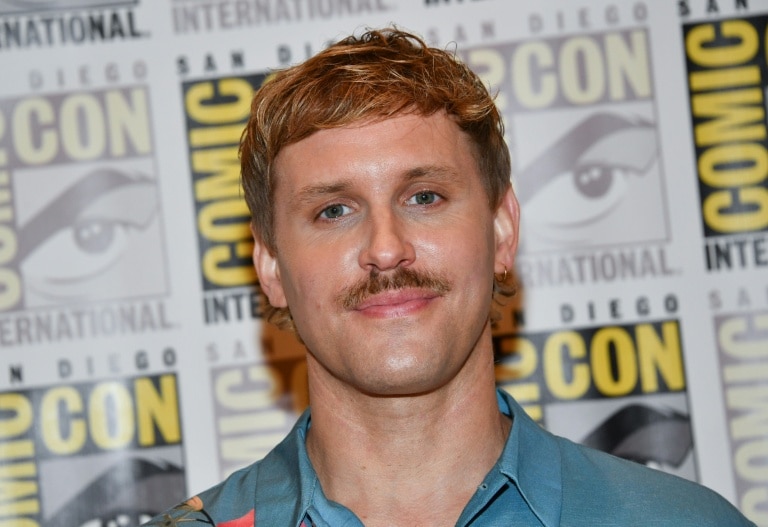
    As the 70th Eurovision Song Contest prepares to crown its 2026 winner in Vienna this Saturday, all eyes are turning to the United Kingdom’s unorthodox representative: inventor and cult musician Sam Battle, better known by his stage name Look Mum No Computer. Where many contestants enter the global competition hungry for a win, Battle brings a laid-back, devil-may-care attitude that defies the typical pressure of Eurovision’s spotlight.

    With bookmakers placing Battle at 150/1 odds of taking home the trophy, the 37-year-old creative says he is fully prepared for any outcome, leaning into the adage that confidence means being comfortable with losing. “It could go well or completely wrong – I’m just here for the ride,” he says. Even in the worst-case scenario of a zero-point finish, he has already leaned into the joke, joking that he’s got a “Look mum, no points” t-shirt ready to go.

    For Battle, Eurovision is far from a make-or-break career milestone. Long before he was tapped to represent the UK, he had built a thriving, eccentric creative career centered on his passion for repurposed audio technology. A cult favorite in experimental electro-pop circles, he is known for building functional synthesisers out of unexpected objects ranging from old bicycles to retro Speak-and-Spell machines. His YouTube channel boasts 700,000 loyal subscribers who tune in to watch his madcap projects: everything from modifying vintage cars to restoring decaying 19th-century church organs, all delivered with the manic, infectious energy that has drawn comparisons to Back to the Future’s eccentric inventor Doc Brown. Off-camera, Battle runs a unique museum in Ramsgate, Kent, dedicated to restoring and exhibiting forgotten vintage audio gear. Just four weeks before the Eurovision grand final, he added a new role to his packed resume: first-time dad to a baby boy named Max.

    What many fans don’t know is that Battle’s Eurovision journey started as a random pub joke with a friend. “We were sitting in a pub saying, wouldn’t it be hilarious if we tried to get into Eurovision?” he recalls. The throwaway joke quickly snowballed: his manager emailed the BBC to ask about the application process, and producers, intrigued by Battle’s one-of-a-kind persona, asked him to submit an original track.

    Battle agreed to join a songwriting writing camp on one non-negotiable condition: he had to be allowed to bring Kosmo, his custom-built synthesiser and drum machine that requires six separate flight cases to transport. It was a casual moment while moving furniture that ultimately gave birth to his entry: a cheeky, 1980s-inspired pop anthem titled *Eins, Zwei, Drei*. As he shifted a sofa to make space for Kosmo, he counted out “Eins, Zwei, Drei” to coordinate the lift – and the team immediately knew they had their song title. Twelve hours later, the track was finished: a playful, high-energy number about quitting a boring office job to take a spontaneous mini-break in Germany. “We all thought it would never get picked,” Battle says. The very next morning, the BBC called to say they loved the track’s zany, unapologetic charm, and after a final audition to confirm he could perform live, Battle was officially named the UK’s 2026 representative.

    During rehearsals in Vienna, Battle’s boundless curiosity for all things mechanical was on full display during a visit to the city’s Museum of Science and Technology, where he wandered through an exhibition of early synthesisers and mechanical instruments like a kid let loose in a candy factory. He impressed museum staff with his deep, encyclopedic knowledge of the obscure gear, pointing out the Mellotron organ that created the iconic texture on The Beatles’ *Strawberry Fields Forever*, and demonstrating the Roland CR-78 drum machine that kicks off Blondie’s *Heart of Glass*. “He’d be a fantastic tour guide – he knows more about these machines than we do,” the museum’s curator said. It took a spontaneous detour to a Eurovision karaoke booth, where Battle ripped through a falsetto version of ABBA’s *Waterloo* and did the full choreography for 2025’s viral hit *Espresso Macchiato*, before the pair could sit down to discuss his upcoming performance.

    Battle is the first to admit he’s no polished Eurovision performer: “I’m literally not a dancer. I’ve got two left feet,” he laughs, but says he’s fully embracing the challenge. His performance, choreographed by Fredrik “Benke” Rydman – the creative mind behind 2024 winner Nemo’s winning staging – leans into Battle’s hyperactive, chaotic energy. The set opens with Battle trapped in the monotony of a soul-crushing office job, before he breaks free and transforms the drab set into a flashing, buzzing electronic carnival, with dancers wearing fur-lined television sets as headgear. Battle built most of the stage props himself, including oversized custom synth panels, drilling hundreds of holes in the process. He had to scrap one idea – adding a real car to the set – when he learned the stage’s glass LED floor had a strict 500kg weight limit for all props.

    Battle is well aware of the UK’s poor recent track record at Eurovision: outside of Sam Ryder’s surprise second-place finish in 2022, the UK has not placed in the top 10 for more than 15 years, and earned exactly zero points in both 2024 and 2025. The BBC, he says, prepared him for the potential public scrutiny that comes with the role, even putting him through a stress test to make sure he could handle the pressure.

    Right now, the only thing keeping him up at night is the fear he’ll trip on stage and embarrass himself. Still, when pressed, he admits there’s a small part of him hoping the audience connects with his unconventional act. “What we’re doing is Marmite – you either love it or hate it – but I think there’s a slot open for our sort of thing,” he says.

    But even if the contest doesn’t go his way, Battle has already lined up his next priority: immediately after the grand final wraps up Saturday night, he’s flying straight home to resume his new favorite job: changing nappies for his newborn son Max. For Sam Battle, no matter what the scoreboard says, Eurovision is already a win.

  • Anas al-Tikriti, British-Iraqi founder of Cordoba, denied entry to Canada

    Anas al-Tikriti, British-Iraqi founder of Cordoba, denied entry to Canada

    A high-profile British-Iraqi interfaith activist was turned away from Canadian soil and detained for 11 hours at Montreal-Pierre Elliott Trudeau International Airport earlier this week, in a move that has sparked intense debate over freedom of speech and political pressure shaping Canadian border policy. Anas al-Tikriti, founder of the London-based Cordoba Foundation, an organization dedicated to fostering cross-cultural dialogue between Western nations and Muslim communities, had been scheduled to address a national convention hosted by the Muslim Association of Canada in Toronto between May 16 and 18 before his entry was blocked. He was ultimately deported back to London following hours of questioning by Canadian border officials. In a formal statement released after his deportation, al-Tikriti described his detention as a prolonged, unfocused process marked by repetitive questioning that mirrored queries he had already completed on his Electronic Travel Authorisation (ETA) application form. Among the repeated questions, he said, was what he called the absurd and demeaning inquiry asking if he had ever been linked to narcotics networks, terrorist organizations or criminal groups. Al-Tikriti added that at no point did officials ask to discuss his planned remarks at the convention, his academic or political views, or the purpose of his visit. When he volunteered to provide additional context or clarification for his travel, the overseeing officer explicitly declined to hear any further information. “It was clear to me within the first three hours that they had no intention of allowing me into Canada, and that the hours that followed were a search for a pretext,” al-Tikriti said in his statement. By the afternoon of his arrival, officials had settled on a justification for the denial: they claimed al-Tikriti had provided false information on his ETA application when he stated he had never been refused a visa by another country, pointing to a 2023 U.S. visa refusal as evidence of the inaccuracy. Al-Tikriti has strongly pushed back on this claim, stating unequivocally that he did not intentionally misstate his travel history on the form. The activist founded the Cordoba Foundation in 2005, and the organization works to build intercultural dialogue and provides strategic and security policy advice to political stakeholders working on Middle East issues. The designation has long been a point of controversy: in 2014, the United Arab Emirates, where al-Tikriti spent his adolescence and early adulthood, labeled the Cordoba Foundation as a terrorist organization – a classification that rights advocates argue is politically motivated. Al-Tikriti has also been targeted by state surveillance in the past: in 2021, forensic analysts confirmed his personal iPhone had been compromised by Pegasus, the powerful military-grade spyware developed by Israeli cybersecurity firm NSO Group, with evidence pointing to the UAE as the actor behind the hack. The Muslim Association of Britain has publicly linked the Canadian decision to ongoing political pressure around the Israel-Palestine conflict, arguing the entry ban was pushed by bad-faith actors seeking to silence public criticism of Israel’s military campaign in Gaza, which critics have labeled a genocide. The organization added that the incident raises serious, troubling questions about the state of free speech in Canada, and the growing trend of targeting activists who publicly advocate for Palestinian human rights. Al-Tikriti echoed that sentiment in his statement, saying he would have respected Canadian authorities more if they had been transparent about the real reason for his denial. “I would, frankly, have had more respect for the Canadian immigration authorities had they simply said so. That they were under pressure not to admit me,” he said. “That my views on Palestine were unacceptable to them. That my criticism of Israel’s crimes against humanity was intolerable.”