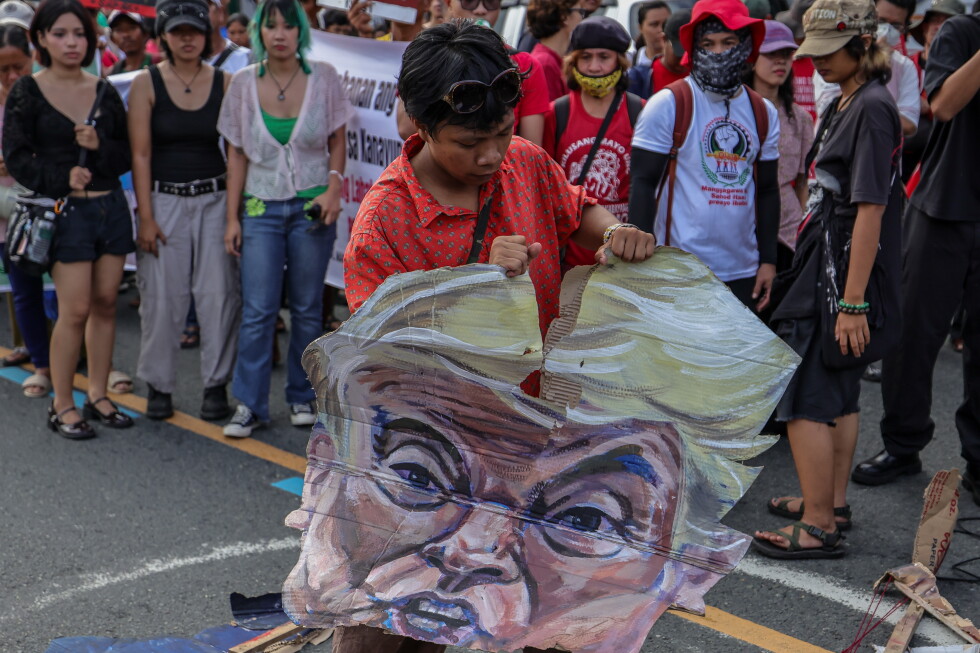
MANILA, Philippines — Philippine President Ferdinand Marcos Jr. is set to deliver his annual State of the Nation Address on Monday, stepping onto the national stage against a turbulent backdrop of overlapping political crises that have shaken his administration over the past year. The event, held at the House of Representatives in suburban Quezon City, will mark Marcos Jr.’s penultimate annual address before his six-year presidential term concludes in mid-2028, with over 23,000 Philippine National Police personnel deployed to secure the venue and surrounding areas. Key routes leading to Malacañang Palace, the official presidential residence in Manila, have been blocked with barbed wire barricades and riot police detachments to head off planned protests by disaffected groups. The expanded security measures come after two separate explosive-related incidents in the capital raised threat levels ahead of the address. A small improvised explosive device detonated before dawn Monday near the gate of the Philippine Department of Justice in Manila, causing no casualties and only minor structural damage. In a separate incident, unassembled bomb components were discovered near the Senate complex in suburban Pasay City, according to national police chief Gen. Jose Melencio Nartatez Jr., who told reporters the discovery was apparently intended “only to sow terror or fear” among the public ahead of the major national event. Beyond security threats, Marcos Jr. faces significant political headwinds as he prepares to speak to the nation. A massive corruption scandal first exposed by the president himself in last year’s State of the Nation Address has now ensnared several of his closest political allies, igniting public anger and calls for deeper accountability. During his 2023 address, Marcos Jr. delivered a sharp rebuke of systemic graft in national flood-control infrastructure projects, as the country was still recovering from catastrophic flooding and landslides that left dozens dead and displaced more than 200,000 residents across the archipelago. Subsequent joint investigations launched by the government and Congress have linked dozens of sitting and former House and Senate members, as well as public works engineers and senior government officials, to the scheme, where the co-conspirators allegedly siphoned off millions in kickbacks from contracted projects. Revelations of the conspirators’ lavish lifestyles, including fleets of private jets and high-end European luxury vehicles, sparked widespread public outrage and mass street protests earlier this year. To date, one sitting and one former member of the 24-seat Philippine Senate have been indicted and taken into custody on corruption charges tied to the scandal. A former House representative identified as a leading suspect has fled the country for Europe. Former Public Works Secretary Manuel Bonoan, who served in Marcos Jr.’s cabinet, has denied any wrongdoing but remains in hospital detention after being formally charged in the case. Despite the progress in investigations, many Filipino activists and political observers have pushed for faster prosecution of high-profile figures implicated in the scandal. Critics have repeatedly questioned why former House Speaker Martin Romualdez, Marcos Jr.’s cousin and one of his most influential political allies who has denied any connection to the graft, has not been charged to date. Marcos Jr. has repeatedly pledged that no individual, regardless of their political ties to his administration, will escape prosecution if evidence of wrongdoing exists. “We have done enough because we’re not done yet,” Marcos Jr. said of the ongoing investigation in recent comments. “Unfortunately, the more we look, the more we find.” Adding to the president’s political challenges is the ongoing impeachment trial of Vice President Sara Duterte, Marcos Jr.’s former political ally who is now estranged from the administration. Duterte faces multiple impeachment charges, including allegations of corruption and threats against the sitting president, with the trial formally opened by the Philippine Senate earlier this month. On the policy front, Marcos Jr. is expected to use his address to outline new government initiatives designed to cushion the Philippine economy from global market volatility stemming from the renewed armed conflict in Iran. Back in March, as hostilities intensified in the Middle East, Marcos Jr. declared a one-year national energy emergency to ensure stable supplies of fuel, food, and key agricultural commodities, while enacting new measures to crack down on price gouging and hoarding of essential goods.
作者: admin
-
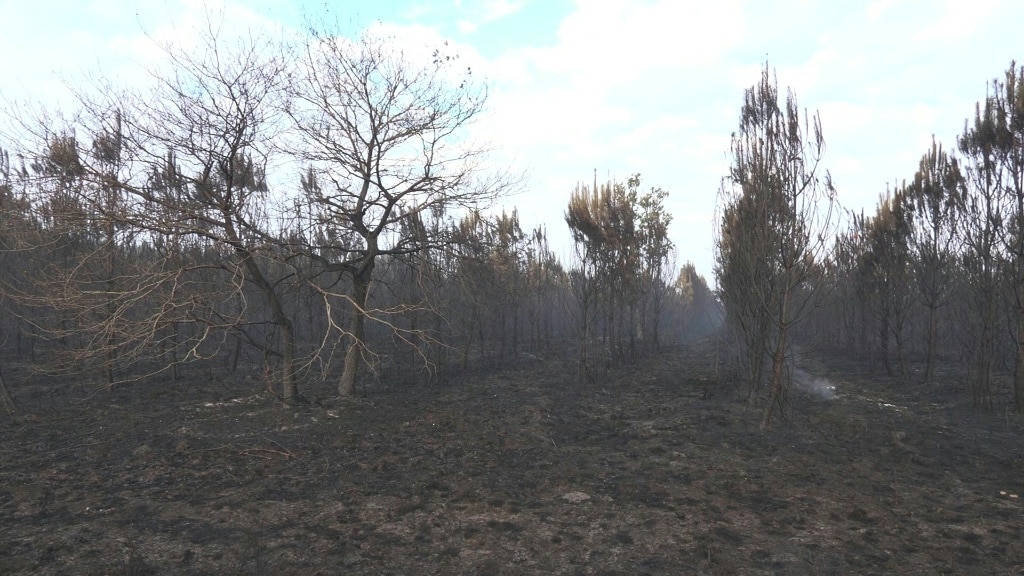
France, Spain race to contain ‘monster’ fires ahead of new heatwave
As emergency shelters across France and Spain hit overflow capacity on Monday, thousands of exhausted local residents and summer tourists face displacement from some of the most devastating wildfires the region has seen in decades — blazes so extreme they are generating their own weather patterns, with a new record-breaking heatwave already forecast to arrive in the coming days.
The infernos are tearing through parched forest landscapes: one in southwest France surrounding Bordeaux’s world-famous wine-growing region, and a second cluster burning across central Spain near the capital Madrid. The outbreak has struck at the peak of the Northern Hemisphere summer travel season, upending hundreds of thousands of lives and devastating vast swathes of protected woodland.
To date, more than 325,000 people have been forced to evacuate their homes and vacation accommodations. The fires spread rapidly fueled by vegetation left tinder-dry by back-to-back heatwaves and near-total lack of rainfall across the region since May.
Speaking from a closed highway in the Madrid region, 50-year-old Olga Congacha, a resident of the locked-down village of Robledo de Chavela, described the chaotic evacuation. “Everyone had to get out of the village quickly — it was a critical situation and people were scared. My husband and I left with all that we could grab: our important documents and some clothes,” she told Agence France-Presse.
In France, the scale of the blazes has spawned an unprecedented meteorological phenomenon for the country: pyrocumulonimbus clouds, giant fire-generated storm clouds that produce their own powerful winds, lightning strikes, and in some cases tornadoes, all of which can spark new secondary blazes. Eric Brocardi, spokesperson for France’s National Firefighters Federation, called the battle a classic “David-versus-Goliath” scenario, adding that crews were working to identify a vulnerable weak point in the fire’s perimeter to launch a coordinated counterattack.
Thousands of frontline firefighters, supported by a fleet of specialized water-bombing aircraft, have been working around the clock to contain the flames and clear toxic smoke that has blanketed residential and tourist areas. French President Emmanuel Macron convened an emergency crisis cabinet meeting on Monday to coordinate the national response, while Spanish Prime Minister Pedro Sánchez traveled to a newly burned area in eastern Spain’s Valencia region, where crews are battling a fresh outbreak.
Spain’s civil protection chief, Virginia Barcones, described the massive wildfire burning near Avila as a “monster” in comments Sunday to state broadcaster TVE. “We are dealing with a perimeter of 280 kilometres encompassing 77,000 hectares (190,000 acres),” she said.
Climate scientists have long warned that human-caused climate change is increasing both the frequency and intensity of extreme heat events and wildfire risk across southern Europe. In France’s Gironde department, the epicenter of the country’s blazes, regional prefects have urged all non-resident tourists to avoid the area entirely and seek alternate summer destinations. “The wind is changing so much, it’s really the fire calling the shots,” one frontline firefighter told reporters.
Since Wednesday alone, the Gironde fire has ravaged more than 42,000 hectares of land — an area seven times larger than the island of Manhattan. Around 220,000 people have been evacuated from the region, 45 seasonal campsites have been forced to close, and an estimated 40,000 summer tourists have had their vacation plans ruined. An additional 30,000 people have been displaced by blazes in other French regions. As of early Monday, local Gironde authorities reported the fire remained “broadly stable” after overnight containment efforts.
In Saint-Jean-d’Illac, one of the villages at the edge of the fire zone, Georges Clivaz refused to evacuate despite an official evacuation order issued Friday. Holding a garden hose to spray down the perimeter of his property a few kilometers from the active blaze, Clivaz said he and his family were staying to protect their home. “We’re doing this to slow down the fire’s advance; we want to save our homes,” he told AFP. “But the firefighters are telling us that in two or three hours the fire will be here.”
Weather forecasters have confirmed a new heatwave will descend on parts of France starting Tuesday, with temperatures forecast to hit 40 degrees Celsius (104 degrees Fahrenheit) in some affected areas. Across Spain, a total of 75,000 residents have been evacuated across the Madrid region, Avila, Toledo, and Castellon in eastern Valencia. On Monday, authorities reported the main fire was still “not yet under control,” but noted enough progress had been made to reopen one evacuated campsite that held 4,500 people and allow elderly residents to return to their homes in another low-risk area, should conditions hold.
Officials added that shifting winds were currently pushing wildfires near Madrid southward, away from the capital, but the blaze’s path has forced additional evacuations of small villages in its trajectory. To date, the blazes have claimed three lives: one civilian fatality near Valencia on Saturday, and two French firefighters killed near Bordeaux earlier this week.
-
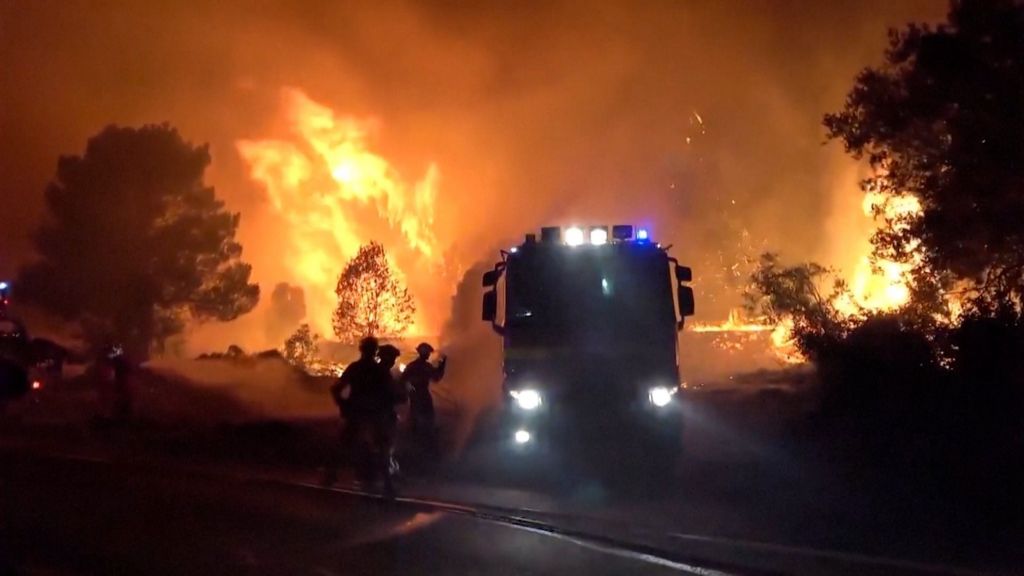
Military unit fights intense flames west of Madrid
A rapidly spreading wildfire is currently raging across the western region of Madrid, Spain, prompting emergency authorities to deploy military units to contain the intense blaze. As the situation remains fluid and continues to develop, news outlets are providing real-time live updates to keep the public informed of changing conditions, evacuation orders, and containment efforts. The wildfire, which has already consumed large swathes of vegetation, is fanned by high temperatures and dry winds that are common in Spain’s summer fire season, creating significant challenges for first responders. This ongoing emergency adds to a growing pattern of more intense and frequent wildfires across the Mediterranean region, linked to rising global temperatures and prolonged drought conditions. Local authorities have urged residents in affected and at-risk zones to follow all official safety guidance and remain vigilant as fire crews work to stop the fire’s advance. As this story continues to evolve, new details on containment progress, structural damage, and community impacts are being released continually through live update channels.
-
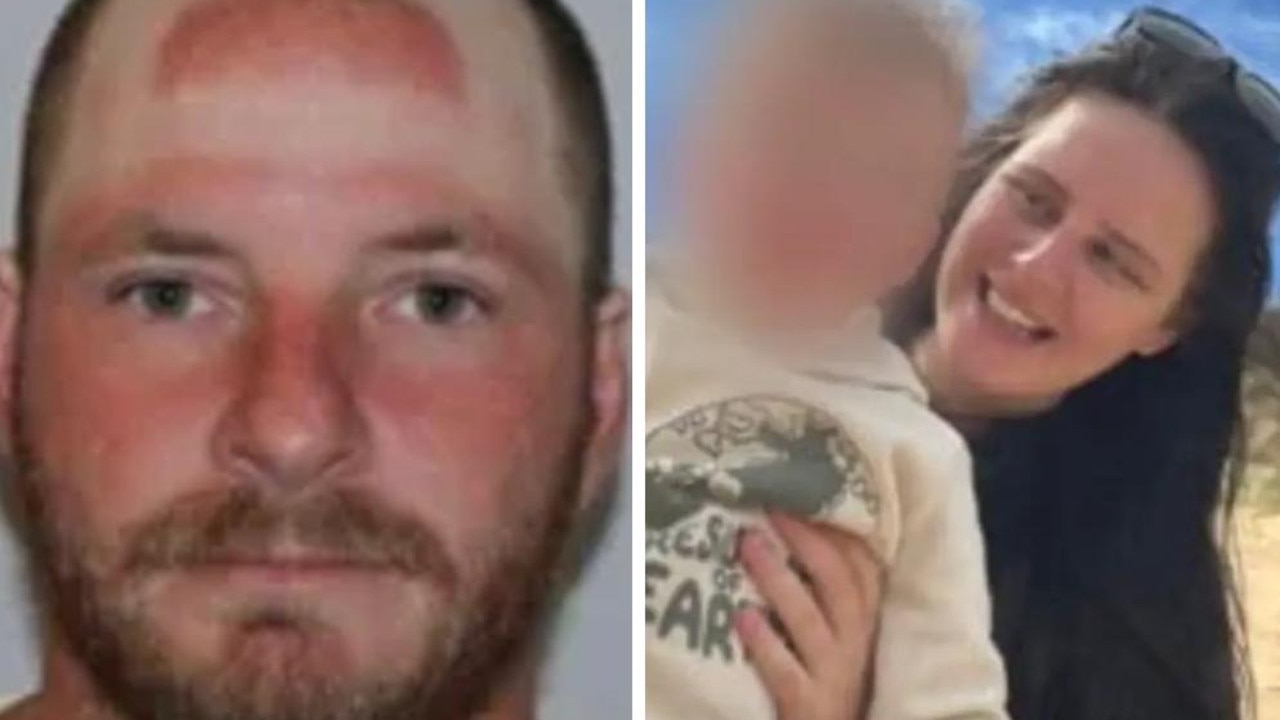
Jorden Turney: Man charged with murder of woman, 29, sobs and calls for ‘justice’ in court
A fatal domestic violence incident in suburban Melbourne has led to an emotional first court appearance for the man accused of killing his partner, 29-year-old Brooke Timmins. The tragedy unfolded on Sunday evening, when emergency responders were dispatched to a residential address on Generation Drive in Clyde North just after 6:30 p.m. following reports of a violent incident. At the scene, first responders found Timmins with severe, life-threatening injuries, and rushed her to a nearby hospital for urgent medical intervention. Despite medical teams’ best efforts, she could not be saved and was pronounced dead shortly after arrival.
Victoria Police confirmed that a 32-year-old man, who was already known to the victim and identified as her partner, was taken into custody directly at the scene without resistance. The next day, on Monday morning, the accused, Jorden Turney, appeared before Melbourne Magistrates Court for his initial filing hearing, where his visible emotional distress became the central focus of the proceedings.
Flanked by two custody officers and dressed in a plain blue t-shirt, Turney was observed wiping tears from his eyes with a tissue, his face flushed with emotion as he openly sobbed through the early stages of the hearing. Court observers noted he took repeated deep, steadying breaths and nodded along as procedural details of the case were read out. His legal representation submitted an additional request during the hearing: asking that Turney be evaluated by a custody nurse, citing a pre-existing documented history of psychiatric illness that requires ongoing monitoring.
Prosecutors, acting on behalf of Victoria Police, requested an extended period to prepare the full case against Turney. They explained that the extension was necessary to allow time for complex forensic testing and full analysis of digital evidence extracted from mobile devices, two processes that are expected to take longer than standard case preparation timelines.
Magistrate Vincenzo Caltabiano granted the remand order, remanding Turney into official custody until his next scheduled court appearance on November 30. Before being led out of the courtroom, Turney addressed the magistrate directly, thanking him and adding a public statement: “Make sure you bring this case to justice.” The incident has renewed quiet attention to domestic violence fatalities in the state of Victoria, with police yet to release further details about the circumstances leading up to Timmins’ death as investigations remain ongoing.
-

Rapper Yung Filly tells trial ‘vibes were good’ with woman who accuses him of rape
A high-profile UK entertainer and rapper has taken the witness stand in an Australian courtroom to push back against serious sexual and physical assault charges laid against him, telling the court that interactions with his accuser were always consensual and friendly.
Andres Felipe Valencia Barrientos, professionally known as Yung Filly, appeared at the District Court of Western Australia on Monday, one week into his ongoing trial. The 30-year-old creator is facing a total of 10 charges: six counts of non-consensual sexual penetration, three counts of assault causing bodily harm, and one count of strangulation. He has entered a firm not guilty plea to every count.
The allegations center on an incident that prosecutors say unfolded in September 2024, shortly after Barrientos performed at a nightclub in Hillarys, a coastal Perth suburb. The accuser, who was 20 years old at the time of the alleged incident, claims she was assaulted by Barrientos in his hotel room after the show. The court previously heard the accuser’s account that the pair first had consensual sexual activity before Barrientos became violent and ignored repeated requests to stop, according to earlier testimony.
Taking the stand on Monday, Barrientos laid out his own version of events, telling the court he had felt a mutual attraction to the woman when they first met at the concert venue. He recalled that he was in the venue’s VIP section, and the woman approached the barrier separating VIP from general admission to speak with him. He admitted to placing a hand on her waist during that initial interaction, but denied any inappropriate touching. Under questioning, he explicitly refuted the accuser’s claims that he touched her breast and digitally penetrated her without consent at the venue.
When the pair moved to his hotel after the performance, Barrientos told the court, the atmosphere between them remained entirely positive. “The vibes were good,” he told the court, repeating the phrase that has become a focal point of his testimony. Addressing the detail that his security team confiscated the woman’s phone upon entry to the hotel, Barrientos called the move a standard operating procedure for him when meeting fans privately, implemented to protect his personal privacy.
Beyond his music career, Barrientos has built a massive following through digital content and mainstream UK media. He is a prominent member of the popular YouTube creator collective Beta Squad, has appeared on Channel 4’s celebrity edition of *The Great British Bake Off*, and hosted original series for BBC Three. Across his social media platforms, he boasts a combined audience of more than 7 million followers: 1.8 million on YouTube, 3 million on TikTok, and 2.4 million on Instagram.
Following his charging in the case, Barrientos was released on bail. He was granted permission to return to his home in the UK shortly after his initial court appearance, where he remained for four months before traveling back to Western Australia to appear for the start of his trial. The trial is ongoing as the court hears evidence from both sides.
-

AFL 2026: Carlton small forward Talor Byrne wins Round 20 Rising Star nomination
Off the Australian Football League pitch, Carlton’s breakout young talent Talor Byrne is quiet and unassuming; once he steps between the lines, however, his electric energy and old-school country work ethic have quickly made him the most exciting emerging piece of the club’s future. The 19-year-old small forward has earned this week’s prestigious AFL Rising Star nomination, capping off a standout three-goal performance that powered Carlton past the Gold Coast Suns at Melbourne’s Marvel Stadium last Saturday. When he arrived at the club at the start of the 2024 season, the Blues’ forward group was struggling through a disjointed, underperforming opening stretch—flat in front of goal, disconnected in build-up play, and failing to deliver consistent pressure on opposing defenses. Byrne’s arrival into the starting rotation has completely shifted that dynamic, injecting new life and urgent energy into an attack that sorely needed it. True to his grounded, country roots, Byrne has brushed off individual praise, staying focused on team success rather than personal accolades. When asked who he had first shared his Rising Star nomination news with, the young forward laughed and admitted he had yet to alert any of his family or close friends, adding with characteristic humility that he “should probably tell them soon.” For Byrne, the path to the AFL was not a straight, smooth line. Before being drafted by Carlton, he faced a period of self-doubt that nearly derailed his dreams of professional football. During his final underage season, Byrne lost confidence in his game and struggled to find the joy that first drew him to the sport. Rather than pushing through the slump at the elite underage level alone, he stepped back to split game time between the GWV Rebels youth academy and his local country club, where coach Chris McLaren helped him rediscover his love for the game. “I wasn’t playing very good footy at the end of my bottom age year, so I was just doubting myself sort of thing,” Byrne explained in an interview following his nomination. “My local coach was unreal for me, he sort of just helped me along there and just made me enjoy my footy again. In the pre-season I just had to lock in and give it a red-hot crack and I guess that’s why I am here now.” That dedicated, no-nonsense approach paid off: Carlton selected Byrne with the 45th pick in the 2023 AFL National Draft, and he relocated to Melbourne to join the club, initially moving into a home shared with Carlton star midfielder and former Rising Star winner Sam Walsh. Walsh stepped into multiple roles for the young draftee: teammate, mentor, friend, and even landlord, hosting Byrne for far longer than originally planned when the young rookie’s search for a permanent group house hit delays. To thank Walsh for his support, Byrne gave his star teammate a generous departing gift: a full slab of premium steaks from his cousin’s butcher shop at Midfield Meats. “He was great showing me the ropes, getting to know everyone and even him as a person – I didn’t really know him,” Byrne said of Walsh. “He had me for a lot longer than he probably expected because it took us a bit longer to find a house. He was great for the start of my career.” Today, Byrne shares a home with three other young Carlton players: Billy Wilson, Flynn Young and Harry Dean. When ranking his housemates, Byrne put Young at the top of the leaderboard for his cooking and cleaning skills, noting that Young “cooks and loves going in his little cleaning modes” while the rest of the group are far less consistent around the house. He and Dean, however, share a habit of unpredictable late-night energy bursts, where the pair run around the house to burn off excess energy before bed— a silly ritual that keeps the young group grounded through the pressure of first-year AFL football. With his Rising Star nomination, Byrne has cemented his status as one of the most promising young talents in the league, and his combination of humble off-field demeanor and explosive on-field output has already made him a fan favorite at Carlton, as the club looks to build a competitive future around its emerging core of young talent.
-
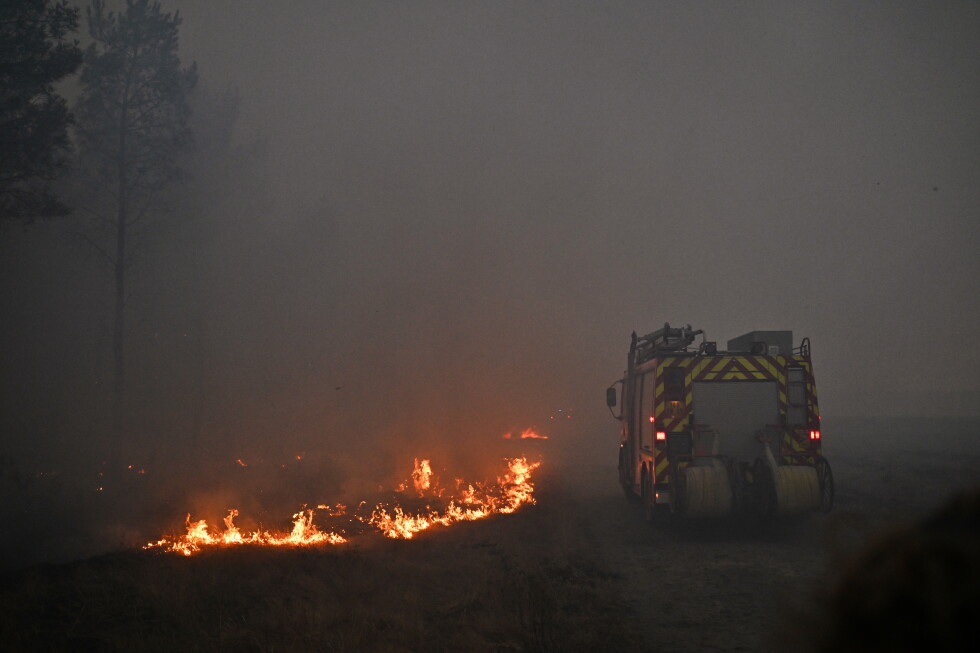
Macron calls crisis meeting as monster wildfires drive 250,000 from their homes
Across southwestern France and central Spain, catastrophic uncontrolled wildfires have triggered mass displacement of hundreds of thousands of residents and tourists, prompting emergency government action amid fragile early signs of progress in containing the blazes.
On France’s Gironde coast, where flames have already charred a swathe of land four times the total area of Paris, local authorities reported a tentative shift in the crisis on Monday: after days of relentless advance that pushed the fire line closer to the major wine hub of Bordeaux, the overnight situation held “globally stable.” The spread of the region’s massive blaze, which has burned for more than a week, has slowed enough that no additional evacuation orders were issued, offering a first glimmer of hope for overwhelmed firefighting teams.
That hope remains fragile, however. With France poised to enter its peak August summer tourist season, Gironde officials have enacted strict new measures to keep people out of high-risk zones, banning all holiday camp operations for children and people with disabilities. Thousands of ground firefighters and a fleet of air tankers dropping water and fire retardant are locked in a race against time: forecasters predict a sharp spike in temperatures starting Tuesday that will create drier, windier conditions far more favorable to flame spread.
In response to the escalating crisis, French President Emmanuel Macron called an emergency high-level meeting for Monday morning to coordinate the national response. Over the weekend, Macron posted a public pledge on social media platform X promising long-term backing for communities devastated by the blazes, writing: “We will rebuild, we will repair and we will be present for as long as necessary.”
The wildfire emergency is not isolated to France. Neighboring Spain is also fighting fast-moving blazes across multiple regions, including uncontrolled burns in areas surrounding the capital Madrid and new evacuation orders issued Sunday in the eastern Valencia region. The Spanish government confirmed that 76,000 people have already been evacuated from at-risk areas, with an additional 30,000 people ordered to remain confined in their homes to avoid exposure to smoke and advancing flames.
For evacuees on both sides of the border, the uncertainty lingers: many have no idea if their homes will still stand when they are allowed to return. Rocío Domínguez, who fled her hometown of Chapinería west of Madrid alongside her dog Simba, described the scene as she left as apocalyptic. “You couldn’t see anything. Everything was covered in ash,” she said. “We don’t know when we get to the town, if we’ll have half the house burned down or we’ll have it intact or we won’t have a house. All the clothes, all the memories, everything.”
-
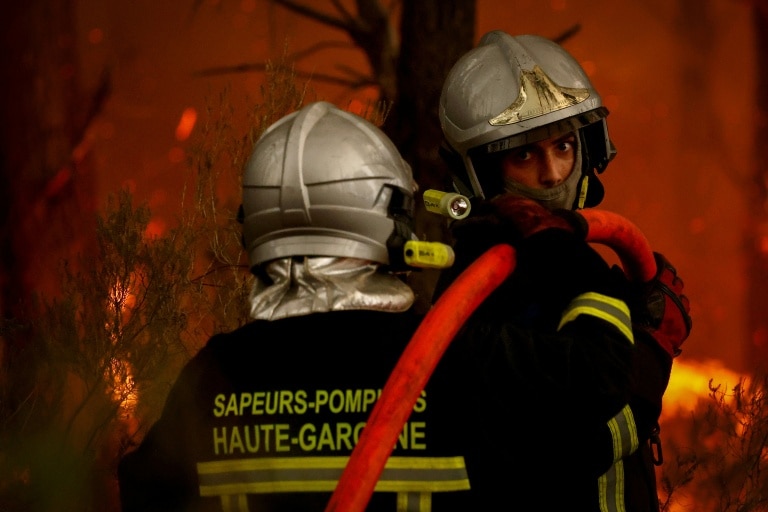
Fires in Europe: latest developments
As record-breaking wildfires continue to sweep across multiple Western European nations, emergency authorities are racing to contain rapidly spreading blazes that have already scorched hundreds of thousands of hectares of land, forced mass evacuations and triggered unprecedented national emergency responses on Monday.
In southwestern France’s Gironde region, the epicenter of the country’s most destructive fire season on record, local officials reported that the large blaze burning near Bordeaux remained largely stable through overnight operations, though no major progress in full containment had been achieved as of Monday morning. “At this stage, the situation remained stable overall overnight, without any major developments,” the Gironde prefecture shared in an official media update. In a proactive precautionary move, local regulators implemented an immediate ban on all overnight holiday camps across the region, including planned Scout excursions and recreational camps for people with disabilities, to prevent avoidable risk to visitors.
French Interior Minister Laurent Nunez confirmed Sunday that the 2026 wildfire season has already far outstripped any previous year in scale, with an estimated 115,000 hectares (284,000 acres) of land burned across the country since January. The nation is currently battling between 30 and 40 active wildfires daily, with the most dangerous conditions concentrated in southwestern Gironde and Landes, as well as the Mediterranean coastal Var region. To date, more than 2,500 firefighters (including a specialized contingent from Switzerland), 1,500 military personnel and 1,200 police officers have been deployed to reinforce containment efforts in Gironde alone.
In a development that marks a new milestone for France’s wildfire crisis, the National Firefighters Federation of France (FNSPF) confirmed that the massive Gironde blaze has spawned a rare, dangerous weather phenomenon never before recorded in the country: a pyrocumulonimbus, or “fire cloud.” Formed when intense wildfire heat superheats near-ground air, causing it to rise rapidly and condense into a turbulent storm cloud, pyrocumulonimbus clouds can generate their own independent wind patterns that often accelerate fire spread and make containment far more difficult.
French President Emmanuel Macron has called an emergency cabinet crisis meeting for Monday morning to coordinate the national response to the ongoing blazes, the Élysée Palace confirmed. Local officials have warned that the more than 220,000 residents and tourists evacuated from high-risk Gironde areas will not be allowed to return home until the main blaze is fully under control. “I urge tourists not to come, not to travel to the Gironde,” Gironde Prefect Sophie Brocas stated Sunday. All non-essential public and private operations were suspended in affected towns on Monday, with officials bracing for a potential worsening of conditions on Tuesday as temperatures are forecast to rise across the region.
The wildfire crisis is not isolated to France. On Italy’s southern Adriatic coast, the Italian Coast Guard announced Sunday that more than 400 people had already been evacuated by sea as wildfires advanced on coastal communities, with hundreds more additional evacuations planned through the day.
In Spain, the wildfires burning across central regions surrounding the capital Madrid have already become the largest forest fire event in the country’s recent modern history, Ecological Transition Minister Sara Aagesen told reporters. The blazes have burned approximately 77,000 hectares across the Madrid, Avila and Toledo regions, with the largest burned area concentrated around Avila.
During a visit to an evacuation shelter, Spanish King Felipe VI emphasized that the ongoing fires have caused “incalculable” damage to the nation’s irreplaceable natural heritage. Prime Minister Pedro Sanchez, who toured the fire zone west of Madrid over the weekend, warned that “difficult hours lie ahead” despite small, positive signs of progress in containing the largest blazes. Sanchez is scheduled to visit fire-affected regions in Valencia on Monday to assess damage and meet with first responders.
-
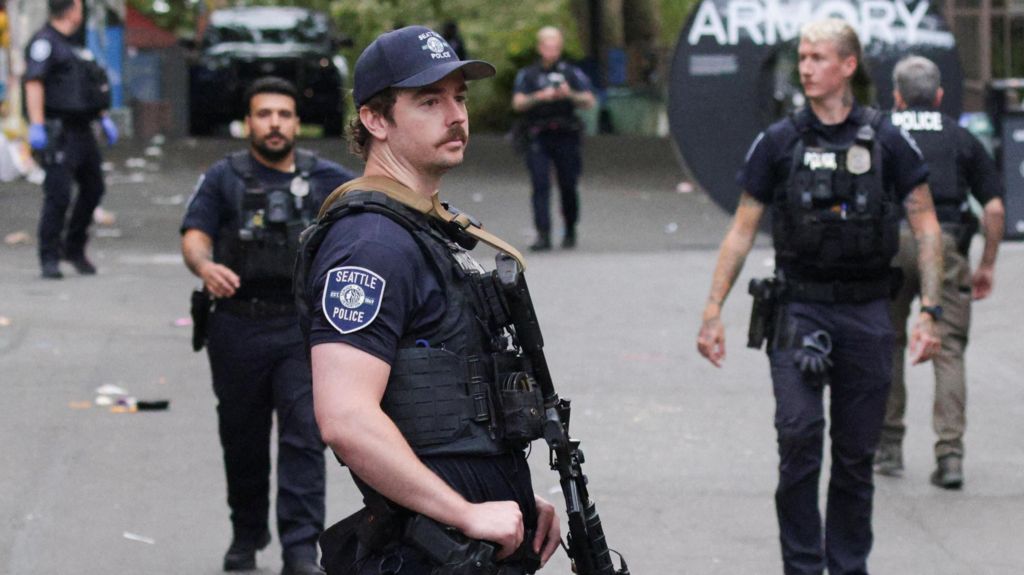
Three dead and five injured in shooting at food festival near Seattle’s Space Needle
On a Sunday evening in July, a violent mass shooting shattered the calm of a popular annual food festival at Seattle Center, steps from the city’s iconic Space Needle, leaving three people dead and five others wounded, according to official updates from the Seattle Fire Department. The gunfire erupted at approximately 6:00 PM local time, in the middle of the weekend-long Bite of Seattle food festival, an event that draws thousands of attendees each year to sample local cuisine and celebrate community connection.
Officials initially confirmed two fatalities at the scene of the attack, with a third victim succumbing to their injuries after being transported to a local hospital. Among the five injured survivors are a two-year-old toddler and a 56-year-old woman, the Seattle Fire Department confirmed. Four of the injured were admitted to area hospitals in stable condition, while the fifth victim declined medical transport and treatment. Multiple videos circulated on social media in the immediate aftermath captured the chaos of the moment, showing hundreds of festival attendees scrambling for shelter inside the Space Needle’s lobby. Footage shows visitors crouching behind concrete pillars and display shelves to avoid stray gunfire, as panic spread through the crowded venue.
Seattle Mayor Katie Wilson confirmed in an official statement that one suspect has been taken into custody by responding law enforcement officers. Wilson initially issued an update saying two suspects had been apprehended, before correcting her statement later Sunday evening to clarify only one suspect is in custody. The Seattle Police Department has launched a full ongoing investigation into the attack, and has issued a public appeal for residents and visitors to avoid the Seattle Center area while investigative work continues.
In the wake of the tragedy, local and state leaders have united to condemn the attack as an act of senseless, horrific violence, and have offered condolences to the families of the victims. Washington Governor Bob Ferguson shared his sympathies via social media, writing, “My prayers are with the families of the victims, and the responders as they work to keep people safe.” Seattle’s U.S. Representative Pramila Jayapal also released a statement expressing her grief, saying, “Our hearts go out to all those impacted by this senseless violence. We are in close touch with Seattle Mayor Katie Wilson and Governor Bob Ferguson, and co-ordinating across multiple levels of government to get updates on the situation.”
Mayor Wilson echoed that condemnation, reflecting on the senseless loss of life at an event meant to bring the community together. “Impacted families are living through the worst moment of their lives, and an entire community is trying to understand how a gathering built around culture, connection, and joy ended in gunfire,” she said. “Tonight, our attention belongs to the people whose lives were taken, those fighting to recover, and the families beside them. Seattle grieves with you, and we will stand with you in the difficult days ahead.”
Witnesses who were at the festival described the immediate aftermath of the shooting as a scene of sheer terror and chaos. One attendee told local media the situation was “pure chaos” after the first shots rang out, with crowds stampeding toward exits to escape the gunfire. As a mark of respect for the victims, the American flag flying atop the Space Needle has been lowered to half-mast.
-

‘This is just the start’: India’s Gen Z protesters force out a minister, but what next?
Over Narendra Modi’s 12-year tenure as India’s prime minister, only one cabinet minister had stepped down from office before 2026 — forced out over sexual misconduct allegations. That makes the July 26 resignation of Education Minister Dharmendra Pradhan, coming after more than a week of widespread mass demonstrations across major Indian cities, a watershed moment for Indian politics, and a victory widely celebrated by the country’s largest-in-the-world generation of young people. For many young activists, the win marks the first time they have seen grassroots protest force change under Modi’s administration.
“We grew up learning in textbooks about how critical dissent is to a functioning democracy, but I never saw that play out in real life around me over the Modi years,” explained 22-year-old Delhi-based student activist Sakhi, one of the movement’s prominent digital organizers. “This time, for the first time, it felt like we actually could make things happen through collective protest.”
Within minutes of Pradhan’s announcement, an old clip of a senior ruling party minister claiming “resignations do not happen in our government” went viral across social media, a testament to the growing confidence of the youth-led movement that secured his ouster. Sakhi, who has become a leading voice for the movement on Instagram, told reporters that the government failed to anticipate the scale of the protests because it was completely out of touch with how young organizers use digital platforms. While the administration maintains tight control over traditional mainstream media and major platforms including Facebook and WhatsApp, Sakhi said it overlooked Instagram as a space for grassroots organizing. She has posted millions-viewed content documenting police brutality, detentions of protestors, and satirical reels mocking law enforcement, building widespread public support for the movement.
The unrest that led to Pradhan’s resignation traces back to May, when India’s national medical entrance examination, the NEET, was canceled after a widespread question paper leak. The cancellation forced nearly 2 million aspirational medical students to retake the high-stakes test, a disruption that upended years of preparation for many young people. In the wake of the scandal, more than 20 affected students died by suicide, with their families blaming government negligence for the tragedy.
Public anger over the leak was organized into a formal movement by the satirical Cockroach Janta Party (CJP), an online activist group launched after India’s chief justice compared unemployed job seekers holding “fake and bogus degrees” to cockroaches. CJP organizers launched a sit-in protest in central Delhi, demanding three core demands: Pradhan’s resignation, sweeping national education reform, and financial compensation for the families of the students who died by suicide after the leak.
The movement grew slowly at first, but a turning point came on July 18, when Delhi police forcibly removed prominent hunger-striking educator Sonam Wangchuk from the protest site and hospitalized him. Two days later, tens of thousands of protestors responded to CJP’s call to march on India’s parliament in New Delhi, triggering a harsh police crackdown. Footage of baton charges, tear gas deployment, and pellet gun use against peaceful demonstrators spread rapidly across social media, amplifying public anger and drawing thousands more new participants to the movement across the country rather than suppressing dissent.
As momentum grew, the wave of discontent and young people’s new willingness to take to the streets spread from Delhi to cities across India. In Mumbai, 26-year-old activist Somaya Korde was detained at her home after sharing online calls for a July 20 protest, but she still joined multiple demonstrations after her release. For Korde, the first woman in her historically socially and economically disadvantaged community to earn a law degree and a recent candidate in local civic elections, Pradhan’s resignation is far from the end of the movement.
“This is just the beginning,” Korde said in an interview. “This is the first time many of us in this generation have stepped out to protest publicly, but there are far larger systemic issues we need to address, and we will keep raising them.” Korde explained that she, like millions of young Indians, saw education as the guaranteed path out of poverty and into a better life — but the NEET leak destroyed her faith in a system that promises hard work will be rewarded. “Schools and universities are being rapidly privatized, high-stakes exam leaks keep happening, and even after you graduate, there are almost no decent jobs available,” she said. “In a democracy, that demands the government be held accountable.”
Korde’s frustration reflects a broader national crisis among Indian youth. India is home to the largest youth population in the world, but official government data shows youth unemployment between the ages of 15 and 29 rose to 16.2% in June 2026, up from 13.8% one year prior. A 2026 study from Azim Premji University underscores the scale of the crisis: fewer than 7% of young Indian job seekers secure permanent salaried employment within a year of graduation, and fewer than 4% land stable white-collar jobs.
The protests have become a unifying moment for young Indians to set aside long-held caution and voice their accumulated frustration with the status quo. Among them is 18-year-old Harshvardhan Kadam from Mumbai, who took a part-time job selling laptops after finishing high school to support his mother following his father’s death in 2025. On July 23, a 15-second Instagram reel Kadam filmed while being detained by police during a protest march went viral, racking up more than 10 million views. In the clip, a police constable can be heard threatening to plant illegal drugs on Kadam to frame him for a crime. The constable was formally suspended from duty after the video spread.
“I never wanted him to lose his job,” Kadam told reporters. “I just wanted to document how police treat people for joining a peaceful protest.” Reflecting on Pradhan’s resignation, Kadam said the victory has changed how young people view their own power. “This is just the start. It shows that next time we raise our voices, the government will be scared of us.”
For many long-time activists who had grown disillusioned with the lack of change under Modi’s administration, the movement has restored lost hope. Swaraj Priyo, a 29-year-old screenwriter from Guwahati who has participated in protests for years, said: “This movement has brought back the space for questioning and dissent, and reminded us that the fight isn’t over.”
Across protest sites, a growing sense that the Modi government is now on the defensive is palpable. Posters now read: “Pradhan was just the example. Next it’s Modi’s turn.” But alongside this new confidence, many activists also share deep apprehension about future retaliation.
Varuni Poorva, a 30-year-old aspiring professor from Patna who has been a student activist for nearly a decade, said Pradhan’s resignation proves the Modi government can be pressured into making concessions. But she has already sought anticipatory bail from courts to avoid arbitrary arrest, and worries about a coming witch hunt against movement organizers — despite the government’s public pledge not to retaliate against protest participants. To date, police have charged more than 100 protestors with serious offenses including attempted murder, and have arrested more than 40 organizers and participants.
Human Rights Watch has documented that under Modi’s administration, Indian authorities have routinely prosecuted activists, journalists, and peaceful protestors using fabricated counterterrorism and hate speech laws. Even with widespread fears of a coming crackdown — fears shared by many protestors’ parents — activists say the movement has already given Indian youth a new sense of political power that cannot be undone. With the core economic and systemic frustrations that sparked the protests still unresolved, activists say it will be impossible for the government to simply return to business as usual.
As graffiti scrawled on a wall at a Delhi protest site puts it: “We do not have jobs. If you wipe this out, we will come back tomorrow.”