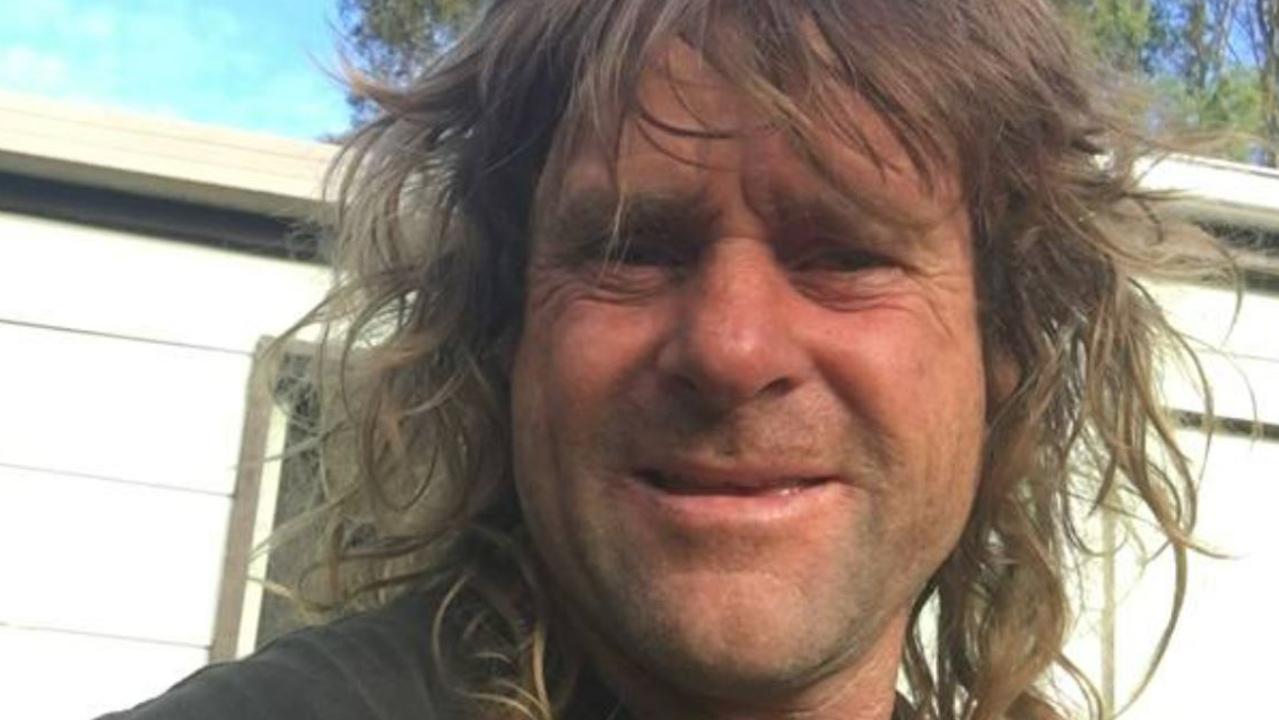
A self-appointed vigilante who killed a man based on unproven child abuse rumors has lost his legal bid to overturn his murder conviction and life sentence, after Victoria’s Court of Appeal rejected every ground of his challenge late last week.
Sixty-year-old Albert Thorn was originally handed a mandatory life sentence in 2023 for the 2018 kidnapping, torture and execution-style murder of 30-year-old Bradley Lyons, a beloved young father and stepfather. The fatal violence grew out of baseless gossip that spread through the tight-knit coastal community of Lakes Entrance in regional Victoria, claiming Lyons had sexually abused local children.
Lyons disappeared from his home on December 2, 2018, sparking a three-month manhunt that ended when police discovered his bound body, shot once in the back of the head, buried in a shallow unmarked grave in remote bushland. In total, seven people have been jailed for their roles in the coordinated vigilante plot that led to Lyons’ death, but Thorn was the only defendant to face a murder charge.
Court documents detail the brutal hours-long abuse Lyons endured before his death: he was dragged from his home by a group of men including Thorn, stuffed into the boot of a Toyota Corolla and driven to Thorn’s rural property in Nyerimilang. For hours, he was held either trapped in the car boot or strapped to a massage table, where he was tortured in an attempt to force a false confession to the child abuse claims. Roughly 10 hours after he was abducted, Lyons was driven to isolated bushland near the town of Bruthen, executed, and buried.
At his original trial, Thorn pleaded guilty to charges of kidnapping, causing intentional injury and false imprisonment, but repeatedly denied carrying out the murder. He claimed he was only involved in the abduction, and that Lyons left his property alive with two other co-accused, Jordan Bottom and Rikki Smith. The jury rejected this account, finding him guilty of murder. Bottom and Smith were acquitted of murder but convicted of assault and false imprisonment, for which they also received custodial sentences.
When handing down Thorn’s original life sentence, Justice Andrew Tinny delivered a scathing rebuke of his actions, noting that Thorn had attempted to frame himself as a heroic citizen protecting vulnerable children after the killing, when his behavior actually exposed a complete lack of basic human decency. “Throughout the many hours of the terrifying ordeal leading up to his shocking death, (Mr Lyons) was treated by you with violence and disdain, reflecting the hatred you felt for him because of your belief that he was a pedophile,” Tinney said. “When speaking most dishonestly to the police in the aftermath of your crimes, you portrayed yourself as a benevolent citizen coming to the assistance of young children in need when, in reality, yours was conduct which showed a want of common human decency.”
Thorn launched his appeal against the conviction and sentence in 2024, arguing two key legal errors had led to a substantial miscarriage of justice. First, he claimed the trial judge erred in allowing the jury to hear testimony from his own daughter, who told the court Thorn had admitted to her that he “killed somebody” the night of the murder. Second, he argued the decision to hold a joint trial for him, Bottom and Smith created unfair prejudice against him, as both co-accused had shifted blame for the murder onto him.
Thorn also separately challenged his life sentence, arguing it was “crushing and manifestly excessive”, particularly given he would not be eligible for parole until he reaches 85 years of age.
In an 88-page judgment published on Friday, Justices Karin Emerton, Kevin Lyons and Peter Kidd unanimously rejected all of Thorn’s grounds of appeal, upholding both the murder conviction and the original life sentence. The judges ruled that Thorn’s daughter’s testimony was legally admissible under evidence rules, and that while the joint trial created some level of prejudice for Thorn, it did not compromise the overall fairness of the proceeding.
The judgment noted that the overlapping accusations of blame between the three co-defendants created a powerful public interest in holding a single joint trial: all three had pointed fingers at one another for the assault and murder, and a joint trial allowed the same jury to weigh all conflicting accounts and avoid the risk of inconsistent, contradictory verdicts across separate proceedings. “Bottom and Smith blamed the applicant for the assault on the deceased on the massage table in the shed and for the murder of the deceased. The applicant laid the blame upon Bottom and Smith,” the judges wrote. “There was therefore a direct conflict between the applicant on the one hand and Bottom and Smith on the other … there was thus a powerful public interest that their differences should be resolved by the same jury at the same trial so as to avoid the risk of inconsistent verdicts.”
The appeal court’s ruling closes the first round of legal challenges to Thorn’s conviction, cementing the life sentence that will see him remain behind bars well into his 80s before he can even apply for parole.