作者: admin

  • The Vatican has said a lot about artificial intelligence. A primer ahead of the pope’s encyclical

    The Vatican has said a lot about artificial intelligence. A primer ahead of the pope’s encyclical

    As the global race to advance artificial intelligence accelerates amid fierce debate over regulation and human impact, the Vatican is finalizing the public release of Pope Leo XIV’s first encyclical — a sweeping moral document that will frame AI development through a lens of Catholic social teaching, demanding an ethics-first approach centered on human dignity, authentic social connection, and global peace.

    Vatican spokespersons confirmed the pontiff signed the landmark text on Friday, a date intentionally chosen to mark 135 years to the day that his namesake, Pope Leo XIII, signed his transformative 1891 encyclical *Rerum Novarum* (Of New Things). That foundational text addressed the explosive inequality and upheaval of the first Industrial Revolution, outlining the inherent rights of workers, setting boundaries for unregulated capitalism, and defining the moral obligations of states and employers to laborers. It has remained the cornerstone of modern Catholic social thought for more than a century, and Pope Leo XIV has already invoked its legacy to contextualize the current AI revolution, arguing the technology poses the same fundamental existential questions about work, humanity, and justice that industrialization did in the 1800s. The new encyclical will embed discussions of AI within the church’s centuries-old tradition of social teaching, which covers interconnected issues of labor rights, global justice, and peace.

    Meghan Sullivan, director of the University of Notre Dame’s ethics institute and a professor of philosophy, notes the Catholic Church is uniquely positioned to shape the global AI conversation. “I think that the Catholic Church in many ways is going to be the adult in the room on some of these debates about how we are going to integrate AI into the rest of our society,” Sullivan said. “For sure, the pope is going to be one of the most forceful advocates for human dignity in these discussions.”

    Just days after his election in 2025, Pope Leo XIV, the first American-born pontiff from Chicago, told the College of Cardinals that the Catholic Church had a moral duty to bring its “treasury of her social teaching” to bear on the threats AI poses to human dignity, justice, and the future of work. A mathematics major with a documented familiarity with digital technology — he is known to regularly use a smartphone for browsing — Pope Leo is expected to address the issue publicly this weekend, as the Vatican marks its annual Social Communications Day with a pre-released message focused on the hidden human toll of the global AI race. In that earlier message, the pope warned of the urgent need to preserve authentic human connection in an era of chatbot “friends,” protect human creative genius against AI-generated music and video, and defend factual reality against the spread of generative AI deepfakes.

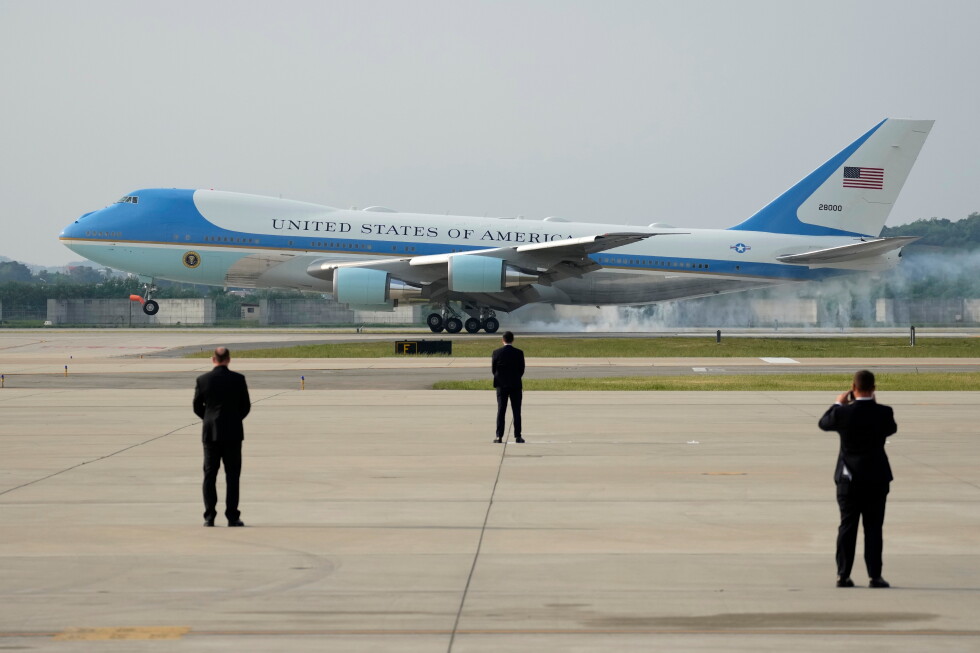
    The public release of the encyclical, expected within the coming weeks, is already projected to create new tension between Pope Leo and the U.S. Trump administration, which has prioritized unimpeded rapid AI development as a core national economic and security priority. The U.S. has repeatedly rejected international regulatory efforts to rein in unchecked AI growth, and domestically the administration has rolled back numerous bureaucratic barriers that slowed technology development. The encyclical’s signing coincided with the conclusion of U.S. President Donald Trump’s official visit to China, a trip focused heavily on AI trade and development. Trump was joined on Air Force One by high-profile tech leaders including Elon Musk, owner of X (which hosts Musk’s AI chatbot Grok), and Nvidia CEO Jensen Huang, who recently secured U.S. federal approval to sell advanced H200 AI chips to Chinese buyers.

    Since the generative AI boom began with ChatGPT’s public debut, the technology has drawn both widespread awe for its transformative capabilities and growing alarm from experts over its risks. These hazards range from hypothetical but catastrophic long-term threats such as unaligned rogue AI systems to immediate, everyday harms including algorithmic bias in hiring, misinformation, and erasure of human connection. Multilateral discussions have so far yielded limited progress: the United Nations adopted a nonbinding AI governance framework last year after summits hosted by Britain, South Korea, and France also produced only voluntary pledges, while the European Union implemented its binding AI Act in 2024, which uses a risk-based classification system to regulate the technology.

    The Vatican has long sought to insert its moral voice into this global debate, publishing targeted ethical guidelines for AI use across sectors from military combat to education and healthcare. Its core argument has remained consistent: AI should serve as a tool that complements human intelligence, not one that replaces it. The church has also drawn attention to the underdiscussed environmental cost of the AI race, highlighting the massive amounts of energy and water required to power AI data centers and large-scale computational processes.

    Thomas Harmon, a theology professor at the University of St. Thomas in Houston, says the church’s influence on the conversation extends far beyond its 1.5 billion global followers. “There are almost a billion and a half Catholics in the world, so that alone is reason to pay attention,” Harmon said. “But beyond the numbers, the Catholic Church has a deep and sophisticated tradition of thinking through what it means to be human.”

    As early as 2020, the Vatican brought major tech companies together to sign the Rome Call for AI Ethics, a pledge that laid out core principles for responsible AI development including inclusiveness, accountability, impartiality, and user privacy. Major global tech firms including Microsoft, IBM, and Cisco were among the initial signatories. Pope Francis, Pope Leo’s predecessor, spent his final years advocating for a binding international treaty to regulate AI, arguing that the risks of developing AI without embedding core human values of compassion, mercy, morality, and forgiveness were too great to leave self-governance to researchers and developers alone. In 2024, Francis addressed a special G7 session on AI’s perils and promise, urging world leaders to ensure all AI development remains human-centric, insisting that all decisions involving the use of force — even for less-lethal tools — must remain in human hands. He also called for a full global ban on lethal autonomous weapons, often referred to as “killer robots.”

    Within the church, Pope Leo has warned clergy against relying on AI to write their homilies, but his concerns extend far beyond internal practice to the broader global implications of AI for peace, labor, and the very nature of reality. As a member of the Augustinian order, which centers the search for truth as a core spiritual value, he has repeatedly highlighted the unique threat generative AI poses through deepfakes and widespread misinformation. In a June 2025 address to an international AI conference, he acknowledged the technology’s meaningful contributions to medical advancement and scientific discovery, but questioned “its possible repercussions on humanity’s openness to truth and beauty, on our distinctive ability to grasp reality.”

    A consistent advocate for global peace, Pope Leo has also called for increased scrutiny of AI development and use in ongoing conflicts including Ukraine and the Middle East, where automated weapons systems are already deployed across aerial drones, maritime vessels, and ground combat platforms. “What is happening in Ukraine, in Gaza and the Palestinian territories, in Lebanon and in Iran illustrates the inhuman evolution of the relationship between war and new technologies in a spiral of annihilation,” he stated earlier this week during an address at Rome’s La Sapienza University, Europe’s largest institution of higher education.

  • ‘Farcical proceeding’: Mahmoud Khalil’s lawyers want deportation case terminated

    ‘Farcical proceeding’: Mahmoud Khalil’s lawyers want deportation case terminated

    Legal representatives for Mahmoud Khalil, a prominent Palestinian rights activist and former Columbia University student, announced Friday they have submitted an emergency motion to the U.S. Board of Immigration Appeals (BIA) requesting the full reopening and immediate termination of his deportation case, building on newly uncovered evidence of widespread procedural irregularities that they argue denied their client due process under U.S. law.

    The motion was formally lodged with the BIA on Thursday, coming roughly one month after the agency issued a final removal order that brought Khalil one step closer to forced expulsion from the United States, where he resides with his U.S. citizen wife and child.

    A core pillar of the legal team’s argument centers on a longstanding structural flaw in the U.S. immigration adjudication system: unlike independent federal judiciary bodies, the BIA and all U.S. immigration courts fall under the oversight of the Department of Justice (DOJ), an agency within the executive branch of government — putting them under the direct control of the sitting presidential administration, in this case the second Trump administration. While immigration courts are nominally required to rule in line with federal law rather than policy priorities, recent reporting has exposed how this structural arrangement can enable political interference in individual cases.

    Last week, The New York Times published an investigation revealing that the BIA’s final removal order against Khalil was marked by multiple extraordinary irregularities that diverge sharply from standard immigration case practice. Internal government documents reviewed by the outlet showed Khalil’s case file was flagged for high-priority processing despite the fact that post-detention immigration appeals routinely take years to resolve. By contrast, the BIA issued its ruling in just nine days. Additionally, three separate BIA judges recused themselves from reviewing the case, a highly unusual move that the outlet noted may stem from prior conflicts related to earlier involvement in Khalil’s proceedings.

    The new motion filed by Khalil’s legal team includes sworn testimony from a former U.S. immigration judge who corroborates the assessment that the procedural shortcuts and multiple recusals are inconsistent with standard adjudication.

    Khalil was first taken into custody by U.S. Immigration and Customs Enforcement (ICE) agents during an arrest outside his New York City home in March 2025. Three months after his arrest, he was released from detention, but his legal battle has remained ongoing. At the time of his arrest, U.S. Secretary of State Marco Rubio revoked Khalil’s permanent resident green card, claiming the activist posed a threat to U.S. foreign policy interests. The Trump administration later added a second claim, alleging Khalil falsified his employment history on his green card application — an accusation Khalil has repeatedly and vehemently denied.

    Khalil’s legal team has long maintained that the push to deport him is outright retaliation for his protected pro-Palestinian speech, a charge the administration has not directly addressed. In a public statement released Friday, Johnny Sinodis, an attorney with Van Der Hout LLP representing Khalil, said the recent revelations of DOJ misconduct confirm what the legal team has argued since Khalil’s arrest: the administration manipulated the entire process to reach a preordained political outcome, weaponizing a broken immigration system riddled with unfair procedural abnormalities.

    Sinodis called on the BIA to throw out the entire government case against Khalil, and demanded increased transparency around the handling of the case. “Transparency also dictates that the government produce any records regarding the handling and adjudication of Mahmoud’s case,” he said. “The apparent interference with the Immigration Judge’s decision making is not only unconstitutional but also violates the government’s own rules and procedures.”

    For the time being, Khalil remains protected from arrest and deportation: he has a separate active federal lawsuit alleging constitutional rights violations related to his arrest and removal proceedings, and a court order bars ICE from deporting him until that separate civil case reaches a conclusion.

  • UAE building pipeline to double oil exports that can bypass Hormuz

    UAE building pipeline to double oil exports that can bypass Hormuz

    Against the backdrop of escalating regional tensions following the US-Israeli military campaign against Iran, the United Arab Emirates has unveiled plans to speed up expansion of its oil pipeline network, a strategic move that will double the volume of crude the nation can export without passing through the contested Strait of Hormuz. The project is on track to be fully operational by 2027, state-owned Abu Dhabi National Oil Company (Adnoc) confirmed in an official statement released Friday.

    Abu Dhabi Crown Prince Sheikh Khaled bin Mohamed bin Zayed Al Nahyan announced the acceleration of the construction during a recent high-level committee meeting, with Adnoc noting that preliminary work on the new pipeline segment had already broken ground. The pipeline will connect the UAE’s inland oil infrastructure to the port of Fujairah, which sits on the UAE’s eastern coast along the Gulf of Oman, eliminating the need for tankers to navigate the Strait of Hormuz, the world’s most critical chokepoint for global oil trade.

    Currently, the UAE’s existing Habshan-Fujairah pipeline boasts a daily throughput capacity of 1.8 million barrels. With the expansion, the country’s total bypass capacity will double, allowing it to restore nearly all of its pre-conflict export volume without relying on Hormuz. Before the outbreak of the current war, the UAE was moving roughly 3.4 million barrels of crude per day to global markets. After Iran took control of the strait and implemented a new regional passage authorization system, UAE exports dropped by approximately 60 percent, according to regional energy data.

    Once the expanded network is complete, the UAE will be able to ship almost all of its pre-war output via the alternative pipeline route. Longer-term, the Gulf nation has set an even more ambitious target: reaching a total export capacity of nearly 5 million barrels per day by 2027, aligning with massive infrastructure investments it has made to ramp up domestic production capacity over recent years.

    The strategic pivot away from Hormuz comes amid a series of disruptive regional developments tied to the ongoing conflict. In the opening weeks of the war, Iran blocked oil exports from other Gulf states while continuing its own shipments, before a U.S. naval blockade imposed last month effectively halted all Iranian crude exports. The move also follows a landmark decision by the UAE just this month to withdraw from the Saudi Arabia-led OPEC cartel, a split rooted in years of disagreements over production policy. For years, Riyadh pushed for aggressive production cuts to prop up global oil prices, while the UAE pushed for looser output limits to capitalize on its expanded production capacity. The UAE’s exit from OPEC gives it full policy flexibility to pursue its 2027 capacity goals, Abu Dhabi officials have said.

    Despite the strategic gains of the project, security risks remain a persistent challenge. The UAE’s close geographic proximity to Iran leaves its critical energy infrastructure vulnerable to attack. Earlier in the conflict, an Iranian drone strike targeted a major gas processing facility located near Habshan, the starting point of the Fujairah pipeline. The port of Fujairah itself has also been hit in previous attacks, forcing a temporary suspension of all cargo operations at the facility.

    The UAE is not alone in moving to diversify its oil export routes away from the Strait of Hormuz. Regional rival and neighbor Saudi Arabia already operates the East-West Pipeline, which enables the kingdom to export up to 5 million barrels of crude per day through the Red Sea port of Yanbu, bypassing Hormuz entirely.

    This independent coverage of Middle East energy and security developments is provided by Middle East Eye, a publication specializing in on-the-ground reporting and analysis of the Middle East and North Africa region.

  • US planning to criminally indict ex-Cuban leader Raúl Castro

    US planning to criminally indict ex-Cuban leader Raúl Castro

    Tensions between the United States and Cuba have spiked dramatically in recent days, after multiple anonymous U.S. Department of Justice sources confirmed that federal authorities are moving forward with a planned criminal indictment of 94-year-old former Cuban leader Raúl Castro, connected to the 1996 downing of two U.S.-linked aircraft that left four people dead. The expected charges, which require formal approval from a federal grand jury before they can be unsealed, come at a uniquely sensitive moment: just one day before the first reports of the indictment plan emerged, CIA Director John Ratcliffe traveled to Havana to hold rare direct talks with senior Cuban security officials.

    Raúl Castro, who retired from the top post of Cuba’s Communist Party in 2011 after leading the island nation for 15 years, closed out six decades of uninterrupted rule by the Castro family when he stepped down. He assumed the presidency in 2006 after his older brother, longtime leader Fidel Castro, resigned due to poor health, and previously served as Cuba’s armed forces minister at the time of the 1996 incident.

    The case that forms the core of the potential indictment dates back 30 years, to February 24, 1996, when Cuban military forces shot down two small civilian planes operated by Brothers to the Rescue, a Miami-based Cuban exile group with a stated mission of rescuing migrants crossing the Straits of Florida and an open anti-Castro political agenda. The group had repeatedly dropped anti-government leaflets in Cuban airspace prior to the incident, and Havana maintained at the time that the aircraft had violated Cuban national airspace. However, an investigation by the International Civil Aviation Organization concluded the shootdown occurred in international waters. All four people on board the two planes were killed in the attack.

    According to unnamed DoJ officials, the public indictment could be released as early as next Wednesday. When asked about the reports during a press gaggle on Air Force One Friday, U.S. President Donald Trump declined to comment on the details of the ongoing investigation, saying he would leave all statements to the Department of Justice. He did not hold back from broader criticism of the Cuban government, however, telling reporters: “But [Cubans] need help, as you know. And you talk about a declining country. They are really a nation, a country in decline.”

    The planned indictment is the latest escalation in a sustained U.S. pressure campaign against Havana that already includes a full oil embargo, sweeping economic sanctions, and open political rhetoric calling for regime change on the island. Trump’s oil blockade has already pushed Cuba to the brink of an energy crisis: just this week, the island’s energy minister publicly acknowledged that the country has effectively exhausted its supplies of fuel oil, leaving essential services and civilian livelihoods at risk. Expectant mothers across Cuba are already reporting severe struggles accessing basic care and supplies amid the ongoing fuel shortages.

    The move to reactivate the investigation into the 1996 shootdown gained momentum earlier this year, when Florida’s attorney general announced the state would reopen its own probe into Raúl Castro’s alleged role in the incident. Florida Governor Ron DeSantis echoed that momentum Friday, praising the planned federal charges as “long overdue.”

    Cuba has not yet issued an official formal response to the reports of the impending indictment, but Foreign Minister Bruno Rodriguez made clear Friday that Havana would not back down to U.S. pressure. “Despite the [US] embargo, sanctions and threats of the use of force, Cuba continues on a path of sovereignty towards its socialist development,” Rodriguez said, per Reuters.

    Acting U.S. Attorney General Todd Blanche, who leads the Department of Justice, has also declined to confirm the reports, telling Fox News: “If and when there’s a time to talk about about that, we will, obviously.” Under U.S. federal procedure, prosecutors must first present evidence of probable cause to a grand jury composed of ordinary citizens before any formal charges can be filed.

    Ratcliffe’s visit to Havana Thursday, which included a meeting with his Cuban counterpart at the Cuban interior ministry, was notable for the attendance of Raúl Rodríguez Castro, the grandson of the former Cuban leader. A CIA official told CBS, the BBC’s U.S. partner, that Washington was open to talks on economic and security cooperation, “but only if Cuba makes fundamental changes” to its governing system. The Cuban government’s official readout of the meeting framed it as an effort to improve bilateral dialogue, and reiterated that Havana does not pose a threat to U.S. national security. The talks also followed a renewed U.S. offer of $100 million in humanitarian aid to help mitigate the harm caused by the American oil blockade.

    The heightened focus on Cuba comes on the heels of a dramatic U.S. action in the region: in January, American authorities indicted Venezuelan leader Nicolás Maduro, and removed him from power in a rapid overnight military operation. Analysts have warned that a similar move to target Raúl Castro could trigger severe consequences for the United States, even as the indictment is widely seen as part of a broader pressure strategy.

    William LeoGrande, a professor of Latin American politics at American University in Washington and author of *Back Channel to Cuba: The Hidden History of Negotiations between Washington and Havana*, described the impending indictment as “one more element of the pressure campaign” that Trump has sustained since returning to office. He warned that further destabilization of the Cuban government could backfire spectacularly on Washington. “If the Cuban economy and social order collapses, it would actually be a disaster for the United States, because it’s likely to touch off a mass migration crisis,” LeoGrande explained. The professor added that the move appears to be a deliberate warning: “It looks like the US is sending a warning to Raúl Castro that he should use his influence to get the government to make concessions. Or else the US military may be coming for him, just like it came for President Maduro in Venezuela.”

  • Wordle heads to primetime as media seek puzzle reinvention

    Wordle heads to primetime as media seek puzzle reinvention

    The global media landscape is undergoing a quiet transformation, as legacy news organizations rush to integrate interactive puzzles and casual games into their digital offerings — all chasing the subscription-driven success that The New York Times has spent years refining, and that is now poised to make the jump to network television.

  • Crackdown on cross-border drug crimes intensified

    Crackdown on cross-border drug crimes intensified

    China has significantly strengthened its law enforcement campaign against cross-border illegal trafficking of drug-manufacturing substances and other sensitive chemicals, China’s Ministry of Public Security announced in an official statement released Friday. Since the start of 2025, authorities have resolved 29 criminal cases linked to this illegal trade and taken 157 suspects into custody.

    Along with the arrests and case closures, law enforcement seizures have been substantial: authorities have confiscated 720 kilograms of illegal drugs, 1.3 metric tons of new psychoactive substances, 0.9 kilogram of stimulants, and 27.7 tons of uncontrolled precursor chemicals — materials that can be repurposed to produce illicit controlled drugs.

    The China National Narcotics Control Commission (CNNCC) has repeatedly issued public warnings to domestic enterprises and individuals, urging them to exercise extreme caution when exporting drug-making substances, new psychoactive substances, and related chemical products to overseas markets, and to remain alert to potential legal risks under foreign jurisdictions.

    In a formal notice issued November 10 last year, the CNNCC’s office mandated that all chemical exporters verify that their overseas buyers complete all required import procedures in compliance with local laws and regulations. This requirement applies specifically to unlisted precursor chemicals and production equipment, which have widespread legitimate industrial uses but can also be diverted to manufacture illegal controlled substances.

    The notice outlined a series of new regulatory requirements for domestic stakeholders. All companies engaged in the production, sale, transportation, import, and export of these sensitive chemicals and related equipment are required to strengthen internal compliance systems, maintain complete and accurate transaction records, and conduct strict background and identity verification for all overseas purchasers.

    Domestic operators have also been warned to watch for illegal recruitment tactics, which often disguise criminal requests as high-value commercial orders or legitimate sample testing requests. Postal services, courier companies, logistics providers, and international freight forwarders have been called on to strengthen screening protocols and assist authorities in intercepting illegal shipments.

    New tighter rules for online information dissemination have also been introduced. Private individuals are completely banned from posting any sales information for non-pharmaceutical precursor chemicals on public online platforms, while all entities and individuals are prohibited from publishing any public online advertisements for pharmaceutical precursor chemicals. Any party that posts sales information for unlisted drug-making chemicals or related production equipment on websites, social media platforms, or e-commerce marketplaces is required to complete mandatory real-name registration and comply fully with all domestic and international legal requirements.

    This is not the first regulatory warning on the issue: the CNNCC issued similar public notices in November 2023 and May 2024, both of which highlighted the serious legal risks associated with exporting drug-making precursors and new psychoactive substances to overseas markets. Despite these repeated warnings, the Ministry of Public Security noted that some domestic offenders have continued to traffic both controlled and uncontrolled precursors, new psychoactive substances, and other sensitive chemicals abroad, gradually building transnational illegal supply chains that create major global drug-related security risks.

    To counter this growing threat, Chinese public security authorities have launched multiple rounds of targeted special law enforcement operations. These operations focus on breaking up major criminal networks, investigating non-compliant enterprises, and holding illegal actors accountable. Officials noted that the campaign has three core goals: eliminating cross-border drug risks, cleaning up non-compliant activity in the domestic online business environment, and protecting the legitimate, healthy development of China’s overall chemical industry.

    One of the major cases resolved during the recent crackdown was a large-scale cross-border drug manufacturing and trafficking ring led by a suspect surnamed Tang, which was uncovered by police in December 2025. In this operation alone, authorities arrested 21 suspects, seized nearly 32 kilograms of illegal drugs, 1 ton of new psychoactive substances, and 15.4 tons of raw drug-making materials. Law enforcement also dismantled one illegal drug production facility and one unauthorized precursor chemical production site, froze approximately 6.92 million yuan ($1 million) in illicit funds linked to the ring, and imposed administrative penalties on three domestic chemical companies that failed to comply with regulatory requirements.

    Investigations into Tang’s operation revealed that he set up two dedicated websites to advertise sensitive chemicals directly to overseas buyers. After receiving orders, he contracted with chemical manufacturers in multiple domestic regions to develop and supply the controlled chemicals, then smuggled the products overseas via complicit international freight forwarding companies, and accepted payment via untraceable virtual currencies to avoid detection. In January 2026, Tang and a second key ringleader, surnamed Chen, were formally arrested on charges of smuggling, trafficking, transporting, and manufacturing illegal drugs.

    In closing, the Ministry of Public Security emphasized that all Chinese enterprises and individuals must strictly comply with domestic and international laws and regulations when conducting cross-border business. It reiterated the importance of proactively guarding against overseas legal risks, to protect both the legitimate rights and interests of Chinese companies and citizens, and global public safety by curbing the transnational drug trade.

  • Radical housing tax overhaul divides experts and property industry

    Radical housing tax overhaul divides experts and property industry

    Australia’s decades-old investor-centric housing tax policies have long been criticized for funneling billions of dollars in public benefits into speculative investment, driving skyrocketing property prices and locking millions of aspiring homeowners out of the market. Now, the Albanese Labor government has tabled one of the most radical housing policy overhauls in a generation as part of its latest federal budget, aiming to reorient the market toward greater affordability and accessibility – but the reform has sparked fierce debate across industry, politics, and advocacy circles.

    Treasurer Jim Chalmers announced the two core changes in his Tuesday budget speech. First, the existing 50% discount on capital gains tax (CGT) for property investors will be replaced with inflation-adjusted indexation, a shift that reduces tax breaks for investors who profit from rapid property price growth. Second, new property investors will only be eligible to use negative gearing – the tax break that allows investors to offset rental losses against other income – when investing in newly constructed residences.

    Chalmers framed the reform as a long-overdue correction to a broken tax system that has favored speculators over working Australians chasing home ownership. “Since 1999, house prices have risen over 400%, more than twice as fast as average incomes,” he told parliament. “Our tax changes will help about 75,000 Australians achieve the dream of home ownership. We’re delivering a fairer tax system for workers, first-home buyers and future generations.”

    The policy has drawn sharp opposition from the conservative Coalition, which has already pledged to repeal the changes if it wins the next federal election. Shadow housing spokespeople argue the reform is “an assault on aspiration”, discouraging ordinary Australians from building property wealth through investment. The nation’s major housing and property industry groups have echoed this criticism, warning the changes will erode investor confidence, create market uncertainty, and ultimately undermine Australia’s already pressing housing supply targets.

    Jacob Caine, president of the Real Estate Institute of Australia (REIA), pointed out that the country is already behind schedule on its National Housing Accord target to build 1.2 million new homes between now and 2029. “At a time of acute rental stress and chronic undersupply, policy settings should be encouraging more investment into housing, not creating uncertainty or reducing confidence,” Caine said. “Private investment plays a critical role in Australia’s housing system.”

    Tim Reardon, chief economist for the Housing Industry Association (HIA), added that investors accounted for 43% of all new home purchases over the past year. He noted that contrary to the government’s framing, the policy will not simply shift investment from established properties to new builds: “In the real world, capital is mobile. Investors aren’t limited to choosing between new or established homes – they can redirect capital to industrial property, commercial assets, shares or other classes of investment entirely.”

    On the other side of the debate, housing affordability advocacy groups have hailed the changes as a historic turning point for Australia’s dysfunctional housing market. Everybody’s Home, a national campaign coalition working to end the national housing crisis, called the reform a long-overdue challenge to one of Australian policy’s most entrenched “sacred cows”.

    Maiy Azize, spokeswoman for Everybody’s Home, argued that for decades the federal government has wasted billions on tax breaks that have done nothing to expand affordable housing and everything to drive up prices and worsen inequality. “The government has spent about $2 billion a year on boosting new housing supply, but gave away orders of magnitude more through CGT discounts and negative gearing,” Azize said. “Imagine if we had that money available to invest in public housing instead.”

    Azize added that the reform will help curb the runaway house price growth that has left tens of thousands of aspiring homeowners playing catch-up on deposits. “For everyone trying to save for a home, you can start saving for a deposit and won’t have to constantly worry if house prices will jump $150,000 in 12 months,” she said. The change also acknowledges that decades of underbuilding have left Australia with a shortage of roughly 640,000 social and affordable homes, a gap that will take roughly 20 years to close even with the new policy in place.

    When it comes to the impact of the changes on property prices, economists are broadly aligned in one key prediction: the overhaul will slow the breakneck growth that has defined Australia’s housing market in recent decades. Commonwealth Bank senior economist Trent Saunders said the tax changes, combined with ongoing interest rate rises from the Reserve Bank of Australia and increasing cost of living pressures, will lead to moderately slower price growth over the next three years.

    “In response to these policy changes, house prices are expected to eventually be 3% lower than they otherwise would have been,” Saunders explained. The policy is projected to shave roughly 60 basis points off annual house price growth in 2026, rising to a full 1 percentage point reduction in 2027. Saunders added that a key downside risk remains: if investor sentiment drops sharply in the short term, price growth could cool even faster than current projections based on market fundamentals suggest.

    As the government moves to legislate the changes, the debate over their long-term impact continues: while supporters say they mark a critical first step toward restoring housing affordability for a new generation, opponents warn they could worsen the existing supply crisis and leave renters and buyers worse off in the long run.

  • UAE made failed attempt to get Saudi Arabia, Qatar to jointly attack Iran: Report

    UAE made failed attempt to get Saudi Arabia, Qatar to jointly attack Iran: Report

    Regional divisions across the Persian Gulf have been laid bare by a newly revealed failed diplomatic push, after Bloomberg reported Friday that the United Arab Emirates was unable to convince Saudi Arabia and Qatar to launch a coordinated joint military response to Iranian retaliatory attacks earlier this year.

    The failed outreach came in the immediate aftermath of a joint strike against Iranian targets by the United States and Israel on February 28. In response to that attack, Tehran launched a massive barrage of thousands of missiles and drones against Gulf states that had aligned with the U.S. and Israel. The UAE, which normalized diplomatic relations with Israel in 2021 under the U.S.-brokered Abraham Accords, bore the overwhelming weight of Tehran’s retaliation, with close to 3,000 projectiles hitting targets across the country.

    Shortly after the attack, UAE President Mohamed bin Zayed Al Nahyan held a series of urgent phone consultations with top Gulf leaders, including Saudi Arabia’s de facto ruler Crown Prince Mohammed bin Salman. To the UAE’s disappointment, both the Saudi crown prince and other regional leaders rejected the call for a unified military offensive against Iran. Instead of uniting competing Gulf powers against a shared adversary, the unfolding conflict has amplified long-simmering tensions between Riyadh and Abu Dhabi, the report found.

    To date, both Saudi Arabia and the UAE have launched retaliatory strikes against Iran, but have acted entirely independently. Analysts have characterized Saudi Arabia’s military response as deliberately restrained; shortly after its strikes, the kingdom shifted its focus to supporting regional mediation efforts led by its close ally Pakistan.

    The UAE has taken a far more escalatory approach, however, targeting critical Iranian energy infrastructure. The Wall Street Journal reported that the UAE carried out an airstrike on Iran’s Lavan Island, a major Gulf oil and gas processing hub, in early April. The attack came at the exact moment the U.S. was publicly announcing a ceasefire in the conflict, and is reported to have sparked a massive blaze that knocked most of the facility’s operational capacity offline for months, representing a major escalation of hostilities.

    Geographic and economic realities have driven the UAE’s harder line. Unlike Saudi Arabia, which can route oil exports through its East-West pipeline to the Red Sea to avoid Gulf closures, the UAE’s energy trade and economic standing are far more vulnerable to Iranian actions. The ongoing conflict has also severely damaged the country’s core identity as a safe global tourism and financial hub.

    Abu Dhabi has aggressively lobbied both publicly and privately to convince the U.S. to continue its military campaign against Iran, and even put forward a failed United Nations resolution that would have authorized the use of military force to respond to Iran’s new control over the strategic Strait of Hormuz. Its frustration with regional allies has grown increasingly public: senior UAE presidential adviser Anwar Gargash openly criticized the Gulf Cooperation Council for what he called a “weak” collective response to Iran’s attacks. That discontent reached a breaking point in May, when the UAE announced its withdrawal from the OPEC oil cartel.

    Amid its growing estrangement from traditional Gulf partners, the UAE has doubled down on its deepening security and diplomatic alignment with Israel. U.S. Ambassador to Israel Mike Huckabee confirmed earlier this month during a public event in Tel Aviv that Israel has deployed Iron Dome air defense batteries, along with specialized military personnel to operate the systems, to the UAE to help defend against Iranian missile and drone attacks. “Israel just sent them — [the UAE] — Iron Dome batteries and personnel to help them operate them. How come? Because there’s an extraordinary relationship between the UAE and Israel based on the Abraham Accords,” Huckabee said.

    Even with this deepening security cooperation, the UAE has remained cautious about publicly acknowledging the full extent of its ties with Israel. This tension was on full display this week, when Israeli Prime Minister Benjamin Netanyahu’s office announced he had made an unpublicized visit to the UAE during the ongoing conflict, only for Abu Dhabi to issue an immediate denial that any such visit ever occurred.

    It should be noted that Israel’s ongoing military campaign in Gaza has been formally labeled a genocide by the United Nations, leading genocide scholars, leading international human rights experts, and multiple heads of state across the globe — including Saudi Crown Prince Mohammed bin Salman and Egyptian President Abdel Fattah el-Sisi.

  • China’s top diplomat says Xi-Trump meeting fruitful

    China’s top diplomat says Xi-Trump meeting fruitful

    BEIJING – A high-stakes meeting between the heads of state of China and the United States held in Beijing delivered substantive progress and productive results following in-depth, constructive discussions between the two leaders, China’s top diplomat Wang Yi confirmed during a press briefing Friday.

    Wang’s briefing came shortly after U.S. President Donald Trump wrapped up his three-day state visit to China, which ran from May 13 to 15, with the meeting with Chinese President Xi Jinping as the visit’s centerpiece. According to Wang, the summit featured a full slate of engagement: formal negotiating sessions, an official welcome banquet, an informal private discussion, and a guided visit. Across all these activities, the two leaders spent a total of nearly nine hours in direct interaction, characterized by a foundation of mutual respect, a shared dedication to maintaining global peace, and an open willingness to expand collaborative work between the two nations.

    The most consequential political agreement to emerge from the talks, Wang noted, is a shared consensus between President Xi and President Trump to work toward building a constructive, strategically stable bilateral relationship. This framework sets a clear direction for future interactions between the world’s two largest economies.

    Beyond overarching strategic direction, the two sides also articulated a shared commitment to deepen people-to-people and institutional exchanges across a wide range of priority sectors. These areas include diplomatic coordination, military-to-military communication, economic and trade cooperation, public health collaboration, agricultural trade and development, tourism expansion, cultural and educational people-to-people ties, and joint law enforcement efforts. Wang emphasized that the outcomes of this meeting have injected fresh, strong momentum into all future bilateral engagement between China and the United States, opening new pathways for cooperation on shared global and regional challenges.

  • Energy crisis set to worsen as Trump weighs renewed Iran assault

    Energy crisis set to worsen as Trump weighs renewed Iran assault

    The ongoing conflict between the United States and Iran, initiated under former president Donald Trump, is pushing the global energy system toward a potentially catastrophic worsening of an already severe crisis, according to new reporting from *The Wall Street Journal*, which warns the world is rapidly exhausting its emergency oil reserve buffer.

    When hostilities first erupted and Iran moved to block the Strait of Hormuz — a critical chokepoint that carries roughly a fifth of global daily oil trade — crude prices spiked sharply. This initial market shock was softened temporarily by existing crude surpluses held by major consuming nations, which allowed additional volumes to be released onto global markets to offset the blocked shipments.

    But that temporary relief is now running out. *The Journal* reports that global emergency and commercial oil inventories are being drawn down at a pace never seen before, with total stocks dropping by almost 250 million barrels in just the first two months of the conflict.

    This unprecedented drawdown has prompted senior oil industry leaders and energy analysts to warn that the current period of relative calm in global energy markets is about to be upended by a sharp correction. If the Strait of Hormuz remains closed to commercial shipping, acute fuel shortages and dramatic price spikes could hit global markets within a matter of weeks, the outlet noted.

    Citing analysis from global risk consulting firm Eurasia Group, the report projects that if current depletion rates hold, U.S. diesel reserves will fall below the 100 million barrel threshold by the end of this month — a level not seen in more than two decades.

    Ellen Wald, a senior fellow focused on global energy policy at the Atlantic Council’s Global Energy Center, told *The Journal* that while higher oil prices will naturally trigger some reduction in consumer and industrial demand, that demand response will not be nearly large enough to offset the massive supply shortfall created by the blocked strait. As a result, prices will continue to climb rapidly.

    “You can only decrease consumption so much, and when inventories run out, they are going to run out,” Wald explained. “At some point the market is going to collide and prices are going to shoot up.”

    The risk of a worse outcome is growing by the day, as new reporting indicates the Trump administration is preparing to escalate military hostilities against Iran. If new attacks are launched, Iran could respond with targeted strikes on regional oil production and export infrastructure, which would only deepen the global supply crunch.

    Independent outlet Zeteo reported Thursday that preparations for a new, imminent phase of military operations in the Iran conflict have accelerated in recent days, as the U.S. president has become increasingly frustrated with the lack of progress in ongoing peace negotiations. Citing anonymous sources familiar with administration planning, Zeteo reported that the U.S. military campaign will ramp up shortly after Trump concludes his upcoming visit to China, with options on the table including a large-scale new bombing campaign targeting Iranian assets.

    U.S. forces carried out widespread bombing of Iranian military targets and civilian infrastructure in the opening weeks of the conflict, but Iran has refused to reverse its decision to close the Strait of Hormuz to commercial traffic. With peace talks stalled and the threat of renewed fighting hanging over markets, Brent crude futures climbed sharply on Friday, pushing prices above $108 per barrel.

    Domestically, average retail gasoline prices across the United States remained above $4.50 per gallon on Friday. Petroleum industry analyst Patrick De Haan projected Thursday that if the Strait of Hormuz is not reopened in the near term, average U.S. gas prices could soon surge past the $5 per gallon mark, piling additional financial pressure on American households.