作者: admin

  • UN says nearly 500 Afghan civilians have been killed in Pakistan-Afghanistan fighting since October

    UN says nearly 500 Afghan civilians have been killed in Pakistan-Afghanistan fighting since October

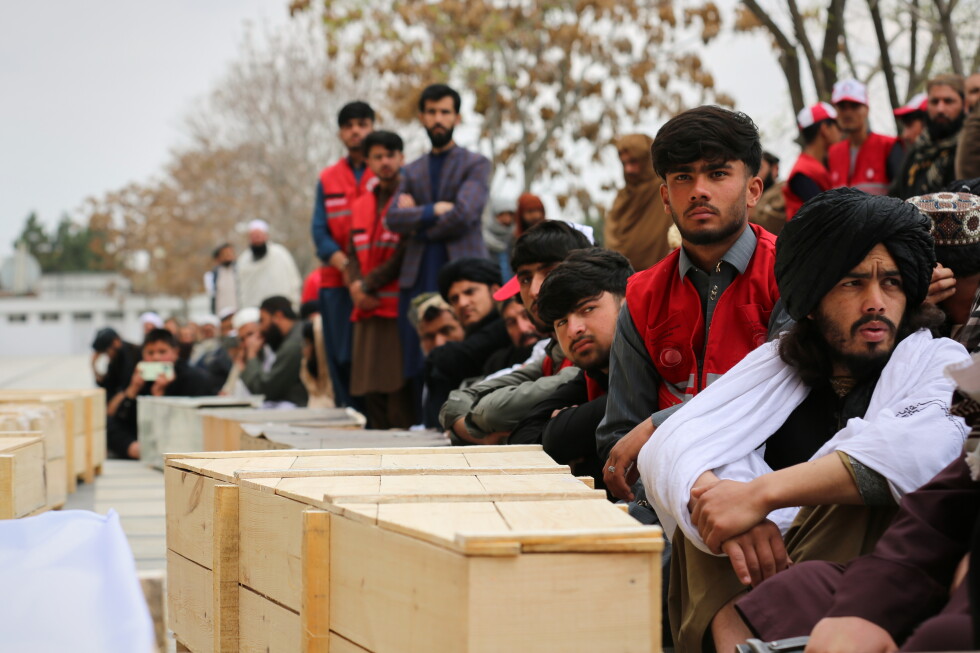
    Months of persistent cross-border hostilities between Pakistan and Afghanistan have left nearly 500 Afghan civilians dead and more than 1,200 injured between October last year and the end of June this year, the United Nations Assistance Mission in Afghanistan (UNAMA) confirmed in a major new human rights report released Tuesday.

    The devastating casualty count, compiled through UNAMA’s on-the-ground documentation, lays bare the human cost of a conflict that has persisted despite repeated international calls for de-escalation. One of the most striking examples of civilian harm documented in the report occurred in Afghanistan’s eastern Paktia Province on June 28, when two successive airstrikes hit a residential building. After the first strike killed several people, local residents rushed to the site to pull trapped survivors from the rubble. A second strike hit the area as the rescue effort was underway, killing 22 civilians – five of them children – and wounding 185 more, with most casualties coming from the second, unprovoked attack. “International humanitarian law provides special protections for medical personnel and humanitarian workers, including first responders. Attacks against them while performing their duties are strictly prohibited,” said Fiona Frazer, UNAMA’s human rights director.

    The deadliest single incident of the cross-border fighting came in March, when a Pakistani airstrike targeted a drug treatment center in the Afghan capital Kabul, killing hundreds of civilians. Last week, global human rights group Amnesty International called for the bombing to be investigated as a potential war crime, a call Pakistan has since rejected. Islamabad has consistently denied targeting civilian infrastructure, asserting in its official response to UNAMA’s report that all of its military operations are directed exclusively at militant hideouts and infrastructure linked to groups that carry out attacks inside Pakistan. Pakistan’s foreign ministry also reiterated its longstanding claim that the Taliban-led Afghan government continues to allow militant groups to operate freely from Afghan territory, an accusation Kabul has repeatedly denied.

    Cross-border tensions between the two neighbors flared dramatically in February, after Afghan forces launched a cross-border retaliatory raid against Pakistan, which had carried out earlier airstrikes inside Afghanistan. Following the exchange, Islamabad publicly declared it was in an “open war” with Afghanistan. Pakistan’s core grievance centers on the presence of the Tehrik-e-Taliban Pakistan (TTP), also known as the Pakistani Taliban, a militant group that has carried out thousands of deadly attacks across Pakistan over the past decade. The TTP maintains close ideological and operational ties to the Afghan Taliban, which seized control of Afghanistan in 2021 amid the chaotic withdrawal of U.S.-led coalition forces. UNAMA’s mandate only allows it to monitor casualties and human rights abuses inside Afghanistan, so the report does not include any tally of civilian casualties from the fighting on Pakistani territory.

    Beyond the cross-border conflict, the UN report also shines a light on the deepening human rights crisis inside Afghanistan, particularly for women and girls under Taliban rule. The Taliban government has imposed sweeping, draconian restrictions on women’s public life: a ban on secondary and higher education for girls, prohibitions on women working in most sectors, a mandatory full hijab rule that requires women to cover their entire bodies, including their faces, and a requirement that all women be accompanied by a male chaperone when in public. These rules are enforced by the Ministry for the Propagation of Virtue and the Prevention of Vice, and enforcement is often arbitrary, with varying interpretations of what counts as compliance leading to sudden detentions and punishment.

    In June, a crackdown on alleged dress code violations in the western Afghan city of Herat led to the arrest of at least 30 women. When rare public protests broke out against the detentions, security forces opened fire on the crowd, killing at least one protester and wounding multiple others. UN investigators also found that vice and virtue officials have been visiting health clinics and retail shops across the country, ordering staff to turn away any woman who arrives without a male chaperone. The report also notes that new marriage regulations in Afghanistan implicitly sanction child marriage, by arranging for marriage contracts to be legally recognized for underage minors.

  • Chip stocks slide in US and Asia as AI jitters rattle investors

    Chip stocks slide in US and Asia as AI jitters rattle investors

    A deepening sell-off in artificial intelligence-linked equities has triggered sharp share drops for leading semiconductor manufacturers across U.S. and Asian markets this week, sending benchmark indexes into steep declines and activating market safety mechanisms.

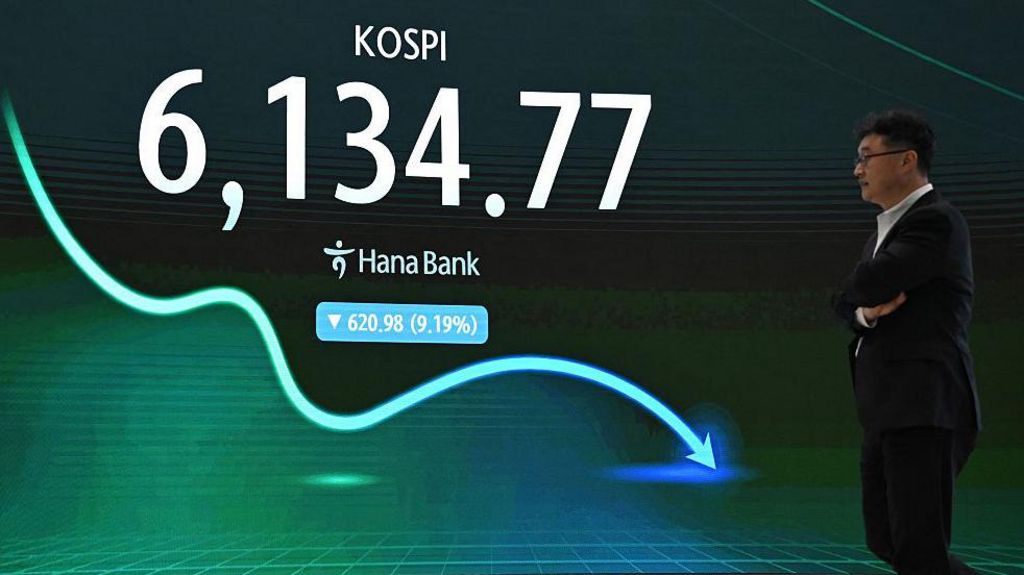
    On Tuesday morning, South Korea’s primary Kospi Index saw trading temporarily suspended after plummeting 8% early in the session. The 20-minute circuit breaker halt failed to stem the downward momentum, with the index closing down a dramatic 10.8% for the day. The collapse was led by the country’s giant technology and chip sectors: Samsung Electronics and SK Hynix, two of the world’s largest memory chip producers, both recorded declines of more than 13% by market close. This is not the first time the tech-heavy Kospi has triggered a circuit breaker this year; the mechanism is explicitly designed to slow panic-driven selling during periods of extreme market volatility. Year-to-date, the index had surged more than 100% from January to mid-June, but has now surrendered roughly a third of that peak value. South Korean stock markets have seen unusually high volatility in recent months, driven by a flood of new retail investors entering the market.

    The global AI stock downturn was sparked by Monday’s trading on Wall Street, where leading AI chip designer Nvidia dropped 5%, erasing its title as the world’s most valuable publicly traded company and handing the top position back to Apple. The decline came following a Wall Street Journal report that Nvidia is in advanced discussions to contribute up to $250 billion to a massive data center infrastructure project developed in partnership with OpenAI, the creator of ChatGPT. The BBC has reached out to both Nvidia and OpenAI to request comment on the reported deal.

    SK Hynix, which held a record-breaking initial public offering on the Nasdaq just three weeks ago, saw its U.S.-listed shares drop 7.5% on Monday, falling well below its $149 per share offer price. Across the East China Sea, Japan’s tech-heavy Nikkei 225 index followed the regional downward trend, closing nearly 4% lower on Tuesday. Apple, which has seen its shares climb roughly 25% so far this year, benefited from Nvidia’s decline to retake the top valuation spot.

    Jun Bei Liu, founder of investment advisory firm Ten Cap, told the BBC that two key factors are driving the pullback: growing investor anxiety over the massive volumes of capital flowing into AI development, and rising competition from Chinese chip manufacturers. Against this uncertain backdrop, Liu noted that institutional investors are currently “taking some profit off the table” after the months-long AI stock rally, but many plan to reinvest in AI-related equities following the upcoming U.S. holiday season.

    In a striking contrast to the broader global sell-off, China’s largest domestic memory chip manufacturer ChangXin Memory Technologies (CXMT) saw its shares skyrocket nearly 470% during its trading debut on the Shanghai Stock Exchange on Monday. The firm produces dynamic random-access memory (DRAM) chips, a critical component for AI data centers, smartphones, personal computers, tablets and a wide range of other consumer electronics. CXMT announced it plans to allocate the majority of proceeds from its IPO to expanding production capacity and accelerating research and development into next-generation memory chip technologies.

  • AI race loss fears behind Trump’s planned September hosting of Xi

    AI race loss fears behind Trump’s planned September hosting of Xi

    As the September 24 meeting between U.S. President Donald Trump and Chinese President Xi Jinping in Washington approaches, discussions around mitigating risks posed by cutting-edge frontier artificial intelligence models and resolving long-running intellectual property disputes have emerged as the core items on the bilateral agenda.

    This planned first official U.S.-China AI dialogue under the Trump administration, first disclosed by Reuters on July 21, will be led on the American side by Treasury Secretary Scott Bessent. Trump later confirmed the report on July 23, noting that the two leaders first broached the topic of AI collaboration and competition during his May visit to Beijing, where the pair met on May 14, 2026.

    Chinese state observers and media outlets point out that the Trump administration’s push for the summit stems from growing anxiety over China’s rapid progress in the global AI race. This concern intensified after China secured new AI development partnerships with 28 countries, mostly from the Global South, at the 2026 World Artificial Intelligence Conference held in Shanghai this past July. Within Chinese policy and tech circles, there is a widespread consensus that further U.S. export restrictions and regulatory curbs on China’s AI sector will only accelerate domestic efforts to achieve technological self-sufficiency and build an independent, sustainable AI ecosystem.

    The upcoming talks will center on regulating high-capacity AI models that carry far-reaching implications for global security and economics: these systems could rebalance global military power, enable devastating cyberattacks on critical national infrastructure, and cause widespread disruption to global labor markets. Trump has repeatedly framed AI as one of the most transformative technologies in human history, warning that the nation that leads the global AI race will hold unmatched strategic and economic advantage. “Whoever wins that race is probably going to win,” he stated in his confirmation of the September talks.

    Washington’s push for dialogue comes against a backdrop of dramatic breakthroughs by Chinese AI developers over the past 12 months. Leading domestic firms including DeepSeek, Zhipu AI and Moonshot AI have launched a wave of low-cost, high-performance frontier models that match or even outperform U.S. industry leaders OpenAI’s ChatGPT and Anthropic’s Claude on key industry benchmarks.

    A key strategy that has allowed Chinese firms to deliver strong results at a fraction of the cost of Western competitors is knowledge distillation, a process where new models learn pattern recognition and reasoning by studying outputs from existing Western AI systems, rather than building foundational capabilities from scratch. This approach eliminates the need for massive purchases of expensive cutting-edge AI chips. Chinese developers have also paired distillation with two efficiency-focused architectural innovations: mixture of experts (MoE), which routes individual queries only to the most relevant subset of the model’s parameters rather than activating the entire system, and sparse attention, which lets models focus only on the most contextually relevant sections of input text. Both techniques drastically cut computing requirements without sacrificing output accuracy.

    In a July 26 commentary, the Global Times, a publication under China’s People’s Daily, noted that China’s open-source AI ecosystem has expanded dramatically in power and influence over the past two years, enough to trigger alarm among leading U.S. AI research labs. “Two years ago, names like Zhipu AI and Moonshot AI barely registered in the American tech press. Now their models are going toe-to-toe with those from Anthropic and OpenAI,” the commentary read. “The United States’ panic makes sense.”

    The publication added that Washington has adjusted its strategy in the AI contest with China: rather than seeking to rapidly displace China from the global AI market, the U.S. is now focused on extending its current lead for as long as possible. “The failure to eliminate China doesn’t mean the contest is over. On the contrary, as knocking China out becomes less feasible, the AI race between the US and China simply shifts to more specific and hard-fought fronts,” the commentary said. “As long as China stays true to a development path suited to its own realities, it will earn the standing it deserves in shaping AI’s norms, rules and standards of access.”

    That reference to “China’s realities” speaks to the long-running impact of U.S. export controls that have constrained China’s access to advanced chip manufacturing technology and high-end AI hardware, a topic rarely addressed directly by Chinese state media until recently. The U.S. first blocked Dutch chip equipment giant ASML from selling extreme ultraviolet (EUV) lithography machines to China in 2019, extended restrictions to cover cutting-edge deep ultraviolet (DUV) lithography systems in October 2023, and banned exports of high-end Nvidia AI graphics processing units (GPUs) to China starting in October 2022.

    In response to these restrictions, Chinese firms initially adapted by sourcing second-hand mid-tier DUV machines for domestic AI chip production, routing imports of Nvidia chips through smuggling networks and shell companies, and training large models at overseas data centers in Southeast Asia. As controls tightened further, however, firms pivoted to the cost-effective distillation strategy that has now enabled their competitive breakthroughs.

    For its part, the Trump administration has raised formal concerns over intellectual property practices in China’s AI sector. Speaking on July 21, Treasury Secretary Bessent said the administration has gathered evidence indicating that leading Chinese AI models draw heavily on foundational development work from U.S. systems, emphasizing that Washington does not tolerate what it frames as intellectual property theft.

    Chinese analysts and policymakers have framed their country’s AI strategy as fundamentally different from the U.S. approach. Zhu Min, former deputy governor of the People’s Bank of China, outlined China’s priorities during a June World Economic Forum panel, noting that Beijing’s top goal is to integrate AI across China’s massive industrial economy, with a particular focus on manufacturing applications.

    “China’s greatest advantage was never about building the largest model. It lies in having more use cases, more factories, more diverse industries and cost-conscious business owners,” Zhu explained. “The real winners will not be the AI model makers but those doing deployment, integration and process restructuring. The vendors installing factory systems, connecting data pipelines, retraining workers and collecting annual fees will pocket more than anyone.”

    Zhu emphasized that manufacturing offers the clearest return on AI investment in China: every small improvement in production yield directly boosts profits, every avoided unplanned outage cuts avoidable losses, and every shortened delivery cycle increases business turnover. By contrast, he noted, U.S. investment capital overwhelmingly focuses on backing a small number of top-tier foundational model developers, betting that a handful of firms will capture the bulk of the global AI market. Chinese investment, meanwhile, flows disproportionately to application layers and industrial integration, targeting returns from the vast network of domestic factories, niche use cases and commercial orders.

    Not all observers expect major breakthroughs from the September talks. Shandong-based political commentator Chen Xia argues that the U.S. is unlikely to make meaningful concessions on core issues China cares about, including easing export controls and expanding access to advanced technology. “The most likely outcome is a handful of toothless risk management clauses. On the issues China truly cares about, including access to technology and the easing of export controls, the US will not compromise on any of them,” Chen said. “The US only wants to walk away with maximum political gain at minimum cost.”

    Chen also frames Trump’s outreach for AI talks as a tactical political move ahead of U.S. midterm elections in early November, where Trump’s Republican Party is fighting to defend its narrow majorities in both the U.S. Senate and House of Representatives. After the election, Chen argues, Washington’s underlying strategy of containing China’s AI development will become more explicit. He added that the U.S. is using the dialogue process to push for global AI governance rules that advance its own strategic interests and lock other nations into a disadvantaged position, while China seeks to secure a more equitable voice in shaping global AI rules.

  • Reserve Bank governor’s words lift ASX 200 after early market losses

    Reserve Bank governor’s words lift ASX 200 after early market losses

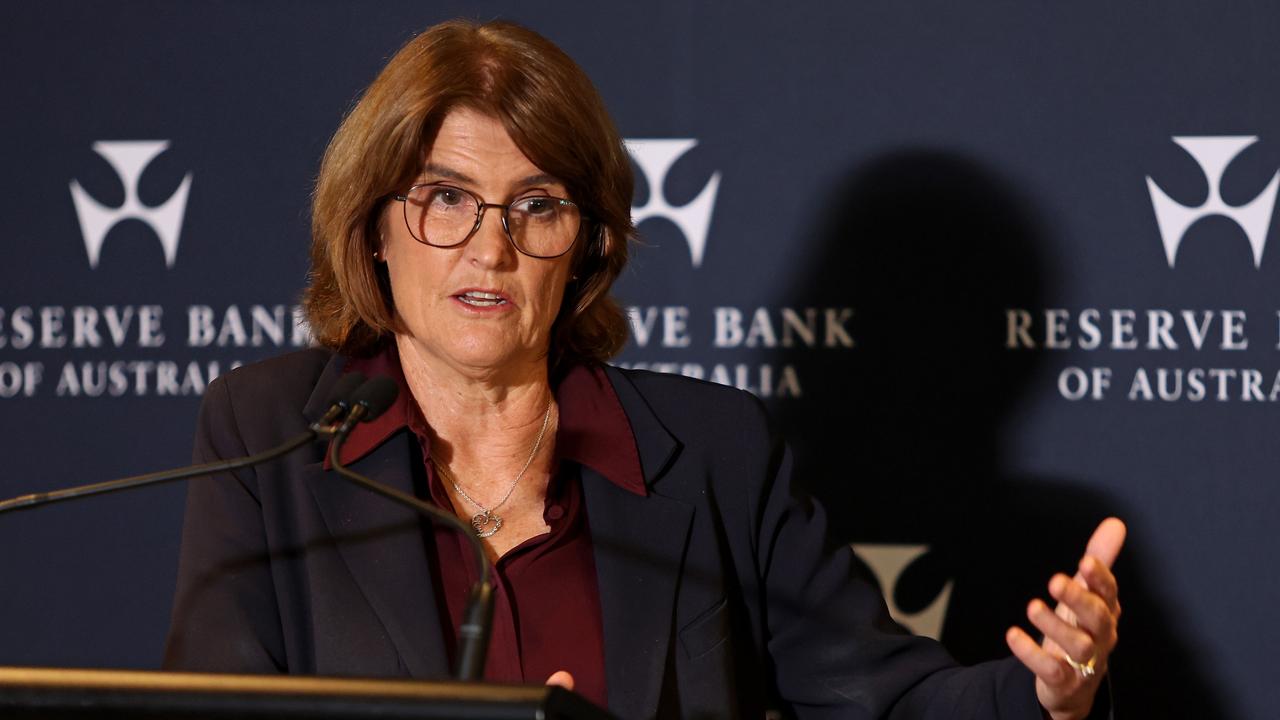
    Australia’s benchmark share index staged a remarkable afternoon comeback on Tuesday, erasing early losses to close firmly in positive territory, driven by a carefully watched speech from Reserve Bank of Australia (RBA) Governor Michele Bullock and a fresh drop in global oil prices. By the closing bell, the ASX 200 had climbed 53.80 points, or 0.60%, to settle at 8947.80, while the broader All Ordinaries index gained 48.20 points, or 0.53%, to reach 9112.00. Alongside the market uptick, the Australian dollar weakened slightly to 69.70 U.S. cents.

    Nine out of the 11 tracked industry sectors closed the session in positive territory, with consumer discretionary stocks leading the charge. Retail heavyweight Wesfarmers saw its shares rise 2.08% to $89.22, electronics retailer JB Hi-Fi gained 2.20% to hit $78.15, and travel agency Flight Centre jumped 5.07% to $12.64. The healthcare sector also posted robust gains: biotech firm CSL rose 2.69% to $119.52, medical device maker ResMed climbed 3.39% to $28.95, and pathology provider Sonic Healthcare gained 2.85% to $22.01.

    The only major headwind to the market’s rally came from the mining sector, where large-cap resources stocks pulled back on the day. BHP Group fell 1.21% to $59.37, Rio Tinto dropped 2.48% to $159.53, and Fortescue Metals edged 0.53% lower to $18.70, offsetting a portion of the gains across other sectors.

    The primary catalyst for the market’s turnaround was Bullock’s speech, in which she outlined that domestic demand growth is slowing faster than the central bank previously projected, alongside a weakening labour market and a greater-than-expected slowdown in the housing sector. Tony Sycamore, senior market analyst at IG, noted that the remarks calmed investor fears of aggressive near-term interest rate hikes, even as the RBA retained its official hawkish bias. The RBA board has repeatedly stated it stands ready to raise the cash rate further if required to hit its inflation mandate.

    “While the RBA’s hawkish bias remains — ‘The Board is prepared to act as required to achieve its mandate, including by increasing the cash rate further if needed’ — the governor noted that demand growth is moderating broadly as expected and that the housing market has softened by more than the Bank had anticipated in May,” Sycamore explained. Combined with the latest drop in oil prices, markets are now only pricing in a 5 basis point rate hike at the RBA’s August policy meeting, with a full 25 basis point increase not fully priced in until March 2027. That said, Sycamore emphasized that Wednesday’s release of June quarter inflation data will be a critical data point for future rate expectations.

    A second supporting factor for the market uptick was a further 0.9% fall in Brent Crude prices, which dropped to $US87.56 per barrel. The decline followed comments from former U.S. President Donald Trump, who revealed that peace talks between Washington and Tehran have resumed, easing geopolitical risks that have put upward pressure on energy prices in recent weeks.

    In individual company news, online travel firm Web Travel was the day’s top performer, with shares surging 17.08% to $3.29 after the company announced a $90 million share buyback program and upgraded its first half EBITDA forecast to a range of $80 million to $86 million. Electronics retailer Harvey Norman also gained 2.33% to $4.83, even after a court ordered the company to pay $35 million in penalties over a deceptive advertising campaign. On the downside, defence technology firm Droneshield dropped 13.22% to $1.80 after the company reported first half revenue of $125.8 million but confirmed that profit margins had shrunk from 65% a year earlier to 60% amid ongoing industry headwinds.

  • Survivors rise to 48 with more missing after Vietnamese ship sinks in South China Sea

    Survivors rise to 48 with more missing after Vietnamese ship sinks in South China Sea

    A coordinated multinational search and rescue operation is underway in the highly contested Spratly Islands after a Vietnamese cargo vessel sank in rough weather over the weekend, with 48 crew members pulled from the water to date and 14 still unaccounted for, authorities confirmed Tuesday.

    The vessel, identified as the *Khoi Nguyen 18*, went down late Saturday near Fiery Cross Reef, a feature of the Spratly archipelago that China has reclaimed into a man-made island and military outpost. Vietnam refers to the broader waterbody where the incident occurred as the East Sea.

    Vietnamese officials announced Monday that three additional survivors had been rescued, bringing the total number of saved crew to 48 of the 62 people originally on board. No further operational details were released alongside that update. By Tuesday afternoon, search teams from Vietnam, China, and the Philippines remained actively scouring the area for the 14 missing crew members, rescue spokespeople confirmed.

    All 48 recovered survivors have already been transferred to Vietnamese jurisdiction, according to the Vietnamese Foreign Ministry. The agency added that survivors are receiving emergency medical attention before being transported back to the Vietnamese mainland. Vietnam launched rescue mobilization immediately after the sinking incident, the ministry noted, and has maintained close coordination with all international partners participating in the search.

    Philippine authorities confirmed their involvement Tuesday, saying they deployed a coastal patrol vessel and a search aircraft in response to an official assistance request from Hanoi. The Philippine Coast Guard emphasized that the operation is being conducted in full compliance with international maritime conventions and existing bilateral cooperation frameworks between Manila and Hanoi. Chinese rescue assets, including surface vessels and helicopters, also joined the search effort in the nearby area.

    Beyond the rescue operation, the incident spotlights the long-running territorial tensions surrounding the South China Sea, one of the world’s most geostrategically critical waterways. China claims sovereignty over nearly the entire South China Sea, a route that carries roughly $5 trillion in global maritime trade annually and is thought to hold massive untapped reserves of offshore oil and natural gas. Multiple other governments including Vietnam, the Philippines, Malaysia, Brunei, and Taiwan hold overlapping, competing claims to different parts of the waterway and its island features.

    This report was originally gathered by the Associated Press, whose climate and geopolitical coverage receives philanthropic funding from independent private foundations. The AP retains full editorial control over all its reporting, and a full list of supporters and editorial standards for philanthropic partnerships is available on the AP’s official website.

  • France orders 4,000 more evacuated as heat threatens fragile hold on vast wildfire

    France orders 4,000 more evacuated as heat threatens fragile hold on vast wildfire

    LEGE-CAP FERRET, France — As soaring temperatures return to southwestern Europe, French emergency officials have ordered the evacuation of nearly 4,000 people from coastal Atlantic tourist sites, raising the stakes for an unprecedented regional wildfire crisis that has already displaced hundreds of thousands across France and Spain.

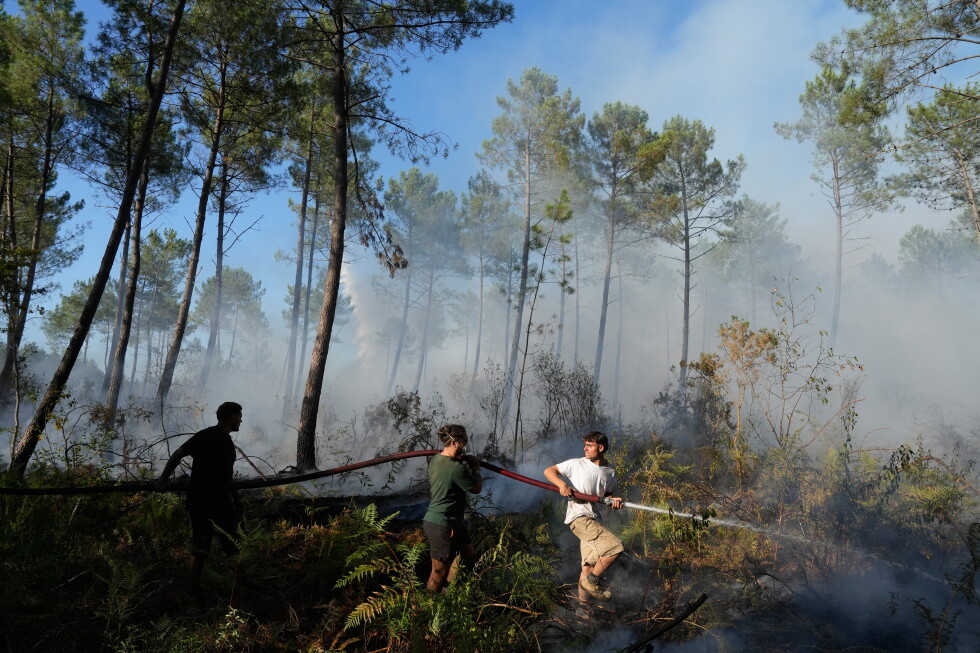
    The sprawling Gironde wildfire west of Bordeaux, which has already burned through 420 square kilometers of land — an area four times the size of Paris — has been held at a standstill overnight by firefighting crews, who managed to douse flare-ups near coastal dunes and halt the fire’s advance. While regional authorities have categorized the blaze as stabilized, they warn this status does not mean the fire is fully contained: with thermometers climbing and humidity levels dropping, the inferno could easily resume its spread across drought-parched vegetation.

    The precautionary evacuation order issued Tuesday covers all tourist infrastructure in the Lacanau resort region, including popular campsites, holiday villages, seasonal residences and leisure parks stretching across Lacanau Ocean and both shorelines of Lacanau Lake. “We are currently in a highly fragile position,” Eric Brocardi, spokesperson for France’s national firefighters federation, told broadcaster BFMTV Tuesday. “Even with the predicted temperature rise, we will continue our offensive against this fire.”

    Since igniting last week, the Gironde blaze has proven wildly unpredictable, at times escalating into a self-sustaining firestorm that forced 220,000 people to flee their homes and vacation getaways. Even after 24 hours without expansion, officials warn that smoldering undergrowth along the fire’s 103-kilometer completed firebreak line could spark new outbreaks as conditions worsen. To date, 93 firefighters have been injured battling the blaze, key transport routes including the A63 highway remain partially closed, and most rail traffic south of Bordeaux is suspended.

    The tense standoff in Gironde stands in contrast to promising progress in neighboring Landes, where a separate destructive wildfire has officially been declared contained, allowing 15,000 of the more than 30,000 displaced residents and tourists to return to their properties starting Monday night. “The fire is fixed, that is good news for Landes,” French President Emmanuel Macron confirmed Monday evening, noting that containment means the fire’s advance has been fully halted with no new active outbreaks spreading. The reprieve comes as a major relief for summer vacation communities that were emptied when flames swept through regional forests and tourist hubs. Still, authorities stress the Landes fire is not fully extinguished: residual hot spots, combined with persistent drought and shifting winds, could reignite the blaze, and surveillance and damping operations will continue for days, if not weeks.

    All hard-won progress across both French fire zones faced an immediate test Tuesday as heat began building back up across the region. France’s national weather service placed Gironde under a yellow heat warning starting midday, forecasting inland temperatures between 33 and 35 degrees Celsius, with southeastern winds expected across the department.

    So far this year, more than 116,000 hectares of land have burned across France, part of a broader trend of extreme wildfire activity amplified by climate change. The European Union’s Copernicus Climate Change Service confirmed Western Europe saw its hottest June on record this year, with extreme heat and widespread drought creating ideal conditions for fires to spread and intensify across both France and Spain.

    Across the border in Spain, the situation remains even more severe, with hundreds of firefighters, military emergency brigades and water-dropping aircraft continuing to battle multiple major blazes, including the largest wildfire recorded in the country’s history. Spain entered its fourth major heat wave of the summer on Tuesday, with forecasts calling for temperatures exceeding 40 degrees Celsius in many inland regions. To date, the ongoing wildfire crisis — which prompted the Spanish government to declare a first-ever national wildfire emergency — has forced roughly 79,000 people to evacuate and ordered another 30,000 to remain sheltered in their homes.

    The highest level of concern centers on two large blazes west of Madrid that have at times neared merging into a single mega-wildfire in the region’s wooded hills, while a separate blaze in the eastern province of Castellón has also triggered mass evacuations. The record-breaking wildfire in Ávila, west of Madrid, has already scorched more than 500 square kilometers of hilly rural terrain — an area five times the size of Barcelona. “Look at how the entire valley is burned. Look at the houses, look at what people have lost,” said David Gonzalez, a 48-year-old gardener who has used his personal van to deliver supplies to firefighting crews in Ávila. “We feel so much anger and helplessness. This is something inhuman.”

    This year alone, wildfires have burned more than 1,530 square kilometers across Spain — six times the total area scorched by wildfires in the same period of 2025, according to Spanish Ecology Minister Sara Aagesen. Spanish Prime Minister Pedro Sánchez has called for a unified national pact to address the growing wildfire risk, which scientists and policymakers agree has been significantly worsened by human-caused climate change.

    Across the two countries, the ongoing crisis has forced more than 330,000 people to flee their homes and tourist accommodations, marking one of the largest and most destructive wildfire outbreaks in recent European history.

  • Made by AI? EU tells firms to stick a label on it from Sunday

    Made by AI? EU tells firms to stick a label on it from Sunday

    Starting this Sunday, August 2, new mandatory transparency requirements for artificial intelligence-generated content will come into force across the European Union, as the bloc rolls out the first phase of its landmark comprehensive AI regulation. The core mandate of the new rules is simple but transformative: any AI system, from large language model-powered chatbots to AI-generated text, images, audio or video, must clearly disclose its artificial origin to end users, so that Europeans can immediately distinguish between authentic human-created content and synthetic AI output.

    Policymakers specifically highlight deepfakes—AI-generated or manipulated text, images, video and audio designed to mimic real content—as a key area of concern. Officials note that generative AI has enabled bad actors to create and spread disinformation at an unprecedented scale, with content tailored to target specific audiences and disseminated in near real time, eroding the public’s ability to tell fact from synthetic content. The new rules are designed to preserve consumer trust in the content they encounter online, by ensuring clear disclosure of AI creation.

    Under the framework, companies can meet the requirement through a range of methods, including embedded watermarks and other detectable digital markers that flag AI origin. Non-compliance carries the threat of substantial fines, though the EU has clarified that the rules only apply to professionally generated AI content; individuals using AI tools for personal, non-professional purposes are entirely exempt from the mandate. AI-generated text intended to inform the public on matters of general interest that lacks human editorial oversight is also required to carry an AI label, while work categorized as artistic, creative, satirical or fictional receives a full exemption. All existing AI systems operating in the bloc have until December 2 this year to bring their operations into full compliance with the new requirements.

    The policy has drawn its share of criticism, with critics arguing that the rules place overly burdensome compliance demands on businesses, and note that rapid, widespread adoption of AI across all sectors could eventually lead to near-universal labelling requirements. But Ashley Casovan, a representative of the International Association of Privacy Professionals, downplayed these concerns, telling AFP that similar predictions of unmanageable compliance burdens have accompanied past new regulatory requirements, and that businesses will adapt over time.

    Many of the world’s largest technology companies have already begun implementing their own AI labelling systems in anticipation of the new rules. TikTok has required creators to label AI-generated images, audio and video for several years, and the platform reports that over three billion pieces of content already carry AI labels thanks to built-in detection and labelling tools. Meta has rolled out its own “AI Info” label for AI-powered posts on Instagram and Facebook, while Google has signed the EU’s voluntary AI transparency code of conduct and is collaborating with major industry players including Nvidia, OpenAI and Apple to develop standardized digital tagging tools.

    Even as companies prepare for compliance, some industry leaders warn that overlapping regulatory requirements could create unintended confusion for end users. Karen Massin, a policy lead at Google, warned that excessive regulatory complexity could prove counterproductive to the rules’ core goal, noting that if online platforms become flooded with overlapping AI labels and legal disclosures, it will become harder rather than easier for users to access the clear context they need to evaluate content.

  • ‘Nowhere to hide’: Tax office issued brutal warning as ex-public servant charged over alleged $1.3m GST fraud scheme

    ‘Nowhere to hide’: Tax office issued brutal warning as ex-public servant charged over alleged $1.3m GST fraud scheme

    In a high-profile joint law enforcement operation targeting serious financial crime, a 33-year-old former public servant from Broken Hill, New South Wales, has been formally charged with attempting to defraud the Australian Commonwealth out of more than $1.3 million via fraudulent Goods and Services Tax (GST) refund claims. The alleged scheme unfolded over a two-year period between 2020 and 2022, and authorities have used the arrest to issue a stark warning that tax fraud will not be tolerated anywhere in the country.

    The suspect was taken into custody at his Broken Hill residence on June 30, following a lengthy investigation led jointly by the Australian Taxation Office (ATO) and the Australian Federal Police (AFP), carried out under the umbrella of the Serious Financial Crime Task Force (SFCT). Body-worn and on-scene footage released by NSW Police shows uniformed officers escorting the man from his home into a waiting police vehicle following the arrest. A subsequent search of the property uncovered multiple electronic devices, which were seized as evidence for the ongoing case.

    According to law enforcement briefings, the former public servant first came onto the ATO’s radar through Operation Protego, the agency’s dedicated integrity task force focused on rooting out fraudulent activity. Investigators allege the suspect submitted falsified business activity statements using a fake Australian business entity to improperly claim the large GST refunds. He faces a single count of obtaining financial advantage through deception, one of the most serious financial crime charges under Australian Commonwealth law.

    Following the arrest and charging, ATO Deputy Commissioner Nicholas Shizas emphasized the critical importance of integrity in both public service and the national tax system. “Integrity is fundamental to public service – if you are not committed to this standard, the public service is not the right place for you,” Shizas said. He added that tax crime has “nowhere to hide” in Australia, pointing to the agency’s sophisticated detection systems and the proven collaborative capabilities of the SFCT and Operation Protego Integrity Taskforce. “This joint effort reflects the ongoing work of the SFCT to disrupt financial crime and respond to criminal behaviour, holding offenders accountable and protecting the integrity of the system,” he noted.

    AFP Acting Commander Tim Underhill echoed Shizas’ remarks, highlighting the collective commitment of partner agencies to safeguarding public funds. “These types of investigations are resource intensive and time-consuming, but the AFP and its partners are committed to preventing fraud and protecting taxpayers’ money,” Underhill said. He stressed that the alleged offending undermines the foundation of Australia’s tax framework, pulling critical funding away from vital community services that rely on consistent tax revenue. “There is no location in Australia where individuals can seek to lay low in the hope of avoiding law enforcement, we will locate you and bring you before the courts,” he added.

    After being granted strict bail conditions, the accused made a brief first appearance at the Broken Hill Local Court earlier this week. The case is scheduled for further progression through the Australian court system in coming months, as investigators continue to build their case against the former public servant.

  • Four decades after Chernobyl, a generational divide reshapes Italy’s nuclear debate

    Four decades after Chernobyl, a generational divide reshapes Italy’s nuclear debate

    Forty years after the Chernobyl nuclear disaster spread radioactive contamination across Europe and pushed Italy to abandon atomic energy entirely, Prime Minister Giorgia Meloni’s right-wing administration is moving systematically to reintroduce nuclear power into the country’s energy portfolio, driven by urgent demands to boost energy independence amid ongoing global geopolitical shocks.

    The government’s strategy centers on courting a new generation of Italian voters, who frame modern nuclear energy as a critical low-carbon solution for climate action and a reliable bulwark against energy market volatility triggered by the ongoing conflicts in Ukraine and the Middle East. Energy policy experts note the administration is counting on this youth-driven support to override the deep-seated skepticism of older Italians who came of age during the 1986 Chernobyl crisis, and who have twice rejected nuclear power in national referendums over the past four decades.

    Next week, the Italian parliament is scheduled to vote on a government-backed bill that will establish the first formal legal framework for next-generation nuclear technologies in the country. If approved, the executive branch will have 12 months to draft detailed regulatory decrees covering every key stage of development, from reactor licensing and strict safety protocols to radioactive waste management and site selection for new facilities.

    Speaking to the Associated Press ahead of the parliamentary vote, Environment and Energy Security Minister Gilberto Pichetto Fratin explained the government’s current mandate: “Our duty at this moment is to lay the legal and regulatory groundwork, so that future decision-makers will have the structure they need to move forward with new reactor installations when the time comes.”

    ## A Historic Policy Reversal For Europe

    Italy’s ongoing nuclear debate comes as a growing number of European nations, including France and Poland, are expanding their existing nuclear programs to meet dual goals of cutting carbon emissions and strengthening energy security following Russia’s 2022 full-scale invasion of Ukraine. Unlike these countries, which maintained their nuclear infrastructure after Chernobyl, Italy is attempting to rebuild an entire industry that was fully dismantled by public mandate decades ago.

    Italy was one of Europe’s earliest nuclear pioneers, with four operational reactors running across the country until the 1987 post-Chernobyl referendum effectively shut down the entire national nuclear program. A second attempt to revive nuclear development collapsed in the wake of Japan’s 2011 Fukushima disaster, when 94% of participating Italian voters rejected plans for new reactor construction.

    If successful, Italy’s current push would mark one of the most dramatic energy policy reversals in modern European history. Meloni’s government argues that surging electricity demand, legally binding European climate targets, and persistent energy security threats after Russia’s invasion of Ukraine collectively justify returning nuclear power to Italy’s energy mix.

    Pichetto Fratin projected that domestic electricity demand will grow by at least 30% over the next decade, a surge that cannot be met by renewable energy sources alone. Instead of reviving the large-scale conventional reactors of the past, the government is prioritizing small modular reactors (SMRs) and other cutting-edge nuclear technologies, which proponents argue come with improved safety features, greater operational flexibility, and far shorter construction timelines than traditional nuclear facilities.

    “We are working with third-generation advanced nuclear technology, which is far better aligned to our current energy needs,” Pichetto Fratin said. “It is much safer thanks to its small modular design, and can be built in a fraction of the time of older large-scale plants. When people ask me for a realistic timeline for the first operational reactor, I tell them 2033, 2034, or 2035.”

    Globally, nuclear power generates roughly 10% of the world’s total electricity supply, accounting for approximately one-quarter of all low-carbon energy produced worldwide. Italy’s planned nuclear comeback is part of a broader global resurgence of interest in atomic energy, driven by steady technological advances that have improved safety and reduced construction and operating costs for new facilities.

    ## Public Opinion Split Along Generational Lines

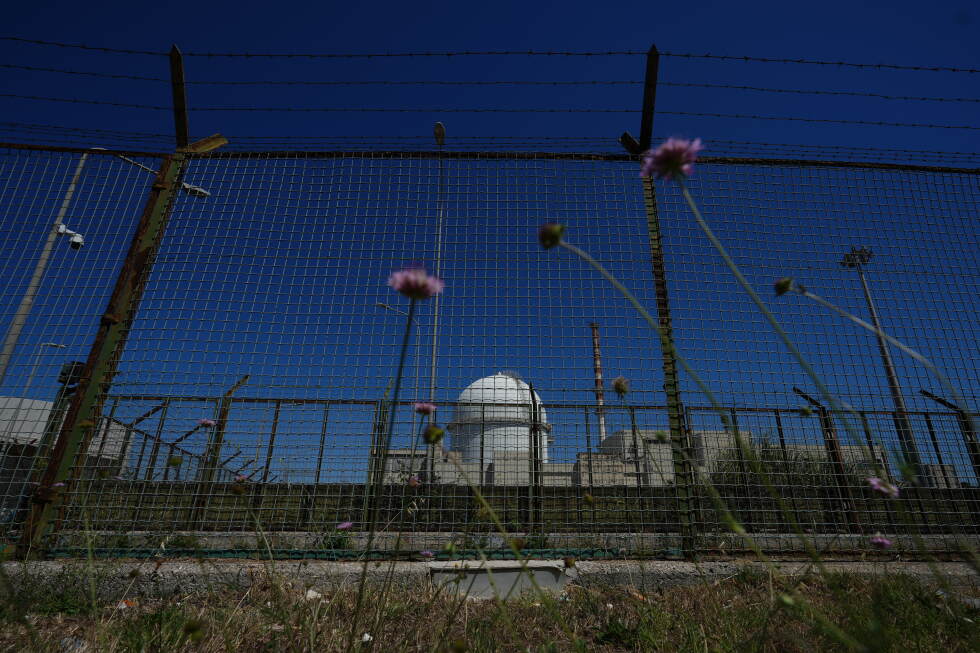
    At the decommissioned Latina nuclear power plant, located south of Rome, crews in protective gear continue to dismantle the remains of Italy’s first nuclear era even as policymakers in the capital debate how to launch a second. This striking contrast is not lost on Viviana Cruciani, who oversees nuclear decommissioning operations at the site, which is run by state-owned energy company Sogin.

    “There is one generation that came of age right after Chernobyl, and they still only see nuclear energy through the lens of that 1986 accident,” Cruciani told the AP. “But there is another, much younger generation that is enthusiastic about nuclear power, and they are frustrated that Italy has not moved forward to bring this technology back.”

    A 2024 public opinion survey conducted by Italian research firm Only Numbers found that roughly 55% of Italian voters support the construction of next-generation nuclear plants. Michele Governatori, a senior energy adviser at climate and energy think tank ECCO, noted that widespread support is particularly concentrated among younger demographics.

    “There is far greater openness to nuclear power especially among younger generations,” Governatori said, explaining that many young Italians associate nuclear energy with technological innovation rather than the historic accidents that shaped public opinion for older cohorts.

    Cruciani added that younger Italians are far more likely to frame nuclear power as a solution to future energy needs and climate change, rather than associating it with the nuclear disasters of the late 20th century. “I think nuclear power can help the environment too; it’s far more sustainable than fossil fuels,” said Cristian Giannetti, a 20-year-old tourist visiting Rome from the Tuscan coastal town of Forte dei Marmi. When asked about the risk of another Chernobyl-scale accident, Giannetti noted that decades of technological advancement have drastically reduced safety risks: “With the expertise and resources we have today, I think the probability of a major accident is really minimal.”

    Other supporters back a return to nuclear power for practical economic reasons. “We have a clear energy crisis in this country, so it is very important that nuclear power gets the green light in Italy too,” said Paola Giovannini Pasti, president of Confagricoltura Donna, the women’s division of Italy’s largest agricultural lobbying group.

    ## Critics Raise Key Questions Over Cost and Political Feasibility

    Not all observers are convinced of the plan’s viability. “If we rely on nuclear as a backup for renewables, average energy costs become devastating. Unfortunately, it is not a good complement to renewables, and it is not cheap,” Governatori said. Pichetto Fratin has acknowledged that nuclear power is not a short-term fix for Italy’s current high consumer electricity prices: “Nuclear power will not lower consumers’ bills today. But the nuclear power we build tomorrow can help bring costs down over time.”

    Industry estimates put the cost of a single 300-megawatt SMR at between 3 billion and 6 billion euros, before accounting for additional infrastructure and national grid connection expenses. Pichetto Fratin said the government expects the majority of this funding to come from private sector investors, but critics argue cost remains the biggest flaw in the government’s case.

    “Nuclear power being built in Europe today comes with exorbitant costs,” Governatori said. “On one hand, costs are extremely high, and on the other, private investors are pulling back from the sector.” He also questioned whether SMR technology will deliver on promises of improved economics, noting that the design has yet to be proven commercially viable at scale. Even so, many critics agree that establishing a formal regulatory framework will allow future projects to be evaluated on a case-by-case basis.

    The biggest political hurdle for the government may ultimately be finding acceptable locations for new reactors and permanent radioactive waste storage. Italy still has not established a permanent national repository for its existing nuclear waste, most of which is currently stored at temporary facilities scattered across the country. Any future reactor or waste storage site will almost certainly face fierce local opposition.

    Even if parliament approves the upcoming framework bill, opponents including major environmental groups and left-wing opposition parties could force a new national referendum once specific reactor sites and waste storage plans are announced. Public opinion polls show that general support for nuclear power drops sharply when voters are asked whether they would accept a reactor in their home province, with roughly six in 10 Italians opposing local reactor development.

    “When you get down to the concrete questions of where the plant will be built and how much it will cost, it is very likely that public opinion will shift back to opposition,” Governatori said.
  • NRL teams: Panthers make bombshell call to axe Blaize Talagi as the Tigers bring Adam Doueihi straight back in after week from hell

    NRL teams: Panthers make bombshell call to axe Blaize Talagi as the Tigers bring Adam Doueihi straight back in after week from hell

    With just six regular-season matches remaining before the 2024 NRL finals kick off, premiership favourites Penrith Panthers have delivered one of the most shocking selection moves of the year, dropping young five-eighth Blaize Talagi to NSW Cup just seven weeks out from the title decider.

    The move comes after opposition teams have increasingly targeted Penrith’s left defensive edge, a strategy that paid major dividends for the Parramatta Eels in their match against the Panthers last round. Talagi, who missed seven tackles in the Eels clash, became the casualty of ongoing defensive struggles on that side of the field, with Cleary choosing veteran Jack Cogger to step into the starting role to partner playmaker Nathan Cleary for this weekend’s match against the Canberra Raiders.

    Speaking after last week’s loss to the Eels, Panthers head coach Ivan Cleary acknowledged the left edge has become a persistent problem for his squad, even as the club retains its status as the best defensive outfit in the NRL. “If they’ve been targeted for two years, we still remain the best defensive team. There were definitely some worries tonight, but on the balance, they can do better than that,” Cleary told reporters. While the call to drop a young player so close to the finals is a high-stakes gamble for the premiership hopefuls, it also gives Cleary enough time to test whether the reshuffled starting 13 is the combination that can carry the club to another premiership title.

    In other selection news across the league, Wests Tigers head coach Benji Marshall has made the surprising call to reinstate star halfback Adam Doueihi straight back into the starting side just one week after the playmaker was dropped from the squad amid internal club unrest. Despite growing calls from fans and pundits to send Doueihi to reserve grade, the halfback will partner former Panthers playmaker Jarome Luai in the halves for the upcoming round, with rookie Javon Andrews named on the reserves. His return is a much-needed boost for a Tigers side that has suffered a dramatic form slump in recent months, with young forward Heamasi Makasini also returning to the starting line-up in the centres.

    The Sydney Roosters have been hit with a double injury blow, with winger Billy Smith joining star outside back Daniel Tupou on the injury sidelines. The club has named Tommy Talau to step into the starting side, forming an all-new left edge combination for the upcoming round.

    For the Dolphins, young playmaker Isaiya Katoa has been named on the extended bench as he continues his recovery from a wrist injury, though the club has confirmed there is no guarantee he will make an early return to the field this weekend.

    There is major positive injury news for the Newcastle Knights, with star fullback Kalyn Ponga named to return this week just after the club confirmed playmaker Dylan Brown will miss the remainder of the season. Ponga’s return comes at a critical time for the Knights, who are also without back Dylan Brown for the rest of the campaign. The club has named a new halves combination of Fletcher Sharpe and Sandon Smith for their road trip to Brisbane, with Deine Mariner shifting into the centres to replace the injured Gehamat Shibasaki.

    South Sydney Rabbitohs forward Brandon Moore has been named to start at hooker despite managing ongoing calf issues, while young forward Tallis Duncan is in line for an earlier-than-expected return from injury in Sunday’s clash against the Cronulla Sharks. The New Zealand Warriors have brought Charnze Nicoll-Klokstad into the starting side to replace the injured Taine Tuaupiki, who is sidelined with a foot injury, while the Gold Coast Titans have welcomed back playmaker AJ Brimson and forward Kurtis Morrin from injury layoffs.

    Melbourne Storm have named young utility Trent Toelau to replace injured captain and hooker Harry Grant at dummy-half this round, with rookie Hayden Watson set to make his NRL debut after being named on the bench. Young centre Jack Howarth will miss the clash against the Canterbury Bulldogs, with Manaia Waitere recalled to the starting side in his place.