作者: admin

  • Humpback whales make record swims between Australia and Brazil

    Humpback whales make record swims between Australia and Brazil

    Two individual humpback whales have completed the longest documented transoceanic journeys ever recorded for their species, traveling thousands of kilometers between breeding grounds off Australia and Brazil, according to new research published Wednesday by an international team of marine scientists.

    The research team relied on a massive dataset of more than 30,000 photographs of distinct humpback whale tail flukes, a unique identifying marker for every individual, to confirm the two massive mammals had been sighted on opposite sides of the South Atlantic Ocean. The first whale was first photographed off the coast of Queensland, Australia in 2007, and was spotted again near São Paulo, Brazil in 2019 — covering a straight-line distance of 14,200 kilometers, or roughly 8,823 miles. The second individual was observed off Brazil’s Bahia coast, before being re-sighted 22 years later in Australia’s Hervey Bay, a journey of 15,100 kilometers. Researchers confirmed these crossings set a new record for the longest distance between verified sightings of a single humpback whale.

    Growing up to 17 meters long and weighing as much as 40 tons, humpback whales are already famous for long annual migrations between Antarctic feeding grounds and tropical breeding areas, but these transoceanic crossings between separate breeding regions are extraordinarily rare, the study authors noted.

    Despite their infrequency, these cross-regional journeys play a critical role in supporting the long-term resilience and health of global humpback whale populations, explained Stephanie Stack, a PhD researcher at Australia’s Griffith University and co-author of the study. When individual whales move between geographically distant breeding populations, they introduce new genetic material that maintains overall genetic diversity, a key factor in helping populations adapt to long-term environmental change. Stack added that traveling whales may also carry new humpback whale song patterns between regions — a striking parallel to how music trends spread through human cultures, since humpback songs are a socially learned cultural trait that spreads across entire ocean basins.

    The new findings also add further empirical support for a longstanding ecological hypothesis called the Southern Ocean Exchange. This theory proposes that after humpback whales gather to feed in the shared feeding grounds of the Southern Ocean around Antarctica, some individuals do not return to their original breeding grounds, instead settling into an entirely new breeding region on a different continent.

    Researchers from Griffith University noted that climate change is altering the Southern Ocean ecosystem in ways that may make these long-distance crossings more common in coming decades. Shifts in sea ice coverage and changes to the distribution of Antarctic krill — the tiny shrimp-like crustaceans that are the primary food source for humpback whales during their feeding season — may push more whales to seek out new breeding routes and areas after feeding, leading to more frequent cross-ocean exchanges.

  • Car rolls and crashes near Sydney Harbour Bridge during peak-hour traffic, trio escape uninjured

    Car rolls and crashes near Sydney Harbour Bridge during peak-hour traffic, trio escape uninjured

    A sudden and dramatic multi-vehicle collision disrupted Wednesday evening commuter traffic near one of Australia’s most iconic landmarks, the Sydney Harbour Bridge, in a chaotic incident that ended with a surprisingly positive outcome. Emergency services were first alerted to the crash just after 4:15 p.m. on Wednesday, with multiple response teams dispatched to the site, located south of the Sydney Harbour Bridge near Millers Point, along the Western Distributor Freeway – a major artery carrying thousands of peak-hour commuters daily.

    Initial response confirmed that three passenger vehicles, each carrying only a single driver, were involved in the collision that resulted in one vehicle rolling over completely in full view of surrounding traffic. The incident immediately created traffic snarls that rippled through the wider Sydney CBD road network, as visual footage from the scene captured the flipped vehicle blocking key lanes near the bridge approach.

    By the time NSW Ambulance paramedics arrived at the scene roughly 15 minutes after the initial call, all three drivers had already managed to exit their vehicles on their own. Responding medical teams conducted full on-site injury assessments for every driver involved, and to the relief of emergency personnel, not a single person required transport to hospital for further treatment. As of 5:00 p.m. Wednesday, ambulance crews were preparing to clear the scene, with no major harm reported to any of those involved.

    NSW Police have confirmed their presence at the site to coordinate response efforts and manage traffic flow. Authorities have issued a public advisory urging motorists to plan alternative routes and avoid the affected area entirely, as official traffic diversions remain in place to accommodate vehicle recovery and road clearance work. This is a developing story, with updates expected as more details about clearing operations and full traffic resumption become available.

  • NSW beauty therapist banned for five years after patient left in ICU from horror injection mishap

    NSW beauty therapist banned for five years after patient left in ICU from horror injection mishap

    A New South Wales beauty practitioner has been stripped of her right to work in the health and beauty industry for half a decade, after an unapproved cosmetic procedure left a 62-year-old client fighting botulism in intensive care.

    Huirong Zhou, who also goes by the professional name Katrina Zhou, has operated Rui Mei Beauty Salon in Burwood since 2014. Holding qualifications only in remedial massage, beauty therapy, and laser hair reduction, Zhou advertised services ranging from semi-permanent makeup and manicures to specialized advanced facial treatments. What she did not hold, however, was council approval to conduct any skin penetration procedures—work that includes the cosmetic injectable treatments she was secretly offering at the unlicensed site.

    The case came to official attention in mid-October 2025, when the client filed a formal complaint against the salon just days after developing worrying symptoms. For two weeks, the 62-year-old woman struggled with dysarthria (slurred speech) and dysphagia (difficulty swallowing), two hallmark signs of iatrogenic botulism—botulism caused by medical or cosmetic procedures. She was first admitted to Canterbury Hospital before being transferred to Concord Hospital’s intensive care unit, where clinicians administered life-saving botulinum antitoxin. Even after treatment, the patient continues to experience persistent impairment to her swallowing and speech function.

    Five days after the initial complaint, an interagency regulatory team launched an on-site inspection of Zhou’s salon. What officers uncovered painted a clear picture of widespread regulatory non-compliance: a large stockpile of unapproved, overseas-sourced therapeutic goods, including unregistered Botox, dermal fillers of unknown origin, and other cosmetic injectables not cleared for clinical use in Australia. Also seized were unapproved needles, syringes, saline solution, antiseptics, and local anaesthetic creams potent enough to qualify as restricted Schedule 4 prescription medication.

    Beyond the illegal stock of medical products, inspectors also flagged serious gaps in basic infection control protocols and a complete failure to maintain required patient treatment records. In its formal decision published this week, the New South Wales Health Care Complaints Commission ruled that Zhou poses an unacceptably severe and continuous threat to public health and safety.

    The permanent-style ban took effect immediately from the order’s issuance, barring Zhou from providing any form of health service to the public—whether paid or on a voluntary basis—for a full five years. The case has renewed calls for tighter surveillance of unlicensed cosmetic procedures in suburban Australian beauty salons, where unregulated injectable treatments have emerged as a growing public health risk across the country.

  • Pakistan’s Saudi deployment reveals a new Gulf security reality

    Pakistan’s Saudi deployment reveals a new Gulf security reality

    In what geopolitical analysts are calling one of the most underreported yet consequential shifts in Middle Eastern security in recent years, unconfirmed reports of a major Pakistani military deployment to Saudi Arabia under a secret bilateral defense pact have reshaped understandings of evolving regional power arrangements. Citing anonymous security and government sources, Reuters first broke the story that Islamabad has deployed roughly 8,000 troops, a full squadron of JF-17 fighter jets, drone combat units, and a Chinese-built HQ-9 advanced air defense system to the kingdom, all under the terms of the 2025 mutual defense agreement signed by the two nations. Neither Pakistani nor Saudi officials have issued an official confirmation or denial of the deployment details, but the reported scope of the force makes clear this is far more than a limited symbolic advisory mission.

    The 2025 Saudi-Pakistan Mutual Defense Agreement was signed in Riyadh on September 17 by Saudi Crown Prince Mohammed bin Salman and Pakistani Prime Minister Shehbaz Sharif, finalized against a backdrop of rapidly escalating regional volatility. The pact’s announcement came just days after an Israeli airstrike targeting a Hamas leadership delegation in Doha, Qatar — an operation that sent shockwaves through Gulf capitals far beyond Qatar’s borders. For decades, Gulf monarchies operated under the core strategic assumption that close alignment with Washington would deter unilateral Israeli military actions on Gulf territory. The Doha strike shattered that long-held confidence, exposing deep growing uncertainty around the reliability of existing regional deterrence frameworks and Western security guarantees. It is this uncertainty, rather than an attempt to displace long-standing American military leadership in the region, that the reported Pakistani military buildup reflects.

    The deployment, if confirmed, underscores an emerging new reality: Gulf states are actively pursuing additional layers of strategic protection as doubts grow about the stability and predictability of the regional security environment. Riyadh’s move to deepen security ties with Islamabad sends a clear but understated message to Washington: if existing security guarantees grow less reliable during periods of regional escalation, Gulf nations will diversify their strategic partnership networks. Crucially, this does not mean Saudi Arabia seeks to replace the United States with Pakistan as its primary security guarantor. That misinterpretation ignores both the deep-rooted structure of Gulf security and the scale of long-standing American military entrenchment across the region. The U.S. maintains an extensive, institutionally embedded military presence throughout the Gulf: the U.S. Fifth Fleet is headquartered in Bahrain, Qatar hosts the largest American air base in the Middle East, thousands of U.S. troops remain stationed in Kuwait, and Washington holds formal strategic access agreements with Oman and the United Arab Emirates. Saudi Arabia itself still relies heavily on American military hardware, intelligence sharing, and overarching regional deterrence architecture — a role Pakistan simply cannot fill.

    Instead, Riyadh and other Gulf states are increasingly focused on supplementing existing security arrangements, rather than relying entirely on a single external power for protection. It is important to note that deep military cooperation between Saudi Arabia and Pakistan is not a new development. Since the 1970s, Pakistani troops have periodically deployed to Saudi Arabia to support training, border security, and advisory missions. Pakistani military institutions have long-standing, close ties with Gulf defense establishments, and Saudi Arabia has repeatedly stepped in to provide critical economic support to Islamabad during periods of severe financial crisis. The bilateral relationship has also extended beyond conventional defense cooperation to include unspoken broader strategic understandings. For decades, analysts have speculated that decades of Saudi financial support for Pakistan’s nuclear program created an informal expectation that Islamabad’s strategic deterrent capabilities could be called on to support Gulf security if the regional balance of power deteriorated dramatically. Public remarks from former Pakistani Defense Minister Khawaja Asif, which implied Saudi Arabia falls under Pakistan’s “nuclear umbrella”, have only reinforced these assumptions, even though no formal nuclear security arrangement has ever been publicly acknowledged.

    While Saudi Arabia has long-standing concerns about Iran’s regional expansion and nuclear ambitions, framing the new agreement solely as a counter to Iran oversimplifies the complex regional context. By the time the pact was signed in September 2025, Iran’s nuclear infrastructure had already sustained major damage during the June 2025 Israel-Iran conflict and subsequent American strikes on Iranian nuclear facilities. Instead, the timing of the agreement reflects broader anxiety across the Gulf about growing regional unpredictability, rather than just an immediate fear of Iranian expansion. The Doha Israeli strike made clear that Gulf territory itself is no longer insulated from spillover escalation from broader regional conflicts, a realization that has accelerated Gulf efforts to diversify security partnerships, build redundant deterrence capabilities, and reduce overreliance on any single security framework.

    For Pakistan, the new arrangement requires navigating an extremely delicate geopolitical balancing act. Islamabad holds two unique roles in the region: it is a formal military partner to Saudi Arabia, while also serving as a rare diplomatic intermediary between Washington and Tehran. In recent weeks, Pakistan has reportedly played a central role in brokering and maintaining the current ceasefire between the U.S. and Iran, and even hosted the only direct round of negotiations between the two parties. Few regional actors maintain open, working diplomatic channels with Riyadh, Tehran, Beijing, and Washington simultaneously. Iranian Foreign Ministry spokesperson Esmaeil Baghaei recently confirmed that indirect diplomatic engagement with the U.S. over the Iranian nuclear file remains ongoing rather than intermittent, and noted that Tehran reviewed proposed U.S. amendments to a draft agreement conveyed via Pakistani intermediaries before submitting its formal counterproposal — further underscoring Islamabad’s growing role as a critical communication bridge between adversarial powers.

    This diplomatic flexibility has emerged as one of Pakistan’s most valuable geopolitical assets in the current regional order, but balancing between rival regional and global camps carries clear risks. Iran has historically tolerated Pakistan’s defense relationship with Saudi Arabia because the relationship was limited to defensive and advisory roles. A visibly expanded Pakistani military deployment directly tied to regional confrontation could eventually undermine Islamabad’s credibility as a neutral intermediary, complicating its diplomatic work. This strategic tradeoff helps explain why Pakistani officials have remained deliberately vague and cautious in public responses to the Reuters report, as strategic ambiguity continues to serve Islamabad’s core interests.

    Beyond its geopolitical implications, the reported deployment also carries technological significance that points to shifting defense markets in the Gulf. The inclusion of Chinese-origin defense systems — the JF-17, which is co-produced with China, and the HQ-9 air defense system — highlights Beijing’s growing indirect footprint in Gulf defense ecosystems. While China remains far from replacing the United States as the dominant military power in the Middle East, and lacks Washington’s extensive alliance network, regional basing infrastructure, and expeditionary military capabilities, Chinese defense technologies are increasingly being integrated into Gulf national procurement plans. This trend is fostering a more diversified, multipolar regional defense environment.

    The development is also being closely watched in New Delhi, as Chinese-built defense systems from Pakistan are now entering Gulf security calculations. While the deployment does not fundamentally reshape the regional balance of power, it does reflect the growing strategic interconnectedness between South Asian and Middle Eastern security theaters, a shift that will have ripple effects across the Indo-Pacific.

    Ultimately, regional states are not abandoning the United States as a core security partner. Instead, they are taking deliberate steps to reduce their strategic vulnerability by expanding partnership networks and building overlapping security relationships that can adapt to an era of growing geopolitical uncertainty. In this sense, the significance of the Saudi-Pakistan defense arrangement is far more political than it is military. The pact signals the emergence of a new Gulf security order that is more flexible, layered, and strategically diversified than the post-Cold War framework that dominated the region for decades. The United States remains the central external security actor in the Middle East, but Gulf states are increasingly unwilling to rely exclusively on any single power amid intensifying regional fragmentation and shifting global great power priorities. For Pakistan, the greatest challenge will not be deploying military assets to the Gulf, but preserving its valuable strategic flexibility without being pulled irreversibly into competing regional confrontations.

    This analysis is contributed by Saima Afzal, a research scholar at Justus Liebig University in Germany, whose work focuses on South Asian security, counterterrorism, and cross-regional geopolitics across the Middle East, Afghanistan, and the Indo-Pacific.

  • Ebola, hantavirus show world’s risk preparedness lagging: pandemic expert

    Ebola, hantavirus show world’s risk preparedness lagging: pandemic expert

    Six years after the World Health Organization officially ended the Covid-19 public health emergency of international concern, a leading global pandemic preparedness expert has issued a stark warning that the world still has not closed critical gaps in early risk detection and pre-outbreak preparedness, as highlighted by two recent high-profile pathogen events.

    Helen Clark, former New Zealand Prime Minister and co-chair of the Independent Panel for Pandemic Preparedness and Response, shared her assessment in an exclusive interview with AFP in Geneva on Tuesday. She acknowledged that incremental progress has been made since the devastating Covid-19 pandemic in overhauling global public health response systems. New updated International Health Regulations, the binding global framework for cross-border disease surveillance and response, are already delivering improvements when active outbreaks are declared, she noted.

    Clark pointed to two recent cases that demonstrate this partial progress: the Ebola outbreak declared last Friday in the Democratic Republic of the Congo (DRC), and the rare hantavirus outbreak that emerged several weeks ago on the Atlantic cruise ship MV Hondius. In both instances, once official alerts were issued, the coordinated international response unfolded smoothly, she said.

    But the core problem, Clark emphasized, lies far upstream of declared outbreaks. Critical gaps remain in the foundational systems of pathogen surveillance and early detection that are designed to stop small outbreaks from becoming large public health crises. “Those basic issues of surveillance, early detection… We’re not there yet,” she stated. Clark argued that the global public health community needs to dramatically expand investment in risk-informed preparedness, with a greater focus on proactively identifying emerging threats before they spiral out of control.

    She detailed how the recent hantavirus outbreak on the cruise ship, which killed three people and triggered global concern, exposed these gaps. The specific hantavirus strain involved is known to be endemic in the region of Argentina where the cruise ship departed, but Clark questioned whether shipping operators and global health authorities had sufficient advance awareness of this local risk to put preventive measures in place.

    The ongoing Ebola outbreak in the DRC’s remote eastern province reveals even more troubling gaps. The outbreak is caused by the dangerous Bundibugyo Ebola strain, which has already claimed more than 130 lives. Clark revealed that the outbreak spread undetected for four to six weeks, because initial testing targeted a more common Ebola strain and returned false negative results. “How could this have gone for four to six weeks, spreading while not getting the testing results that we needed to show that it was a particular variant?” Clark asked. She called for a full independent investigation into the chain of events to identify critical lessons for strengthening local and global response capacity.

    Beyond surveillance gaps, Clark highlighted that sweeping cuts to global health aid have created a “perfect storm” that undermines outbreak prevention in the world’s most vulnerable nations. After major international donors drastically reduced funding, low-income fragile states are suddenly expected to cover the full cost of strengthening their domestic health systems, a burden they simply cannot afford, she explained. “With the best will in the world, the poorest and most fragile countries just haven’t got money sitting in the bank to do that, so things will get neglected across a range of areas,” Clark said.

    In closing, Clark reaffirmed that global solidarity remains an irreplaceable pillar of effective pandemic preparedness. Pathogens do not respect national borders, she noted: a confirmed Ebola case in a U.S. citizen linked to the DRC outbreak and cross-border spread of hantavirus from the cruise ship prove that all nations share a common interest in strong prevention systems everywhere. “We’re in this together, and so we have to look to ways of financing preparedness or response which reflect our shared interests,” Clark stressed.

  • 5.8 magnitude earthquake hits Peru, damaging buildings and injuring 27

    5.8 magnitude earthquake hits Peru, damaging buildings and injuring 27

    A 5.8-magnitude seismic event has rattled the southern Peruvian Pacific region late Tuesday, leaving at least 27 people injured and causing structural damage to multiple buildings across the affected area. Local authorities have confirmed that no fatalities have been recorded in the wake of the tremor.

    According to data from the U.S. Geological Survey (USGS), the earthquake’s epicenter was pinpointed 20 kilometers, or 12.4 miles, east-southeast of Pampa de Tate, a small town located in Peru’s Ica region. The temblor originated at a depth of approximately 56.5 kilometers, equal to 35 miles, below the Earth’s surface.

    In response to the disaster, Peruvian Defense Minister Amadeo Flores traveled to the impacted zone to assess the destruction and meet with local response teams. During his visit, Flores inspected several damaged structures, most notably the main campus of San Luis Gonzaga University.

    Seismic activity is a frequent occurrence across Peru, a geographic reality that stems from the country’s position along the Pacific “Ring of Fire.” This geologically active zone is a horseshoe-shaped arc of volcanoes and tectonic fault lines that wraps around the entire Pacific Basin, making nations along its perimeter highly prone to regular earthquake and volcanic activity.

  • LIV cash crunch hits Asian Tour as Korea Open prize money cut

    LIV cash crunch hits Asian Tour as Korea Open prize money cut

    Just weeks after celebrating a planned $500,000 prize money injection from LIV Golf, the Asian Tour has reversed course, slashing the total purse for this week’s Kolon Korea Open back to its original 2024 level of 1.4 billion South Korean won (approximately $1 million).

    The sudden change traces back to a bombshell announcement from Saudi Arabia’s Public Investment Fund (PIF), LIV Golf’s primary backer since the breakaway tour launched in 2021. Just one week after the Asian Tour trumpeted the Korea Open purse boost in late April, PIF confirmed it would end all financial support for LIV following the 2026 season, after sinking an estimated $5 billion into the rival circuit. The news has left LIV scrambling to secure new backing and thrown its long-term future into uncertainty, with ripple effects now spreading to its partner tours.

    First launched in 1958, the Korea Open is one of Asian golf’s most historic tournaments. The LIV-funded increase would have pushed the total purse to a record 2 billion won ($1.5 million), marking the largest prize pool in the event’s 66-year history. Organizers had even previously confirmed the champion would take home a 700 million won winner’s share. While the overall purse has been rolled back, the Asian Tour confirmed Wednesday that the defending champion will still receive a previously announced 200 million won bonus, per an update from title sponsor Kolon.

    Despite the funding shakeup, several high-profile LIV Golf players are still set to compete when the tournament tees off Thursday in Chuncheon. The field includes two-time Masters champion Bubba Watson, Mexican standout Abraham Ancer, and Korean-born New Zealander Danny Lee.

    The funding crunch also casts doubt over another key collaboration between LIV and the Asian Tour: the Asian Tour’s International Series, a slate of elevated mini-tour events that LIV has fully bankrolled to date. Each International Series stop currently offers a $2 million purse and serves as a direct qualification pathway for LIV Tour spots. The next event on the International Series calendar is scheduled to tee off in Morocco from June 11 to 14, leaving the golf world waiting to see if that tournament will proceed with its planned purse structure.

  • Fifa World Cup 2026: Is this the most exclusionary tournament in history?

    Fifa World Cup 2026: Is this the most exclusionary tournament in history?

    As the most anticipated global celebration of the world’s most beloved sport, the FIFA World Cup has long been framed as a unifying month-long spectacle that transcends national borders. For decades, billions of fans have gathered across living rooms, neighborhood cafes, local pubs, and packed stadiums to cheer on their teams and watch history unfold as the tournament’s most coveted trophy is lifted. But the 2026 edition, set to run from June 11 to July 19 across the United States, Canada, and Mexico, stands apart from all previous tournaments – and not for the better. Billed as the largest World Cup in history, with 48 competing nations and three co-hosts, the 2026 event has been overshadowed from its early planning stages by cripplingly high ticket prices, restrictive border controls, sweeping travel bans, and rising authoritarianism under the current U.S. administration, leaving fans across the globe disheartened and locked out.

    Unlike previous single-nation tournaments, the 2026 edition’s spread across three vast North American countries has created fragmentation from the start. Vast distances between host venues eliminate the cohesive geographic and cultural identity that defined past tournaments in South Africa, Brazil, and Qatar, where fans could move between matches without cross-border travel and the event felt rooted in a single shared host community. Still, diehard football fans have historically traveled across continents to support their teams, but 2026 presents barriers unlike any the sport has seen before.

    For international fans, journeying to North America begins with exorbitant baseline costs. Transatlantic flights to the U.S. are already long and pricey, with analysts warning costs could spike further amid potential jet fuel shortages linked to the U.S.-Israeli confrontation with Iran. Once inside the U.S., intercity travel between venues almost always requires additional plane or train tickets, and fans hoping to catch matches across all three host nations face even steeper compounding travel and accommodation costs.

    Despite these barriers, demand for the tournament remains high. In the first round of ticket sales in late 2025, FIFA received roughly 20 million ticket requests, a number that surged to 500 million requests by January 2026, with the largest volume of international applications coming from fans in Argentina, Brazil, Colombia, England, Germany, Portugal, and Spain. But affordability remains out of reach for all but the most wealthy fans, a stark contrast to past tournaments that offered subsidized ticket rates for local residents. There is no comparable federal subsidized ticketing program for 2026, and prices across all three host nations are at historic highs. During the second round of sales in April 2026, CNN reported opening match tickets in Mexico ranged from $3,000 to $10,000. Even with minor price drops in recent weeks driven by cooling resale market demand, the tournament remains completely unaffordable for even the most loyal local fans.

    “I know dozens of people who have travelled to World Cups around the world, or even to the Olympics in Paris, but very few people I know have bought tickets for this one,” Jennifer Muller, a board member of Cloud 9, the supporters group for Gotham Football Club based in New York-New Jersey, told Middle East Eye. Multiple reports from across the U.S. echo this sentiment: one Atlanta sports retail owner noted local fans were purchasing tickets that cost as much as a monthly mortgage payment.

    In response to mounting criticism, FIFA rolled out a small batch of $60 entry-tier tickets for all participating national team fans in December 2025, but analysts dismiss the move as a hollow publicity stunt, with only a few hundred discounted tickets allocated per match. New York City recently announced a similar gesture: 1,000 $50 tickets for local residents via lottery for matches at the 82,500-seat MetLife Stadium, which will host eight matches including the July 19 final. This works out to just 125 discounted seats per non-final match – roughly 0.15% of the stadium’s total capacity – a move that critics say only highlights the extent of predatory price gouging.

    Match tickets are only the first expense. Transportation costs have also reached absurd levels: the Associated Press reports train fares from New York City to MetLife Stadium have jumped to 12 times the standard rate. “I live 12 miles from the MetLife Stadium. Even if tickets fell into my lap, I have no idea how I would get to the stadium without spending over $100 for a 12-mile trip,” Muller added. Even traditional free public viewing events have been monetized: multiple U.S. cities initially converted popular fan parks into paid ticketed events, only rolling back entry fees in New York and other locations after widespread backlash, though premium fan park sections still cost $200 to $300 per person.

    For millions of fans across Africa, Asia, and the Middle East, the barriers extend far beyond cost. Strict U.S. visa rules, new social media vetting requirements, and sweeping travel bans have made attending the tournament all but impossible for supporters from the Global South. Unlike the 2018 Russian World Cup and 2022 Qatari World Cup, which created streamlined special entry systems for ticket holders, the U.S. has added layers of new hurdles. The Trump administration imposed a full travel ban on Haiti and Iran, and partial bans on Senegal and Ivory Coast – four participating nations that are now effectively locked out of direct U.S. match attendance. When Iran requested its scheduled fixtures be moved to Mexico to avoid these restrictions, the request was denied. The U.S. also mandated a $5,000 to $15,000 visa bond for travelers from 50 countries, though it later exempted ticket holders from participating participating nations following outcry.

    Even with the exemption, many fans and official delegations have already been denied entry. Cheikh Tham, a Senegalese community organizer in Atlanta, told Middle East Eye multiple members of the Senegalese Football Federation and the team’s official traveling fan entourage have already been denied U.S. visas. “So now we’re trying to work with the embassy to see how to help us get the ticket cheaper, so at least we can get the flights and go to support the team,” Tham said. The combination of pricing out local fans and blocking Global South supporters has created a tournament defined by exclusion – a reality that directly contradicts FIFA’s core branding of football as a unifying global force.

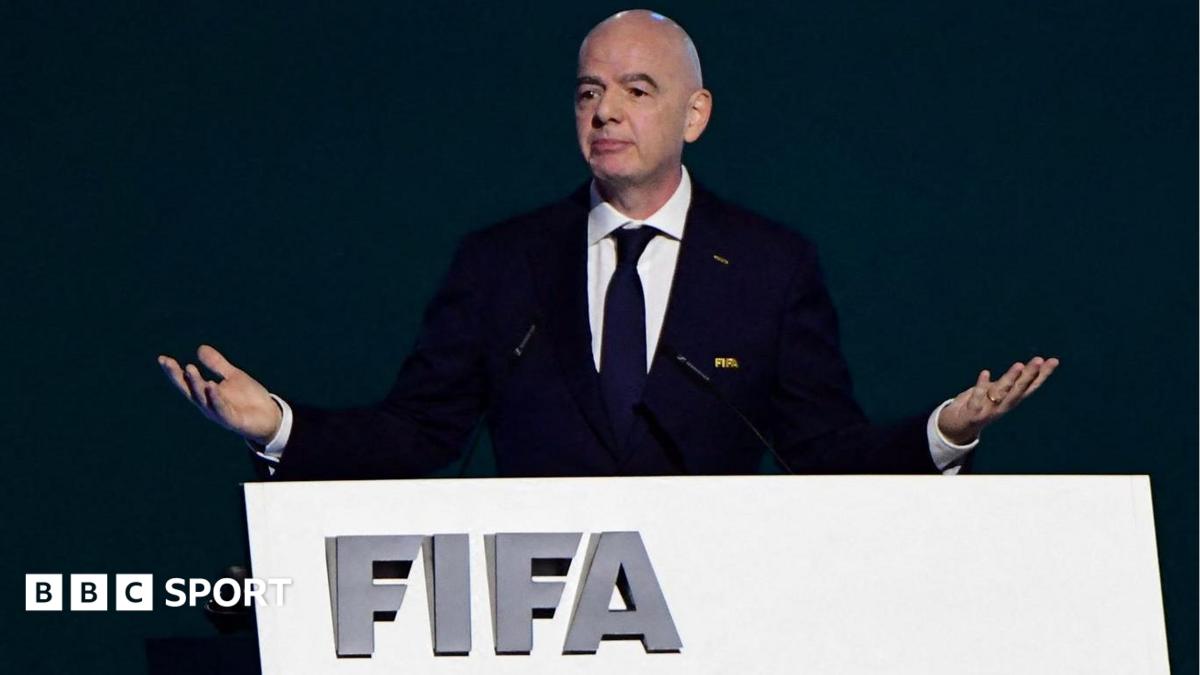
    “Gianni Infantino, the president of Fifa, talks all the time about how this World Cup will net 11 billion dollars for his organisation. I wouldn’t be surprised if, actually, it went more than $11bn,” said Jules Boykoff, author of *Red Card: The 2026 World Cup, Sportswashing, and the FIFA Greed Machine*. “That is more money than any sporting event in the history of the world. The travel restrictions slices mightily against the FIFA slogan that ‘football unites the world.’ This form of exclusion threatens to suck much of the joy from the tournament, given that visiting football fans bring zest and passion to the festivities. These exclusionary practices may well put a serious damper on the fun.”

    Critics also point out that this tournament fits a long history of large-scale sporting events being used for sportswashing – the practice of using a major tournament to launder a host’s global image amid widespread human rights violations. While sportswashing is most often associated with non-Western hosts such as Russia and Qatar, Boykoff argues the same dynamic is at play in 2026, with the Trump administration using the tournament to distract from rising authoritarianism and anti-immigrant policy. “That’s not to say that massive human rights problems don’t occur in Russia or Qatar. They’re well documented, so that’s for real, but oftentimes, people do turn a blind eye to the human rights violations in the United States, or they don’t call them human rights violations,” Boykoff noted. He added that the tournament could ultimately have an unexpected upside: “And quite honestly, the World Cup, if it has any positive effects, it could open a lot of people’s eyes to the double standard that we’re talking about here, and start looking at the United States and other so-called democracies with a more critical lens that also takes their human rights problems into consideration.”

    Under the Trump administration, the U.S. has seen a sharp rise in anti-immigrant enforcement, including mass immigration raids, expanded detentions, and aggressive deportation campaigns targeting immigrant communities across the country. The administration has refused to issue any guarantee that non-U.S. citizens will be safe from Immigration and Customs Enforcement (ICE) raids inside World Cup stadiums. Andrew Giuliani, executive director of the White House Task Force on the 2026 FIFA World Cup, told reporters in December 2025 that “the president does not rule out anything that will help make American citizens safer. This tense environment mirrors an incident at a 2025 FIFA Club World Cup match in New Jersey, where a father of two was arrested by ICE during the event.

    In late April 2026, the American Civil Liberties Union (ACLU) issued an unprecedented travel warning for the tournament, alerting international visitors to the risks of arbitrary detention, deportation, invasive social media screening, racial profiling, free speech suppression, surveillance, and even inhumane treatment or death in U.S. detention facilities. Jamil Dakwar, director of the ACLU’s human rights program, called the warning the first of its kind for a large-scale sporting event in modern U.S. history.

    “Over the past year, we have engaged with Fifa and raised these issues and concerns multiple times, particularly around abusive immigration enforcement,” Dakwar told Middle East Eye. “We alerted them to the deteriorating human rights situation under the Trump administration, including illegal and unconstitutional immigration practices where individuals were detained and deported without due process, [and] in some instances, attempts to deport even permanent legal residents in connection to their activism in support of Palestinian rights. The abusive deployment of armed federal forces, including the National Guard, is, in my view, unlike anything we have seen in many decades. It affects not only migrants or asylum seekers, but also bystanders, people observing events, reporters, and even lawful residents.”

    Activists are also specifically concerned about restrictions on political speech: after fans widely displayed Palestinian solidarity during the 2022 Qatar World Cup, there are no guarantees that similar displays will be tolerated in the U.S. “We have not been able to get binding assurances from Fifa or the federal government that people attending the World Cup will not be subject to the same kinds of abusive or authoritarian practices, including deadly use of force, profiling, inhumane detention and summary deportation without due process. If this can happen to permanent legal residents and even citizens, then it can certainly happen to visitors coming into the country as well,” Dakwar added.

    Beyond visitor rights, the ACLU and local labor groups are also raising concerns about the impact on communities already living in the U.S. Just this week, workers at SoFi Stadium in Inglewood, California, which will host multiple World Cup matches, publicly demanded that ICE have no presence at the tournament and that FIFA stop sharing worker and fan data with ICE and foreign intelligence agencies. “We cannot celebrate the World Cup while workers, tourists, immigrant families, and local communities are made to feel unsafe. Los Angeles should be a city of welcome – not fear,” Yolanda Fierro, a SoFi Stadium worker and member of Unite Here Local 11, said in a statement.

    Activists stress they are not calling for a boycott of the tournament, but rather for global fans to take precautions and hold FIFA accountable for enabling the current administration’s policies. “It is a call for precaution – for awareness of risks, for preparation, and for safety planning,” Dakwar said. “More than anything, it is also a signal to Fifa that they need to take responsibility and use their leverage to ensure that this World Cup does not become a space where abusive practices and widespread human rights violations are normalised, and where people are exposed to surveillance, deportation, arrest, detention, or other violations.”

    Despite the widespread criticism, inequity, and human rights concerns, the world’s biggest football show will go on. As Boykoff put it: “I believe that we can both appreciate the action on the field and support the worker-athletes on the field, and critique Fifa for the way that it is basically turning the people’s game into a game for plutocrats.”

  • ‘I saw my leg still there’: Deine Mariner set for stunning Broncos return after fears he could lose his leg

    ‘I saw my leg still there’: Deine Mariner set for stunning Broncos return after fears he could lose his leg

    Brisbane Broncos rugby league winger Deine Mariner is on track for one of the most remarkable comebacks in the sport’s recent history, just weeks after medical experts held genuine fears that a rare, sudden medical condition could force the amputation of his leg. The 2023 grand final hero is now eyeing a return to the field before the end of the 2024 season’s finals series, in a story defined by grit, fast-acting medical care and extraordinary good fortune.

    Mariner first sustained what medical staff initially believed to be a severe bruising injury, or cork, during the Broncos’ round nine clash against the Sydney Roosters. The Samoan international was forced off the field early in the match, but returned to the pitch to cover for a teammate who suffered an injury later in the game. By the time the match concluded, Mariner was already showing clear signs of distress, but the full severity of his condition did not emerge until that night, when he was staying at the team’s Sydney hotel.

    As his condition rapidly deteriorated overnight, Mariner made the critical decision to contact the Broncos’ medical staff, who immediately arranged an urgent dash to Sydney’s Royal Prince Alfred Hospital. By the time he arrived, he had developed acute compartment syndrome, a dangerous condition that causes dangerous pressure buildup in muscle tissue that can cut off blood flow and lead to tissue death if not treated immediately. When medics checked for a pulse in Mariner’s foot, the risk of amputation became a real possibility.

    Mariner recalled the harrowing experience in an interview following his recovery: “I got rushed into surgery, so I didn’t really get to understand what was happening. All I knew was that there was a lot of pressure on my leg at the time. And I think a lot of the blood flow was starting to stop going into my leg. It would definitely be up there with the worst pain I’ve experienced. I was trying to go to sleep and I was thinking, ‘Should I call them or not?’ Then when I really started to feel a lot of pain and I couldn’t move, that’s when I was like, ‘I better call them.’”

    “I didn’t even think of losing my leg as an option until I got to the hospital and they were checking for the pulse in my foot, and that’s when that stuff started coming up,” he added. “But I was like, ‘Just do the surgery so I can get it over and done with.’ When I woke up, I saw my leg still there, so I was like, ‘It’d be pretty bad if I woke up and my leg wasn’t there.’ I’m just pretty lucky to be in this position. I’m still breathing and I’m still alive. Being in ICU, I saw a lot of other people that don’t get a second chance.”

    In total, Mariner underwent seven separate surgeries to save his leg. The first two procedures focused on cutting into the affected muscle tissue to release the dangerous pressure buildup. Over the following days, surgeons closed the wound gradually across five additional procedures, a process that required repeated rounds of general anesthesia.

    Mariner paid tribute to the medical teams that saved his leg and his future playing career: “I wasn’t used to going back under anaesthetics for that long. It was pretty full on, but I was in such good hands. Shout out to Dr Gupta and his team at St Vincent’s Private Hospital. They were the best. I wouldn’t be able to be here today if it wasn’t for them. Even the doctors were saying they haven’t seen this happen in a player in this context before.”

    Even more incredibly, Mariner’s recovery has progressed far faster than many medical observers expected. Currently recovering at home after his time in hospital, Mariner says he is targeting an eight-week timeline for his return to full training and match play, putting him on track to rejoin the Broncos squad ahead of the 2024 NRL finals.

    “At the moment my leg is stuck a bit, so once that opens up, I’ll be able to start moving again. I’ve got a lot of confidence in myself to get back out there again for the Broncos,” he said. “I think we’re looking around the eight-week mark for returning to play. Obviously we’ve still got plenty more games to go, so I’ll just have to take it day by day and let the body heal itself. It gives me a bit more hunger to get back out there. At the same time, I just want to make sure that I’m doing the best for myself and putting myself in a good position for my body to heal.”

    Mariner added that the overwhelming support from his club, teammates and family has helped him maintain a positive outlook through the harrowing experience: “It has been a pretty hectic couple of weeks. My leg is doing a lot better and I am back home now which helps. I’m good. It was pretty full on with everything but I had a really good support group and the club were so good to me and my family. I am in a pretty good headspace. When the time comes, I’ll be ready.”

  • ‘Cherished and loved’: Anthony Albanese meets with family of Kumanjayi Little Baby

    ‘Cherished and loved’: Anthony Albanese meets with family of Kumanjayi Little Baby

    A national tragedy that has sparked urgent calls for systemic reform in remote Indigenous community services moved forward this week, as Australian Prime Minister Anthony Albanese met privately with the family of Kumanjayi Little Baby, the five-year-old Warlpiri girl allegedly murdered last month at an Alice Springs town camp.

    WARNING: Aboriginal and Torres Strait Islander readers are advised this article references a deceased Indigenous child, whose name and story are shared with the permission of her family.

    Kumanjayi went missing from the Northern Territory town camp on April 25, with 47-year-old Jefferson Lewis taken into custody in connection with her death. Lewis’ arrest ignited violent clashes between community members and police outside Alice Springs Hospital, where the suspect was detained, and amplified long-simmering demands for urgent action to address intergenerational poverty and overhaul flawed child protection systems across the Northern Territory.

    On Wednesday, Albanese traveled to Alice Springs to sit down with Kumanjayi’s mother, grandfather and grandmother, marking his first face-to-face meeting with the grieving family since the child’s killing. After the meeting, the prime minister spoke publicly to honor the young girl’s life and acknowledge the family’s immeasurable pain.

    “Kumanjayi was cherished and loved,” Albanese told reporters. “They are going through the worst of devastation, and at this time, they have asked that they be allowed to go through their sorry business with the privacy, dignity and solemnity that it deserves.”

    Albanese added that the family had taken some small comfort in the outpouring of community support that has emerged in Alice Springs since the tragedy. “It was an opportunity as well, too, where we laid flowers at the memorial, at the camp that has sprung up spontaneously,” he said. “This is a young person lost far too early under circumstances unbearable. They are trying to bear their way through this with dignity, with respect, and it will remain something that is with them forever.”

    He noted that the family remains proud of their beloved daughter and granddaughter, but carry the devastating regret that Kumanjayi will never get to grow into the adult she was meant to become. “It was important to be able to say to the family that the nation stands with them in their grief … we’ll give them every support that they need,” the prime minister said.

    Turning to the broader policy failures that the tragedy has laid bare, Albanese committed that the federal government would work collaboratively with the Northern Territory government and local Indigenous leaders to deliver tangible improvements. “Every child has the right to be safe and to enjoy a quality of life free from danger,” he said. “This is a time where what I want to see is the different levels of government coming together with the community in the same way that the community has.”

    Addressing longstanding inadequate conditions in remote town camps specifically, Albanese acknowledged that all levels of government have fallen short, and must “do much better” to improve living outcomes. “My government has acknowledged that is the case,” he said. “When it comes to housing, we are building more remote housing. When it comes to the issues that were raised with me about Yuendumu and other communities, as well as the town camps – clearly, the Northern Territory government have had responsibility since 2012 for the town camps. Clearly, there’s a need to do better, to make sure that the living conditions are improved.”

    Albanese pointed to on-country dialysis programs that keep Indigenous community members connected to their traditional lands while accessing critical care as a practical model for how targeted government investment can deliver tangible change to remote communities.

    The tragedy has already prompted a high-profile call for national reckoning from Kumanjayi’s aunt, Coalition frontbencher Jacinta Nampijinpa Price, who broke down in tears earlier this month while delivering an emotional tribute to her niece on the floor of the Senate.

    Price used the address to demand an honest, unflinching conversation about the ongoing failures of child protection systems for Indigenous children across remote Australia. “I don’t want to be here right now, to have to stand in this chamber, to deliver a condolence speech for a little girl in my family,” she said. “She was loved. She should still be here.”

    “The hardest truth is that for many in my hometown, none of this came as a surprise,” Price continued. “For too long in this country, there has been silence around what is happening in too many town camps and remote communities – a silence driven by fear, a fear of causing offence, a fear of being labelled racist, fear of speaking honestly about dysfunction, violence, alcohol abuse, neglect and conditions. Vulnerable children are growing up in that silence and it is killing our babies. And when I say our babies, our people, I mean all Australians.”