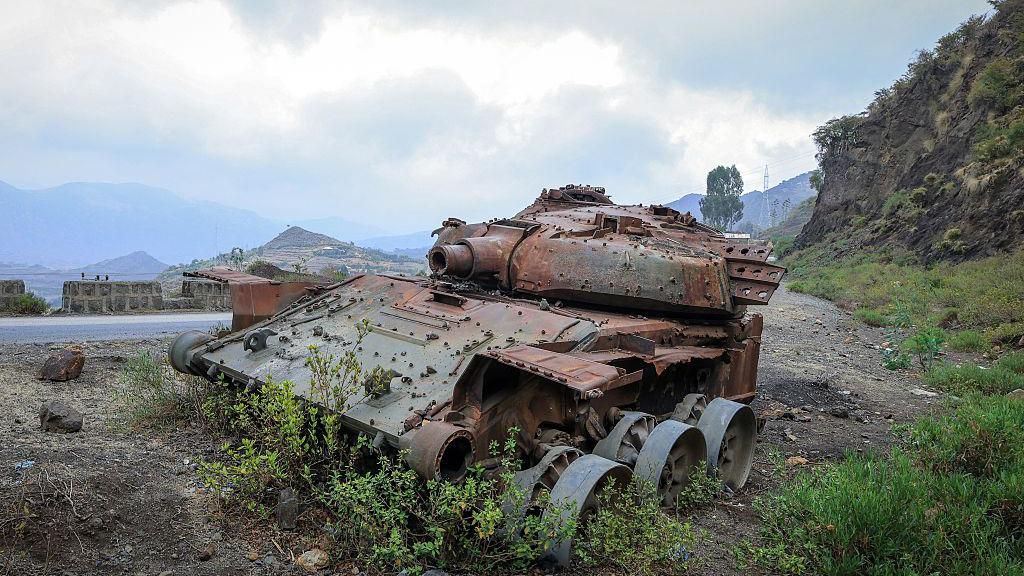
Four years after the conclusion of a devastating two-year civil war, Ethiopia’s Tigray region has been shaken by some of the most intense fighting since the 2022 peace deal, triggering a new wave of cross-border displacement and stoking international fears of a return to large-scale violence.\n\nOver the weekend, heavy confrontations broke out early Saturday in Shererina, a small strategically located community in western Tigray near the Ethiopia-Sudan border. Clashes, which featured heavy artillery fire and drone strikes according to a senior Tigray People’s Liberation Front (TPLF) source, continued through Sunday, forcing hundreds of ethnic Tigrayans to flee for safety into neighboring Sudan. Witnesses in the region reported continuous sounds of explosions, heavy small arms fire, and military aircraft operating over the area throughout Saturday, while Sudanese medical and local sources confirmed that both wounded combatants and civilian refugees have crossed the border. The full death toll from the latest outbreak of violence remains unconfirmed as of press time.\n\nThe 2020–2022 civil war between the TPLF and Ethiopia’s federal government killed hundreds of thousands of people before an African Union-mediated peace agreement brought active hostilities to a close in November 2022. However, core provisions of the peace deal have never been fully implemented, and tensions have escalated sharply in recent months after TPLF forces retook full control of Tigray region, ousting the interim administration established as part of the peace settlement. The latest fighting in Shererina adds another layer of complexity: the wider western Tigray area has been the site of long-running territorial disputes between Tigray and Ethiopia’s southern Amhara regional state, making the border locality strategically sensitive to multiple competing stakeholders.\n\nBoth sides have immediately traded blame for initiating the clashes, deepening the risk of further escalation. The TPLF-led Tigray regional administration has labeled the federal government’s actions an “open war” against the region, accusing Addis Ababa of violating the 2022 peace deal in a deliberate campaign to subjugate and divide the people of Tigray. For its part, the Ethiopian federal government has not released a full official public statement, but Minister Abraham Belay publicly confirmed the clashes had occurred in a social media post. Belay blamed the outbreak of violence on what he called the “TPLF clique,” warned that continued conflict would bring “worse consequences” for the region, and simultaneously called for diplomatic engagement, noting that all outstanding disputes must be resolved through peaceful negotiation rather than armed confrontation. \”Today, it is better to reach out for peace before destruction,\” he wrote.\n\nBeyond Ethiopia’s borders, regional observers have raised growing concerns that the renewed Tigray conflict could become entangled with the ongoing civil war in Sudan, turning the northern Ethiopia border region into a new front for a proxy conflict. Multiple diplomatic sources have reported unconfirmed accusations that rival factions in Sudan are providing military backing to opposing sides in the Tigray dispute, a development that could dramatically destabilize the entire Horn of Africa region if the current clashes expand.
作者: admin
-
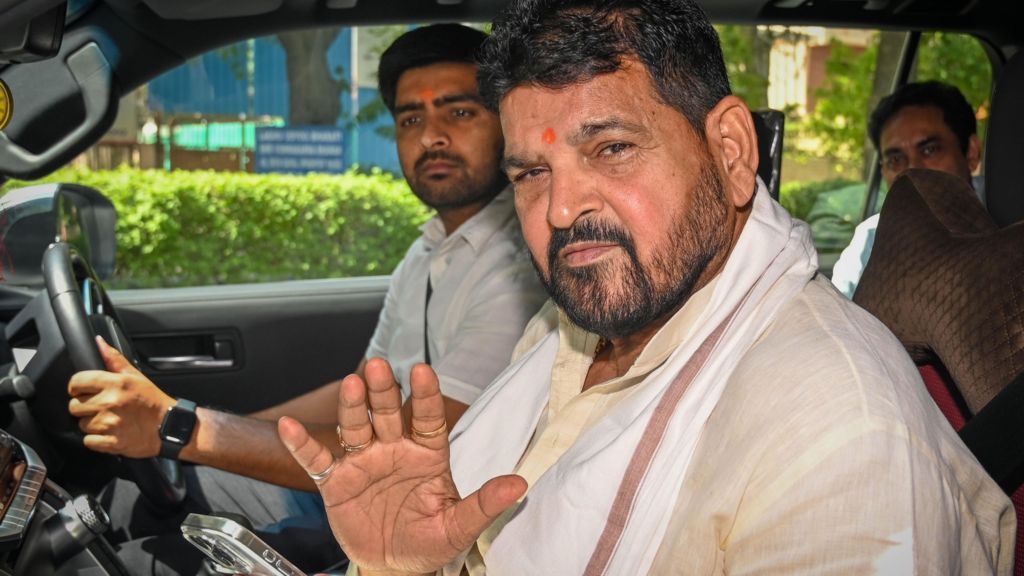
India’s ex-wrestling chief cleared in sexual harassment case
Three years after a group of prominent Indian female wrestlers first brought explosive sexual harassment allegations against a powerful ruling-party politician, an Indian district court has delivered a not-guilty verdict that has reignited debate over accountability in Indian sports and institutional bias.
The case centers on Brij Bhushan Sharan Singh, a former Member of Parliament from Prime Minister Narendra Modi’s Bharatiya Janata Party (BJP) who once led the Wrestling Federation of India (WFI). Six female wrestlers accused Singh of repeated sexual harassment during his tenure as WFI chief, claims Singh has strenuously denied from the moment they were made public. A close aide of Singh, Vinod Tomar, who was also named in the case, has similarly been cleared of all charges.
Singh, who retains significant political clout in Uttar Pradesh—India’s most electorally critical state—saw the allegations against him erupt into a national and international controversy in 2023. That year, the protesting wrestlers attempted to march to India’s new parliament building in New Delhi to demand action, a demonstration that ended with police detaining the athletes. Viral footage showed Olympic medalists Sakshi Malik, Bajrang Punia, and two-time world championship medalist Vinesh Phogat being dragged from the protest site and transported in police vans, prompting widespread condemnation from elite athletes across the country and opposition political leaders. For weeks afterward, the wrestlers maintained a high-profile sit-in protest in central Delhi, pressuring the central government to open a formal investigation and prosecute Singh.
Following Monday’s verdict announcement, Singh spoke to local reporters, expressing relief and maintaining his long-stated innocence. “The day the accusation was levelled against me, I had said that if the charges were proven, I would willingly hang myself. Today, the court has acquitted me,” he told NDTV, India’s leading English-language news channel. As Singh returned to his Delhi residence after the ruling, hundreds of supporters gathered to celebrate, setting off firecrackers and tossing flower petals to greet him.
But the acquittal has drawn immediate and sharp pushback from the wrestlers who brought the case. Phogat, who became the public face of the 2023 protests, wrote on social media platform X that the outcome left her deeply disappointed. She alleged that “from the first day, the entire administration, system and government were engaged in protecting [Singh],” confirming that the accusers intend to challenge the district court’s ruling in a higher court.
The case has long put the Modi government under political scrutiny. When the allegations first emerged, critics accused the BJP of moving too slowly to discipline Singh, who was a sitting MP at the time. The government rejected those claims, stating it would allow the legal process to proceed independently. Under mounting public pressure, however, the BJP declined to name Singh as its candidate for his Uttar Pradesh parliamentary constituency, Kaiserganj, in the 2024 national elections. Instead, the party fielded Singh’s son for the seat—who ultimately won the election.
-
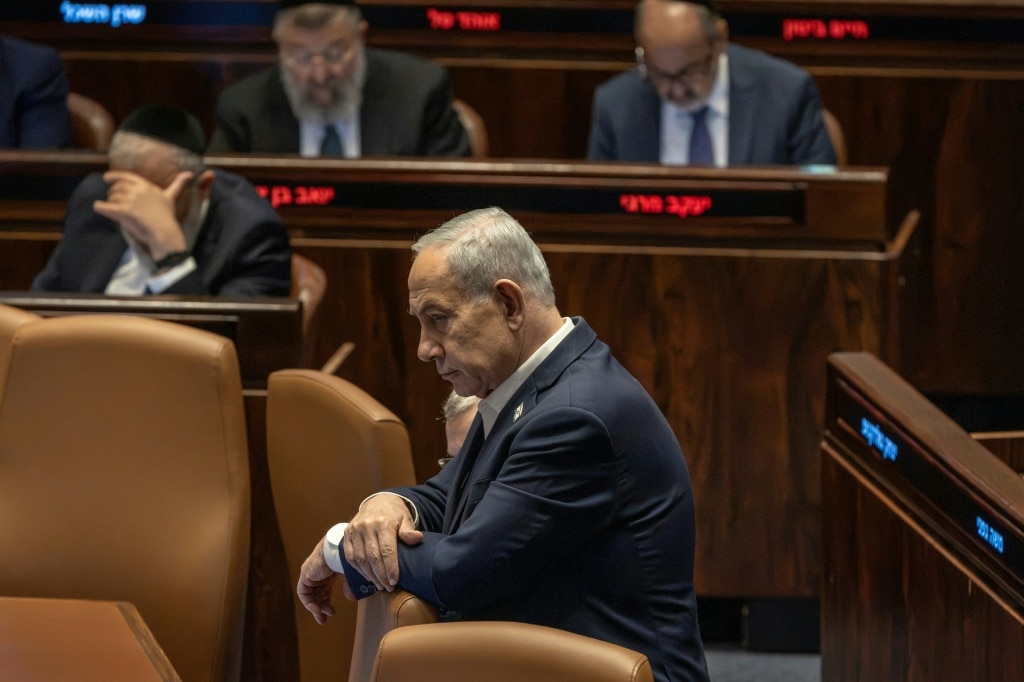
Israel conveys ‘concerns’ to US on Gaza plan and keeps striking
Fresh tensions have emerged between the Israeli government and the Trump administration over a proposed framework to end the months-long Gaza war, with Jerusalem formally conveying its sharp concerns to Washington on Monday while continuing military strikes across the besieged Palestinian territory. This latest disagreement exposes a growing rift between Israeli Prime Minister Benjamin Netanyahu and U.S. President Donald Trump, just months before Netanyahu faces a critical reelection contest in October — a race where the Israeli leader has centered his campaign on his close personal and political alliance with the U.S. president, whom he met with just last week.
At the heart of Israel’s objections is the demand for concrete, verifiable full disarmament of the Hamas militant group, which last Friday announced it would surrender its weapons to a newly formed interim Palestinian governing committee under the Trump-backed peace plan. In an official statement to Agence France-Presse, Doron Spielman, spokesperson for Netanyahu’s office, confirmed that Israeli officials had shared their reservations with U.S. counterparts. “The version that has been made public does not reflect Israel’s positions,” Spielman said, adding that Israeli intelligence assessments confirm Hamas has spent the months since the October 2024 ceasefire brokered by Trump actively rearming and recruiting new fighters, in clear preparation for future attacks.
The October ceasefire has reduced the intensity of large-scale conflict, but Israel retains military control over more than 60 percent of the Gaza Strip. According to Gaza’s local authorities, over 1,200 Palestinians have been killed in the territory since the truce took effect. The Israeli military, for its part, has confirmed that five of its soldiers and one civilian contractor have been killed in Gaza during the same period.
Trump framed Hamas’s announcement of weapons surrender as a transformative breakthrough for peace, calling the move a “major milestone” in efforts to end the devastating conflict that began when Hamas launched the deadliest single attack on Israeli soil in the country’s history on October 7, 2023. The U.S. president told reporters Friday that Israel was “very happy” with the development, but Netanyahu has until now remained publicly silent on the plan, breaking that silence only with Monday’s formal transmission of concerns to Washington.
Spielman argued that Hamas’s continued rearming activity proves the group is planning another large-scale attack similar to the October 7 massacre, noting that the Trump administration’s own Board of Peace roadmap outlines a vision for Gaza as “a deradicalised terror-free zone that does not pose a threat to its neighbours”. “That vision stands in direct contrast to the current reality and to Hamas’s stated intentions,” he said. “The indispensable first step toward any lasting arrangement is the genuine, verifiable and irreversible demilitarisation of Hamas. Anything short of full demilitarisation will leave Hamas with the capability to threaten Israel again.”
The four-day-old roadmap released by the Board of Peace calls on Israel to immediately and fully end all military operations in Gaza, and outlines a timeline for a phased Israeli military withdrawal from the territory — terms that run counter to Israel’s long-held position that its forces will remain in Gaza until Hamas’s disarmament is fully completed. This disagreement over the Gaza plan is not the only rift between the two allies: Israel has also openly expressed skepticism over Trump’s diplomatic push to end the brief Iran-Israel war that broke out in late February.
On the ground in Gaza, violence has continued unabated despite the ceasefire agreement. A Gaza-based security official confirmed that Israeli strikes carried out since early Sunday have killed 19 Palestinians, among them multiple women and children. Palestinian authorities added that an Israeli airstrike on Saturday destroyed a large stockpile of critical medical supplies, a loss that exacerbates the already catastrophic humanitarian situation across the strip. Israel has long defended its strikes, stating that Hamas systematically uses civilian infrastructure to hide weapons and fighters, and that Saturday’s strikes targeted two individuals it accuses of planning imminent attacks on Israeli civilians and military personnel.
The growing gap between U.S. and Israeli positions has drawn sharp criticism from senior Palestinian leaders involved in drafting the peace plan. Mohammad Dahlan, a prominent Palestinian political figure who played a central role in negotiating the framework, said that after the roadmap’s release he spoke with Trump’s senior aide and son-in-law Jared Kushner, who initially indicated Israel would end all strikes starting Sunday. Dahlan quickly walked back that claim on social media, revising his statement to say Kushner only confirmed he was “working with the Israeli side to halt the attacks”. Dahlan later accused Netanyahu of actively undermining the best chance to end the devastating conflict. “Netanyahu is working to obstruct the most promising opportunity to begin ending this war,” he said.
-

Ghana parliament backs tough cocoa farm protections, with up to 20 years in prison
ACCRA, Ghana — A controversial piece of legislation that imposes harsh criminal penalties, including decades-long prison sentences, on cocoa farmers who convert their land to other uses without explicit government authorization has been approved by Ghana’s parliament, according to a full copy of the bill reviewed by the Associated Press.
Lawmakers passed the new regulatory measure on Thursday, but full details of the legislation were not released to the general public until late Sunday. Ghanaian President John Mahama has not yet given his final signature to enact the bill into law.
Under the proposed legislation, all existing and future cocoa farms across Ghana would be designated as protected national assets. Any repurposing of this land for non-cocoa agricultural or industrial activity without formal government approval would be classified as a criminal offense, a provision that has already drawn sharp pushback from farming advocacy groups and smallholder producers.
Moses Djan Asiedu, who serves both as an active cocoa farmer and the administrator of the Ghana Cooperative Cocoa Farmers and Marketing Association Limited, called the draft law unfair in its current form. Asiedu explained that the vast majority of Ghanaian cocoa producers invest their own private capital to purchase land, clear vegetation, and maintain cocoa plantations for years before they begin turning a profit, all while receiving minimal financial or infrastructural support from the national government.
“If cocoa is recognized as a critical national asset, then the government has a responsibility to support farmers to cover their core production costs,” Asiedu told reporters.
The harshest penalties outlined in the bill are reserved for the conversion of cocoa land to illegal gold mining, a widespread practice that has drawn growing government concern in recent years. Farmers convicted of converting cocoa farms to unauthorized mining operations would face prison sentences ranging from 10 to 20 years, plus substantial fines levied per cocoa tree destroyed in the conversion process.
Cocoa production is the backbone of the West African regional economy, supporting hundreds of thousands of smallholder livelihoods across Ghana and neighboring Ivory Coast. For Ivory Coast, the world’s top cocoa producer, cocoa bean exports account for roughly 40% of the country’s total annual export revenue. In Ghana, the second-largest global producer of cocoa, cocoa exports contribute nearly 15% of the nation’s total export earnings.
To shield smallholder producers from volatile global commodity pricing, Ghanaian government regulators set a fixed purchase price for cocoa beans at the start of every planting season. The vast majority of beans are sold through government-licensed buying agents to insulate producers from sudden price shifts in international futures markets.
This year, however, global cocoa markets have seen unprecedented volatility. After a major surge in cocoa futures prices that pushed contract values above $12,000 per metric ton in 2024 — the highest level recorded in decades — the market corrected sharply, crashing to roughly $4,000 per ton as new supply growth outpaced lagging global demand.
-

US faces new pressure to build weapons without China’s rare earth magnets
Against a backdrop of rising geopolitical friction with China and depleting U.S. military stockpiles fueled by ongoing conflict in the Middle East, a small U.S. startup is stepping into a gap that has long left American defense supply chains vulnerable to external control. Phoenix Tailings, a small refinery based in Exeter, New Hampshire, is pioneering a new approach to domestic critical mineral production by extracting high-value rare earth elements from legacy mining waste, also known as tailings, a solution that could cut years off the timeline to build a sovereign U.S. supply chain.
For decades, China has held a near-monopoly over the processing and separation of critical minerals—inputs essential to everything from advanced fighter jets to precision-guided missiles, electric vehicle batteries, and radar systems. Even as the U.S. has raced to unwind this dependence by developing domestic mining operations, most new projects are still years away from full production. Extracting usable minerals from existing mine waste, however, offers a near-term bridge to meet soaring demand, industry leaders say.
Phoenix Tailings currently operates out of a modest office park facility, but the company has secured a $500 million loan from the U.S. Pentagon to construct a massive new expansion called the Freedom Facility, named for its mission to free the U.S. and its Western allies from Chinese influence in the rare earth sector. Construction of the new plant will take 14 to 18 months, and when fully operational, it will boost the company’s annual production capacity from just 200 kilograms to 120 tons of processed critical metal—enough to meet a large share of U.S. defense demand for high-priority minerals like samarium.
Inside the company’s current facility, technicians clad in heat-resistant hazmat suits and sealed face masks use a low-emission electrolysis process to separate pure rare earth metals from mining waste powder. The end product, a grayish mixture of neodymium and praseodymium, is used to manufacture high-strength permanent magnets that power F-35 fighter jets, Tomahawk cruise missiles, THAAD missile defense systems, military drones, and radar arrays. As Anthony Balladon, Phoenix Tailings co-founder and chief commercial officer, puts it: a $150 million advanced weapons system is entirely useless without the $20,000 to $30,000 in critical minerals it requires.
The urgency of this supply chain overhaul has accelerated sharply in recent months. Ongoing conflict in the Middle East has drawn down U.S. munitions stockpiles at an unprecedented rate, and the newly escalating tensions with Iran have further stretched already thin inventories. A May 2025 analysis from the Center for Strategic and International Studies (CSIS), a Washington-based think tank, warns that it could take at least three years to replenish stockpiles of key systems such as Tomahawk cruise missiles, Patriot interceptors, and THAAD defense systems. Shortfalls not only leave the U.S. and its Middle Eastern allies more vulnerable in the current conflict, but also leave the U.S. with diminished firepower for any potential future confrontation with China.
Last month, former President Donald Trump added new pressure to the sector with an executive order tightening restrictions on defense contractors sourcing critical mineral components from China. The order also curtails the Pentagon’s ability to issue waivers for contractors that claim domestic supplies are unavailable, making it mandatory for all critical materials used in U.S. military equipment to be sourced from the U.S. or allied nations. “It is the policy of the United States that not only the finished equipment deployed by our military, but also the critical materials and components necessary to manufacture, maintain, sustain, and repair that equipment, are sourced domestically or from allied nations,” the July 20 order states.
Major defense contractors have signaled they are working to adjust their supply chains. Lockheed Martin, the world’s largest defense contractor, said in a statement that it “continuously assesses the global rare earth supply chain to ensure access to critical materials that support our customers’ missions.” Other leading firms including Raytheon Technologies and Northrop Grumman declined to comment on their supply chain adjustments to AP.
Balladon acknowledges that scaling domestic production to meet demand in the required timeline is a significant challenge. “It will be a tall order and a challenge to replenish these stocks and scale up in the time frame needed to meet defense demand and regulations,” he said. Still, the company is moving forward quickly, with plans to boost output to 5 tons within three months, and reach full 120-ton capacity by 2027 or 2028 at the latest.
Phoenix Tailings is not the only firm shifting supply chains away from China. Rochester, New York-based magnet manufacturer Arnold Magnetic Technologies, which supplies critical components for precision-guided weapons, has for years relied on Chinese-sourced samarium. Today, the company is sourcing its samarium from a restarted rare earth operation in La Rochelle, France, where Belgium-based chemical firm Solvay has resumed processing rare earths from legacy mining waste that was abandoned when China dominated the global market in the 2000s. After China weaponized its rare earth monopoly in 2025 by restricting exports during the U.S.-China trade war, Solvay restarted processing operations at the site, ramping up output to meet growing demand from both European and North American defense and industrial clients. While Solvay’s materials come at a higher cost than Chinese alternatives, Arnold CEO Matt Blake notes that the magnets represent a tiny share of total weapons system costs, making the price increase negligible.
Not all critical mineral supply gaps are close to being filled, however. Brodie Sutherland, CEO of Patriot Critical Minerals Corp., which is developing domestic tungsten mining operations in the U.S., warns that the U.S. remains fully dependent on imports for tungsten, with China controlling roughly 80% of global mine supply and an even larger share of downstream processing. With a 2027 Pentagon deadline to eliminate Chinese tungsten from defense supply chains approaching, Sutherland says U.S. production will take years to ramp up, leaving the Department of Defense reliant on existing stockpiles, recycling, and limited alternative sources in the near term.
Despite these headwinds, Balladon remains optimistic that U.S. companies and allied partners can meet the challenge. “Ultimately, with the right support and partners across the industry, we think we can make it happen,” he said.
-
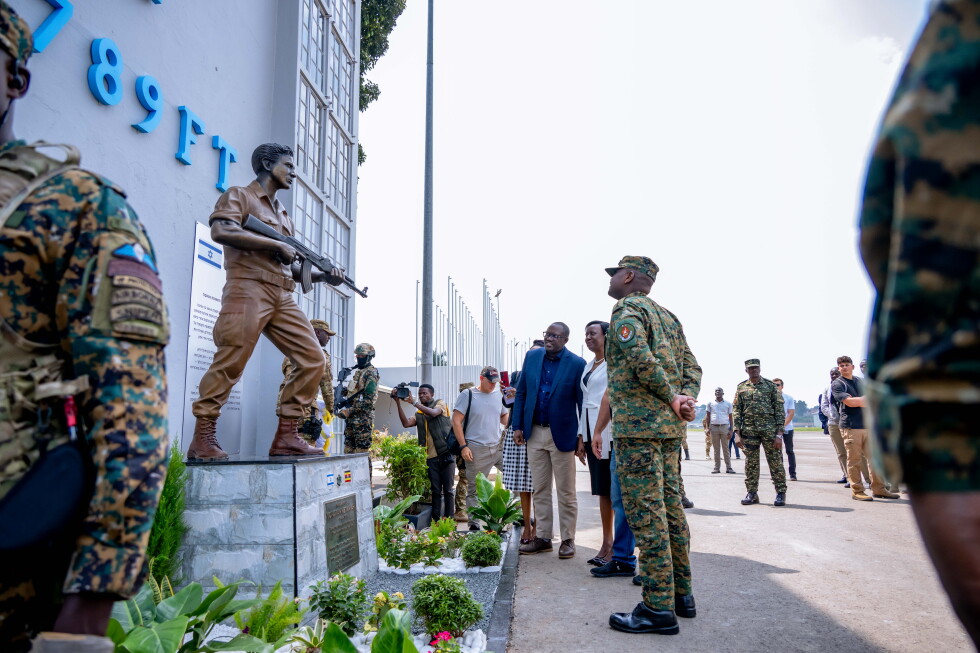
Uganda’s military unveils statue of Netanyahu’s brother who died in 1976 Entebbe hostage rescue
Nearly half a century after one of the most audacious hostage rescue missions in modern military history played out on Ugandan soil, Uganda’s military has dedicated a permanent memorial to the fallen Israeli commando who led the operation: Yonatan Netanyahu, older brother of current Israeli Prime Minister Benjamin Netanyahu. The bronze statue, which depicts the lieutenant colonel holding an assault rifle in a combat-ready stance, was formally unveiled Saturday by Gen. Muhoozi Kainerugaba, Uganda’s top military commander and the eldest son of long-serving President Yoweri Museveni, widely viewed as his likely political successor. Kainerugaba, who personally commissioned the monument, used the opening ceremony to honor the fallen soldier’s extraordinary courage and commitment. The memorial stands on the grounds of Entebbe International Airport, the exact site where the 1976 raid unfolded, and the event drew a crowd that included Israeli nationals based in the region, among them local businessman Barak Orland. The story of the Entebbe raid began when pro-Palestinian hijackers — two Palestinian militants and two German collaborators — seized an Air France passenger flight carrying 106 people, diverting it to Entebbe Airport. The hijackers separated Jewish and Israeli passengers from the rest of the group and issued an ultimatum: they would execute the hostages unless Israel released dozens of imprisoned Palestinian militants within a week. Over seven days of stalled negotiations, Israeli military planners secretly prepared a high-risk rescue mission that would go down in military legend. On the night of July 3, 1976, Israeli commandos landed at Entebbe, stormed the terminal, and engaged hijackers and responding Ugandan forces. In the under-an-hour operation, Yonatan Netanyahu, the raid’s commander, was fatally struck by enemy gunfire — the only Israeli commando killed in the mission. Just three hostages died in the crossfire, and the vast majority of captives were brought to safety. Dozens of Ugandan soldiers were also killed during the clash. At the time of the 1976 raid, Uganda was ruled by dictator Idi Amin, who had cut diplomatic ties with Israel and openly supported the Palestinian independence movement. Israel’s successful rescue severely humiliated Amin, and the operation drew sharp criticism from the Organization of African Unity, the precursor to the modern African Union, which condemned the raid as a violation of Ugandan national sovereignty. For Israel, however, the mission has become a defining moment in the nation’s modern history, widely celebrated as one of the most extraordinary military achievements in its history. Benjamin Netanyahu has repeatedly stated that his brother’s death during the raid fundamentally altered the trajectory of his own life and political career. In his remarks at the unveiling, Kainerugaba emphasized the enduring meaning of the memorial beyond just remembrance. “Today, this memorial stands not only in remembrance of a distinguished soldier, but also as a tribute to the enduring values he embodied: courage in the face of danger, unwavering commitment to protecting innocent lives, and steadfast devotion to duty,” he told attendees. Today, relations between the Ugandan government and Israel are officially cordial, with President Museveni having repeatedly stated his public support for a two-state solution to resolve the long-running Israeli-Palestinian conflict. The unveiling of the monument marks a striking shift from the diplomatic tensions that surrounded the original raid, representing a public acknowledgment of the fallen soldier’s sacrifice decades after the historic mission.
-

Ex-refugee’s ‘full circle’ Commonwealth Games win
Twelve years ago, a teenage weightlifter arrived in Glasgow for the 2014 Commonwealth Games with big dreams, but left the athletes’ village with an uncertain future and a life-altering decision. On Thursday, that same athlete, Cyrille Tchatchet II, stood on the Commonwealth Games podium in the same city, finally claiming the medal that capped a decades-long journey of struggle, resilience, and reinvention.
Tchatchet II first competed in Glasgow in 2014, finishing fifth in the 85kg weight class. But rather than returning to his home country of Cameroon with his teammates after the competition, he made the difficult choice to flee, a decision rooted in personal circumstances he still chooses not to discuss publicly. What followed was a brutal start to his new life in the United Kingdom: the then-teenager spent two months sleeping rough on the streets of southern England, unsure where his next meal or safe place to rest would come from. In his darkest moments, he even contemplated ending his own life.
“When I left, I didn’t really know what was going to happen,” Tchatchet II recalled in an interview after his 2026 win. “I didn’t know I was going to be homeless, I didn’t know I would go through all the struggles that I went through. I couldn’t think for a second that I would be in Glasgow to win a silver medal.”
He recalled the conversation he had with his mother, Eveline Njike, the day he left the 2014 Commonwealth athletes village: “I told her I didn’t have a place to go and she was very concerned.”
Gradually, Tchatchet II rebuilt his life from the ground up. He was granted official refugee status in 2016, earned a spot representing the International Olympic Committee Refugee Team at the Tokyo 2020 Olympic Games, and eventually earned eligibility to compete for England at the Commonwealth Games. Off the platform, he trained as a mental health nurse, and now works 10-hour shifts daily at a facility in Oldbury, before heading straight to training for two and a half hours after clocking out. Balancing a full-time nursing career with elite athletics has required enormous sacrifice, he says, but the effort has been worth every moment.
On Thursday, 12 years to the day after he first competed in Glasgow, Tchatchet II delivered one of the strongest performances of his entire career in the men’s 110kg weightlifting event. He lifted a combined total of 374kg across all his attempts, ultimately falling just short of gold to Fiji’s Taniela Tuisuva Rainibogi, who set a new Commonwealth Games record of 378kg to take the top spot on the podium. Even with the narrow defeat, Tchatchet II walked away with a well-earned silver medal, a milestone 12 years in the making.
For the 31-year-old, the win completes a full-circle moment that once felt impossible. “It’s been a full circle for me and I’m very pleased to have finally achieved this dream, which I at some point felt was never going to happen,” he said. “Coming in Glasgow back in 2014, as a teenager, I was full of dreams and uncertainty as well. So, going back to Glasgow, competing and actually winning a silver medal… I’m very, very proud and honoured to have been given this opportunity to represent England.”
Now, Tchatchet II wants his story and his silver medal to stand as a message of hope for anyone facing overwhelming hardship. Working on the frontlines of mental health care, he hopes his journey will inspire others to keep pushing through dark times. “This medal means hope, perseverance and to never give up,” he said. “My story wasn’t straightforward. Despite the hardships we go through, there’s always a possibility. We have to believe in ourselves and keep pushing. The tough times were worth it.”
He added that he is eager to return to work to share his achievement with the colleagues who have supported him through every step of his journey: “I’m really looking forward to going back to work and showing this medal to my colleagues who have supported me throughout.”
The emotional, years-long journey to a Commonwealth medal has left Tchatchet II reflecting on how far he has come, saying: “It took over a decade for me to win this medal, very emotional times.”
-
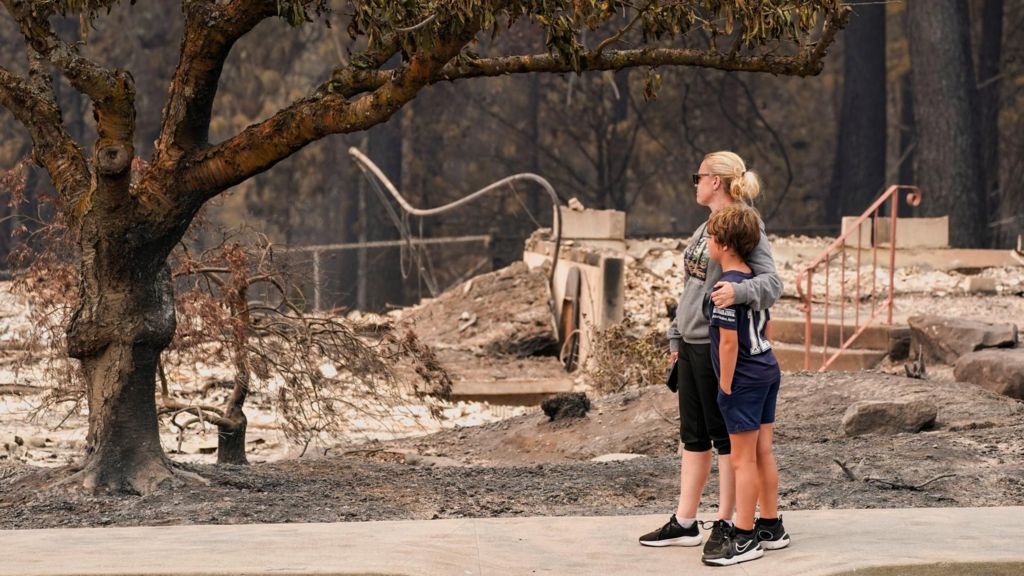
Washington state wildfires force 60,000 people to evacuate homes
A devastating outbreak of wildfires across Washington state has triggered the largest evacuation in the region’s recent history, forcing more than 60,000 residents to flee their homes as flames destroy hundreds of structures and cripple local infrastructure. As of Monday, three large uncontrolled blazes were still raging on the outskirts of Spokane, Washington’s second-most populous city, with emergency officials warning that containment remains far out of reach.
Spokane Mayor Lisa Brown labeled the event “the worst natural disaster our region has ever faced”, noting that assessment teams are still working to map the full scale of destruction and have not ruled out potential fatalities. To date, no official deaths or injuries have been confirmed by authorities. Across the entire state, the Washington State Department of Natural Resources reports a total of 16 active wildfires burning across more than 250,000 acres of land. The destruction extends far beyond charred wilderness: an estimated 600 buildings, including residential homes and local commercial properties, have been reduced to ash, and local utility provider Avista Utilities confirms more than 10,000 customers remain cut off from electrical power.
Footage captured from Spokane shows towering plumes of black smoke billowing over residential neighborhoods, with fire crews operating helicopter water dumps to slow flames advancing toward occupied homes. The conditions that allowed the fires to spread so rapidly were predicted days in advance: the U.S. National Weather Service issued an “extremely critical” fire weather warning ahead of the weekend, noting that high gusty winds paired with record-dry vegetation would create ideal conditions for fast-moving wildfires. Meteorologists and climate scientists warn that these extreme conditions are becoming increasingly common, pointing to human-caused climate change as a key driver of warmer, drier summers, more frequent intense heatwaves, and longer, more severe droughts that set the stage for catastrophic wildfire seasons.
Washington Governor Bob Ferguson has already signed a declaration of statewide emergency to free up additional state resources, and confirmed Sunday that he has formally requested federal disaster assistance following a conversation with U.S. President Donald Trump. Speaking to media, Mayor Brown emphasized that public compliance remains critical to avoiding loss of life, urging at-risk residents to remain alert, follow evacuation orders promptly, and stay patient as first responders work to get the blazes under control. She also highlighted the enormous strain the disaster has placed on local support systems: “While local communities have stepped up with incredible generosity, and our first responders are working 24 hours a day, we need outside support to address the scale of mass displacement, the shortage of emergency housing, and the growing need for basic essential supplies for displaced residents.”
While forecasters predict calmer, lighter winds for Monday, they have also warned that temperatures are set to climb again later this week, which could reignite active flames and speed new spread across dry unburned areas.
-
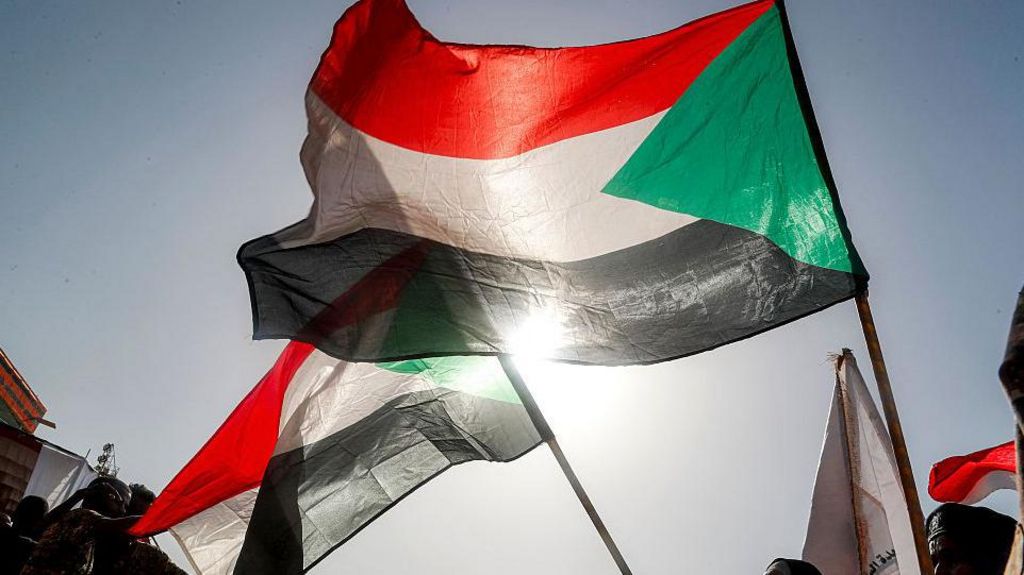
Sudan army drone strike on court session kills 35, rights group says
Three years into Sudan’s devastating civil conflict between the national army and the paramilitary Rapid Support Forces (RSF), a deadly drone attack has left dozens dead and wounded in the restive Darfur region, amplifying global concerns over escalating violence against civilian populations.
A local Sudanese human rights monitoring group, the Emergency Lawyers Group, has confirmed that 35 people lost their lives in the Sunday afternoon strike, which hit an open-air traditional court session in Ghara al-Zawiya village. The village is currently under RSF control, a faction that holds sway over most of Darfur, Sudan’s western territory. Dozens of additional civilians and attendees were injured in the attack, and as of Monday, the Sudanese army has not issued any public statement acknowledging or responding to the incident.
Witnesses to the strike shared chilling details with Agence France-Presse, confirming that the informal court gathering was held under a tree, with local community leaders in attendance. Among those killed were four prominent tribal leaders and two RSF commanders, the witness reported. Local outlet Darfur 24, a privately owned regional news site, cited a resident who said two unmanned aerial vehicles circled the settlement before launching at least four missiles into the gathering.
The Emergency Lawyers Group has issued an official statement condemning the attack, calling for an immediate independent investigation into the strike. The organization emphasized that deliberately targeting civilian gatherings and community infrastructure constitutes a severe violation of established international humanitarian law. It also drew attention to a worrying growing trend in the conflict: the increasing use of drone strikes to target populated civilian areas and public gatherings, a shift that has drastically raised safety risks for millions of Sudanese civilians trapped in crossfire.
The current conflict, which broke out in April 2023 between the Sudanese Armed Forces and the RSF, has already been marked by widespread atrocities against civilian populations on both sides. The RSF has faced repeated accusations of war crimes and mass atrocities, including large-scale drone strikes targeting civilian communities over the course of the three-year war. A United Nations fact-finding mission concluded last year that the RSF’s prolonged siege and assault on el-Fasher, Darfur’s largest remaining major city, carried all the identifying characteristics of genocide—a finding the RSF has repeatedly denied.
As the army continues to mobilize its supporters amid ongoing frontline clashes across the country, the humanitarian catastrophe in Sudan shows no sign of abating. The conflict has killed more than tens of thousands of people to date, and forced millions more to flee their homes as internally displaced persons or cross-border refugees into neighboring countries.
-
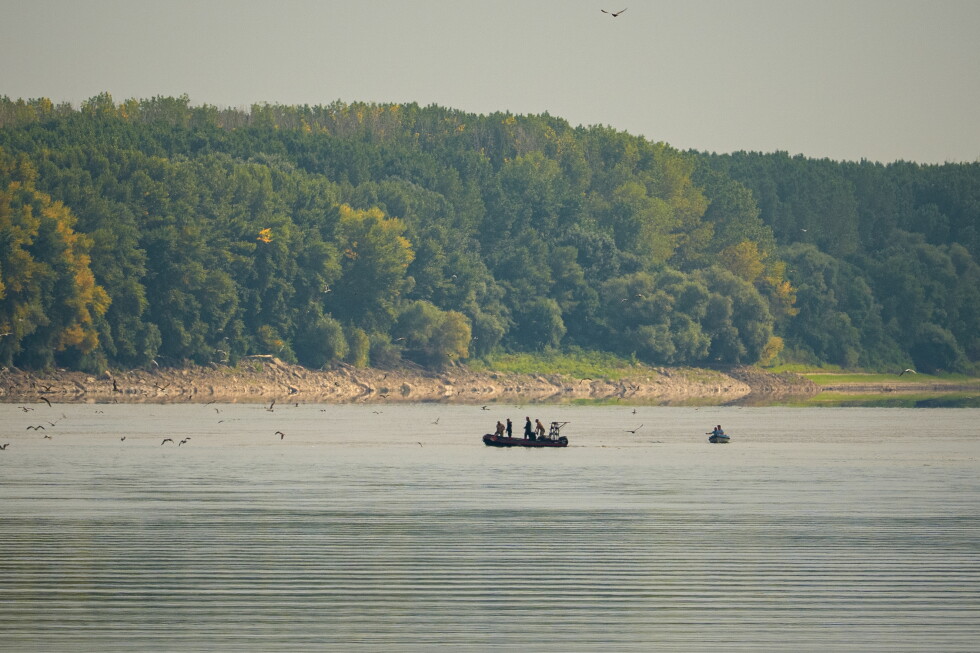
Record low Danube levels push some countries in Eastern Europe to the brink of energy emergency
A devastating combination of prolonged drought and repeated extreme heat waves has pushed the Danube River, one of Europe’s most critical water and energy infrastructure arteries, to historically low water levels, triggering a regional energy crisis that has forced governments across Central and Eastern Europe to implement urgent power conservation measures.
On Monday, water levels at the Danube running through Hungary’s capital Budapest dropped to approximately 10 centimeters (4 inches), a reading far below the previous all-time low of 33 centimeters (13 inches) recorded in 2018. With no substantial rainfall forecast in the coming days or weeks, and a new blistering heat wave bringing daytime temperatures above 38 degrees Celsius (100 degrees Fahrenheit) driving sharp increases in both electricity and water demand, hydrological conditions are not expected to improve any time soon.
The most pressing crisis is unfolding at Hungary’s Paks Nuclear Power Plant, the nation’s single largest source of electricity, which relies on Danube water to cool its four Soviet-built reactors. Now in its 44th year of operation, the facility is teetering on the edge of a total shutdown for the first time in its history. By Monday, successive reactor power reductions had cut output from the plant’s typical 2,000 megawatts to just 240 megawatts.
In a Facebook video posted Monday, Hungarian Prime Minister Péter Magyar announced that engineering teams had successfully kept the plant’s last operating turbine running temporarily, staving off a full shutdown that was projected over the weekend. Magyar noted that a complete power down is still likely to occur as early as Tuesday or Wednesday, but called the temporary reprieve good news, especially amid peak summer energy demand.
Located roughly 90 kilometers (55 miles) south of Budapest, Paks supplies nearly half of Hungary’s total electricity generation and meets around a third of domestic consumption. To offset the massive output gap created by the plant’s reduced operations, Hungary has turned to regional electricity imports and scaled up utilization of renewable energy sources.
Last week, the Hungarian government called on large industrial energy users to cut consumption and asked households to voluntarily reduce power use during peak demand hours between 5 p.m. and 10 p.m. Starting Monday, the government banned electric freight trains from operating during peak hours, a measure expected to save between 70 and 90 megawatt-hours of electricity daily. What began as voluntary conservation became mandatory for large industrial and commercial users after the government issued an official decree Saturday. Magyar reported that the collective effort cut national electricity use by 700 megawatts on Sunday, and thanked Hungarian residents for their cooperation.
The crisis extends far beyond Hungary’s borders, with neighboring Serbia and Romania also grappling with crippling low water levels that have disrupted energy production, shipping, and agricultural activity.
In Romania, the Danube’s water flow has dropped to 1,500 cubic meters per second, less than a third of the average July flow. To redirect water into the Danube’s main channel and secure cooling supplies for the state-owned Cernavoda Nuclear Power Plant, the Romanian military used 180 kilograms (397 pounds) of explosives to clear rock formations near the lower Danube’s Bala Canal on Monday. Authorities have already shut down one reactor unit at Cernavoda, cutting the plant’s total output to half its normal capacity, and warn the second reactor could also be taken offline if water levels do not rise. Romania declared a nationwide energy sector state of alert Friday, and Acting Prime Minister Ilie Bolojan has appealed to citizens to voluntarily cut electricity use during evening peak hours.
In Serbia, record low Danube levels have forced the country’s primary hydroelectric power plant to operate at just 20% of its normal capacity. Prime Minister Djuro Macut convened an emergency energy crisis meeting in Belgrade on Monday, and urged residents to minimize use of high-power household appliances, particularly air conditioning. Over the weekend, Macut described the unfolding situation as “serious and demanding.”
Associated Press correspondents Jovana Gec in Belgrade, Serbia, and Stephen McGrath in Leamington Spa, England contributed reporting to this article.