作者: admin

  • Nvidia’s record result fails to impress investors

    Nvidia’s record result fails to impress investors

    As the global AI boom continues to reshape the technology and business landscapes, chip manufacturing leader Nvidia has delivered another blockbuster set of quarterly earnings that far outpace Wall Street projections, underscoring the unrelenting demand for AI infrastructure — even as investor caution pulled shares lower in extended trading.

    Widely recognized as the foundational supplier of advanced processing chips for the world’s top AI development teams, including industry leaders OpenAI and Meta, Nvidia’s financial results have become a closely watched benchmark for the overall health of the generative AI sector. The California-based firm announced that its first-quarter revenue surged 85% year-over-year to hit $81.6 billion, while net income more than tripled to $58.3 billion, numbers that blow past prior analyst forecasts. The company’s skyrocketing growth was fueled almost entirely by explosive expansion in its data center division, which produces the high-performance chips that power large-scale AI model training and deployment.

    Today, Nvidia holds the title of the world’s most valuable publicly traded company, boasting a total market capitalization of roughly $5.3 trillion, and the firm makes a bold prediction for the future of AI investment: it projects that annual global spending on AI infrastructure will reach between $3 trillion and $4 trillion by the end of the 2020s. Speaking to analysts during a post-earnings conference call, Nvidia chief executive Jensen Huang framed the current growth as a fundamental shift in the global technology ecosystem, noting, “Demand has gone parabolic. The reason is simple: the era of agentic AI is here.”

    Despite the universally acknowledged strength of the quarterly report, Nvidia’s stock dropped 1.6% during after-hours trading immediately following the earnings release. Market analysts point to two key factors driving this unexpected pullback: sky-high investor expectations that set an extraordinarily high bar for results, and growing concerns over mounting competition in the AI chip space.

    Ruth Foxe-Blader, managing partner at U.S. venture capital firm Citrine Venture Partners, described the dip as a classic “law of large numbers” effect. “Nvidia represents 8% of the S&P 500. Unless there’s a belief in this continued parabolic growth it’s difficult for investors to get super excited, although Nvidia posted outstanding numbers,” she explained to the BBC. “But it’s just investors seeking that hypergrowth, which is indicating an early sell-off.”

    Victoria Scholar, head of investment at retail investment platform interactive investor, echoed this analysis, noting that the AI bellwether has repeatedly outperformed market projections to the point that investors now expect nothing short of extraordinary results. She also pointed to the common “buy the rumour, sell the fact” market dynamic that played out this quarter: “shares had already rallied ahead of earnings,” she said, leading investors to lock in gains once the results were officially released.

    Beyond inflated growth expectations, a growing undercurrent of concern among investors centers on rising competition in the data center chip market. As the sector evolves, major cloud and tech giants (known in the industry as hyperscalers) are increasingly developing their own custom AI chips to reduce reliance on third-party suppliers, a shift that could eat into Nvidia’s dominant market share over time.

  • Tankers pass strait as truce hopes revive

    Tankers pass strait as truce hopes revive

    Fragile hopes for a diplomatic end to the months-long Middle East conflict gained new momentum this week, as multiple commercial oil tankers including two Chinese-flagged vessels loaded with a combined 4 million barrels of crude successfully transited the Strait of Hormuz on Wednesday. The movement of these ships, which comes amid a temporary lull in hostilities between the United States and Iran, offered a small but significant signal that de-escalation could be within reach, even as both sides continued to exchange sharp military warnings.

    US President Donald Trump said Tuesday that the ongoing conflict, which began on February 28, would conclude “very quickly”, while Vice President JD Vance, who has led recent US negotiating efforts with Iranian officials, told reporters that progress toward a peace agreement was advancing. Just hours before Vance’s comments, Trump revealed he had come within 60 minutes of ordering new airstrikes on Iranian targets, and gave Tehran a 48 to 72-hour window to finalize a deal to end hostilities. Vance, who previously took part in failed negotiations with Iran in Pakistan, added that US forces remain “locked and loaded” to resume large-scale military operations if no agreement is reached.

    Despite the optimistic rhetoric from senior US officials, Israel’s public broadcaster Kan reported Wednesday that Washington and Jerusalem have already finalized joint military planning for a potential resumption of combat against Iran, citing an anonymous senior US security official. Iran has responded swiftly to the US threats, with army spokesman Mohammad Akraminia warning that the Islamic Republic will open new military fronts against the US if American forces renew their attacks. Iranian Deputy Foreign Minister Kazem Gharibabadi pushed back against US framing of the deadline, accusing Washington of rebranding naked aggression as an opportunity for peace.

    In a provocative announcement early Wednesday, Iranian Foreign Minister Abbas Araghchi claimed that Iranian armed forces had become the first military in the world to shoot down a US F-35 stealth fighter jet, citing what he said was an official US report on combat aircraft losses. “With the hard-won experience and intelligence we have gained from this conflict, any return to war will bring far more surprises for our enemies,” Araghchi wrote on social media.

    The conflict has already caused unprecedented disruptions to global energy markets, blocking hundreds of tankers from departing the Persian Gulf and sending oil prices soaring for months. Beyond the two Chinese supertankers — part of a small group of Iraqi crude carriers that have exited the gulf so far this month — South Korean Foreign Minister Cho Hyun confirmed Wednesday that a South Korean-operated tanker carrying 2 million barrels of crude is also transiting the strait in coordination with Iranian authorities. The positive signals of easing tension pulled global oil prices lower this week, with benchmark Brent crude dipping as low as $110.16 per barrel before recovering most of its losses later in the trading day.

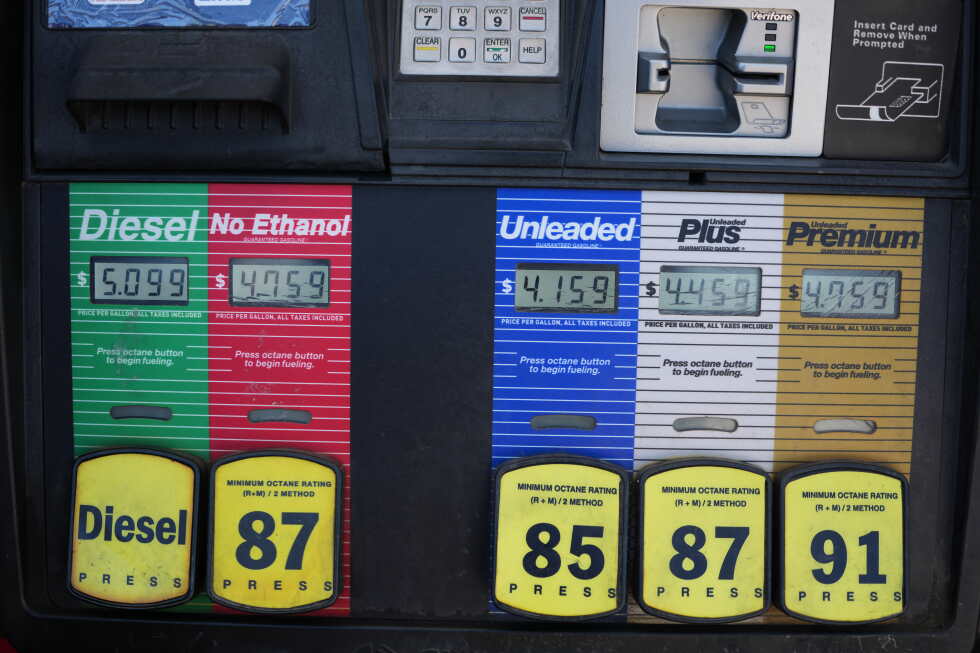
    Trump has already extended the current truce indefinitely, and has made clear he seeks to withdraw US forces from the conflict, which has emerged as a major political liability: US consumers have faced soaring gasoline prices, and public frustration with the war has grown steadily. On Tuesday, the US Senate advanced a bipartisan war powers resolution that would force Trump to end US military operations unless he secures explicit congressional authorization for the campaign. The vote marked the first time the chamber has ever approved a measure constraining Trump’s war authority, representing a significant bipartisan rebuke of the president’s handling of the conflict. The resolution still needs to pass a majority vote in the House of Representatives before it would reach Trump’s desk for a veto, however, making its final enactment uncertain.

    In an update on one of the conflict’s most controversial incidents, US Central Command commander Brad Cooper told a congressional panel this week that an investigation into a deadly attack on an Iranian school that killed roughly 170 people, most of them children, on the first day of the war remains “complex”. Cooper repeated the US military’s unconfirmed claim that the school was located on the site of an Iranian cruise missile base, stopping short of accepting formal responsibility for the civilian deaths. Iranian Foreign Ministry spokesman Esmaeil Baghaei dismissed the claim as a “baseless fabrication”, noting that striking an active school during operating hours amounts to a grave violation of international humanitarian law and an unambiguous war crime.

    In a separate regional development, the United Nations Security Council — including Russia — officially condemned an unclaimed drone attack on the United Arab Emirates’ Barakah Nuclear Power Plant this week. Abu Dhabi confirmed the drone originated from Iraqi territory. The unmanned aircraft struck a generator adjacent to the plant, the first operational nuclear power facility in the Arab world, on Sunday, sparking a small fire but causing no injuries or radiation leaks. The UAE Defense Ministry added Tuesday that its air defense systems intercepted and destroyed six drones launched from Iraq over the preceding 48 hours.

  • The differences — and similarities — in the Trump and Putin visits to China

    The differences — and similarities — in the Trump and Putin visits to China

    BEIJING — When Chinese President Xi Jinping hosted back-to-back state visits from U.S. President Donald Trump and Russian President Vladimir Putin in the Chinese capital, superficial ceremonial parallels masked sharp underlying differences in Beijing’s relationships with the two global powers.

    Both visiting heads of state were greeted with full formal honors on Beijing’s Tiananmen Square: they exchanged the obligatory formal handshakes, reviewed marching honor guard contingents armed with polished bayonets, and received enthusiastic welcomes from groups of children waving flowers and national flags. But the core goals, scheduling, and outcomes of the two summits diverged dramatically, revealing the distinct roles Washington and Moscow play in China’s foreign policy strategy.

    China’s core priority for Trump’s visit was de-escalation and stabilization of bilateral ties, which had been roiled by escalating trade tensions between the world’s two largest economies. By contrast, Beijing’s objective for Putin’s trip was to expand and solidify its years-long deep strategic partnership with Moscow.

    To accommodate Trump’s known preference for high-profile displays of respect, Xi prioritized grand ceremonial hospitality, including a rare private tour of Zhongnanhai — the walled former imperial garden that serves as the headquarters of China’s top ruling bodies. “Xi understands this is what Trump values: being treated as a distinguished VIP, and receiving that respect in front of global media cameras,” explained George Chen, a partner leading the Greater China practice at the advisory firm The Asia Group.

    With Putin, a far more frequent visitor to Beijing who has built years of personal diplomatic rapport with Xi, the focus shifted from ceremony to tangible substantive progress. “They reaffirmed their longstanding friendship treaty, signed dozens of new cooperation deals including major energy agreements, and doubled down on their stated ‘no limits’ strategic partnership,” Chen added.

    These contrasting priorities were visible even in the basic structure of the two visits. Trump’s trip extended over three days, and included ceremonial side events beyond formal talks: a private guided tour of the historic Temple of Heaven, in addition to his walk through Zhongnanhai’s imperial gardens. Putin’s visit was compressed to two days, with most of his meetings with Xi held inside the Great Hall of the People adjacent to Tiananmen Square. There, the two leaders toured an exhibition chronicling the history of China-Russia ties before holding an informal tea. Notably, the visit marked Trump’s second trip to China as U.S. president, while it was Putin’s 25th visit to the country since he took office.

    The clearest divide between the two summits emerged in their core policy messaging. For the Trump meeting, Xi centered discussions on the urgent need to repair relations after months of trade friction, framing the bilateral relationship as one that should be rooted in partnership rather than rivalry. By the end of the summit, the two leaders released a joint statement committing to work toward what they called “a constructive China-U.S. relationship of strategic stability.”

    For the Putin summit, by contrast, the messaging centered on reinforcing a deep, longstanding alignment that is both strategically critical and economically mutually beneficial. While Beijing and Washington were still negotiating to resolve trade frictions, Moscow and Beijing publicly reaffirmed their status as indispensable global partners. Putin identified the energy sector, specifically oil and natural gas cooperation, as the primary driving force behind the bilateral relationship.

    The gap in tangible outcomes was equally stark. China and Russia finalized more than 40 new cooperation agreements spanning trade, technology, cultural and media exchanges. The two leaders also signed a formal joint declaration positioning Russia and China as “important centers of power in a multipolar world,” pushing back against what they frame as U.S. global hegemony. On the other hand, Trump and Xi did not sign a joint declaration or oversee any public agreement signing during the summit itself. Details of a handful of preliminary accords were only released after Trump departed Beijing: the agreements included a Chinese commitment to purchase $17 billion worth of U.S. agricultural goods on an annualized basis, and a deal to buy 250 Boeing commercial aircraft.

    Some analysts have pointed out that the opacity of China-U.S. agreements marked a clear contrast to the transparency of China-Russia cooperation. “China and Russia reached a wide range of clear agreements, while the details of any concrete deals between China and the U.S. remain quite vague,” noted Claus Soong, an analyst at the Mercator Institute for China Studies based in Berlin. Still, not all major expected deals materialized during the Putin visit. Lyle Morris, a senior fellow focused on Chinese national security and foreign policy at the Asia Society Policy Institute’s Center for China Analysis, highlighted that no formal binding agreement was signed for the long-planned Power of Siberia 2 gas pipeline, a project that would ship Russian natural gas to China via Mongolia. “This is a major setback for Russia and for Putin personally,” Morris argued.

    Geopolitical alignment also differed sharply on the high-stakes issue of Taiwan, the self-governing democratic island that Beijing claims as part of its sovereign territory. Moscow has long maintained full public alignment with Beijing’s position on Taiwan, while the U.S. has maintained a policy of deliberate strategic ambiguity, serving as Taipei’s primary informal security backer and leading arms supplier.

    During his talks with Trump, Xi explicitly framed Taiwan as the most sensitive and important issue in the bilateral relationship, warning that mismanagement of U.S. policy toward the island could spark direct confrontation between the two powers. Trump did not address the issue publicly during his time in Beijing, but during his return trip to the U.S., he described U.S. arms sales to Taiwan as a “very good negotiating chip” in dealings with Beijing — comments that stoked widespread anxiety among Taiwanese officials and the public. No such tensions emerged during Putin’s visit: in the signed joint declaration, Russia explicitly reiterated its opposition to Taiwanese independence “in any form,” and voiced full support for what it called China’s efforts to defend its national sovereignty and achieve unification.

    Beyond Taiwan, the two leaders also aligned in expressing shared concern over what they called the “accelerated remilitarization” of Japan, at a time of already strained relations between Beijing and Tokyo over regional territorial and political disputes related to Taiwan.

  • How protesters are set for Ireland’s parliament over Yves Sakila’s ‘disturbing’ death

    How protesters are set for Ireland’s parliament over Yves Sakila’s ‘disturbing’ death

    A 35-year-old Congolese-Irish man Yves Sakila has died following his detainment by private security guards over an alleged shoplifting incident in central Dublin, sparking widespread public outrage, demands for independent investigation, and planned mass protests outside Ireland’s national parliament this Thursday.

    The fatal encounter unfolded shortly after 5 p.m. local time last Friday outside Arnotts, one of Dublin’s most iconic department stores on Henry Street. According to official details from Gardaí, Ireland’s national police service, security personnel held Sakila in connection with the alleged theft, during which an 82-year-old bystander sustained serious injuries as Sakila allegedly attempted to flee the scene. The older man was transported to a local hospital for non-life-threatening injuries and remains in recovery as of this week.

    During the detainment, Sakila lost consciousness, and urgent medical response teams transferred him to Dublin’s Mater Hospital, where he was pronounced dead shortly after arrival. Born in the Democratic Republic of Congo, Sakila had grown up in Galway and Dublin, building deep ties to Irish communities across the country.

    Graphic mobile phone footage of the incident has circulated widely across social media platforms in recent days. The recording shows multiple security personnel restraining Sakila while he was held face-down on the public sidewalk. Irish anti-racism advocates have described the video as deeply troubling, with the Irish Network Against Racism (INAR) saying the incident bears clear hallmarks of excessive use of force by security staff.

    INAR’s leadership emphasized that the death of a Black man in this context has sparked extreme anxiety among Ireland’s ethnic minority populations, and that a full, unflinching probe is necessary to preserve community trust in the country’s criminal justice system.

    Dr. Ebun Joseph, Ireland’s Special Rapporteur on Racism and Racial Equality, echoed those calls, noting that the viral footage has caused profound distress, fear, and anger across Black and minority ethnic communities across Ireland. In an official letter obtained by BBC News NI, addressed to Gardaí, Justice Minister Jim O’Callaghan, and national police ombudsman body Fiosrú, Joseph wrote that the visible disproportionate and unnecessary force used during Sakila’s restraint raises urgent, serious questions that demand comprehensive, independent examination.

    The case has already been referred to Fiosrú for independent oversight, while Gardaí confirm that their wide-ranging probe into all circumstances surrounding the incident remains ongoing, with no significant new updates to share as of Wednesday.

    In a public statement, a representative for Arnotts department store expressed deep sorrow over Sakila’s passing, extending heartfelt condolences to his family, friends, and the entire Congolese community in Ireland. “No loss of life should ever be the outcome of a retail security incident,” the spokesperson said, adding that the retailer recognizes the deep hurt and public concern this tragedy has caused. Arnotts is fully cooperating with ongoing law enforcement investigations and conducting an internal full review of its partnership with the private security firm that provides on-site protection for the store. The retailer declined to offer further comment while the probe is active, saying it remains committed to seeing all facts of the case fully established.

    Community response to the death has grown rapidly over the past week. On Tuesday afternoon, dozens of mourners gathered for a candlelit vigil outside the Henry Street store, singing hymns and offering prayers for Sakila. Among the attendees was Walter Kabangu, former vice president of the Congolese Community in Ireland and a former schoolmate of Sakila. Kabangu told local media that watching the viral footage of his friend’s final moments was incredibly traumatic.

    “It’s mostly shocking, just seeing the images and seeing someone you used to see back in school in your younger days and then seeing them have such a demise,” Kabangu said. “It’s just a very sad situation that has taken place and something that I find quite regrettable and something that shouldn’t have taken place. This tragedy has impacted our entire community, and it is a devastating, shocking moment for all Congolese people in Ireland.”

    Laure Zoya, a community organizer, told national broadcaster RTÉ that the video and witness testimonies have deeply shocked and traumatized Congolese, African, and Black communities across Ireland and around the world. “Many people are disturbed by the level of force shown during the restraint and are demanding full clarity regarding the circumstances that led to Mr Sakila becoming unresponsive,” Zoya said.

    Chris Kibiadi, a Dublin resident who knew Sakila personally, told RTÉ: “It could happen to me, it could happen to you. It’s not a black or white issue, it’s a matter of basic justice. We need justice for our brother. I keep saying my brother, because I knew him.”

    Political leaders across Ireland’s partisan spectrum have offered condolences to Sakila’s family and backed calls for a full investigation. Taoiseach and Prime Minister Micheál Martin said he extended his deepest sympathies to the Sakila family and the wider Congolese community. “The situation will have to be thoroughly investigated, and needs to be thoroughly investigated,” Martin said. “I don’t want to prejudice the outcome of that investigation but I think a lot of people are clearly very concerned about what has transpired here.”

    Justice Minister Jim O’Callaghan has also confirmed that a thorough Garda investigation is required, while Social Democrats leader Holly Cairns called the circulating social media video deeply concerning, and reiterated that only a full, comprehensive probe into all events can answer outstanding public questions. Organizers say Thursday’s protest outside Leinster House, Ireland’s parliament building, will be the largest public demonstration to date, calling for transparency and accountability over Sakila’s death.

  • Gaza flotilla activists await deportation from Israel

    Gaza flotilla activists await deportation from Israel

    As international condemnation mounts over the mistreatment of detained Gaza-bound activists, hundreds of people seized by Israeli forces from the Global Sumud Flotilla remained in custody Thursday, with the vast majority en route to deportation from southern Israel’s Ramon Airport.

    The latest incident marks the second consecutive attempt by activist organizers to breach Israel’s 17-year blockade of the Gaza Strip, a restriction that has pushed the besieged Palestinian territory into catastrophic humanitarian hardship following the outbreak of the 2023 Israel-Hamas war. Last week, roughly 50 vessels carrying more than 430 activists from dozens of countries set sail from Turkey, only to be intercepted at sea by Israeli security forces and taken into custody.

    Controversy erupted earlier this week after Israel’s far-right National Security Minister Itamar Ben Gvir posted a provocative video of the detained activists, who were shown with their hands bound and foreheads pressed to the ground. Captioned “Welcome to Israel”, the footage showed Ben Gvir heckling the captives while waving an Israeli flag, drawing fierce backlash from leaders across the globe as well as unexpected criticism from within Israel’s own governing coalition.

    Adalah, the Israeli legal center representing the detained activists, confirmed Thursday that most detainees were being transferred from Ktziot Prison, a maximum-security facility located in the Negev Desert near the Gaza border, to Ramon Airport for expulsion. Only a small group remains in custody, including one Israeli citizen activist who attended a court hearing Thursday to face what Adalah calls “absurd” and unfounded charges, including illegal entry, unlawful stay, and attempting to break the Gaza blockade.

    Multiple detained activists and observers have shared harrowing accounts of abuse in custody. Legal director Suhad Bishara told reporters that at least two activists had been hospitalized after being shot with rubber bullets, while dozens more reported injuries including suspected broken ribs. Bishara added that while attorneys had been able to meet with many detainees, a number of activists were forced to attend court hearings without any legal representation.

    Alessandro Mantovani, an Italian journalist who was deported ahead of the main group, described violent treatment at the hands of Israeli security forces during a press conference after landing at Rome’s Fiumicino Airport Thursday. “They beat us up. They kicked us and punched us and shouted ‘Welcome to Israel’,” Mantovani said, adding that he and other early deportees were transported to Ben Gurion Airport in handcuffs and leg chains before being put on flights out of the country.

    Dario Carotenuto, an Italian member of parliament who was also detained and expelled, called the experience traumatizing. “It was really tough… They called us by number… with rifles pointed at us… I think those were the longest seconds in my life,” Carotenuto said.

    The backlash to Ben Gvir’s video has been swift and widespread, with condemnation pouring in from national governments including Italy, Spain, Australia, and Canada. Even domestic allies and international partners joined in the criticism: Israeli Prime Minister Benjamin Netanyahu and Foreign Minister Gideon Saar publicly distanced themselves from the minister’s actions, while U.S. Ambassador to Israel Mike Huckabee labeled the incident “despicable actions”.

    Francesca Albanese, the United Nations’ independent expert on human rights in the Palestinian territories and a native Italian, called on her home country to take concrete action against Israel. “Words do not suffice: let Italy stop opposing the suspension” of the EU-Israel Association Agreement, she wrote on the social platform X.

    Israel has enforced a complete land, air, and sea blockade of Gaza since 2007, when Hamas took control of the territory. Since the outbreak of war in October 2023, triggered by Hamas’ cross-border attack that killed roughly 1,200 people, the humanitarian situation in Gaza has collapsed. More than 2 million Gazans, nearly the entire population, have been forcibly displaced at least once and rely entirely on international aid for survival. While a fragile temporary ceasefire has reduced active fighting in recent months, Israel has repeatedly paused aid deliveries, leaving Gaza grappling with extreme shortages of food, clean water, medicine, and other critical supplies.

    A previous attempt to break the blockade by the Global Sumud Flotilla was intercepted last month in international waters off the coast of Greece. Most participants were expelled directly to European countries, while two were taken into Israeli custody, held for several days, and then deported.

  • Free vaccines and booster calls: NSW reveals ‘targeted’ approach to diphtheria outbreak as cases hit 35yr high

    Free vaccines and booster calls: NSW reveals ‘targeted’ approach to diphtheria outbreak as cases hit 35yr high

    Australia is facing a public health emergency as a diphtheria outbreak surges to levels not recorded in 35 years, pushing national case counts above 220. In response to the growing crisis, New South Wales (NSW) has announced a targeted, free vaccination initiative to curb the spread of the potentially fatal bacterial disease and boost lagging immunization rates across the state.

    NSW Health Minister Ryan Park unveiled the plan at a Thursday press conference, issuing an urgent public call for residents to verify that their diphtheria vaccinations are up to date. Under the new policy, all doses and boosters will be provided at no cost to patients at Aboriginal Medical Services (AMS) and general practitioner (GP) clinics across NSW. Free access is also extended to all individuals under 19 years of age seeking immunization.

    Park emphasized that immunization rates across NSW remain far lower than public health officials recommend, with particularly concerning gaps in coverage among Aboriginal and Torres Strait Islander communities. The state’s intervention comes in response to rising cases nationally, most of which are concentrated in the Northern Territory – the region that recorded Australia’s first diphtheria-related death in nearly a decade in recent weeks. While the outbreak is centered in northern Australia, cases have now spread across state borders: Queensland and South Australia have both reported detections, and NSW confirmed its first cases of the current outbreak earlier this week.

    In a direct appeal to First Nations communities, Park specifically urged any Aboriginal or Torres Strait Islander resident who has not received a diphtheria booster in the last 10 years to access free immunization through their local AMS or GP. “Diphtheria has taken hold in some parts of northern Australia, and we need to keep people safe,” Park said. “The best way to do that is vaccination.”

    As Australia’s most populous state with the country’s largest public health system and most extensive resources, NSW has committed to ongoing monitoring of the outbreak and stands ready to expand its response if needed. Park noted that the diphtheria outbreak is a shared national challenge, and NSW is willing to contribute additional support to affected regions as the situation evolves.

    Diphtheria is a highly contagious bacterial infection that can cause severe respiratory damage, heart and nerve complications, and even death in unvaccinated individuals. Public health officials have long emphasized that widespread immunization is the most effective prevention strategy against the disease, which was largely controlled in high-income countries through routine vaccination programs for decades.

  • Rich nations topped $100 bn climate finance goal again in 2023, 2024: OECD

    Rich nations topped $100 bn climate finance goal again in 2023, 2024: OECD

    For the third consecutive year, high-income economies have exceeded the $100 billion annual climate finance commitment to low- and middle-income nations, new data from the Organisation for Economic Co-operation and Development (OECD) confirms. Yet growing geopolitical and economic headwinds have cast serious uncertainty over whether wealthy countries can deliver on an even larger, newly agreed climate aid target, leaving vulnerable nations waiting for much-needed support to tackle the climate crisis.

    The original promise to mobilize $100 billion per year for climate action in developing countries by 2020 was a landmark commitment to address climate inequality: developing nations contribute the least to historical greenhouse gas emissions, yet bear the brunt of worsening extreme weather and need investment to shift to clean energy and adapt to climate impacts. For years, wealthy nations failed to hit the target, only hitting the mark for the first time in 2022 after an extension of the deadline to 2025. Since then, contributions have steadily grown: OECD tracking data shows total climate finance hit $115.9 billion in 2022, jumped to $132.8 billion in 2023, and rose slightly to $136.7 billion in 2024.

    Breaking down the 2024 figures reveals a shifting mix of funding sources. Public sector climate finance fell 2.6% year-over-year to $101.6 billion, but private sector contributions surged 33% to reach $35 billion. Raphael Jachnik, who led the OECD’s analysis, told AFP the dip in bilateral public funding largely reflected a return to pre-2023 trends after an unusually large one-year increase in public contributions the previous year. The OECD also noted that full data for 2025, the final year of the original $100 billion commitment, will not be available until 2027 at the earliest.

    Climate finance has been one of the most divisive issues at UN climate talks for decades, with developing nations growing increasingly frustrated by repeated delays and unmet promises from wealthy governments. At the 2024 COP29 summit held in Azerbaijan, rich nations agreed to a new collective target: $300 billion in annual climate finance by 2035. They also set a broader, less specific goal of mobilizing $1.3 trillion per year from combined public and private sources by 2035. But even this new target is widely viewed as insufficient by vulnerable developing countries, and multiple major headwinds now threaten its delivery.

    The most significant disruption comes from the United States, where climate sceptic Donald Trump returned to the presidency in 2024. Since taking office, Trump has withdrawn the US from active global climate diplomacy and made deep cuts to the country’s foreign aid programs, eliminating a core source of global climate finance. The European Union, currently the largest single contributor to international climate finance, is grappling with domestic budget pressures and has redirected large sums of public spending to military investment amid ongoing conflicts in Ukraine and the Middle East, leaving less fiscal space for climate aid.

    Turkey’s Climate Minister Murat Kurum, who will chair the upcoming COP31 climate summit hosted by Ankara this November, has made clear he will pressure wealthy nations to deliver on their new commitments. Speaking at a climate ministerial gathering in Copenhagen this week, Kurum said: “It is easy to say we support global climate action. But promises must be kept. I will hold donors accountable for the commitments they made under the $300 billion Baku finance goal.”

    Wealthy Western nations have pushed to expand the pool of climate finance contributors, arguing that major economies still classified as developing – including China and Saudi Arabia – should now take on a larger share of funding. Rich countries, many facing their own domestic debt and budget crises, have also pushed for the private sector to play an increasingly central role in meeting future targets.

    OECD data also shows that 36% of 2024 climate finance went to projects in Asia, making it the largest recipient region, while Africa received 31% of total contributions. In a trend that has sparked widespread criticism from developing country governments and activists, the majority of public climate finance continues to be issued as loans rather than grants: loans made up 73% of total public climate finance in 2023 and 67% in 2024. Developing nations argue that relying on loans pushes already vulnerable economies deeper into debt, at a time when they are forced to respond to a climate crisis they did little to cause.

    Mohamed Adow, director of Nairobi-based climate think tank Power Shift Africa, called the reliance on loans an outrage. “The rich world profits from the loans they provide to poor countries who are desperately trying to deal with climate change caused by the rich world. It’s a total scandal,” Adow said. “The countries least responsible for the climate crisis are being asked to take on debt to survive it.”

  • UK government to release papers related to former Prince Andrew’s appointment as trade envoy

    UK government to release papers related to former Prince Andrew’s appointment as trade envoy

    LONDON – The British government is scheduled to declassify and publish a set of confidential documents Wednesday detailing the appointment and tenure of King Charles III’s brother, the former Prince Andrew, now legally named Andrew Mountbatten-Windsor, as the UK’s international trade envoy. This long-awaited release comes just months after a cross-party group of UK lawmakers accused Andrew of prioritizing his controversial personal friendship with disgraced financier and convicted sex offender Jeffrey Epstein over national interests.

    The push for full transparency began back in February, when parliament overwhelmingly approved a formal motion demanding the documents be made public. The vote followed a major development: Andrew was arrested on charges alleging that he shared sensitive government trade reports with Epstein during his time in the unpaid official role. The calls for publication gained even more urgency after the U.S. Department of Justice unsealed millions of pages of previously sealed court records tied to the Epstein case, which laid bare the disgraced financier’s extensive network of high-profile connections across the globe.

    Those released U.S. documents detailed how Epstein leveraged his web of wealthy, powerful friends to accumulate influence and carry out a years-long pattern of sexual exploitation targeting young women and underage girls. Nowhere has the wave of revelations from the Epstein files caused more upheaval than in the UK, where the scandal has opened up fierce new debates about power, accountability and unregulated influence within the country’s so-called Establishment – the interconnected group of aristocratic elites, senior politicians and high-profile business leaders that have long shaped British public life.

    During a heated parliamentary debate held to examine Andrew’s long-documented ties to Epstein, ministers and backbench lawmakers from across the political spectrum united to demand greater transparency and accountability from the British royal household. Trade Minister Chris Bryant was among the most vocal critics, arguing that Andrew engaged in a relentless pattern of self-serving behavior throughout his decade as a working royal. “Andrew was a rude, arrogant and entitled man who could not distinguish between the public interest he claimed to serve and his own private interest,” Bryant stated during the debate, adding that the former prince’s time in office was defined by a constant “self-enriching hustle.”

    Andrew has already faced significant consequences for his ties to the scandal: he was stripped of all his honorary royal titles and public roles last year, as King Charles III moved quickly to distance the monarchy from the growing controversy surrounding the former prince. This is not the first time Andrew’s ties to controversial figures have cut short his public service: he originally held the post of special trade envoy from 2001 to 2011, when he was forced to step down over widespread concerns about his questionable links to autocratic figures in Libya and Azerbaijan.

  • DR Congo cancels World Cup training camp over Ebola outbreak

    DR Congo cancels World Cup training camp over Ebola outbreak

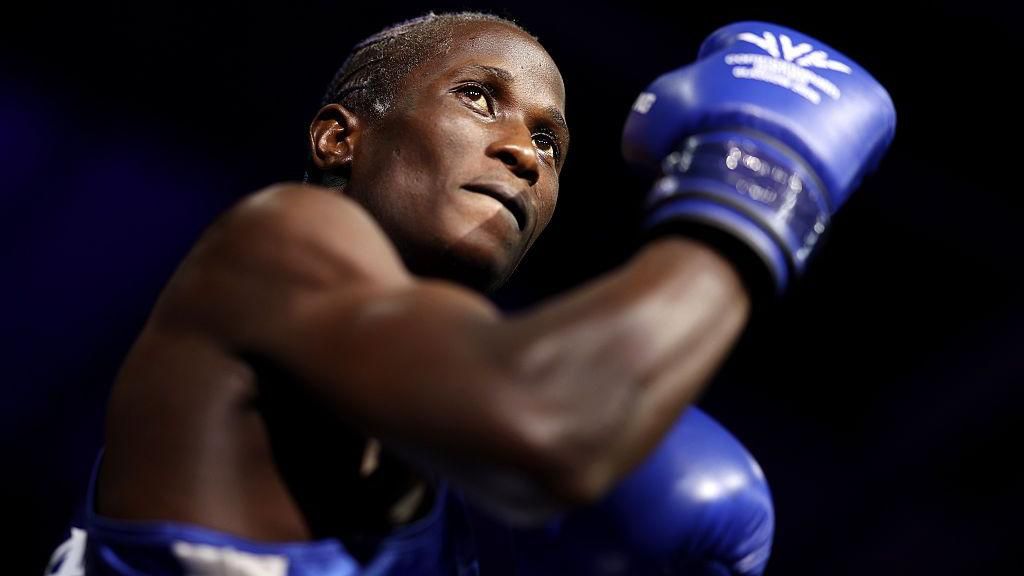
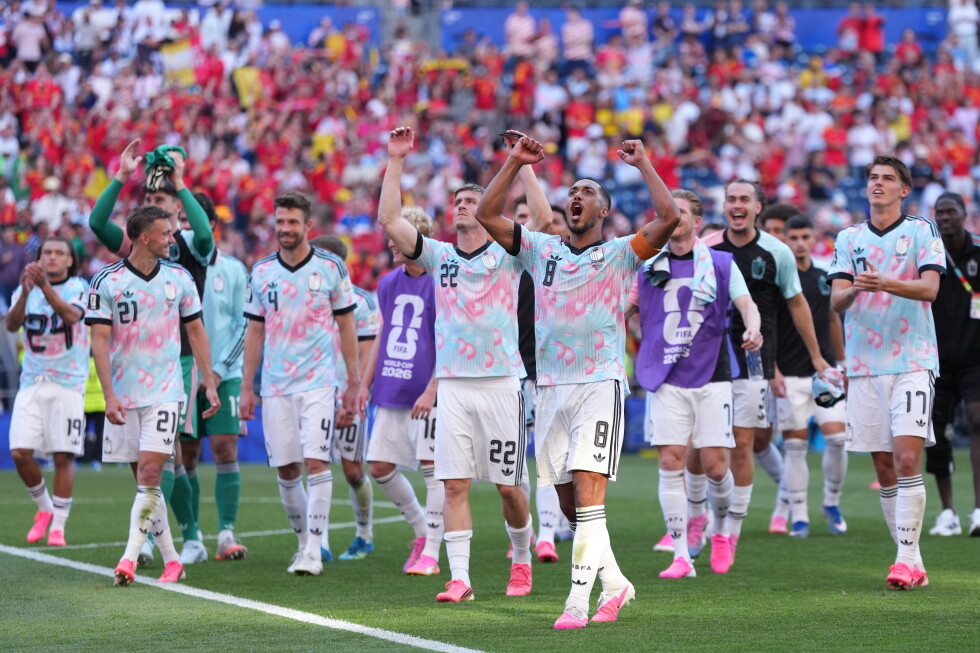
    For the first time in 52 years, the Democratic Republic of Congo (DR Congo) has secured a spot at the FIFA World Cup, marking a historic milestone for the Central African nation’s national football program. But the long-awaited return to football’s biggest global stage has been overshadowed by a growing public health crisis, forcing a last-minute change to the team’s pre-tournament training plans.

    Originally scheduled to host its pre-World Cup training camp in the capital city of Kinshasa, the DR Congo men’s national football team has confirmed it will relocate all onshore preparations to Belgium, after an alarming Ebola outbreak in the country’s eastern provinces spread to become a globally recognized public health emergency. As of recent official counts, the outbreak has been linked to 139 deaths out of roughly 600 suspected cases of infection, according to local health authorities.

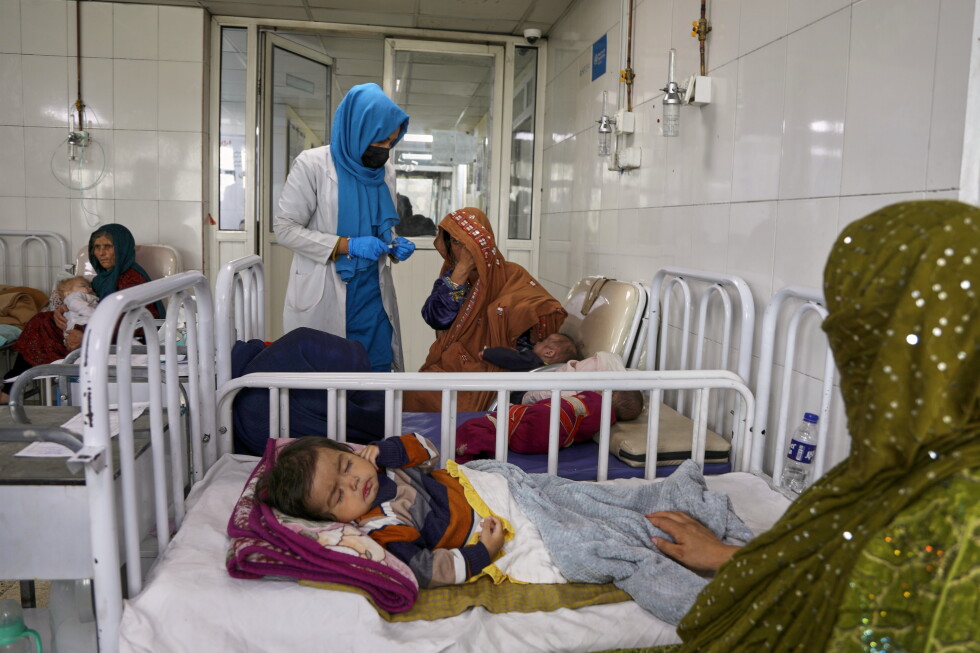
    The outbreak is being driven by the rare Bundibugyo strain of the Ebola virus, a variant with no currently approved vaccine available for widespread use. The World Health Organization (WHO) announced last month that the event qualifies as a “public health emergency of international concern” (PHEIC), the organization’s highest level of alarm for global health threats, though officials have stressed that the outbreak does not yet meet the criteria to be classified as a pandemic. WHO experts have also warned that developing a targeted, deployable vaccine for the Bundibugyo strain could take as long as nine months to complete, leaving local containment efforts stretched thin in the near term.

    Jerry Kalemo, national team spokesperson, confirmed to international media outlets that despite the disruption to domestic training plans, all pre-tournament friendly matches scheduled across Europe will proceed as originally arranged. The Leopards, as DR Congo’s national team is commonly known, are set to face Denmark in Liege on June 3, followed by a matchup against Chile in the Spanish coastal city of Marbella on June 9 as they build match fitness ahead of the World Cup finals.

    Back in DR Congo, domestic government and public health teams are fully focused on containing the outbreak, with most available public resources diverted to slowing transmission and supporting affected communities. While the relocation of the national team’s training camp is a necessary precaution to protect the squad and avoid potential exposure to the virus, the entire DR Congo football community remains focused on the historic tournament ahead, which will see the country take the World Cup stage for the first time since its 1974 appearance in West Germany.

  • India has a new political superstar – a cockroach

    India has a new political superstar – a cockroach

    In the crowded landscape of Indian political symbols, where the ruling Bharatiya Janata Party claims the lotus and the opposition Congress relies on the iconic hand, an unlikely new mascot has exploded into online consciousness: the humble, reviled, notoriously indestructible cockroach. What began as a throwaway offensive comment from India’s Chief Justice Surya Kant has evolved into a viral satirical political movement that has upended conventional Indian politics and given a voice to millions of frustrated young Indians.

    The controversy that sparked the movement ignited last month, when Kant made headlines during a public court hearing. He was accused of comparing unemployed young people who gravitated toward journalism and activism to cockroaches and parasites. The judge quickly issued a clarification, stressing his remarks were aimed exclusively at individuals holding fake academic credentials, not the broader Indian youth population. But by the time the clarification was issued, the original comment had already spread like wildfire across Indian social media, sparking a mix of public outrage, dark internet humor, and eventually, the creation of a spontaneous online uprising: the Cockroach Janta Party (CJP), or Cockroach People’s Party.

    Far from a traditional, registered political party, the CJP is a satire-driven online collective founded by Abhijeet Dipke, a 30-year-old political communications strategist and current Boston University student who previously worked with India’s anti-corruption born Aam Aadmi Party, a group renowned for its sophisticated social media outreach. Dipke originally conceived the CJP as a lighthearted joke, telling BBC Marathi that he simply wanted to create a space for disillusioned young people to gather. What unfolded far outpaced his wildest expectations.

    Within days of launching, the CJP racked up tens of thousands of membership sign-ups via a simple Google form, spawned the viral hashtag #MainBhiCockroach (translated “I too am a cockroach”), and earned public endorsements from high-profile opposition politicians. The movement soon crossed over from online to offline, with young volunteers donning cockroach costumes to appear at public clean-up drives and protest events, leaning into the reclaimed label with theatrical, unapologetic energy. By last Thursday, the CJP’s Instagram account hit 10 million followers – surpassing the official BJP account, which counts roughly 8.7 million followers, even as the BJP claims the title of the world’s largest political party by formal membership. While the CJP’s X account, which boasts more than 200,000 followers, is currently withheld for users in India following an unspecified legal demand, the movement’s momentum has shown no signs of slowing.

    For its growing base of supporters, the CJP represents a much-needed break from India’s rigid, heavily managed mainstream political culture that often shutters out dissent. Backing for the movement has come from across the political opposition, including prominent figures like MP Mahua Moitra, veteran politician Kirti Azad, and senior lawyer Prashant Bhushan. Critics, however, have pushed back against framing the CJP as a spontaneous grassroots rebellion, pointing to Dipke’s past ties to the AAP and arguing the movement is nothing more than opposition-aligned digital political theater, carefully packaged rather than organically born.

    Beneath the memes and insect-themed jokes, the CJP’s rapid rise exposes a deep well of generational frustration among India’s massive youth population. Roughly half of India’s 1.4 billion people are under the age of 30, making it home to the youngest national population on the globe, yet formal political participation among young Indians remains strikingly low. A recent national survey found that 29% of young Indians avoid all forms of political engagement entirely, while only 11% hold formal membership in any established political party.

    “People are frustrated because they don’t feel heard or represented,” Dipke explained.

    Across South Asia, the past half-decade has seen a wave of youth-led protest movements that have toppled sitting governments in Sri Lanka, Nepal, and Bangladesh, all fueled by widespread public anger over lack of job opportunities, skyrocketing living costs, and stagnant economic mobility. India has not yet seen a mass uprising of comparable scale, but the underlying economic and social pressures mirror those that drove unrest across the region. Even as India posts impressive headline GDP growth, anxieties over employment, widening economic inequality, and rising cost of living have not eased. For many young Indians entering the workforce, a college education no longer guarantees financial stability, and the long-held promise of upward social mobility feels increasingly out of reach.

    While Dipke rejects comparisons between the CJP and the mass upheavals that shook neighboring countries, noting India’s unique political context, he agrees that the frustration among young Indians is tangible – it is simply expressed differently, fragmented across online spaces rather than concentrated in mass street protests. “Gen Z has given up on traditional political parties and wants to create its own political front in a language they understand,” he said.

    That distinctly internet-native language is on full display on the CJP’s website, which reads far less like a traditional political manifesto and more like a product of meme culture. The collective describes itself as “the voice of the lazy and unemployed,” boasts “zero sponsors” and “one stubborn swarm,” and invites people “tired of pretending everything is fine” to join its ranks. The site features satirical mock forms, intentionally unpolished design, and a visual identity that feels more like an inside internet joke than a formal political institution. Yet tucked between the self-deprecating jokes about doomscrolling, unemployment, and widespread political burnout are clear, concrete political demands: greater government accountability, media reform, electoral transparency, and expanded political representation for women.

    This balance between parody and sincere grievance is core to the movement’s broad appeal. The jokes resonate because the underlying frustrations are universal for young Indians: stagnant job markets, growing inequality, systemic corruption, and a pervasive sense of political alienation. Even the choice of the cockroach as a mascot carries deliberate meaning: far from a heroic or aspirational symbol, the cockroach is defined by its resilience, adaptability, and ability to survive in hostile conditions with minimal resources, a metaphor that hits close to home for many young Indians.

    The merging of political satire and organized politics is not a new phenomenon globally: in Italy, comedian Beppe Grillo turned anti-establishment humor into the Five Star Movement, a major force in Italian politics, while in Ukraine, Volodymyr Zelenskyy parlayed a career playing a fictional president on television into winning the actual presidency. In the United States, the rise of Donald Trump sparked long-running debates over whether political satire has become obsolete in an era where political reality often feels like parody. The CJP, however, offers a distinctly Indian, internet-first iteration of this trend: a meme-driven, insect-themed movement shaped by viral hashtags, widespread youth burnout, and ironic despair.

    While the CJP strikes many observers as an unusual development in Indian politics, it fits into a long history of political spectacle in the country. Indian politicians have long embraced dramatic public displays, from staged meditative retreats in Himalayan caves to high-drama party switching that sees legislators whisked between locations on buses and hidden in hotels to avoid defection. Mainstream Indian political campaigns already rely on tightly choreographed viral content and punchy slogans designed to maximize social media reach. Against that backdrop, an insect-themed satirical movement feels far less out of place than it might seem.

    The CJP’s rapid spread is less a sign that young Indians want another formal political party, and more evidence that they are desperate for a new way to express their deep-seated frustration with the status quo. Dipke believes the CJP is just the start of a larger youth-led political shift. “Young people are fed up with the current political system, and more youth organisations will come forward,” he predicted. Skeptics, however, argue the movement is a viral flash in the pan that will fade as quickly as it emerged.

    Regardless of its long-term fate, the CJP has already achieved something unprecedented in modern Indian politics: it has, for the first time for many young Indians, made them feel seen and heard. Where past generations of politically frustrated young Indians produced formal manifestos and organized mass movements, 2026 has given rise to a meme-driven party with an insect mascot – a reflection of how a new generation is reimagining political expression for the digital age.