作者: admin

  • Trump’s push for deep-sea mining spawns new companies and fast-tracked rules

    Trump’s push for deep-sea mining spawns new companies and fast-tracked rules

    Twelve months have passed since former U.S. President Donald Trump signed an executive order to jumpstart a commercial deep-sea mining industry from scratch, and the sector has already seen explosive investor activity, soaring stock valuations, and a rushed federal permitting push that could bring the first U.S.-approved commercial seabed mining projects to fruition within the next two years. An Associated Press investigation into the nascent industry reveals sharp divides over its economic viability, environmental risks, and legal legitimacy, even as regulators move aggressively to auction off access to seafloor deposits stretching from Alaskan waters to American Samoa by the end of 2025.

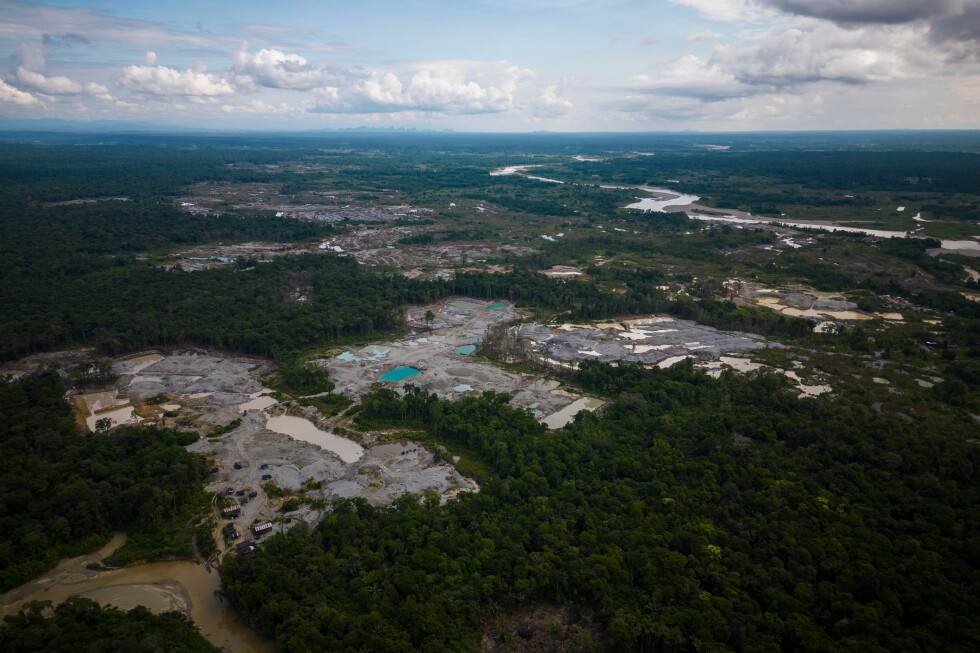
    At least nine companies are currently in active discussions with federal regulators to secure exploration and commercial mining rights, marking a dramatic reversal of decades of U.S. policy that aligned with international agreements governing the global seabed. For context, deep-sea mineral deposits — most notably polymetallic nodules, fist-sized rock formations formed over millions of years that contain high concentrations of manganese, copper, nickel, cobalt and rare earth elements critical to clean energy technology — have drawn prospector interest for more than a century. Trillions of these nodules lie on the international seabed between Mexico and Hawaii, an area classified as the shared heritage of all humankind under the governance of the Jamaica-based International Seabed Authority (ISA). To date, the ISA has granted only exploration rights to 24 contractors, and has not finalized rules to allow commercial mining, a process that has dragged on for more than a decade.

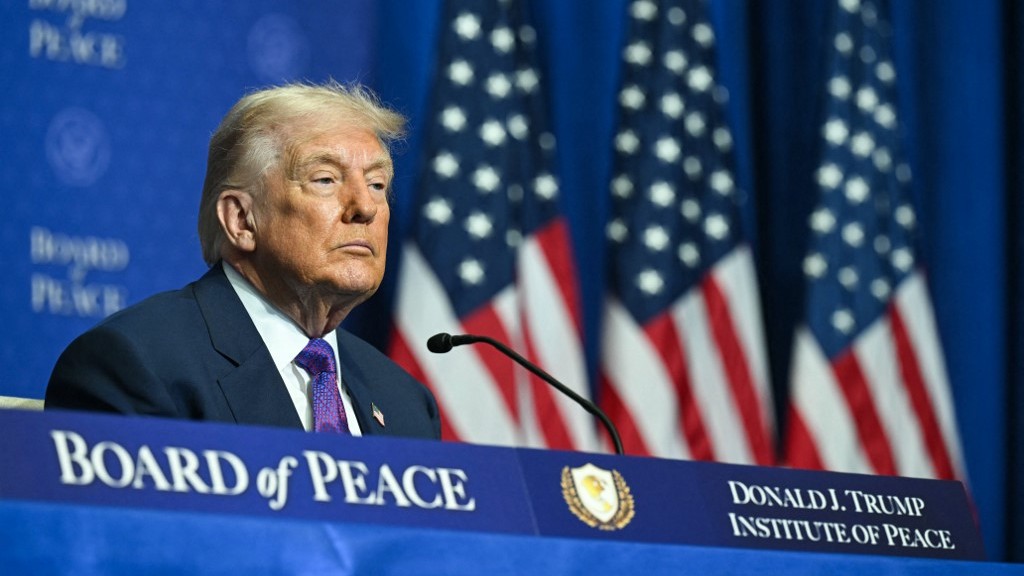
    Trump’s 2024 executive order broke with this international framework, reversing longstanding U.S. commitments to wait for ISA rules and directing federal agencies to accelerate domestic permitting. The order framed seabed mining as critical to U.S. economic prosperity and trade independence from China, a framing that has rallied industry and political support. Today, two federal agencies are leading the permitting push: the Bureau of Ocean Energy Management (BOEM), which regulates U.S. territorial waters, and the National Oceanic and Atmospheric Administration (NOAA), which oversees activity in international waters. Neither agency has ever approved a commercial deep-sea mining project, but political appointees installed during Trump’s second term have moved rapidly to rewrite rules and expand capacity. In June 2025, Interior Secretary Doug Burgum ordered BOEM to streamline its review process, announced plans to rebrand the agency as the Marine Minerals Administration, and scheduled the first lease auction for as early as August 2025, covering areas off Alaska, Virginia, American Samoa and the Northern Mariana Islands. NOAA, meanwhile, revised its rules in January 2025 to allow companies to apply for commercial and exploration permits simultaneously, and has requested expanded staffing to process 16 applications in the 2026 fiscal year. A White House spokesperson has defended all actions as legally sound.

    But a closer look at the companies leading the race for seabed access reveals a pattern of legal disputes, failed past projects, and questionable track records that raise alarms for analysts and observers. The most high-profile contender is The Metals Company, widely viewed as the industry front-runner, which says it is prepared to launch commercial mining before the end of 2026 if it receives a permit. The firm conducted a 2022 test that pulled 3,000 metric tons of nodules from the seabed, and has close ties to the Trump administration: CEO Gerard Barron was at the White House for the signing of the executive order, has testified three times before Congress on deep-sea mining, and has received financial advice from Cantor Fitzgerald, the firm led by current Commerce Secretary and NOAA overseer Howard Lutnick. The company submitted its permit applications within a week of the executive order, and resubmitted under the new streamlined rules just one day after NOAA finalized the regulatory changes, leading Democratic Rep. Ed Case of Hawaii to accuse the firm of being improperly aligned with the agency. Barron has denied the accusation, noting the company spent nearly $800,000 on lobbying starting in 2024 to streamline permitting rules.

    The Metals Company’s leadership also has a history of failed deep-sea mining projects: Barron got his start in the sector as an investor in Nautilus Minerals, which won the world’s first commercial seabed mining license from Papua New Guinea in 2011, only to collapse before production began, leaving the government holding more than $100 million in debt for its 15% stake in the project. In a statement, a company spokesperson said The Metals Company has 15 years of preparation and testing behind it, and faces no unfair advantages in the permitting process.

    Other leading contenders bring similarly controversial track records. Tampa-based Odyssey Marine Exploration, which got its start in the 1990s hunting sunken shipwrecks for profit, pivoted to deep-sea mining after a years-long legal battle with the Spanish government over a 1804 wreck of a Spanish naval galleon loaded with gold and silver. After a high-profile dispute, Odyssey was forced to return the treasure, and turned its focus to coastal mineral sand mining. The company won a phosphate dredging permit in Mexico’s Gulf of Ulloa, but the Mexican government revoked the permit over fears of harm to marine habitats including critical habitat for endangered loggerhead turtles. Odyssey sued Mexico and won a $37 million settlement in 2024, and has since applied to BOEM to begin dredging off the coast of Virginia. In 2025, the company announced it would merge with American Ocean Minerals Corporation, a newly formed firm that has applied for a NOAA exploration license for deep-sea nodules. An Odyssey spokesperson said the company has selected its project area to avoid sensitive habitats and that dredging can be done safely.

    Another startup, Impossible Metals, has targeted seabed deposits off American Samoa and the Northern Mariana Islands, despite widespread local opposition: American Samoa and nearby Guam have already banned deep-sea mining in territorial waters, and a similar ban is being considered in the Northern Mariana Islands. Because the federal government controls waters beyond three miles from shore, the final decision rests with Washington, not local leaders. Impossible Metals has marketed itself as an environmentally friendly alternative to traditional deep-sea mining, planning to use floating robots that only collect nodules free of marine life, and has offered local governments 1% of future profits. Critics, however, question whether the untested technology works, and whether any profits will ever materialize. The company declined to respond to AP’s requests for comment.

    Smaller, newer entrants to the sector have also faced questions: Deep Sea Minerals Corp., a Canadian public company founded in 2022, recently acknowledged its marketing materials may have overstated its growth prospects, and confirmed it currently holds no mining rights and has no specialized deep-sea mining technology. Even among the small group of applicants, conflict has already emerged: The Metals Company and American Metal Resources are currently involved in mutual lawsuits alleging the misuse of confidential business information.

    Beyond questions about corporate track records, deep-sea mining faces major unresolved economic and environmental challenges. Deep-sea ecologists have long warned that the deep ocean is one of the least studied ecosystems on Earth, and large-scale mining could drive fragile, unique deep-sea species to extinction. But economic analysts are also deeply skeptical that the promised profits from the sector will ever materialize.

    Proponents of deep-sea mining have long anchored their business case on rising demand for battery minerals for electric vehicles, which drove a surge in cobalt and nickel prices five years ago. But battery technology has evolved rapidly, with modern designs relying far less on the two minerals, reducing projected demand. Even copper, the most consistently in-demand metal found in nodules, is being replaced by aluminum in some industrial applications. At the same time, analysts point out that abundant, lower-cost mineral reserves remain untapped on land: multiple copper, cobalt and nickel mines in the U.S. are already fully permitted but remain inactive, suggesting that permitting barriers are not the primary constraint on domestic mineral supply.

    The Metals Company’s own 2024 pre-feasibility study, required for public mining companies by the U.S. Securities and Exchange Commission, projected that the firm would not break even on its first project until the eighth year of operation — the same year it projected all of its currently identified reserves would be fully mined. Mining industry analysts say that forecast is a clear red flag: no viable project expects to only break even when its reserves are exhausted. “Anyone with industry experience would conclude that the project should be abandoned at this stage,” said mining consultant Steven Emerman, who conducted an independent analysis of the study at the request of deep-sea mining opponents. The Metals Company argues that it will find additional economically viable reserves after the project launches, and that the unique mix of four minerals in nodules makes the project resilient to shifting demand. A spokesperson said the cost of surveying additional reserves is best incurred once operations are underway, and the company is confident additional reserves will prove viable.

    Another major unaddressed barrier is processing capacity: the U.S. currently has no large-scale domestic processing facilities for nickel, manganese or cobalt, despite the executive order’s focus on trade independence. Building these facilities would require billions in capital and years of construction, meaning companies will initially have to rely on processing partners in Japan, South Korea and Indonesia. That reliance creates major legal risk, because most other countries are party to the ISA and could face legal action for assisting U.S. mining in international waters that is not authorized by the ISA. For example, The Metals Company relies heavily on Swiss firm Allseas, which owns the specialized mining ship and collection vehicles the company plans to use. Allseas has said it will only deploy its technology once all relevant national and international regulatory requirements are met, leaving the project’s core infrastructure in limbo.

    Some companies, including Impossible Metals, have suggested the U.S. government could de-risk the sector by purchasing nodules for the National Defense Stockpile, creating a guaranteed buyer for early production. But the Defense Logistics Agency, which manages the stockpile, says there are currently no plans to acquire seabed nodules. Even if the government did step in, analysts note that unprocessed nodules stored in warehouses offer no strategic benefit.

    Former senior regulators warn that current U.S. rules are not equipped to govern the novel industry, with insufficient requirements to ensure operators have the financial capacity and technical expertise to complete projects safely. “You want to make sure that the operators are financially capable … (that) they actually have the skills and the resources that would be required,” said Elizabeth Klein, who led BOEM during the final two years of the Biden administration. “The current regs don’t speak to much of that at all.” A BOEM spokesperson countered that current rules require companies to demonstrate financial capacity during the lease bidding process and require a security deposit, and that the agency is required to ensure projects are carried out safely and responsibly.

    Despite the long list of unanswered questions and risks, industry supporters remain optimistic. Tony Romeo, founder of South Carolina-based startup Deep Sea Rare Minerals, which got its start searching for Amelia Earhart’s lost plane, says his firm expects to begin production by 2028. “There’s going to be some flops. There’s going be some failures. Some businesses aren’t going to make it, but somebody will,” he said. For now, industry leaders are pushing for long-term certainty, fearful that a future president less supportive of deep-sea mining could cancel their projects. At a January 2025 industry conference, top NOAA and BOEM officials declined to offer any long-term guarantees, noting no one can predict future policy changes. For the immediate future, they said, the door is open for business.

  • India-Africa summit postponed as aid groups in Congo warn Ebola outbreak is ‘gaining momentum’

    India-Africa summit postponed as aid groups in Congo warn Ebola outbreak is ‘gaining momentum’

    A fast-growing, deadly Ebola outbreak in the Democratic Republic of the Congo has triggered global public health alarm, prompting the postponement of the upcoming India-Africa Forum Summit that was set to open next week in New Delhi.

    The announcement, released Thursday in a joint statement by India’s Ministry of External Affairs and the African Union, cited the rapidly evolving public health crisis across parts of the African continent as the core reason for the delay. The decision was made to guarantee full participation of African heads of state and key stakeholders, while prioritizing the continent’s urgent public health response. New Delhi has reaffirmed its unwavering solidarity with affected African nations, pledging full support to the African Centres for Disease Control and Prevention-led response efforts to contain the outbreak.

    The outbreak itself, caused by the rare Bundibugyo strain of Ebola, has spread rapidly through eastern Congo’s conflict-stricken Ituri province, overwhelming underfunded and understaffed local health systems. As of the latest official updates, 139 suspected deaths and nearly 600 suspected cases have been recorded, but international health experts warn the true scale of the crisis is far larger than official counts. The London-based MRC Centre for Global Infectious Disease Analysis estimates actual cases could already exceed 1,000, and the World Health Organization has confirmed it has not yet identified patient zero, the initial source of the outbreak.

    Making the crisis far more dangerous, no approved vaccine or targeted treatment exists for the Bundibugyo strain. The virus spread undetected for weeks after its first recorded death, as public health authorities initially tested for the more common Zaire strain of Ebola and returned false negative results. Aid workers and health responders are now playing a dangerous catch-up game to curb transmission, but systemic challenges have blocked effective action.

    Ituri province, the current epicenter of the outbreak, is already grappling with a years-long humanitarian crisis driven by persistent interethnic conflict and attacks by armed groups linked to the Islamic State, including the Allied Democratic Forces and CODECO militia. More than 920,000 people have been internally displaced in the province, and years of underfunding and recent international aid cuts have gutted already weak local health infrastructure and disease surveillance capacity. The International Rescue Committee reported it was forced to suspend surveillance activities in three out of five Ituri districts over the past year due to funding shortfalls, leaving communities blind to early spread of the virus.

    Ground reports from response teams paint a grim picture of the situation on the ground. Even after almost 20 tons of emergency aid was airlifted to Bunia, the site of the first recorded death, doctors report treating suspected Ebola patients in general hospital wards with outdated personal protective equipment, due to a total lack of dedicated isolation space. At Bambu General Hospital, suspected Ebola patients share open wards with patients suffering from other injuries and illnesses. At Mongbwalu General Hospital, where around 30 suspected cases are currently receiving care, the medical director told the Associated Press that staff are untrained in Ebola response, lack proper protective gear, and are on the brink of being completely overwhelmed if case numbers continue to rise.

    Local residents, already reeling from years of security crises, described growing anxiety as the virus spreads. “It’s truly sad and painful because we’ve already been through a security crisis, and now Ebola is here too,” said Justin Ndasi, a Bunia resident. Even as some residents have begun wearing face masks, supplies of protective gear have become increasingly scarce, and many public spaces including schools and churches remain open, with few public health prevention measures like handwashing stations in place. Near the Uganda border in Mongbwalu, gold mining operations continue as normal, creating further risks of cross-border transmission; two confirmed cases have already been recorded in Uganda.

    In mid-August, the World Health Organization officially declared the outbreak a Public Health Emergency of International Concern, the highest level of global public health alert. WHO Director-General Tedros Adhanom Ghebreyesus warned this month that he is deeply concerned by the “scale and speed” of the epidemic, with WHO experts noting the outbreak likely began two months earlier than initially detected, and could last at least two more months. Ongoing insecurity in the region continues to hamper response efforts: just this week, an ADF attack in an Ituri village killed at least 17 civilians, further disrupting emergency response work.

    As Congo and global health partners scramble to scale up response, the impact of the outbreak is already rippling across international events, with the India-Africa summit becoming the first major diplomatic gathering to be postponed due to the crisis.

  • No winners announced in Thursday night’s Powerball draw as massive prize jackpotted to $60m

    No winners announced in Thursday night’s Powerball draw as massive prize jackpotted to $60m

    For the fourth straight week, Australia’s beloved Powerball lottery has failed to produce a Division One grand prize winner, sending the top jackpot surging to a massive $60 million ahead of the next draw.

    The previous draw, held Thursday evening, carried a Division One prize of $40 million, and no ticket matched the full winning combination to claim the top reward. This rolling over of the unclaimed grand prize means that when the next draw is held next Thursday, hopeful ticketholders across the country will compete for a $60 million windfall that ranks as the second largest lottery jackpot offered anywhere in Australia in 2026.

    While the top prize went unclaimed, the draw did deliver life-changing windfalls for lower-tier winners. Two lucky Division Two winners, who matched all seven main numbers but not the Powerball, each walked away with a six-figure payout of $369,858.25. One of the winning Division Two tickets was purchased in New South Wales, and the other was bought in South Australia.

    In addition to the Division Two winners, the Thursday draw also awarded 59 Division Three winners, each taking home a payout of $15,507. The jackpot has not been claimed by a Division One ticketholder since April 23, marking a full month of consecutive rollovers that have steadily grown the prize pool to its current record-sized value.

    The official winning numbers drawn on Thursday, ordered numerically, were 1, 13, 15, 16, 29, 32, and 34, with the Powerball number being 6, according to official data released by The Lott, the organization that manages the national lottery game. Lotteries officials have noted that the upcoming $60 million jackpot is one of the most anticipated draws of the year, with a surge in ticket sales already expected as hopeful players across the country try their luck at claiming the massive prize.

  • Cuba outraged after US indicts Raul Castro

    Cuba outraged after US indicts Raul Castro

    In a provocative new escalation of long-standing US pressure on Cuba’s communist government, the United States’ indictment of 94-year-old former Cuban president Raul Castro on murder and conspiracy charges has triggered widespread shock and anger across the island nation, adding fuel to fears of further American intervention amid a crippling months-long US oil blockade that has already pushed Cuba’s fragile economy to the edge of collapse. The charges, which also include the destruction of aircraft, stem from the 1996 downing of two civilian aircraft flown by anti-Castro operatives that violated Cuban airspace. Cuban authorities have long characterized the shootdown as a legitimate act of self-defense, and now dismiss the indictment as a baseless, politically motivated attack decades in the making.

    Raul Castro, younger brother of iconic revolutionary leader Fidel Castro who defied US influence for decades, remains a powerful political figure in Cuba even after stepping down from the presidency. The indictment comes as the culmination of a steady campaign of pressure from the Trump administration, which has ramped up sanctions and blockades against the island in recent months. This move also follows a pattern of aggressive international intervention by the Trump administration, including the 2025 toppling of Venezuelan president Nicolas Maduro, escalated tensions with Iran, and even public overtures to purchase Greenland from Denmark.

    Cuban officials have called on citizens to rally in protest against what they call a “despicable” action, organizing a demonstration outside the US Embassy in Havana for early Friday. Ordinary Cubans on the ground have echoed this outrage, linking the indictment to the ongoing economic suffering caused by the US oil blockade that has paralyzed daily life on the island. For four months, the blockade has cut off critical fuel supplies, leaving residents grappling with daily power outages that can stretch to 20 hours, dried-up municipal water supplies, runaway inflation that has sent prices for basic necessities soaring, and uncollected trash piling up across Havana’s streets.

    “This is not actually a legitimate accusation over an incident from more than 30 years ago — this is a deliberate public attack on a revered Cuban public figure,” 30-year-old Havana accountant Fabian Fernandez told Agence France-Presse. “This is purely a political move, a play for public image.” Retiree Pedro Leal, 65, condemned the US action for its direct harm to ordinary Cuban people. “What the US government is doing now, on top of the energy blockade that keeps us from getting fuel, is honestly criminal,” Leal said. Many Cubans, like 58-year-old self-employed worker Iris Herrera, say they fear the indictment is a precursor to full-scale US military intervention. “I do not agree with a United States war here in Cuba. It’s inhumane, because there will be deaths — many deaths,” Herrera said.

    Cuban President Miguel Diaz-Canel wrote on the social platform X that the charges lack any legal foundation, saying they “add to the file they are fabricating to justify the folly of a military aggression against Cuba.”

    The US acting Attorney General Todd Blanche openly declared that Washington expects Castro to face prosecution and imprisonment in the US, speaking to a cheering crowd of anti-Castro Cuban-Americans at a Miami news conference. “We expect that he will show up here by his own will or by another way and go to prison,” Blanche said.

    International pushback against the indictment has been led by China, which issued a firm statement of support for Cuba and called on the US to de-escalate tensions. Chinese foreign ministry spokesman Guo Jiakun told reporters Thursday that Washington “should stop brandishing the sanctions stick and the judicial stick against Cuba and stop threatening force at every turn.”

    Beijing’s criticism comes amid a visible US military buildup in the region: US Southern Command announced Wednesday that the USS Nimitz aircraft carrier strike group has entered the Caribbean Sea, posting a welcome message on X alongside a video showcasing the warship’s military capabilities.

    President Trump has called the indictment a “very big moment” but downplayed suggestions of imminent military escalation, telling reporters Wednesday: “There won’t be escalation. I don’t think there needs to be. Look, the place is falling apart. It’s a mess, and they sort of lost control.”

    Regional analysts warn the move follows a clear playbook the US already deployed in Venezuela, where US authorities used a domestic criminal indictment of sitting president Maduro — a close Cuban ally — as justification for military intervention that toppled his government earlier this year. “The message here is clear: we can do to you what we did to Nicolas Maduro,” Christopher Sabatini, senior fellow for Latin America at the Chatham House think tank, told AFP. Sabatini noted that Cuba’s military would almost certainly mobilize to defend the country against any US intervention, but added that “whether the people would or not, it’s difficult to say.” The escalating crisis has left the Caribbean region bracing for further instability, as the combination of economic pressure, political provocation, and military posturing raises the stakes for one of the longest-running geopolitical standoffs in the Western Hemisphere.

  • Energy shock from Iran war to weigh on Europe’s growth, boost inflation

    Energy shock from Iran war to weigh on Europe’s growth, boost inflation

    FRANKFURT, GERMANY – The European Commission has downwardly revised its regional economic growth outlook and lifted inflation projections, citing severe upward pressure on energy prices driven by escalating conflict in the Middle East. In a bleak but cautiously measured assessment released Thursday, the bloc’s executive body confirmed the European economy will avoid a full contraction despite mounting headwinds from the global energy market shock.

    As a major net importer of energy, the EU economy is uniquely exposed to volatility triggered by Middle East tensions, commission officials explained in an official statement. Skyrocketing fuel costs have translated directly to higher monthly utility bills for households across the bloc, while input costs for businesses have surged, squeezing profit margins across a wide range of industries.

    The commission’s 2026 spring economic forecast cuts expected annual growth for the 20-nation eurozone to 0.9% this year, down from the 1.2% growth projection it released in its 2025 autumn update. For 2027, growth expectations have also been trimmed to 1.2%, from the previous estimate of 1.4%. On the inflation front, the forecast now puts average annual eurozone inflation at 3.0% for 2026, a full 1.1 percentage points higher than the commission’s earlier 1.9% projection.

    This revised inflation figure sits well above the 2% annual inflation target maintained by the European Central Bank (ECB). The unexpected jump in projected inflation has fueled widespread market expectations that the ECB will move to raise its key benchmark interest rates later this year in a bid to cool persistent price pressures.

    Energy market volatility was ignited after heightened risk of attacks from Iranian drones and speedboats forced the suspension of most commercial ship traffic through the Strait of Hormuz, the critical maritime chokepoint that carries roughly one-fifth of the world’s total annual oil and natural gas supplies. The disruption immediately sent global crude prices climbing sharply. Beyond energy markets, the outbreak of conflict has also eroded consumer confidence across the EU, which has fallen to its lowest point in 40 months as households grow increasingly concerned about potential job losses and ongoing price hikes.

    Despite the sweeping downward revisions, the commission stressed that the bloc’s economy will still register modest positive growth this year and next, dodging the outright recession that many analysts have warned could follow a major energy shock. Even so, the forecast outlines a clear downside risk: if energy prices remain elevated for an extended period, growth would drop even lower than current projections while inflation would climb further beyond target levels, extending pressure on both households and policymakers.

  • Ukraine says its drones hit another refinery deep inside Russia as long-range strikes escalate

    Ukraine says its drones hit another refinery deep inside Russia as long-range strikes escalate

    In the latest escalation of Kyiv’s long-range campaign targeting Moscow’s war-critical energy infrastructure, Ukrainian drones struck a major Russian oil refinery deep inside Russian territory overnight, triggering a large blaze that sent thick plumes of black smoke billowing across the sky, Ukrainian President Volodymyr Zelenskyy confirmed Thursday. The targeted facility is the Syzran oil refinery, operated by Russian state-owned energy giant Rosneft, located more than 800 kilometers (500 miles) from the Ukrainian border, Zelenskyy announced via social media alongside footage capturing the post-attack scene. Independent verification of the strike and the published video has not yet been possible, but regional authorities have confirmed two fatalities from Ukrainian drone activity in Syzran. Samara Region Governor Vyacheslav Fedorishchev made the announcement of the two deaths, though he did not explicitly reference the refinery strike, while Russia’s independent Astra news outlet was the first Russian source to confirm the refinery was the intended target.

    This attack marks the second consecutive day of Ukrainian drone strikes against Russian refinery assets, part of a rapidly expanding, almost daily campaign that targets the oil infrastructure that generates a substantial share of revenue funding Russia’s full-scale invasion of Ukraine, now in its fourth year. The strike also underscores a dramatic shift in Ukraine’s military capabilities: where Kyiv once relied almost entirely on pleas for large-scale foreign military assistance at the start of the invasion, it has now developed advanced domestic drone and missile technology that extends its mid- and long-range strike capacity far beyond what was thought possible just months ago. Today, Ukrainian military expertise and domestic weaponry are in demand from other countries, marking a full reversal of Kyiv’s early wartime position.

    Zelenskyy confirmed in a Wednesday evening social media update that Kyiv’s long-range operational plan for May is moving forward largely as scheduled. “The key targets are Russian oil refineries, storage facilities, and other infrastructure tied to these oil revenues,” he stated.

    The growing frequency and range of these strikes, some reaching as far as 1,500 kilometers (900 miles) inside Russian borders, are delivering a dual blow to the Kremlin. Combined with existing international sanctions that have already squeezed Russia’s economy, the strikes are cutting into critical oil revenue that funds Moscow’s war effort. They have also stoked growing insecurity among the Russian public over the war, adding mounting political pressure on Russian President Vladimir Putin. Analysts note that the expanded strike capacity has also directly supported frontline progress for Ukrainian forces.

    The Washington-based Institute for the Study of War (ISW) noted in a Wednesday assessment that Ukraine has recorded its most meaningful battlefield advances since 2024, in part enabled by Kyiv’s new long-range reach. “Ukraine’s intensified midrange strike campaign against Russian logistics, military equipment, and manpower since early 2026 has also degraded Russian forces’ ability to conduct offensive operations across the theater and has also likely supported recent Ukrainian advances,” the think tank reported.

    Concurrent with the Syzran strike, Russia’s Defense Ministry reported that its air defense systems intercepted and downed 121 Ukrainian drones across multiple regions between late Wednesday and early Thursday. In the Belgorod region, which shares a direct border with Ukraine, regional governor Alexander Shuvayev reported eight people were injured in drone attacks.

    The tit-for-tat drone exchange between the two nations comes as Russia has heavily invested in its own domestic drone program, which it has used throughout the war to launch sustained barrages against Ukrainian civilian population centers. United Nations data confirms that Russian drone and missile strikes have killed more than 15,000 Ukrainian civilians to date. In the most recent overnight exchange, Ukraine’s air force announced it successfully shot down 109 of the 116 Russian drones launched against Ukrainian territory overnight. Emergency services confirmed one civilian was killed and at least six more were wounded in Russian strikes across northern, southern and eastern regions of Ukraine.

  • Watch: Moment car explodes into massive fireball in NYC

    Watch: Moment car explodes into massive fireball in NYC

    A shocking piece of footage has spread rapidly across social media platforms this week, capturing the heart-stopping instant when a car erupted into a giant fireball in the middle of a New York City street. The dramatic viral clip, which has been viewed millions of times since it was first uploaded to the internet, paints a vivid picture of chaos unfolding in one of the world’s busiest urban centers. In the footage, intense orange flames quickly consume the vehicle before thick, plumes of jet-black smoke billow upward, completely shrouding the surrounding roadway and obscuring nearby buildings from view. Pedestrians and nearby motorists are reported to have fled the area immediately as the explosion sent waves of heat across the block, with local emergency dispatchers receiving a flood of 911 calls within seconds of the blast. As of the latest updates, the cause of the explosion remains under investigation by city authorities, who have not yet released additional details regarding potential injuries, property damage, or the circumstances that led to the vehicle catching fire and detonating. The rapid spread of the user-generated content across digital platforms underscores how quickly unexpected, dramatic events in major cities capture global public attention in the age of social media, turning a routine day in New York City into a viral news event viewed by audiences around the world.

  • Nvidia’s record result fails to impress investors

    Nvidia’s record result fails to impress investors

    As the global AI boom continues to reshape the technology and business landscapes, chip manufacturing leader Nvidia has delivered another blockbuster set of quarterly earnings that far outpace Wall Street projections, underscoring the unrelenting demand for AI infrastructure — even as investor caution pulled shares lower in extended trading.

    Widely recognized as the foundational supplier of advanced processing chips for the world’s top AI development teams, including industry leaders OpenAI and Meta, Nvidia’s financial results have become a closely watched benchmark for the overall health of the generative AI sector. The California-based firm announced that its first-quarter revenue surged 85% year-over-year to hit $81.6 billion, while net income more than tripled to $58.3 billion, numbers that blow past prior analyst forecasts. The company’s skyrocketing growth was fueled almost entirely by explosive expansion in its data center division, which produces the high-performance chips that power large-scale AI model training and deployment.

    Today, Nvidia holds the title of the world’s most valuable publicly traded company, boasting a total market capitalization of roughly $5.3 trillion, and the firm makes a bold prediction for the future of AI investment: it projects that annual global spending on AI infrastructure will reach between $3 trillion and $4 trillion by the end of the 2020s. Speaking to analysts during a post-earnings conference call, Nvidia chief executive Jensen Huang framed the current growth as a fundamental shift in the global technology ecosystem, noting, “Demand has gone parabolic. The reason is simple: the era of agentic AI is here.”

    Despite the universally acknowledged strength of the quarterly report, Nvidia’s stock dropped 1.6% during after-hours trading immediately following the earnings release. Market analysts point to two key factors driving this unexpected pullback: sky-high investor expectations that set an extraordinarily high bar for results, and growing concerns over mounting competition in the AI chip space.

    Ruth Foxe-Blader, managing partner at U.S. venture capital firm Citrine Venture Partners, described the dip as a classic “law of large numbers” effect. “Nvidia represents 8% of the S&P 500. Unless there’s a belief in this continued parabolic growth it’s difficult for investors to get super excited, although Nvidia posted outstanding numbers,” she explained to the BBC. “But it’s just investors seeking that hypergrowth, which is indicating an early sell-off.”

    Victoria Scholar, head of investment at retail investment platform interactive investor, echoed this analysis, noting that the AI bellwether has repeatedly outperformed market projections to the point that investors now expect nothing short of extraordinary results. She also pointed to the common “buy the rumour, sell the fact” market dynamic that played out this quarter: “shares had already rallied ahead of earnings,” she said, leading investors to lock in gains once the results were officially released.

    Beyond inflated growth expectations, a growing undercurrent of concern among investors centers on rising competition in the data center chip market. As the sector evolves, major cloud and tech giants (known in the industry as hyperscalers) are increasingly developing their own custom AI chips to reduce reliance on third-party suppliers, a shift that could eat into Nvidia’s dominant market share over time.

  • Tankers pass strait as truce hopes revive

    Tankers pass strait as truce hopes revive

    Fragile hopes for a diplomatic end to the months-long Middle East conflict gained new momentum this week, as multiple commercial oil tankers including two Chinese-flagged vessels loaded with a combined 4 million barrels of crude successfully transited the Strait of Hormuz on Wednesday. The movement of these ships, which comes amid a temporary lull in hostilities between the United States and Iran, offered a small but significant signal that de-escalation could be within reach, even as both sides continued to exchange sharp military warnings.

    US President Donald Trump said Tuesday that the ongoing conflict, which began on February 28, would conclude “very quickly”, while Vice President JD Vance, who has led recent US negotiating efforts with Iranian officials, told reporters that progress toward a peace agreement was advancing. Just hours before Vance’s comments, Trump revealed he had come within 60 minutes of ordering new airstrikes on Iranian targets, and gave Tehran a 48 to 72-hour window to finalize a deal to end hostilities. Vance, who previously took part in failed negotiations with Iran in Pakistan, added that US forces remain “locked and loaded” to resume large-scale military operations if no agreement is reached.

    Despite the optimistic rhetoric from senior US officials, Israel’s public broadcaster Kan reported Wednesday that Washington and Jerusalem have already finalized joint military planning for a potential resumption of combat against Iran, citing an anonymous senior US security official. Iran has responded swiftly to the US threats, with army spokesman Mohammad Akraminia warning that the Islamic Republic will open new military fronts against the US if American forces renew their attacks. Iranian Deputy Foreign Minister Kazem Gharibabadi pushed back against US framing of the deadline, accusing Washington of rebranding naked aggression as an opportunity for peace.

    In a provocative announcement early Wednesday, Iranian Foreign Minister Abbas Araghchi claimed that Iranian armed forces had become the first military in the world to shoot down a US F-35 stealth fighter jet, citing what he said was an official US report on combat aircraft losses. “With the hard-won experience and intelligence we have gained from this conflict, any return to war will bring far more surprises for our enemies,” Araghchi wrote on social media.

    The conflict has already caused unprecedented disruptions to global energy markets, blocking hundreds of tankers from departing the Persian Gulf and sending oil prices soaring for months. Beyond the two Chinese supertankers — part of a small group of Iraqi crude carriers that have exited the gulf so far this month — South Korean Foreign Minister Cho Hyun confirmed Wednesday that a South Korean-operated tanker carrying 2 million barrels of crude is also transiting the strait in coordination with Iranian authorities. The positive signals of easing tension pulled global oil prices lower this week, with benchmark Brent crude dipping as low as $110.16 per barrel before recovering most of its losses later in the trading day.

    Trump has already extended the current truce indefinitely, and has made clear he seeks to withdraw US forces from the conflict, which has emerged as a major political liability: US consumers have faced soaring gasoline prices, and public frustration with the war has grown steadily. On Tuesday, the US Senate advanced a bipartisan war powers resolution that would force Trump to end US military operations unless he secures explicit congressional authorization for the campaign. The vote marked the first time the chamber has ever approved a measure constraining Trump’s war authority, representing a significant bipartisan rebuke of the president’s handling of the conflict. The resolution still needs to pass a majority vote in the House of Representatives before it would reach Trump’s desk for a veto, however, making its final enactment uncertain.

    In an update on one of the conflict’s most controversial incidents, US Central Command commander Brad Cooper told a congressional panel this week that an investigation into a deadly attack on an Iranian school that killed roughly 170 people, most of them children, on the first day of the war remains “complex”. Cooper repeated the US military’s unconfirmed claim that the school was located on the site of an Iranian cruise missile base, stopping short of accepting formal responsibility for the civilian deaths. Iranian Foreign Ministry spokesman Esmaeil Baghaei dismissed the claim as a “baseless fabrication”, noting that striking an active school during operating hours amounts to a grave violation of international humanitarian law and an unambiguous war crime.

    In a separate regional development, the United Nations Security Council — including Russia — officially condemned an unclaimed drone attack on the United Arab Emirates’ Barakah Nuclear Power Plant this week. Abu Dhabi confirmed the drone originated from Iraqi territory. The unmanned aircraft struck a generator adjacent to the plant, the first operational nuclear power facility in the Arab world, on Sunday, sparking a small fire but causing no injuries or radiation leaks. The UAE Defense Ministry added Tuesday that its air defense systems intercepted and destroyed six drones launched from Iraq over the preceding 48 hours.

  • The differences — and similarities — in the Trump and Putin visits to China

    The differences — and similarities — in the Trump and Putin visits to China

    BEIJING — When Chinese President Xi Jinping hosted back-to-back state visits from U.S. President Donald Trump and Russian President Vladimir Putin in the Chinese capital, superficial ceremonial parallels masked sharp underlying differences in Beijing’s relationships with the two global powers.

    Both visiting heads of state were greeted with full formal honors on Beijing’s Tiananmen Square: they exchanged the obligatory formal handshakes, reviewed marching honor guard contingents armed with polished bayonets, and received enthusiastic welcomes from groups of children waving flowers and national flags. But the core goals, scheduling, and outcomes of the two summits diverged dramatically, revealing the distinct roles Washington and Moscow play in China’s foreign policy strategy.

    China’s core priority for Trump’s visit was de-escalation and stabilization of bilateral ties, which had been roiled by escalating trade tensions between the world’s two largest economies. By contrast, Beijing’s objective for Putin’s trip was to expand and solidify its years-long deep strategic partnership with Moscow.

    To accommodate Trump’s known preference for high-profile displays of respect, Xi prioritized grand ceremonial hospitality, including a rare private tour of Zhongnanhai — the walled former imperial garden that serves as the headquarters of China’s top ruling bodies. “Xi understands this is what Trump values: being treated as a distinguished VIP, and receiving that respect in front of global media cameras,” explained George Chen, a partner leading the Greater China practice at the advisory firm The Asia Group.

    With Putin, a far more frequent visitor to Beijing who has built years of personal diplomatic rapport with Xi, the focus shifted from ceremony to tangible substantive progress. “They reaffirmed their longstanding friendship treaty, signed dozens of new cooperation deals including major energy agreements, and doubled down on their stated ‘no limits’ strategic partnership,” Chen added.

    These contrasting priorities were visible even in the basic structure of the two visits. Trump’s trip extended over three days, and included ceremonial side events beyond formal talks: a private guided tour of the historic Temple of Heaven, in addition to his walk through Zhongnanhai’s imperial gardens. Putin’s visit was compressed to two days, with most of his meetings with Xi held inside the Great Hall of the People adjacent to Tiananmen Square. There, the two leaders toured an exhibition chronicling the history of China-Russia ties before holding an informal tea. Notably, the visit marked Trump’s second trip to China as U.S. president, while it was Putin’s 25th visit to the country since he took office.

    The clearest divide between the two summits emerged in their core policy messaging. For the Trump meeting, Xi centered discussions on the urgent need to repair relations after months of trade friction, framing the bilateral relationship as one that should be rooted in partnership rather than rivalry. By the end of the summit, the two leaders released a joint statement committing to work toward what they called “a constructive China-U.S. relationship of strategic stability.”

    For the Putin summit, by contrast, the messaging centered on reinforcing a deep, longstanding alignment that is both strategically critical and economically mutually beneficial. While Beijing and Washington were still negotiating to resolve trade frictions, Moscow and Beijing publicly reaffirmed their status as indispensable global partners. Putin identified the energy sector, specifically oil and natural gas cooperation, as the primary driving force behind the bilateral relationship.

    The gap in tangible outcomes was equally stark. China and Russia finalized more than 40 new cooperation agreements spanning trade, technology, cultural and media exchanges. The two leaders also signed a formal joint declaration positioning Russia and China as “important centers of power in a multipolar world,” pushing back against what they frame as U.S. global hegemony. On the other hand, Trump and Xi did not sign a joint declaration or oversee any public agreement signing during the summit itself. Details of a handful of preliminary accords were only released after Trump departed Beijing: the agreements included a Chinese commitment to purchase $17 billion worth of U.S. agricultural goods on an annualized basis, and a deal to buy 250 Boeing commercial aircraft.

    Some analysts have pointed out that the opacity of China-U.S. agreements marked a clear contrast to the transparency of China-Russia cooperation. “China and Russia reached a wide range of clear agreements, while the details of any concrete deals between China and the U.S. remain quite vague,” noted Claus Soong, an analyst at the Mercator Institute for China Studies based in Berlin. Still, not all major expected deals materialized during the Putin visit. Lyle Morris, a senior fellow focused on Chinese national security and foreign policy at the Asia Society Policy Institute’s Center for China Analysis, highlighted that no formal binding agreement was signed for the long-planned Power of Siberia 2 gas pipeline, a project that would ship Russian natural gas to China via Mongolia. “This is a major setback for Russia and for Putin personally,” Morris argued.

    Geopolitical alignment also differed sharply on the high-stakes issue of Taiwan, the self-governing democratic island that Beijing claims as part of its sovereign territory. Moscow has long maintained full public alignment with Beijing’s position on Taiwan, while the U.S. has maintained a policy of deliberate strategic ambiguity, serving as Taipei’s primary informal security backer and leading arms supplier.

    During his talks with Trump, Xi explicitly framed Taiwan as the most sensitive and important issue in the bilateral relationship, warning that mismanagement of U.S. policy toward the island could spark direct confrontation between the two powers. Trump did not address the issue publicly during his time in Beijing, but during his return trip to the U.S., he described U.S. arms sales to Taiwan as a “very good negotiating chip” in dealings with Beijing — comments that stoked widespread anxiety among Taiwanese officials and the public. No such tensions emerged during Putin’s visit: in the signed joint declaration, Russia explicitly reiterated its opposition to Taiwanese independence “in any form,” and voiced full support for what it called China’s efforts to defend its national sovereignty and achieve unification.

    Beyond Taiwan, the two leaders also aligned in expressing shared concern over what they called the “accelerated remilitarization” of Japan, at a time of already strained relations between Beijing and Tokyo over regional territorial and political disputes related to Taiwan.