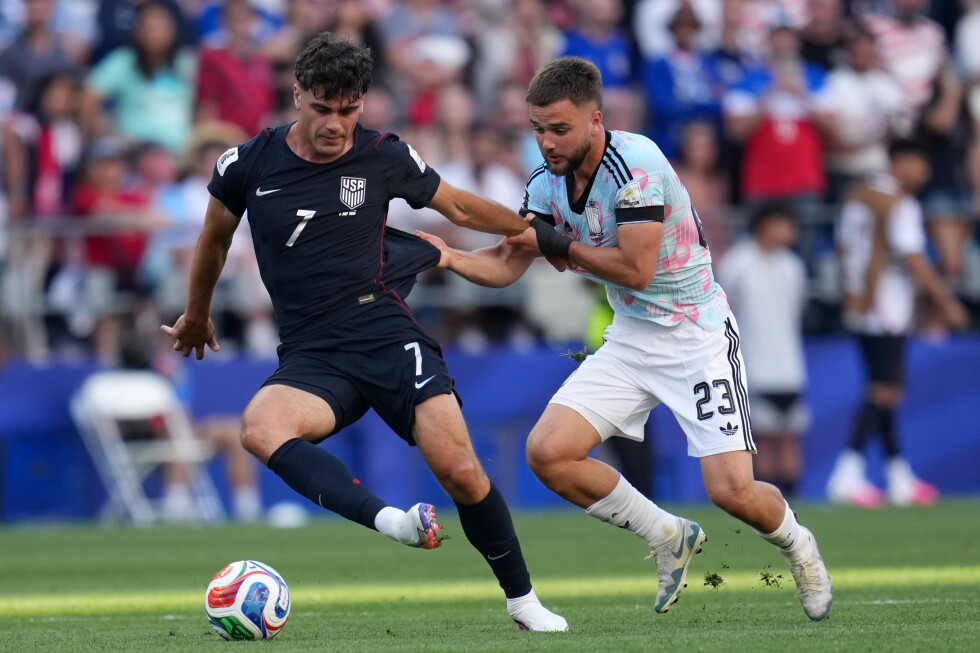
American international soccer midfielder Gio Reyna has finalized a move to French Ligue 1 side Strasbourg, closing the door on a disappointing single season in the German Bundesliga and opening a new chapter in his young professional career. The 23-year-old, who emerged as a key contributor for the United States men’s national team during the most recent World Cup, put pen to paper on a five-year contract with the French club, the organization confirmed in an official announcement Tuesday. The transfer, which sees Reyna move from Borussia Mönchengladbach, carries a reported fee of 3 million euros, equivalent to approximately $3.5 million. Reyna first made his mark in European soccer as a promising prospect at Borussia Dortmund, where he spent several seasons honing his craft before making the switch to Mönchengladbach ahead of the 2023-2024 campaign. However, his debut season with the Bundesliga side failed to live up to expectations: across 20 appearances in all competitions, Reyna found the back of the net just once, struggling to cement a consistent role in the starting lineup. Despite his underperformance at club level, Reyna remains a proven talent on the international stage. He featured in every one of the United States’ five matches at the 2022 FIFA World Cup in Qatar, and notched a memorable goal to seal a 4-1 opening victory over Paraguay in a recent pre-tournament friendly. For Strasbourg, the move adds a high-potential young talent to a squad that finished eighth in Ligue 1 last term, a result that left the club outside of qualification for any 2024-2025 European continental competitions. The French side shares an ownership group with English Premier League giant Chelsea, giving it the financial flexibility to target emerging international talent. Reyna will be working under new Strasbourg head coach Hugo Oliveira, a long-time assistant to former Fulham manager Marco Silva who left his role at Fulham earlier this year to take up a position at Benfica before taking the Strasbourg job. The transfer marks a key turning point in Reyna’s career, as he looks to rebuild his form and prove he can live up to the early hype that surrounded his emergence in European soccer.
作者: admin
-
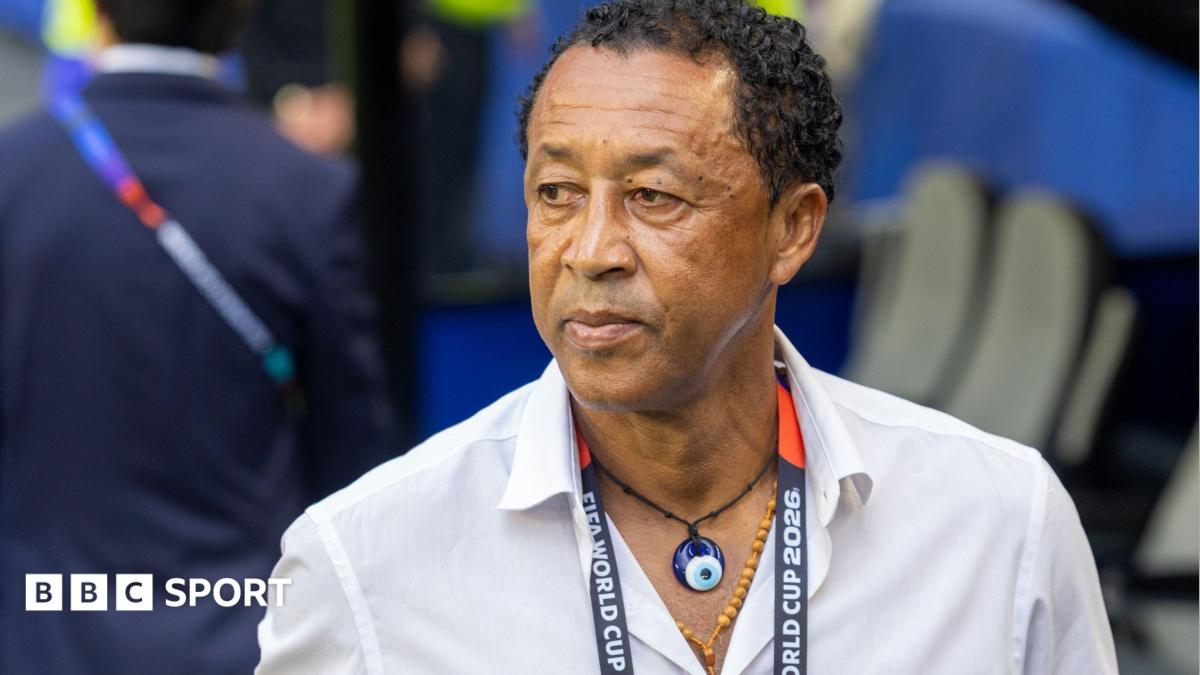
Cape Verde coach Bubista resigns to join Moroccan club
In a move that has shaken African football following the historic 2026 FIFA World Cup, Cape Verde’s trailblazing head coach Bubista has stepped down from his role with the national side to take up a two-year contract at Moroccan top-flight club RS Berkane. The 56-year-old leaves behind a transformative legacy for the small island nation, after leading them to their first ever World Cup qualification and an unforgettable debut run that captured global attention.
Taking charge of Cape Verde, nicknamed the Blue Sharks, in January 2020, Bubista steadily built a side that exceeded all expectations. He first guided the team to a surprise quarter-final finish at the 2023 Africa Cup of Nations, before masterminding their 2026 World Cup qualification, which saw them edge out regional powerhouse Cameroon to book their spot in the global finals. At the tournament, their giant-killing run continued into the last 32, where they pushed eventual runners-up Argentina all the way, ultimately suffering a narrow 3-2 defeat after extra time. That underdog run cemented their place as the feel-good story of the 2026 finals.
Bubista’s new role at RS Berkane sees him replace Moin Chaabani, who departed the north-east Moroccan club last month to take up the vacant head coach position with Tunisia’s national team. While RS Berkane is not counted among Morocco’s traditional elite clubs, it has emerged as a dominant force in African football in recent seasons. The club claimed its first ever Moroccan top-flight league title in the 2024-25 season, and has lifted the CAF Confederation Cup — Africa’s second-tier continental club competition — on three separate occasions. The club has also drawn international controversy before, most notably in 2024 when it wore shirts displaying a map of Morocco that included the disputed territory of Western Sahara during a Confederation Cup match.
The Cape Verde Football Federation has publicly acknowledged Bubista’s contributions to the national program, releasing a statement thanking him for his “dedication, professionalism, and contribution to the development of the national team’s sporting project” and wishing him well in his new role.
Bubista’s departure is far from an isolated case: he is the latest head coach to exit one of the 10 African nations that competed at the 2026 World Cup. The wave of changes began earlier this week when Vladimir Petkovic and Algeria mutually agreed to part ways, just months after the 62-year-old Bosnian extended his contract with the Desert Foxes through to 2028. Algeria exited the tournament in the last 32 following a defeat to Switzerland.
In West Africa, both Ivory Coast and South Africa have declined to renew the contracts of their head coaches Emerse Fae and Hugo Broos respectively, with both deals expiring at the end of July. Senegal made a quicker change, sacking Pape Thiaw immediately after the team’s dramatic last-32 exit against Belgium, with the federation justifying the decision as being “in the best interests of Senegalese football”. Former France international Patrick Vieira has already been linked with the vacant role.
Tunisia’s coaching change has already been finalized, with Chaabani penning a four-year deal last month. He replaced Herve Renard, who stepped in mid-campaign after Sabri Lamouchi was sacked following a 5-1 qualifying defeat to Sweden.
Finally, Ghana’s future remains unresolved. Carlos Queiroz led the Black Stars to the last 32, where they suffered a narrow 1-0 defeat to Colombia. Queiroz publicly announced his departure on social media shortly after the elimination, though the Ghana Football Association says internal discussions about the role are still ongoing.
-
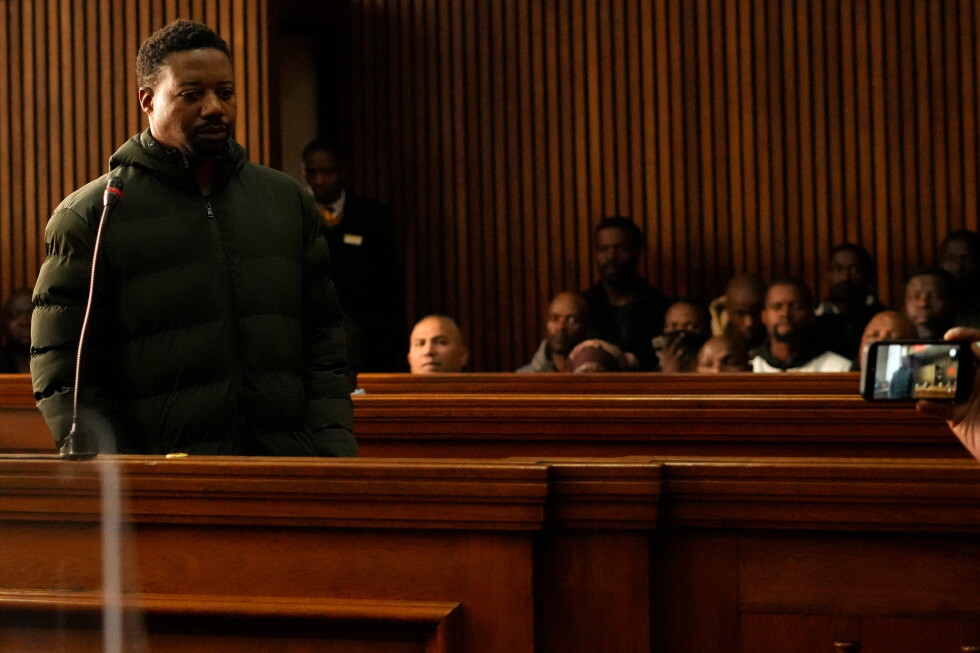
Zimbabwe mourns mother and 2 daughters killed in the UK as father faces charges
BULAWAYO, Zimbabwe — A somber crowd of grieving relatives, friends and community members filled a Bulawayo church on Tuesday to lay to rest a Zimbabwean-born mother and her two young daughters, whose brutal murders in their adopted British home have sent shockwaves across three nations.
The three victims — 42-year-old Nothabo Zandile Tshuma, 15-year-old Natalie, and 5-year-old Nala — were honored in a funeral service held days after their bodies were recovered from their residence near Bedford, north of London. Their husband and father, 45-year-old Ndodana Mkhanyisi Tshuma, a British citizen of Zimbabwean origin, is currently in custody in South Africa after fleeing the United Kingdom shortly before the bodies were discovered. He faces three murder charges connected to the deaths, and South African authorities are processing an extradition request to return him to the UK to face trial.
British law enforcement first found the bodies on July 7, after concerned family members contacted police to report they had been unable to reach the family for an extended period. A preliminary coroner’s inquest confirmed all three victims suffered fatal head injuries. On Tuesday, the victims’ remains were displayed in white coffins at the Bulawayo church ahead of their burial, drawing hundreds of mourners to pay their last respects.
Speaking to the gathered crowd, family spokesperson Theophilus Khumalo spoke of the irreparable hole the three deaths have left in the community. “Their departure has created a silence so deep that only the voice of God can comfort it,” Khumalo told mourners, remembering the two young girls as “God’s little flowers.” He added that Tshuma had long held quiet dreams of watching her daughters grow into “confident, educated and God-loving young women” before those plans were cut short. In an earlier public statement released after the bodies were identified, the family described the shock of the killings as “an unbearably painful journey” for everyone connected to the victims.
The case has garnered widespread public attention across the United Kingdom, Zimbabwe, and neighboring South Africa since news of the deaths broke last month. Tshuma was arrested in Johannesburg in a joint operation carried out by Interpol and South African police, just days after the bodies were found. When officers took him into custody, they discovered an unlicensed firearm in his possession, which investigators believe he intended to use to take his own life. He currently faces separate charges in South Africa for unlawful possession of the weapon, and local courts will hold proceedings to review the UK’s extradition request in the coming weeks.
As a Zimbabwean-born family that had settled in the UK, the slayings have struck a chord with diaspora communities on both the African continent and in Europe, leading to widespread calls for justice for the three victims. The funeral service on Tuesday closed a chapter of mourning for the family, but legal proceedings surrounding the case are only just beginning as extradition processes move forward.
-
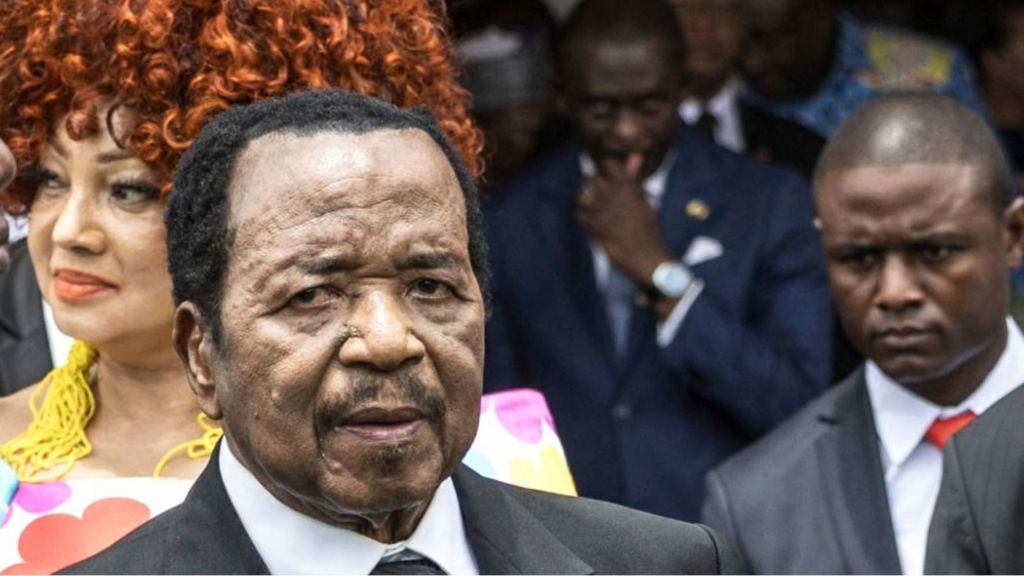
World’s oldest president reshuffles army as his absence stokes unease
Nearly two months after Cameroon’s 93-year-old long-ruling president Paul Biya withdrew from public view and traveled abroad, he has implemented a sudden shakeup of the country’s top military command, a move that has amplified already simmering public concern over his extended stay in Switzerland.
Biya, who has not appeared at any public event since departing Cameroon for what his official team billed as a short private trip to Geneva on June 7, issued a series of separate presidential decrees on Monday to fill key army leadership roles and elevate five colonels to the rank of brigadier general. Among the promoted officers is Raymond Jean Charles Beko’o Abondo, who was immediately reappointed to lead the elite presidential guard — the unit tasked with Biya’s personal security, a post he has held continuously since 2013.
Military leadership overhauls have become a familiar pattern during Biya’s decades in office, particularly during periods of heightened public scrutiny or when perceptions of political vulnerability emerge. Three years ago, just after an unexpected coup in neighboring Gabon ousted the long-ruling Bongo dynasty and sent political shockwaves across Central and West Africa, Cameroon’s government moved quickly to reshuffle its own top military ranks. Ahead of last year’s deeply contested presidential election, where Biya ran for a controversial eighth term, he once again rearranged the army’s senior leadership. As recently as June this year, he presided over another round of promotions for senior defense and security force officials.
The context of this latest reshuffle, carried out while the head of state remains outside the country, has ignited fierce public debate, especially across Cameroon’s social media platforms. Biya’s prolonged absence has already fueled widespread speculation about the state of his health, though government officials have repeatedly rejected unconfirmed reports that the president has been hospitalized during his trip. Two years ago, press freedom organizations across the continent condemned Cameroon’s government after it imposed a national ban on media reporting about Biya’s health, a restriction that remains in place today.
Beyond health speculation, Cameroonians have increasingly criticized the complete lack of transparency around Biya’s activities during his trip and the uncertainty over when — or if — he plans to return. Since winning re-election last year, Biya pledged to form a new national cabinet, but he has yet to follow through on that promise. A newly created vice-presidency position, established this past April, also remains empty. Despite his absence, Biya has continued to sign official decrees from Geneva, including measures authorizing the Cameroonian government to enter new loan agreements with international financial institutions.
In a recent interview with French-language international broadcaster RFI, Cameroon’s Communication Minister René Emmanuel Sadi pushed back against growing criticism, affirming that the president is in good health and will return to the country imminently. He also dismissed opposition claims that Biya’s months-long absence has left the country without an active head of state, insisting that Biya continues to carry out his presidential duties remotely from his Swiss location.
But opposition leaders reject that framing. Mamadou Mota, vice-president of the opposition Cameroon Renaissance Movement (CRM) party, argues that Biya’s continuing absence has left a glaring institutional gap at the heart of the Cameroonian government. “A country cannot be governed by remote control while critical socioeconomic challenges go unaddressed,” Mota said last week, echoing a widespread sentiment among opposition and independent observers that the long-running absence of the head of state has left the country adrift amid ongoing economic and security crises.
-
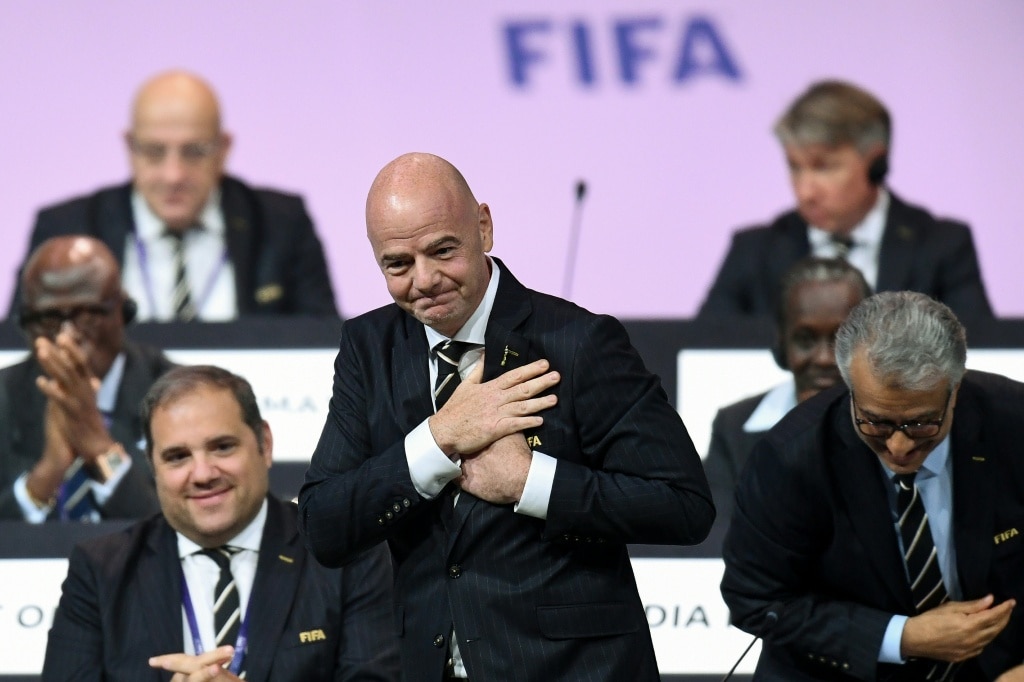
Infantino’s problems mount as Wenger and key FIFA ally turn on him
Pressure on FIFA President Gianni Infantino has escalated dramatically this week, as once-trusted allies have turned against the embattled leader following the collapse of his controversial plan to open World Cup governance to private investment. The scheme, which was officially scrapped over the weekend after triggering global backlash within football’s governing circles, has left Infantino fighting to retain control and shore up support ahead of next year’s scheduled leadership election.
The most stinging rebukes came from two figures long seen as core members of Infantino’s inner circle: Arsène Wenger, FIFA’s chief of global football development hand-picked by Infantino for the role in 2019, and FIFA Secretary-General Mattias Grafstrom. In an official statement released Tuesday, Wenger made clear his view that pulling the plug on the proposal was not just necessary but unavoidable. “The decision to withdraw the project was absolutely necessary and beyond question,” the former Arsenal manager said, adding that he had no prior involvement in the plan and only learned of its existence through media reports.
Grafstrom’s rebuke came in an internal email to FIFA staff obtained by Agence France-Presse, in which the secretary-general explicitly distanced himself from the initiative. He called the chaotic rollout and collapse of the private investment plan “a sad and reproachable series of events,” adding in a subtle rebuke of Infantino’s leadership that “Individuals, unstable moments and unfortunate episodes come and go. The institution, its mission and its responsibility towards world football continue.”
The ill-fated proposal was first unveiled by FIFA a week prior, which sought to raise $4.2 billion through a new commercial subsidiary named FIFA Forward Enterprise (FFE). Under the plan, FFE would take over operational and commercial control of flagship events including the men’s World Cup and the expanded Club World Cup, valuing the new entity at $20 billion. But the plan immediately sparked fierce pushback, with European governing body UEFA threatening to deploy the ultimate sanction: a full boycott of all FIFA competitions, including the 2026 World Cup. By Saturday, facing overwhelming opposition, Infantino was forced into a humiliating climbdown, announcing the project was being scrapped entirely.
Far from resolving the crisis, the withdrawal has only deepened challenges to Infantino’s leadership. European football’s governing body has not backed down: through its U.S.-based legal counsel, UEFA sent a formal legal notice to Infantino last Friday, seen by AFP, warning that it is actively considering litigation, arbitration and regulatory complaints over what it calls the “shabby, backroom, opaque deal.” The notice orders Infantino and FIFA to immediately preserve all documents and electronic records related to the FFE proposal, naming Wenger, Grafstrom and FIFA Chief Operating Officer Kevin Lamour (who publicly criticized the plan last Friday) as parties with knowledge of the scheme who must retain all relevant materials.
Support for Infantino among FIFA’s member associations is also crumbling. Four UEFA member unions – Wales, Finland, Sweden and Serbia – have already withdrawn their public endorsements of Infantino ahead of the March 2025 presidential election in Rabat, where he was long expected to win an unopposed fourth and final term. The Football Association of England is widely reported to be on the brink of pulling its support as well.
Infantino has retained a small core of backing, including from Morocco, co-host of the 2030 World Cup, Kuwait, Qatar (where Infantino owns a personal residence) and Lebanon, which granted him honorary citizenship earlier this year. However, the public break from Wenger and Grafstrom – who accompanied Infantino at every major event through the 2022 Qatar World Cup – has dealt a fatal blow to the narrative that the president retains the confidence of FIFA’s internal leadership. This marks the second high-profile defection in days: last Friday, Infantino’s special advisor Carlos Cordeiro, a close associate of former U.S. President Donald Trump, resigned from his post over the proposal.
For Infantino, the crisis shows few signs of abating. When he announced the withdrawal of the FFE plan, he framed the decision as a step to unify global football. But as opposition grows within FIFA’s own ranks and among leading member associations, that unifying goal appears increasingly out of reach – and Infantino’s grip on the FIFA presidency is now far shakier than it was just one week ago.
-
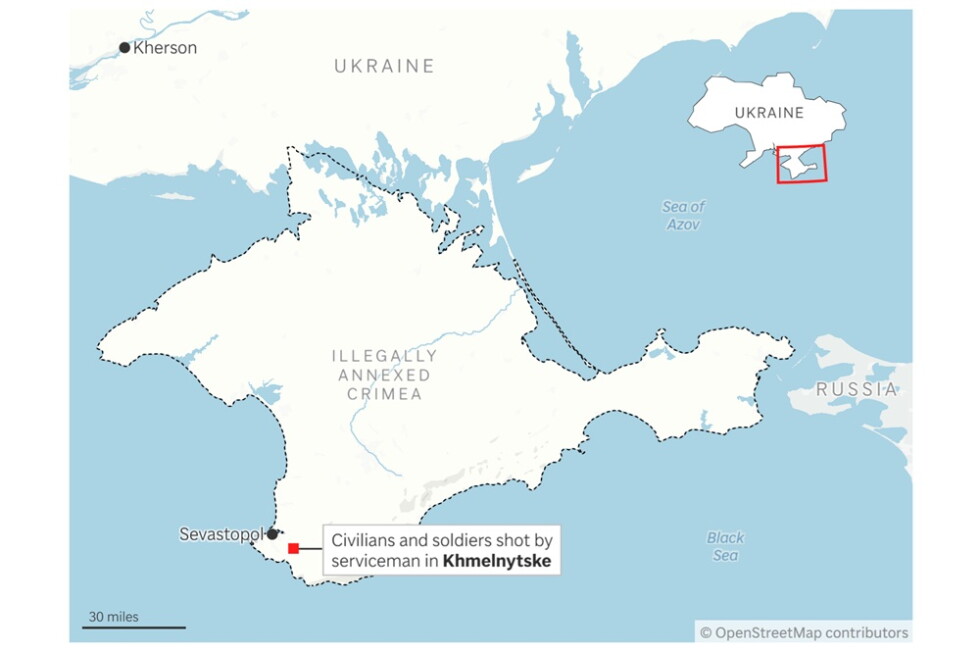
A serviceman in Russian-held Crimea shoots fellow soldiers and civilians, killing 4
A violent shooting incident carried out by a Russian serviceman against fellow service members and civilian bystanders has left four people dead and four others injured in Russian-occupied Crimea, according to the Moscow-appointed governor of Sevastopol, Mikhail Razvozhayev, who made the announcement publicly on Tuesday.
The attack unfolded in the small village of Khmelnytske, an administrative subdivision of the Sevastopol region, though Razvozhayev did not provide a precise timeline for when the shooting began. Initial details shared by the governor outline that the unidentified serviceman first targeted his own colleagues, opening fire that resulted in one service member’s death and left a second with serious injuries. The gunman then continued his attack, turning his weapon on unarmed civilians, killing three and wounding three more in the process.
Following the rampage, the shooter was taken into custody by Russian security authorities, and a formal investigation into the incident has been launched. To date, officials have not released any additional details about the gunman’s identity, background, or potential motives for the violence.
The broader geopolitical context of the incident is rooted in the ongoing conflict between Russia and Ukraine. Back in 2014, Russia illegally annexed the Crimean Peninsula from Ukraine, a move that has never been recognized by the majority of the international community. For the Kremlin, the Black Sea peninsula holds immense strategic value amid Russia’s full-scale invasion of Ukraine, which is now in its third year (note: corrected from the original text’s inaccurate fifth year framing to reflect the 2022 invasion timeline). At the opening stages of the 2022 full-scale invasion, Russian forces massed in Crimea rapidly advanced to capture large swathes of southern Ukraine, establishing a continuous overland supply route connecting the peninsula to Russian-held territories on the Ukrainian mainland.
In recent months, Ukrainian military operations have increasingly targeted Russian supply lines running to and through Crimea, disrupting logistics and triggering significant fuel shortages across the peninsula. Crimea is traditionally a major tourist destination for Russian visitors during the warm summer months, and the supply disruptions have added additional strain to daily life for residents and visitors alike amid the ongoing war.
-
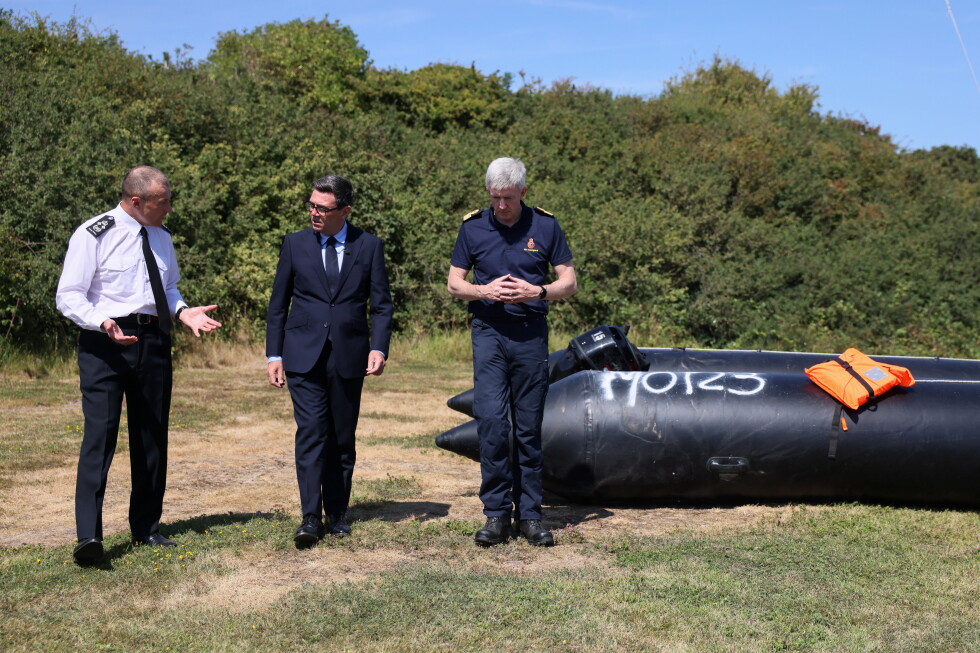
French and British teams rescue 157 migrants after a boat engine fire in the Channel
A large-scale cross-border rescue operation carried out by French and British emergency teams has saved 157 migrants whose small migration vessel suffered a catastrophic engine fire and began sinking while attempting to cross the English Channel, French maritime officials have confirmed.
The incident unfolded early Tuesday, when the overloaded makeshift boat was still within France’s designated search-and-rescue zone, just kilometers from British territorial waters. According to an official statement released by the maritime prefecture overseeing the English Channel and North Sea, the engine burst into flames unexpectedly, and the vessel started to break apart within minutes. In response to the urgent crisis, French authorities dispatched two dedicated rescue ships, a French Navy helicopter, and specialized medical teams to the scene. British emergency assets also joined the operation rapidly, with crews from the Royal National Lifeboat Institution and UK Border Force deploying to assist with the evacuation.
By the conclusion of the operation, all 157 migrants had been pulled from the frigid Channel waters to safety: 103 were retrieved by French rescue vessels, while the remaining 54 were rescued by British teams. All survivors were transported to the northern French port of Boulogne-sur-Mer for mandatory medical checks and emergency support services.
This incident marks the latest dangerous episode in the ongoing Channel migration crisis, and it sheds new light on the complex challenges rescuers face when responding to migrant vessels. The vessel involved in Tuesday’s rescue had initially departed from the Normandy coast on Monday, and had been under continuous monitoring by French rescue vessels overnight. During the hours before the engine fire, five passengers already required emergency assistance and were brought ashore to Boulogne-sur-Mer. The remaining passengers on board made the unusual decision to refuse offers of help from rescuers, choosing to continue their crossing.
French maritime authorities explain that this choice is far from uncommon. Migrants attempting the crossing in unstable, overloaded makeshift boats often only accept rescue intervention when they are facing an immediate, life-threatening emergency. Rescuers also face a difficult constraint: they cannot force passengers to disembark from unstable vessels, because a sudden rush to evacuate could cause the boat to capsize, putting all people on board at far greater risk of death.
Tuesday’s rescue comes just one week after four migrants lost their lives in two separate small boat crossing attempts in the Channel, highlighting the persistent deadly risk of this route for people seeking migration to the UK. In response to the rising number of crossings and associated deaths, the UK and French governments signed a new multi-million euro agreement earlier this year designed to crack down on unauthorized departures. The deal increases the number of police patrols along northern France’s coastline and upgrades regional surveillance infrastructure. It also provides funding for new detection technologies to target so-called “taxi boats” — small, usually inflatable motorized vessels that smugglers use to pick up migrants from remote stretches of the northern French coast and transport them across the Channel.
-
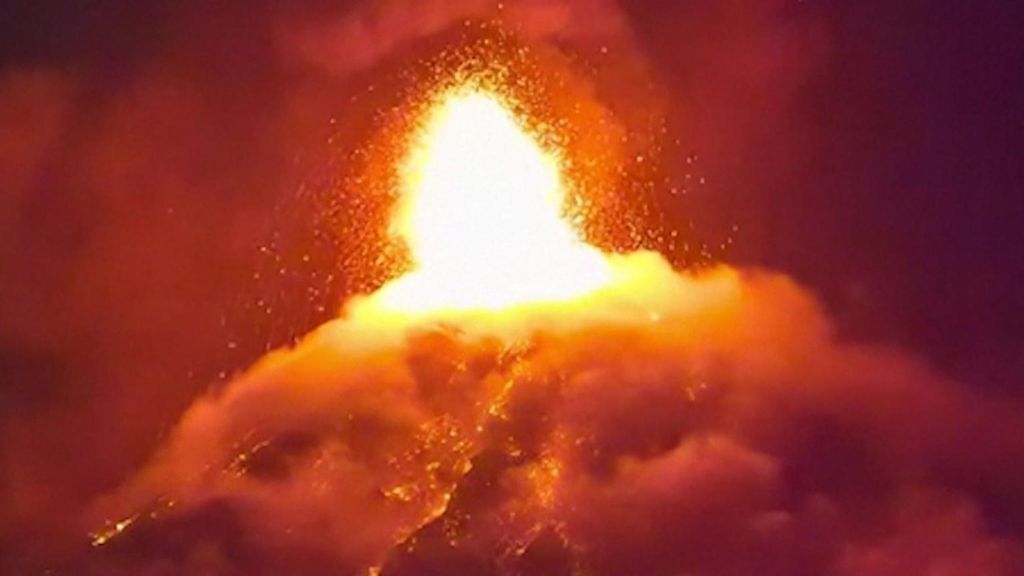
Guatemala volcano eruption sends lava spewing into the air
One of the Western Hemisphere’s most consistently active volcanoes has roared back to life in Guatemala, forcing emergency evacuations of nearby communities and putting the entire nation on high alert for further dangerous activity.
Fuego, a towering stratovolcano located just 10 miles west of Guatemala’s famous tourist hub Antigua, began ejecting glowing lava and thick plumes of ash on Monday. By early Tuesday, the country’s official volcanology monitoring agency confirmed that fast-moving pyroclastic currents – lethal mixtures of superheated gas, volcanic ash, and jagged rock fragments – were still cascading down the volcano’s southeastern slope, a sign that the eruption was far from over.
In response, Guatemala’s national disaster management agency Conred issued a nationwide orange alert, the second-highest warning level in the country’s emergency system. The agency issued a series of urgent public advisories, noting that ongoing volcanic activity could spawn additional pyroclastic flows and large ash clouds that threaten communities across the region. Residents were instructed to keep all windows and doors sealed to avoid inhaling toxic ash particles, while all classes have been canceled at schools within the danger zone near the volcano’s base.
Fuego’s proximity to Antigua, a UNESCO World Heritage Site famed for its well-preserved Spanish colonial architecture that draws millions of international tourists annually, adds an extra layer of urgency to the emergency response. The active volcano itself is also a popular destination for adventurous hikers from around the globe. Conred has strongly warned both tourists and local residents to avoid all high-risk areas, particularly the steep slopes close to the volcano’s crater, and to follow evacuation orders immediately if instructed to leave.
This is not the first time Fuego has caused catastrophic loss of life. A devastating 2018 eruption of the volcano killed more than 200 people, most of whom were trapped by the fast-moving pyroclastic flows that swept through the Las Lajas ravine. That disaster remains one of the deadliest volcanic events in Central America’s recent history, and emergency officials are keen to avoid a repeat of the 2018 tragedy by acting proactively to move at-risk populations out of harm’s way.
-

80 female politicians targeted in ‘campaign of harassment’
A coordinated, targeted campaign of harassment targeting female elected officials across the Republic of Ireland has been uncovered, with at least 80 councillors from across the political spectrum coming forward to report disturbing, inappropriate phone calls, the country’s main local government representative body has confirmed.
The Association of Irish Local Government (AILG), which advocates for all 950 city and county councillors across the republic, first confirmed the pattern of abuse earlier this week. The organization’s president, Aengus O’Rourke, labeled the widespread reports deeply alarming, emphasizing that no elected public servant should face intimidation or harassment simply for fulfilling their formal public duties.
“The reports we have received are deeply concerning and point to what appears to be a deliberate campaign targeting women in public office,” O’Rourke said in an official statement. “While this behaviour has been directed at female councillors, it is an attack on local democracy itself,” added AILG Head of Operations Elaine Lynch.
One of the affected councillors, Dakota Nic Mheanman from Ballybofey, Donegal, shared her experience with local outlet Donegal Daily, describing sexually explicit phone calls that left her feeling deeply uncomfortable. After she ended the first unwanted call, she said the caller redialed within 60 seconds and continued repeated attempts to contact her throughout the day and into the evening.
Nic Mheanman, who has since stopped answering calls from private or withheld numbers, pushed back against the harassment in a social media statement, noting that female politicians across all parties had faced similar abuse. “This is a direct attack on female councillors,” she said, thanking AILG for bringing the issue to public attention and affirming that female elected representatives would not be bullied into stepping back from their work. She also urged constituents to display visible phone numbers when reaching out to public representatives to help filter legitimate queries from abusive contacts.
In response to the emerging pattern of abuse, AILG has proactively reached out to every female councillor across the Republic of Ireland to issue alerts, share guidance on call screening and walk through protocols for reporting abusive incidents to authorities. The organization has also issued a public appeal asking constituents to avoid contacting councillors from withheld or private numbers whenever possible, encouraging alternative contact methods such as leaving a voicemail, sending a text or email, or using official contact details published through local authorities. This simple step, the association notes, helps councillors quickly distinguish legitimate constituent enquiries from nuisance or abusive calls. AILG has confirmed it will maintain close collaboration with law enforcement as the investigation progresses.
An Garda Síochána, Ireland’s national police service, has confirmed the matter is now being probed at a national level by its specialist detective unit. To support affected elected officials, the force has appointed dedicated liaison officers in every Garda division to provide support, while divisional crime prevention teams stand ready to offer personal safety guidance to any councillor who requests it. Police have issued a clear appeal to any public representative who has experienced harassment or fallen victim to a related offense to file an official report immediately.
-
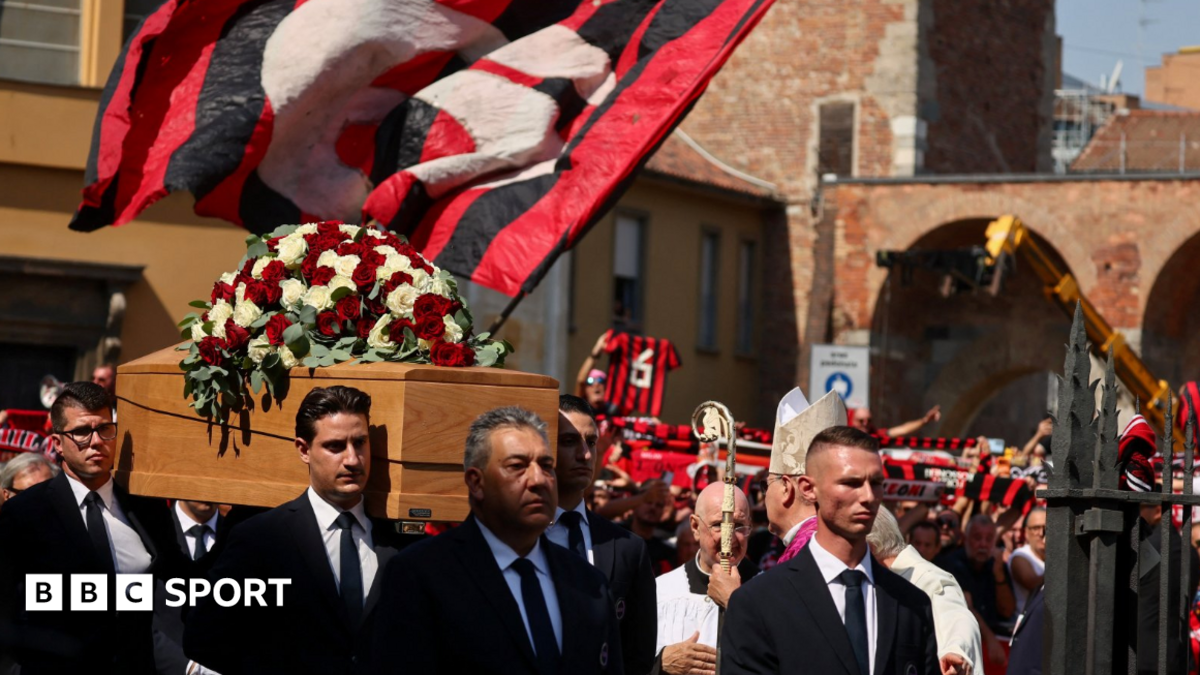
Mourners line streets of Milan for legend Baresi’s funeral
Milan, Italy — Thousands of mourners packed the streets of Italy’s fashion and football capital this Tuesday to bid a final farewell to one of the game’s most iconic defenders, Franco Baresi, who passed away last week at the age of 66 following a prolonged battle with ill health.
Widely celebrated as one of the greatest centre-backs in the history of association football, Baresi built an unprecedented legacy that was inextricably tied to one club: AC Milan. Over an extraordinary 20-year professional career, he never left the Rossoneri, going on to make 719 first-team appearances for the club, score 33 goals, and wear the captain’s armband for 15 consecutive seasons. That tenure places Baresi second on AC Milan’s all-time list for senior appearances, and as the club captain with the most trophy haul in its history: he led AC Milan to 18 major honors, including six Serie A titles, three UEFA Champions League crowns, four Italian Super Cups, three UEFA Super Cups and two Intercontinental Club World Cups. In recognition of his unparalleled service, AC Milan retired his iconic number 6 shirt upon his retirement in 1997, and named him the club’s honorary president in 2020. To this day, Baresi’s number 6 remains only one of just two shirt numbers permanently retired by the club, alongside Paolo Maldini’s number 3.
Beyond his club success, Baresi also left an indelible mark on international football. He earned 81 senior caps for the Italian national team, was a member of the 1982 FIFA World Cup-winning Azzurri squad, and captained Italy to the 1994 World Cup final, where the side fell to Brazil in a penalty shootout.
The funeral mass was held inside Milan’s historic Sant’Ambrogio Basilica, drawing a who’s who of football greats who shared pitches and dressing rooms with Baresi across his career. Attendees included fellow AC Milan legends Paolo Maldini, Marco van Basten, Clarence Seedorf, Alessandro Costacurta, Mauro Tassotti, Dida, Daniele Massaro and Dejan Savicevic, as well as Italian football icon Roberto Baggio. Though the majority of the current AC Milan first team is currently in Australia for a pre-season tour, several senior squad members who did not travel made a point to attend, including United States forward Christian Pulisic.
AC Milan has confirmed that the club will hold a formal public tribute to its former captain ahead of a pre-season friendly against derby rivals Inter Milan scheduled for this Wednesday, allowing fans and the current squad to honor Baresi’s decades of contribution to the club he loved.