For the third consecutive year, high-income economies have exceeded the $100 billion annual climate finance commitment to low- and middle-income nations, new data from the Organisation for Economic Co-operation and Development (OECD) confirms. Yet growing geopolitical and economic headwinds have cast serious uncertainty over whether wealthy countries can deliver on an even larger, newly agreed climate aid target, leaving vulnerable nations waiting for much-needed support to tackle the climate crisis.
The original promise to mobilize $100 billion per year for climate action in developing countries by 2020 was a landmark commitment to address climate inequality: developing nations contribute the least to historical greenhouse gas emissions, yet bear the brunt of worsening extreme weather and need investment to shift to clean energy and adapt to climate impacts. For years, wealthy nations failed to hit the target, only hitting the mark for the first time in 2022 after an extension of the deadline to 2025. Since then, contributions have steadily grown: OECD tracking data shows total climate finance hit $115.9 billion in 2022, jumped to $132.8 billion in 2023, and rose slightly to $136.7 billion in 2024.
Breaking down the 2024 figures reveals a shifting mix of funding sources. Public sector climate finance fell 2.6% year-over-year to $101.6 billion, but private sector contributions surged 33% to reach $35 billion. Raphael Jachnik, who led the OECD’s analysis, told AFP the dip in bilateral public funding largely reflected a return to pre-2023 trends after an unusually large one-year increase in public contributions the previous year. The OECD also noted that full data for 2025, the final year of the original $100 billion commitment, will not be available until 2027 at the earliest.
Climate finance has been one of the most divisive issues at UN climate talks for decades, with developing nations growing increasingly frustrated by repeated delays and unmet promises from wealthy governments. At the 2024 COP29 summit held in Azerbaijan, rich nations agreed to a new collective target: $300 billion in annual climate finance by 2035. They also set a broader, less specific goal of mobilizing $1.3 trillion per year from combined public and private sources by 2035. But even this new target is widely viewed as insufficient by vulnerable developing countries, and multiple major headwinds now threaten its delivery.
The most significant disruption comes from the United States, where climate sceptic Donald Trump returned to the presidency in 2024. Since taking office, Trump has withdrawn the US from active global climate diplomacy and made deep cuts to the country’s foreign aid programs, eliminating a core source of global climate finance. The European Union, currently the largest single contributor to international climate finance, is grappling with domestic budget pressures and has redirected large sums of public spending to military investment amid ongoing conflicts in Ukraine and the Middle East, leaving less fiscal space for climate aid.
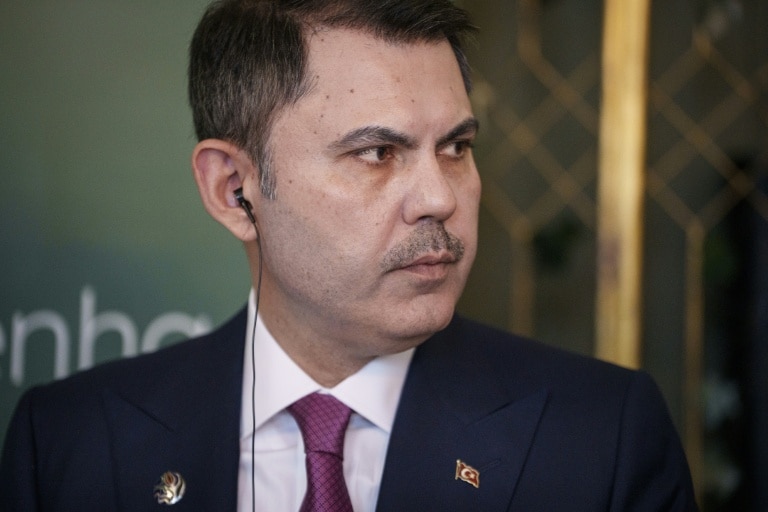
Turkey’s Climate Minister Murat Kurum, who will chair the upcoming COP31 climate summit hosted by Ankara this November, has made clear he will pressure wealthy nations to deliver on their new commitments. Speaking at a climate ministerial gathering in Copenhagen this week, Kurum said: “It is easy to say we support global climate action. But promises must be kept. I will hold donors accountable for the commitments they made under the $300 billion Baku finance goal.”
Wealthy Western nations have pushed to expand the pool of climate finance contributors, arguing that major economies still classified as developing – including China and Saudi Arabia – should now take on a larger share of funding. Rich countries, many facing their own domestic debt and budget crises, have also pushed for the private sector to play an increasingly central role in meeting future targets.
OECD data also shows that 36% of 2024 climate finance went to projects in Asia, making it the largest recipient region, while Africa received 31% of total contributions. In a trend that has sparked widespread criticism from developing country governments and activists, the majority of public climate finance continues to be issued as loans rather than grants: loans made up 73% of total public climate finance in 2023 and 67% in 2024. Developing nations argue that relying on loans pushes already vulnerable economies deeper into debt, at a time when they are forced to respond to a climate crisis they did little to cause.
Mohamed Adow, director of Nairobi-based climate think tank Power Shift Africa, called the reliance on loans an outrage. “The rich world profits from the loans they provide to poor countries who are desperately trying to deal with climate change caused by the rich world. It’s a total scandal,” Adow said. “The countries least responsible for the climate crisis are being asked to take on debt to survive it.”