作者: admin

  • US congressman refuses to drop reelection bid over ex-wife’s abuse claims

    US congressman refuses to drop reelection bid over ex-wife’s abuse claims

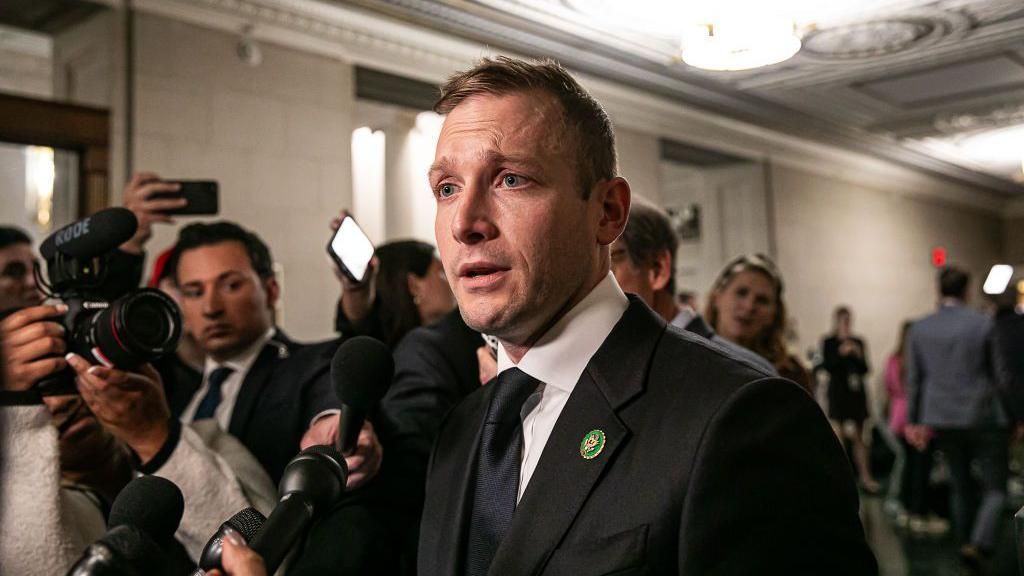
    A sitting Republican U.S. congressman from Ohio is digging in to defend his seat in the upcoming November midterm elections, refusing to step aside even amid a barrage of serious abuse allegations levied by his ex-wife, whose father is a sitting U.S. senator, and public doubt about his electoral prospects from former President Donald Trump.

    Max Miller, a one-term White House aide who is running for his third congressional term, made his position clear in an exclusive interview with CNN, stating firmly, “I’m never going to back down.” His defiant statement comes just 24 hours after Trump placed a personal call to the incumbent, where he raised questions about whether Miller could secure victory in the November general election, two sources familiar with the call confirmed.

    Miller has issued a full, categorical denial of all claims against him. These include allegations of physical and emotional abuse against his ex-wife Emily Moreno and their young daughter, as well as unsubstantiated claims of illegal drug use, all of which he describes as a baseless smear campaign.

    Court documents and police reports obtained by major U.S. news outlets, including CBS — the domestic broadcast partner of the BBC — detail the serious accusations from Moreno. She alleges Miller threw her into a wall during an altercation, held a loaded gun to her head, and inflicted a fractured collarbone on their two-year-old daughter. During Tuesday’s interview with CNN anchor Jake Tapper, Miller forcefully rejected the accusation of harming his child, saying he has never been physically abusive to his daughter.

    In a video statement posted to X (formerly Twitter) over the weekend, Miller framed Moreno’s accusations as “baseless” and “destructive.” He pointed to his record in office as evidence of his qualifications, arguing, “I’ve been a good legislator. All they’re trying to do is create rumourmills without evidence.” The case has drawn heightened political attention because Moreno’s father, Bernie Moreno, is currently a sitting U.S. senator from Ohio, who has publicly stated his daughter “lives in constant fear” of Miller.

  • The Briton who helped 6,000 UK Jews move to Israel

    The Briton who helped 6,000 UK Jews move to Israel

    Over the past 15 years, a British-born Israeli immigration consultant has facilitated the relocation of more than 6,000 Jewish people to Israel, much of that work carried out during his tenure with a controversial organization that openly advertises residency opportunities in illegal Israeli settlements across the occupied West Bank and Golan Heights. As Israel continues to expand its network of unauthorized settlements and outposts in Palestinian-claimed territories, a growing number of Israel-aligned organizations have stepped up efforts to recruit Jewish migrants from across the globe to move to these occupied areas.

    One of the most high-profile groups engaged in this work is Nefesh B’Nefesh (NBN), an organization that facilitates Jewish immigration to Israel—known widely as Aliyah—while actively promoting settlement in occupied territories. The group’s official website hosts dedicated informational pages for dozens of illegal settlements, complete with local community contact details for prospective migrants interested in relocating. For example, NBN spotlights the Gush Etzion settlement bloc in the West Bank, profiling individual settlements including Tekoa. In its promotional material for Tekoa, the organization notes the settlement’s population growth followed the opening of a new bypass route that circumvents nearby Palestinian communities, a framing that omits any discussion of the route’s seizure of private Palestinian land.

    NBN also promotes Katzrin, a settlement built on illegally occupied Syrian land in the Golan Heights, marketing the community only for its “breathtaking surrounding views” while failing to disclose its status on occupied territory. Other settlements across the West Bank receive similar misleading promotion: Elkana is billed as a “well-situated community in the center of Israel,” while the Mateh Binyamin cluster of illegal outposts is described as “one of the most beautiful regions in Israel. Neither location is acknowledged to sit outside of Israel’s internationally recognized 1948 armistice lines. To further recruit for Mateh Binyamin, NBN has hosted a 2021 recorded webinar on its website featuring US-born settlers encouraging international Jews to relocate to the area.

    The organization’s informational page for Mitzpeh Yericho frames relocation to the settlement as part of a “pioneering effort to build up Eretz Yisrael [the land of Israel],” noting that most residents live in permanent housing while others occupy temporary structures including mobile homes and modular concrete units—structures frequently used by settlers to establish new unauthorised outposts on seized Palestinian land. NBN also promotes expansion of the Shiloh settlement, highlighting “several construction initiatives” underway to “expand its borders,” language that directly refers to the seizure of additional adjacent Palestinian territory for settlement growth.

    While the total number of international migrants NBN has assisted to move into illegal occupied territories remains undisclosed, the group’s own page for the West Bank settlement of Efrat offers a glimpse: it notes “thousands of NBN Olim [immigrants]” currently reside in the unauthorized settlement. When contacted for comment, NBN has attempted to distance itself from promotional activity, claiming its settlement pages are “for educational and informational purposes only” and that it “does not endorse, recommend, or promote any specific community.” Despite this disclaimer, the organization’s consistent terminology and framing treats both the Golan Heights and the occupied West Bank as integral territory of the state of Israel, contradicting its formal claims.

    NBN primarily focuses on facilitating Aliyah for Jewish migrants from North America (the United States and Canada), but previously maintained operational activities in the United Kingdom, where it was led by the UK-born Dov Newmark, the subject of this investigation. Public records and Newmark’s own LinkedIn profile confirm he served as NBN’s “Director of UK Aliyah” from 2009 through 2023. In a May 2024 interview with British-Israeli podcaster David Goodwin, Newmark reflected positively on his 15-year tenure with the organization, saying “Nefesh really put all the information together on one site, which was amazing,” calling his time with the group “Amazing 15 years. Great organisation.”

    Newmark confirms that during his 15 years working on Aliyah, first with NBN and now through his private consultancy, he has assisted more than 6,000 Jewish people in relocating to Israel. It remains unclear whether any of these migrants were assisted to move to illegal settlements: neither Newmark nor NBN responded to multiple requests for comment from Middle East Eye (MEE) for this investigation. It also remains unclear exactly when NBN ceased formal operations in the UK: Newmark claims the organization exited the UK market around 2018, but a UK-registered charitable entity linked to the group, Friends of Nefesh B’Nefesh Limited, was only formally dissolved in July 2024, and NBN listed a UK contact number on its website through 2021.

    When contacted by MEE, a spokesperson for the UK Foreign Office reaffirmed the UK government’s longstanding official position on the legality of Israeli settlements, but declined to comment specifically on Newmark’s activities. The spokesperson stated, “The UK is clear that settlements are illegal under international law and jeopardise prospects for peace. We oppose further settlement expansion and strongly advise against conducting any economic and financial activities in illegal Israeli settlements.”

    Raised in northeast London, Newmark became active in Bnei Akiva, a Zionist Jewish youth movement that frames Aliyah as the “ultimate expression of its ideology” and organizes gap year programs for international Jewish youth in Israel, from his teenage years. In 2008, Newmark himself relocated to Israel with his wife and three children, and has resided in Modiin, within Israel’s recognized borders, ever since. After leaving NBN in 2023, he launched his own independent Aliyah consultancy business called Make Aliyah Easy, which offers free support services to British Jews looking to relocate to Israel, including pre-migration planning, relocation logistics assistance, and post-arrival integration support. Instead of charging clients directly, Newmark earns commission from referring clients to English-speaking service providers ranging from moving companies to currency exchange services. MEE was unable to verify which providers Newmark works with, or whether any of those providers operate in occupied territories.

    To grow his new business, Newmark has partnered with multiple Israeli and UK-based organizations, including Yad L’Olim, Olim Paveway, UK shipping firm Stephen Morris, and London-based investment firm Raymond James, hosting informational webinars featuring Israeli real estate agents and immigration experts to guide prospective migrants. Publicly, all residential communities Newmark promotes on his own platforms sit within Israel’s internationally recognized borders, with no public mention of assistance for relocation to illegal settlements. But a newly announced partnership has raised new questions about his work. In June 2026, Newmark publicized a formal partnership with Shivat Zion, an Israeli Aliyah organization that launched in 2025 marketing itself as “the UK’s Only Free Aliyah Support Charity” despite never completing registration with the UK Charity Commission.

    Earlier in 2026, investigative outlet Declassified UK exposed that Shivat Zion had offered to assist a UK citizen with relocation to an illegal West Bank settlement, prompting two UK Labour Members of Parliament to call for official sanctions against the group. In response to the expose, a Shivat Zion representative posted a video claiming the organization operates “under Israeli law” but did not directly deny the allegations that it facilitates migration to occupied territories, stating only: “If someone has decided on a specific city in Israel, we help them.”

    While Israel enshrines its settlements in the West Bank as legal under its own domestic law, this designation has no standing under international law. All Israeli settlements in occupied Palestinian and Syrian territory are universally recognized as illegal under international law, and are also unlawful under British law. Newmark has publicly described his arrangement with Shivat Zion as a partnership, but the organization’s website formally lists him as its Senior Aliyah and Strategic Consultant for the UK. It remains unclear whether he works as an employee, earns commission, or operates as a freelance contractor for the group. What is clear is that Newmark serves as Shivat Zion’s primary public point of contact in the UK: no other UK-based Aliyah consultants are listed on the organization’s website. Shivat Zion also declined to respond to multiple MEE inquiries about its UK operations, its activity in occupied territories, and its partnership with Newmark, and did not rule out assisting migration to illegal settlements.

    Despite the ongoing controversy over links to organizations that promote settlement in occupied territories, Newmark remains unapologetic about his work and continues to expand his Aliyah-focused business. “If you think about it, Israel is a country made up of Olim [immigrants],” Newmark told Goodwin in the 2024 interview. “Israel survives and thrives on Aliyah.” Newmark argues the founding and existence of the state of Israel deserves celebration, noting “it didn’t come easy.” He also shared that his daughter was serving in the Israeli navy at the time of the interview, and that he regularly volunteers at Israeli army bases, cooking barbecue meals for active-duty soldiers. Despite widespread documentation of human rights violations committed by the Israeli military and ongoing international accusations of genocide in its military campaign in Gaza, Newmark says he finds the experience of volunteering with the military inspiring. “You can see the determination in those soldiers to go in there and do what they need to do. They’re so positive and the morale is so high, you can’t help but be sucked into that positivity,” he said.

    Newmark also says he expects Israel’s ongoing war in Gaza will drive an increase in Aliyah, a trend he says he is prepared to support. “There’s always a spike in Aliyah after a conflict,” he explained. “And this will be no different. There will be a spike. […] And I’m excited to help people fulfil and realise their dream of moving and making Aliyah.”

    This report was produced by Middle East Eye, an independent media outlet focused on original coverage and analysis of the Middle East, North Africa and surrounding regions.

  • ‘Coherent to describe Zionism as racist’: UK tribunal upholds protection for anti-Zionist beliefs

    ‘Coherent to describe Zionism as racist’: UK tribunal upholds protection for anti-Zionist beliefs

    In a landmark legal ruling that has reignited fierce debates over academic freedom, protected belief, and the characterization of Zionism in the United Kingdom, the Employment Appeals Tribunal (EAT) has upheld a lower court’s finding that the University of Bristol unlawfully discriminated against former political sociology professor David Miller when it terminated his employment over anti-Zionist comments he made in 2021. The tribunal also confirmed that framing Zionism as a racist, colonial, and imperialistic ideology is a coherent philosophical position eligible for legal protection under UK equality law.

    The EAT’s judgment, released this week, formally rejected the University of Bristol’s appeal against a 2024 employment tribunal ruling that first found Miller’s dismissal unlawful. In its written reasoning, the tribunal laid out clear support for the legitimacy of framing Zionism in critical terms. “It is coherent to describe as ‘racist’ an ideology [Zionism] that promotes the establishment of a state [in this case, Israel] for only one race of people [Jewish] in a territory that formerly contained a large number of people of a different race [Palestinians],” the judgment read. The tribunal further added that such an ideology, which historically encouraged Jewish migration to the region backed by imperial powers with the goal of displacing the indigenous Palestinian population, can also be coherently categorized as colonial and imperialistic.

    Miller, who joined the University of Bristol faculty in 2018, centered his academic research on the influence of lobbying groups, including organizations tied to the governments of Israel and South Africa. He was fired for gross misconduct in October 2021, following public comments he made earlier that year criticizing Zionism, the state of Israel, and Jewish student organizations on campus. The 2024 original employment tribunal already concluded that Miller’s termination stemmed directly from his expression of anti-Zionist beliefs, which qualify as protected philosophical beliefs under the 2010 Equality Act. The tribunal ruled that both the dismissal and the university’s rejection of Miller’s internal appeal amounted to unlawful direct discrimination, prompting the University of Bristol to launch its appeal to the EAT.

    In its final decision, the EAT reaffirmed every core conclusion of the lower tribunal. It confirmed that Miller’s core belief – that political Zionism is inherently racist, colonial, and imperialist, and that it ought to be opposed – meets the legal standard for protected belief. The tribunal also backed the finding that Miller’s 2021 comments were an expression of this protected belief, and that these comments directly and materially influenced the university’s decision to fire him.

    While the tribunal acknowledged that the University of Bristol acted in pursuit of what it framed as legitimate goals – including protecting student well-being and safeguarding the institution’s public reputation – it upheld the lower court’s ruling that dismissal was a disproportionate response to Miller’s comments. The judgment noted that Miller’s remarks were lawful, had not been found to be antisemitic, did not incite violence, and did not pose a threat to anyone’s personal safety. A lesser disciplinary measure would have been sufficient, the EAT concluded.

    The ruling does include one partial caveat: the EAT upheld the original finding that Miller contributed to his own dismissal through his specific remarks directed at Jewish students and student societies, meaning any compensation for unfair dismissal will be reduced by 50%. However, the tribunal also ruled that the lower court did not adequately justify its conclusion that there was a 30% chance Miller would have been fairly dismissed in 2023 over separate later social media posts, so this component of the compensation ruling will require reconsideration.

    For Miller, the outcome represents a total legal victory. In a post on the social platform X, he framed the decision as a “decisive” win for the global anti-Zionist movement, noting that the pressure campaign targeting him had “spectacularly backfired.” “The University of Bristol’s attempt to overturn my 2024 Employment Tribunal victory has been comprehensively dismissed. We won on every single count,” Miller wrote. “This is a public humiliation for the genocidal Zionist regime, whose assets in Britain bullied the University into sacking me and then dragged them into this futile appeal.”

  • Projectile sinks Indian-flagged ship off Yemen coast

    Projectile sinks Indian-flagged ship off Yemen coast

    A new chapter of escalating maritime instability has unfolded in the waters off Yemen, after an Indian-flagged commercial vessel capsized and sank when it was struck by an unidentified projectile, regional and national officials confirmed this week.

    All 14 crew members on board the MSV Faize Noore Oliya — 13 of whom hold Indian citizenship — have been pulled from the water safely, with no reported casualties, Indian Shipping Minister Sarbananda Sonowal announced. In his official statement, Sonowal denounced the strike as an unprovoked attack, adding that New Delhi would move quickly to implement new safeguards to protect Indian seafarers operating in the high-risk region. As of the latest updates, no group or actor has claimed responsibility for the strike, and the identity of the perpetrator remains unconfirmed.

    This incident marks the latest in a growing string of targeted attacks on commercial shipping across the Red Sea, a critical alternative shipping route that many oil tankers have diverted to since Iran blocked the Strait of Hormuz, one of the world’s most vital chokepoints for global energy trade, back in February. The disruption to key regional shipping lanes began in earnest after a series of coordinated U.S. and Israeli strikes on Iranian targets in late February, which triggered Tehran’s decision to close the Strait of Hormuz — a passage that carries roughly a fifth of the world’s daily oil consumption. The closure immediately sent shockwaves through global energy markets, pushing oil prices sharply higher as supply chain fears mounted.

    In response to the closure, many oil tankers carrying crude from Saudi Arabia re-routed through the Red Sea to reach global markets. But the growing frequency of attacks on shipping in the Red Sea, most of which have been linked to Yemen’s Iran-aligned Houthi movement targeting Saudi-linked vessels, has turned the alternative route into a new danger zone for commercial shipping. Reuters, citing officials from Yemen’s Saudi-backed and internationally recognized transportation ministry, reported that the Houthi group carried out the latest attack using an explosive-laden boat. The Houthi movement has not issued any public response to the accusation, and the group previously announced a self-declared blockade of Saudi Red Sea ports in late July, which has already disrupted regional shipping activity. The United Kingdom’s Maritime Trade Operations agency has also documented multiple separate attacks on commercial vessels transiting the region over the past seven days.

    Despite the rising security threats to regional shipping, global oil markets saw a significant downturn on Tuesday, with prices dropping to a three-week low. The decline came after senior U.S. officials signaled growing optimism that a new deal with Iran could be reached to reopen the Strait of Hormuz. This push for a new agreement follows a 14-point memorandum of understanding signed between Washington and Tehran back in June that laid out a framework for a ceasefire, the reopening of the Strait, and a negotiated end to hostilities within a 60-day window. The deal collapsed just three weeks after it was signed, however, when then-U.S. President Donald Trump announced the ceasefire was finished after Iran carried out new attacks on shipping in the Strait and the U.S. launched retaliatory strikes.

    On Tuesday, U.S. Treasury Secretary Scott Bessent told reporters that negotiations have moved forward in recent days, indicating that a final deal to reopen the Strait could be finalized as early as Tuesday or Wednesday. Iran has pushed back against this framing, however, with Tehran officials stating that they are not engaged in direct negotiations with the United States and have no plans to open such talks, saying that any ongoing diplomatic discussions are being mediated through Oman.

    India’s Ministry of External Affairs later issued a formal statement calling the ongoing wave of attacks on commercial shipping in the region deeply worrisome. “The targeting of commercial shipping in the region must end, and free and unimpeded navigation and commerce through the international waterways in the region, in keeping with international law, must be restored at the earliest,” the ministry’s statement read, echoing growing global concern over the impact of the regional crisis on international trade and energy security.

  • Japanese lawyer slams government for military buildup under pretext of defense

    Japanese lawyer slams government for military buildup under pretext of defense

    A prominent Japanese legal scholar and advocacy leader has publicly denounced the Japanese government’s ongoing military expansion, accusing Tokyo of using national defense as a false pretext to erode long-standing constitutional constraints on the country’s military activity. Makoto Ito, who serves as both a practicing lawyer and director of the Japan Institute of Constitutional Law, has raised urgent alarms over the government’s steady push to move beyond the bounds of Japan’s post-WWII pacifist constitution, a foundational document that has limited the country’s military posture to strictly defensive operations for nearly 80 years. In his criticism, Ito emphasized that sticking to an exclusively defense-oriented security policy is not just a constitutional obligation, but the most effective path to delivering long-term, stable security for Japan and the broader East Asian region. He called on policymakers to reverse course on their current buildup trajectory and reaffirm the country’s historic commitment to pacifist governance that has shaped Japanese policy since the end of World War II. The criticism comes amid a years-long shift in Japanese security policy that has seen increased defense spending, expanded military deployments abroad, and incremental changes to constitutional interpretations that have relaxed restrictions on the use of military force beyond Japan’s immediate borders, a shift that has drawn growing concern from domestic legal experts and regional neighbors alike.

  • SpaceX’s first-ever earnings show a loss and huge spending

    SpaceX’s first-ever earnings show a loss and huge spending

    When Elon Musk-led SpaceX made its debut as a publicly traded company on U.S. stock exchanges in June, it capped off months of anticipation and even briefly soared past legacy corporate giants including Microsoft and Amazon to claim one of the largest market valuations in global history. But just two months after that historic listing, the aerospace and technology firm’s first public quarterly financial report has painted a far more mixed picture of its current performance, sparking immediate investor backlash.

    The report, released this week, reveals that SpaceX’s top-line revenue grew an impressive 92% year-over-year to hit $7.8 billion (£5.8 billion) in the latest quarter. The company’s core business lines — manufacturing next-generation launch rockets, producing its low-orbit Starlink internet satellites, and operating its social media platform X — all contributed to that strong revenue growth, which outpaces many mature public technology firms.

    However, that revenue surge is far overshadowed by an extraordinary spike in operating costs, which have jumped 550% year-over-year to reach $18.3 billion. Over the first half of 2026 alone, the firm posted a net loss of $2 billion, a figure that has alarmed market watchers and shareholders alike.

    In the immediate aftermath of the report’s release, SpaceX’s stock dropped nearly 9% during after-hours trading, erasing all of the gains it had posted during regular trading hours earlier that day. This decline marks the latest chapter in a steady downward trend for the company’s share price, which peaked at $176 on its first day of public trading in June. For the past several weeks, SpaceX’s stock has traded below its $135 initial public offering price, as initial investor hype around the listing has faded amid growing concerns about the company’s aggressive spending and unprofitable trajectory.

    Market analysts note that SpaceX has long poured billions into research and development for long-term projects, including next-generation Starship rockets for deep space exploration and NASA missions, as well as the expansion of the Starlink satellite internet network. Even so, the scale of the recent spending increase has left many investors questioning how long the company can sustain its current growth trajectory without turning a profit.

  • Trump administration revokes visa of Brazil’s ambassador to US in spat with Lula

    Trump administration revokes visa of Brazil’s ambassador to US in spat with Lula

    A sharp diplomatic rift between the outgoing Trump administration and Brazil’s Lula da Silva government has escalated dramatically, with U.S. officials confirming they have revoked the visa of Brazil’s ambassador to Washington in a reciprocal response to months of Brazilian pushback on U.S. diplomatic moves.

    Multiple senior State Department officials, speaking on condition of anonymity to discuss the sensitive diplomatic matter, confirmed the visa revocation does not amount to an immediate expulsion of Ambassador Maria Luiza Ribeiro Viotti, a seasoned diplomat who previously served as a top United Nations official. The action can be rapidly reversed, officials emphasized, if Brazilian authorities agree to advance the confirmation of Trump’s nominee for U.S. ambassador to Brasilia and reverse the visa denial for two senior American diplomats.

    The standoff traces back to two key incidents in recent months. First, the Lula administration has delayed approval of former Florida House Speaker Danny Perez, whom Trump nominated to the ambassadorship in June. Brazilian officials have signaled they will not take up the appointment until after the country’s October 4 presidential election, a timeline the Trump administration has rejected as unacceptable.

    Second, last month Brazil denied entry visas to U.S. Assistant Secretary of State for Democracy, Human Rights and Labor Riley Barnes and one of his senior aides, who had planned a working visit to Brasilia between July 27 and 30. Brazilian authorities pushed back against the trip after unconfirmed reports emerged that the pair intended to criticize Lula and Brazil’s upcoming electoral process. The State Department has refuted these claims, calling the accusation a “baseless lie” and noting the trip was routine, focused on pre-scheduled discussions of election integrity, religious freedom, and freedom of expression with government and civil society stakeholders.

    U.S. officials added that the visa revocation decision was delayed multiple times over recent weeks to give Lula an opportunity to compromise and reverse course on the two issues. When Brazilian authorities did not adjust their position, the administration moved forward with the reciprocal action.

    Tensions between the Trump administration and Lula’s government have simmered for months, rooted in deep policy and political disagreements. The two governments have clashed repeatedly on Western Hemisphere policy, particularly over diplomatic stances toward Venezuela and Cuba, where Lula’s leftist government holds positions directly opposed to the Trump administration’s. These frictions have been amplified by Trump’s longstanding close ties to Jair Bolsonaro, the former Brazilian president who preceded Lula and is currently under house arrest serving a 27-year sentence for his role in an attempted coup following the 2022 election.

    Bolsonaro’s son, Sen. Flávio Bolsonaro, will face Lula in the upcoming October presidential election, and the Trump administration has openly courted the younger Bolsonaro. He and his brother Eduardo met with Trump and other senior U.S. officials in Washington back in May. Shortly after that meeting, the Trump administration designated two of Brazil’s largest drug trafficking organizations — First Command Capital and Red Command — as foreign terrorist organizations, a move Lula has openly opposed.

    Just this week, additional economic tensions took effect when the Trump administration imposed new tariffs of up to 37.5% on thousands of Brazilian export products. The U.S. claims Brazil engages in unfair trade practices and fails to crack down on forced labor within its borders, but the Lula administration has rejected these accusations outright, framing the tariffs as an explicit attempt to sway the election outcome in Flávio Bolsonaro’s favor.

    The younger Bolsonaro has echoed his father’s longstanding, unsubstantiated claims that Brazil’s electronic voting system — which has been in use for 25 years — is vulnerable to widespread fraud. While he toned down those claims during his official nomination as the Liberal Party’s presidential candidate over the weekend, the issue remains a central talking point for his conservative campaign.

    Last week, a senior anonymous Brazilian diplomat told reporters in Brasilia that the government was already expecting a retaliatory U.S. response to the visa denial and ambassadorial delay. The diplomat also noted that the Trump administration deviated from standard diplomatic protocol by launching formal proceedings for Perez’s appointment before securing informal Brazilian approval, a step that contributed to the gridlock. As of Tuesday, Brazil’s government had not issued an official public response to the visa revocation following requests for comment from the Associated Press.

  • Israel suffers record emigration wave, with almost 270,000 leaving since 2023

    Israel suffers record emigration wave, with almost 270,000 leaving since 2023

    A landmark new study conducted by Tel Aviv University researchers has uncovered an unprecedented surge in Israeli emigration, with nearly 270,000 citizens leaving the country between the start of 2023 and the end of 2025 — the highest three-year total recorded in the nation’s modern history.

    Drawing on official datasets compiled by Israel’s Central Bureau of Statistics and other state agencies, the research found a consistent upward trend in long-term departures. More than 86,000 Israelis exited the country for stays of three months or longer in 2023, and that number climbed to over 90,000 in both 2024 and 2025. This puts the annual average of long-term departures at roughly 90,000, a sharp 50% increase from the pre-pandemic average of 60,000 departures per year recorded between 2010 and 2019.

    Unlike previous official emigration reports that only counted citizens who left for a full year or more to count as long-term emigrants, the Tel Aviv University study expands this definition to include anyone spending a minimum of three months outside Israeli borders. Study co-author Itai Ater explained to local outlet Haaretz that this adjusted methodology captures a far more accurate picture of the actual scope of outward migration. The study’s final counts also exclude recent immigrants from Ukraine and Russia who left Israel within three years of arriving, focusing only on long-term residents who had lived in the country for at least three years before their departure.

    Ater emphasized that while the current cumulative numbers do not yet pose an immediate threat to Israel’s national resilience, the steady upward trajectory demands urgent action. “In 2025, we again see deeply troubling numbers of Israelis who left the country for a significant period, adding to the emigration wave of 2023 and 2024,” he said. “But looking ahead, and unless there is a change, there is growing concern that emigration from Israel will increase to a level that endangers the country’s security and economy.”

    Compounding these concerns, earlier Tel Aviv University research has already confirmed that the emigration wave is disproportionately driven by highly skilled workers: a significant and worrying share of departures are doctors, PhD-holding researchers, engineers, university academics, and high-income professionals. While some skilled labor outflow has been observed in other developed economies, the institution notes that this brain drain carries unique risks for Israel. The country has limited natural resources, and its entire economic model is built around leveraging its skilled, innovation-focused workforce.

    The study’s authors warn that the current trend could soon trigger an irreversible domino effect. As more people leave, the incentive grows for friends, family members and professional networks to join them, creating a self-reinforcing cycle that becomes harder to break the longer it continues. “Once emigration numbers cross a certain threshold, reversing the trend will be extremely difficult, perhaps impossible,” the university stated in its release of the study findings.

    The release of the unprecedented data has sparked fierce cross-party criticism of Prime Minister Benjamin Netanyahu’s ruling government from Israeli lawmakers. Gilad Kariv, chair of the Knesset’s Committee for Immigration, Absorption and Diaspora Affairs and a member of the left-wing opposition Democrats party, took to social platform X to condemn the government’s inaction. “Israel is facing a tsunami of emigration, and the government is doing nothing about the issue,” Kariv wrote. He called the emigration wave a “strategic threat to Israel’s future” that is directly tied to the government’s policy agenda, specifically the controversial judicial overhaul launched in early 2023 that sparked months of mass nationwide protests.

    Centrist-right opposition lawmaker Meirav Cohen of the Together party also joined the criticism, drawing a pointed connection between the government’s policies toward Gaza and the growing outflow of Israeli citizens. “They declared they would carry out voluntary emigration from Gaza,” Cohen said on X, referencing the government’s widely criticized plan to encourage the expulsion of Palestinian residents from the Gaza Strip. “In the end, the October 7 government encouraged voluntary emigration from the State of Israel.”

    This report was originally framed by independent regional outlet Middle East Eye, which provides specialized, unfiltered coverage of the Middle East and North Africa region.

  • Paramount chief executive David Ellison breaks silence on Warner Bros mega merger

    Paramount chief executive David Ellison breaks silence on Warner Bros mega merger

    The high-stakes battle over one of the biggest media mergers in entertainment history has entered a new chapter, as Paramount Skydance CEO David Ellison has publicly defended his firm’s proposed $110 billion acquisition of Warner Bros. Discovery for the first time. In a lengthy op-ed published by *The New York Times*, Ellison pushed back against widespread opposition to the mega-deal, arguing that critics are clinging to an outdated vision of Hollywood that no longer aligns with the modern media landscape.

    Ellison’s intervention comes at a critical moment: the merger, which has already received formal backing from the U.S. Department of Justice and European Union regulators, has been put on an indefinite hold following a wave of domestic antitrust legal challenges. The most prominent lawsuits were filed in July by 12 state attorneys general, led by California’s top law enforcement official Rob Bonta, alongside the Writers Guild of America (WGA). The challengers argue the combined media entity would violate the U.S. Clayton Antitrust Act, stifle market competition, and cut professional opportunities for working writers in Hollywood. As a result of these challenges, federal court proceedings have been paused, with a trial not scheduled to begin until March 2, 2027, effectively freezing all progress toward closing the transaction in the U.S.

    A core point of criticism from opponents has centered on two concerns: that a merged Paramount-Warner would hold too much market power, and that it would undermine the editorial independence of the companies’ major news outlets, Paramount’s CBS and Warner Bros. Discovery’s CNN. Ellison directly addressed both concerns in his op-ed. He stressed that the two legacy news brands would retain full editorial independence and remain strictly non-partisan, committed to delivering balanced, unbiased reporting “straight down the middle.”

    To counter broader antitrust claims that the merger would create an unassailable media monopoly, Ellison presented market share data to refute the idea of excessive market control. He noted that even after the merger, the combined company would capture less than 20% of total television watch time in the United States. When major streaming and digital platforms like YouTube are included in the calculation, that share drops to roughly 13%—far smaller than the collective market power held by major tech and streaming giants such as Netflix, Amazon, and Apple. Ellison emphasized that the resources of these big tech competitors “dwarf ours,” meaning the merged Paramount-Warner would still operate as a far smaller player in a crowded, competitive global media market.

    Ellison also outlined the strategic benefits the merger would bring to creative workers and content production. He committed that the combined company would invest more than $30 billion annually into new content, producing 30 wide-release theatrical films and 170 original television series each year. In an era where algorithm-driven digital platforms have reshaped how content is created and consumed, he argued that scaling up content investment through the merger is critical to supporting and sustaining creative workers across the industry. Even as he laid out this ambitious vision, Ellison acknowledged that audience preference is unpredictable, noting that “nobody can dictate what audiences will love.”

    Despite the regulatory approvals the deal has already secured at the federal and international levels, domestic legal challenges have become a major roadblock. While the DOJ and EU have signed off on the transaction, state-level lawsuits and court delays have halted all momentum for closing, leaving the future of one of Hollywood’s largest ever combinations of media assets up in the air.

  • Gaza families bury 112 people recovered nearly three years after Israeli strikes

    Gaza families bury 112 people recovered nearly three years after Israeli strikes

    On a somber Tuesday in Gaza City, hundreds of mourning relatives gathered to lay to rest 112 members of two interconnected Palestinian clans, the Abu Shari’a and al-Hasayna families, who were killed in a devastating 2023 Israeli airstrike. Their remains, which lay trapped under collapsed concrete for nearly three years, were only recovered by civil defence teams last month, bringing an end to a years-long wait for closure that came paired with a devastating reawakening of grief.

    The airstrike that killed these family members targeted Gaza’s densely populated Sabra neighborhood in November 2023, and stands as one of the deadliest single attacks in the ongoing Israeli military campaign in Gaza. Israeli warplanes completely leveled an entire residential block where hundreds of clan members had gathered to shelter, killing more than 300 people in total – among them 44 children, 37 women, and more than 10 people living with disabilities. For months after the attack, most of the victims’ remains remained trapped under the rubble of the destroyed buildings, as Israeli restrictions blocked critical heavy rescue equipment from entering the besieged territory, halting all recovery efforts.

    It was not until July 14 that Palestinian Civil Defence crews were able to resume search operations at the site, working with limited, insufficient tools to extract remains from the rubble. The intense force of the Israeli bombs had scattered human remains across the site, turning the already painstaking work into an even more grueling challenge. After 17 days of nonstop work under extremely harsh conditions, crews recovered the 112 remains laid to rest this week. Even so, dozens more victims from the strike are still believed to be entombed in the debris, and thousands more across Gaza share the same fate.

    “We worked for 17 days to recover the bodies in extremely difficult conditions. In the end, we managed to recover the remains of 112 people,” Mahmoud Basal, spokesperson for the Palestinian Civil Defence in the Gaza Strip, told Middle East Eye. “Thousands of people are still buried beneath the rubble, while their families continue to grieve and plead for the means to recover them.”

    Among those killed in the strike were prominent community leaders, including Fathi Abu Shari’a, the clan’s respected elder mukhtar. After the first blast hit Abu Shari’a’s home, hundreds of surviving family members fled to the residence of Mofeed al-Hasayneh, a former Palestinian Authority minister of public works and housing who also held United States citizenship. The family believed the home would be spared from attack, with around 200 al-Hasayneh members gathering there for shelter – but the building was also hit by an Israeli bomb, killing everyone inside including al-Hasayneh.

    Mahmoud al-Hasayneh, a survivor of the attack who lost multiple extended family members in the strike, shared his family’s decades-long agony of waiting for recovery. Al-Hasayneh was not at the home when it was bombed, but his son was injured, and his brother, sister-in-law, their children, two of his sisters and their entire families, and dozens of other aunts, uncles, and cousins were killed. Many of the victims held dual citizenship from the United States, the United Kingdom, and Romania, he added, noting that Israeli forces did not spare women, children, or any civilian space in the attack.

    “Unfortunately, the Israelis respected neither children nor women, nor immunity, nor any house, nor any sanctity,” al-Hasayneh said. “They struck everyone here.”

    For relatives scattered across the globe, every step of the slow recovery process reopened deep trauma. “Every time a body was recovered, relatives abroad would call and cry. We opened a new wound,” al-Hasayneh said. “We pray that God will envelop them in His mercy and honour them. This is the greatest honour for the deceased: that they are helped in being buried.”

    For the families gathered for the mass funeral, where the remains were laid out in rows, each draped in a Palestinian flag, the moment carried conflicting, bittersweet emotion: relief at finally being able to lay their loved ones to rest, after nearly 1000 days of waiting, paired with a crushing return of the grief they felt when the massacre first occurred.

    “There is a feeling of both pain and joy,” said Amer Abu Shari’a, who lost multiple family members in the attack. “Joy because we will bury and honour these martyrs after three years. But the sorrow has returned, as if the massacre happened today.”

    The mass burial of the 112 clan members shines a light on the broader crisis of missing people across the Gaza Strip. Omar Nofal, head of Gaza’s government committee for missing persons, told reporters that around 6,000 people have been officially registered as missing since the war began, but the actual number is likely closer to 15,000 – all still trapped under rubble from thousands of destroyed buildings across the territory. According to the Palestinian Ministry of Health, Israeli forces have killed more than 73,000 Palestinians in Gaza since October 2023, and wounded more than 170,000 others, with thousands more still unaccounted for under collapsed infrastructure.