作者: admin

  • ASX 200 tumbles as big four banks slump on bleak mortgage forecast

    ASX 200 tumbles as big four banks slump on bleak mortgage forecast

    On Monday, a gloomy mortgage forecast from one of Australia’s biggest lenders triggered a sharp sell-off across the country’s top banking sector, dragging the benchmark ASX 200 into negative territory even as solid gains from mining and healthcare stocks softened the blow.

    The ASX 200 shed 31 points, or 0.33%, to close at 9232.60, while the broader All Ordinaries index fell 21.10 points, or 0.22%, to settle at 9424.00. Against the U.S. dollar, the Australian dollar strengthened to 70.66 US cents, lifted by market expectations that the incoming Reserve Bank of Australia governor will take a hawkish policy stance at Tuesday’s meeting. Despite the overall market dip, seven out of the 11 tracked sectors ended the trading day in positive territory.

    The sharpest losses were concentrated in the financial sector, which dropped 2.27% overall, driven by a negative reaction to Westpac’s latest operational update. The major Australian lender warned that domestic economic conditions are softening, and disclosed that mortgage applications have plummeted 20% in its latest reporting period. The decline is attributed to persistent interest rate hikes and recent federal government tax policy changes that have cooled housing market demand.

    By market close, Westpac shares had tumbled 5.88% to $35.70. The negative sentiment spilled over to all of Australia’s other big four banks: National Australia Bank fell 2.39% to $41.22, Commonwealth Bank dropped 2.10% to $174.27, and ANZ lost 1.70% to $37.09.

    Tony Sycamore, senior market analyst at IG, noted that heavy selling in the major banks is particularly impactful for the ASX 200 because the institutions act as the lifeblood of Australia’s national economy. “We are heading into a pretty volatile earnings season, with more negative surprises than positive earnings beats, and we got the first taste of that today with Westpac,” Sycamore explained. “Top-line results weren’t poor, but the downbeat mortgage outlook confirms the worst fears that market participants have held since the release of the federal budget.

    “This budget is not friendly to banks, nor is it friendly to the property market, and we are already seeing unintended consequences, because the big four banks are central to how this economy performs,” he added.

    Gains in two key sectors helped limit the ASX 200’s overall decline. Healthcare stocks posted broad upward movement: vaccine manufacturing giant CSL rose 1.72% to $134.47, sleep and respiratory technology firm ResMed jumped 4.23% to $30.09, and medical imaging technology provider Pro Medicus gained 0.30% to close at $176.61.

    Mining stocks also posted mixed but overall positive results. Diversified mining giant BHP added 0.87% to $63.52, and rival Rio Tinto gained 0.77% to $179.05, while iron ore producer Fortescue slipped a modest 0.17% to $17.99. Gold miners extended a recent rally, lifted by rising global gold commodity prices: Newmont surged 4.36% to $159.48, Evolution Mining climbed 2.39% to $13.72, and Northern Star Resources added 1.37% to $23.01.

    Several individual companies posted strong share growth outside of these core sectors. Treasury Wine Estates shares soared 4.23% to $5.66 even after the company announced a $558 million non-cash write-down, as the winemaker also updated guidance to show expected unaudited earnings before interest, tax and amortization of $492.3 million, which tops the previous guidance range of $480 million to $490 million.

    Gambling and entertainment firm Tabcorp gained 2.81% to $0.92 following its announcement of a $267 million deal to acquire wagering technology provider BetMaker. Digital automotive marketplace Car Group jumped 9.92% to $29.70 after reporting annual net after-tax profit of $314 million, a 14% increase from the previous year’s result.

  • Cryptolink forced to shut 96 crypto ATMs across Australia after Austrac compliance action

    Cryptolink forced to shut 96 crypto ATMs across Australia after Austrac compliance action

    Australia’s leading cryptocurrency ATM operator Cryptolink has been ordered to take its entire 96-machine network offline for three months, after national financial regulator Austrac (Australian Transaction Reports and Analysis Centre) ruled the business posed an unacceptable risk to the country’s financial system.

    The suspension of Cryptolink’s operating license, which went into effect this Monday, marks one of the most significant regulatory crackdowns on Australia’s fast-growing crypto ATM sector to date. Austrac’s action centers on repeated failures by the company to meet core regulatory obligations designed to counter money laundering and terrorist financing, including meeting mandatory reporting requirements and providing documentation to prove its machines operate within the bounds of national law.

    Austrac chief executive Brendan Thomas explained that the regulator had exhausted all alternative avenues before ordering the full network shutdown. “Austrac has ongoing concerns about the company’s ability to manage high-risk transactions through its crypto ATMs,” Thomas said in an official statement. He added that Cryptolink had already been given formal opportunities to fix its compliance gaps: the company entered into an enforceable undertaking with Austrac in October 2025, after being fined $56,340 for earlier breaches, and committed to upgrading its risk management frameworks. Despite that commitment, Thomas said Cryptolink still failed to meet basic regulatory obligations, and did not respond to a formal request for information that would have allowed Austrac to verify the network’s legal compliance.

    “The company failed to submit these required reports or respond to Austrac’s request for information, thus we’ve deemed it too high risk to continue operating at present,” Thomas said. “Cryptolink was given the opportunity to comply but could not meet its obligations despite the enforceable undertaking.” As part of the enforcement action, Cryptolink has lost its Virtual Asset Service Provider registration, the mandatory approval required to operate crypto ATMs across Australia, for the three-month suspension period.

    The original breaches identified by Austrac’s dedicated cryptocurrency taskforce included persistent late reporting of threshold transactions – transfers of $10,000 AUD or more that require mandatory disclosure under Australian anti-money laundering law. Regulators also flagged critical weaknesses in Cryptolink’s internal risk assessment processes for countering money laundering and terrorist financing.

    When the earlier enforcement action was taken in 2025, Cryptolink acknowledged “lapses” that had led to delayed reporting, but denied that it enabled any illicit use of its machines. The company said at the time that it would strengthen its compliance systems through independent third-party reviews, upgraded transaction monitoring tools, and more rigorous risk assessment protocols. It also introduced new customer safeguards including pre-transaction warnings, public education initiatives, and targeted monitoring flagging for suspicious activity. “While we regret the shortcomings that led to this outcome, we are committed to turning this into an opportunity to build a more robust, resilient and trusted platform,” a company spokesperson said in October 2025.

    Crypto ATMs have become an increasingly common presence in Australian shopping centers in recent years, as retail interest in cryptocurrency holdings has grown. Austrac has made it clear that the entire crypto sector will remain under heightened regulatory scrutiny as the footprint of these machines expands across the country. “We will continue to keep a close watch on the cryptocurrency sector, particularly businesses operating crypto ATMs, and will take action where we identify serious risks or noncompliance,” Thomas confirmed.

  • Ukrainian drone attack on the Russian city of Nizhnekamsk kills 12, authorities say

    Ukrainian drone attack on the Russian city of Nizhnekamsk kills 12, authorities say

    A deadly Ukrainian drone attack on the major Russian industrial city of Nizhnekamsk in the Tatarstan region has left 12 people dead and 39 injured, regional authorities confirmed Monday, marking one of the deepest and deadliest strikes on Russian domestic territory in the ongoing four-year conflict.

    Nizhnekamsk, a critical oil refining and petrochemical hub located roughly 1,200 kilometers (750 miles) east of the Ukraine-Russia border with a population of 240,000, faced what regional head Rustam Minnikhanov’s press service described as a “massive” drone assault targeting both industrial and civilian infrastructure early Monday. No additional operational details were released immediately by Russian officials, and Ukrainian authorities have not issued any on-the-record comment on the attack as of early reporting.

    The strike comes as part of a sustained, nearly daily campaign Ukraine has waged against Russian energy infrastructure using domestically developed long-range drones. In recent months, these attacks have gradually chipped away at Russia’s domestic oil refining capacity, triggered widespread fuel shortages across parts of the country, and eroded public sense of security among the Russian population. Ukrainian officials have explicitly framed the campaign as a strategic effort to bring Russian President Vladimir Putin to the negotiating table and end Moscow’s full-scale invasion, which entered its fifth year in 2025.

    Ukraine’s domestic drone technology has advanced rapidly in recent months, allowing the country’s military to strike targets increasingly deep into Russian territory. Some drones have now reached as far as Siberia, more than 2,000 kilometers (1,200 miles) from the international border between the two warring states. In a social media statement released late Sunday, just hours before the Nizhnekamsk attack, Ukrainian President Volodymyr Zelenskyy reaffirmed the country’s policy of retaliatory strikes. “We do deliver entirely justified responses, and every Russian strike will be met with our response. Russia’s war will be felt more and more at their own home – in Russia,” Zelenskyy said. “The only reason this is still continuing is Russia’s unwillingness to end this war.”

    The exchange of cross-border air attacks is not one-sided. Russian forces have routinely launched large-scale air assaults on Ukrainian territory, using a combination of long-range missiles, heavy glide bombs, and attack drones. According to United Nations data, these strikes regularly hit civilian populated areas and have killed thousands of Ukrainian civilians since the full-scale invasion began.

    In a separate development reported Monday, the World Health Organization’s European office confirmed that one of its humanitarian supply warehouses in Ukraine’s central Dnipro region had been hit twice in less than 24 hours. The strikes destroyed an estimated $500,000 worth of emergency medical supplies destined for front-line healthcare facilities, though no personnel casualties were reported in the attack on the WHO facility.

    This escalation in long-range strikes on both sides comes as Ukrainian military leaders have repeatedly called for faster delivery of Western financial assistance to support ongoing operations, including counteroffensive efforts in Crimea. Multiple additional exchanges of overnight strikes across the front line were reported in the 24 hours preceding the Nizhnekamsk attack, with at least seven fatalities and dozens of injuries recorded on both sides of the conflict.

  • From Uniqlo to Zara, clothing brands try to win over Gen Z with a needle and thread

    From Uniqlo to Zara, clothing brands try to win over Gen Z with a needle and thread

    Against a backdrop of growing global alarm over textile waste and the fashion industry’s massive carbon footprint, a surprising new retail trend is taking hold: major clothing brands are now encouraging customers to repair their worn garments instead of replacing them with new purchases. What once might have seemed like a counterintuitive approach to boosting sales has become a core strategy to win over Generation Z shoppers, who prioritize both environmental sustainability and budget-friendly consumption.

    While long-standing outdoor brands like Patagonia and L.L.Bean, along with high-end luxury fashion houses, have offered product repair services for decades, the concept has recently moved mainstream. Today, industry leaders ranging from denim giant Levi Strauss & Co. to global casual wear chain Uniqlo and value retailer Primark are leaning into needle-and-thread initiatives to connect with younger consumers.

    Levi Strauss, based in San Francisco, has expanded its hands-on sustainability effort called the Wear Longer program across the United States, building on the repair and customization services it already offers at hundreds of locations worldwide. After identifying that many Gen Z consumers share a strong interest in thrifting and eco-friendly habits but lack basic sewing skills, the brand launched introductory handstitching courses for high school students. Over 90-minute sessions, Levi’s employees teach four foundational mending skills: attaching a loose button, hemming garments, patching holes, and fixing tears. “We think it’s important to empower the people who buy our clothes with the skill sets to maintain them, to get them to that second life,” explained Paul Dillinger, Levi’s head of global design innovation.

    For many consumers like Chloe Halprin, a 25-year-old Detroit nonprofit grant writer, these programs fill a critical gap. Halprin fits exactly the profile of the shopper brands are targeting with the “fix it, don’t ditch it” movement. As a teenager, she shopped at low-cost fast fashion outlets like Forever 21, and when a garment ripped beyond what her limited sewing skills could fix, she simply threw it away. Today, she buys almost all of her clothing secondhand, has recently learned to hem garments with a sewing machine, and is working her way up to more advanced projects like repurposing an old skirt into a new top. “I try to be conscientious of my carbon footprint,” Halprin said. “I really don’t like waste. I’m trying to save money as well.”

    The shift to mending services comes as the global fashion industry faces mounting pressure to address its outsized contribution to environmental degradation and climate change. Textile waste—including manufacturing offcuts, unsold inventory, and discarded clothing and household linens—ranks among the sector’s most urgent challenges. The United Nations Environment Program estimates that the world generates enough fabric waste to fill a garbage truck, which is then dumped or incinerated, every single second. Industry researchers broadly confirm that extending a garment’s lifespan through repair and resale directly reduces its overall environmental impact, especially when it delays or eliminates the need to buy a new item.

    Data from the Ellen MacArthur Foundation, a leading sustainability nonprofit, underscores the scale of the problem: global clothing production nearly doubled between 2000 and 2015, while the average number of times a garment is worn before being discarded dropped by 36%. The organization also found that less than 1% of all discarded clothing material is ever recycled into new apparel.

    Generation Z—consumers born between 1997 and 2012—has been a key driver of the growing demand for repair and resale options. This cohort came of age surrounded by fast fashion and e-commerce, but their teenage and young adult years were shaped by the economic uncertainty of the COVID-19 pandemic and post-pandemic inflation. A joint report from independent market intelligence firm GlobalData and leading resale platform ThredUp found that Gen Z’s preferences, driven by both tight budgets and a rejection of excessive consumerism, have helped the preowned clothing market grow far faster than overall retail apparel sales in the U.S.

    For new clothing brands, mending programs and educational workshops address shifting core consumer priorities while boosting brand reputation, explained Neil Saunders, a retail analyst at GlobalData. “It puts a halo on the brand,” he said.

    As mass-market and fast-fashion retailers from Zara to H&M join the movement, the trend has drawn both interest and skepticism from sustainability experts. Spain-based Zara launched a digital platform in 2022 that allows customers to resell preowned Zara garments and request basic alterations and repairs, with the program currently active in 17 of the nearly 100 countries where the retailer operates.

    Ireland-headquartered Primark has centered its approach on consumer education, hosting free “Love It For Longer” workshops that teach attendees practical skills like replacing zippers and buttons. To date, the value retailer has held more than 730 workshops across nine of the 17 countries where it operates, including the U.S., and has tested in-store repair services at three U.K. locations this year. “Learning how to repair and care for clothing is probably one of the most simplest but absolutely totally effective ways that we can reduce waste and also extend the lifetime of whatever we buy,” said Vicki Swain, Primark’s product longevity & partnership lead. Swain added that affordable fast fashion items are just as durable and repairable as higher-priced garments, noting that half of the items Primark sells annually are wardrobe staples like socks, underwear, T-shirts, and jeans: “There is nothing throw away about our products.”

    Uniqlo, the Japanese mass-market retailer focused on timeless basic apparel, offers a full suite of aftercare services at 75 of its roughly 2,500 global stores, including basic repairs, decorative traditional Japanese sashiko mending, embroidery, and creative restyling. The company frames these services as a way to extend the product lifecycle and strengthen customer relationships, according to Jean-Emmanuel Shein, director of global corporate responsibility at Uniqlo USA.

    However, some sustainability experts argue that these well-meaning initiatives will have limited impact on the fashion industry’s overall environmental footprint. “The fashion sector’s primary source of impact is due to the overproduction of pieces and growing volumes of garments created,” said Kate Fletcher, a professor of sustainability, design and fashion systems at Manchester Metropolitan University in England. “Repairing a garment in store happens in addition to these growing production volumes, not instead of them.”

    A core open question remains: can repair services grow from a niche marketing offering to a commercially viable part of mainstream fashion retail? Sweden-based H&M Group, one of the world’s largest apparel retailers with more than 4,000 stores in over 80 countries, has been open about the biggest barrier: cost. The company notes that while repair and resale are important sustainability goals, manufacturing brand new garments is currently far cheaper for businesses than extending the lifespan of existing ones. H&M has tested mending and redesign studios in several European flagship locations over the past decade and is the majority owner of secondhand clothing platform Sellpy.

    In May 2024, H&M joined Primark, ThredUp, and dozens of other fashion and textile companies in signing an open letter urging governments across North America and the European Union to adopt tax incentives that would make repair and resale of clothing more profitable for businesses.

    Saunders of GlobalData noted that making in-store mending work economically is challenging, because the service is labor-intensive but must be priced low to attract customers. Consumer signals are also mixed, he added: while younger shoppers embrace the idea of repair and resale, they still continue to shop for affordable fast fashion, since it remains one of the most accessible options for budget-conscious consumers. “But what they’re doing as well, though, is they’re buying into alternative channels like resale. And they’re having things repaired,” Saunders said.


  • Protest in India state intensifies over alleged corruption in job exams

    Protest in India state intensifies over alleged corruption in job exams

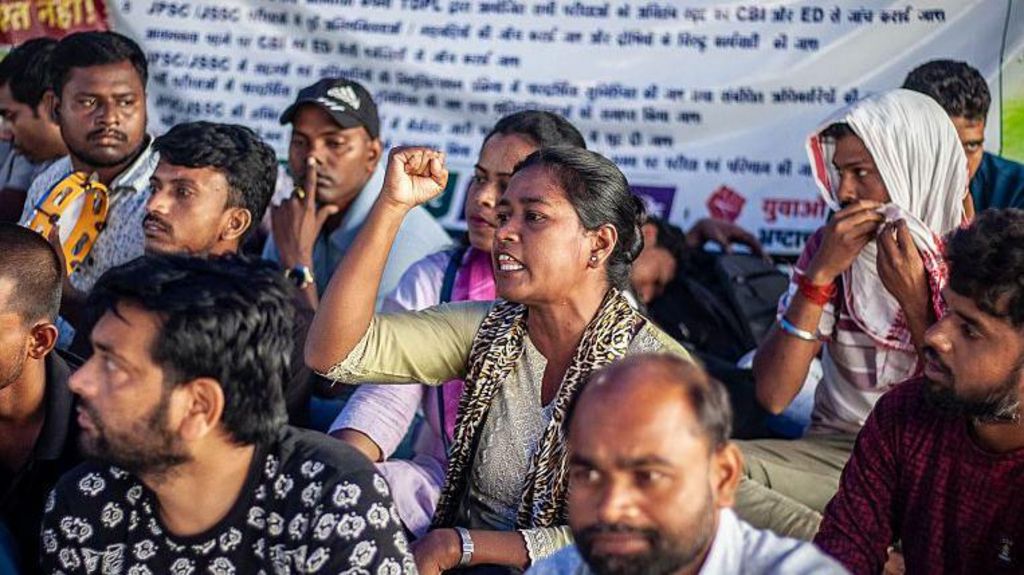
    For more than two weeks, tens of thousands of angry students and unemployed job aspirants have filled the streets of Ranchi, the capital of India’s eastern Jharkhand state, turning a local exam controversy into a major political showdown over systemic corruption in government recruitment processes.

    The current wave of unrest is rooted in results from a preliminary civil service examination administered by the Jharkhand Public Service Commission (JPSC) in April, which were publicly released in July. Almost immediately after the results were announced, unsuccessful candidates took to social media to share leaked answer sheets that exposed glaring inconsistencies: multiple candidates who secured top spots had answered far fewer questions correctly than low-ranking or failed applicants. The irregularities sparked widespread allegations of result manipulation and kickbacks, rapidly mobilizing young people across the state.

    Since July 25, protesters have maintained a continuous encampment at a major Ranchi stadium, with many sleeping in open-air facilities and dozens launching hunger strikes to amplify their demands. On Monday, thousands of demonstrators marched toward the Jharkhand State Assembly to escalate their call for a complete overhaul of the state government’s broken recruitment exam system. Local law enforcement deployed increased security across the city, with large numbers of police officers and media personnel on site to monitor the unrest.

    This agitation in Jharkhand comes on the heels of a nationwide protest movement known as the “cockroach protests,” which drew thousands of young job seekers to New Delhi to demand action over widespread exam paper leaks across the country. Organized by the loosely organized Cockroach Janta Party (CJP)—a grassroots movement unaffiliated with any established political party—the five-week national protest wrapped up on July 25 after Indian Education Minister Dharmendra Pradhan resigned from his post. The CJP movement had already gained cross-country support from unemployed youth in nearly every Indian state, laying groundwork for the current protest in Jharkhand.

    In response to growing pressure, Jharkhand’s ruling government has already taken a series of steps to address the protesters’ anger. The JPSC chairman stepped down on July 22 and has since been questioned by investigators, followed by the resignation of three additional JPSC commission members. After multiple rounds of negotiations with protest leaders last weekend, the state government agreed to cancel the disputed JPSC exam, alongside two other tainted recruitment exams. The state’s Criminal Investigation Department (CID) has launched a full investigation into the allegations, which has so far led to more than a dozen arrests. Investigators are also probing the selection process for a private contractor that handled key portions of the exam administration, after candidates raised red flags about the firm’s hiring.

    Despite these concessions, protest organizers have made clear that demonstrations will continue until all of their core demands are met. Their top remaining demand is the transfer of the entire investigation to the Central Bureau of Investigation (CBI), India’s top federal investigative agency, which protesters argue will be able to conduct an independent probe free of local political interference.

    Unlike the national CJP movement, which intentionally stayed outside of established party politics, the Ranchi agitation has drawn open support from across India’s political spectrum. The Bharatiya Janata Party (BJP), which holds the opposition majority in Jharkhand’s state assembly, has organized its own parallel demonstrations, raised the scandal in legislative proceedings, and publicly joined calls for a federal CBI probe. Even the Indian National Congress, which is a coalition partner in Jharkhand’s ruling state government and the national political rival of the BJP, has publicly expressed support for the protesting students.

    Jharkhand Chief Minister Hemant Soren, leader of the regional ruling Jharkhand Mukti Morcha (JMM) party, has pushed back against the escalating unrest. In comments Sunday, Soren claimed that outside vested interests are working to destabilize democratic governance in the state, warning that the protest movement must not be exploited for political gain. He nonetheless reaffirmed the state government’s commitment to delivering justice to aggrieved candidates and holding all wrongdoers accountable.

    The unrest in Jharkhand underscores a growing national crisis in India, where persistent irregularities and corruption in government job recruitment have fueled widespread anger among the country’s large youth population, which faces chronically high unemployment rates.

  • Tropical storm causes some flooding in eastern China

    Tropical storm causes some flooding in eastern China

    A series of weather disturbances are rippling through East Asia this week, with former Typhoon Dolphin leaving a trail of disrupted daily life after making landfall along China’s eastern coast over the weekend.

    The storm first slammed into the coastal city of Taizhou, located in China’s Zhejiang Province, Sunday evening, packing maximum sustained winds of 151 kilometers per hour (93 mph) as it came ashore. Before hitting the Chinese mainland, Dolphin already drenched northern Taiwan with heavy downpours over the weekend, laying the groundwork for widespread flooding once it moved inland. After landfall, the system weakened to a tropical storm, bringing sustained torrential rain to eastern China on Monday that quickly overwhelmed local drainage systems and triggered flash flooding in multiple low-lying areas.

    As of Monday morning, Taiwan’s Central Weather Administration recorded maximum sustained winds of just 65 kph (40 mph) within the storm system, confirming a steady weakening trend. China’s national meteorological service added that Dolphin is tracking northwest at a speed of 15 to 20 km per hour (9 to 12 mph), and is projected to continue losing intensity until it fully dissipates over inland China. Even in its weakened state, however, the storm poses serious hazards: national and local authorities have issued urgent warnings for elevated risks of catastrophic river flooding and destructive landslides across mountainous and low-lying regions of eastern China.

    Local response teams have already been deployed to address storm damage. State broadcaster CCTV reported that emergency crews in Yueqing, a coastal city within Zhejiang, launched search and rescue operations to extract residents trapped in water-submerged homes, while also working to clear storm debris including fallen broken tree branches from public streets to restore access for emergency vehicles.

    The proactive steps taken by Chinese authorities ahead of the storm’s arrival mitigated potential casualties: more than 300,000 residents in high-risk areas were preemptively relocated to emergency shelters before Dolphin made landfall. Major transportation hubs also pre-emptively suspended services, with both of Shanghai’s major international airports canceling more than 1,300 incoming and outgoing flights to avoid putting passengers and crew at risk.

    The impacts of Dolphin have not been limited to China and Taiwan. The storm system also amplified seasonal monsoon rainfall across the Philippines, worsening already wet conditions and sparking flash floods and deadly landslides in vulnerable areas across the archipelago.

    Meanwhile, a second tropical system is gearing up to impact East Asia this week. Tropical Storm Chan-hom is currently tracking toward Japan’s Pacific coastline, according to the Japan Meteorological Agency. As of Monday morning, the storm carried maximum sustained winds of 83 kph (51 mph), and forecasters project it will intensify slightly before making landfall sometime between Tuesday and Wednesday.

  • World shares are mixed after Wall Street gains, while oil prices bounce higher

    World shares are mixed after Wall Street gains, while oil prices bounce higher

    Global equity markets delivered a mixed performance across Europe and Asia on Monday, building on an upward rally that pushed major U.S. indexes to fresh records in the prior session. The uptick on Wall Street was driven by an unexpected monthly jobs report that fueled investor expectations the U.S. Federal Reserve would hold off on interest rate hikes for the near term.

    In early European trading, benchmarks split gains and losses: Germany’s DAX climbed 0.3% to 26,411.01, France’s CAC 40 edged 0.1% lower to 8,703.72, and the U.K.’s FTSE 100 dipped 0.3% to 10,869.35. Futures tied to the S&P 500 ticked up 0.1% ahead of the U.S. trading open, while Dow Jones Industrial Average futures slipped 0.1%.

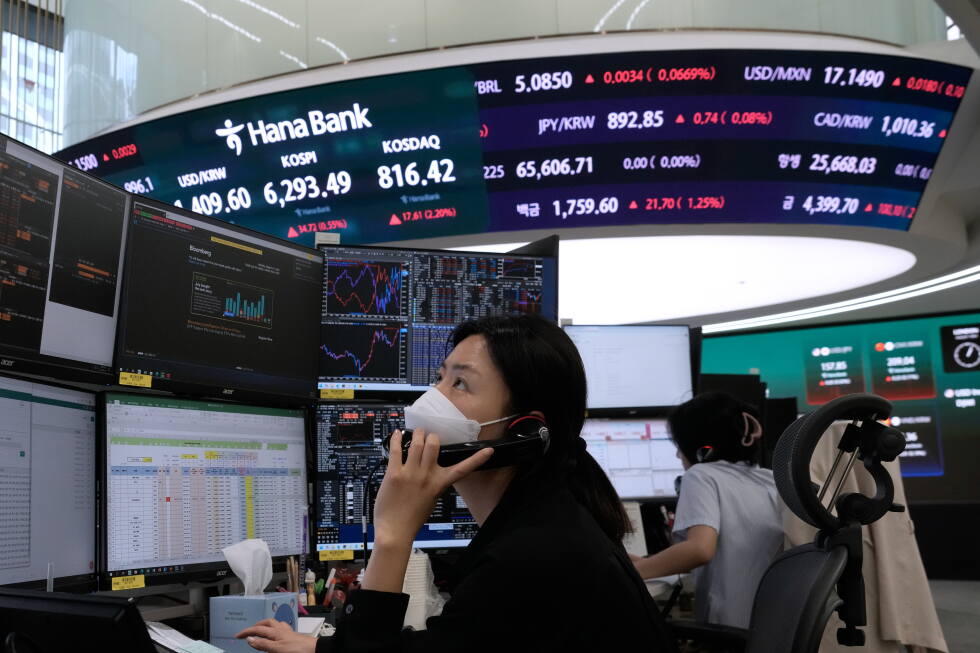
    Across Asian markets, Japan’s Nikkei 225 outperformed peers, jumping 2.1% to close at 66,970.22, lifted by robust gains in the domestic technology sector. Leading chip equipment manufacturer Tokyo Electron rose 4.1%, while chip testing producer Advantest gained 6.4% to lead the index upward. South Korea’s Kospi posted a more modest 0.7% gain to 6,299.66, even as major domestic chipmakers pulled back: Samsung Electronics lost 0.4% and SK Hynix, the rival memory chip producer, edged 0.1% lower. Analysts noted foreign investors have recently started selling off large tech holdings to lock in recent gains and reallocate capital to other sectors, including defense contracting.

    Other major Asian indexes also notched gains: Hong Kong’s Hang Seng Index added 1.1% to 25,937.49, and China’s Shanghai Composite rose 0.7% to 3,966.59. Australia’s S&P/ASX 200 bucked the upward trend to lose 0.3% at 9,232.60, while Taiwan’s Taiex surged 1.6% and India’s Sensex held nearly flat from Friday’s close.

    Oil prices climbed on Monday as geopolitical uncertainty across the Middle East disrupted expectations for energy supply security. The uptick came after Israel rejected a Gaza ceasefire proposal announced by former U.S. President Donald Trump, while new details emerged of a potential shipping management deal between Iran and Oman for the strategic Strait of Hormuz. Tehran has recently signaled it will bar vessels linked to “hostile countries” from passing through the key waterway, through which roughly 20% of global oil supplies transit daily. Separate tensions escalated over the weekend when Yemen’s Iranian-backed Houthi rebels attacked a government-controlled port on the country’s Red Sea coast, deepening fears of threats to critical global shipping lanes and a potential resumption of full-scale Yemeni civil war.

    Brent crude, the global benchmark for oil prices, gained 0.8% to trade at $84.23 per barrel on Monday. U.S. West Texas Intermediate crude rose 0.7% to settle at $78.72 per barrel. “Negotiators said that a deal to establish a safe shipping route was close, but Iran may now be exploring just how much it can extract from the U.S. in return,” Bas van Geffen, senior macro strategist for Rabobank, noted in a market commentary.

    This week, investors are turning their focus to a series of key U.S. inflation updates, headlined by the release of the July Consumer Price Index (CPI), the most closely watched gauge of consumer-level inflation. Economists forecast a 3.4% annual rise in inflation for July, a slight slowdown from June’s 3.5% gain. Inflation has held stubbornly above the Federal Reserve’s 2% target for most of 2024, keeping pressure on central bank policymakers to consider continued rate hikes.

    The market momentum that carried into Monday originated from Friday’s surprise U.S. jobs report, which showed employers cut 23,000 jobs in July, defying analyst projections of continued job growth. The softer than expected labor data pushed U.S. stocks higher and pulled Treasury yields lower, as investors bet a cooling jobs market would convince the Fed to delay further interest rate increases. All major U.S. indexes notched a second straight week of gains, with several hitting all-time records. The S&P 500 rose 0.6% to 7,757.64, topping its prior all-time high, while the Dow Jones Industrial Average gained 0.3% to 54,036.93, just short of the record it set Wednesday. The Nasdaq composite climbed 1.3% to 26,690.62, led by large technology stocks that have driven much of 2024’s market rally: Nvidia jumped 2.3% and Broadcom rose 1.7%.

    While the soft jobs report supported expectations for steady interest rates, it also clouded the broader economic outlook, dimming one of the economy’s strongest recent performers and stoking concerns about consumer household spending amid persistent high inflation. The report also revised lower payroll numbers for May and June, cutting a combined 103,000 jobs from the prior two months’ totals. The slowing pace of employment growth complicates the Federal Reserve’s dual mandate to balance stable job growth and taming persistent inflation, as higher interest rates cool price pressures by slowing overall economic growth, but also raise borrowing costs that make business expansion more difficult.

    In currency markets on Monday, the U.S. dollar strengthened against the Japanese yen, rising to 158.72 yen from 157.71 yen in the prior session. The euro edged slightly lower to $1.15617 from $1.1568.

  • South Australia announced huge $3m royal commission into AI

    South Australia announced huge $3m royal commission into AI

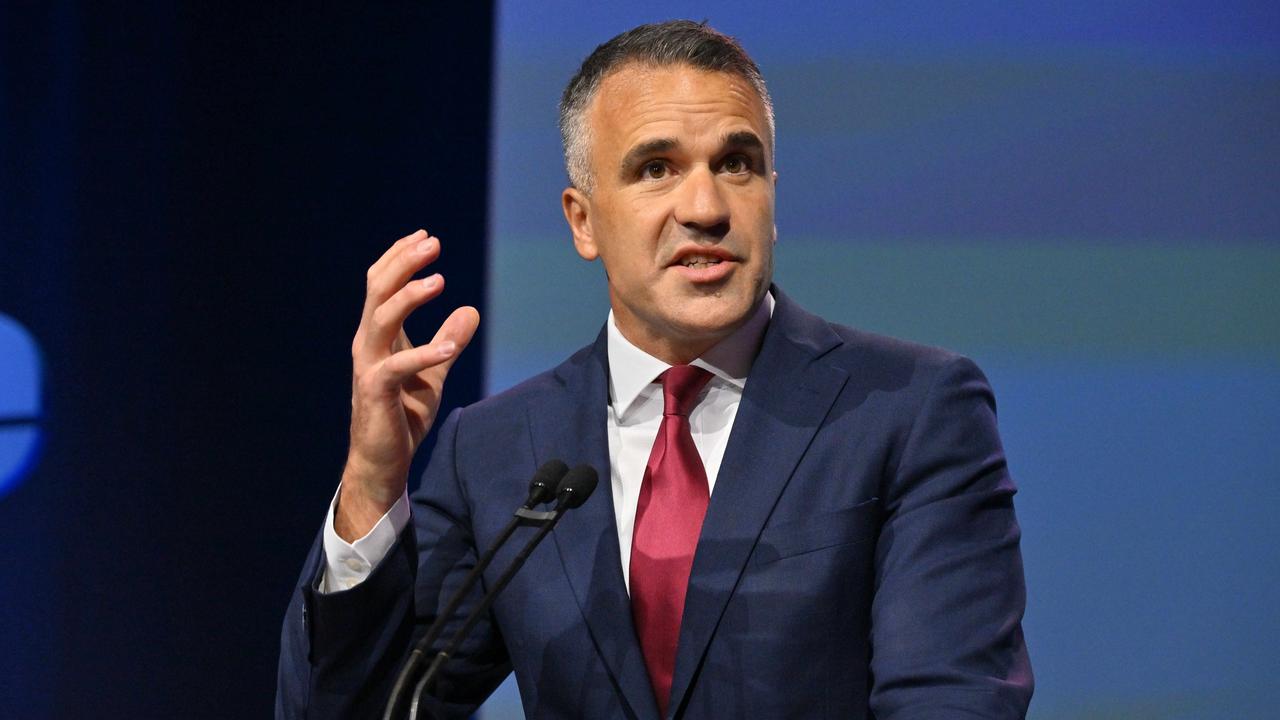
    As artificial intelligence continues its explosive global growth, South Australia’s state government is stepping forward to lead thoughtful regulation of the transformative technology, announcing a $3 million Royal Commission inquiry into AI’s current uses and emerging risks. The initiative, unveiled by Premier Peter Malinauskas, draws on the successful regulatory framework the state developed for social media reform that ultimately shaped Australia’s national ban on underage social media use, a model now adopted by governments around the world.

    Malinauskas’s announcement comes shortly after his official visit to the United States, where he held in-depth talks with leading AI developers, including OpenAI – creator of the viral ChatGPT large language model – and tech giant Apple. During those meetings, the premier explored emerging use cases for generative and advanced AI, gaining first-hand insight into how rapidly the sector is evolving and what impacts it will have on regional economies and communities.

    The Royal Commission, set to launch in October 2024, will launch a sweeping public inquiry to map how AI is already being deployed across key South Australian sectors, from education and public health to public services, industry and the arts. Its core mandate is clear: to identify pathways to unlock AI’s full economic and social benefits for South Australia, while proactively flagging potential risks, unregulated harms, and unwanted negative impacts on residents.

    Malinauskas framed the rapid expansion of AI as the most significant technological shift the global community has experienced since the Industrial Revolution, noting that while no single regional government can halt the global rollout of the technology, it can shape how it is adopted locally to center public good. “This rapid development cannot occur unchecked. Governments must assume its responsibility to ensure these changes improve the lives of their citizens,” Malinauskas said, adding that the state aims to become a global leader in people-first AI policy.

    “What we are trying to do is embrace the huge opportunity AI presents, but not in a careless way that leaves our community dealing with avoidable regrets down the line,” he added.

    The inquiry is expected to collect public and stakeholder evidence over the next nine months, with a final report containing policy recommendations due to be published no later than 1 July 2025. The approach to the inquiry mirrors the process South Australia used for its earlier social media reform investigation: the state’s local inquiry laid the groundwork for the federal government’s national ban on children’s access to social media platforms, which has since become a blueprint for policymakers across the globe grappling with digital regulation.

    With the $3 million price tag to be covered by South Australian taxpayer funds, the commission marks one of the most ambitious subnational regulatory efforts into AI anywhere in the world, signaling that regional governments are increasingly moving to address AI impacts even as national and international bodies negotiate broader global governance frameworks.

  • Eight more people charged after teen allegedly tied to tree, assaulted in Townsville

    Eight more people charged after teen allegedly tied to tree, assaulted in Townsville

    A violent, orchestrated attack on a 17-year-old in North Queensland has led to eight new charges, bringing the total number of accused individuals facing criminal proceedings to 11, Queensland Police have confirmed.

    The incident unfolded on July 18, when the injured teenager was discovered by passing joggers around 6:35 a.m. in remote bushland just off Cape Pallarenda Road in Town Common, near Townsville. When found, he was tied to a tree with severe, life-altering injuries, and was immediately transported to Townsville University Hospital in stable condition. Law enforcement later confirmed the victim required surgical intervention to treat his wounds.

    Initially, three suspects were taken into custody and charged shortly after the attack in July. That group includes a 13-year-old boy from Deeragun, who faces four charges: unlawful deprivation of liberty, assault causing bodily harm while in company, grievous bodily harm, and torture. A 14-year-old girl from Kirwan faces the same four offences and has been processed under Queensland’s Youth Justice Act. The third original suspect is a 35-year-old Kirwan woman, who faces the same four core charges plus an additional count of driving with a suspended Queensland driver’s license. She is scheduled to appear in court on September 28.

    On Monday, police announced that eight more people have now been arrested and charged in connection with the brutal assault. Five adult suspects were taken into custody: a 40-year-old Heatley woman, a 36-year-old Cranbrook woman, a 32-year-old Kirwan woman, a 30-year-old Heatley man, and a 24-year-old Heatley man. All five face one count each of the same four core offences: unlawful deprivation of liberty, grievous bodily harm, assault causing bodily harm in company, and torture. They are set to appear before Townsville Magistrates Court this coming Monday.

    Alongside the five adults, three 15-year-old boys were also charged with the same four offences. Two of the teens are from Kirwan and already appeared at Townsville Children’s Court on August 8, while the third boy, from Mount Low, is scheduled for a court appearance on August 14.

    Detective Senior Sergeant Dave Miles, head of the Townsville Child Abuse and Sexual Crime Unit, shared key details about the investigation and the nature of the attack. He confirmed the attack was not random, but a pre-planned act coordinated by the group of suspects against the 17-year-old victim. Only some of the accused are known to the victim, he added. Miles also revealed that after abandoning the injured teen, the suspects engaged in dangerous driving around the Townsville Strand area, which ended in a vehicle collision.

    Queensland Police investigations into the incident remain ongoing. Law enforcement is urging any member of the public who has information related to the attack, regardless of how minor it may seem, to contact investigators to assist with the case.

  • New Zealanders abroad urged to enroll for the election as new law locks out last-minute voters

    New Zealanders abroad urged to enroll for the election as new law locks out last-minute voters

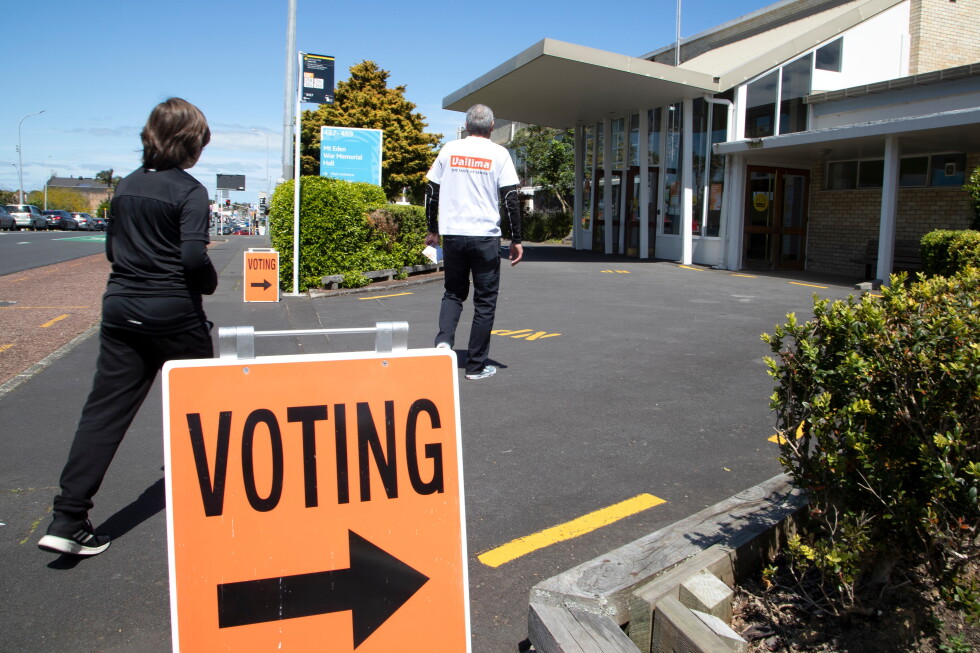
    WELLINGTON, New Zealand — As the country prepares for its October-November 2025 general election, New Zealand’s independent Electoral Commission has kicked off a national outreach campaign on Monday, calling on all eligible voters both domestically and overseas to complete their voter registration or update their personal information ahead of a strict new enrollment deadline. The change, which came into force after legislative approval last December, eliminates the long-standing rule that allowed eligible voters aged 18 and older to register or update their details on election day itself, even when they arrived at polling stations to cast their ballot.

    Under the new regulation, all voters must finalize their registration and confirm up-to-date contact and address information no later than 13 days before election day. For this year’s contest scheduled for November 7, the final enrollment deadline is set for October 25. Early voting will open October 21 for overseas voters and October 26 for domestic voters, and any citizen who fails to meet the enrollment cutoff will be turned away from polling places when they attempt to vote.

    The new enrollment cutoff is part of a broader package of electoral law amendments introduced by the country’s incumbent center-right National-led government, which is currently campaigning for a second consecutive term in office. Other changes included in the legislation are a ban on voting for incarcerated prisoners and an increase to the cap on allowable anonymous political donations. Governing officials argue the deadline change is a practical reform designed to address lengthy election result delays. Prime Minister Christopher Luxon, leader of the National Party, explained in a July interview with Radio New Zealand that the 2023 election, which allowed on-the-day registration, took three full weeks to finalize the final result — the longest delay in New Zealand’s electoral history.

    The change has drawn sharp criticism from center-left opposition parties, led by the Labour Party, who claim the reform is a partisan move designed to suppress special votes — a category that includes ballots cast by overseas voters, domestic voters voting away from their home electorate, and voters registering on election day. In recent decades, special votes have consistently leaned in favor of left-wing political parties. Labour Party leader Chris Hipkins told reporters in July that the change risks disenfranchising tens of thousands of eligible New Zealanders, and pledged to reverse the regulation if his party wins the November election.

    Even with the new deadline in place, Electoral Commission officials still project that the final election result will not be confirmed until 20 days after voting concludes, a mere three-day reduction from the 23-day wait that was projected without the cutoff. Roughly 700,000 special votes are still expected to be cast in this year’s election.

    Latest commission data shows that 89% of all eligible domestic voters have completed their registration so far. While voting itself is voluntary in New Zealand, enrollment is mandatory for all eligible citizens residing in the country, with a fine of 100 New Zealand dollars (approximately $59 USD) for those who fail to comply.

    More than 1 million New Zealand citizens currently reside overseas, though exact figures for how many of those are eligible to vote have not been confirmed. Eligible overseas voters can participate by downloading ballot papers from the Electoral Commission website, having their ballots witnessed by a third party, and uploading the completed document digitally. Chief Electoral Officer Karl Le Quesne confirmed that the October 25 deadline applies to overseas voters as well, noting that many eligible voters living abroad can also cast ballots in person at New Zealand embassies and consulates around the world.

    The commission’s new outreach campaign is specifically targeting young eligible voters, who have historically been the most likely to delay registration until close to election day. The campaign will run targeted advertising across social media, online gaming platforms, and streaming services to reach this demographic. Electoral Commission Chair Simon Moore noted that as of the campaign launch, roughly 440,000 eligible voters remain unenrolled nationwide, and nearly half of those — 200,000 — are between the ages of 18 and 25. “That’s the cohort we really need to get the attention of,” Moore said.