作者: admin

  • 3 dead, 17 mostly workers still missing in collapse of unfinished hotel in Philippines

    3 dead, 17 mostly workers still missing in collapse of unfinished hotel in Philippines

    A devastating building collapse at a nine-story hotel under construction in Angeles City, Pampanga province, has left three people dead and 17 more missing after rescuers pulled two trapped workers from a massive concrete and steel rubble pile early Monday, Philippine officials have confirmed. \n\nHundreds of emergency responders led by local fire departments and police spent hours working to extract the two construction workers, who were trapped alive beneath fallen concrete slabs and twisted rebar when the structure fell early Sunday. A small group of journalists, including Associated Press reporters, witnessed the harrowing scene: one worker was pulled from the rubble deceased, while emergency crews attempted to resuscitate the second inside an ambulance parked at the edge of the debris field, which is made up of crumpled concrete, mangled iron and buckled aluminum scaffolding. After prolonged resuscitation efforts, crews ultimately declared the second worker dead and departed the site. \n\nRegional Philippine Police Chief Brigadier General Jess Mendez told the AP that in a final attempt to keep one trapped worker alive through the sweltering summer heat, rescuers were able to administer water and intravenous medication before the man succumbed to his entrapment. \”He never made it despite all the efforts,\” Mendez said.\n\nThe third fatality was identified as a Malaysian tourist staying at a neighboring small budget inn, which was partially crushed by falling debris from the collapsed hotel. Another guest at the inn escaped with minor injuries and fled the site immediately after the collapse, officials confirmed.\n\nThe unfinished structure collapsed with a loud crash shortly after a severe thunderstorm hit the area before dawn on Sunday. Twenty-six construction workers, who were sleeping on plywood sheets on the building’s ground floor, either escaped on their own or were pulled out alive in the immediate aftermath of the incident. As of Monday, 17 workers remain unaccounted for, with one already located by rescuers but not yet extracted from the rubble, officials said.\n\nA full day after the disaster, Angeles City Mayor Carmelo Lazatin announced that search and rescue operations would continue, with no transition to body recovery planned for the time being. \”My best hope is that we can rescue more people alive,\” Lazatin told the AP. \”We don’t want to give the families of the trapped workers any bad news.\” \n\nBut the prolonged wait has deepened anxiety and fear among family members gathered in temporary shelters near the collapse site. Lea Mendoza Casilao, a 47-year-old sardine factory worker whose mason boyfriend is among the missing, said she has lost faith in a timely rescue. \”I’m losing hope because of what I see— slow rescue work,\” she said. Casilao had brought a week’s supply of rice and sardines to the site for her boyfriend, after the pair planned to meet over the weekend, a meeting that never happened after the building crumbled where he was sleeping.\n\nLazatin defended the pace of the operation, noting that massive concrete slabs are still held in unstable positions by tangled aluminum scaffolding, and any rushed movement could trigger secondary collapses that would put rescue crews at fatal risk.\n\nPhilippine National Police Chief General Jose Melencio Nartatez Jr. confirmed that law enforcement will launch a full investigation into the collapse to identify its root cause and any potential violations of national building codes and construction safety regulations.\n\nAngeles City, located roughly 80 kilometers north of the Philippine capital Manila, has a unique modern history: it was once home to one of the largest U.S. Air Force bases outside the U.S. mainland, Clark Air Base, which closed in the early 1990s. The former base has since been redeveloped into the Clark Freeport Zone, a busy industrial and tourism hub that has turned Angeles City and surrounding Luzon communities into major commercial and leisure centers. The collapsed hotel was located in an area dotted by budget inns, leisure businesses and other commercial developments that grew up around the former base.

  • Rubio’s visit to India focuses on US trade tensions, the Quad alliance and sightseeing

    Rubio’s visit to India focuses on US trade tensions, the Quad alliance and sightseeing

    On his first official visit to India as U.S. Secretary of State, Marco Rubio has arrived in New Delhi with a clear mission: to repair frayed bilateral relations and reinforce long-standing strategic and economic partnerships between Washington and New Delhi, even as lingering trade disputes create friction between the two major Indo-Pacific powers.

    During Sunday’s high-level talks, which included meetings with Indian Prime Minister Narendra Modi and Foreign Minister Subrahmanyam Jaishankar, Rubio outlined shared priorities for deepened collaboration across four key areas: trade, energy, defense, and maritime security. He reaffirmed that the two nations remain strategically aligned, and voiced public optimism that negotiators will be able to hash out a long-stalled comprehensive bilateral trade agreement in the near future. As a key diplomatic gesture, Rubio also delivered a formal invitation from U.S. President Donald Trump for Modi to make an official state visit to Washington later this year.

    The roots of recent bilateral tension stretch back to new tariffs imposed by the Trump administration on a wide range of Indian exports, a move driven in large part by U.S. disapproval of India’s continued purchases of discounted Russian crude oil following the outbreak of the Ukraine war. The steep tariffs sparked outrage among Indian officials and eroded trust in Washington’s commitment to the relationship, raising questions about U.S. reliability as a long-term partner for New Delhi. While the two sides eventually reached an interim trade deal that rolled back some of the most punitive tariffs and expanded India’s purchases of American energy and other goods, negotiations on a broader, full-scale trade agreement have yet to reach a successful conclusion.

    Despite these frictions, the United States has continued to view India as a critical geopolitical ally and a key counterweight to growing Chinese influence across the Indo-Pacific, leading to steady expansion of defense and technology cooperation in recent years. That regional focus will take center stage later in Rubio’s four-day trip, when he is set to join talks with foreign ministers from the other three Quadrilateral Security Dialogue member nations: Australia, India, and Japan. The Quad, an Indo-Pacific strategic alliance, has emerged as a central coordination platform for member states to advance cooperation on maritime security, resilient global supply chains, and aligned regional strategy, as China expands both its military footprint and economic clout across the region.

    The alliance has repeatedly pushed back against Chinese activities in the South China Sea, accusing Beijing of aggressive militarization of disputed island territories. For its part, China has long framed the Quad as a deliberate effort to obstruct its peaceful rise and contain its growing regional influence. Recent trade tensions between the U.S. and India, paired with Trump’s high-profile recent visit to China, have sparked new scrutiny of the alliance’s future role and cohesion.

    Praveen Donthi, a senior analyst with the International Crisis Group, noted that India’s growing global strategic weight is closely tied to its utility as a counterbalance to Chinese regional power. Any major shift in U.S. policy toward Beijing, he argued, would directly reshape New Delhi’s strategic value to Washington. “If the U.S. changes its approach towards China, it will diminish India’s importance,” Donthi explained.

    Beyond geopolitics and trade, the ongoing conflict in Iran has added new layers of pressure to bilateral negotiations, particularly on energy security. The war has disrupted critical shipping lanes through the Strait of Hormuz, the main transit route for more than a third of India’s crude oil imports, stoking fears of prolonged supply disruptions and driving up global fuel prices. Rising energy costs have in turn placed new strain on India’s already fragile economy, making energy diversification a top policy priority for New Delhi.

    Speaking after Sunday’s talks, Jaishankar affirmed that India will continue expanding its energy imports, including from the United States, while pursuing a deliberate strategy of diversifying supplier nations to keep domestic markets stable and fuel prices affordable for Indian consumers. He added that New Delhi supports open, unconstrained global energy markets as a core requirement for sustained global economic growth. During his meetings, Rubio echoed that push, emphasizing Washington’s desire to deepen energy cooperation and encouraging India to continue ramping up purchases of American oil and natural gas.

    Alongside his packed schedule of official diplomatic engagements, Rubio has incorporated cultural and ceremonial stops into his four-day itinerary. He opened the trip in the eastern Indian city of Kolkata, where he visited the global headquarters of the Missionaries of Charity, the charitable organization founded by Mother Teresa. He also took part in a gala reception in New Delhi celebrating the 250th anniversary of U.S. independence. Before concluding his visit, Rubio is scheduled to travel to two of India’s most iconic tourist destinations: Agra, home to the Taj Mahal, and Jaipur, the capital of Rajasthan known for its historic forts, royal palaces, and vibrant cultural heritage.

  • Fight MND founder Neale Daniher dies after inspirational battle with the disease

    Fight MND founder Neale Daniher dies after inspirational battle with the disease

    Australian Rules Football icon and one of the nation’s most inspirational public figures Neale Daniher has passed away at 65, bringing a close to a 13-year public battle against motor neurone disease (MND). He died surrounded by his immediate family, leaving behind a transformative legacy of courage, fundraising and advocacy that has changed the global fight against the devastating neurodegenerative condition.

    In a public statement released Monday afternoon, the Daniher family paid tribute to the man they described as the unshakable heart of their clan. “From day one, Neale was a fighter. His determination was unmatched – choosing every day to find opportunity where others might see only challenge, and taking the fight to the Beast with everything he had,” the statement read.

    Even as his illness progressed through its most debilitating stages, Daniher never lost his signature playful charm and sharp wit. “Even in the toughest times, he kept pushing forward, determined to land as many blows as he could against his toughest opponent, all with a cheeky grin and a sharp sense of humour that never left him,” the family shared.

    Raised as one of 11 children, Daniher built a reputation for bringing light and connection to every room he entered long before his MND diagnosis. He first made his mark on Australian sport as a fierce, strategically brilliant player for the Essendon Football Club, before transitioning to a legendary coaching career with the Melbourne Football Club, where fans affectionately nicknamed him “Coach” and “Reverend.” Across every stage of his life, he drew people in as a natural leader, beloved far beyond his titles as a husband, father, proud grandfather, music lover, and the person with the loudest laugh in any gathering.

    Daniher’s activism against MND began after his own diagnosis in 2012, when he launched the “Beat The Beast” campaign that evolved into the national FightMND movement and the iconic annual Big Freeze match held at the Melbourne Cricket Ground (MCG). Over 13 years, his work raised more than $100 million for MND research globally. This year’s Big Freeze match, scheduled to take place in just a few weeks, will mark the first edition of the event held without Daniher present.

    In 2025, Daniher’s extraordinary contributions to public life were recognized when he was named Australian of the Year, an honor that Prime Minister Anthony Albanese noted was met with unanimous national approval. He left a simple, powerful legacy for current and future MND fighters: “No matter the odds, no matter the diagnosis, we all have the power to fight, to smile, and to do. Because the mark of a person isn’t what they say, it’s what they do.” The family closed their statement with Daniher’s iconic catchcry: “Play On.”

    AFL chief executive Andrew Dillon described Daniher’s passing as a devastating loss for the entire Australian football community. Beyond his on-field achievements, which included leading Melbourne to six finals series and a 2000 Grand Final appearance, Dillon emphasized that Daniher’s greatest impact came from his selfless advocacy.

    “His contribution to wider Australian life was simply incredible in the way he put himself at the forefront, despite the challenge of his own MND diagnosis, to raise awareness of the disease, champion fundraising efforts and search for a cure that he knew would likely not help him, but may help many thousands of other Australians in the future,” Dillon said.

    Melbourne Football Club President Steven Smith echoed that sentiment, noting that Daniher’s courage extended far beyond the boundaries of the football pitch. “It is impossible to encapsulate in words the impact of Neale Daniher. His courage transcended the football field, and his determination inspired an entire country,” Smith said. “Neale was not driven by personal motivation, he was driven by helping others, right until the very end. He was a true leader and the definition of what it means to be selfless.”

    Prime Minister Albanese joined tributes, calling Daniher one of Australia’s greatest modern figures. “The devastating impacts of MND stole so much from Neale, but he held onto everything that people loved and admired about him: his selflessness, his bravery, his humour, his ability to look on the bright side and his fierce determination to make a difference for others,” Albanese said. “Neale Daniher’s remarkable legacy lives all around us.”

    Daniher’s death comes just days after 30-year-old NRL star Jai Arrow revealed his own MND diagnosis and immediate retirement from professional sport, a revelation that cast renewed national attention on the condition.

    The Florey Institute of Neuroscience and Mental Health, a leading Australian medical research institution that has received $17.5 million in funding from FightMND, called Daniher an extraordinary force for the global fight against MND. “Through his powerful advocacy work, Neale helped to raise millions of dollars for researchers in Australia and around the world working to find a cure for MND,” the institute said in a statement.

    Executive Director Professor Peter van Wijngaarden noted that Daniher turned a personal battle into a global movement that continues to accelerate research. “Even in his own battle with MND, Neale was fighting for everyone who would come after him,” van Wijngaarden said. “We will forever be grateful to him and FightMND for putting this disease in the spotlight, inspiring so many and supporting vital research at The Florey and across the globe.”

  • In Sudan’s war economy, gold keeps flowing as miners risk mercury and collapse

    In Sudan’s war economy, gold keeps flowing as miners risk mercury and collapse

    Perched across the arid, mountainous terrain of northern Sudan’s Dalgo Mahas, a small crew of artisanal gold miners moves slowly across the landscape. Each man carries a handheld metal detector, sweeping the dry earth for traces of the precious metal that has come to define their nation’s tragedy. One kneels, driving a simple digging tool into the dirt, working without hard hats, respiratory protection, or any of the most basic safety protocols that govern formal mining operations around the globe.

    These unregulated small-scale miners are just a tiny fraction of the tens of thousands of Sudanese who have turned to informal gold extraction in recent years, a sector that has become both a lifeline for desperate families and the core driver of the devastating civil war that has pushed millions to the brink of famine.

    Sudan’s reliance on gold traces back to 2011, when the secession of South Sudan stripped the country of more than two-thirds of its historic oil revenues. Overnight, the nation’s economy was left reeling, and gold quickly emerged as the replacement backbone of government finances. In the years following South Sudan’s independence, gold exports accounted for 70% of Sudan’s total national revenue, supplying the cash-strapped state with critical foreign currency to keep basic operations running.

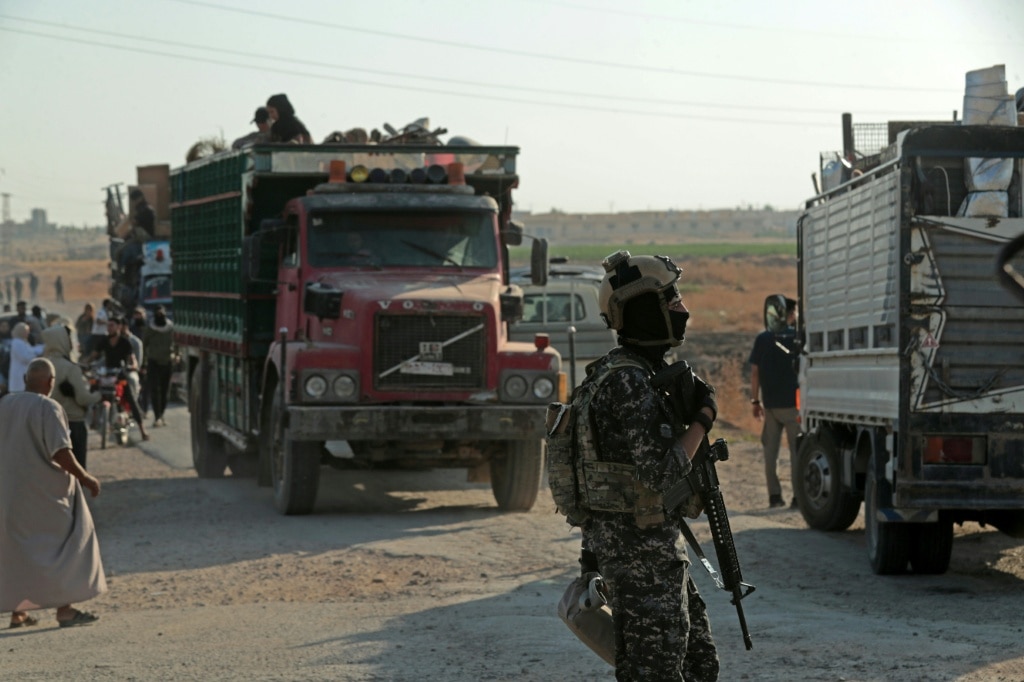
    But today, that same gold wealth is funding the brutal ongoing conflict between Sudan’s regular military and the paramilitary Rapid Support Forces (RSF), according to independent United Nations expert investigators commissioned to track war financing. The RSF, which maintains tight control over major gold-producing regions across Darfur and Kordofan, has overseen the smuggling of massive volumes of unregulated gold out of Sudan to fund its military operations, the experts confirm.

    The human cost of the conflict has already been catastrophic. U.S.-based conflict monitoring organization the Armed Conflict Location & Event Data Project estimates that at least 59,000 people have been killed since the war began, though the group stresses this count is almost certainly a major undercount, given widespread restrictions on on-the-ground reporting and access to conflict zones. The war has also spawned the world’s largest humanitarian disaster, forcing more than 10 million Sudanese to flee their homes to escape violence. For many of these displaced people, artisanal gold mining has become the only viable way to put food on the table for their families.

    “Gold mining is the only thing I can rely on,” explained 28-year-old Atta al-Khazin, who abandoned his career as a small-scale farmer when rising global oil prices made agricultural inputs too expensive to turn a profit.

    Zahir Adam, a 35-year-old father from el-Fasher in Darfur who has worked in gold mining for more than a decade, said the sector has seen a massive influx of new workers since the war erupted three years ago. “They had no other option,” he said. “Many young people, and many families, depend on mining.”

    Official industry figures confirm Sudan’s gold production is growing, even as its war rages. The country produced 70 tons of gold in 2025, up from 64 tons in 2024, cementing its position as one of the top gold-producing nations in Africa. State-run Sudanese Mineral Resources Company data shows the sector generated roughly $1.8 billion in revenue for 2025.

    More than half of this production comes from informal, artisanal small-scale mines that operate almost entirely outside government oversight, with almost no adherence to global safety or environmental standards. The extraction process used by most informal miners carries major health risks for workers and nearby communities: after digging ore from the ground, miners crush the rock, then mix it with toxic mercury to bind gold particles into an amalgam. The mixture is then heated over an open stove to evaporate the mercury, leaving pure gold behind. The process releases dangerous mercury vapor into the air and leaches toxic waste into local water supplies, creating long-term public health risks that extend far beyond the mines themselves.

    The U.N. expert panel’s 2024 report found that more than 50% of all gold mined in Sudan never enters formal, regulated trade channels, and is instead smuggled across borders to illicit markets in neighboring countries.

    Lethal safety failures are also routine in the unregulated sector. Just last month, a mine collapse in Sudan’s Red Sea Province killed at least seven miners. Another collapse in South Kordofan Province in January claimed 13 lives.

    Efforts to bring the critical sector under government oversight have repeatedly fallen apart amid political upheaval. After the military ousted longtime dictator Omar al-Bashir in April 2019, a civilian-led transitional government that ruled for more than a year launched an initiative to regulate informal gold mining and crack down on smuggling. Those reform efforts were cut short by a military coup in October 2021, which paved the way for the full-scale civil war that broke out in 2023, leaving the gold sector more unregulated and conflict-fueled than ever before.

  • Swimmer Gkolomeev ‘breaks’ record at drug-fueled Enhanced Games

    Swimmer Gkolomeev ‘breaks’ record at drug-fueled Enhanced Games

    The first edition of the highly divisive Enhanced Games, an event that openly permits competitors to use performance-enhancing drugs banned by every major international sports governing body, wrapped up in Las Vegas on Sunday with just one unofficial world record broken, falling far short of organizers’ bold predictions of multiple record-breaking performances.

    Greek swimmer Kristian Gkolomeev delivered the sole standout result of the night, clocking 20.81 seconds in the men’s 50-meter freestyle to beat the existing official world mark of 20.88 seconds set by Australia’s Cameron McEvoy earlier this year. Competing in a synthetic full-body supersuit banned from Olympic and other mainstream sporting events for decades, Gkolomeev’s achievement will never be formally recognized by global athletics regulators, but it earned him a $1 million bonus from event organizers. “It was a great race… I got it,” Gkolomeev said after the win. “I’m going to continue. Maybe next year I’ll break it again.”

    Organizers had built hype around the event by promising that the open use of sophisticated doping regimens would lead to dozens of new records across swimming, sprinting, and weightlifting. Gkolomeev’s last-minute win spared the event from a total record drought, though most athletes came within fractions of a second or kilograms of existing marks without surpassing them. Earlier in the competition, Gkolomeev had also come close to breaking Pan Zhanle’s 100m freestyle world record of 46.40 seconds, finishing with a time of 46.60 and saying he was frustrated to fall just short.

    Other high-profile competitors also narrowly missed record targets. Britain’s Ben Proud, a 2024 Paris Olympics silver medallist who admitted to using multiple performance-enhancing substances, won the men’s 50m butterfly in 22.32 seconds — just 0.05 seconds off the world record. “We all know what we came for. And that’s world records. And so to be that agonizingly close, it’s frustrating,” Proud said.

    In a surprising turn of events that defied the event’s core premise, several clean, unenhanced athletes claimed event titles against doped competitors. American swimmer Hunter Armstrong took gold in the opening swimming event, the men’s 50m backstroke, with a time of 24.21 seconds to beat two rivals who used performance-enhancing drugs. Former 100m world champion Fred Kerley, currently serving a suspension for missed drug tests, also won the men’s 100m sprint clean with a time of 9.97 seconds, joking of his doped rivals: “Man, they got to do better than that. They need to train a little harder. Get on that shit a little bit more.” Barbados sprinter Tristan Evelyn also won the women’s 100m sprint clean, finishing in 11.25 seconds. US Olympic medallist Cody Miller, another clean competitor, rolled back the years to win the men’s 50m breaststroke, cutting seven-tenths of a second off his own personal best at age 34, though he did not come close to challenging Adam Peaty’s world record.

    The pattern of near-misses extended to the weightlifting platform, where multiple athletes failed to hit the record lifts they had achieved in training. Dominican Republic weightlifter Beatriz Piron, who reportedly hit a world record lift in training, narrowly failed to complete a 100kg snatch to open the competition. Canadian Boady Santavy and American Wesley Kitts also fell short of their target record snatch lifts of 183kg and 197kg respectively, even after organizers bent competition rules to grant each an extra fourth attempt. “I hit a lot of PRs in training. Not 197 yet… Man, if I had about four more weeks (in training) I’d say I’d have had a good shot at it,” Kitts said. Even Hafthor Bjornsson, the former World’s Strongest Man best known for playing The Mountain on *Game of Thrones*, failed to break his own existing 510kg deadlift world record.

    Backed by high-profile investors including billionaire tech entrepreneur Peter Thiel and former U.S. President Donald Trump’s son Donald Trump Jr., the Enhanced Games was held at a custom-built temporary arena on the parking lot of a Las Vegas casino, with large cash prizes — up to $1 million for a world record and $250,000 for an event win — luring a field that included multiple current and former Olympic medallists.

    The event has faced widespread condemnation from global sports governing bodies, who refuse to recognize any records set at the competition and have called it a dangerous experiment that normalizes harmful doping. Public health experts have also raised urgent alarms, warning that the open use of banned substances such as testosterone and anabolic steroids carries major long-term risks, including life-shortening heart, liver, and kidney damage, with little research available on the full health impacts of the regimens athletes are using. Enhanced Games officials have pushed back against these criticisms, noting that all substances used by athletes are approved by the U.S. Food and Drug Administration, and the event’s parent company already sells many of these substances directly to the general public.

  • Toshifumi Suzuki, the Japanese behind the ‘conbini’ empire, has died. He was 93.

    Toshifumi Suzuki, the Japanese behind the ‘conbini’ empire, has died. He was 93.

    TOKYO – Toshifumi Suzuki, the iconic Japanese business leader who transformed a small licensed franchise into the world’s largest convenience store network, 7-Eleven, passed away at his Tokyo residence on May 18 at the age of 93. The cause of death was heart failure, according to an official announcement Monday from Seven & i Holdings, where Suzuki served as honorary adviser.

    Born in 1932 in Japan’s northern Nagano Prefecture, Suzuki graduated from Tokyo’s prestigious Chuo University before launching his retail career at Ito-Yokado, a major Japanese department store chain now also held under the Seven & i Holdings umbrella. It was from this foundation that he would go on to revolutionize modern convenience retail.

    In 1973, Suzuki secured a franchise licensing agreement with the U.S.-based original 7-Eleven brand, opening Japan’s first 7-Eleven location in 1974. What began as a single licensed outlet rapidly grew into a nationwide phenomenon, redefining daily life for Japanese consumers under Suzuki’s leadership. Today, 7-Eleven’s ubiquitous “conbini” outlets are woven into the fabric of Japanese society, offering far more than quick snacks and drinks. Shoppers can access ATMs, pay utility bills, print documents, and grab freshly prepared on-the-go meals, turning the small neighborhood stores into one-stop hubs for daily needs. The chain now counts more than 80,000 locations across the globe, retaining its position as Japan’s largest convenience store operator.

    When the original 7-Eleven parent company, U.S.-based The Southland Corp., fell into severe financial trouble in the 1990s, Suzuki steered the Japanese subsidiary to acquire a controlling majority stake in the global brand. He completed the full acquisition in 2005, bringing the entire 7-Eleven network under full Japanese ownership and turning a local license into a global retail powerhouse.

    Beyond building the 7-Eleven empire, Suzuki led Seven & i Holdings on a series of strategic expansions that diversified the group’s footprint. He oversaw the acquisition of Barney’s Japan in 2015, added full banking services to the group’s offerings, and integrated iconic Japanese department store chains Sogo and Seibu into the holding group. His core business philosophy centered on delivering a fully integrated lifestyle shopping experience tailored to evolving customer needs. He also spearheaded early adoption of cutting-edge retail technologies, cementing 7-Eleven’s reputation as an industry innovator that reshaped how Japanese consumers shop. Suzuki stepped into the chief executive role at 7-Eleven Japan in 1978, and remained a guiding force for the brand for decades.

    In recent years, Seven & i Holdings drew global attention when Canadian retail giant Alimentation Couche-Tard, operator of the global Circle K convenience store chain, launched a takeover bid for the group. However, the company abandoned the acquisition attempt in 2024, citing a lack of productive negotiation progress from Seven & i’s side.

    Per the company’s announcement, private funeral services have already been held for Suzuki with only immediate family in attendance. The family has politely declined condolence messages, floral arrangements, and other sympathy gifts. A public memorial service will be announced at a later date. Suzuki is survived by his wife and two children.

  • ‘Thought the plane was going down’: Chaotic scenes as Cathay Airlines flight from Brisbane rocked by turbulence, eight hospitalised

    ‘Thought the plane was going down’: Chaotic scenes as Cathay Airlines flight from Brisbane rocked by turbulence, eight hospitalised

    A routine international flight departing Australia turned into a terrifying ordeal this week, when sudden, unanticipated severe turbulence threw the cabin into chaos and left multiple passengers and crew members injured, airline and medical authorities have confirmed. The incident unfolded on Cathay Pacific Flight CX156, roughly two hours ahead of its scheduled landing at Hong Kong International Airport, catching crew and travelers completely off guard as breakfast service was just getting underway. Without any prior warning from the cockpit or activation of the seatbelt sign, two successive waves of violent turbulence hit the aircraft just 15 to 20 seconds apart, sending loose objects—from smartphones and breakfast trays to hot coffee and food items—flying throughout the cabin. Unbelted passengers and crew members, who were moving through the aisles to serve meals, were thrown violently upward, with many striking the overhead cabin panels before falling back into seats or the aisle floor. When the turbulence subsided, the cabin was left in disarray: food splattered across seats, walls and floors, spilled drinks soaked through passenger belongings, and injured people waited for assistance. Among those on board the flight were four traveling doctors, who immediately stepped in to provide urgent first aid to the injured before landing. Cathay Pacific later confirmed official injury counts: 10 people total, including six cabin crew members and four passengers, were hurt during the event. Eight of those injured required inpatient hospital care after the aircraft landed safely at approximately 6:45 a.m. local time in Hong Kong. Nicholas Stevenson, a Cairns-based businessman who was a passenger on the flight, described the harrowing experience to Australian Broadcasting Corporation (ABC), recalling that the sudden drop and jolting left many travelers convinced the plane would crash. “I thought the plane was going down. There were phones flying, coffees smashed into the roof, food absolutely everywhere,” Stevenson said. “People were screaming. There was a lot of people really freaking out.” He added that the turbulence struck at the moment the cabin crew had just woken passengers, turned on the cabin lights, and began distributing breakfast meals, leaving no time for people to return to their seats and fasten their belts. “There was no seatbelt sign or warning before hand,” Stevenson explained. “The first one [episode of turbulence] caught everyone completely off guard… Anyone that didn’t have their belts on hit the roof.” Speaking after landing, the pilot told passengers the turbulence was caused by an overnight thunderstorm cell that evaded early detection, according to Stevenson. Because of the darkness covering the region at the time, the storm system did not appear on the aircraft’s weather radar until it was too late to avoid the turbulence. With the plane already close to its destination and no immediate alternate landing site available to divert to, the crew continued the flight to Hong Kong. After landing, all able passengers were asked to remain in their seats while first responders escorted injured passengers and crew off the aircraft first for immediate medical care. Representatives for Cathay Pacific confirmed the details of the incident to ABC, and media outlets have since reached out to the airline for further comment on safety protocols and potential changes to procedures. The incident has renewed casual conversation among travel experts about the persistent risk of unexpected clear-air or thunderstorm-related turbulence, even on routine long-haul flights, and the importance of keeping seatbelts fastened whenever seated during flight.

  • Philippine construction collapse toll hits four, over dozen missing

    Philippine construction collapse toll hits four, over dozen missing

    Eight minutes ago, AFP updated the death toll from a catastrophic building collapse at a construction site north of the Philippine capital, confirming four fatalities with approximately 17 people still unaccounted for nearly 36 hours after the disaster struck.

    The nine-story under-construction structure gave way in pre-dawn hours Sunday in Angeles City, roughly 80 kilometers north of Manila. As the building collapsed, it crashed into an adjacent adjacent hotel, killing one Malaysian guest staying at the property. Immediately after the disaster, two construction workers were pulled alive from the tangled wreckage, but both succumbed to their injuries overnight despite desperate efforts by medical teams to save them.

    Regional fire bureau spokesperson Maria Leah Sajili explained to AFP the grim circumstances of the two workers’ deaths: “The first of the two was pulled out alive, but unfortunately, his body gave out and he did not survive. Doctors could not resuscitate him. The other one suffered a cardiac arrest around 3:00 am (1900 GMT Sunday). Doctors could not attend to him as he was still pinned down.”

    On Monday morning, rescue crews recovered a fourth unidentified body from the rubble, though officials have not yet confirmed whether this victim was already counted among the missing. As of Monday afternoon, 17 people remain listed as missing, the vast majority of whom are construction workers who were sleeping on the construction site when the collapse occurred.

    Families of the missing have flocked to the area, waiting anxiously for any update on their loved ones amid agonizing uncertainty. Lea Casilao, 47, whose boyfriend is among the unaccounted for, traveled from her home in northern Manila to Angeles City on Sunday, bringing rice and canned goods for her partner unaware the accident had already happened. She spent Sunday night sleeping in a local government building near the site, sharing her heartbreak with reporters: “It’s very difficult, it is breaking my heart to wait for something uncertain.”

    In Bulacan province, not far from Angeles City, Stephanie Batar and her mother only learned of the disaster Monday morning via social media, and have been unable to reach Batar’s 64-year-old father, who had just started a six-month contract at the site weeks earlier. “I couldn’t breathe. I couldn’t stand. It’s very painful and we did not know what to do,” Batar told AFP.

    Alfredo Albis, a 55-year-old worker who survived the collapse because he was sleeping in a worker barracks just five meters from the fallen building, lost two cousins who are still trapped in the rubble. “They were working here to earn for their families and (they) are missing,” he said, adding he fears the worst for his relatives.

    Investigations into the exact cause of the collapse are still ongoing, but regulatory records reveal the construction project was already flagged for serious safety violations just months earlier. Geraldine Panlilio, regional director of the Philippine labor department, told Manila radio station DZMM her office ordered a temporary shutdown of the project in September 2024 after inspectors documented multiple violations of national occupational safety standards.

    “Our labor inspectors had monitored poor working conditions, a violation that would put our workers at risk,” Panlilio said. She added that the construction crew lacked basic required safety equipment including hard hats, work boots, safety belts and lifelines, and also worked in poorly lit sites with no mandatory safety warning signage. Construction resumed one month after the shutdown after the project’s contractor reportedly corrected the cited violations and met minimum regulatory requirements.

    Officials confirmed that while up to 70 workers were employed at the site, most had left for the weekend to return to their homes, which likely reduced the final death toll. Rescue operations continue at the site, but Sajili noted that search efforts for trapped survivors face extraordinary logistical challenges: “rescue in (a) building collapse is very challenging since any sudden shift triggered by the movements of our rescuers can cause areas to move and people under can get crushed.”

    She added that if thermal scanners fail to detect any more signs of life in the rubble, heavy mechanical equipment including excavators will be brought in to clear debris and recover remaining victims. No official timeline has been announced for the transition to recovery operations.

  • Brexit red tape costs hit food firms

    Brexit red tape costs hit food firms

    Nearly seven years after the United Kingdom completed its full exit from the European Union, post-Brexit trade barriers continue to squeeze British food exporters doing business with the continent, prompting top industry voices to share their mounting frustrations as UK officials weigh policy changes to cut bureaucratic red tape.

    Two key sectors in the South West of England — Devon’s sausage manufacturing and Brixham’s fishing trade — have been hit particularly hard by the additional administrative checks, costly paperwork and persistent border delays that came into force after Brexit. For Charles Baughan, managing director of family-owned Westaway Sausages based in Newton Abbot, these extra trade burdens have already accumulated into a quarter of a million pounds in losses for his business.
    Baughan detailed the steep administrative and financial toll of the current rules, explaining that every shipment of sausages bound for the EU requires a 14-page health certificate signed 46 separate times, which must be validated and stamped by an official veterinarian before departure. Beyond the £600 in direct costs per shipment for this process, he warned that even a minor error on the paperwork can lead to an entire consignment being seized and destroyed by French customs at the Port of Calais, creating constant, costly uncertainty for his firm.

    The pain is shared across the region’s fishing trade, according to Ian Perkes, a fish merchant based in the Brixham fishing port. Perkes noted that time-consuming paperwork bogs down operations on both sides of the English Channel, creating avoidable delays at the UK departure point and the Channel Tunnel entry point that throw off tight market timelines. Exporters even face financial penalties from UK health authorities if they fail to finalize and print all required health certification by the 1pm daily deadline, adding another unnecessary cost to already thin profit margins.

    To address these long-running frictions, UK government ministers are currently evaluating a proposal for closer alignment with EU food safety and trade regulations, a policy shift that could significantly cut bureaucratic barriers for exporters. The plan under discussion calls for “dynamic alignment”, a framework that would see the UK automatically adopt updated EU food rules into domestic law as they are introduced. If approved, a formal agreement on the new alignment framework could be finalized within the next two to three years.

    Jayne Kirkham, Labour Member of Parliament for Truro and Falmouth and a sitting member of the House of Commons Environment, Food and Rural Affairs Committee, confirmed that incremental progress is being made on advancing the alignment proposal. She emphasized that the current post-Brexit trade barriers have caused measurable damage to the UK’s national economy and to agricultural and fishing producers across the country, and that unimpeded cross-border trade is a non-negotiable necessity for these sectors. Kirkham added that negotiations on the framework could move at a surprisingly fast pace, with a finalized deal possible as early as 2027.

  • Qantas flagship Project Sunrise hit by fresh Airbus supply chain delays

    Qantas flagship Project Sunrise hit by fresh Airbus supply chain delays

    One of the aviation industry’s most highly anticipated ultra long-haul flight projects has hit another unexpected hurdle, with Australian flag carrier Qantas confirming its game-changing non-stop Sydney-to-London and Sydney-to-New York initiative will not launch until 2027 following a four-month extension to delivery delays from aircraft manufacturer Airbus.

    Dubbed Project Sunrise – a tribute to Qantas’ iconic World War II Double Sunrise flights that saw crews cross multiple time zones and witness two sunrises on a single journey – the decades-in-the-making initiative aims to redefine long-distance air travel by connecting Australia’s densely populated east coast directly to major western hubs without any layovers. The project relies on custom-built Airbus A350-1000URL aircraft, modified with an extra rear-center fuel tank that holds an additional 20,000 liters of jet fuel to power the 18+ hour ultra-long journeys.

    Airbus, the European aerospace giant, attributed the latest delay to ongoing global supply chain disruptions that have rippled across its entire A350 production line, impacting all scheduled deliveries of the popular wide-body aircraft model. Prior to this setback, the first commercial launch of Project Sunrise flights was targeted for 2026, following a multi-year delay triggered by the COVID-19 pandemic that pushed the original 2023 launch date back three years.

    In an official statement provided to NewsWire, Qantas confirmed the revised timeline, noting that while the first custom A350 will now arrive in April 2027, the four subsequent aircraft will be delivered in rapid succession. By November of the same year, the airline expects to be back aligned with its original overall deployment schedule for the project.

    “We continue to work closely with Airbus on the delivery and certification process that will enable us to begin operating these history-making ultra long-haul flights,” a Qantas spokesperson said.

    Despite the delivery delay, progress on pre-launch preparations remains on track. Qantas revealed that the first modified aircraft is currently being painted at Airbus’ facility in Toulouse, France, and is set to begin critical test flights in the coming weeks. Pilot training for the new ultra long-haul routes is also already well underway, with crew completing simulation training at Qantas’ Sydney training center.

    Once operational, Project Sunrise flights are projected to cut total travel time between Sydney and London or New York by up to four hours compared to existing one-stop connecting routes. Qantas already operates the world’s second-longest non-stop commercial route, between Perth and London, with a flight time of roughly 18 hours. The new Project Sunrise services will extend that range by more than three hours for flights departing Sydney, pushing the boundaries of modern civilian aviation to new limits.