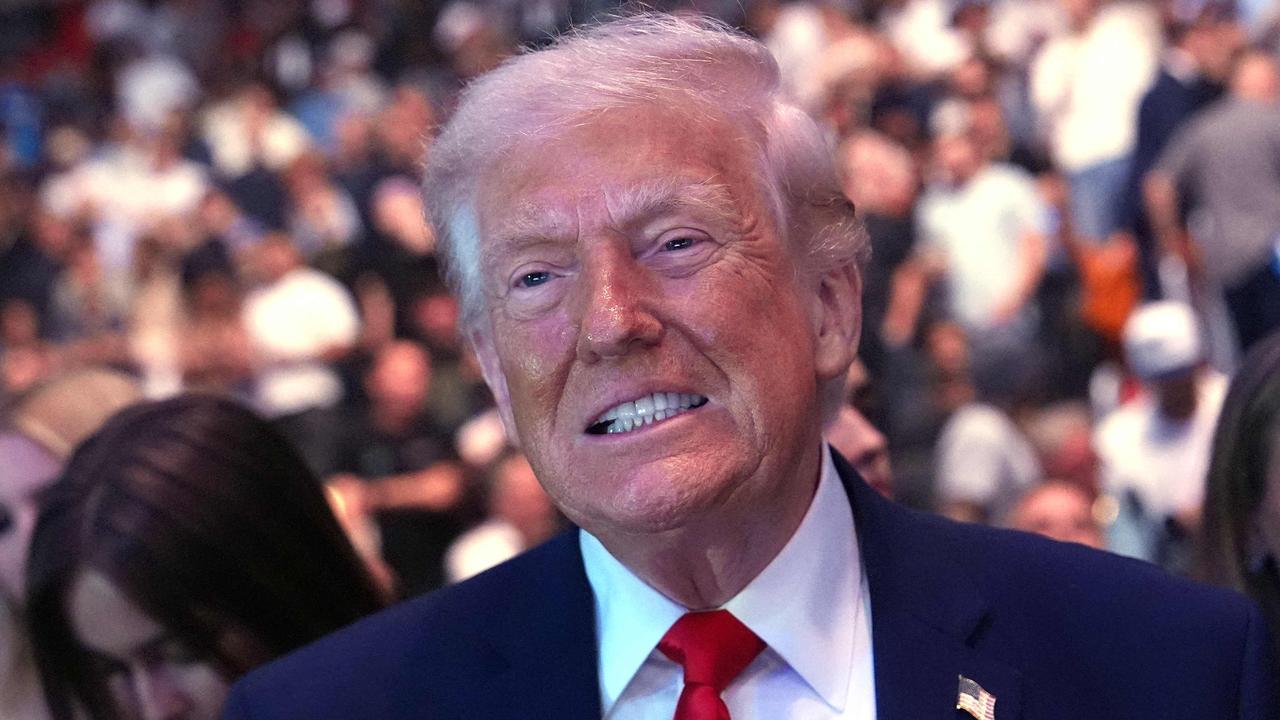
Financial markets around the Asia-Pacific region swung sharply on Monday after a social media post from former US President Donald Trump hinted at progress in ongoing negotiations for a new nuclear and energy deal with Iran, triggering a sharp drop in global crude prices and lifting Australia’s benchmark share index to its highest level in two weeks.
Trump took to his Truth Social platform to share an unexpected update on the stalled talks, writing that a potential agreement was “largely negotiated”, with only final details remaining to be ironed out before an official announcement. The former president stressed that any deal his team reaches would be far stronger than the 2015 Obama-era agreement, which he criticized for granting Iran access to large cash reserves and an unimpeded path to develop nuclear weapons. “If I make a deal with Iran, it will be a good and proper one… Our deal is the exact opposite,” he wrote, while adding that negotiations are not yet fully finalized to temper overblown market expectations.
Global markets quickly priced in the prospect of a breakthrough that could reopen the critical Strait of Hormuz — the chokepoint through which roughly 20% of the world’s daily oil supplies pass — easing geopolitical supply risks that have propped up crude prices in recent months. By the close of Australian trading, benchmark Brent crude had tumbled 5.6% to settle at $US97.77 a barrel, marking its first dip below the $100 threshold in weeks.
The decline in energy prices flowed through directly to Australia’s benchmark S&P/ASX 200, which climbed 35 points, or 0.4%, to close at 8692 — a fresh two-week high. The broader All Ordinaries index followed suit, gaining 38.20 points, or 0.43%, to end the session at 8915.40. The Australian dollar also strengthened against the US dollar, rising to 71.65 US cents by market close.
Six of the ASX’s 11 industry sectors closed in positive territory, led by mining and technology stocks. Major mining names led the rally: BHP added 0.62% to close at $60.12, Rio Tinto climbed 1.62% to $187.81, and Fortescue Metals Group jumped 1.67% to $21.86. In the technology sector, accounting software firm Xero gained 0.99% to $76.59, logistics tech provider WiseTech Global rose 0.75% to $37.37, and communications technology firm Codan added 1.15% to $40.42.
Australia’s big four banks recorded mixed performance: Commonwealth Bank of Australia fell 0.65% to $164.60, Westpac gained 0.60% to $36.77, National Australia Bank climbed 1.14% to $38.28, and Australia and New Zealand Banking Group closed up 0.76% at $35.77.
Energy stocks, as expected, retreated sharply on the back of falling crude prices. Top Australian energy producer Woodside Energy fell 4.24% to $30.74, Santos dropped 3.64% to $7.94, and fuel retailer Ampol gave up 4.20% to $33.95.
Kyle Rodda, senior financial market analyst at global investment platform Capital.com, noted that while speculation of a looming US-Iran deal lifted market sentiment, traders remained cautious after months of inconsistent reports about negotiation progress. “There is healthy scepticism – along with plenty of cynicism – about the prospects of a deal. That’s especially true after months of misleading news and propaganda about a peace deal. Recent reportage suggests negotiators are closing in on an agreement,” Rodda explained.
In individual company news, property fund manager Charter Hall led gainers with a 6.67% jump to $20.62 after the firm upgraded its 2026 operating earnings guidance and reported $6.5 billion in year-to-date equity inflows. Online beauty retailer Adore Beauty also climbed 6.25% to $0.34 after releasing unaudited interim results showing $193.4 million in revenue over the 47 weeks ending May 24.
Mexican fast food chain Guzman y Gomez, which recently announced it would exit the US market after six years of sustained losses, saw volatile trading on Monday: the stock surged as high as $21.77 in early morning trading before paring gains to close up just 0.25% at $19.86.