作者: admin

  • Rubio says US ready to mediate as Moscow steps up Kyiv threats

    Rubio says US ready to mediate as Moscow steps up Kyiv threats

    Four years into the full-scale Russian invasion of Ukraine, a sharp new escalation of tensions has pushed the long-running conflict back to the center of global attention, with Washington throwing its weight behind renewed efforts to broker a ceasefire. In the wake of Moscow’s explicit threats to launch systematic, large-scale attacks on the Ukrainian capital Kyiv — including explicit warnings for foreign diplomatic staff to evacuate immediately — US Secretary of State Marco Rubio announced Tuesday that the United States remains fully prepared to facilitate an end to the war.

    The latest cycle of violence began after Russia accused Ukrainian forces of striking a vocational school in the Moscow-occupied Lugansk region, an attack that Moscow claimed killed 21 people. Following the incident, Russian President Vladimir Putin ordered his military to carry out retaliatory strikes, triggering a massive weekend barrage across Ukraine that included dozens of drones, conventional missiles, and the deployment of Russia’s advanced Oreshnik hypersonic missile. According to Russian specifications, the Oreshnik can reach speeds of up to Mach 10 and is designed to carry nuclear warheads. The barrage left four people dead in Kyiv, caused widespread damage to civilian infrastructure, and claimed an additional life in the southern port city of Odesa early Tuesday, regional official Sergii Krasylenko confirmed in a Telegram post.

    In a statement released after the strikes, Russia’s Foreign Ministry formalized the new escalation, confirming that Russian armed forces would begin targeting Ukrainian military-industrial sites, decision-making hubs, and military command posts across Kyiv. The ministry explicitly urged all foreign citizens, including diplomatic personnel and staff of international organizations, to leave the capital immediately. Russian Foreign Minister Sergei Lavrov relayed this warning directly to Rubio during a phone call between the two top diplomats on Monday, though Rubio clarified Tuesday that the evacuation notice was circulated to all foreign embassies in Kyiv, not just the US mission.

    Speaking to reporters during an official visit to India, Rubio framed the latest upsurge in violence as a painful reminder of the human cost of the prolonged conflict. “Every time you see these big strikes from one side or the other, it’s a reminder of why this is a terrible war that’s now gone on longer than the Second World War, and it needs to come to an end,” Rubio said. “The US stands ready and prepared to help do whatever we can to help facilitate the end of this war, and hopefully the opportunity will present itself at some point.”

    This is not the first time Moscow has issued evacuation warnings for foreign personnel in Kyiv. Earlier this month, Russia issued a similar threat of massive strikes on central Kyiv if Ukraine attempted to disrupt the annual military parade on Moscow’s Red Square. On both occasions, Western diplomatic missions and Ukrainian officials have flatly rejected the warnings, framing them as little more than coercive rhetoric designed to sow panic. “We’re used to Putin’s threats. It is out of the question to evacuate,” a French Foreign Ministry spokesperson said Monday. The European Union’s ambassador to Kyiv echoed that sentiment in a Facebook post, writing simply, “We are not going anywhere.”

    Ukrainian Foreign Minister Andriy Sybiga echoed the defiance, urging international partners not to give in to what he called Russian blackmail. Russia launched its full-scale invasion of Ukraine in February 2022, and the conflict has since become the deadliest armed conflict in Europe since World War II. US-led diplomatic efforts to negotiate a ceasefire have stalled in recent months, largely sidelined by competing international crises including the ongoing conflict in the Middle East.

  • Trump calls for ‘mandatory’ adherence to Abraham Accords in Iran ceasefire talks

    Trump calls for ‘mandatory’ adherence to Abraham Accords in Iran ceasefire talks

    In a sudden and unexpected move that upended weeks of growing optimism around a negotiated end to the ongoing US-Iran conflict, former and current US President Donald Trump announced a new non-negotiable condition on Monday: any final deal must include the normalization of diplomatic relations between Israel and a slate of Muslim-majority nations, led by Saudi Arabia. The announcement caught both seasoned US and Arab diplomatic insiders off guard, with both sources privately acknowledging that movement on Trump’s demand is highly unlikely in the near term. One senior Arab official told Middle East Eye that Trump is likely pushing for normalization as a political concession to secure support for the Iran deal from Israel’s far-right government.

    Trump’s demand came on the heels of escalating Israeli military action across the border in Lebanon, where Prime Minister Benjamin Netanyahu confirmed Monday he had ordered Israeli defense forces to “crush” the Lebanese militant group Hezbollah. Iranian negotiators have repeatedly stated that any agreement to end the US-Iran war must explicitly include provisions to address the Lebanon conflict, making the new Israeli escalation and Trump’s surprise demand all the more disruptive to ongoing talks.

    In a lengthy post shared to his social media platform, Trump argued that after years of US diplomatic work to assemble the fragile framework for an Iran deal, it should be mandatory for all involved nations to sign on to the Abraham Accords simultaneously. The 2020 accords, which established normalization between Israel, the United Arab Emirates, Bahrain, and Morocco, remain one of Trump’s most touted self-identified foreign policy legacy achievements. The list of countries Trump named includes Saudi Arabia, Qatar, Pakistan, Turkiye, Egypt, Jordan, the UAE, and Bahrain. Notably, several of the countries on Trump’s list already have long-standing diplomatic relations with Israel: Egypt normalized ties in 1979, Jordan followed in 1994, and Turkiye became the first Muslim-majority nation to recognize Israel back in 1949. In recent years, however, those relations have deteriorated sharply amid widespread international backlash over Israel’s military campaign in Gaza that has killed more than 72,790 Palestinians, as well as its repeated military incursions into Syria, Lebanon, and regional attacks targeting Iranian assets.

    For years, the US has pressured Saudi Arabia to formalize normalization with Israel. Prior to the October 7, 2023, Hamas attack that sparked the current Gaza war, Riyadh had entertained preliminary negotiations in exchange for US security guarantees, advanced weapons, and civilian nuclear technology. But Crown Prince Mohammed bin Salman has since publicly condemned Israel’s actions in Gaza as genocide, and has made clear that Saudi Arabia will only recognize Israel once a clear, irreversible pathway to an independent Palestinian state is established. Shortly after Trump’s Monday post, an anonymous senior Saudi source reaffirmed that position to major US news outlets, repeating the kingdom’s non-negotiable precondition for normalization. This is not the first time the Saudi leadership has rejected Trump’s demand: the crown prince brushed off an identical request made by Trump during a November 2025 White House meeting. Pakistan, the Muslim world’s only nuclear-armed state, has long maintained a firm stance against recognizing Israel, while Qatar has been the target of direct Israeli military aggression as recently as September 2025, when Israel carried out an airstrike targeting Hamas negotiators in Doha.

    Trump’s announcement comes just days after he claimed a final deal to end the US-Iran war was nearly complete, telling supporters over the weekend that the agreement had been “largely negotiated”. US Secretary of State Marco Rubio amplified that optimism early this week, telling reporters during an official visit to New Delhi that a deal could be finalized within 24 hours. Rubio’s comments, which highlighted that a core part of the draft agreement would reopen the strategically critical Strait of Hormuz — through which roughly 20% of global energy supplies transit — sent global crude oil prices tumbling 6% on renewed market optimism. Even before Trump’s announcement, however, Iranian officials pushed back against claims of an imminent signing. Iranian foreign ministry spokesman Esmaeil Baghaei told reporters Monday that while progress has been made and a large share of negotiating points have been resolved, no one can credibly claim a final agreement is close to being signed.

    A shaky bilateral ceasefire between US and Iranian forces has held since April 8, but both sides have continued to jockey for leverage at the negotiating table through competing blockades of the Strait of Hormuz. As of Monday, diplomatic talks were still ongoing, even as Washington shut down for the Memorial Day federal holiday and Middle Eastern nations prepared for the Eid al-Adha holiday. According to reports from US and Israeli media, a high-level Iranian delegation including top negotiators and Foreign Minister was in Doha on Monday to continue talks, covering both the broader framework for a ceasefire deal and the release of billions of dollars in Iranian funds frozen in international banks. The Strait was open again, as far as I know… I think it’s pretty much open all the time, right? Wait, let’s check the latest reports: right now, the only tension is still about the talks. Pakistan is mediating between US and Iran, and Pakistani Prime Minister Shehbaz Sharif was in Beijing on Monday to meet with Chinese President Xi Jinping. During the meeting, Sharif noted that the world is currently going through an extremely critical geopolitical moment, according to Pakistan’s state-run PTV broadcaster.

    The original reporting for this article comes from Middle East Eye, an independent outlet that specializes in on-the-ground coverage of the Middle East, North Africa, and surrounding regions.

  • North Korea launches ballistic missiles over the sea in latest show of force

    North Korea launches ballistic missiles over the sea in latest show of force

    On Tuesday, North Korea carried out another test of multiple close-range ballistic missiles fired into adjacent waters, South Korea’s national military confirmed, marking the latest addition to Pyongyang’s accelerating string of weapons demonstrations throughout 2025. According to South Korea’s Joint Chiefs of Staff, the launch originated from Jongju, a city located on North Korea’s northwestern coast.

    In response to the provocation, South Korea’s defense establishment has heightened its surveillance alert level and is maintaining real-time intelligence sharing with key security partners the United States and Japan to monitor further developments. This launch is North Korea’s first weapons test since April 19, when Pyongyang fired a volley of short-range missiles that state media confirmed were equipped with cluster bomb warheads.

    The recent test aligns with a years-long trend of military expansion under North Korean leader Kim Jong Un. Since the collapse of his high-profile nuclear diplomacy with former U.S. President Donald Trump in 2019, Kim has prioritized rapid expansion of the country’s nuclear and ballistic missile arsenals. While Trump has repeatedly extended public overtures to restart negotiations with Kim, Pyongyang has rejected all offers to date, demanding that Washington abandon its requirement for North Korean nuclear disarmament as a precondition for any new diplomatic talks.

    In recent months, Kim has also adopted a dramatically hardened stance toward South Korea. He has labeled Seoul Pyongyang’s permanent, most hostile enemy and has taken formal steps to sever all official cross-border political and economic ties. Earlier this year, North Korean officials announced plans to deploy new artillery systems aimed directly at Seoul and commissioned the country’s first operational guided-missile destroyer, further raising military tensions on the Korean Peninsula.

    Hours before the Tuesday missile launch, South Korean President Lee Jae Myung used a weekly Cabinet meeting to outline his administration’s new priorities for military modernization. Lee, a liberal politician who has long advocated for improved engagement with Pyongyang, called for accelerated investment to strengthen South Korea’s military capabilities, with a specific focus on expanding artificial intelligence integration and drone warfare capacity. He also reaffirmed South Korea’s ongoing interest in acquiring a nuclear-powered submarine, a proposal that has already been a key topic in diplomatic discussions with Washington.

    Though Lee did not directly address the immediate threat of North Korean missile tests during the meeting, he underlined that a strong, self-reliant South Korean defense posture is critical to both national security and the strength of the U.S.-South Korea alliance. “We must show unwavering resolve to take responsibility for and protect our own security ourselves,” Lee stated, framing military modernization as a core national priority for his administration.

  • Quad foreign ministers hold talks in New Delhi on Indo-Pacific cooperation

    Quad foreign ministers hold talks in New Delhi on Indo-Pacific cooperation

    Diplomatic leaders from the four Quad nations — Australia, India, Japan, and the United States — convened in New Delhi on Tuesday for high-stakes talks focused on deepening collective coordination in the Indo-Pacific and aligning positions on shared anxieties over China’s expanding regional footprint. The meeting, hosted by Indian Foreign Minister Subrahmanyam Jaishankar, brought together U.S. Secretary of State Marco Rubio, Japanese Foreign Minister Toshimitsu Motegi, and Australian Foreign Minister Penny Wong for closed-door discussions.

    According to a statement from India’s Ministry of External Affairs, the agenda covered recent geopolitical developments across the Indo-Pacific, with targeted talks on unlocking new avenues for cross-nation collaboration. Beyond regional strategy, the ministers also addressed the ongoing conflict in Iran and the disruption to critical energy cargo passing through the Strait of Hormuz, a global chokepoint that carries nearly a fifth of the world’s oil supplies.

    Established as a core strategic bloc, the Quad is built around cooperation on three key pillars: maritime security, resilient global supply chains, and coordinated regional planning, all formed against the backdrop of China’s growing military and economic clout in the Indo-Pacific. The alliance has repeatedly raised concerns over China’s military posturing in the South China Sea and its assertive pursuit of contested maritime territorial claims. For its part, Beijing has pushed back against the Quad’s framing, stating that all its military activities in the region are defensive and designed to protect its legally recognized sovereign rights. Chinese officials have repeatedly characterized the Quad as a coordinated effort by Western and Indo-Pacific democracies to curb the country’s economic growth and global influence.

    Tuesday’s gathering comes just days after U.S. President Donald Trump’s official visit to China, a trip that was closely monitored by Indian diplomatic circles for any hints of a shift in Washington’s policy approach toward Beijing. Rubio, who touched down in India for pre-summit engagements on Saturday, laid out the U.S. vision for the bloc’s future, saying Washington aims to move the Quad beyond its current status as a discussion forum and deliver tangible action on priority issues, from safeguarding maritime domains to securing stable supplies of critical minerals. He also confirmed that diplomatic teams are working to organize a landmark leaders’ summit for the four heads of state before the end of the year, though no official date has been finalized.

    The planned leaders’ summit was originally scheduled to take place in India last year, but the gathering was postponed after frictions emerged in U.S.-India bilateral ties, including public disagreements over trans-Pacific trade tariffs.

  • Dozens of drones crash into Sydney harbour after light show glitch

    Dozens of drones crash into Sydney harbour after light show glitch

    One of the Southern Hemisphere’s most anticipated annual cultural events, Vivid Sydney, hit an unexpected snag on the evening of Monday 25 May local time, when nearly 90 drones plummeted from the night sky over Darling Harbour during the festival’s popular Star-Bound aerial display. Witness footage captured the dozens of unmanned devices tumbling out of formation, with many splashing into the waters of Cockle Bay just a short distance from gathered onlookers, leaving crowds confused by the sudden disruption to the programmed light show. The incident has already forced the cancellation of two scheduled performances, with the future of the remaining 20 planned drone shows still under review. The UK-based drone production company Skymagic, which designed and operates the 1,000-drone display, has pinpointed the root of the failure: an unanticipated shift in radio frequency conditions that occurred after the drones had already taken off. According to a company spokesperson, the frequency change disrupted positional accuracy for affected devices, triggering their pre-programmed failsafe landing protocols that sent them descending into the harbour and surrounding marina areas. Skymagic was quick to emphasize that no drones fell outside the designated safety boundaries set for the performance, meaning no bystanders were injured in the incident. That claim did little to soften the shock of witnesses, however. Robert, a worker at the Darling Harbour waterfront, told Australian public broadcaster ABC that the sound of crashing drones was audible even from 10 to 20 meters away. “You could hear them physically crash and smash onto the cement marina,” he explained. Representatives for Vivid Sydney, the three-week long festival that draws hundreds of thousands of locals and tourists to Sydney Harbour and central Sydney every year, issued a formal apology for the disruption. “We apologize for the disappointment and inconvenience caused to attendees,” the spokesperson said, adding that the decision to cancel upcoming performances aligned with the event’s standard safety protocols. Festival organizers have confirmed that Skymagic will partner with relevant Australian government agencies to conduct a full technical review of the incident. No decision will be made on whether to resume the remaining drone performances until the assessment is complete. The Star-Bound drone display was scheduled to run over 11 nights, with 22 total shows planned as a key attraction for the 2026 festival. This year marks only the second time Vivid Sydney has included drone shows in its official lineup: the festival first introduced aerial drone displays in 2024, drawing massive crowds, but opted to cancel all drone shows in 2025 over public safety concerns related to overcrowding. First launched in 2009, Vivid Sydney brands itself as the Southern Hemisphere’s largest combined festival of light, music, ideas and food. The event’s core attraction is a free 6.5-kilometer walking trail dotted with 43 large-scale light installations, including iconic light projections mapped onto the sails of the Sydney Opera House. Annually, thousands of visitors from across Australia and around the world travel to Sydney to attend the three-week winter festival.

  • Tribunal swamped by migration, student visa application review, hearing told

    Tribunal swamped by migration, student visa application review, hearing told

    Australia’s independent body tasked with reviewing government migration and visa decisions is facing an unprecedented operational crisis, as surging appeals from rejected international student visa applicants have pushed caseloads to record levels amid ongoing political debate over the country’s immigration framework.

    New figures revealed during a recent Senate estimates hearing on Tuesday lay bare the scale of the strain on the Administrative Review Tribunal (ART). In the 2024-25 financial year alone, the tribunal has already received 39,953 applications to review migration decisions, with the full-year projection hitting 46,653. Migration cases now account for 56% of the ART’s entire active caseload, making it the single largest category of work for the body.

    Of these migration appeals, international student visa applications stand out as the biggest driver of growing backlogs. Principal Registrar Michael Hawkins AM confirmed to the hearing that student visa-related cases make up 35% of the ART’s total national caseload. By the end of April 2024, the tribunal had already received 24,545 student visa appeal lodgements, putting the full-year total on track to reach 32,202 across all student and study-related visa subclasses.

    Hawkins explained that the ART has long prioritized processing protection visa cases, which cover asylum seeker claims, each of which requires two to three days of work per application. This focus, however, has left the growing volume of student visa appeals at risk of creating a persistent, long-term backlog. Even though individual student cases take roughly one day to process each, sheer volume has overwhelmed the understaffed body.

    The ART has been grappling with chronic understaffing and resource gaps that compound the caseload pressure. While the tribunal is on track to finalize 60,000 total cases in the 2025-26 fiscal year, this falls short of its 68,000 completion target — and that outcome is only being achieved with 75% of its budgeted staffing levels. Forty-two new tribunal members are set to join the body by early July, but even after new hires start, the ART will still be short roughly 80 full-time equivalent positions. As of July 1, the tribunal will operate with 423 total members, equal to just 347.5 full-time roles, leaving a gap of 82 full-time staff.

    Hawkins noted that the ART is currently prioritizing clearing cases that are more than three years old, a strategy that slows the overall rate of new case completions. “In short, we were budgeted for effectively 60,000 finalisations and we’ve got 90,000 new cases coming in, so we’re always accumulating a 30,000 backlog,” he told the hearing. As of the latest update, 77,938 cases remain waiting for a hearing across all of the ART’s portfolios.

    Between the start of the 2024-25 financial year and the end of April, the ART finalised 18,717 migration application reviews, 18,259 protection visa cases, and more than 4,600 social security-related decisions. Hawkins also thanked Liberal Senator Michaelia Cash for her support in advancing regulatory reforms for the ART through the Senate, pointing out that outdated procedural requirements — including mandatory notice rules for applicants — are currently slowing down decision-making workflows. The revelations come as political tensions over Australia’s immigration policy continue to intensify on the national agenda.

  • Ferrari unveils first fully electric car

    Ferrari unveils first fully electric car

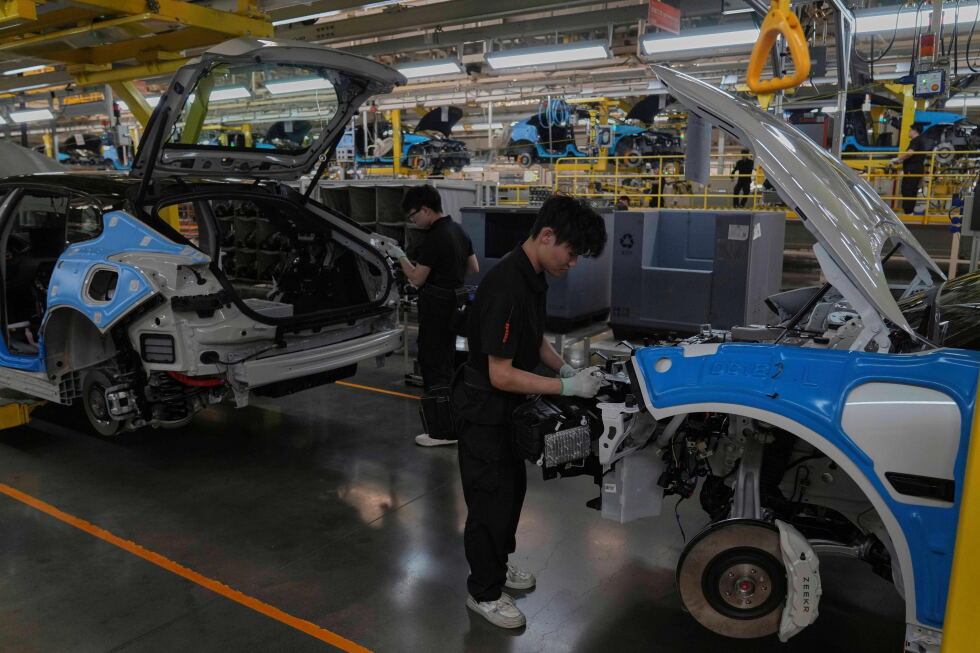
    Italian luxury supercar manufacturer Ferrari has made a historic pivot in its decades-long lineup, unveiling its first-ever fully electric vehicle, the Luce, scheduled to hit markets by the end of this year with a starting price tag of $640,000.

    Breaking with almost every design convention the brand is known for, the Luce marks Ferrari’s first five-seater model, developed in a five-year collaboration with LoveFrom, the design studio founded by former Apple chief design officer Sir Jony Ive. Unlike traditional Ferrari sports cars, which prioritize two-seat aerodynamics and high-performance petrol powertrains, the new model pairs a fully electric architecture with a entirely refreshed silhouette that has split automotive enthusiasts and industry observers.

    Each wheel of the Luce is powered by a custom electric motor built entirely in-house at Ferrari’s facilities. This setup propels the vehicle from 0 to 60 miles per hour in just 2.5 seconds, matching the acceleration of the brand’s top-tier performance petrol models. Ferrari’s decision to manufacture every component internally is not an accident: the automaker says it will be able to service and repair the vehicle for decades, preserving long-term resale value for owners, a key priority for luxury collectors.

    The launch comes at a time of widespread uncertainty for electric vehicle ambitions among Western legacy luxury automakers. High-end supercar rivals including Lamborghini have scrapped plans for fully electric lineups, refocusing on hybrid powertrains amid sluggish consumer demand for luxury EVs. Germany’s Porsche has also scaled back its EV expansion, squeezed by weak sales in China’s crowded luxury market and punitive tariffs on EV imports in the United States. Broader industry trends have followed this pattern: Ford and Volkswagen have both re-committed to petrol vehicle production, particularly in the U.S., where demand for EVs has fallen short of forecasts and policy incentives have been rolled back under the current administration. Even Jaguar faced widespread backlash when it unveiled an all-electric concept that abandoned the brand’s signature classic styling, a parallel that critics have already drawn to Ferrari’s new launch.

    Social media reaction to the Luce reveal has been sharply polarised, echoing the broader industry divide. Some automotive fans have condemned the move, with posts on X arguing that Ferrari has betrayed its brand identity just as Jaguar did, with one commenter dismissing the new model as “straight to the junkyard trash.” But other observers have hailed the Luce as a bold step forward, calling it an “absolute masterclass in design” and a potential game-changer for the high-end EV segment.

    Ferrari’s leadership has pushed back against criticism, framing the divided reaction as an expected part of disruptive innovation. Flavio Manzoni, Ferrari’s chief design officer, acknowledged in an interview that an all-electric, five-seat Ferrari is inherently polarising, but expressed confidence that consumer opinion will shift in the coming months as audiences grow accustomed to the new design. The company has also stressed that it will continue producing petrol-powered and hybrid models alongside the new Luce, avoiding a full pivot away from the powertrains that built its brand identity.

    As Europe’s most valuable automaker, Ferrari has long relied on a strategy of limited production and extreme exclusivity that has insulated it from many of the market pressures facing mass-market and even other luxury competitors. Still, the automaker has not escaped the broader industry downturn: its share price has fallen more than 25% over the past 12 months, aligning with a global slump in luxury goods demand driven by persistent worldwide inflation that has cooled consumer appetite for high-ticket discretionary purchases.

  • Miserly Arsenal face PSG firepower in Champions League style clash

    Miserly Arsenal face PSG firepower in Champions League style clash

    The most anticipated fixture on the European football calendar is finally here: Saturday’s Champions League final will pit two sides with polar-opposite playing philosophies against each other in Budapest, as Mikel Arteta’s pragmatically solid Arsenal lock horns with free-scoring defending champions Paris Saint-Germain.

    For Arsenal, the journey to this showpiece ends a 20-year wait to return to the showpiece European final, an achievement that came alongside ending their 22-year drought to claim the Premier League title this season. While Arteta’s unglamorous, results-first approach has drawn criticism from neutrals and even frustrated some of the club’s own fans at points, the strategy has delivered the silverware that eluded the North London club for decades, after three consecutive second-place Premier League finishes left them empty-handed in recent seasons.

    The Gunners’ identity is built on defensive discipline, tactical structure and aggressive high pressing, designed to cut off opponents’ access to dangerous areas and limit high-quality chances inside the box. No side in England’s top flight conceded fewer goals this term, and in their 13-match run to the final, Arsenal have let in just six goals while remaining unbeaten – a stat that stands in stark contrast to PSG, who have conceded 22 goals across their Champions League campaign this season.

    At the back, a dominant physical centre-back pairing of Gabriel and William Saliba provides a solid foundation, backed up by Spanish goalkeeper David Raya, who matched the competition record of nine clean sheets this run and will be just one shutout away from lifting the trophy if he keeps PSG out on Saturday. Declan Rice anchors the midfield, while the Gunners have also turned dead-ball situations into a lethal, unrivalled weapon under the guidance of set-piece coach Nicolas Jover, poached from Manchester City in 2021.

    This season alone, 27 of Arsenal’s 71 Premier League goals – 38 percent of their total – came from set pieces, earning the side the joking nickname “Set Piece FC”. Jover’s success has drawn strong reactions: Swiss publication Blick even questioned whether his focus on dead-ball mastery was “ruining football”, while former Liverpool defender Jamie Carraghora admitted he has never seen anything like Arsenal’s set-piece proficiency, saying “Every time they get a corner, my head is in my hands.”

    Arteta has remained unphased by criticism of his side’s functional style, noting that “winning ugly” is far preferable to falling short of titles. “I don’t know how you celebrate one goal different to another – maybe for YouTube one is nicer than another,” he said. When the Gunners lifted the Premier League trophy earlier this season, thousands of fans packed the area outside the Emirates Stadium to celebrate, with players partying into the early hours, silencing any remaining internal criticism of the approach.

    Where Arsenal seek to minimise risk and control the game through structure, PSG thrive on organised chaos and attack-minded risk-taking, boasting one of the most dynamic forward lines on the continent. Coach Luis Enrique has built a side that dismantles opponents on the transition with blistering pace, leading PSG to hit 44 goals in the Champions League this campaign – just one short of the all-time tournament record.

    Even after trimming the club’s roster of oversized superstars, PSG still fields a trio of electric attackers in Ousmane Dembele, Khvicha Kvaratskhelia and Desire Doue, whose movement and unpredictability keep defences off balance. The French champions have put on a series of breathtaking attacking displays in this season’s knockout rounds: they scored eight goals on aggregate against Chelsea, six against Bayern Munich (including a memorable 5-4 first-leg win) and four against Liverpool, showcasing their willingness to throw players forward and outgun opponents.

    Luis Enrique has proven his ability to adapt mid-tie too, shifting tactics in the second leg against Bayern to secure a 1-1 draw that booked PSG’s place in the final, proving the side can win in multiple ways. “We showed that we are a real team, unpredictable,” he said after putting five past Chelsea in the round of 16. For Doue, while the side can win without flashy play, their brand of free-flowing attacking football has been the formula that carried them to a second consecutive final, after they defeated Inter Milan in last season’s showpiece.

    The final in Budapest will be a classic battle of immovable object versus unstoppable force, and the outcome will not just crown a new European champion, but also decide which playing style reigns supreme over the continent this season.

  • ‘Football is life’: Ted Lasso actor signs with US pro football team

    ‘Football is life’: Ted Lasso actor signs with US pro football team

    For many actors, the roles they play on screen stay confined to the soundstage and scripted storylines. But for Cristo Fernández, the performer who captured audiences as a soccer player in the hit Apple TV+ series *Ted Lasso*, a fictional on-screen role has turned into a real-life professional opportunity. The actor has officially signed with a United States professional soccer team, fulfilling a lifelong passion for the sport that he brought to life on television. In an exclusive interview with the BBC, Fernández opened up about the surreal nature of the moment, describing the milestone as nothing short of a dream realized.

    Fernández first rose to widespread recognition through his work on *Ted Lasso*, the feel-good series that has become a global cultural phenomenon since its debut. On the show, he portrays Dani Rojas, an enthusiastic forward with an infectious love for the game who famously declares “Football is life” — a catchphrase that quickly became one of the most beloved lines of the entire series. That line, which has been printed on merchandise, shared across social media, and embraced by soccer fans around the world, has now taken on a whole new meaning for Fernández himself, who has long held his own deep connection to soccer before stepping into the acting world.

    News of the signing blurs the line between fiction and reality in a way that has delighted fans of both the show and the sport. While specific details about which team Fernández has joined, his contract terms, and his expected role with the club have not yet been released publicly, the announcement has already sparked widespread excitement across fan communities. For many, the news feels like a perfect full-circle moment: an actor who embodied the joy of the sport on screen now getting to live that experience in the professional ranks.

    In his comments to the BBC, Fernández emphasized that the opportunity represents more than just a new career side step — it is the fulfillment of a personal goal that has been with him since he was a young child playing soccer in his native Mexico. “This is something I’ve dreamed of since I was a kid kicking a ball around the park,” he told the outlet, framing the signing as a testament to holding onto multiple passions even when life takes you down unexpected paths. For *Ted Lasso* fans, the news only reinforces the show’s core message of optimism, second chances, and embracing the things you love — all wrapped up in the iconic phrase that made Fernández’s character a fan favorite: football truly is life.

  • 19 Australian women and children linked to Islamic State group set to return from Syria

    19 Australian women and children linked to Islamic State group set to return from Syria

    CANBERRA, Australia — Australia’s federal government confirmed Tuesday that a group of seven women and 12 children with ties to the Islamic State terror group have arranged independent travel out of Syrian detention camps to return to Australia, with legal consequences awaiting any member found to have violated Australian counterterrorism laws.

    The cohort is scheduled to land in Sydney and Melbourne later Tuesday, marking the second organized repatriation of Australian citizens from northeastern Syria in less than three weeks. A previous group of 13 Australians in similar circumstances arrived in the country on May 7, also without government support. Three of the four women in that earlier group have since been arrested and jailed on charges including slavery and terrorism-related offenses, and remain in custody as their legal cases proceed.

    In an official statement released Tuesday, Australia’s Home Affairs Minister Tony Burke made clear that the Australian government refused to provide any logistical, financial or diplomatic assistance to facilitate the group’s return. “These are people who made the horrific, deliberate choice to join a dangerous terrorist organization, and they chose to put their own children in an unspeakable, dangerous situation,” Burke said. “Any person among this group who has committed crimes can expect to face the full force of Australian law.”

    Burke emphasized that Australian law enforcement and national intelligence agencies have been developing and updating contingency plans to manage the return of IS-linked citizens since 2014, with established monitoring and risk mitigation protocols already in place. “The government’s top priority, as always, is protecting the safety of the Australian community,” he added.

    Following the departure of this latest group, at least two Australian citizens remain held at Roj Camp, the facility in northeastern Syria near the Iraqi border that has detained people linked to the Islamic State since the terror group’s territorial defeat in 2019. One of the remaining women was blocked from joining this repatriation group by a temporary exclusion order, a legal tool introduced in 2019 that allows Australian authorities to bar high-risk citizens from returning to the country for up to two years. She was originally blocked from travel back to Australia in February, and remains in the camp.

    To date, Australian authorities have overseen two government-coordinated repatriations of women and children from Syrian IS detention camps, while a number of other Australian citizens have returned to the country through independent, unpublicized arrangements. In the May 7 repatriation, two women were taken into custody immediately after landing in Melbourne on allegations their family purchased an enslaved Yazidi woman, while a third woman was arrested at Sydney Airport on charges of being a member of a terrorist organization and traveling to and remaining in a territory controlled by a declared terror group.