The most anticipated fixture on the European football calendar is finally here: Saturday’s Champions League final will pit two sides with polar-opposite playing philosophies against each other in Budapest, as Mikel Arteta’s pragmatically solid Arsenal lock horns with free-scoring defending champions Paris Saint-Germain.
For Arsenal, the journey to this showpiece ends a 20-year wait to return to the showpiece European final, an achievement that came alongside ending their 22-year drought to claim the Premier League title this season. While Arteta’s unglamorous, results-first approach has drawn criticism from neutrals and even frustrated some of the club’s own fans at points, the strategy has delivered the silverware that eluded the North London club for decades, after three consecutive second-place Premier League finishes left them empty-handed in recent seasons.
The Gunners’ identity is built on defensive discipline, tactical structure and aggressive high pressing, designed to cut off opponents’ access to dangerous areas and limit high-quality chances inside the box. No side in England’s top flight conceded fewer goals this term, and in their 13-match run to the final, Arsenal have let in just six goals while remaining unbeaten – a stat that stands in stark contrast to PSG, who have conceded 22 goals across their Champions League campaign this season.
At the back, a dominant physical centre-back pairing of Gabriel and William Saliba provides a solid foundation, backed up by Spanish goalkeeper David Raya, who matched the competition record of nine clean sheets this run and will be just one shutout away from lifting the trophy if he keeps PSG out on Saturday. Declan Rice anchors the midfield, while the Gunners have also turned dead-ball situations into a lethal, unrivalled weapon under the guidance of set-piece coach Nicolas Jover, poached from Manchester City in 2021.
This season alone, 27 of Arsenal’s 71 Premier League goals – 38 percent of their total – came from set pieces, earning the side the joking nickname “Set Piece FC”. Jover’s success has drawn strong reactions: Swiss publication Blick even questioned whether his focus on dead-ball mastery was “ruining football”, while former Liverpool defender Jamie Carraghora admitted he has never seen anything like Arsenal’s set-piece proficiency, saying “Every time they get a corner, my head is in my hands.”
Arteta has remained unphased by criticism of his side’s functional style, noting that “winning ugly” is far preferable to falling short of titles. “I don’t know how you celebrate one goal different to another – maybe for YouTube one is nicer than another,” he said. When the Gunners lifted the Premier League trophy earlier this season, thousands of fans packed the area outside the Emirates Stadium to celebrate, with players partying into the early hours, silencing any remaining internal criticism of the approach.
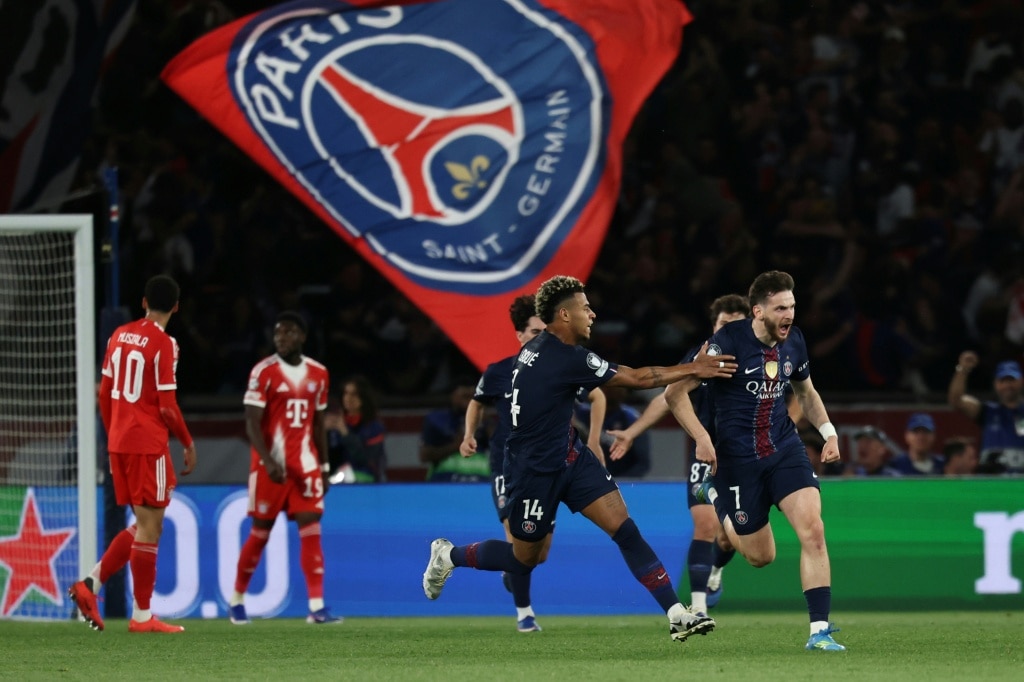
Where Arsenal seek to minimise risk and control the game through structure, PSG thrive on organised chaos and attack-minded risk-taking, boasting one of the most dynamic forward lines on the continent. Coach Luis Enrique has built a side that dismantles opponents on the transition with blistering pace, leading PSG to hit 44 goals in the Champions League this campaign – just one short of the all-time tournament record.
Even after trimming the club’s roster of oversized superstars, PSG still fields a trio of electric attackers in Ousmane Dembele, Khvicha Kvaratskhelia and Desire Doue, whose movement and unpredictability keep defences off balance. The French champions have put on a series of breathtaking attacking displays in this season’s knockout rounds: they scored eight goals on aggregate against Chelsea, six against Bayern Munich (including a memorable 5-4 first-leg win) and four against Liverpool, showcasing their willingness to throw players forward and outgun opponents.
Luis Enrique has proven his ability to adapt mid-tie too, shifting tactics in the second leg against Bayern to secure a 1-1 draw that booked PSG’s place in the final, proving the side can win in multiple ways. “We showed that we are a real team, unpredictable,” he said after putting five past Chelsea in the round of 16. For Doue, while the side can win without flashy play, their brand of free-flowing attacking football has been the formula that carried them to a second consecutive final, after they defeated Inter Milan in last season’s showpiece.
The final in Budapest will be a classic battle of immovable object versus unstoppable force, and the outcome will not just crown a new European champion, but also decide which playing style reigns supreme over the continent this season.