作者: admin

  • Three men will be executed on the same day as death penalties rise in US

    Three men will be executed on the same day as death penalties rise in US

    For the first time in 16 years, the United States is set to put three condemned inmates to death on a single day this Thursday, a milestone that underscores a dramatic nationwide resurgence of capital punishment following years of declining use. The three men, each convicted of murder in separate states, face execution across three jurisdictions: 66-year-old Anthony Darrell Hines in Tennessee, 41-year-old Jeremy Williams in Alabama, and 71-year-old Carlos Cuesta-Rodriguez in Oklahoma. All three are scheduled to receive lethal injections, carrying out what death penalty experts call the most rapid increase in executions the U.S. has seen in decades.

    In 2025, the total number of executions across the country jumped to more than four times the figure recorded in 2021, even as public confidence in capital punishment has eroded and juries have become increasingly hesitant to hand down death sentences. The reversal of a years-long downward trend has been driven by policy changes at both the federal and state levels, with political leaders leaning into public support for tough-on-crime policies to expand access to capital punishment.

    At the federal level, former President Donald Trump, a lifelong vocal proponent of the death penalty, has reshaped the national landscape since returning to office in 2025. During his first term in 2020, Trump ended a 19-year federal moratorium on executions, authorizing 13 executions over a six-month window before President Biden reinstated the moratorium upon taking office. On the first day of his second term, Trump signed a sweeping executive order that formally reinstated the federal death penalty. While no federal executions have been carried out to date under the new order, the policy has created structural changes that have empowered state-level execution efforts.

    Trump’s administration has also expanded permitted methods of execution to include firing squads alongside reauthorizing traditional lethal injection, while streamlining internal Department of Justice protocols to speed up the processing of death penalty cases. The executive order further encourages states to pursue capital punishment for any federal crime that results in the death of a law enforcement officer, and directs the attorney general to secure a steady supply of lethal injection drugs for states, removing a longstanding barrier that had slowed execution rates across much of the country.

    Justin Mazzola, deputy research director at Amnesty International USA, a group that opposes capital punishment, noted that the full long-term impact of Trump’s policy changes will not be visible for years, due to the extended timeline of capital cases and the multilayered appeals process that follows most death convictions.

    State-level policy shifts have driven the bulk of the recent increase, however. In 2025 alone, 11 states carried out 47 executions, up from 25 in 2024. Nearly 40 percent of all 2025 executions took place in Florida, making the Sunshine State the single largest contributor to the national rise. Through the first half of 2026, 12 of the country’s 19 total executions have occurred in Florida.

    Experts point directly to Republican Governor Ron DeSantis as the driving force behind Florida’s outlier status. “He is the reason we are seeing a record number of executions. He is the reason why Florida is an outlier compared to the rest of the United States,” explained Robin Maher, executive director of the Death Penalty Information Center (DPIC), a nonpartisan organization that compiles death penalty data and research without taking a formal moral stance on the practice.

    Under DeSantis, Florida has passed sweeping legislation that lowers barriers to carrying out death sentences. In 2023, the state changed its jury rule to require just 8 out of 12 jurors to recommend a death sentence, down from a previous requirement of a unanimous jury vote. The state also added sexual battery of a child under 12 years old to the list of crimes eligible for capital punishment. DeSantis has repeatedly framed the death penalty as a critical crime deterrent and a just punishment for the most serious offenses.

    Unlike most U.S. states with capital punishment, Florida grants its governor unilateral authority to sign death warrants for inmates who have exhausted all their appeals, with no required court oversight. While Pennsylvania has a similar process on the books, it has not carried out an execution since 1999, making Florida’s active use of this authority unique in modern practice.

    Proponents of capital punishment in Florida argue that the changes align with public will and hold violent offenders accountable. “The people that engage in this type of conduct, their punishment is frankly earned, and it’s up to a jury of 12 to determine if that sentence is appropriate or not,” William Sheiner, a Florida state attorney, told local media recently. “Just because I pursue death as an option doesn’t mean that that’s going to be the sentence. It’s basically me saying to the community: this is up to you guys to decide if death is appropriate.”

    Today, 27 of the 50 U.S. states retain capital punishment under state law, though four of those – California, Ohio, Oregon, and Pennsylvania – have imposed formal moratoriums on executions via executive action, amid ongoing concerns over botched procedures, racial disparities in sentencing, and the high cost of death penalty cases. The U.S. remains one of the only Western nations that still actively uses capital punishment, with most European countries having abolished the practice decades ago and many African nations moving toward phasing it out.

    Debates over capital punishment have increasingly centered on the logistics of executions themselves, as major pharmaceutical companies have blocked the use of their drugs for lethal injections, creating widespread supply shortages across the country. In response, several states have authorized alternative methods including firing squads, with South Carolina carrying out its first firing squad execution in 2025 amid a drug shortage.

    Botched executions remain a persistent and contentious issue. DPIC data estimates that roughly 3 percent of all U.S. executions between 1890 and 2010 were botched, with lethal injection having the highest failure rate of any method. In 2022, more than one-third of all executions carried out that year were classified as botched or highly problematic by the organization. Most recently, in May 2026, Tennessee officials spent more than an hour unsuccessfully attempting to establish IV access for death row inmate Tony Von Carruthers, with witnesses reporting Carruthers groaned repeatedly in pain as blood ran down his chest. Tennessee Governor Bill Lee granted Carruthers a one-year reprieve after the failed attempt, though he has refused to classify the incident as a botched execution, framing it only as a failure to establish IV access.

    It remains unclear whether all three scheduled executions this Thursday will proceed as planned, or if last-minute legal challenges or reprieves will alter the timeline. Hines, the Tennessee inmate scheduled for execution, has maintained his innocence for 40 years and is currently bedridden; he is set to be executed under the same lethal injection protocol that failed for Carruthers just 12 weeks ago.

    In Alabama, Williams, convicted of the 2021 rape and murder of a 5-year-old girl, has voluntarily dismissed his attorneys and chosen not to pursue further appeals, volunteering for execution. Governor Kay Ivey has already stated she will not grant clemency, making him set to become Alabama’s first executed inmate of 2026. In Oklahoma, Cuesta-Rodriguez, convicted of the 2003 murder of a woman, has also declined to request clemency, though experts note his advanced age increases the risk of a problematic execution.

    The scheduled triple execution comes at a time of steadily declining public support for capital punishment nationwide. A 2026 Gallup poll found that just 52 percent of Americans now view the death penalty as morally acceptable, the lowest recorded level since the 1970s. This declining public support is reflected in the dropping number of death sentences handed down by juries: while juries issued more than 300 death sentences annually nationwide in the 1990s, they issued just 23 in all of 2025.

    “That tells us something very important: These are regular citizens that are sitting in judgment of people who are accused of committing the worst possible crimes, and then deciding what sentence fits those crimes,” Maher said. “Those juries are increasingly saying that a death sentence is not the right answer.”

    Maya Foa, CEO of Reprieve US, a legal organization opposed to the death penalty, added that the current surge in executions runs counter to public sentiment and practical policy needs. “It’s the opposite of a cheap easy political fix,” Foa said.


  • Freestyle fundamentals with Nigeria’s national champion

    Freestyle fundamentals with Nigeria’s national champion

    When it comes to freestyle football, few athletes on the African continent carry the historic legacy and unmatched skill of Evelyn Okafor. A trailblazer who has rewritten the record books for women in the sport, Okafor boasts an extraordinary resume that includes four national championship titles in her home country of Nigeria, three consecutive African crowns, and a landmark achievement as the first African woman ever to earn a spot at the World Freestyle Football Championship.

    What began as a personal passion for the sport has evolved into a full-time professional career for Okafor, who credits her early inspiration to Rasheedat Ajibade, captain of Nigeria’s beloved Super Falcons national women’s football team. Ajibade’s example of excellence and resilience pushed Okafor to hone her craft, combining jaw-dropping technical tricks, creative improvisation, and relentless determination to rise through the ranks of competitive freestyle football.

    Today, beyond competing on the global stage, Okafor is committed to passing her knowledge on to new aspiring freestylers. In this feature, she walks viewers through some of her signature, fan-favorite freestyle fundamentals – from the challenging trick of balancing a regulation football on one’s neck to the iconic, crowd-pleasing “around the world” move. More than just a skills tutorial, Okafor uses the platform to share a core message: young girls deserve space to chase big, ambitious dreams in sports, regardless of historical barriers or underrepresentation.

    Whether you’re a seasoned freestyle footballer looking to sharpen your basics or a newcomer curious about the art of the sport, Okafor’s tutorial invites audiences to test their own skills, learn from a champion, and join her movement to expand opportunities for women in freestyle football. This segment was produced by Isaiah Akinremi and Tom Santorelli, with filming led by Monday Idara and editing by Aaron Akinyemi, published 14 hours ago under BBC Sport’s Africa Sport section.

  • LA Lakers to be sold in record $12.5bn deal

    LA Lakers to be sold in record $12.5bn deal

    One of the most recognizable and successful franchises in global sports, the Los Angeles Lakers of the National Basketball Association (NBA), has changed hands again in less than 12 months, with a new ownership group paying a staggering $12.5 billion – a new world record for the most expensive sports team sale in history.

    The buyers are Josh Kushner, brother of Jared Kushner, the son-in-law of former U.S. President Donald Trump, and Bob Iger, the highly respected former chief executive officer of entertainment giant The Walt Disney Company. The pair will acquire controlling interest in the franchise, just 10 months after current majority owner Mark Walter purchased his controlling stake from the legendary Buss family.

    Walter’s October 2025 acquisition, which was unanimously approved by the NBA Board of Governors, was itself a record-breaking deal at the time, valued at an estimated $10 billion. Now, just months later, the franchise value has surged dramatically to hit the new $12.5 billion mark.

    In a joint public statement released following the announcement of the deal, Kushner and Iger emphasized their long-standing connection to the league and the franchise. “As lifelong NBA fans, we are deeply honoured for the opportunity to become stewards of the Los Angeles Lakers, one of the most iconic sports franchises in the world,” the statement read. The pair went on to acknowledge the legacy of the Buss family, which owned the team for more than four decades, saying “We have immense respect for the leadership and vision of Jerry and Jeanie Buss.” Outlining their plans for the future, they added: “Our long-term commitment is to build on that foundation, compete at the highest level, and serve this extraordinary team, its fans, and the city of Los Angeles.”

    The Buss family’s decades-long ownership of the Lakers dates back to 1979, when Jerry Buss purchased the franchise for just $67.5 million – a deal that also included the Los Angeles Kings NHL hockey team and the Kia Forum arena in Inglewood. After Jerry Buss passed away in 2013, ownership was held in a trust for his six children, before the 2025 sale to Walter that ended the family’s direct control. Walter, who also holds a stake in Major League Baseball’s Los Angeles Dodgers alongside sports investor Todd Boehly, expressed his gratitude for his brief tenure leading the franchise.

    “Owning the Los Angeles Lakers has been one of the great honours of my life,” Walter said in his own statement. “It has been an extraordinary investment, but what I will carry with me is the community, the fans, and a city that treats this team as family. I am grateful to Jeanie Buss, the Buss family, the players, and the staff for welcoming me into this chapter. The Lakers belong to Los Angeles, and I have every confidence the best is still ahead.”

    The Lakers are one of the most decorated teams in NBA history, holding 17 championship titles – just one behind the all-time record of 18 held by the Boston Celtics. The franchise has been through notable off-court and on-court changes in recent months. This summer, the team lost LeBron James, the all-time leading scorer in NBA history, who left at age 41 to join the Philadelphia 76ers. In his place, Slovenian superstar Luka Doncic, who was acquired via trade from the Dallas Mavericks in February 2025, has stepped into the role as the team’s franchise cornerstone.

    Doncic, who is already positioned as the face of the franchise, expressed optimism about the new ownership group in a social media statement. “Being a Laker means everything to me, and I’m excited to get back on the court and bring a championship to LA,” Doncic wrote. “I’ve gotten used to big changes over these last few years, but I know that no matter what, there is no limit to the potential of this iconic franchise. I look forward to meeting Josh and Bob so we can get to work building something special in LA together.”

    The sale does come with a layer of existing controversy around co-buyer Josh Kushner. Kushner was recently embroiled in public debate surrounding a failed plan led by FIFA president Gianni Infantino to sell private stakes in the governing body’s major global tournaments. Kushner’s U.S.-based venture capital firm Thrive Eternal was tapped to lead the investor group for the aborted FIFA Forward Enterprise proposal, a project that drew widespread criticism from football governance advocates before it was scrapped.

  • Thousands of Canadians call for US ambassador’s expulsion

    Thousands of Canadians call for US ambassador’s expulsion

    A grassroots petition demanding the expulsion of the U.S. Ambassador to Canada, Pete Hoekstra, has garnered more than 60,000 signatures from Canadian citizens, amplifying growing public anger over what signatories frame as unacceptable interference in the country’s domestic politics amid high-stakes bilateral trade negotiations.

    Launched by a Calgary-based resident, the online document accuses Hoekstra, a known Republican ally of former U.S. President Donald Trump, of repeatedly inserting himself into Canadian political debates. A core grievance highlighted in the petition is Hoekstra’s role in normalizing Trump-era rhetoric that framed Canada as a potential 51st U.S. state, a threat that many Canadians see as a fundamental violation of national sovereignty. The petition also raises alarm over unapproved meetings between U.S. State Department officials and separatist activists from Alberta, a province that has long had internal tensions with the federal Canadian government, calling those meetings a deliberate intrusion into Canada’s internal affairs. Beyond calling for Hoekstra’s immediate removal from his diplomatic post, the document demands a formal parliamentary inquiry into broader patterns of U.S. diplomatic interference in Canadian domestic politics.

    This high-profile public push comes at a critical moment, as Canadian and U.S. trade negotiators race to broker a last-minute agreement before new sweeping U.S. tariffs on Canadian goods go into effect next Wednesday. The tariffs, proposed by Trump last month, would impose a 50% levy on an estimated $20 billion to $28 billion worth of Canadian exports, retaliation for what Trump claims is unfair treatment of U.S. cars, dairy, and alcohol in cross-border trade. Canadian Prime Minister Mark Carney has already issued a stark warning that Canada will implement reciprocal retaliatory measures if the tariffs are enforced, raising the stakes for both sides to reach a compromise. Canadian media outlets have reported that an interim deal could be finalized in the coming days, though negotiations remain tense.

    Hoekstra’s tenure in Ottawa has been marked by repeated controversy, far from the quiet diplomacy expected of a cross-border envoy. He has openly defended Trump’s aggressive trade policies, framing them as critical to protecting U.S. national economic security and prosperity, while also acknowledging that the bilateral U.S.-Canada relationship is irreplaceably important. Past controversies include a public clash with Ontario’s top trade representative, widespread backlash after he reposted Trump’s 51st state comment and told reporters that the idea was a “great discussion to be had” for leaders of both countries, and criticism last year for inviting a prominent leader of the 2022 Freedom Convoy protest movement to the U.S. embassy’s official Fourth of July celebration. More recently, Hoekstra has publicly called out Canadian political rhetoric as “anti-American” and repeatedly pushed back against provincial policies that removed American alcohol from retail store shelves, a dispute that has become a major sticking point in the ongoing trade negotiations.

    When contacted by the BBC, a spokesperson for the U.S. Embassy in Ottawa confirmed that embassy leadership was aware of the petition but declined to provide any further comment. The petition is set to be formally tabled in the Canadian House of Commons later this year by Elizabeth May, leader of Canada’s Green Party, and the BBC has reached out to May’s office for additional comment on the effort.

    Under existing House of Commons rules, any petition submitted by a Canadian resident that is approved by a sitting member of parliament is published on the parliament’s official website. If a petition gathers at least 500 valid signatures, it must be formally presented to the full chamber and requires an official written response from the Canadian federal government. While most parliamentary petitions only draw a few hundred signatures and gain little public attention, this initiative far surpassed the threshold by Wednesday morning, amassing more than 100 times the required number of signatures to force formal parliamentary consideration. The unprecedented level of public support for the petition reflects deep-seated Canadian public frustration with U.S. policy toward the country at a time of unprecedented strain on the decades-long bilateral trade and security relationship.

  • Eurovision Song Contest changes rules for countries at war

    Eurovision Song Contest changes rules for countries at war

    In a landmark overhaul of competition policies, the European Broadcasting Union (EBU), governing body of the Eurovision Song Contest, has approved sweeping rule amendments that fundamentally change how the contest’s host country is selected, along with updates to participation and performance standards. The changes, finalized following input from competing broadcasters after the 2026 contest held in Vienna, introduce a new provision that bars any winning nation from hosting the following year’s event if it is involved in active armed conflict, or if a tense geopolitical scenario threatens the security, public safety or regional stability of the country.

    The rule change is widely interpreted as a direct response to ongoing controversy surrounding Israel’s participation in the contest, which has sparked widespread criticism over the country’s military operations in Gaza and the broader Middle East. Last November, an attempt to suspend Israel from the competition failed, prompting five national broadcasters — including major Eurovision players Spain and Ireland — to announce a full boycott of the event. Despite the widespread protests, Israel’s contestant Noam Bettan finished second with his entry *Michelle*, marking the second consecutive year the country has claimed the runner-up spot. Following the result, many participating broadcasters raised private concerns about the risks of staging the contest in Jerusalem or Tel Aviv if Israel were to secure a win in future editions.

    While Israel is the most visible target of the new host eligibility rule, the policy also applies to Ukraine, which has been locked in a full-scale defensive war against Russian invasion since 2022. In 2022, Ukrainian folk-rap group Kalush Orchestra won the contest with *Stefania*, a symbolic victory that drew global public support for the war-torn country. After the win, EBU organizers conducted a comprehensive feasibility study to evaluate whether the 2023 contest could safely be held in Kyiv. Ultimately, organizers concluded security risks were unacceptably high, and the United Kingdom stepped in to host the event in Liverpool on Ukraine’s behalf.

    The new rules formalize this ad-hoc evaluation process into official policy. Under the updated framework, the EBU may commission an independent security assessment of the winning country’s region whenever such a step is deemed necessary. After reviewing the assessment findings, the EBU’s Reference Group will make a final determination on whether the winning broadcaster can safely host the competition. If the winning nation is ruled ineligible to host, the EBU will select an alternate broadcaster to organize the event — and crucially, the alternate will not be required to stage the contest on behalf of the original winning country, a departure from the 2023 arrangement that saw the BBC partner with Ukraine’s public broadcaster to center Ukrainian cultural heritage throughout the Liverpool event.

    In addition to the host eligibility changes, the EBU announced two other notable policy updates on Tuesday. First, the minimum age for Eurovision contestants will be raised from 16 to 18, a significant shift after decades of the lower age limit. Second, organizers have issued new clarifications for rules governing the use of pre-recorded backing tracks. Since 1999, live instruments have largely been prohibited from Eurovision performances, with only lead vocalists required to perform live. Starting with next year’s contest, backing tracks will no longer be permitted to “unduly assist” competing artists — a ban that specifically prohibits pre-recorded vocals singing the main melody to supplement or support a singer’s live performance.

    EBU officials noted that this clarification is designed to protect the competitive integrity of Eurovision performances, ensuring audiences always hear the lead vocalist’s live performance unassisted. Martin Green, Eurovision Contest Director, framed the package of changes as a balanced update that preserves what makes the contest unique while strengthening protections for all participants. “These changes are about giving everyone involved greater clarity, protecting artists and ensuring the Contest continues to provide a safe and welcoming environment, while preserving the spirit and integrity that make the Eurovision Song Contest so special,” Green said in a statement.

    Looking ahead, the 2027 Eurovision Song Contest will be hosted in Bulgaria, following Bulgarian singer Dara’s victory at the 2026 contest with her upbeat club anthem *Bangaranga*. The announcement of the new rule changes also comes just weeks after organizers confirmed that Canada will make its Eurovision debut in next year’s competition, marking a major expansion of the contest’s geographic reach beyond its traditional European base.

  • WHO says Congo’s Ebola outbreak is on track to eclipse the deadliest one in history

    WHO says Congo’s Ebola outbreak is on track to eclipse the deadliest one in history

    GENEVA – The head of the World Health Organization issued a stark warning Wednesday that the ongoing Ebola outbreak in the Democratic Republic of the Congo is on course to become the deadliest Ebola epidemic on record, surpassing the 2014-2016 West African outbreak that claimed more than 11,000 lives across over 28,000 confirmed cases.

    Speaking to reporters gathered in Geneva, WHO Director-General Tedros Adhanom Ghebreyesus emphasized that based on the current rate of new infections and fatalities, the eastern Congo outbreak will soon overtake the historic 2014-2016 event as the worst Ebola outbreak the world has ever seen.

    Already, the outbreak – which public health officials classify as the fastest-growing in recorded history – has documented more than 4,300 confirmed cases and claimed more than 2,000 lives, according to WHO data. While the outbreak was not formally declared by Congolese health authorities until May 15, recent genetic sequencing analysis of virus samples has traced the first infections back to February, meaning the outbreak has been spreading undetected in local communities for months before an official response was launched.

    What makes this outbreak particularly challenging for frontline health workers is the unique strain of virus driving it: the rare Bundibugyo Ebola variant, for which no licensed vaccines or targeted antiviral treatments currently exist. This leaves medical teams limited in their ability to protect at-risk populations and improve outcomes for infected patients.

    Compounding these challenges is the geographic and security context of the outbreak. The virus is spreading across remote, conflict-ravaged regions of eastern Congo, close to the country’s shared borders with South Sudan, Uganda, and Rwanda – a location that raises the risk of cross-border transmission to neighboring countries. Epidemiologists tracking the outbreak note that the virus is spreading more quickly than response teams can scale up their monitoring and containment efforts. A majority of new cases and deaths continue to occur in local communities that remain inaccessible to health workers, allowing the virus to spread undetected and unchallenged.

  • Why the Trump administration will have to accept a Hormuz toll

    Why the Trump administration will have to accept a Hormuz toll

    Weeks after the U.S.-Iran memorandum of understanding fell apart, both Washington and Tehran have been shoring up their strategic positions ahead of any potential resumption of negotiations. The two sides have adopted starkly different posturing: the U.S., led by President Donald Trump, has issued open threats and floated the possibility of expanded bombing strikes against key Iranian infrastructure, while Iran has deliberately cut maritime traffic to a trickle through the strategically critical Strait of Hormuz, the chokepoint that the Islamic Revolutionary Guard Corps (IRGC) has repeatedly proven it can close at will.

    Official statements from both capitals remain deeply contradictory. Trump has repeatedly claimed Iran is desperate to restart talks, but Iranian officials have consistently denied any active negotiations are underway. Even amid this dissonance, both sides acknowledge that any future agreement will revolve entirely around control and access to the strait, which borders Iran and Oman. The two adjacent countries have floated a series of framework proposals for managing traffic through the waterway, and while no final deal has been reached, it is already clear Iran will hold far more sway over shipping than it did before the U.S. preventive war began in February.

    A core sticking point in ongoing discussions over a regional framework is whether Iran will be permitted to charge tolls or fees for commercial vessels passing through the strait. The Trump administration has taken an uncompromising stance against any such arrangement, arguing that it would deliver much-needed new revenue to Tehran and serve as undeniable public proof that its preventive war was a catastrophic strategic error. Secretary of State Marco Rubio reiterated this position in July, warning that allowing a nation-state to unilaterally control an international waterway and charge passage fees would set a dangerous global precedent that could be replicated in other strategic waterways around the world.

    Before the outbreak of war, the strait operated as a free, open international shipping route, with 120 to 150 commercial vessels traversing the waterway daily to move energy and goods to global markets. The U.S. has pushed for a full return to this pre-war status quo, but Iran has zero interest in rolling back its new leverage—a reality that reflects the shifting power dynamics created by the war itself. Trump’s decision to launch conflict gave Tehran a unique opportunity to leverage its geographic position, and Iranian leaders moved quickly to capitalize on it.

    Initially, Iran’s decision to restrict strait access was designed to raise the cost of the war for the U.S. and push regional U.S. partners to pressure Washington into ending hostilities. Over time, however, control over the strait evolved into a far more valuable strategic asset: a bargaining chip Iran can deploy whenever the U.S. threatens to escalate military operations. Today, reopening the strait to full traffic is a higher priority for the U.S. than containing Iran’s nuclear program, but Washington has yet to find a viable path to achieve that goal.

    Trump first turned to military force to break the impasse, betting that heavy U.S. airstrikes would degrade the IRGC’s capacity to target shipping and force Tehran to back down. That strategy failed on two counts: it overestimated the ability of U.S. military power to force a change in Iran’s core strategic calculations, and it drastically underestimated Iran’s capacity to mass-produce and deploy low-cost drones and missiles against shipping. Every U.S. strike only reinforced Tehran’s belief that the war threatened the existence of the Iranian state, and instead of capitulating, Iran escalated: it targeted vessels using the alternative route along Oman’s southern coast and made clear that expanded U.S. bombing would trigger wider attacks on Gulf energy infrastructure.

    All U.S. military efforts to restore the pre-war status quo have failed, and there is little reason to expect future attempts to succeed. Foreign policy analyst Daniel R. DePetris argues that if the Trump administration wants to extract itself from an open-ended unwinnable conflict, its best available option is to accept an Iranian toll and fee structure for strait passage.

    Admittedly, this would face fierce domestic pushback: Capitol Hill hawks would almost certainly condemn the move, and many of Trump’s own political allies would struggle to justify the concession to voters. But when framed as a choice between accepting passage fees or remaining mired in endless conflict, accepting fees is the far more pragmatic option. The Trump administration’s original decision to launch war created the current crisis, and bad policy choices inevitably generate unforeseen negative outcomes that must be managed.

    Critics who warn that an Iranian fee structure would be unprecedented are mistaken. There is already a working model for this kind of arrangement at another critical global trade chokepoint: the Strait of Malacca in Southeast Asia, where shipping companies contribute to a voluntary fund managed by Malaysia, Indonesia, and Singapore that covers navigational support, maritime safety, environmental protection, and search and rescue operations. A similar voluntary system in the Strait of Hormuz would not break new ground, and in fact, shipping firms and their insurance providers may even view predictable fees as a net benefit, if they reduce the risk of far costlier disruptions or attacks.

    It would be disingenuous to ignore the downsides of such a deal: U.S. acceptance of Iranian tolls would be an embarrassing acknowledgment that Tehran is now the primary power broker for the strait, and reports that Iran is demanding fees equal to 7% of a vessel’s cargo value mean Tehran would gain substantial new revenue it did not control before the war. Even so, this scenario is far less catastrophic than many U.S. policymakers claim. Over time, Iran’s new leverage will gradually erode, as Gulf Arab states have already begun adapting to the new status quo by expanding alternative energy export routes that bypass the strait entirely, reducing their vulnerability to Iranian pressure.

    Saudi Arabia has ramped up crude exports through its cross-country east-west pipeline, which delivers oil to Red Sea ports for global shipment. While this route remains vulnerable to attacks from the Iran-aligned Houthi movement in Yemen and cannot fully replace the volume of traffic that previously moved through the Strait of Hormuz, it has still allowed Saudi Arabia to avoid a full shutdown of oil production. The United Arab Emirates has followed a similar path, increasing exports through the Fujairah terminal located outside the strait; by July, Fujairah accounted for 66% of all UAE crude exports, up from 51% just one month earlier. Iran’s aggressive actions during the war have only accelerated these diversification efforts, which will over time reduce Tehran’s ability to disrupt global energy flows by holding the strait hostage.

    Negotiations over the future of the Strait of Hormuz remain ongoing. If an agreement requiring passage fees becomes unavoidable, DePetris argues U.S. policymakers should set aside political posturing and accept the deal. Ceding ground on the fee question is the most efficient way for the U.S. to exit a foolish, unnecessary conflict at the lowest possible long-term cost.

    This analysis is by Daniel R. DePetris, a fellow at Defense Priorities, a Washington D.C.-based think tank that promotes realism and restraint in U.S. foreign policy, and a columnist for multiple major U.S. publications. It was originally published by Responsible Statecraft and republished with permission.

  • Members of Trump’s cabinet remained on decoy plane, after Trump’s quiet exit

    Members of Trump’s cabinet remained on decoy plane, after Trump’s quiet exit

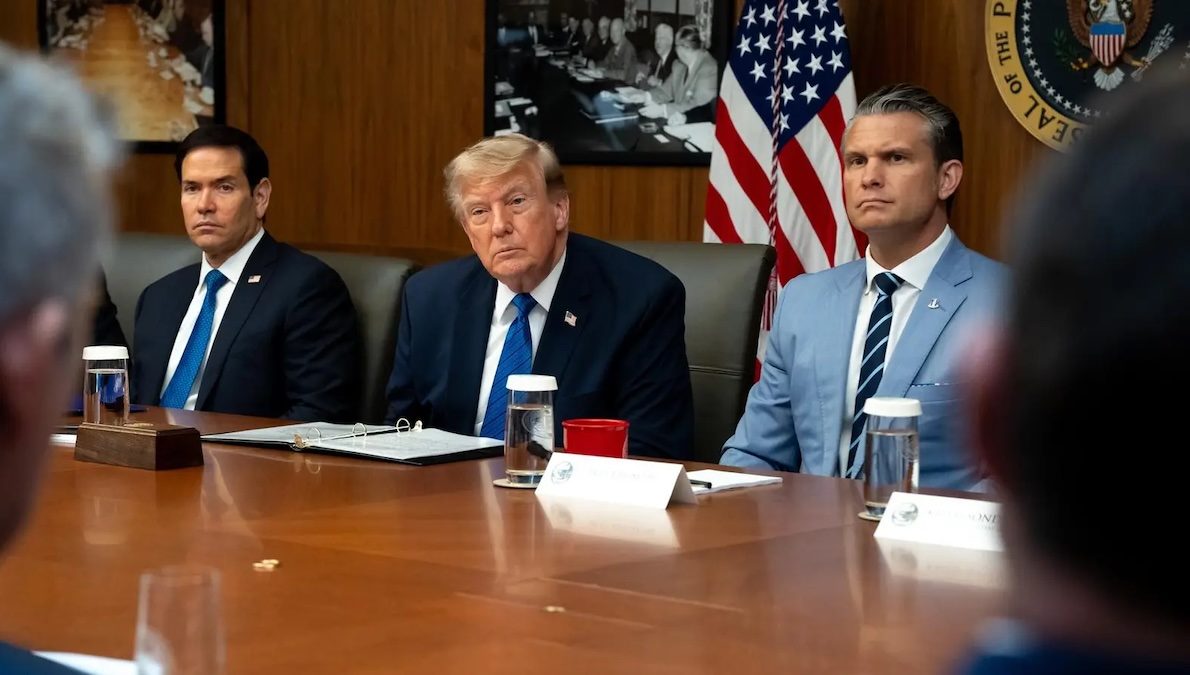
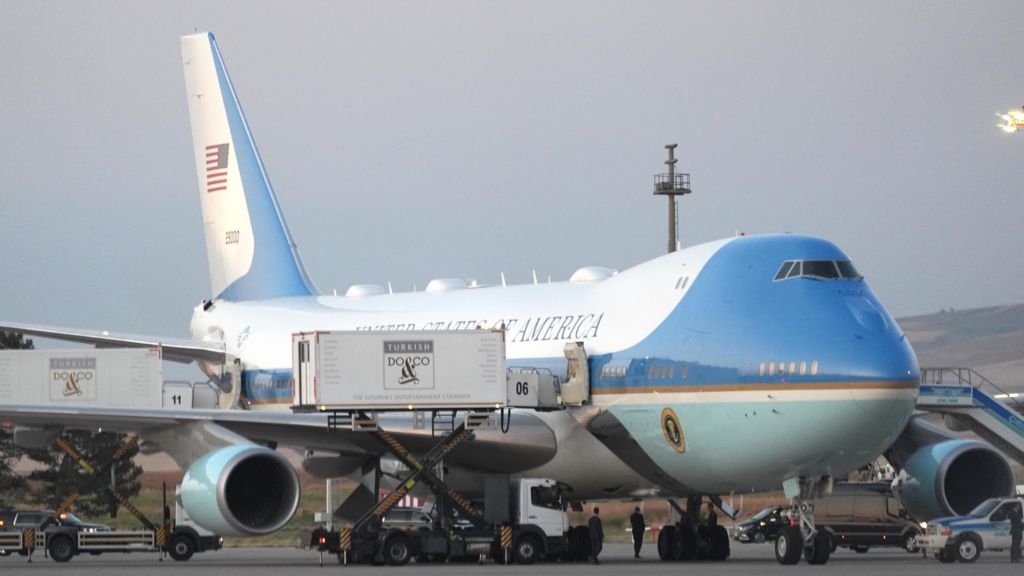
    A startling revelation has emerged from US media detailing a carefully orchestrated secret security operation during former US President Donald Trump’s visit to Turkey last month, which saw two of his top cabinet officials unwittingly remain on a decoy aircraft while Trump slipped away on a separate plane. According to a report from CBS News, a partner of the BBC in the United States, the elaborate ruse was launched over heightened security threats linked to Iran. The operation, which unfolded on July 8, started as expected: Trump entered the aircraft widely assumed to be Air Force One alongside Secretary of State Marco Rubio, Treasury Secretary Scott Bessent, members of the White House staff, and the press pool. But what looked like a routine departure was actually a carefully planned diversion. Instead of staying on board, Trump secretly exited the aircraft via a catering truck, which transported him covertly to a pre-positioned military aircraft that would carry him to his destination. The term “Air Force One” is technically a call sign assigned to any United States Air Force aircraft carrying the sitting US president, and in this unusual scenario, the original aircraft retained the call sign even after Trump left, cementing its role as a working decoy. CBS sources have confirmed that the decision to leave Rubio and Bessent on the decoy plane was not a random choice, but a deliberate move to preserve the constitutional line of presidential succession. Under US law, if the sitting president were to die or become incapacitated while in office, power transfers first to Vice President JD Vance, followed by the Speaker of the House of Representatives, then the President Pro Tempore of the Senate, the Secretary of State, and finally the Secretary of the Treasury. By leaving the fourth and fifth in the line of succession on the decoy craft, administration officials ensured that even if the plane carrying Trump were attacked or suffered a catastrophic incident, the chain of presidential authority would remain unbroken. Alongside the two top cabinet secretaries, two other senior White House officials also remained on the decoy plane: White House Deputy Chief of Staff Stephen Miller and White House Communications Director Steven Cheung. As of this report, the White House has not yet issued an official statement on the disclosure, and the BBC confirmed it has reached out to White House press officials to request comment on the incident. The unpublicized operation has drawn attention to the intense security protocols that surround US presidential travel, particularly during visits to regions where threats from state and non-state actors remain elevated.

  • Man airlifted to hospital after being bitten by shark

    Man airlifted to hospital after being bitten by shark

    On Tuesday, a recreational boating outing off Ireland’s southern coast ended in a medical emergency after a man sustained a suspected shark bite roughly four miles offshore from Ram Head, Ardmore in County Waterford. The injured man was one of five people aboard a 5-meter pleasure craft that called for help when the incident unfolded.

    The alarm was first raised with Dublin Coast Guard, which issued an assistance request to Ballycotton RNLI at 16:16 local time. By 16:30, Ballycotton RNLI launched its all-weather Trent-class lifeboat, the Austin Lidbury, with calm waters and clear visibility allowing the crew to reach the incident site by approximately 17:10. Multiple emergency and rescue agencies mobilized quickly to the scene, including the Irish Coast Guard’s Rescue 117 helicopter, plus both Ballycotton and Youghal RNLI lifeboat crews.

    By the time the Ballycotton team arrived, both Youghal RNLI and Rescue 117 were already on location alongside the affected pleasure craft. The injured man was lifted from the small vessel via winch onto Rescue 117, with the two RNLI lifeboats standing by to support the operation. The casualty was then airlifted to Cork University Hospital, where he remains in care as of the latest updates.

    Following the operation, the Ballycotton RNLI crew returned to their home harbor by 18:15. After refueling the lifeboat, the all-volunteer crew went on to complete their pre-scheduled weekly training session, highlighting the organization’s constant state of readiness for maritime emergencies.

    Eolan Walsh, on-duty coxswain for Ballycotton RNLI, praised the seamless collaboration between all responding teams. “This was a well-coordinated multi-agency response, with Ballycotton RNLI, Youghal RNLI and Rescue 117 working together to ensure that the casualty received urgent medical assistance as quickly and safely as possible,” Walsh said.

    He also used the incident to issue an urgent safety reminder for all people heading offshore. “Incidents such as this are a reminder that conditions at sea can change quickly and that anyone heading offshore should make safety a priority,” he explained. He urged mariners and recreational boaters to confirm their vessel is suited to expected conditions, wear properly fitted lifejackets or personal flotation devices, carry reliable communication equipment, and share their route and expected return time with a contact on shore before departing.

    This latest suspected shark bite is not the first recorded incident of its kind along the Irish coast. In 2018, a Belfast angler suffered severe injuries to his lower arm after he caught a blue shark and was bitten while pulling the animal aboard his fishing boat. Crosshaven RNLI based in Cork responded to that 2018 incident to provide emergency assistance to the injured man.

  • US inflation eases as food and fuel costs cool

    US inflation eases as food and fuel costs cool

    Newly released inflation data from the U.S. Bureau of Labor Statistics shows that annual consumer price growth cooled slightly to 3.4% in July, down from 3.5% recorded in the 12 months to June. The modest deceleration offers marginal relief for households, but economists emphasize it only slows the pace of price increases rather than reversing the overall rise in living costs that has strained American budgets in recent years.

    Energy markets remained highly volatile in July, driven by ongoing geopolitical conflict in the Middle East that has disrupted global supply projections. On a monthly basis, gasoline prices dropped 2.9% from June, but over the 12-month period, pump prices have still surged 24.6%, keeping pressure on consumers who rely on personal vehicles for commuting and daily travel.

    Month-over-month headline inflation climbed by 0.1%, with housing costs accounting for nearly all of that uptick. As rent represents one of the largest fixed expenses for most U.S. households, even minor incremental increases in rental prices have an outsized impact on the overall national inflation gauge. Food price growth also slowed in July compared to June, rising only marginally, while broad energy prices fell over the month to deliver a small buffer for household budgets.

    When stripping out the more volatile swings in food and energy prices, core inflation rose 0.2% in July after holding flat in June. Core sector trends showed mixed movements: medical care services and airfare saw small upticks, while car insurance costs continued a downward trend that began earlier this year.

    The Federal Reserve, led by new chair Kevin Warsh, has made gradual inflation reduction its top policy priority, balancing the goal of cooling price growth against efforts to avoid triggering unnecessary economic volatility. “The Fed does not have a magic wand to erase years of above-target inflation overnight,” Warsh explained in a recent press briefing. “We must remain patient as we work to bring price growth back down to our target level gradually, without unnecessary shocks to the labor market and broader economy.” The central bank’s official long-term inflation target sits at 2%, a level policymakers view as the sweet spot for stable prices, sustainable economic growth, and reduced risk of deep recessions.

    Former President Donald Trump echoed widespread public concern, noting that inflation remains unacceptably high for millions of working and middle-class families. He pointed to persistent increases in rent and grocery costs as clear evidence that the cost of living remains one of the most pressing economic issues facing the country.

    Financial markets reacted calmly to the latest inflation data, as the figures came in broadly aligned with analyst projections. Major stock indices saw little movement following the report’s release. Recent labor market data, which showed a net loss of jobs in July, has also softened investor expectations that the Federal Reserve will implement another interest rate hike in its upcoming meetings.