作者: admin

  • Southampton pay tribute as Udoh dies aged 21

    Southampton pay tribute as Udoh dies aged 21

    The global football community is in mourning after the announcement of the sudden passing of 21-year-old rising talent Victor Udoh, who previously played for the academies of both Southampton FC and Royal Antwerp. The Nigerian left-winger, whose promising career was just getting off the ground, leaves behind shocked teammates, coaches and fans across three European countries where he played.

    Udoh began his European youth career with Belgian Pro League side Royal Antwerp, joining the club’s academy setup in 2023. He quickly made an impression with the club’s youth development squad, Young Reds, netting 12 goals in 27 appearances to force his way into first-team contention. By the end of his first season at the club, he had earned his senior debut, and went on to rack up 28 first-team appearances before moving on.

    In February 2025, Udoh made the move to England to join Southampton’s prestigious academy, where he spent six months developing his game. During his time on the south coast, he featured eight times for the club’s under-21 side in the competitive Premier League 2 competition, and scored two goals for the young Saints side.

    After leaving Southampton that September, Udoh continued his professional journey by signing with Ceske Budejovice, a club competing in the Czech second tier, where he had been playing up until his passing.

    Both former clubs have released official statements paying tribute to the young player, expressing their deep sorrow at his death. “We are devastated by the tragic passing of former player Victor Udoh at the age of 21,” Southampton FC shared in a post on X. “The thoughts of everyone at the club go out to Victor’s loved ones at this extremely difficult time.”

    Royal Antwerp echoed the sentiment, writing: “With great dismay, RAFC has learned of the passing of former player Victor Udoh. Our thoughts are with Victor’s family, friends, and loved ones. We wish them much strength, support, and warmth during this particularly difficult time.”

    No cause of death has been announced publicly by the clubs or Udoh’s family at the time of publishing.

  • Next power move in China’s SE Asia strategy is nuclear

    Next power move in China’s SE Asia strategy is nuclear

    Across Southeast Asia, a quiet but transformative shift is underway: nations across the region are reembracing nuclear power as a core component of their long-term development strategies, and China has positioned itself at the center of this emerging energy landscape, turning its growing nuclear industrial capacity into a pivotal tool of geopolitical influence.

    A decade ago, large-scale nuclear development across Southeast Asia was widely seen as politically unfeasible. Today, however, the urgent pressures of climate action, rapid industrial growth, expanding artificial intelligence infrastructure, and soaring domestic electricity demand have pushed governments to prioritize low-carbon baseload power, moving nuclear energy from a marginal option to a central policy priority. The regional shift is already visible in concrete planning: Vietnam signed a construction agreement with Russia for the Ninh Thuan 1 nuclear power plant in March 2026; the Philippines and Indonesia have set targets to operationalize their first commercial reactors by the early 2030s; and Malaysia, Thailand, and Singapore are actively evaluating small modular reactor technologies for future energy development.

    While established nuclear exporters including France, Russia, South Korea, and the United States remain active in the region, Beijing has emerged as the most consequential long-term partner for Southeast Asian nations, backed by unmatched advantages in financing, industrial scale, and state-backed delivery capacity that few competitors can replicate. Unlike traditional infrastructure projects, nuclear partnerships are not short-term commercial transactions: they are strategic commitments that span more than 50 years, shaping everything from a nation’s long-term fuel dependency and industrial regulatory standards to its broader geopolitical alignment.

    China’s rise as a global nuclear export leader is the product of decades of deliberate industrial investment and technological accumulation. As of 2026, China operates 61 commercial nuclear reactors with an additional 36 under construction, giving it the world’s third-largest operating reactor fleet while leading global nuclear construction activity. Unlike many Western nuclear industries that stagnated in the post-Cold War era, China sustained consistent investment across reactor engineering, domestic manufacturing, and workforce development, allowing it to localize approximately 90% of all reactor component production within its borders.

    This deep domestic localization has cut supply chain risks, reduced manufacturing costs, and enabled Chinese nuclear firms to offer fully integrated turnkey packages that cover every stage of a project: engineering, procurement, construction, financing, workforce training, and long-term fuel supply. Rather than exporting standalone reactors, China effectively exports complete, self-sustaining nuclear ecosystems. The flagship of this export strategy is the Hualong One (HPR1000), a third-generation pressurized-water reactor co-developed by China’s two top nuclear operators, China National Nuclear Corporation and China General Nuclear Power Group. With more than 40 units already operational or under construction globally, the Hualong One has become one of the world’s most widely deployed modern reactor designs, featuring advanced safety systems and a 1,100 megawatt generation capacity per unit, enough to power roughly one million households. For developing economies grappling with persistent electricity deficits and rapid industrial expansion, this combination of cost, capacity, and fully integrated service is uniquely compelling.

    Beyond comprehensive offerings, China’s appeal to Southeast Asian nations stems from its ability to deliver projects quickly and affordably. Western nuclear projects are frequently plagued by costly overruns and multi-year delays, while Russia faces growing international geopolitical constraints that limit its export reach, and South Korea lacks the large-scale financing capacity China can offer through its state-led development model. Beijing has already set an ambitious target of exporting 30 reactors to Belt and Road Initiative partner countries by 2030, an initiative valued at an estimated 1 trillion yuan (US$145 billion). Chinese nuclear cooperation already spans multiple continents, with active projects and agreements in Pakistan, Argentina, Kenya, Kazakhstan, and Saudi Arabia, demonstrating the global scale of its export push. For Southeast Asian governments working against tight development timelines to meet growing energy demand, this reliable, fast-tracked model is a major advantage.

    Yet the opportunities presented by Chinese nuclear technology come with unavoidable strategic risks that regional governments cannot dismiss. Nuclear infrastructure creates unusually deep, long-term dependencies for recipient nations: reactor lifespans regularly exceed 40 years, and fuel supply, technical upgrades, and spent fuel management remain tied to the original vendor for decades. This structural dependency is amplified by the limited number of countries that possess industrial-scale uranium enrichment capacity. While Russia currently dominates global low-enriched uranium supplies, China is rapidly expanding its own domestic fuel cycle infrastructure to support its growing export business, meaning future recipient nations could become dependent on Beijing not just for construction, but for long-term fuel access and consistent operational capacity.

    Technology lock-in may prove even more impactful than fuel dependency over time. Unlike traditional infrastructure such as ports or industrial parks, integrated nuclear ecosystems are extremely difficult to restructure or replace once technological and institutional dependency becomes embedded over decades. Maintenance systems, engineering standards, and regulatory frameworks remain aligned with the original supplier, gradually shaping a nation’s long-term industrial priorities and geopolitical orientation. In effect, China exports far more than power generation infrastructure: it exports sustained, long-term strategic influence.

    This does not inherently imply malicious intent; all major nuclear exporters create similar structural dependencies through their supply relationships. But what makes China’s position unique is its combination of reactor exports, Belt and Road infrastructure financing, cross-border industrial integration, and broader geopolitical outreach, making the long-term strategic implications far more significant for regional states. For Southeast Asian nations seeking to maintain strategic autonomy amid intensifying US-China great power competition, this dynamic creates a difficult balancing act. Washington already views competition over critical infrastructure in maritime Southeast Asia through a strategic lens, as Chinese-backed energy, port, and digital projects expand across the region. Chinese nuclear diplomacy could therefore become a new front in broader Indo-Pacific competition over influence, technological standards, and long-term regional alignment.

    In response, most ASEAN governments are expected to pursue a hedging strategy rather than aligning exclusively with any single nuclear supplier. Maritime Southeast Asian nations such as Indonesia and the Philippines are likely to pursue diversified technology partnerships with multiple exporters, while mainland Southeast Asian economies may become more deeply integrated into Chinese nuclear industrial and financing ecosystems. This divergence could eventually lead to competing nuclear technological ecosystems across the region, where infrastructure standards and fuel supply arrangements reflect broader geopolitical blocs, adding a new layer of fragmentation to ongoing Indo-Pacific great power competition.

    China is also investing heavily in next-generation nuclear technology, most notably thorium molten-salt reactors. In June 2024, China’s Wuwei Thorium Molten Salt Reactor reached full operational capacity, marking a key milestone in the commercial development of this advanced reactor technology. While thorium is promoted as a safer and more sustainable alternative to conventional uranium-based nuclear power, its long-term geopolitical impact may be far more significant than its technical benefits. If China becomes the first major exporter of commercially viable thorium reactors, it could secure substantial influence over global nuclear technology standards across much of the developing world.

    It is important to note that framing Southeast Asian nations as passive recipients of Chinese influence oversimplifies the complex regional dynamic. Many regional governments are pursuing nuclear partnerships with China specifically to accelerate domestic technological learning and build domestic industrial capacity. Thailand offers a clear example of this approach: in 2015, Thai utility Ratchaburi Electricity Generating Holding acquired a 10% stake in two Hualong One reactors at China’s Fangchenggang nuclear site in Guangxi province, while Chinese institutions trained a new generation of Thai nuclear engineering professionals. This early cooperation laid the groundwork for a 2025 bilateral memorandum on peaceful nuclear energy cooperation between Beijing and Bangkok. Notably, China itself followed a similar developmental path: its modern nuclear industry was built through technological absorption from Canadian, French, Russian, and American designs before it eventually developed fully indigenous reactor technology with domestic intellectual property rights. Many Southeast Asian states now hope to replicate this model, leveraging initial foreign partnerships to gradually build their own domestic expertise, regulatory capacity, and industrial capability.

    The core challenge for regional governments will be maintaining strategic diversification. If nations become overly dependent on any single supplier—whether China, Russia, or Western vendors—their long-term strategic flexibility could be significantly eroded over time. Today, Southeast Asia’s nuclear revival is no longer solely a story about decarbonization and meeting rising electricity demand. It is increasingly tied to regional industrial competitiveness, technological sovereignty, expanding AI infrastructure, and geopolitical positioning. For China, successful expansion of nuclear exports strengthens its global industrial reach, extends its geopolitical influence, and reinforces its image as a leading provider of advanced technological solutions for developing economies. For Southeast Asian governments, Chinese nuclear cooperation delivers access to financing, rapid project deployment, and industrial learning opportunities that few other exporters can currently match. Ultimately, the actors that come to dominate Southeast Asia’s future nuclear infrastructure will likely shape the balance of technological and geopolitical influence across the Indo-Pacific for the rest of the 21st century.

  • Inglis to lead Australia in ODI series against Pakistan after Marsh ankle jury

    Inglis to lead Australia in ODI series against Pakistan after Marsh ankle jury

    A last-minute leadership shakeup has hit Australia’s men’s one-day international squad ahead of their highly anticipated three-match series against Pakistan, with wicketkeeper-batter Josh Inglis tapped to step into the captaincy role following an ankle injury to Mitchell Marsh, Cricket Australia announced Tuesday in Islamabad.

    Marsh picked up the injury during his recent participation in the Indian Premier League (IPL), forcing him to withdraw from the Lucknow Super Giants’ closing fixture of the tournament and return to his home country for further care. The all-rounder will undergo detailed medical assessment and targeted treatment in Perth once back in Australia, with no clear timeline yet released for his return to competitive play.

    This leadership vacancy comes as no small surprise, given Australia is already missing two of its top white-ball leaders for the Pakistan series. Regular 50-over captain Pat Cummins and vice-captain Travis Head have both skipped the tour to remain in India for the IPL playoffs, leaving the squad already short on experienced top-level leadership before Marsh’s injury.

    The ODI series is set to kick off this coming Saturday in Rawalpindi, with the two remaining matches scheduled to take place in Lahore on June 2 and June 4 respectively. For Inglis, this captaincy appointment is not uncharted territory. The wicketkeeper-batter already led the Australian side in a series against Pakistan back in November 2024, when a large number of the team’s first-choice players were also unavailable for selection.

    Following the conclusion of the Pakistan series, Australia’s men’s squad will travel directly to Bangladesh for a white-ball tour. A number of the team’s star fast bowlers, including Cummins, Josh Hazlewood and Mitchell Starc, have already been confirmed as absentees for both the Pakistan and Bangladesh legs of the back-to-back tour.

  • Trump, days from 80th birthday, has annual medical exam

    Trump, days from 80th birthday, has annual medical exam

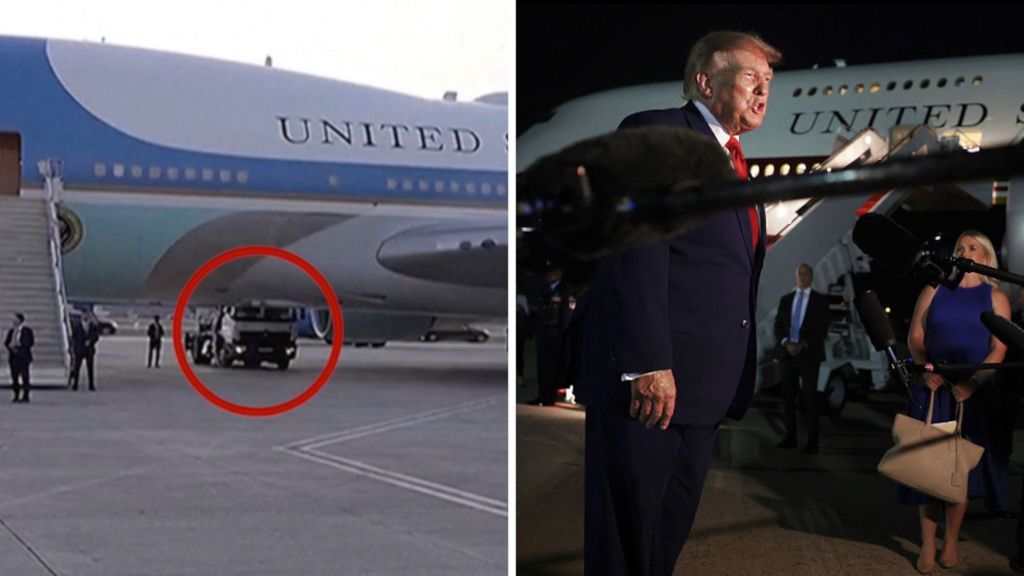
    Just five days before he marks his 80th birthday, sitting U.S. President Donald Trump underwent his scheduled annual medical examination on Tuesday at Walter Reed Military Medical Center, reigniting long-running public and political discussion about the state of the commander-in-chief’s physical and mental health.

    As the oldest person ever inaugurated to the U.S. presidency, Trump has repeatedly positioned his own perceived vitality as a point of contrast against his Democratic predecessor Joe Biden, frequently claiming superior physical and mental fitness on the campaign trail and in public appearances. However, this latest check-up comes amid renewed public speculation over Trump’s well-being, sparked by recent visible bruising on his right hand and multiple observations of apparent drowsiness during high-stakes official meetings.

    This exam marks Trump’s third formal physical assessment since he returned to the White House for his second term in January 2025. He completed a scheduled annual check in April 2025, followed by an unannounced after-hours visit to Walter Reed that October, which the White House later classified as a second “annual” physical – a move that drew criticism and fresh questions from political observers and transparency advocates about the consistency of the administration’s health disclosures.

    Criticism over the lack of full transparency around Trump’s personal health has followed him throughout his political career, and that pattern has held during his second term. While the White House has confirmed it plans to release limited details about Tuesday’s exam later in the day, the administration retains full discretion over how much clinical information it makes public.

    An Agence France-Presse reporter embedded with the presidential motorcade confirmed Trump arrived at the Bethesda, Maryland, medical facility, located roughly 10 miles outside Washington D.C., at approximately 8:50 a.m. local time (12:50 GMT). Per the president’s publicly released daily schedule, he is set to return to the White House for a 1:30 p.m. (17:30 GMT) policy briefing where the ongoing conflict in Iran will be the top agenda item.

    Trump’s 80th birthday, scheduled for June 14, will coincide with a high-profile Ultimate Fighting Championship (UFC) bouts hosted on the White House South Lawn, an event expected to draw thousands of invited spectators. The president has long leaned into public boasts about his personal health, repeatedly claiming he is far more physically fit than prior Oval Office occupants despite his well-documented preference for fast food and publicly disclosed higher-than-average body weight.

    “I feel the same as I did 50 years ago,” Trump told attendees at an Oval Office event earlier this month, adding with characteristic dry humor, “Maybe junk food is good.” The president is widely known for his public fondness for beef burgers, well-done steaks, and Diet Coke, a diet that has long been noted by health commentators as inconsistent with standard cardiovascular wellness guidance.

    Public discussion of Trump’s health first ramped up last summer, when the White House officially confirmed that Trump had been diagnosed with chronic venous insufficiency after observations of persistent swelling in his lower legs. The common vascular condition, caused by faulty valves in leg veins that allow blood to pool in lower extremities, causes symptoms including swelling, muscle cramping, and visible skin discoloration.

    More recently, Trump has repeatedly appeared in public with unexplained bruising on his right hand, which makeup artists have regularly attempted to cover during televised appearances. He also developed a visible neck rash during one widely watched Oval Office address last year. Administration officials have attributed the hand bruising to daily low-dose aspirin Trump takes as part of a standard preventive cardiovascular care regimen.

    Following his unannounced October 2025 visit to Walter Reed, Trump told reporters that an MRI conducted during the appointment confirmed his cardiovascular health was “excellent.” His personal physician, U.S. Navy Captain Sean Barbabella, released a public letter after that visit claiming Trump’s “cardiac age” was calculated to be roughly 14 years younger than his actual chronological age at the time.

    The subject of presidential age and fitness has dominated U.S. political discourse for the better part of a decade, and gained renewed attention during the 2024 general election cycle. Then-incumbent Joe Biden, who was 81 years old at the time, was forced to suspend his re-election campaign following a widely panned debate performance against Trump that stoked widespread public concern over his cognitive fitness. Biden previously held the title of oldest inaugurated U.S. president, a record he lost when Trump was sworn in for his second term at age 78. Trump still holds the record as the third oldest person to be inaugurated as president, a mark he set when he first took office at age 70 in 2017.

  • Iran condemns US strikes as ‘gross violation’ of ceasefire

    Iran condemns US strikes as ‘gross violation’ of ceasefire

    Weeks after a fragile truce halted large-scale conflict between Iran and the United States, a new round of US air strikes near the strategic Strait of Hormuz has thrown ongoing peace negotiations into uncertainty, with Tehran condemning the attack as a blatant breach of the ceasefire agreement.

    The US Central Command (Centcom) confirmed the Monday strikes in southern Iran, framing the operation as necessary self-defense targeting Iranian missile installations and boats suspected of preparing to lay mines. While Centcom did not release exact location details, an unnamed official speaking to The New York Times confirmed the targets were located in the vicinity of Bandar Abbas, Iran’s key southern port city that hosts a major naval base along the Strait of Hormuz. Local Iranian officials initially reported hearing large explosions in the area and launched an immediate investigation into the incident.

    In an official statement following the strikes, Iran’s foreign ministry labeled the US action an “aggressive and unjustified” gross violation of the ceasefire that took effect on April 8. The ministry held Washington fully accountable for any consequences stemming from the operation in Hormozgan province, the coastal region that borders the world’s most critical energy chokepoint. Iran has blocked shipping through the strait since the conflict began, a move that triggered a sharp spike in global energy prices. “Without a doubt, the Islamic Republic of Iran will not leave any evil unanswered and will not hesitate to defend the Iranian nation,” the statement added. In a subsequent development, Iran’s Islamic Revolutionary Guard Corps (IRGC) claimed it had shot down an American drone and opened fire on a US fighter jet that entered Iranian airspace, though the group did not provide a timeline for the encounter.

    The conflict dates back to February 28, when the United States and Israel launched a wave of deadly opening attacks against Iran, including an operation that killed Iran’s supreme leader. After three weeks of intense fighting, the two sides reached a ceasefire agreement that has held largely intact for over a month, with only one major clash recorded earlier in May. The strikes come at a critical juncture, as diplomatic negotiators have been holding multi-party talks aimed at extending the existing truce and eventually reaching a permanent end to the open conflict.

    Details of the proposed preliminary deal have emerged in recent days: rather than a full permanent settlement, the parties are negotiating a memorandum of understanding that would include a 60-day extension of the ceasefire, the reopening of the Strait of Hormuz to commercial shipping, and a framework for future negotiations on Iran’s controversial nuclear program. The core sticking point in the talks remains Tehran’s demand for the release of billions of dollars in Iranian assets that have been frozen by foreign governments. Additional points of contention center on the future of Iran’s stockpile of highly enriched uranium, which the US, Israel and Western nations claim is intended for nuclear weapons development – an assertion Iran has repeatedly denied, maintaining its nuclear program is exclusively for peaceful energy and medical purposes.

    US leadership has sent mixed signals on the status of negotiations in recent days. Over the weekend, former President Donald Trump first indicated a deal was close at hand, then reversed course saying he had instructed American negotiators to avoid rushing into an agreement. Secretary of State Marco Rubio has clarified that a final agreement remains achievable, but will require several more days of negotiations. On Monday, Iranian officials acknowledged that some incremental progress has been made, but added that a finalized deal is not imminent.

    The majority of peace negotiations to date have been mediated by Pakistan, but this week Iranian negotiators shifted to talks facilitated by Qatari mediators in Doha. A source briefed on the Doha talks confirmed to Reuters that Iran’s central bank governor joined Monday’s negotiating session to lead discussions on the issue of frozen assets, with talks also focusing heavily on the status of Iran’s uranium program and the future of the Strait of Hormuz. At this stage, it remains unclear how the Monday strikes will impact the trajectory of the diplomatic process, leaving regional stability and global energy markets in a state of heightened uncertainty.

  • PGA Tour heads to Colonial without Scheffler and Spieth while LIV resumes in South Korea

    PGA Tour heads to Colonial without Scheffler and Spieth while LIV resumes in South Korea

    Professional golf enters a busy week of tournament action across six major men’s tours and multiple women’s circuits, with elite players jockeying for form, ranking points, and coveted major championship exemptions ahead of next month’s U.S. Open.

    ### PGA Tour: Charles Schwab Challenge at Colonial Country Club
    Headlining the men’s schedule this week is the PGA Tour’s Charles Schwab Challenge, hosted for the first time in back-to-back weeks with the CJ Cup Byron Nelson, an unprecedented scheduling shift for the Texas-based stop. Held at Fort Worth’s Colonial Country Club, the par-70 7,289-yard course will host a $9.9 million total purse, with the winner taking home $1.782 million in prize money.

    Notable absences shake up this year’s field: current FedEx Cup leader Scottie Scheffler, who has notched seven top-5 finishes in 11 events this season with one win at The American Express, will miss the tournament for the first time since he became eligible to compete. Texas fan favorite Jordan Spieth also sits out this year, ending a consecutive start streak that dates back to his professional debut. With Scheffler and Spieth out, U.S. Open champion J.J. Spaun, ranked world No. 9, enters as the highest-ranked competitor in the field. Former top-50 player Nico Echavarria will look to rebound after a surprise last-week win by Wyndham Clark at the Byron Nelson knocked him out of the top 50, costing him an automatic exemption into the 2025 British Open. Justin Thomas makes his first start at Colonial since 2022, while Texas native Ryan Palmer accepted a sponsor exemption for his sixth PGA Tour start of the year. In milestone news, Si Woo Kim has officially crossed $6 million in career PGA Tour earnings, coming off a runner-up finish at last week’s Byron Nelson. Ben Griffin returns as defending champion.

    Broadcast coverage is split across Golf Channel and CBS: preliminary rounds air Thursday and Friday from 4-7 p.m. ET on Golf Channel, with Saturday coverage running 1:30-3:30 p.m. on Golf Channel and 3:30-6:30 p.m. on CBS. Sunday coverage airs 1-3 p.m. on Golf Channel and 3-6 p.m. on CBS.

    ### LPGA Tour: ShopRite LPGA Classic in New Jersey
    On the women’s side, the LPGA Tour hosts the ShopRite LPGA Classic at Galloway, New Jersey’s Seaview Hotel and Golf Club Bay Course. The par-71 6,263-yard event carries a $2 million total purse, with a $300,000 winner’s share. Jennifer Kupcho returns to defend her 2024 title, while Nelly Korda enters the week as the top-ranked player in the Race to CME Globe standings. Last week, Lottie Woad claimed victory at the Kroger Queen City Championship.

    This week’s New Jersey event is one of only two remaining 54-hole tournaments on the LPGA schedule, held just seven days ahead of the high-profile U.S. Women’s Open at Los Angeles’ Riviera Country Club. World No. 7 Charley Hull is the only top-10 ranked player in the world competing this week, with most top contenders opting to prepare directly for next week’s major. Nelly Korda, who fell out of the final round top grouping in her most recent event for the first time this season, will not compete. First held in 1986, the tournament has only seen one repeat winner in its history: Anna Nordqvist, who won back-to-back titles in 2015 and 2016. Nordqvist shares the 54-hole scoring record of 17-under 196 with legend Annika Sorenstam.

    Broadcast coverage runs exclusively on Golf Channel: Friday 12-3 p.m. ET, Saturday 3:30-6:30 p.m. ET, and Sunday 3-5 p.m. ET, with early Sunday coverage streaming on the Golf Channel app.

    ### DP World Tour: Austrian Alpine Open in Kitzbühel
    The European DP World Tour travels to the Austrian Alps for the Austrian Alpine Open, held at Kitzbühel’s Kitzbühel-Schwarzsee-Reith Golf Club. The par-70 6,822-yard course hosts a $2.75 million total purse, with a $458,333 winner’s share. Nicolai Von Dellingshausen returns as defending champion, with Patrick Reed leading the Race to Dubai standings entering the week. Last week, Richard Sterne claimed victory at the Soudal Open.

    Austrian native Sepp Straka makes a sentimental home start, competing in his national open 12 years after he played his first professional event at the same tournament as a 20-year-old collegiate golfer at the University of Georgia. Only two other top-100 world-ranked players join Straka in the field: Casey Jarvis of South Africa and Daniel Hillier of New Zealand, with the field slightly depleted by conflicting tournament play from LIV Golf. Kevin Na, who recently ended a four-year tenure with LIV Golf, makes his second DP World Tour start of the year at this event. First held in 1990 with Bernhard Langer as the inaugural champion, the tournament spent eight seasons as a Challenge Tour event before returning to the DP World Tour schedule in 2006. This week’s event marks the third stop of the DP World Tour’s European Swing.

    Golf Channel will carry all four rounds of coverage, airing 6:30-11:30 a.m. ET Thursday and Friday, 7-11:30 a.m. ET Saturday, and 6-11 a.m. ET Sunday.

    ### LIV Golf League: LIV Golf Korea in Busan
    The breakaway LIV Golf League travels to Busan, South Korea for LIV Golf Korea, the eighth event of the 2025 season held in the eighth different host country, with four of this year’s stops hosted in Asia. The event is held at Busan’s Asiad Country Club, a 7,024-yard par-70 originally built for the 2002 Asian Games that underwent a major redesign by Rees Jones in 2019. The 54-hole event carries a $20 million total purse, with the winner taking home a $4 million payout. Bryson DeChambeau, who won the 2024 event at Jack Nicklaus Golf Club Korea, returns to defend his title, while Jon Rahm enters the week as the circuit’s points leader. Last week, Lucas Herbert won LIV Golf Virginia, earning himself a spot in the upcoming U.S. Open.

    This week’s event is the first of two consecutive LIV stops ahead of the U.S. Open, and the circuit continues its streak of strong major performances: at least one LIV player has finished in the top 10 of the last 10 major championships. Three LIV players qualified for the upcoming U.S. Open via sectional qualifying last week in Dallas: Peter Uihlein, 2010 U.S. Open champion Graeme McDowell, and amateur Caleb Surratt. The season-ending points leader after next week’s stop in Andalucia will earn an automatic exemption into the British Open at Royal Birkdale.

    Broadcast coverage airs on Fox Sports networks: FS1 carries round one and two coverage Thursday and Saturday from 12-5 a.m. ET, with final round coverage Sunday on Fox from 12-5 a.m. ET.

    ### Other Global Tour Events This Week
    The Korn Ferry Tour hosts the UNC Health Championship in Raleigh, North Carolina this week, held at Raleigh Country Club with a $1 million total purse and an $180,000 winner’s share. Trace Crowe returns as defending champion, with Ian Holt leading the tour’s points standings. No television coverage is scheduled for the event.

    Additional global events this week include the Mizuno Open on the Japan Golf Tour, the Jabra Ladies French Open on the Ladies European Tour, the Spanish Challenge on the European Challenge Tour, the Resort Trust Ladies on the Japan LPGA, and the Suhyup Bank MBN Ladies Open on the Korea LPGA. Next week, top tours will shift to major championship preparation, with the PGA Tour hosting the Memorial Tournament, LIV Golf heading to Andalucia, the DP World Tour hosting the KLM Open, and the LPGA Tour teeing off the U.S. Women’s Open.

  • A rare public trial opens in Paris child abuse case as parents seek a national wake-up call

    A rare public trial opens in Paris child abuse case as parents seek a national wake-up call

    PARIS – A groundbreaking public trial launched in Paris this week has thrown long-silenced child abuse scandals in French educational settings back into the national spotlight, after a group of affected parents broke with decades of legal convention to open proceedings to the public, inspired by a high-profile campaigner’s fight against abuse. The defendant, a 36-year-old school assistant whose identity has not been released to protect the ongoing case, stands accused of sexually assaulting nine children between the ages of 3 and 5 at a Paris nursery school. The alleged offenses occurred between August 2024 and April 2025, during bathroom supervision, lunch breaks, and after-school care sessions. He additionally faces charges of sexual harassment against two colleagues and sexual assault against one, and has denied all allegations. If convicted, he could face up to 10 years of prison time.

    Under standard French law, all criminal cases involving minor victims are held behind closed doors to protect the privacy of children. But the parents of the victims in this case chose to waive that privacy protection, drawing direct inspiration from Gisèle Pelicot, who made her own widely publicized trial for rape and drug-related offenses open to the public to shine a light on systemic abuse. Echoing Pelicot’s core mantra that shame should rest with abusers, not survivors, the families say their choice to open the trial is intended to break the culture of silence that has allowed child abuse to persist unaddressed in French schools for years.

    The allegations first came to light in April 2025, when multiple children disclosed the abuse to their parents. According to the families, their trauma was compounded by systemic failures: a warning raised by one mother months before the case came to light was dismissed outright by school leadership, a revelation that has amplified calls for sweeping oversight reform. Outside the Paris courthouse Tuesday, parent activists gathered to demand action. Barka Zerouali, co-founder of MeToo Ecole – the grassroots MeToo School movement focused on educational setting abuse – told protesters that the moment demands a national reckoning. Demonstrators carried banners reading “Because no child should be afraid to go to school”, echoing the growing public anger over unaddressed risks for young children.

    Rebecca Royer, a legal representative for multiple affected families, outlined the broader goals of the parents’ campaign: “what we are expecting is a real turning point in child protection, meaning we expect the government and municipalities to implement real measures to protect children, but also to provide real resources.”

    This trial is not an isolated case. In recent months, a cascade of similar allegations across Paris and the rest of France has pulled the issue of child abuse in early education into the center of public and political debate. Last week, Paris prosecutor Laure Beccuau confirmed that active investigations are ongoing across 84 city nursery schools, 20 elementary schools, and 10 daycare centers. Since the start of 2026, 78 school and after-school staff in Paris have been suspended from their roles, 31 of them over suspicions of sexual violence, according to newly elected Paris Mayor Emmanuel Grégoire.

    Unlike state-employed teachers, school assistants and after-school program leaders in France are hired and overseen by municipal authorities – a structural arrangement that has come under intense scrutiny in the wake of the allegations. Grégoire, who took office in March, has named combating child abuse his “absolute priority”, and recently unveiled a €20 million ($22 million) action plan to fix what he has called “major dysfunction” in the city’s school oversight system. He has pledged that any employee suspected of child abuse will be suspended immediately pending investigation. Before his election, Grégoire publicly shared his own experience as a child abuse survivor, when he was assaulted as a 9- and 10-year-old in elementary school. The wave of abuse allegations that emerged earlier this year made child protection a defining issue of the Paris mayoral campaign, cementing its place as a top national priority.

  • Partey in preliminary Ghana squad for World Cup

    Partey in preliminary Ghana squad for World Cup

    One of Ghana’s most high-profile football stars, former Arsenal midfielder Thomas Partey, has been selected for the West African nation’s preliminary squad ahead of the 2026 FIFA World Cup, a decision that comes as the 32-year-old prepares to stand trial on multiple sexual offense charges next year.

    Partey, who currently plies his trade for Spanish La Liga club Villarreal after leaving Arsenal this past summer when his contract at the North London side expired, has formally pleaded not guilty to seven counts of rape and one additional count of sexual assault. The charges stem from allegations made by four separate women dating back to incidents between 2020 and 2022. His trial is scheduled to get underway in 2026.

    Across his five-year tenure with Arsenal between 2020 and 2025, Partey earned 167 appearances across all domestic and European competitions for the Gunners. Capped 58 times for Ghana to date, the midfielder currently serves as vice-captain of the national team, a status the Ghana Football Association has reaffirmed in the wake of the charges.

    “Thomas is our vice-captain. He is one of the top midfielders in the world and we stand by him shoulder to shoulder,” GFA President Kurt Okraku told BBC Sport in a public statement confirming the association’s support for the player.

    Ghana head coach Carlos Queiroz named Partey as part of his 28-man preliminary group for a pre-World Cup training camp, which will be capped off with a friendly fixture against Wales in Cardiff on June 2. Queiroz is required to cut his final roster down to the 26-player limit mandated by FIFA before the tournament kicks off.

    Alongside Partey, other notable call-ups include Manchester City forward Antoine Semenyo, Coventry City striker Brandon Thomas-Asante, and Leicester City pair Jordan Ayew and Abdul Fatawu. Five goalkeepers were included in the preliminary squad, among them Joseph Anang, who currently plays for League of Ireland Premier Division side St Patrick’s Athletic. The only major absentee from the group is Tottenham Hotspur winger Mohammed Kudus, who has not featured since January due to a persistent quad injury.

    Ghana will kick off their Group L campaign at the 2026 World Cup against Panama in Toronto on June 17, before subsequent group stage matches against England in Foxborough and Croatia in Philadelphia respectively.

  • Sabalenka thrives in French Open heat, Sinner waits in wings

    Sabalenka thrives in French Open heat, Sinner waits in wings

    The opening day of main draw action at the 2025 French Open delivered a mix of dominant wins, shocking upsets and highly anticipated upcoming matches on Tuesday, as top seeds navigated soaring Paris temperatures and tricky first-round hurdles to kick off their fortnight at Roland Garros.

    Women’s world number one Aryna Sabalenka got her tournament campaign off to a flying start, wrapping up a straight-sets 6-4, 6-2 victory over Spain’s Jessica Bouzas Maneiro, the world No. 50, in just 75 minutes on Court Philippe Chatrier. The Belarusian 28-year-old, a four-time Grand Slam singles champion, only faced one minor scare when she failed to close out the match on her own serve, but responded immediately with a break in the next game to seal her spot in the second round.

    The result marked a strong bounce-back for Sabalenka, who suffered a surprise early exit at the Italian Open earlier this month. Speaking after her win, the top seed acknowledged that first-round matches at major tournaments always carry extra pressure. “I’m super happy to be through. I feel like it was a tricky first-round opponent,” she said. “I’d say that for me the first rounds are always not easy. And then, as I get further in the tournament, as I get more comfortable, my level becomes better.”

    Sabalenka will next face the winner of the opening-round match between French wildcard Elsa Jacquemot and Czech qualifier Linda Fruhvirtova in the round of 64. She also noted that the unseasonably hot conditions at this year’s tournament actually worked in her favor, a stark contrast to the cold, wet weather she faced in Rome and during her first week of practice in Paris. “I’d say that it was a bit warm,” she joked. “Especially compared to the first days when I first got here, it was like 14C, freezing. Now it’s boiling hot and balls are flying, everything is much faster. But physically I feel strong, so I feel like it can benefit me.”

    As Sabalenka wraps up her opening match, all attention turned to the evening’s night session, where men’s world number one Jannik Sinner was set to make his 2025 French Open debut. The Italian 24-year-old is one win away from completing a career Grand Slam, with the Paris title the only major still missing from his trophy cabinet. With double defending champion Carlos Alcaraz sidelined through injury and Sinner bringing a 29-match winning streak into the tournament, he enters as the overwhelming favorite to lift the trophy. Still, six matches stand between him and the men’s final on June 8, and he will open against French wildcard Clement Tabur, who is expected to receive a rapturous welcome from the home crowd on Chatrier. Tuesday’s match marks almost exactly one year since Sinner’s heartbreaking five-set loss to Alcaraz in the 2024 final, where he held three championship points before being overturned.

    Before Sinner takes the court, women’s defending champion Coco Gauff will face off against compatriot Taylor Townsend in the preceding match on Chatrier.

    The opening day also brought a major upset when Russia’s sixth seed Daniil Medvedev suffered a five-set first-round exit at the hands of Australian wildcard Adam Walton. The result extends Medvedev’s poor run of form at Roland Garros: it is now the seventh time he has been knocked out in the opening round in 10 tournament appearances. Despite the disappointing loss, the former world number one insisted he remains committed to competing in Paris. “I know that I am in good shape and I can play well in Roland Garros. I can,” Medvedev said. “It’s just tougher for me, and first rounds are usually tougher for me, but I will always come here.”

    Elsewhere in the draw, 18-year-old American rising star Iva Jovic continued to turn heads with a dominant 6-4, 6-2 win over Philippines’ Alexandra Eala, booking a second-round clash with compatriot Emma Navarro, the former world No. 8 who eased past Indonesia’s Janice Tjen in straight sets. 2021 French Open runner-up Stefanos Tsitsipas also advanced after his opponent Alexandre Muller was forced to retire through injury early in the match. The Greek 27-year-old, who has plummeted to No. 79 in the ATP rankings after a poor run of results, could reach the third round of a Grand Slam for the first time in seven appearances when he faces Italy’s Matteo Arnaldi next. The day ended with a fairy-tale win for home crowd favorite Moise Kouame: the 17-year-old French wildcard notched his first ever Grand Slam match win with an impressive 7-6(4), 6-2, 6-1 victory over 2014 US Open champion Marin Cilic of Croatia.

  • Hungary’s Magyar vows to probe alleged misconduct by Orbán’s government

    Hungary’s Magyar vows to probe alleged misconduct by Orbán’s government

    BUDAPEST, Hungary – Fresh off a historic electoral upset that ended 16 years of nationalist-populist rule under Viktor Orbán, newly installed Hungarian Prime Minister Péter Magyar announced Tuesday that his center-right Tisza party will launch six parliamentary investigative committees to probe allegations of widespread corruption and abuse of power from Orbán’s previous administration.

    Magyar’s Tisza party secured a two-thirds parliamentary majority in last month’s national election, a decisive landslide victory that gave the new government the legislative power needed to roll back the controversial authoritarian-leaning policies that earned Orbán condemnation from critics and international observers as a far-right autocrat. Holding Orbán, his long-ruling Fidesz party, and their allied business networks accountable for alleged misconduct was a central pledge of Tisza’s election campaign.

    Addressing lawmakers on the floor of parliament, Magyar outlined the scope of the upcoming investigations, which include the suspected misappropriation of hundreds of millions of dollars in public funds managed by Hungary’s National Bank – a case already undergoing active police examination. “We will put all corruption and abuses of power on full display,” Magyar stated. “The Hungarian people have the right to know who benefited from their money, who stole their money, who got rich from the vulnerability of the people.”

    Throughout his four consecutive terms in office spanning 16 years, Orbán faced repeated accusations of systemic misuse of public funds, including directing hundreds of millions in profitable state contracts to close family members and a small circle of pro-Fidesz business elites. He was also widely criticized for systematically eroding independent democratic institutions, prompting the European Parliament to formally designate Hungary as no longer a full democracy in 2022.

    Since Tisza parliamentarians took office earlier this month, the new majority has already tabled a landmark constitutional amendment that would cap the office of prime minister at a total of eight years. This new lifetime limit would apply to Magyar himself, and retroactively bars Orbán, who served 16 years in power, from holding the premiership again. On Tuesday, Magyar added that the government will also explore extending this term limit restriction to all other elected public offices, noting, “No one should imagine that electoral authority is inherited forever. Power exercised without limits leads to loss of control over time in any democratic system.”

    One of the six investigative committees will also examine the controversial details of a 2024 presidential pardon granted to an accomplice in a child sexual abuse case by former Hungarian President Katalin Novák, a scandal that ultimately forced Novák’s resignation earlier this year.

    In addition to the probes and term limits, Magyar’s administration has committed to further democratic overhauls: a constitutional amendment to dissolve Orbán’s controversial Sovereignty Protection Office, a 2023-created body that targeted non-governmental organizations, independent media, and opposition groups under the pretext of countering foreign interference. The new prime minister also vowed to eliminate long-held political privileges for senior officeholders, including cutting salaries for the prime minister, cabinet members, state-owned enterprise executives, and sitting lawmakers.