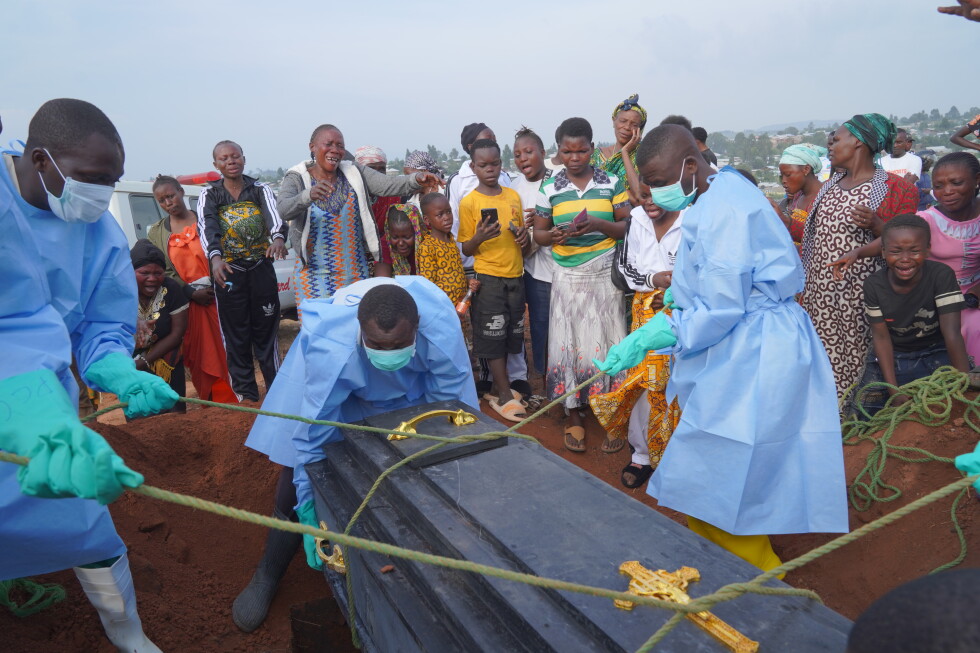
GENEVA – The head of the World Health Organization issued a stark warning Wednesday that the ongoing Ebola outbreak in the Democratic Republic of the Congo is on course to become the deadliest Ebola epidemic on record, surpassing the 2014-2016 West African outbreak that claimed more than 11,000 lives across over 28,000 confirmed cases.
Speaking to reporters gathered in Geneva, WHO Director-General Tedros Adhanom Ghebreyesus emphasized that based on the current rate of new infections and fatalities, the eastern Congo outbreak will soon overtake the historic 2014-2016 event as the worst Ebola outbreak the world has ever seen.
Already, the outbreak – which public health officials classify as the fastest-growing in recorded history – has documented more than 4,300 confirmed cases and claimed more than 2,000 lives, according to WHO data. While the outbreak was not formally declared by Congolese health authorities until May 15, recent genetic sequencing analysis of virus samples has traced the first infections back to February, meaning the outbreak has been spreading undetected in local communities for months before an official response was launched.
What makes this outbreak particularly challenging for frontline health workers is the unique strain of virus driving it: the rare Bundibugyo Ebola variant, for which no licensed vaccines or targeted antiviral treatments currently exist. This leaves medical teams limited in their ability to protect at-risk populations and improve outcomes for infected patients.
Compounding these challenges is the geographic and security context of the outbreak. The virus is spreading across remote, conflict-ravaged regions of eastern Congo, close to the country’s shared borders with South Sudan, Uganda, and Rwanda – a location that raises the risk of cross-border transmission to neighboring countries. Epidemiologists tracking the outbreak note that the virus is spreading more quickly than response teams can scale up their monitoring and containment efforts. A majority of new cases and deaths continue to occur in local communities that remain inaccessible to health workers, allowing the virus to spread undetected and unchallenged.