作者: admin

  • Rights group accuses UAE of being transit point for mercenaries on way to Sudan

    Rights group accuses UAE of being transit point for mercenaries on way to Sudan

    Two years into Sudan’s devastating civil war, a damning new investigation from global human rights watchdog Human Rights Watch (HRW) has uncovered an elaborate cross-border network that recruited Colombian former soldiers to fight alongside the Rapid Support Forces (RSF), the paramilitary group accused of widespread war crimes across the conflict-torn nation. The report directly ties the recruitment operation to a company based in the United Arab Emirates, with mercenaries transiting and training at official UAE military facilities before being deployed to frontline combat zones where mass atrocities have been documented.

    Sudan’s conflict ignited on April 15, 2023, when long-simmering tensions between the RSF, led by Gen Mohamed Hamdan Dagalo, and the country’s official national army boiled over into open armed conflict. Since fighting began, UN and independent estimates place the death toll at more than 150,000 people, with over 12.9 million Sudanese displaced from their homes—millions of whom have fled across international borders into neighboring countries such as Chad to escape the violence. The RSF has seized control of large swathes of western Sudan’s Darfur region and made major territorial gains in other parts of the country, including the key city of el-Fasher, which fell to RSF forces last year amid reports of systemic mass killing.

    HRW’s investigation, carried out between March and September 2025, drew on first-hand interviews with multiple Colombian mercenaries who participated in the deployment, alongside forensic analysis of social media content, videos, and photos to verify travel routes, locations, and military equipment. The findings align with earlier research published last month by independent security analysis firm Conflict Insights Group, which first flagged the presence of Colombian mercenaries in RSF-controlled Darfur.

    According to mercenary testimonies collected by HRW, the recruitment network targeted retired Colombian army personnel with deceptive job advertisements offering work as drone pilots in Africa. Once recruited, fighters traveled through a string of transit airports across the UAE, Libya, Chad, and Somalia, before heading to Darfur frontlines. Multiple mercenaries described off-the-books travel through Abu Dhabi, with no entry stamps placed in their passports, before being transferred directly to UAE military bases for training. “They didn’t stamp our passports,” one unnamed mercenary told HRW. “We went in and went out and there was a bus waiting for us to take us to a military base.”

    The report confirms that recruits received tactical and technical training at two UAE military facilities in Ghiyathi and Al Wathba, run by the Abu Dhabi-based firm that organized the operation. Once deployed to Sudan, the Colombian contractors filled a range of combat roles for the RSF, serving as infantry troops, artillery operators, drone pilots, vehicle crew, and combat instructors for RSF fighters. Crucially, HRW has documented multiple eyewitness accounts placing Colombian mercenaries in el-Fasher during the mass killings that followed the RSF’s capture of the city in 2025. The UN Human Rights Office has confirmed that more than 6,000 civilians were killed in just the first three days of the RSF’s offensive on the city.

    Six el-Fasher residents interviewed by HRW in late 2025 confirmed they observed men they believed to be Colombians operating alongside RSF fighters during the October 2025 mass killings. One survivor detained by RSF forces told investigators he saw foreign fighters standing by silently as RSF fighters opened fire on unarmed civilian crowds. Another witness reported seeing white fighters alongside RSF militants who killed three civilians, noting: “They were there when the executions happened, but they didn’t execute.” After international outcry over the el-Fasher atrocities, RSF leader Dagalo announced a domestic investigation into alleged violations by his fighters, but no independent accountability has been delivered to date.

    HRW investigators also recovered unused UAE armed forces munitions from locations where Colombian mercenaries were captured inside Sudan. While the weapons were originally manufactured in Serbia and Bulgaria, HRW confirmed they had been purchased by the UAE prior to being diverted to RSF forces in Sudan.

    The UAE has repeatedly and forcefully denied all allegations of state backing for the RSF or enabling mercenary recruitment through its territory. In an official statement to the BBC, the UAE’s Ministry of Foreign Affairs said: “The UAE does not permit its territory to be used for the recruitment, training, financing or transit of foreign fighters to any conflict, including Sudan.” The government added that relevant Emirati authorities have opened investigations into all public claims of involvement by Emirati-based entities, noting that any unauthorised support for armed non-state groups violates UAE law and would result in criminal prosecution. The UAE also reaffirmed its public commitment to facilitating a lasting ceasefire in Sudan and supporting an inclusive transition to a civilian-led government to end the country’s suffering.

    International action on the issue has already begun: in December 2025, the United States imposed targeted sanctions on a network of Colombian individuals and entities that US authorities confirmed were recruiting and training former Colombian soldiers to deploy to Sudan. HRW is now calling on the United Nations, African Union, and the governments of the US and UK to publicly condemn the alleged UAE role in the conflict and hold all actors accountable for facilitating atrocities in Sudan. Colombian President Gustavo Petro has previously condemned the cross-border mercenary trade, calling Colombian fighters deployed to foreign conflicts “spectres of death” and describing their recruitment as a “form of human trafficking”.

  • Why a scandal involving money in a couch has South Africa’s president facing possible impeachment

    Why a scandal involving money in a couch has South Africa’s president facing possible impeachment

    For South African President Cyril Ramaphosa, a two-year-old corruption scandal known locally as ‘Farmgate’ has unexpectedly resurfaced, bringing with it the very real threat of impeachment proceedings that could cut short his final term in office. The controversy centers on an unreported 2020 theft of roughly $580,000 in hidden U.S. cash found stashed inside a sofa at Ramaphosa’s private Phala Phala game ranch, a property the president owns outside the capital.

    The scandal first came to public light in 2022, when a former director of South Africa’s State Security Agency filed an official police report revealing the theft and levying serious accusations against Ramaphosa, including money laundering, improper conduct, and a deliberate cover-up. According to the accuser, Ramaphosa deployed his personal security detail to hush up the 2020 incident to hide the existence of the undeclared cash, rather than reporting the crime through official law enforcement channels.

    Ramaphosa has repeatedly denied any wrongdoing, offering his own account of the origin of the funds. A prominent wealthy businessman before entering politics, with a long-documented passion for game and livestock breeding, the president says the cash came from the private sale of buffalo from his ranch to foreign buyers. He explained that a staff member had stashed the money under the sofa cushions out of concern that the property’s shared safe was accessible to multiple on-site workers, adding that he had notified the head of his official presidential police protection unit immediately after the theft was discovered.

    Following the 2022 public revelations, South Africa’s Parliament appointed an independent investigative panel to probe the allegations. The panel’s final report concluded that there was credible preliminary evidence of serious misconduct by Ramaphosa. It noted that the president failed to officially report the theft through standard legal channels, that the source of the large cache of foreign cash had not been properly verified, and that the total sum involved could be far larger than the $580,000 Ramaphosa has acknowledged. The report also added that Ramaphosa allegedly exploited his presidential office by contacting then-Namibian President Hage Geingob to help secretly track a theft suspect who had fled across the border into the neighboring country. The panel formally recommended that Parliament launch a full impeachment inquiry.

    Ramaphosa survived the first attempt at impeachment in late 2022, when his party, the African National Congress (ANC), held an outright parliamentary majority and voted as a bloc to reject the panel’s findings and dismiss calls for an inquiry. But two major opposition parties immediately challenged the parliamentary vote in the Constitutional Court, South Africa’s highest judicial body, arguing that the process violated constitutional procedure and that the panel’s evidence mandated the formation of a special impeachment investigation committee.

    Earlier this month, the Constitutional Court ruled in favor of the opposition, overturning the 2022 parliamentary vote and clearing the way for impeachment proceedings to move forward. Parliament has already confirmed it will establish the required investigative committee as ordered by the court.

    The president has moved quickly to push back against the revived proceedings. State broadcaster SABC confirmed this week that Ramaphosa has formally filed court documents challenging the independent panel’s findings, which he says contain “grave flaws.” He has repeatedly stated he has no intention of resigning from office.

    Under South Africa’s constitution, removing a sitting president via impeachment requires a two-thirds majority vote from the 400-seat National Assembly. While the ANC lost its absolute parliamentary majority in the 2024 general election, the party still holds enough seats to unilaterally block any impeachment motion against Ramaphosa. The 73-year-old president is currently serving his final allowed term, which is scheduled to conclude in 2029.

  • DR Congo seeks World Cup ticket refunds after Ebola outbreak

    DR Congo seeks World Cup ticket refunds after Ebola outbreak

    Fifty-two years after their last appearance at football’s global showcase, the Democratic Republic of Congo’s men’s national team – known affectionately as the Leopards – is set to make a historic return to the FIFA World Cup this summer. But a rapidly spreading Ebola outbreak centered in the Central African nation has thrown a wrench into plans for hundreds of home fans, who are now barred from entering the United States to cheer on their side, prompting the country’s football governing body to push FIFA for full ticket refunds.

    The World Health Organization designated the ongoing Ebola outbreak a Public Health Emergency of International Concern on May 16, triggering sweeping travel restrictions from the United States, one of three co-hosts for the 2026 tournament alongside Canada and Mexico. As of late May, regional health officials have recorded more than 900 suspected Ebola cases and 223 suspected deaths across Central and East Africa, over 90% of which are concentrated in DR Congo. In response to the public health crisis, the U.S. Embassy in Kinshasa has suspended routine visa processing, and Washington has implemented an entry ban barring all non-U.S. citizens who have traveled to DR Congo, Uganda or South Sudan within the prior 21 days.

    While the WHO has refrained from issuing official recommendations for cross-border travel restrictions, the U.S. policy has effectively locked hundreds of DR Congo-based fans out of matches scheduled on U.S. soil. Veron Mosengo-Omba, president of the Fédération Congolaise de Football (Fecofa), told BBC Sport Africa that the federation has formally asked FIFA to issue refunds for hundreds of tickets purchased by fans who now cannot travel. Ticket prices for the 2026 World Cup are already exponentially higher than the 2022 edition in Qatar, reaching up to seven times the cost due to FIFA’s controversial dynamic pricing model.

    “They are punished because they cannot get to see the World Cup (in the USA) to support their team,” Mosengo-Omba said. “We don’t want our supporters who love football, who love the World Cup, to lose everything.”

    FIFA, the global governing body for football, told reporters it will review Fecofa’s request in due course. Under the organization’s standard ticketing policy, refunds are only issued in exceptional cases such as match cancellations, with fans typically limited to reselling or transferring tickets to other attendees. It remains unclear whether the organization will grant an exception for the affected DR Congo fans.

    The timeline of the tournament puts additional pressure on stakeholders: the Leopards kick off their Group K campaign against Portugal in Houston on June 17, meaning fans traveling from DR Congo would have needed to depart by the end of May to meet the 21-day entry requirement. Following their opening match, DR Congo will face Colombia in Guadalajara, Mexico, and most displaced fans have already shifted plans to attend that fixture, which is not subject to U.S. entry rules. If the Leopards advance to the round of 16 as group runners-up, their next match would be held in Toronto, Canada, which currently does not enforce the same entry restrictions as the United States.

    Notably, the DR Congo national squad itself remains unaffected by the travel ban. All 26 players in head coach Sebastien Desabre’s squad and nearly all technical staff are based at clubs outside DR Congo. The few Fecofa officials traveling with the team from the country departed weeks ago to satisfy the 21-day waiting period, and the federation canceled a planned pre-tournament training camp in Kinshasa, opting to assemble the squad in Belgium for warm-up friendlies before moving to their tournament base in Texas.

    For DR Congo, this World Cup marks more than just a football competition: it is the first time the nation has qualified for the tournament since 1974, when it competed as Zaire, making it the first sub-Saharan African nation to ever compete at the World Cup. Mosengo-Omba, who was elected Fecofa president earlier this May after stepping down from his role as secretary general of the Confederation of African Football, called the long-awaited return a “resurrection” of Congolese football.

    “This is the resurrection of football in this country,” he said. “People forget their problems now they are following the Leopards. The team need to go to the second round (at the World Cup). With the new leaders, we bring the football of this country to the very highest level. We are not saying that we will win the Afcon or World Cup, but we will build a solid foundation for the future.”

    Mosengo-Omba also pushed back against widespread global anxiety over Ebola, noting that the outbreak is concentrated in rural eastern regions of the large country, and that DR Congo has far more experience containing the virus than any other nation. However, public health experts warn that this outbreak presents unique challenges: it is caused by the rare Bundibugyo strain, which has not circulated globally in more than a decade, and no licensed vaccine is currently available for the variant. Containment efforts have also been hampered by armed conflict in eastern DR Congo that has displaced tens of thousands of people, and widespread community distrust of public health workers.

    FIFA added that it remains in close contact with Fecofa, the three host governments, and global health authorities to ensure full compliance with all medical and security protocols for the tournament.

  • Senegal’s lawmakers defy president and elect ousted Sonko as speaker

    Senegal’s lawmakers defy president and elect ousted Sonko as speaker

    DAKAR, Senegal — In a dramatic twist that has escalated political tensions across the West African nation, Senegal’s National Assembly has voted to install ousted former Prime Minister Ousmane Sonko as its new speaker, a direct rebuke to President Bassirou Diomaye Faye who dismissed Sonko from his cabinet post just days earlier. The outcome raises the specter of prolonged political deadlock for a country already grappling with a crippling, record-level national debt crisis.

    The rupture between Faye and Sonko brings an end to the once-powerful political alliance that swept both men to office in the 2024 March presidential election, a partnership that collapsed after months of simmering public and private disagreements. Last week, Faye moved to dismiss Sonko along with the entirety of his cabinet, triggering the voluntary resignation of the incumbent parliament speaker and clearing the way for Tuesday’s contentious vote. On Monday, Faye appointed a new prime minister and has signaled that a full new cabinet will be unveiled in the coming days.

    When Faye and Sonko took power earlier this year, they ran on a shared platform of transformative progressive reform: cracking down on systemic corruption, expanding access to formal employment for Senegal’s fast-growing young population, and ensuring the nation reaps maximum economic benefit from its abundant natural resources. But in the months that followed their inauguration, policy rifts between the two leaders emerged publicly, most notably over ongoing negotiations for a new lending agreement with the International Monetary Fund.

    Political analysts warn that Sonko’s new role gives him substantial institutional leverage to challenge the president’s agenda. As speaker, Sonko controls the legislative pipeline, determining which bills come up for a full vote, has broad authority to conduct oversight of government reforms, and can introduce new legislation directly. “This positions Sonko on an inevitable collision course with the president he once served,” explained Babacar Ndiaye, a senior political analyst at Dakar-based think tank Wathi.

    For his part, Sonko has pushed back against suggestions he will use his new position to wage personal political warfare against Faye. In remarks following his election, he stated he would not pursue petty score-settling, but pledged to exercise every constitutional power granted to the speaker’s office to hold the new Faye-led government accountable for its actions and policy choices.

    The political standoff is unfolding against a backdrop of deep structural economic pressure on Senegal. Faye and Sonko’s ruling party, Pastef, holds an overwhelming supermajority in the 165-seat National Assembly, controlling 130 seats — and Sonko serves as the party’s national leader, giving him a solid base of support to challenge Faye’s executive authority. Beyond the political infighting, the country faces a deepening debt crisis and soaring cost of living that has strained household budgets across the nation. A 2023 government audit revealed the previous administration underreported total national debt by a substantial margin, bringing the official total to $13 billion and giving Senegal one of the highest debt-to-GDP ratios on the African continent.

  • Watch: Texas police rescue baby from car stuck in floodwater

    Watch: Texas police rescue baby from car stuck in floodwater

    A harrowing water rescue unfolded in flood-ravaged Texas this week, after a father made the risky decision to drive his vehicle through a rain-swollen road that had already been submerged by days of heavy downpours. The ill-fated attempt left his car stranded in rushing floodwater, with his infant child still trapped inside, prompting an emergency call to local law enforcement.

    Responding officers arrived quickly at the scene, launching an urgent operation to extract the baby from the waterlogged vehicle before rapidly rising floodwaters could cause further danger. In dramatic footage released by the Texas Police Department that has since circulated publicly, first responders can be seen navigating fast-moving, chest-deep water to reach the stuck car and safely pull the infant to dry ground.

    Following the successful rescue, law enforcement officials have issued a stark public warning to all motorists across the region: never attempt to cross a flooded roadway, no matter how familiar you are with the route or how shallow the water may appear. Statistics consistently show that most flood-related vehicle fatalities stem from preventable attempts to cross submerged roads, and officials are stressing that turning around rather than risking crossing is the only safe choice.

    Thankfully, the outcome of this incident avoided tragedy. Authorities confirmed that neither the adult driver nor the rescued baby suffered any injuries, a result that first responders are calling a best-case scenario after the dangerous misstep.

  • Russia ramps up threats against Ukraine. What does that say about the war?

    Russia ramps up threats against Ukraine. What does that say about the war?

    Over the weekend, the Russian military launched one of its largest recent bombardment campaigns against Ukraine’s capital Kyiv, following the attack with explicit new threats of consistent, systematic targeting of Ukrainian military infrastructure in the city. Alongside its warnings of intensified strikes, Moscow has urged foreign nationals and diplomatic personnel to evacuate Kyiv immediately, stoking fears of a dramatic escalation in the four-year full-scale invasion that has reshaped eastern Europe’s security landscape.

    On the surface, these threats carry an ominous tone that has prompted global observers to question whether a new phase of open conflict is imminent. But as Ukrainian officials point out, the reality on the ground holds much that is familiar: for more than four years, Russian forces have targeted Ukrainian population centers and infrastructure on a weekly basis, and Kyiv has faced regular bombardments since the full-scale invasion began in February 2022. Ukraine’s foreign ministry has assessed that the overall level of security threat to Kyiv and other Ukrainian cities remains unchanged from what it has been over the past months and years.

    What is new, however, is the explicit framing Moscow has given to its planned strikes, a shift tied directly to a recent incident in the Russian-occupied Luhansk region. Last week, Moscow accused Ukrainian forces of deliberately carrying out a lethal strike that killed 21 civilians in the town of Starobilsk, framing the attack as an intentional massacre of students. Ukraine has rejected that claim, asserting it only targeted a legitimate Russian military facility in the occupied territory. For the first time in recent months, the Kremlin is holding up the alleged civilian casualty event as formal justification for large-scale retaliation against Kyiv – a departure from its usual pattern of launching strikes without extensive public justification, and a contrast to its longstanding lack of public remorse for civilian casualties caused by its own military operations across Ukraine.

    Analysts and Ukrainian officials have offered multiple interpretations of what is driving this new rhetorical escalation. Ivan Stupak, a military analyst and former Ukrainian intelligence officer, argues that the shift in messaging reflects growing problems with Russian domestic narrative control. “When you have problems with the economy and Russian society, then there’s pressure for revenge,” he explained.

    Andrii Kovalenko, a member of Ukraine’s National Security and Defence Council, outlined three additional factors unrelated to the Starobilsk incident that he believes explain the new threats. First, he argues, the heightened rhetoric stems directly from Russia’s persistent lack of strategic progress on the front lines. With no major territorial gains to show for months of fighting, the Kremlin is turning to psychological pressure to break Ukrainian public morale. Second, the warning to foreign diplomats to leave Kyiv is a deliberate attempt to pressure Ukraine’s Western allies, whose continued political and military support Moscow has long identified as a core barrier to achieving its war aims. Third, Kovalenko says the threats serve as a deliberate distraction from Ukraine’s growing ability to carry out long-range strikes on Russian territory and its incremental progress reclaiming occupied Ukrainian land.

    These assessments align with broader analysis from international defense and security research institutes. The Washington-based Institute for the Study of War has concluded that the trajectory of the war, now entering its fifth year, is currently shifting in favor of Ukrainian forces. Russia is losing far more soldiers than it is able to recruit each month, with casualty numbers outpacing monthly recruitment for five consecutive months, as Russian command continues to throw troops into costly offensives that yield minimal territorial gains.

    Nigel Gould-Davies, a senior fellow at the International Institute of Strategic Studies, notes that these battlefield losses have left the Kremlin facing a fateful choice. As Russia confronts growing constraints on both its military industrial output and available manpower, it will soon have to decide whether to order a forced mobilization of the country’s economy and society to sustain the war effort. Forcing mass conscription and economic restructuring, Gould-Davies warns, would be deeply disruptive and extremely unpopular among the Russian public, carrying significant risks to the Kremlin’s domestic stability.

    Despite these signs of growing Russian weakness, the immediate threat to Kyiv remains acute. The capital is still clearing damage from the large-scale weekend retaliatory strike that saw Russia launch nearly 600 drones and 90 missiles, the vast majority aimed at Kyiv. While Ukrainian air defenses intercepted most of the drones, 35 missiles successfully struck targets. In a notable display of new weapons deployment, Russia used at least one of its new Oreshnik hypersonic missiles, a system fitted with six independent warheads that is extremely difficult for conventional air defense systems to intercept. Stupak argues that the deployment of the new missile so far has been primarily for propaganda purposes, noting that Russian Oreshnik tests over Ukraine have so far used inert warheads and caused limited damage.

    Still, Kyiv faces growing challenges in defending against repeated large-scale Russian strikes. Ukrainian officials have repeatedly warned that critical air defense interceptor missiles are in dangerously short supply, and US-made Patriot systems – the only weapon currently in Ukraine’s arsenal proven effective at intercepting Russian ballistic missiles – remain far less numerous than needed. Ukrainian President Volodymyr Zelensky has recently renewed urgent appeals to Western allies to deliver additional air defense systems and interceptor missiles to shore up Kyiv’s defenses.

    While analysts agree that the Kremlin’s escalating threats stem in large part from growing desperation over the course of the war, that desperation does not make the threat to Ukraine any less severe. For Kyiv and its international backers, Russia’s worsening position on the battlefield may only make the coming months more dangerous.

  • Argentina seizes 700 trafficked marine animals shipped from Kenya

    Argentina seizes 700 trafficked marine animals shipped from Kenya

    In a major breakthrough against the global illegal wildlife trade, Argentine law enforcement and conservation partners have seized more than 700 trafficked marine animals originating from Kenya, all bound for the lucrative international ornamental aquarium pet industry. The high-profile operation, carried out on April 26 at Ezeiza International Airport outside Buenos Aires, brought together multiple specialized stakeholders: Argentina’s Environmental Control Brigade, federal customs officials, the national agricultural health agency, the International Fund for Animal Welfare (IFAW), and Argentina’s leading marine wildlife rehabilitation organization Fundación Temaikèn.

    The intercepted shipment held a diverse array of tropical marine species highly sought after by private aquarium collectors and exotic pet enthusiasts. Among the creatures confiscated were surgeonfish, puffer fish, lionfish, butterflyfish, octopuses, crabs and starfish, all pulled illegally from Kenyan reef ecosystems, according to conservation officials. Tragically, many of the animals did not survive the grueling 120-hour transcontinental transit, while those that remained alive arrived exhibiting extreme stress, physiological shock, and life-threatening dehydration.

    As the only facility in Argentina equipped to handle large-scale confiscations of exotic marine wildlife, Fundación Temaikèn immediately launched an emergency rescue operation at its campus in Escobar, a city north of Buenos Aires. A team of veterinarians and wildlife care specialists worked nonstop for more than 28 hours to stabilize the surviving animals, modifying existing enclosures and installing 10 purpose-built new tanks fitted with specialized heating, filtration, and water conditioning systems designed to meet the unique needs of tropical marine species.

    “Many of these animals were extracted from reef ecosystems and arrived at the limit of survival, after spending days inside transport bags and boxes before the rescue could be carried out,” explained Cristian Gillet, wildlife director at Fundación Temaikèn, in an official statement. Because each animal was individually packed in hundreds of small plastic bags, rescue teams had to conduct painstaking drip acclimation procedures one animal at a time, gradually adjusting them to the facility’s water conditions to minimize the risk of fatal physiological shock from sudden shifts in temperature and salinity.

    Specialists also implemented a strict triage protocol to prioritize treatment for the most critically weakened animals, while separate teams sorted through the shipment to identify all species and separate living specimens from those that did not survive the journey.

    Wildlife trafficking analysts note that the global trade in ornamental marine species has grown rapidly in recent years, driven by rising consumer demand for exotic pets and custom home aquariums. Conservation organizations have long warned that this unregulated trade inflicts severe damage on already fragile coral reef ecosystems, where wild populations are often overharvested to meet demand, and it carries an extremely high mortality rate for the animals themselves, who suffer extreme conditions during capture and long-distance transit.

    “This is an industrialized crime,” emphasized Christian Plowman of IFAW. “Moving 709 animals comprising 102 species across international cargo routes, packed in bags for 120 hours of transit, is not something done casually. It requires coordination along every link of the chain.”

    Plowman added that this seizure marks the third time in 12 months that Argentine authorities have intercepted a large illegal shipment at the same entry point, a pattern that reveals this airport as an established smuggling corridor for wildlife traffickers. “Traffickers identify and exploit corridors that work until enforcement disrupts the model. This interception — and the two before it — should be understood as intelligence, not just seizures. They are telling us something important about where the networks are operating and how,” he said.

    As of the latest update, all surviving animals remain under round-the-clock specialized care at Fundación Temaikèn, while Argentine authorities work to determine their long-term fate. Investigators have not yet released information about the individuals or criminal networks behind the shipment, and have not announced any arrests to date. Officials from the Kenya Wildlife Service did not immediately respond to requests for comment from the Associated Press, the original reporting agency for this story.

  • Trump has annual medical exam, days before turning 80

    Trump has annual medical exam, days before turning 80

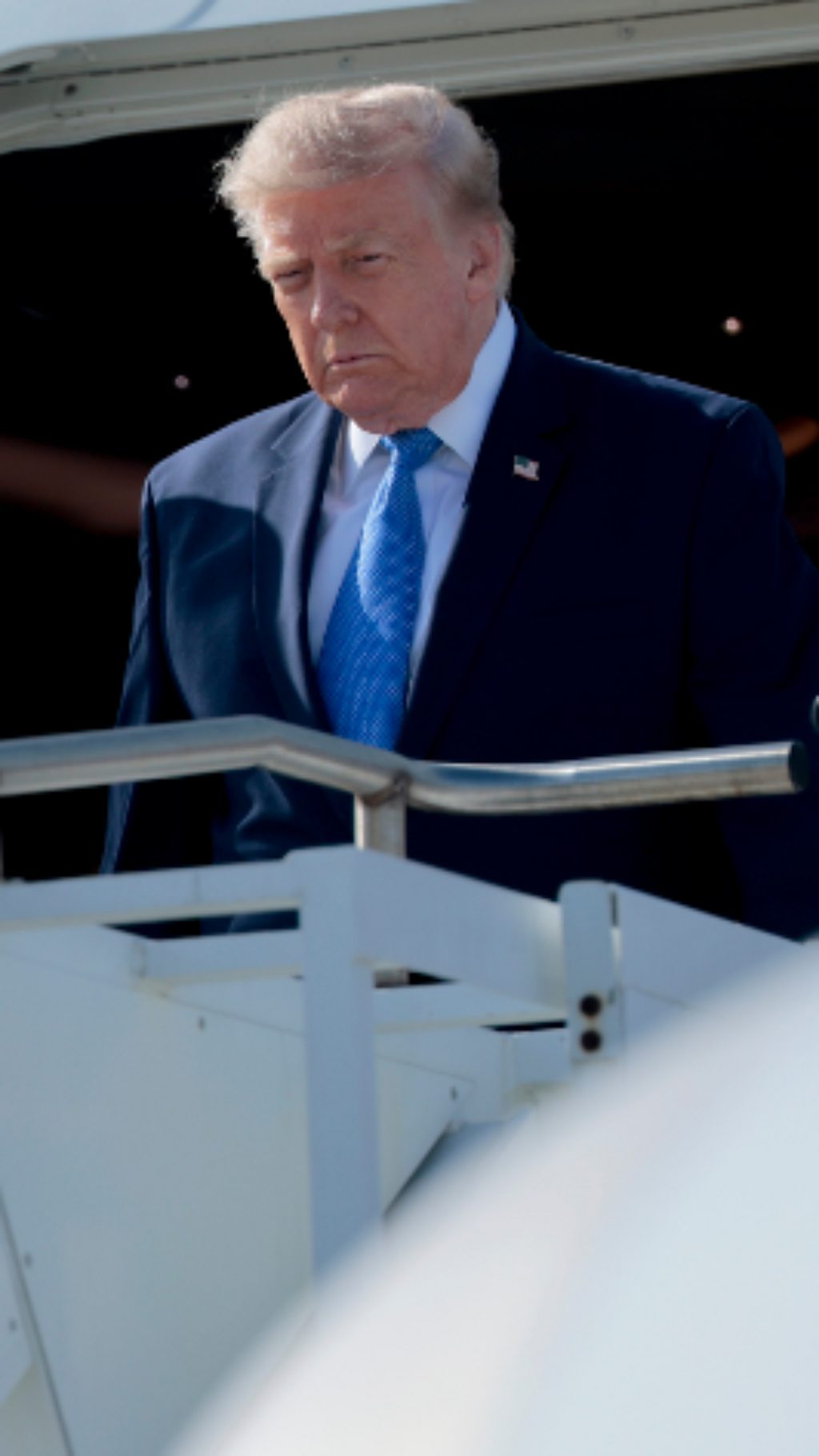
    Just one week before he marks his 80th birthday, sitting U.S. President Donald Trump underwent his scheduled annual physical examination on Tuesday at Walter Reed National Military Medical Center, a facility located just outside Washington, D.C. in Bethesda, Maryland. The visit comes amid growing public discussion and unaddressed questions about the Republican incumbent’s overall health, a topic Trump himself has weaponized against his Democratic predecessor Joe Biden in recent political discourse.

    As the oldest person ever inaugurated to the U.S. presidency, Trump has repeatedly made public claims about his exceptional mental and physical fitness, often contrasting his perceived vitality with Biden’s public appearances. Tuesday’s check-up, which included both medical and dental screenings, follows recent observations of the president that have fueled new speculation: multiple witnesses have noted apparent sleepiness during high-stakes policy meetings, and persistent bruising on his right hand that is regularly concealed with makeup.

    According to an AFP reporter embedded with the presidential motorcade, Trump arrived at the medical facility at approximately 8:50 a.m. local time (12:50 GMT). Per the White House’s publicly released daily schedule, the president is set to convene a critical policy meeting at the White House by 1:30 p.m. local time (17:30 GMT), with ongoing tensions over the Iran conflict topping the meeting’s agenda.

    By longstanding convention, the White House typically releases a public summary of presidential physical examinations within hours or days of the appointment, but the level of detail shared is entirely at the administration’s discretion. Transparency around Trump’s health has long been a point of public criticism, dating back to his first term in office. Last year alone, the president underwent two separate medical visits: a routine scheduled check-up in April, and an unannounced trip to Walter Reed in October that sparked widespread unconfirmed speculation about unreported health issues.

    Last summer, White House officials confirmed that Trump had been evaluated for persistent leg swelling and received a diagnosis of chronic venous insufficiency, a common circulatory condition where damaged vein valves cause blood to pool in the lower extremities, leading to swelling, cramping, and skin discoloration. The confirmation came after multiple public appearances showed Trump with visibly swollen ankles. For the bruising on his right hand, the White House has explained that the marks are a side effect of daily aspirin use, part of what the administration calls a standard cardiovascular prevention regimen.

    Following his unscheduled October 2024 check-up, Trump told reporters that an MRI conducted during the visit showed his cardiovascular health was “excellent.” His attending physician, U.S. Navy Captain Sean Barbabella, released a public letter at the time stating that Trump’s cardiac age was “approximately 14 years younger than his chronological age.”

    Trump’s 80th birthday on June 14 will coincide with a high-profile public event at the White House: a Ultimate Fighting Championship (UFC) cage match hosted on the South Lawn, which is expected to draw thousands of spectators from across the country.

  • Pilgrims pray on Mount Arafat as hajj reaches peak

    Pilgrims pray on Mount Arafat as hajj reaches peak

    On Tuesday, millions of Muslim worshippers from across the globe gathered on Saudi Arabia’s Mount Arafat to mark the sacred climax of the annual hajj pilgrimage, turning the rocky desert hill near Mecca into a sea of faith as they fulfilled one of Islam’s most fundamental obligations, even as regional conflict and record-breaking heat created unprecedented challenges for organizers and pilgrims alike.

    This year’s gathering drew more than 1.5 million total participants, a figure that reflects strong international turnout despite ongoing armed conflict in the Middle East sparked by recent US-Israeli strikes on Iran. In response to those attacks, Tehran launched retaliatory drone and ballistic missile strikes targeting key infrastructure and energy facilities across the Gulf region, including sites within Saudi Arabia, creating widespread uncertainty that impacted travel plans for many Iranian pilgrims. Official data shows just over 30,000 Iranians have completed the journey this year, equal to roughly one-third of the 86,000 pilgrims the country originally expected to send. Iran’s state-run IRNA news agency confirmed that the reduced numbers are a direct result of the ongoing wartime situation. Even amid this regional unrest, Saudi officials noted over the weekend that overall international participation this year still exceeds the total recorded in 2024.

    From the first break of dawn, worshippers clad in the traditional seamless white ihram garments gathered on the 70-meter hill, which holds profound religious significance: it is the site where the Prophet Muhammad is believed to have delivered his final farewell sermon more than 1,400 years ago, outlining the core principles of the Islamic faith. Pilgrims recited verses from the Quran and offered personal prayers, enduring searing desert temperatures that reached as high as 44 degrees Celsius in Mecca over recent days. For many, the moment marked the fulfillment of a lifelong spiritual goal.

    “It is an indescribable feeling,” shared Ahmed Abu al-Ezz, a 35-year-old Egyptian engineer making his first hajj journey as he approached the hill. “This is something I have dreamed of my entire life, and to be here now is beyond words.”

    To support the massive crowd of pilgrims traveling to the site, volunteer teams distributed free bottled water, portable parasols, and pre-prepared food packages, while security and medical support helicopters regularly patrolled the airspace above the gathering to monitor conditions and respond to emergencies.

    Hajj is one of the five central pillars of Islam, a religious obligation that every physically and financially able Muslim must complete at least once in their lifetime. This year’s gathering presented unique heat-related challenges, amplified by human-caused climate change, which scientists confirm is increasing the frequency and intensity of extreme heatwaves across the globe. Unlike female pilgrims, male worshippers are prohibited from wearing head coverings during hajj rituals, forcing many to rely on portable umbrellas to block the blistering midday sun.

    Saudi authorities have implemented sweeping heat safety reforms since the 2024 hajj, when temperatures soaring above 50 degrees Celsius contributed to the deaths of more than 1,300 pilgrims. Upgrades for 2025 include expanded shaded walkways and gathering areas, as well as the deployment of thousands of additional trained medical personnel. The Saudi Ministry of Health confirmed it has mobilized more than 50,000 healthcare workers and 3,000 ambulances across the pilgrimage route to treat heat exhaustion and other medical emergencies.

    Following the day of prayer on Mount Arafat, pilgrims will travel to the nearby plain of Muzdalifah to spend the night in open air, collecting small pebbles that will be used for the symbolic “stoning of the devil” ritual in the valley of Mina, which is scheduled to begin on Wednesday. The full sequence of hajj rituals typically takes five days or more to complete, tracing the exact path Prophet Muhammad took during his final pilgrimage in 632 CE.

    For the Al Saud royal family, which rules Saudi Arabia and holds the ceremonial title of “Custodian of the Two Holy Mosques” (referring to the sacred sites in Mecca and Medina), successful organization of the annual hajj has long been a core source of domestic and international political legitimacy.

  • Australia secures 850,000 tonnes of fertiliser from Indonesia as Iran peace in doubt

    Australia secures 850,000 tonnes of fertiliser from Indonesia as Iran peace in doubt

    Geopolitical volatility in the Middle East has pushed the Australian government to lock in a critical emergency supply of agricultural fertiliser to shield the nation’s farming sector and food supply chain from potential global market disruptions. As hopes for a tentative de-escalation deal between the United States and Iran collapsed following fresh US military strikes on Iranian targets this week, Canberra moved to confirm an additional 80,250 tonnes of urea secured through a partnership with Indonesian fertiliser producer PT Pupuk and Australian industrial firm Incitec Pivot.

    The new shipment is part of a broader 250,000-tonne urea agreement arranged through Indonesia, and marks the sixth additional critical input delivery secured via the Australian government’s $10.7 billion Fuel and Fertiliser Security Facility. The first of these extra shipments are scheduled to arrive on Australian shores in the coming weeks. Export Finance Australia, which was recently granted expanded regulatory powers to support private suppliers in sourcing critical fuel and fertiliser cargoes amid global instability, facilitated the transaction.

    The tense standoff in the Middle East carries outsized importance for Australian supply chains: roughly 20 percent of the world’s total crude oil exports transit through the Strait of Hormuz, a key chokepoint whose security has been thrown into doubt by the renewed hostilities. Urea, a core input for modern agricultural production, is heavily dependent on global energy markets for its manufacturing and shipping, meaning supply disruptions in the Middle East can quickly send fertiliser prices soaring and cut off access for domestic producers.

    Agriculture Minister Julie Collins emphasized that stabilizing fertiliser supplies is a core priority for keeping Australia’s food production network operational during a period of unprecedented global uncertainty. “We have been working around the clock to help secure the critical inputs our farmers and producers need, including fuel and fertiliser,” Collins said. “Supporting the purchase of additional fertiliser shipments is about getting more fertiliser into Australia at a time of global uncertainty, helping to provide our farmers and producers with confidence for the future. The additional fertiliser we’ve secured from Indonesia, in partnership with industry, is the result of our Government’s careful and considered work to strengthen Australia’s relationship with Indonesia.”

    Trade Minister Don Farrell added that the federal government remains committed to partnering with industry and agricultural peak bodies to maintain consistent, reliable supply chains for the nation’s critical agricultural sector. “The Albanese Labor government will always support Australian farmers, and the many jobs and communities this vital sector sustains across the country,” Farrell said.

    The new fertiliser deal comes just days after Prime Minister Anthony Albanese announced a separate agreement to secure 660,000 additional barrels of jet fuel from China, following high-level diplomatic talks with Chinese Premier Li Qiang. Albanese warned that even if a peace deal is reached in the Middle East in the near term, lingering supply chain disruptions will continue to impact global energy and commodity markets for some time.

    “The longer the conflict goes on, the more enduring the impact will be, the economic tail,” Albanese said. “We are very hopeful that the positive signs of a de-escalation and peace in the region will lead to a conclusion. We know, though, this is volatile and uncertain times, and I want to make it clear that when the conflict ends, that doesn’t mean that the economic tail concludes. There will be a period of time before ships are able to go through the Strait of Hormuz.”

    As of this week, the government reports that national stockpiles of key fuels have improved since the outbreak of open hostilities between the US, Israel and Iranian-aligned forces on February 28. Current national reserves hold five more days of petrol, two additional days of diesel (bringing the total to 38 days) and two extra days of jet fuel (totaling 31 days) compared to levels recorded at the end of February. In addition to the new deals with Indonesia and China, the government has also arranged alternative fuel shipments from other regional partners including South Korea and Brunei as part of its broader $10.7 billion strategy to bolster national fuel and fertiliser security.