作者: admin

  • Efficient Sinner underlines status as favourite

    Efficient Sinner underlines status as favourite

    The 2025 French Open got off to a statement start for world No. 1 Jannik Sinner, who cemented his status as the tournament’s overwhelming title favorite with a clinical straight-sets victory over French wildcard Clement Tabur in the tournament’s opening round. Sinner’s 6-1, 6-3, 6-4 win on Court Philippe Chatrier pushed his undefeated run to 30 consecutive matches, a streak that has already seen him claim clay-court titles at Monte Carlo, Madrid, and Rome. His triumph in Rome earlier this month also made him just the third player in men’s tennis history to complete the career Golden Masters, the rare feat of winning all nine ATP Masters 1000 events. This run of form comes at a historic moment for Sinner, who is chasing the only Grand Slam title missing from his trophy collection: a championship at Roland Garros. A Paris win would make him only the 10th male player in the Open Era to complete the career Grand Slam, a milestone rival Carlos Alcaraz claimed his spot in when he won the 2025 Australian Open earlier this year. Between them, Sinner and Alcaraz have taken home the last nine men’s Grand Slam titles. Sinner’s path to the Coupe des Mousquetaires has been cleared of one of its biggest hurdles this year, as defending champion Alcaraz was forced to withdraw from the tournament due to injury. That absence, combined with Novak Djokovic’s nearing retirement after a 20-plus-year Hall of Fame career, has made Sinner the heaviest favorite to win a men’s Grand Slam since Rafael Nadal was favored to claim his fifth consecutive Roland Garros title in 2009. Sinner is well aware of the parallels to that 2009 tournament, where the heavily favored Nadal was upset in the fourth round by Robin Soderling in one of the biggest shocks in Grand Slam history, and will be aiming to avoid that same upset fate during his 2025 run. Tuesday’s opening match marked Sinner’s first return to Court Philippe Chatrier since his heartbreaking 2024 French Open final loss to Alcaraz, a five-set thriller where Sinner squandered three match points before falling to the defending champion. Against Tabur, the world No. 171 entering the tournament, Sinner was in control from the first serve. He kept unforced errors impressively low while firing off winners consistently across all three sets, and did not allow Tabur a single break point over the course of the two-hour and eight-minute match. The draw has already shaped up favorably for Sinner in his half of the bracket, even beyond Alcaraz’s absence. Multiple top seeds exited in the first round on Tuesday: sixth seed Daniil Medvedev and ninth seed Alexander Bublik both suffered opening-round upsets, while fourth seed Felix Auger-Aliassime, the highest remaining ranked seed in Sinner’s half, needed a dramatic fifth-set tiebreak to scrape past world No. 57 Daniel Altmaier. Auger-Aliassime has also lost five consecutive head-to-head matches against Sinner, leaving the Italian with a clear statistical advantage ahead of any potential meeting. Up next for Sinner is a second-round matchup against Argentina’s Juan Manuel Cerundolo, ranked 56th in the world, who advanced after beating British player Jacob Fearnley in his opening round. This year’s opening round also marked a disappointing milestone for British men’s tennis, as no British male players managed to advance past the first round of the 2025 French Open, a historic low for the nation’s contingent at the clay-court major.

  • Iran: ‘shot down Reaper drone’ after US launched new strikes

    Iran: ‘shot down Reaper drone’ after US launched new strikes

    A spiraling cycle of cross-border attacks between U.S. and Iranian forces has thrown fragile ongoing peace negotiations into deep uncertainty, just days after U.S. President Donald Trump claimed progress toward a potential end to the illegal U.S.-Israeli war on Iran. The escalation, which unfolded across roughly 24 hours, has underscored deep divisions between the two sides and cast serious doubt over whether a diplomatic breakthrough can be reached.

    The sequence of hostilities began on Monday, when U.S. Central Command announced it had carried out what it framed as “self-defense strikes” against targets in southern Iran. The military command said the raids targeted Iranian missile launch sites and naval vessels that it accused of planning to deploy mines, framing the action as a necessary measure to protect U.S. troops deployed in the region. The strikes came mere hours after Trump publicly claimed that peace talks with Tehran were moving forward smoothly.

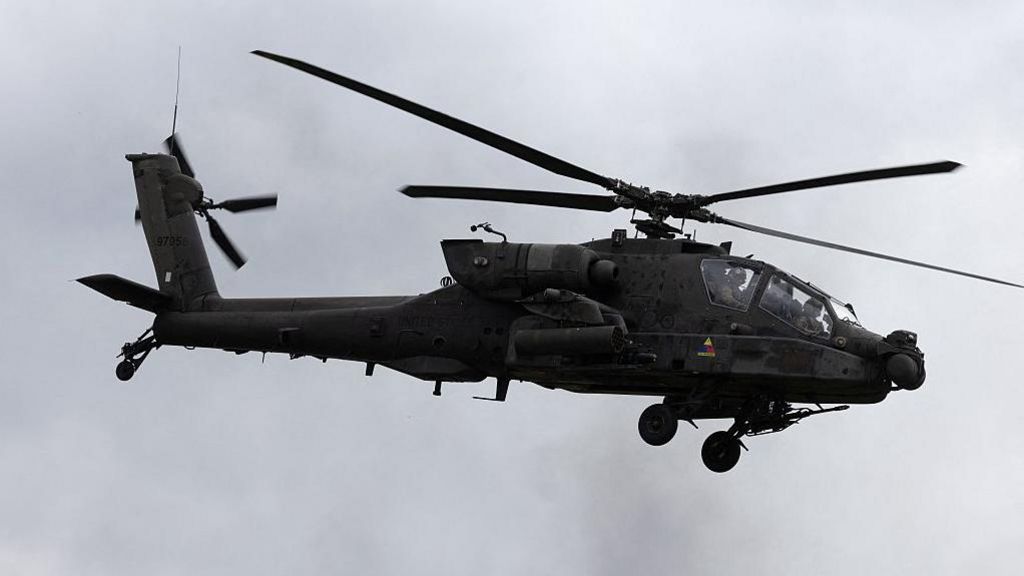
    Early Tuesday, the Iranian military issued a sharp response, confirming that its air defense units had downed a U.S. MQ-9 Reaper drone, and had engaged an RQ-4 surveillance drone and an F-35 fighter jet that had entered Iranian airspace. The Islamic Revolutionary Guard Corps (IRGC), which issued the official statement carried by multiple Iranian state news outlets, characterized its actions as legitimate self-defense, and insisted it retains the full right to respond to any violation of sovereign Iranian territory by aggressive U.S. forces.

    Independent experts have laid out a more detailed sequence of events than either side has publicly released, based on Iranian sources. Hamidreza Azizi, a foreign policy researcher and visiting fellow at the German Institute for International and Security Affairs, explained that the exchange escalated through multiple sequential rounds. “It reportedly began when U.S. forces attacked two IRGC naval boats, killing four Iranian military personnel,” Azizi said. “Iran responded with anti-ship missiles targeting U.S. vessels. Iranian air defense systems then shot down at least one – some reports say three – U.S. drones operating in the area. After that, the U.S. hit Iranian anti-ship missile positions and air defense sites, prompting a second Iranian response targeting U.S. ships in the Arabian Sea with additional anti-ship missiles.”

    To date, independent verification of casualty counts, damage assessments, and which side initiated the clash remains severely limited. The competing accounts of the incident fit a well-established pattern in the conflict, with both nations framing their own military actions as just responses to the other’s aggression. What is clear, however, is that the multi-round escalation over a single day is far harder to de-escalate than an isolated one-off incident, raising urgent questions about the future of the indirect peace talks currently underway between the two countries.

    Diplomatic efforts have been on shaky ground for days, even before the latest military clash. Trump has publicly claimed that a final peace deal is close at hand, and on Monday evening released a social media post laying out his demand that Iran hand over all its enriched uranium to the U.S. for destruction, or destroy it under international supervision. Tehran has not accepted this proposal, and Iranian officials have pushed back hard on Trump’s claims that an imminent deal is near.

    The Wall Street Journal reported on Monday that negotiators have been working toward a 14-point memorandum of understanding that would implement an immediate ceasefire, open the Strait of Hormuz to global shipping after a U.S. blockade, lift some sanctions on Iran, unfreeze Iranian assets held abroad, and set up a 30-day window for broader negotiations that would later address Iran’s nuclear program. According to anonymous sources cited by the outlet, the U.S. is pushing for upfront commitments from Iran on its nuclear program, while Iranian negotiators are demanding concrete, detailed guarantees of sanctions relief before any final agreement is signed.

    During a press briefing on Monday, Iranian Foreign Ministry spokesperson Esmail Baghaei acknowledged that significant progress has been made on many core issues, but rejected any suggestion that a final deal is imminent. “It is correct to say that we have reached a conclusion on a large portion of the issues under discussion,” Baghaei stated. “But to say that this means the signing of an agreement is imminent – no one can make such a claim.”

    Baghaei emphasized that the top and only priority of current negotiations is ending the war on all fronts, including the ongoing Israeli offensive in Lebanon. Contradicting Trump’s public claims, he confirmed that nuclear program issues and the long-term governance of the Strait of Hormuz are not on the table in this round of talks. “How this region should be managed concerns the littoral states,” Baghaei said, referring to Iran and Oman. “We understand that the security of the Strait of Hormuz is a concern for the entire world.”

    The spokesperson also hit out at shifting U.S. negotiating positions and what Tehran says is consistent Israeli efforts to sabotage the diplomatic process. A major sticking point in the talks, he noted, is Iran’s demand that any ceasefire agreement must include an end to Israeli attacks on Lebanon, which have killed or wounded more than 12,000 people to date. Even after a Pakistan-brokered ceasefire took effect in early April, Israel escalated its strikes, killing and wounding more than 1,400 people in a single 24-hour period. “One should expect nothing from Israel except the sabotage of any process,” Baghaei added.

    Trump later tempered his earlier claims of an imminent deal, posting on his Truth Social platform that “Negotiations with the Islamic Republic of Iran are proceeding nicely! It will only be a Great Deal for all or, no Deal at all – Back to the Battlefront and shooting, but bigger and stronger than ever before – And nobody wants that!” Trump also added a new demand to the negotiations: that all regional mediating countries including Turkey, Pakistan, Egypt, Saudi Arabia, Qatar and Jordan be required to join the U.S.-brokered Abraham Accords normalization agreements with Israel, and suggested that Iran itself should also normalize ties with Israel as part of any deal, a proposal Tehran has not engaged with publicly.

    Analysts warn that the latest military escalation has created an extremely high-risk environment for the negotiations. “Fighting and talking at the same time is quite a common thing in a negotiation at the end of a conflict that has been very intense and hasn’t been resolved,” said Samir Puri, a visiting lecturer in war studies at King’s College London. “The key … is to keep talking and to not allow the talks to collapse by these escalations – because these may not be the last escalations. What we don’t know is whether this is the storm before the calm or the calm before the storm. We don’t know whether these negotiations need to be sustained and to absorb these sorts of escalations for days, for weeks, for months. It could be a very long negotiation process still to come.”

    Domestic political opposition to a potential deal has emerged on both sides of the conflict, as well as from Israel. Israeli Prime Minister Benjamin Netanyahu said Sunday that he supports U.S. diplomatic efforts, but insisted that any final deal must eliminate what he calls Iran’s nuclear threat – a position that contradicts long-standing assessments from both U.S. and Israeli intelligence, which confirm Iran halted its nuclear weapons program in the early 2000s and has not resumed it. Israeli opposition leader Yair Lapid joined pro-war Republican U.S. lawmakers in criticizing the emerging framework, calling the proposed deal “bad for Israel, bad for the region, bad for the citizens of Iran.”

    Some U.S. Congressional Democrats have also raised objections to the terms of the potential deal, even as they support an immediate end to the conflict. The war has already killed or wounded more than 30,000 Iranians, most of them civilians, according to the Iranian Ministry of Health. “If this deal with Iran is real, I will welcome it because every day this insane war goes on, America gets weaker,” Sen. Chris Murphy, a Connecticut Democrat, said Sunday. “The priority is to end the war – now. But make no mistake: These are Iran’s terms. Our nation emerges humiliated.”

    Murphy, a long-time opponent of the war, noted that Trump, who withdrew the U.S. from the 2015 Joint Comprehensive Plan of Action (JCPOA) nuclear deal during his first term, has failed to achieve any of his stated war goals. “A hardline regime is still in charge. Iran still has its ballistic missile and drone program. They still have a navy that can close the strait,” Murphy said. “And now that we are dropping sanctions, we have less leverage to get them to give more in future negotiations. Of course, none of those things could be accomplished by an air campaign – which is why so many of us opposed this war. And now the new regime is emboldened. They took our best shot and beat us. Iran emerges more powerful.”

    Iranian military leaders have reaffirmed that their forces are fully prepared to resume and escalate hostilities if negotiations collapse. “Look, Americans talk too much and keep changing their story by the minute,” Khatam al-Anbiya Central Headquarters Commander Ali Abdollahi Aliabadi said Monday. “We’ve said it many times before: On the battlefield, we’ll show what we’re capable of.”

  • Adams & Robinson in US squad for World Cup

    Adams & Robinson in US squad for World Cup

    As the 2026 FIFA World Cup co-host United States moves closer to its opening group stage match, head coach Mauricio Pochettino has officially announced his final 26-player roster for the tournament, bringing together a mix of Europe-based stars and domestic Major League Soccer talent.

    Five players plying their trade in English top-flight and lower-tier clubs earned call-ups to the squad, headlined by Bournemouth midfielder Tyler Adams and Fulham left-back Antonee Robinson — two experienced campaigners who have each notched 52 international caps for the Stars and Stripes to date. They are joined on the roster by Leeds United midfielder Brenden Aaronson, Crystal Palace center-back Chris Richards, and Coventry City forward Haji Wright.

    Other high-profile European-based selections include Celtic defender Auston Trusty, AC Milan attacking star Christian Pulisic, Juventus midfielder Weston McKennie, and Borussia Mönchengladbach attacking midfielder Gio Reyna, the 23-year-old son of former US internationals Claudio Reyna and Danielle Reyna. Reyna’s inclusion comes nearly four years after a high-profile controversy that rocked the 2022 Qatar World Cup US camp. After the 2022 tournament, details emerged that then-head coach Gregg Berhalter had threatened to remove Reyna from the squad over alleged poor attitude in training. In response, Danielle Reyna shared details with US Soccer of a 1991 physical altercation between Berhalter and his then-girlfriend (now wife), triggering an independent investigation by the governing body. The investigation ultimately concluded Berhalter had not improperly hidden information about the incident and found no evidence of repeated similar misconduct. Notably, Pochettino also included Sebastian Berhalter — Gregg Berhalter’s son and current Vancouver Whitecaps midfielder — among the MLS-based players selected for the tournament.

    The full roster also features three goalkeepers: Chicago Fire’s Chris Brady, New York City’s Matt Freese, and New England Revolution’s Matt Turner. Alongside the named defenders, additional backline selections include PSV Eindhoven’s Sergino Dest, Villarreal’s Alex Freeman, Toulouse’s Mark McKenzie, Charlotte FC’s Tim Ream, FC Cincinnati’s Miles Robinson, Borussia Mönchengladbach’s Joe Scally, and Columbus Crew’s Max Arfsten. The midfield corps adds Bayer Leverkusen’s Malik Tillman, Marseille’s Timothy Weah, Seattle Sounders’ Cristian Roldan, and Club America’s Alejandro Zendejas, while the forward group is completed by Monaco’s Folarin Balogun and PSV Eindhoven’s Ricardo Pepi.

    As one of the three joint hosts of the 2026 FIFA World Cup, the United States will kick off its Group D campaign on June 13 against Paraguay, before facing subsequent group stage matches against Australia and Turkey.

  • PSG’s Hakimi in Morocco squad despite injury

    PSG’s Hakimi in Morocco squad despite injury

    As Morocco finalizes its preparations for the 2026 FIFA World Cup, the North African side has made a headline-grabbing selection call: star captain Achraf Hakimi will be part of the Atlas Lions’ tournament squad, despite being sidelined with an injury picked up months earlier in the UEFA Champions League semi-finals.

    The 27-year-old Paris Saint-Germain full-back, who boasts 95 senior international caps for Morocco, has not featured in competitive action since his side’s first-leg victory over Bayern Munich on 28 April. However, recent images of Hakimi taking part in full team training on Tuesday, ahead of PSG’s upcoming Champions League final against Arsenal, have given Moroccan football officials enough confidence to include the influential right-back in their 26-man roster.

    Hakimi is far from the only high-profile name to earn a spot in Walid Regragui’s squad. The call-up list features a host of top talent plying their trade across Europe’s biggest leagues: Manchester United defender Noussair Mazraoui, West Ham United centre-back Issa Diop, Crystal Palace defender Chadi Riad, Sunderland young winger Chemsdine Talbi, and Real Madrid attacking midfielder Brahim Diaz all secured places. Former Manchester United holding midfielder Sofyan Amrabat, now at Real Betis, Olympique de Marseille defender Nayef Aguerd, and VfB Stuttgart playmaker Bilal El Khannouss were also included in the final selection.

    In a surprising omission, former Chelsea winger Hakim Ziyech did not make the cut for the Atlas Lions, ending his hopes of featuring in a third consecutive World Cup tournament.

    Currently ranked eighth in the official FIFA Men’s World Rankings, Morocco enters the 2026 tournament on a wave of historic momentum. The side made history as the first African nation to reach a World Cup semi-final at the 2022 edition in Qatar, where they fell to eventual champions France in a tightly contested match. More recently, Morocco secured a controversial Africa Cup of Nations title in 2025, when their final victory was reinstated after an initial walk-off declaration awarded the win to Senegal, which was later overturned by confederation officials.

    Drawn into Group C for the 2026 World Cup, Morocco will face tough competition from Scotland, five-time champions Brazil, and CONCACAF side Haiti. Their opening group match is scheduled for 19 June against Steve Clarke’s Scotland side, as both teams look to kick off their tournament campaigns with three crucial points.

    Below is the full roster selected by Morocco for the 2026 FIFA World Cup:
    **Goalkeepers**: Yassine Bounou (Al Hilal), Munir Mohamedi (RS Berkane), Ahmed Tagnaouti (Royal Armed Forces)
    **Defenders**: Noussair Mazraoui (Manchester United), Anass Salah-Eddine (PSV Eindhoven), Youssef Belammari (Al Ahly), Nayef Aguerd (Marseille), Chadi Riad (Crystal Palace), Issa Diop (West Ham United), Redouane Halhal (KV Mechelen), Achraf Hakimi (Paris St-Germain), Zakaria El Ouahdi (Genk)
    **Midfielders**: Samir El Mourabet (Strasbourg), Ayyoub Bouaddi (Lille), Neil El Aynaoui (Roma), Sofyan Amrabat (Real Betis), Azzedine Ounahi (Girona), Bilal El Khannouss (Stuttgart), Ismael Saibari (PSV Eindhoven)
    **Forwards**: Abdessamad Ezzalzouli (Real Betis), Chemsdine Talbi (Sunderland), Soufiane Rahimi (Al Ain), Ayoub El Kaabi (Olympiacos), Brahim Diaz (Real Madrid), Yassine Gessime (Strasbourg), Ayoub Amaimouni-Echghouyabe (Eintracht Frankfurt)

  • Nasa unveils next steps to build permanent Moon base

    Nasa unveils next steps to build permanent Moon base

    In a major update to its ambitious lunar exploration agenda, NASA has publicly released new design renderings and contract details for the robotic vehicles and infrastructure that will lay the groundwork for a permanent American outpost on the Moon. The announcement comes as the United States and China engage in a growing 21st-century space race, with both nations racing to put the first humans back on the lunar surface in more than 50 years.

    As part of the $20 billion Ignition Moon Base program first unveiled in March 2025, NASA aims to complete a permanently crewed outpost powered by a mix of nuclear fission and solar energy at the Moon’s south pole by 2032. The program is structured in three distinct phases, starting with an extensive pre-human robotic exploration mission that will map the region’s harsh, cratered terrain and deliver critical scientific equipment. NASA has now awarded construction contracts for this initial phase to three private aerospace firms: Jeff Bezos-founded Blue Origin, Intuitive Machines, and Astrobotic Technology.

    Each company has been tapped to deliver specialized hardware tailored to the challenges of lunar operations. Blue Origin’s Endurance lunar lander is being engineered to execute precision landings across uneven terrain while operating with full autonomous navigation and control. Astrobotic’s Griffin-1 lander, meanwhile, is targeted to touch down in the Nobile Crater, a permanently shadowed basin near the lunar south pole that scientists believe holds large deposits of frozen water ice. All robotic craft will carry a suite of scientific instruments, including high-resolution mapping cameras and laser-based landing assistance tools. Through 2029, the program plans 25 separate robotic launches, delivering a total of 4 metric tons of cargo to the lunar surface, according to Moon Base program executive Carlos García-Galán.

    Following the completion of robotic exploration, the second phase will focus on installing the base’s energy infrastructure, including small modular fission reactors that can provide reliable power through the lunar south pole’s two-week-long dark nights. The third and final phase will see the construction of semi-permanent habitation modules and long-range rovers that will allow human crews to traverse the rocky polar landscape. The south pole was selected as the base site specifically for its accessible water ice, which can be processed into drinking water, breathable oxygen, and rocket fuel for future deep space missions, including crewed missions to Mars. A permanent lunar presence would also open new avenues for cutting-edge lunar science and potential commercial resource extraction, NASA officials say.

    In a statement Tuesday, NASA administrator Jared Isaacman emphasized the long-term commitment of the U.S. to lunar exploration, saying the new contracts confirm America will “never give up the Moon again” after the end of the Apollo program. The U.S. has a stated political goal of landing American astronauts on the Moon before the end of the current presidential term in 2028, putting intense public pressure on NASA to meet the aggressive timeline.

    This timeline puts NASA in direct competition with China’s own lunar program, which is on track to land the first Chinese humans on the Moon by 2030. Just this week, China moved forward with its human spaceflight program, launching the Shenzhou-23 mission to deliver a new crew to the Tiangong space station in low Earth orbit, demonstrating consistent progress in its space infrastructure development. Many independent space experts, however, say NASA’s 2028 landing target is unrealistic, given persistent delays in the development of the human landing system.

    NASA has contracted Elon Musk’s SpaceX to develop the Starship Human Landing System, the craft that will carry astronauts from lunar orbit down to the surface. The project has faced repeated technical setbacks and schedule slippage that have pushed back its expected completion date. “It would not surprise me at all if China gets there first,” Dr. Simeon Barber, a lunar scientist at the U.K.’s Open University, told reporters. Barber noted that the ongoing delays to the human landing craft are the single biggest bottleneck for NASA’s lunar agenda. He also suggested that the aggressive timeline and recent string of announcements are driven as much by political pressure as technical planning, saying NASA feels compelled to demonstrate progress amid the high-profile competition with China. Even after the successful Artemis II mission that carried four American astronauts on a lunar flyby in April 2026, many scientists share Barber’s view that China is on track to beat the U.S. to the first crewed lunar landing of this new space race.

  • Morocco’s Hakimi among 9 picked for World Cup returning from historic 2022 squad

    Morocco’s Hakimi among 9 picked for World Cup returning from historic 2022 squad

    Fresh off their history-making run at the 2022 Qatar World Cup, Morocco has announced its 26-man squad for the 2026 FIFA World Cup hosted across North America, with star Paris Saint-Germain right-back Achraf Hakimi headlining a roster that blends veteran experience from the 2022 breakout campaign and exciting newly eligible talent drawn from the nation’s European diaspora.

    Named to the squad just three months after newly appointed head coach Mohamed Ouahbi took charge of the national side, the majority of the selected players were born in Europe, a reflection of Morocco’s longstanding strategy of leveraging the deep pool of talent with Moroccan heritage playing across the continent’s top leagues. Ouahbi himself was born in Belgium, and a number of squad members share similar cross-continental roots: Hakimi and Real Madrid forward Brahim Diaz are two of five players born in Spain who qualify to represent Morocco through their family lineage. Diaz, who previously earned caps for the Spanish men’s national team, switched his international allegiance to Morocco in 2024.

    Over the past nine months, FIFA has approved nationality changes for three players included in Ouahbi’s 26-man roster: Fulham center-back Issa Diop, PSV Eindhoven left-back Anass Salah-Eddine, and 18-year-old Lille promising midfielder Ayyoub Bouaddi, marking their first major senior international tournament with the North African nation.

    Veteran leadership remains a core pillar of the squad: 35-year-old goalkeeper Yassine Bounou, who delivered a series of viral standout performances during Morocco’s 2022 Cinderella run, is set to make his third World Cup appearance when the tournament kicks off. Bounou is one of nine players returning from the 2022 squad that made global football history as the first African nation ever to reach the World Cup semifinals.

    Led by then-coach Walid Regragui in 2022, Morocco defied all pre-tournament projections to top a group containing 2018 runner-up Croatia and pre-tournament favorite Belgium, before knocking out Spain and Portugal in consecutive knockout round matches. Their fairy-tale run only ended against eventual champions France, where an injury-ravaged Moroccan side bowed out in a tight semi-final contest.

    Morocco enters the 2026 tournament holding the title of African Cup of Nations champions, though that status remains under dispute. The Atlas Lions currently hold the title via a legal ruling following their January 2025 final against Senegal, but Senegal has appealed the decision to the Court of Arbitration for Sport, seeking to have its on-field victory reinstated. A ruling is expected in the coming months that could strip Morocco of the continental title before the World Cup gets underway.

    The current set-up follows a period of transition for Morocco’s senior side: Regragui stepped down from his role four months ago following the AFCON final loss to Senegal, opening the door for Ouahbi’s appointment. The new head coach earned his new position after leading Morocco’s Under-20 national side to a surprise World Cup title in 2025, where his young squad defeated Argentina in the final. One of the standout players from that under-20 triumph, Strasbourg forward Gessime Yassine, has earned a call-up to the senior 2026 World Cup squad Tuesday.

    Drawn into Group C, Morocco will base its pre-tournament training camp in New Jersey, kicking off its World Cup campaign against five-time champion Brazil on June 13 in East Rutherford. The team will then face Scotland in Massachusetts, before closing out group stage play against Haiti on June 24 in Atlanta. Like all teams in the expanded 48-team 2026 tournament, Morocco retains a path to the knockout stage even if it finishes third in its group: the top two sides from each group advance directly to the round of 16, while the four best third-place finishers also move on to the knockout round.

    Looking ahead beyond 2026, Morocco is already set to co-host the 2030 World Cup alongside Spain and Portugal, with original 1930 host nations Argentina, Paraguay and Uruguay also named as co-hosts that will each host one group stage match to mark the tournament’s centennial.

    The full 2026 Morocco World Cup squad is as follows:
    Goalkeepers: Yassine Bounou (Al-Hilal), Munir El Kajoui (RS Berkane), Ahmed Reda Tagnaouti (AS FAR)
    Defenders: Noussair Mazraoui (Manchester United), Anass Salah-Eddine (PSV Eindhoven), Youssef Belammari (Al Ahly), Achraf Hakimi (Paris Saint-Germain), Zakaria El Ouahdi (Genk), Nayef Aguerd (Marseille), Chadi Riad (Crystal Palace), Redouane Halhal (Mechelen), Issa Diop (Fulham)
    Midfielders: Samir El Mourabet (Strasbourg), Ayyoub Bouaddi (Lille), Neil El Aynaoui (Roma), Sofyan Amrabat (Real Betis), Azzedine Ounahi (Girona), Bilal El Khannouss (Stuttgart), Ismael Saibari (PSV Eindhoven)
    Forwards: Abdessamad Ezzalzouli (Real Betis), Chemsdine Talbi (Sunderland), Soufiane Rahimi (Al Ain), Ayoub El Kaabi (Olympiakos), Brahim Diaz (Real Madrid), Gessime Yassine (Strasbourg), Ayoube Amaimouni-Echghouyabe (Eintracht Frankfurt)

  • Watch: Nasa shows renderings for planned permanent moon base

    Watch: Nasa shows renderings for planned permanent moon base

    In a major milestone for humanity’s deep space exploration ambitions, NASA has publicly released detailed digital renderings that outline its blueprint for a long-term, crewed outpost on the Moon, with a formal target of establishing permanent human habitation on Earth’s only natural satellite by 2032.

    The newly revealed visualizations offer the public and scientific communities a clear preview of what the groundbreaking facility could look like once completed, showcasing modular living quarters, research laboratories, and operational zones designed to sustain human life through the Moon’s extreme temperature swings, long dark lunar nights, and harsh cosmic radiation environment. Unlike the short-duration Apollo missions of the 1960s and 1970s that only saw brief visits by astronauts, this project marks a fundamental shift in lunar exploration: moving from temporary visits to continuous, long-term human presence off Earth.

    Experts note that a permanent lunar base is not just an end goal on its own. It is positioned as a critical stepping stone for future crewed missions to Mars, allowing scientists to test life support systems, resource utilization technologies (including extracting water ice from lunar polar regions), and deep space survival strategies in a relatively accessible deep space environment. The project also opens new opportunities for international collaboration and commercial partnership in space exploration, with multiple private aerospace companies already contributing to development planning for key components of the base.

    NASA’s release of these renderings comes amid renewed global interest in lunar exploration, with multiple space agencies around the world advancing their own lunar exploration plans in recent years. The 2032 target date sets a clear timeline for the agency to advance engineering development, test new technologies, and execute precursor missions to lay the groundwork for the permanent habitation facility.

  • African nations seek security ties with Turkey through ‘Somalia model’

    African nations seek security ties with Turkey through ‘Somalia model’

    Over the weekend, Turkish Defense Minister Yasar Guler confirmed a growing trend across the African continent: a rising number of African states are pushing to adopt the long-developed ‘Somali model’ partnership that Ankara and Mogadishu have built over more than a decade, aiming to secure Turkish security and economic support to strengthen their own national capacity. Speaking on the sidelines of the Efes military exercises held in western Turkey, Guler emphasized that Turkey continues to deliver specialized military training and technical assistance to armed forces across African nations in response to their formal requests, supporting steady progress in local defense capacity building. ‘In this context, several other countries are requesting the same comprehensive model we implemented in Somalia,’ Guler noted, adding that Turkish officials are currently reviewing each incoming request.

  • Atrocities in Sudan backed by Colombian mercenaries trained at UAE bases, says report

    Atrocities in Sudan backed by Colombian mercenaries trained at UAE bases, says report

    A groundbreaking new investigation from Human Rights Watch (HRW) has uncovered damning evidence linking the United Arab Emirates to the deployment of hundreds of Colombian mercenaries in Sudan, where the foreign fighters have supported the Rapid Support Forces (RSF) — a paramilitary group accused of large-scale war crimes and genocide in the country’s ongoing civil conflict.

    According to the 38-page report, Abu Dhabi-based private security firm Global Security Services Group (GSSG) has actively recruited hundreds of Colombian special operations contractors since the start of 2024, deploying them directly to Sudan to fight alongside the RSF against the official Sudanese Armed Forces (SAF). HRW investigators confirmed that the contractors passed through UAE-operated military bases on Sudanese territory before joining frontline RSF units, a trail of evidence that the human rights organization says proves direct UAE complicity in widespread violence committed by the paramilitary.

    The RSF has faced mounting international accusations of genocide, systematic mass sexual violence, ethnic cleansing, and multiple other violations of international humanitarian law since Sudan’s civil conflict reignited in April 2023. HRW’s findings add new weight to global calls for punitive action against the UAE, which has long faced allegations of covertly backing the RSF despite consistent official denials.

    “The recruitment of Colombian private military contractors adds to a growing body of evidence that the UAE provides military support to the Rapid Support Forces, which have repeatedly carried out heinous atrocities in Sudan,” said Mausi Segun, executive director of HRW’s Africa Division. “Governments should publicly demand that the UAE stop supplying weapons, equipment, personnel, and other military support to the Rapid Support Forces.”

    HRW’s findings align with earlier independent investigations into RSF atrocities. In March 2024, Yale University’s Humanitarian Research Lab (HRL) corroborated United Nations claims of genocide in Sudan’s Darfur region, documenting that RSF forces had waged a deliberate campaign of starvation against the strategic city of el-Fasher. The lab’s report confirmed that RSF fighters razed dozens of rural farming villages, destroyed critical crop infrastructure, and systematically targeted civilian populations after seizing control of the city. Extensive on-the-ground interviews conducted by independent outlet Middle East Eye (MEE), alongside subsequent UN and HRL investigations, have documented widespread extrajudicial executions, mass rape, and extortion of el-Fasher’s civilian population by RSF fighters.

    The presence of Colombian mercenaries in Sudan first entered public view in November 2024, when a SAF-aligned armed group released social media videos showing an intercepted convoy of Colombian fighters that had crossed into Sudan from neighboring Libya. While the UAE has repeatedly rejected all accusations of supporting the RSF, MEE has published years of investigative work backed by satellite imagery, flight tracking logs, weapons serial numbers, and multiple anonymous insider sources confirming the UAE’s ongoing military backing for the paramilitary.

    Joey Shea, a lead HRW researcher on the investigation, told MEE that Colombian contractors transited through sensitive UAE military and government facilities prior to their deployment to RSF frontlines. She added that investigators have directly linked the foreign contractors to grave human rights abuses on the ground.

    “One contractor who I spoke to told me that he helped to support the training of child soldiers, boys as young as 13-14 years old,” Shea explained.

    The investigation also revealed that the military relationship between the UAE and Colombian private military contractors stretches back more than a decade. As early as 2011, The New York Times reported that UAE leader Mohammed bin Zayed Al Nahyan was building a foreign legion of up to 800 Colombian contractors to serve officially within the UAE armed forces. One retired Colombian contractor interviewed by HRW confirmed he took part in that 2011 recruitment drive, noting that the operation was entirely public, with all participants receiving formal work contracts for their service in the UAE.

    This report is based on independent reporting from Middle East Eye, a media outlet specializing in original, unfiltered coverage of the Middle East, North Africa, and global affairs.

  • Women’s soccer star Alexia Putellas leaves Barcelona after 14 seasons

    Women’s soccer star Alexia Putellas leaves Barcelona after 14 seasons

    After 14 seasons of transformative leadership and unprecedented success that reshaped women’s soccer on both domestic and global stages, two-time consecutive Ballon d’Or winner Alexia Putellas is preparing to depart FC Barcelona, the Catalan giants confirmed this week. The club announced Tuesday that the 32-year-old icon will formally say goodbye to fans and teammates during a ceremonial event at Camp Nou on Wednesday, an occasion organized to honor the extraordinary legacy of a player who has become a global role model both on and off the pitch.
    Putellas’ exit comes just days after she helped Barcelona secure their fourth UEFA Women’s Champions League crown in just six seasons, capping her final campaign with the club with one more major trophy. Since joining Barcelona from Levante back in 2011 at the age of 18, Putellas has built an unmatched record with the club: she has featured in 507 senior matches, the second-highest total in the club’s all-time history, and netted 232 goals — a mark that stands as a new club record for any player, male or female. Over her 14 years in Barcelona’s blue and garnet stripes, Putellas lifted 38 major trophies, including 10 Spanish domestic league titles and the four continental crowns.
    In a heartfelt video message shared across her personal social media channels, Putellas reflected on her time with the club, saying, “The time has come to acknowledge that I’ve given everything for these colors. It’s been a perfect story.”
    Putellas’ legacy extends far beyond the trophy case and record books. She was the talismanic leader of Barcelona’s first-ever Champions League winning side in 2021, a breakthrough triumph that cemented Spanish women’s soccer as a global powerhouse. Her back-to-back Ballon d’Or wins in 2021 and 2022 brought unprecedented mainstream attention to the women’s game, with many analysts crediting her influence as a key factor behind Spain’s 2023 FIFA Women’s World Cup victory.
    Off the pitch, Putellas has stood at the forefront of cultural change for women’s soccer in Spain. When the Spanish football federation was plunged into crisis following former president Luis Rubiales’ unwanted non-consensual kiss of player Jenni Hermoso during the 2023 World Cup trophy ceremony, Putellas stepped forward as one of the leading voices of the player rebellion that ultimately forced Rubiales to resign. Reflecting on the progress of the sport over her career, Putellas noted, “At the beginning, being a soccer player wasn’t even recognized as a profession. Now I feel privileged to have been part of this change.”
    Her career has not been without adversity: a serious leg injury sidelined her for months at the peak of her powers, casting doubt over her future at the top level. After her return, limited minutes sparked widespread rumors of an early exit, but Putellas ultimately committed to a contract extension to see out her final chapter with the club she called home for nearly 15 years.
    As of yet, Putellas has not confirmed her next professional move, but speculation across Spanish soccer circles has linked her to a potential move to the London City Lionesses, a rapidly rising club in England’s second tier. Putellas was spotted attending a Lionesses match in London back in January, fueling ongoing rumors about her next step.