In a moment blending automotive history and high-profile ceremonial debut, Ferrari this week pulled back the curtain on its first fully electric production vehicle, the Luce, but the iconic Italian supercar brand’s big bet on electrification has immediately faced sharp market skepticism amid a shaky global EV landscape.
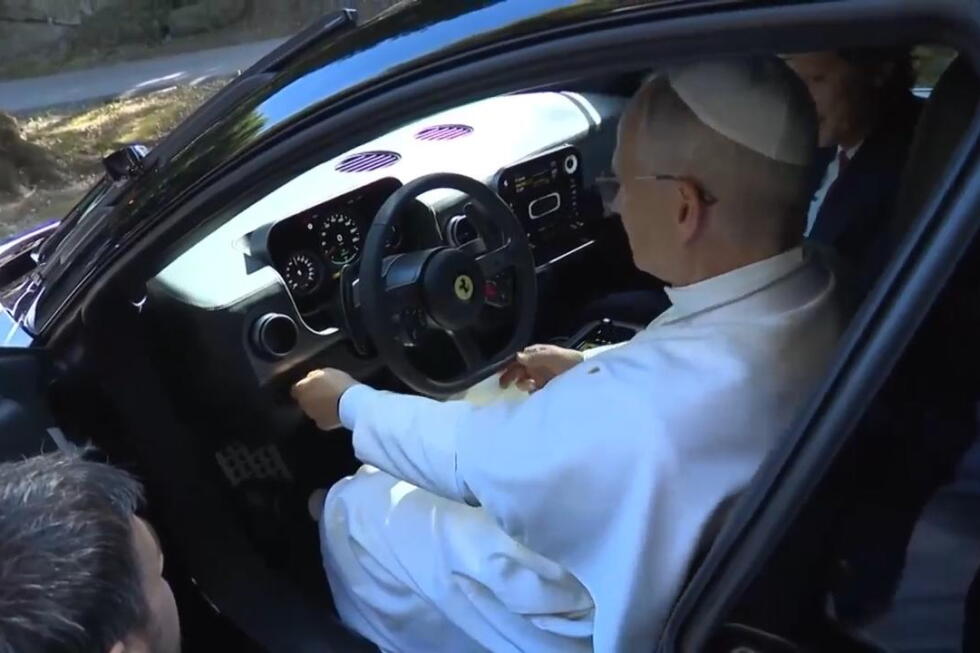
The luxury marque first revealed the Luce — whose name translates to “light” in Italian — to the public on Monday, just days before brand leadership gave exclusive previews of the five-seat, four-door model to Italy’s president and Pope Leo XIV at the pontiff’s summer residence in Castel Gandolfo, outside Rome. During the private viewing, Pope Leo slipped into the Luce’s driver’s seat, where Ferrari test driver Raffaele De Simone walked him through the vehicle’s steering wheel controls, with Ferrari chairman John Elkann seated beside him in the passenger compartment.
Engineered to mark a new era for the 77-year-old performance brand, the Luce packs impressive technical specs: four independent electric motors (one for each wheel) deliver a total 1,000 horsepower, propelling the car from 0 to 100 km/h (0 to 62 mph) in just 2.5 seconds, with a maximum driving range of more than 530 km (329 miles) on a single charge. Pricing for the Italian market is reported to hit a staggering 500,000 euros, with U.S. pricing still yet to be officially announced.
For Ferrari, the launch is far more than just adding a new model to its lineup. “We are not simply unveiling a new car, we are inaugurating a chapter that turns our vision into reality, strengthening Ferrari’s tradition of anticipating and shaping the future,” Elkann said in an official statement marking the debut. The brand, which already offers hybrid powertrain options across much of its lineup, has poured billions of euros into its electrification transition, though it recently scaled back its 2030 fully electric lineup target from 40% to just 20% amid shifting market expectations.
Despite the brand’s ambitious long-term vision, the debut has been met with immediate pushback from investors, critics and consumers alike. By Tuesday trading, Ferrari shares plummeted 8.4% on the Milan stock exchange, while U.S.-listed shares of the automaker fell 5.3% as markets reacted to the high-risk launch. Auto industry critics have echoed that uncertainty, with many arguing the Luce deviates sharply from Ferrari’s signature design and positioning that has defined the brand for decades.
“The internet has made up its mind, hasn’t it, if you’ve seen any of the comments on it. And it’s not universally loved from the outside,” said Matt Prior, editor-at-large for U.K.-based automotive outlet Autocar. While Prior praised the Luce’s refined interior, he noted the fundamental engineering shift from internal combustion to battery power has created unavoidable design tradeoffs. With the large battery pack mounted under the vehicle’s floor, the Luce sits taller than traditional Ferrari models, a change that compromises the sleek, low-slung profile the brand is famous for.
“For a company whose entire history is based on making dynamic-looking sleek cars, it’s maybe harder for Ferrari to get around than it is for other manufacturers,” Prior explained.
Industry analysts have also raised questions about the timing and positioning of the ultra-luxury EV at a moment when most global automakers are targeting mainstream consumers with more affordable electric models. Robby DeGraff, product and consumer insights manager at automotive research firm AutoPacific, called the Luce “perhaps the most controversial model to bear the stallion on its fenders,” questioning whether the brand’s loyal customer base demands a six-figure electric vehicle. Even so, DeGraff acknowledged the launch is a strategic move to help Ferrari comply with tightening global emissions regulations that will require all major automakers to expand zero-emission lineups in the coming decade.
Ferrari’s launch comes at a uniquely challenging moment for the global EV market. While policy mandates — including the European Union’s requirement for a 90% cut in tailpipe emissions by 2035 — have pushed automakers to invest heavily in electrification, slowing demand growth in key markets and intensifying competition have forced many brands to scale back their electric targets, with several major manufacturers posting billions in losses on their EV divisions.
Global electric car sales hit 20 million last year, meaning one in four new passenger vehicles sold worldwide is now electric, according to the International Energy Agency. European EV sales grew more than 30% in 2025, but the market has become increasingly cutthroat, with a flood of affordable, technologically advanced Chinese EV models grabbing market share from established European and American brands. EV adoption also remains uncertain in the U.S., where recent policy shifts have disrupted market planning, and even elevated consumer interest following the outbreak of the U.S.-Iran war has yet to translate into sustained, widespread sales growth.
“The whole electric car market is not really where it could be,” Prior said. “And so much of it is legislation driven rather than natural demand driven.”
The report was filed by Alexa St. John from Detroit, with additional contributions from Associated Press journalists Cassandra Allwood in London and Colleen Barry in Milan.