A spiraling cycle of cross-border attacks between U.S. and Iranian forces has thrown fragile ongoing peace negotiations into deep uncertainty, just days after U.S. President Donald Trump claimed progress toward a potential end to the illegal U.S.-Israeli war on Iran. The escalation, which unfolded across roughly 24 hours, has underscored deep divisions between the two sides and cast serious doubt over whether a diplomatic breakthrough can be reached.
The sequence of hostilities began on Monday, when U.S. Central Command announced it had carried out what it framed as “self-defense strikes” against targets in southern Iran. The military command said the raids targeted Iranian missile launch sites and naval vessels that it accused of planning to deploy mines, framing the action as a necessary measure to protect U.S. troops deployed in the region. The strikes came mere hours after Trump publicly claimed that peace talks with Tehran were moving forward smoothly.
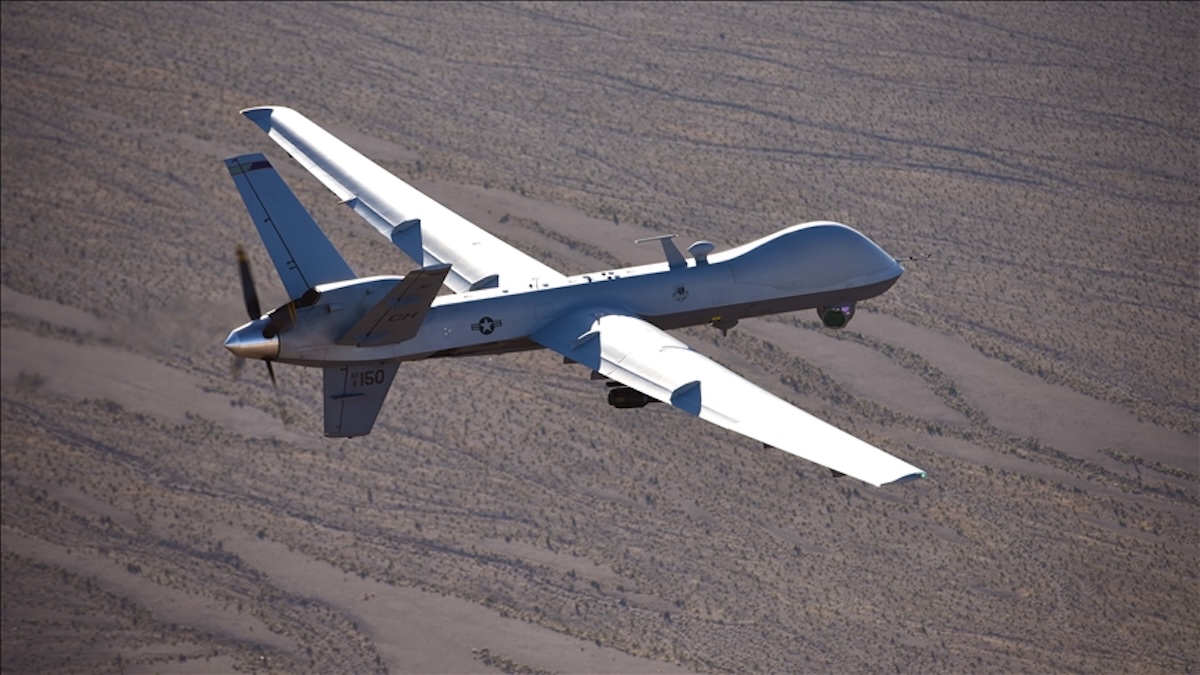
Early Tuesday, the Iranian military issued a sharp response, confirming that its air defense units had downed a U.S. MQ-9 Reaper drone, and had engaged an RQ-4 surveillance drone and an F-35 fighter jet that had entered Iranian airspace. The Islamic Revolutionary Guard Corps (IRGC), which issued the official statement carried by multiple Iranian state news outlets, characterized its actions as legitimate self-defense, and insisted it retains the full right to respond to any violation of sovereign Iranian territory by aggressive U.S. forces.
Independent experts have laid out a more detailed sequence of events than either side has publicly released, based on Iranian sources. Hamidreza Azizi, a foreign policy researcher and visiting fellow at the German Institute for International and Security Affairs, explained that the exchange escalated through multiple sequential rounds. “It reportedly began when U.S. forces attacked two IRGC naval boats, killing four Iranian military personnel,” Azizi said. “Iran responded with anti-ship missiles targeting U.S. vessels. Iranian air defense systems then shot down at least one – some reports say three – U.S. drones operating in the area. After that, the U.S. hit Iranian anti-ship missile positions and air defense sites, prompting a second Iranian response targeting U.S. ships in the Arabian Sea with additional anti-ship missiles.”
To date, independent verification of casualty counts, damage assessments, and which side initiated the clash remains severely limited. The competing accounts of the incident fit a well-established pattern in the conflict, with both nations framing their own military actions as just responses to the other’s aggression. What is clear, however, is that the multi-round escalation over a single day is far harder to de-escalate than an isolated one-off incident, raising urgent questions about the future of the indirect peace talks currently underway between the two countries.
Diplomatic efforts have been on shaky ground for days, even before the latest military clash. Trump has publicly claimed that a final peace deal is close at hand, and on Monday evening released a social media post laying out his demand that Iran hand over all its enriched uranium to the U.S. for destruction, or destroy it under international supervision. Tehran has not accepted this proposal, and Iranian officials have pushed back hard on Trump’s claims that an imminent deal is near.
The Wall Street Journal reported on Monday that negotiators have been working toward a 14-point memorandum of understanding that would implement an immediate ceasefire, open the Strait of Hormuz to global shipping after a U.S. blockade, lift some sanctions on Iran, unfreeze Iranian assets held abroad, and set up a 30-day window for broader negotiations that would later address Iran’s nuclear program. According to anonymous sources cited by the outlet, the U.S. is pushing for upfront commitments from Iran on its nuclear program, while Iranian negotiators are demanding concrete, detailed guarantees of sanctions relief before any final agreement is signed.
During a press briefing on Monday, Iranian Foreign Ministry spokesperson Esmail Baghaei acknowledged that significant progress has been made on many core issues, but rejected any suggestion that a final deal is imminent. “It is correct to say that we have reached a conclusion on a large portion of the issues under discussion,” Baghaei stated. “But to say that this means the signing of an agreement is imminent – no one can make such a claim.”
Baghaei emphasized that the top and only priority of current negotiations is ending the war on all fronts, including the ongoing Israeli offensive in Lebanon. Contradicting Trump’s public claims, he confirmed that nuclear program issues and the long-term governance of the Strait of Hormuz are not on the table in this round of talks. “How this region should be managed concerns the littoral states,” Baghaei said, referring to Iran and Oman. “We understand that the security of the Strait of Hormuz is a concern for the entire world.”
The spokesperson also hit out at shifting U.S. negotiating positions and what Tehran says is consistent Israeli efforts to sabotage the diplomatic process. A major sticking point in the talks, he noted, is Iran’s demand that any ceasefire agreement must include an end to Israeli attacks on Lebanon, which have killed or wounded more than 12,000 people to date. Even after a Pakistan-brokered ceasefire took effect in early April, Israel escalated its strikes, killing and wounding more than 1,400 people in a single 24-hour period. “One should expect nothing from Israel except the sabotage of any process,” Baghaei added.
Trump later tempered his earlier claims of an imminent deal, posting on his Truth Social platform that “Negotiations with the Islamic Republic of Iran are proceeding nicely! It will only be a Great Deal for all or, no Deal at all – Back to the Battlefront and shooting, but bigger and stronger than ever before – And nobody wants that!” Trump also added a new demand to the negotiations: that all regional mediating countries including Turkey, Pakistan, Egypt, Saudi Arabia, Qatar and Jordan be required to join the U.S.-brokered Abraham Accords normalization agreements with Israel, and suggested that Iran itself should also normalize ties with Israel as part of any deal, a proposal Tehran has not engaged with publicly.
Analysts warn that the latest military escalation has created an extremely high-risk environment for the negotiations. “Fighting and talking at the same time is quite a common thing in a negotiation at the end of a conflict that has been very intense and hasn’t been resolved,” said Samir Puri, a visiting lecturer in war studies at King’s College London. “The key … is to keep talking and to not allow the talks to collapse by these escalations – because these may not be the last escalations. What we don’t know is whether this is the storm before the calm or the calm before the storm. We don’t know whether these negotiations need to be sustained and to absorb these sorts of escalations for days, for weeks, for months. It could be a very long negotiation process still to come.”
Domestic political opposition to a potential deal has emerged on both sides of the conflict, as well as from Israel. Israeli Prime Minister Benjamin Netanyahu said Sunday that he supports U.S. diplomatic efforts, but insisted that any final deal must eliminate what he calls Iran’s nuclear threat – a position that contradicts long-standing assessments from both U.S. and Israeli intelligence, which confirm Iran halted its nuclear weapons program in the early 2000s and has not resumed it. Israeli opposition leader Yair Lapid joined pro-war Republican U.S. lawmakers in criticizing the emerging framework, calling the proposed deal “bad for Israel, bad for the region, bad for the citizens of Iran.”
Some U.S. Congressional Democrats have also raised objections to the terms of the potential deal, even as they support an immediate end to the conflict. The war has already killed or wounded more than 30,000 Iranians, most of them civilians, according to the Iranian Ministry of Health. “If this deal with Iran is real, I will welcome it because every day this insane war goes on, America gets weaker,” Sen. Chris Murphy, a Connecticut Democrat, said Sunday. “The priority is to end the war – now. But make no mistake: These are Iran’s terms. Our nation emerges humiliated.”
Murphy, a long-time opponent of the war, noted that Trump, who withdrew the U.S. from the 2015 Joint Comprehensive Plan of Action (JCPOA) nuclear deal during his first term, has failed to achieve any of his stated war goals. “A hardline regime is still in charge. Iran still has its ballistic missile and drone program. They still have a navy that can close the strait,” Murphy said. “And now that we are dropping sanctions, we have less leverage to get them to give more in future negotiations. Of course, none of those things could be accomplished by an air campaign – which is why so many of us opposed this war. And now the new regime is emboldened. They took our best shot and beat us. Iran emerges more powerful.”
Iranian military leaders have reaffirmed that their forces are fully prepared to resume and escalate hostilities if negotiations collapse. “Look, Americans talk too much and keep changing their story by the minute,” Khatam al-Anbiya Central Headquarters Commander Ali Abdollahi Aliabadi said Monday. “We’ve said it many times before: On the battlefield, we’ll show what we’re capable of.”