作者: admin

  • Hegseth says Colombia’s new president has requested US collaboration in anti-drug efforts

    Hegseth says Colombia’s new president has requested US collaboration in anti-drug efforts

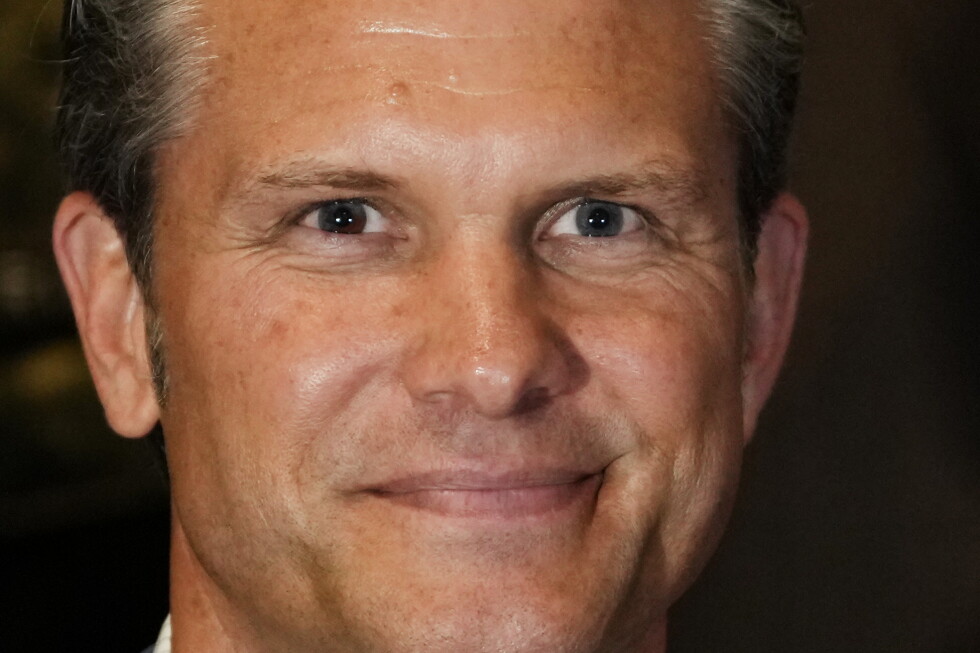
    PANAMA CITY – During a regional gathering focused on counter-narcotics cooperation held this Wednesday, U.S. Defense Secretary Pete Hegseth made two key announcements that reshape security and diplomatic dynamics across the Western Hemisphere. First, he confirmed that Colombia’s newly inaugurated presidential administration under Abelardo de la Espriella — widely known by his nickname “El Tigre” — has formally requested American military collaboration for joint counter-narcotics operations targeting what Washington terms “narco-terrorism” within Colombian territory.

    The announcement came on the sidelines of the Americas Counter-Cartel Coalition meeting, where Hegseth also revealed that Colombia will formally join the U.S.-led “Shield of the Americas” initiative as its 19th participating nation. The initiative, first launched during a March summit hosted by U.S. President Donald Trump for regional leaders aligned on aggressive cartel opposition, notably did not extend an invitation to de la Espriella’s predecessor, progressive former President Gustavo Petro.

    “Through our newly inaugurated president — what our president likes to call President El Tigre — Colombia has formally asked the U.S. Department of Defense to partner with Colombian forces in the fight against narco-terrorism, authorizing joint military operations to dismantle terrorists and their operational networks,” Hegseth told attendees of the closed coalition gathering.

    As of Thursday, de la Espriella’s administration, which was sworn in just last week, has not issued an official public response to Hegseth’s confirmation. The conservative Colombian leader had previously signaled his willingness to join the U.S.-backed anti-cartel initiative during his election campaign, however, aligning with his platform of tougher security policy against drug trafficking groups.

    In a separate, sweeping address to coalition attendees, Hegseth issued a call for all participating Latin American nations to cut formal recognition of the International Criminal Court (ICC). The push comes amid long-standing tensions between the Trump administration and the global judicial body, which has issued arrest warrants for senior Israeli officials over alleged war crimes in Gaza and launched investigations into potential misconduct by U.S. military personnel in Afghanistan. The Trump administration has in turn launched a coordinated diplomatic campaign to undermine and dismantle the court in retaliation.

    Hegseth defended U.S. military strikes targeting suspected drug traffickers across the Latin American region — operations that have drawn widespread international scrutiny over their legal compliance — claiming the actions “are entirely legal under international humanitarian law.” He also repeated the Trump administration’s talking point that ICC investigations infringe on national sovereignty, arguing the court seeks to strip regional governments and domestic judicial systems of their independent authority. It remains unclear from Hegseth’s remarks whether the ICC has actually opened any probes or taken any formal actions to block current U.S. counter-narcotics operations in the region.

  • ‘If you’re not conservative, don’t come here’: The town making missiles for Trump

    ‘If you’re not conservative, don’t come here’: The town making missiles for Trump

    Tucked into the rolling Appalachian foothills of East Tennessee, Kingsport is a working-class community of 58,000 where local lore holds there is a ‘church on every corner.’ Christianity shapes nearly every facet of public life here, with a banner hanging above the city’s historic Lamplight Theatre declaring ‘Jesus first in all things’ as more than 300 local congregations provide spiritual grounding for residents. But alongside these houses of worship, another pillar of the local economy holds equal sway: the Holston Army Ammunition Plant, the only domestic U.S. producer of critical explosive and propellant components for Patriot missiles, warheads, and other heavy military systems, all tied directly to America’s ongoing costly conflict with Iran.

    The Iran war, and its cascading impact on consumer prices from gasoline to groceries, has sent President Donald Trump’s national approval ratings plummeting to an all-time low of 32%, a 14-point drop from his 2025 inauguration. Even a share of Republican respondents have cited growing disillusionment with the administration’s foreign and economic policies, as inflation and energy costs squeeze household budgets nationwide. The conflict has pushed U.S. gas prices above $4 per gallon, a punishing increase that ripples through every sector of the economy that relies on transportation. Yet even amid these widespread frustrations, Kingsport remains a bastion of unshakable loyalty to Trump, who carried the city by overwhelming margins in all three of his election campaigns. The broader state of Tennessee has been a solidly Republican red state for more than 25 years, and that partisan loyalty runs deep here.

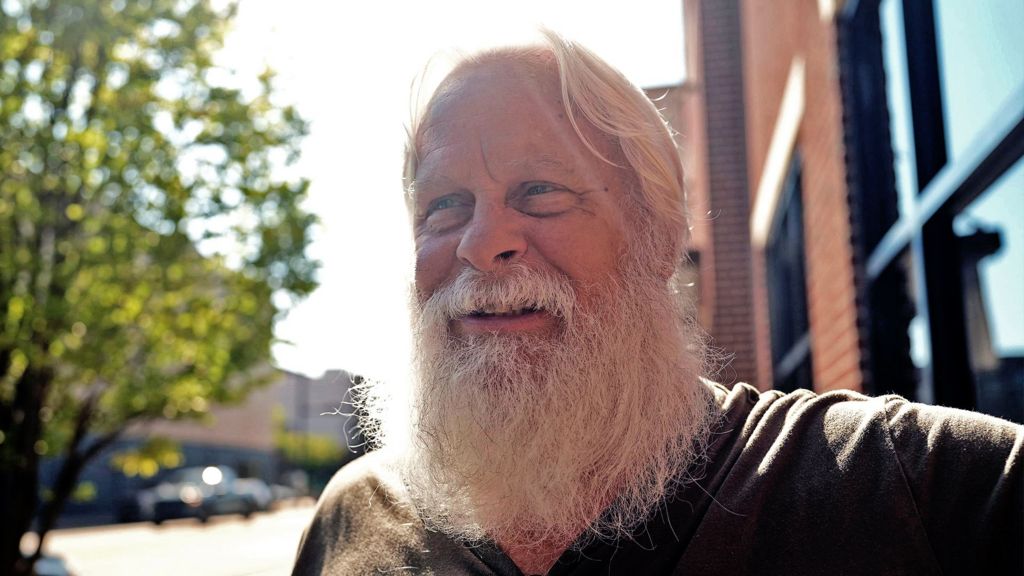
    When it comes to the Iran conflict, the vast majority of Kingsport residents either openly back the U.S. military campaign or justify its necessity, despite Trump’s repeated 2024 campaign promise to end America’s era of endless foreign wars. Pam Robinson, a 65-year-old independent voter and former 20-year veteran of the local chemical industry, frames her support in simple terms: ‘If he can stop anyone from having a nuclear bomb, then I’m for it.’ David Carter, a 66-year-old retired veteran and devout Christian who works as a seasonal Santa Claus, argues that forward deployment prevents conflict from reaching U.S. soil: ‘The whole reason we go over there, and we keep everything under control there, is [so that] we don’t have it on our doorstep.’ Other residents take an even harder line: James Camper, a 63-year-old veteran wearing a branded Trump lanyard, said bluntly exiting a local discount grocery store, ‘Honestly, I think we should turn them into a parking lot and don’t worry about it anymore.’

    Veterans make up roughly 10% of the regional population, and many more local households have family members serving on active duty. Robinson, who says her Christian faith guides all her political choices, notes that the remote nature of the conflict has softened local anger: the war has not devolved into large-scale ground combat with massive casualty numbers, a reality that has prevented widespread outrage from boiling over. ‘If it was hand-to-hand and more people were getting killed, people would be banging the doors down,’ she explained.

    Kingsport’s unique status as a core U.S. munitions production hub gives residents a perspective on the Iran war that differs sharply from many other parts of the country. The Holston plant employs roughly 1,000 local workers, standing out as one of many large industrial complexes cutting through the region’s lush mountain landscape. Daniel Overstreet, a 53-year-old Kingsport resident, argues the plant will operate regardless of whether the U.S. is at peace or war, and frames Trump as constrained by legislative gridlock. ‘He said he would get the gas prices under control, and they were for a while,’ Overstreet explained. ‘He said he was gonna get food prices down, but he has no control over that. The president is basically a puppet for Congress and the Senate. His hands are tied, to a certain extent.’ That sentiment is widespread across the community: residents do complain about high prices, inflation, and other economic struggles, but very few hold Trump personally responsible for those hardships.

    It was Trump who made the final call to launch military strikes against Iran in February 2026, after nuclear negotiations with the Iranian regime collapsed. In an eight-minute social media video announcing the operation, Trump framed the conflict as a matter of national self-defense, saying ‘the objective is to defend the American people by eliminating imminent threats from the Iranian regime’ and pledging that ‘Iran will never have a nuclear weapon.’

    William Bogle, a 75-year-old local evangelist who has voted for Trump in every one of his campaigns, acknowledges that the economic strain is real even for his own household: his wife ‘has to stretch a grocery dollar until, you know, it’s big as a bedsheet.’ Even so, Bogle says Trump is ‘doing a good job,’ and that ‘I know he wants the country to prosper.’

    This unwavering local support reveals a key undercurrent beneath national polling headlines: while Trump has lost support among traditional Republican and independent voters, his core base of self-identified MAGA adherents remains firmly loyal. As national observers watch to see how Trump’s sliding popularity will impact Republican candidates in the upcoming November midterm elections, this deeply conservative Bible Belt region remains reliably red, with almost no competitive electoral contests. During recent local primary elections, just one Democratic candidate appeared on the county commission ballot, with seven of 11 districts fielding only Republican candidates, many running unopposed.

    Many residents say they cannot bring themselves to vote across party lines for moral reasons, with opposition to abortion ranking as the top deciding issue, alongside deep rejection of socialism and so-called ‘woke’ progressive policies. For most voters, these concerns outweigh any criticisms they may have of Trump’s performance in office. David Carter, the 66-year-old veteran and grandfather, concedes that Trump ‘needs to humble himself more,’ but says he will only back candidates who align with the community’s social values, including strict opposition to abortion rights.

    Liberal and progressive voices do exist in Kingsport, but they make up a small, largely quiet minority. Adam Teague, a 44-year-old gay piercing artist and lifelong Baptist who is one of the few open Democrats in downtown Kingsport, says he has toned down public displays of his identity since Trump took office to avoid conflict: ‘Before Trump took office, I was wearing, like, rainbow shirts and everything. I kind of toned it down, just to feel safer.’

    While Trump won the 2024 presidential election in part by building a broad coalition that included young voters, polling shows growing disillusionment among that demographic, a shift that is starting to appear even in deeply red Kingsport. Mary Herron, a 21-year-old college student who works part-time, said she has seen a quiet shift among her peers: ‘I am seeing a shift in the support … that’s kind of rare around here. But I’ve seen a handful of people who have been like, ‘Oh yeah, well, I voted for him, and now I’m not with him anymore.”

    Her friend Emily Villalpando, 21, a biomedical science student who hopes to become a doctor, notes that most young people in the region inherited their political views from their parents, but that as they enter adulthood and take on financial responsibilities, the impact of inflation and economic policy hits much closer to home. Villalpando, Herron, and their friend Caden Bayless, the third member of their progressive college trio, cite women’s reproductive rights and aggressive immigration enforcement as top concerns, but they are skeptical that a major political shift will happen anytime soon in the region. Bayless says she holds out hope that the younger generation can drive change long-term, but ‘given where we live … it would be a very difficult change.’

    Bogle, the local evangelist, summed up the region’s political culture in terms that echo that pessimism: ‘We live in a great place, and if you’re not conservative, don’t come here. Because you wouldn’t be a good fit. But if you’re conservative, come here, and we’ll embrace you.’ Like most residents across Kingsport, regardless of their views on specific policies, Bogle says he will continue to pray for Trump, a sentiment shared by even more moderate local voters such as Robinson. ‘All you can do is pray for your leaders, and God will give you what you want in the end,’ Robinson said.
  • Ayra Starr on her secret relationship and teasing Stevie Wonder

    Ayra Starr on her secret relationship and teasing Stevie Wonder

    In an industry that often tries to box artists into prefabricated expectations, 24-year-old Nigerian sensation Ayra Starr has always carved her own path. Just weeks out of major, undisclosed surgery ahead of her highly anticipated new album *Starrgirl*, the Grammy and MOBO Award-nominated star defied medical odds: just seven days after leaving the hospital, she was already back in the dance studio, a thick bandage across her stomach, rehearsing for a run of upcoming live appearances, TV spots and fan events.

    “I was hoping it would be a quick recovery, but it was more complicated than they expected,” she previously shared with fans. Speaking to *Today*, the US breakfast TV program, Starr framed her early return to work as a gift: “I’m healing. I have strength today. I’m so happy I was able to even be here today and be able to do this.” This display of unshakable tenacity is nothing new for the singer – it has been the defining thread of her already groundbreaking career.

    Discovered at 18 performing cover songs on YouTube, Starr has spent the last six years shattering records for African women in global music: she was the first African woman to take home Best International Act at the MOBO Awards, the first Nigerian woman to cross one billion video views on YouTube, and in 2024, she made history as the first Afrobeats artist to perform on Glastonbury’s iconic Pyramid Stage – where she closed her set with a bold promise to return as a headliner. Beyond music, she’s expanded into fashion, closing out London Fashion Week for designer Di Petsa in 2025, and has earned nods from some of the biggest names in the industry, from Coldplay’s Chris Martin to Stevie Wonder.

    When she arrives for an interview, it’s with an almost otherworldly self-assurance that never veers into arrogance. Quick with dry, cutting sarcasm and a playful sense of humor, she remembers teasing Stevie Wonder, the music legend, into a playful back-and-forth about zodiac signs after he called to congratulate her on a Grammy nomination. “I was trying to one-up him every single time, and he was trying to one-up me. It was almost like a battle,” she laughs. By the end of the chat, she’d jokingly told the Taurus icon that “Tauruses ain’t crap” – a bold, unapologetic move that sums up her approach to every relationship and opportunity.

    That unfiltered authenticity has opened doors to collaborations with global superstars across genres: she opened for Coldplay on their *Music of the Spheres* world tour, worked with the likes of Tyla, David Guetta, Le Sserafim and Kelly Rowland, and *Starrgirl* features high-profile collaborations with Afrobeats legends Wizkid and Rema, former One Direction star Zayn Malik, and rising R&B talent KWN. The record marks her first release under a new deal with Jay-Z’s Roc Nation, following her 2025 relocation from Lagos to New York City – a move she described with characteristic wit in a Substack essay: “New York is basically a walk-in freezer with rent. It’s so cold it feels like the city is actively trying to unalive my motivation… I’m not scared, I promise.”

    The upheaval of relocation was a deliberate choice: Starr wanted to step outside her comfort zone to expand her sound and pull in new influences. The result is a genre-blending project that juxtaposes classic Afrobeats rhythms with unexpected sonic textures. Take opening track *Where Do We Go*, which layers a hypnotic electronic pulse under a swaying Afrobeats beat, pairing a danceable rhythm with vulnerable lyrics about a toxic, on-again-off-again secret relationship.

    “Like, the rebel I am, I love to juxtapose,” she explains. “I don’t like being normal and boring. So the idea of writing a heartbreak song on a beat like that, where you can dance to it, was just very enticing. I love things like that.” The lyrics, which explore the fear of starting over and settling for less than you deserve, act as a metaphor for the entire album: after the global runaway success of breakout hit *Rush* and second album *The Year I Turned 21*, Starr found herself trapped between satisfying casual listeners who wanted more of the same and growing as an artist for her core fanbase.

    “Just like any other pop artist, passive listeners get attached to the songs they know – the popular songs. Then you’re stuck between creating for the passive listeners and creating for your core fans who want you to do more. So that can limit you, because you stop thinking as an artist and start thinking about making music just for consumers. But I’m not meant to conform. It’s just not who I am. I will rebel against every single preconception and every stereotype,” she says.

    *Starrgirl* is thus a declaration of artistic autonomy, marking Starr’s evolution into full creative and personal control as she steps into womanhood. Standout track *Misunderstood* pushes back against critics who claimed she could never succeed on her own, while *Treasure* offers a soft, laid-back moment for Starr to celebrate how far she’s come, with lyrics sung in Yoruba that invite listeners to savor joy. The album’s most infectious cut, *Ms Paper*, takes a detour into Dominican bouyon music, a high-energy genre defined by frantic percussion – and it was recorded entirely by accident. After finishing a session with French-Congolese star Theodora on a sweltering February night in Los Angeles, the pair finished a boozy Congolese meal and were wrapping up for the day when inspiration hit. The studio AC was broken, leaving everyone delirious, sweating and half-dressed, but the chaotic energy created a track that already has fans buzzing after live snippets went viral.

    Not everyone has celebrated Starr’s genre-bending new direction: back home in Nigeria, some critics have accused her of diluting Afrobeats heritage to chase global success. But Starr pushes back against the idea that she has to fit into a pre-set template. “People have a certain template they think I should follow, and it’s like, you cannot tell me how to dream,” she says. “I’m able to honour my culture, but also try new things, because that’s who I am.”

    She visualizes this balance on the *Starrgirl* album cover, where she pairs a sleek, club-ready gold gown with a traditional Yoruba gele headwrap. Speaking to Capital Xtra, she explained the choice was intentional: “I wanted young girls in Kwara State or Erin-Ile to see this and feel represented. I’m not the first to do it, I won’t be the last to do it – but I want people to feel confident in their culture and wear [the gele] like the crown that it is.” The striking retro-futuristic look quickly went viral, spawning dozens of copycats and softening criticism of her new creative path.

    For Starr, the entire project circles back to a mantra she spells out on the track *Amazing*: “If they’re gonna talk, I’ll give them something to talk about”. “That’s definitely my mantra,” she says. “And do you know what? I think I need to listen to myself more because I have all the answers in my music.”

  • Vultures are disappearing in Nigeria – but the ‘Vulture King’ is fighting to reverse the trend

    Vultures are disappearing in Nigeria – but the ‘Vulture King’ is fighting to reverse the trend

    Long stigmatized as symbols of death and decay, vultures across much of Africa have faded from urban skies with little public mourning. But conservationists are now sounding the alarm: driven by illegal hunting, poisonings, habitat destruction, and demand for their body parts in traditional spiritual practices, multiple vulture species across the continent are teetering on the edge of total extinction. And their disappearance could trigger devastating public health and ecological consequences that many people have yet to recognize. One small community in southeastern Nigeria, however, is bucking this devastating trend, proving that community-led conservation can reverse decades of population decline.

    In Awka-Etiti, a sacred forest surrounding the Nguma deity shrine has served as a safe haven for vultures for hundreds of years. Though most residents identify as Christian, many continue to uphold long-held traditional beliefs that position vultures as sacred, good omens. Local tradition holds that if vultures appear to feed on ritual sacrifices left at the shrine, it means the deity Nguma has accepted the offering and heard the community’s prayers. Because of this spiritual status, vultures have never been hunted by local residents, and the birds have long lived side-by-side with people in the town, scavenging openly in markets and public spaces.

    Chukwuemeka Igwe, a local resident in his 50s who has volunteered with the Nigeria Conservation Foundation (NCF) for six years, has become the public face of the community’s protection efforts, earning him the local nickname Ezeudene, or the Vulture King. “The indigenous don’t hunt vultures,” he explains. Long after he noticed the number of vultures in the area began to drop as outside poachers slipped into the region to hunt the protected birds, Igwe began a grassroots campaign to rally local protection. He travels to markets, bus stations, and public gathering spots to educate residents and visitors about vultures’ critical ecological role, and has worked with community leaders, local organizations, and security teams to block poachers. Local bylaws have now been passed to formalize the birds’ protected status in the area.

    While many people still see vultures as unpleasant or sinister creatures, scientists and conservationists emphasize they are one of nature’s most critical natural sanitation systems. By consuming animal carcasses within hours of death, vultures stop rotting remains from becoming breeding grounds for deadly pathogens. Their uniquely powerful stomach acids neutralize dangerous bacteria, allowing them to safely consume infected carcasses and stop the spread of fatal zoonotic diseases such as anthrax and rabies. “In places where the total collapse of vultures has happened, there has been impact of rising zoonotic diseases,” explains NCF conservation biologist Stella Egbe. Without vultures, ecosystems lose a free, highly effective natural defense against disease outbreaks that can spread to humans.

    Across the continent, vulture populations have plummeted at an alarming rate. BirdLife International, the leading authority on avian conservation for the IUCN Red List, reports that African vulture populations have dropped between 80% and 97% over the past 50 years. Seven African vulture species are now classified as either Endangered or Critically Endangered. Poisoning is responsible for an estimated 60% of all vulture deaths across Africa, according to BirdLife data, while rapid urban expansion has destroyed much of the tall old-growth trees that vultures rely on for nesting.

    The fastest growing driver of decline, particularly in West and Southern Africa, is illegal hunting driven by demand for vultures and their body parts for use in traditional medicine and spiritual practices. Dead adult vultures that once sold for just $18 to $22 in Nigeria now fetch as much as $145 on the black market, Egbe says. Poachers are also increasingly targeting vulture eggs and nests, a catastrophic threat for a slow-reproducing species: vultures do not reach sexual maturity until they are 5 to 7 years old, produce only one chick every 1 to 2 years, and many juvenile vultures do not survive their first year of life. Removing even a single nest or clutch of eggs eliminates an entire year’s reproductive output for a breeding pair, accelerating population collapse. In 2020, more than 2,000 dead hooded vultures were found in Guinea-Bissau, most with their heads removed for use in belief-based practices, highlighting the scale of the crisis.

    Nigeria has become a key hub for illegal vulture trafficking, in part due to its rich biodiversity and porous national borders. Nigerian Customs Service spokesman Abdullahi Maiwada says the agency has made cracking down on wildlife smuggling a priority, seizing protected species and supporting prosecutions of traffickers to meet the country’s commitments under the Convention on International Trade in Endangered Species (CITES), which bans cross-border trade in endangered vulture species. But Maiwada acknowledges that enforcement alone cannot solve the crisis. “We may not be able to do it without the cooperation or understanding of members of the community,” he says. “If people understand why these species should be preserved, then our enforcement will only be complementary to those who decide to be recalcitrant.”

    That community-centered approach is exactly what has driven success in Awka-Etiti. After years of coordinated protection and local outreach, the results are already encouraging: in 2017, just 20 vultures were recorded in the town’s monitoring surveys; today, that number has climbed to more than 160. “The missing vultures are almost back. If you go to the marketplace now, you see vultures. At one time they disappeared, but now they are coming back,” Igwe confirms.

    Egbe says the Awka-Etiti model offers a blueprint for vulture conservation across the continent. “What we’ve done in Awka-Etiti is one very good example of a success story where people have taken charge of what’s going on in their environment. That makes us happy,” she says. Later this year, conservation researchers from across West Africa will gather in Abuja to review and update the 2022 West African Vulture Conservation Action Plan, where threats from poaching and the role of community-led conservation will top the agenda.

    For Igwe, every returning vulture to Awka-Etiti is a small victory, but he knows the fight to save African vultures extends far beyond his town’s borders. “I’m fighting to make nature exist the way it’s supposed to be,” he says.

  • Trump ‘low-key’ bets on economic pressure against Iran

    Trump ‘low-key’ bets on economic pressure against Iran

    For a U.S. leader famous for his bombastic, high-profile approach to global affairs, Donald Trump’s newest strategy on Iran marks a striking departure. The American president has confirmed he is prioritizing sweeping economic sanctions over direct military strikes or high-stakes diplomatic negotiations, leaning on financial pressure to weaken Iran’s position amid the ongoing regional conflict.

    “We are low-keying it,” Trump told news outlet Axios in a phone interview Sunday. “We are only semi-negotiating with them. We are just watching Iran with its huge inflation and the fact they have no money.” Though the president has repeatedly insisted he is keeping all options on the table—including the possibility of targeted military action against Tehran—he has centered his public messaging on the deep economic harm U.S. sanctions have inflicted on the Islamic Republic.

    Speaking from the Oval Office Monday, Trump claimed “Iran is broke, totally broke and they’re not paying their soldiers.” In a recent post to his Truth Social platform Wednesday, he doubled down on assertions that Iran’s annual inflation rate has surged past 300 percent. He also argued there is no immediate need for military intervention, asserting that the U.S. maintains “total control” over the Strait of Hormuz—the critical global oil shipping chokepoint that has emerged as the central flashpoint in U.S.-Iran tensions during the ongoing Israel-Hamas war.

    Independent experts broadly agree that U.S. sanctions have taken a heavy toll on Iran’s economy, even if they dispute some of Trump’s more dramatic claims. “Iran is in terrible shape economically. It can’t ship oil at any meaningful level. And it still labors under sanctions and still can’t access its overseas assets,” explained Michael O’Hanlon, a senior foreign policy expert at the Washington-based Brookings Institution. “The question is, do its leaders really care? I think they care some, but not a lot.”

    The shift to a low-key sanctions-focused approach marks a notable change for Trump, who just weeks ago threatened to launch the most devastating military strikes against Iran since World War II. For the past five months, as the Israel-Gaza conflict has drawn in regional actors, Trump has alternated between apocalyptic threats of military action and vague promises of imminent diplomatic breakthroughs. Now, he appears to have put both on hold.

    At the end of July, the Trump administration rolled out new sanctions targeting Iran’s Islamic Revolutionary Guard Corps (IRGC), the ideological backbone of Iran’s military apparatus. According to reporting from The Wall Street Journal, Trump’s national security advisors have presented him with detailed data on the impact of existing sanctions, and the president is currently weighing both tightening current restrictions and imposing new, stricter measures.

    Analysts suggest the strategic shift also reflects growing constraints on U.S. military capabilities. Multiple U.S. media outlets have reported that American conventional munitions stockpiles have been severely depleted after months of resupplying Israel and supporting ongoing operations in the Middle East, leaving fewer military options ready for immediate deployment against Iran.

    Iranian officials have dismissed Trump’s new sanctions push as a sign of U.S. weakness. “Whenever Washington proves itself incapable of pursuing diplomacy it retreats into sanctions; and whenever those sanctions fail to produce results, it simply increases the dose,” Esmaeil Baqaei, spokesman for Iran’s foreign ministry, wrote in a post on X this week. Baqaei noted that Iran has withstood decades of U.S. sanctions, adding that the new pressure campaign “strangle their own remaining chances of a less humiliating exit from a crisis of their own making.” Responding to Trump’s comparison of the conflict to a chess match, Baqaei told reporters “Iranians have shown they are professional chess players.”

    The biggest open question remains whether Trump—an notoriously impulsive leader known for preferring the spectacle of high-profile confrontation and flashy policy wins over slow, incremental pressure—will stick to this new long-term strategy.

  • Keeper Bihina stars as Cameroon upset Morocco to make Wafcon final

    Keeper Bihina stars as Cameroon upset Morocco to make Wafcon final

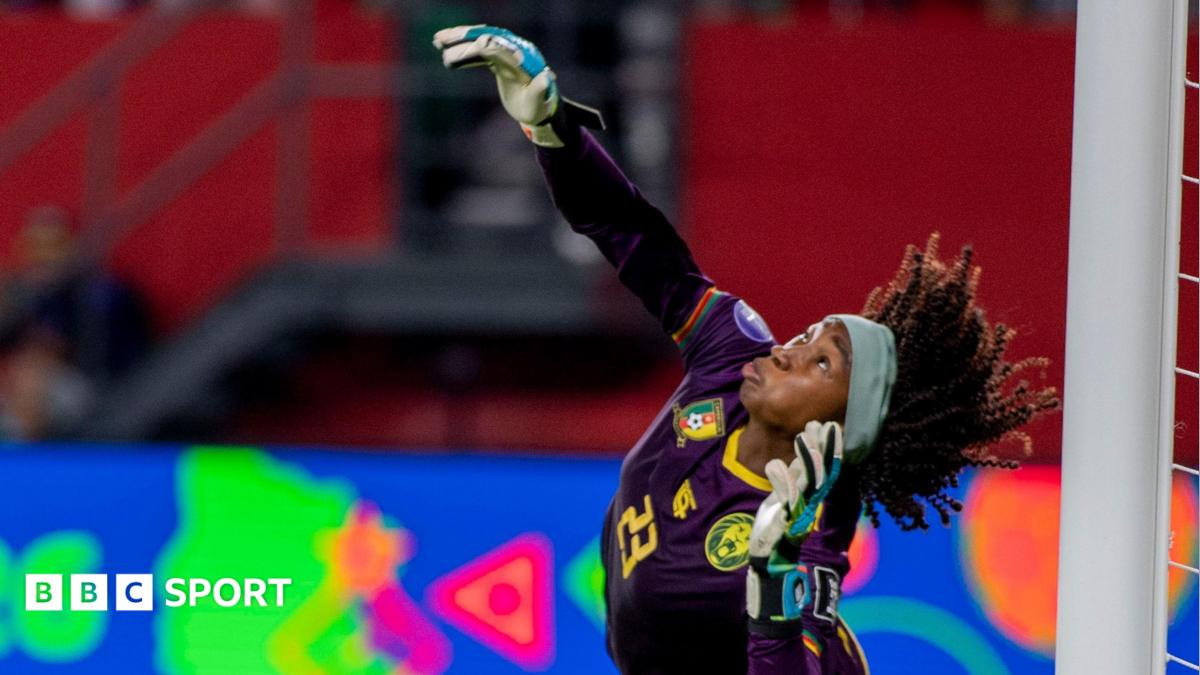
    In a tense, dramatic Women’s Africa Cup of Nations (Wafcon) semi-final clash in Rabat on Wednesday, 22-year-old Cameroonian goalkeeper Michaely Bihina delivered one of the most memorable performances in recent continental women’s football history, booking her side a spot in the 2026 tournament final at the expense of hosts Morocco.

    The tightly contested match stayed deadlocked at 0-0 through 90 minutes of regulation and an additional 30 minutes of extra time, but Bihina’s standout saves turned the tide of the contest. With just two minutes left in extra time, a VAR review awarded Morocco a critical penalty after referee Vincentia Amedome ruled Cameroon’s teenage defender Maryam Nyadjou had made accidental contact to the face of Morocco’s Sakina Ouzraoui. Winger Fatima Tagnaout stepped up to take the spot kick, but her tame left-footed attempt was pushed away by Bihina, forcing the match to a penalty shootout to decide the winner.

    In the shootout, Bihina continued her incredible form, blocking efforts from Kenza Chapelle, Maryame Atiq and Sakina Ouzraoui to leave the packed Moulay Hassan Stadium silent. After Morocco goalkeeper Khadija Er-Rmichi saved a penalty from Grace Mendoua to keep her side in the tie, Nyadjou held her nerve to convert the decisive spot kick, securing a 3-1 shootout win for the Indomitable Lionesses.

    This run to the final is already a stunning underdog story for Cameroon. The side was originally eliminated during the qualification stage, but earned a last-minute spot in the 16-team finals after the Confederation of African Football expanded the tournament mid-qualification, with Cameroon advancing based on its global world ranking. The 2026 final marks Cameroon’s first appearance in the Wafcon championship match since 2016, when the side hosted the tournament and fell to Nigeria.

    Throughout 120 minutes of play, Cameroon’s organized, disciplined defensive structure neutralized Morocco’s ball dominance, limiting the hosts to few high-quality chances. Morocco came closest to breaking the deadlock in the 14th minute, when Sanaa Mssoudy redirected a right-wing cross onto the right upright, and Mssoudy also fired into the side-netting in the 60th minute. A flurry of late chances in regulation and extra time from both sides failed to find the back of the net, setting up the dramatic late penalty and shootout.

    For Morocco, the semi-final exit is a devastating disappointment. The north African nation has invested heavily in women’s football in recent years, hiring 2023 Women’s World Cup winning manager Jorge Vilda to lead the side in pursuit of its first ever continental title. The Atlas Lionesses finished as runners-up in both 2022 and the delayed 2024 tournament, throwing away a 2-0 first-half lead against Nigeria to claim second place in 2024.

    Cameroon will now face Malawi in Sunday’s 19:00 GMT final, after Malawi beat Algeria 3-1 in the first semi-final on Wednesday. Coached by Valentine Nguele, who only took the job in June, Cameroon will need to contain star Chawinga sisters Tabitha and Temwa Chawinga to claim the title. Sunday’s final will guarantee a first-time Wafcon champion, as neither Cameroon nor Malawi has ever claimed the continental crown.

    In other continental women’s football news, two 2027 FIFA Women’s World Cup African playoff matches are scheduled for Thursday: Ivory Coast will face Ghana at 17:00 GMT, followed by a match between Nigeria and South Africa at 20:00 GMT. The winners will advance to inter-confederation qualifying for the 2027 global tournament.

  • ‘Landmark moment’: NFL locks in the Jonas Brothers to perform at historic game in Melbourne

    ‘Landmark moment’: NFL locks in the Jonas Brothers to perform at historic game in Melbourne

    The National Football League has secured one of the world’s biggest pop acts to deliver the headline halftime performance for its landmark first regular-season matchup held on Australian soil, locking in multi-platinum selling trio the Jonas Brothers to take the stage at the iconic Melbourne Cricket Ground next month. On September 11, when the long-time NFC rivals the Los Angeles Rams and San Francisco 49ers face off in the historic contest, the Jonas Brothers will run through their catalogue of global chart-topping hits for thousands of in-stadium fans, with the performance also streaming to millions of additional viewers around the world on Netflix.

    Composed of brothers Nick, Joe and Kevin Jonas, the trio has cemented their status as one of the most commercially successful pop acts of the 21st century, with more than 20 million albums sold globally and a star on the Hollywood Walk of Fame recognizing their decades-long contribution to entertainment. In a statement ahead of the performance, the band expressed their enthusiasm for joining the historic NFL event. “We couldn’t be more excited to perform at halftime during the NFL’s first-ever regular season game in Australia,” the group said. “Playing at the iconic Melbourne Cricket Ground in front of such passionate Australian fans is an incredible honour. We can’t wait to be part of this historic moment and celebrate with everyone in the stadium and watching around the world.”

    This Melbourne clash is a key part of the NFL’s long-running strategy to expand the reach of American football across the globe, following a series of successful regular season games hosted in international markets over recent years. This season alone, the league will stage regular matchups in major international hubs including London, Madrid and Paris, with league leadership prioritizing delivering top-tier in-game and halftime entertainment for all international audiences. For the Australian debut, league officials emphasized that securing a globally beloved act like the Jonas Brothers was a priority to match the significance of the occasion.

    “Bringing the first-ever NFL regular season game to Australia is a landmark moment for the league, and we are committed to creating an entertainment experience that reflects the scale and significance of the occasion,” said Tim Tubito, the NFL’s senior director of global game presentation and entertainment. “The Jonas Brothers are global entertainers whose music connects across generations, making them the ideal artists to help us celebrate this historic game in Melbourne. We look forward to delivering a memorable halftime performance for our fans in Australia and those watching around the world.”

  • Why Japanese firms are being so slow to use AI

    Why Japanese firms are being so slow to use AI

    Against a backdrop of deepening labour shortages, rapidly aging demographics, and decades of stagnant productivity, Japan would seem uniquely positioned to embrace artificial intelligence as a transformative solution to its most pressing economic challenges. Yet new data and industry analysis reveal that widespread AI integration across Japanese workplaces has progressed far slower than in major Western and Asian counterparts, leaving the world’s third-largest economy stuck in a holding pattern that mirrors the deliberate, slow pacing of traditional Japanese Noh theater.

    Observers note that while Japanese business and political leaders repeatedly voice urgent agreement on the need to adopt AI, tangible action on the ground has barely moved forward – a dynamic that builds dramatic tension but does nothing to address Japan’s immediate economic hurdles. Recent OECD data collected at the end of 2025 underscores this gap: just 8.4% of Japanese workers currently incorporate AI into their daily job responsibilities, a figure that pales in comparison to 50% in the United States and 32% in the United Kingdom. Across Asia, Singapore leads the region in AI uptake, with 56% of workers reporting they use AI multiple times per week, second only to the United Arab Emirates globally.

    Industry experts point to deep-rooted cultural and structural factors as the primary drivers of Japan’s slow AI rollout. Austin Xu, co-founder of U.S.-based AI startup Kuse AI, which recently opened a Tokyo office to serve domestic Japanese clients, cites pervasive corporate conservatism and extreme risk aversion as core barriers. “Consensus-driven decision-making and rigid process culture genuinely slow innovation down,” Xu explained. “Tolerance for AI-generated mistakes is almost zero, especially in client-facing roles. Many companies would rather leave a position vacant than turn responsibilities over to a machine.” This approach stands in stark contrast to the U.S., where many businesses grant AI tools far more autonomy to test and improve productivity, adopting a “test and adjust” mindset that allows AI to integrate gradually into core workflows.

    Parrisa Haghirian, a professor of international management at Kyoto University of Advanced Science, echoes this analysis, noting that AI adoption faces the same structural headwinds as any organizational change in traditional Japanese firms. “Japanese companies are extremely sensitive to errors, uncertainty, and reputational damage,” she said. Because generative AI still carries inherent reliability risks, it is largely confined to low-stakes internal tasks in Japan: drafting text, summarizing documents, and gathering information. It is rarely deployed to support core business operations, high-stakes decision-making, or end-to-end process improvement.

    The slow adoption is particularly acute in Japan’s healthcare sector, where many facilities have not yet completed full digitalization of patient records. An anonymous hospital employee described a system still overwhelmed by mountains of physical paperwork, comparing the current workflow to the Stone Age.

    Japan’s national government has acknowledged the systemic challenge of low AI adoption and has taken legislative action to accelerate uptake. Last year, Japan’s parliament passed the AI Promotion Act, which relies on light-touch regulation to incentivize private sector AI investment. The government has publicly committed to turning Japan into “the world’s most AI-friendly country for development and utilization,” arguing that broader AI integration is the only path to reverse Japan’s persistent productivity slump – currently the worst among all G7 advanced economies. Official Ministry of Finance data claims that overall corporate AI use has risen dramatically, from just 11% five years ago to 75% today. But critics push back on this metric, arguing that the vast majority of companies that report having AI access only let a tiny fraction of employees use the technology, and restrict usage to very limited functions.

    Additional structural barriers include a widespread shortage of digitally skilled workers and a legacy of outdated, aging corporate IT infrastructure. Yasushi Ogasawara, a professor specializing in Japanese social systems and technology at Meiji University, notes that despite widespread consumer adoption of consumer electronics, general digital literacy across the workforce remains low. Industry projections estimate Japan will face a shortage of nearly 800,000 IT professionals by 2030, and roughly 60% of Japanese companies still rely on core computer systems that are more than 20 years old. Ogasawara also points to a policy priority that conflicts with rapid AI adoption: the Japanese government and corporate sector prioritize maintaining full employment above all else, creating little incentive to roll out AI tools that could displace human workers. “While policymakers talk about AI, reskilling, and digital skills, the top priority remains protecting jobs, so adapting the workforce to new digital technologies moves slowly,” he explained.

    There are faint signs of incremental change. A small number of forward-thinking companies have begun prioritizing AI literacy in new graduate hiring, integrating AI into daily work for entry-level employees. Uta Yamaguchi, a new graduate who joined leading general trading firm Kanematsu in April, says she uses AI regularly for routine tasks: drafting emails for executives, summarizing complex documents, and transcribing and summarizing meeting recordings. Even at this progressive firm, however, fully autonomous AI systems that can handle end-to-end multi-step workflows remain almost non-existent, a stark contrast to common deployments in the U.S.

    Ogasawara argues that meaningful large-scale change will remain limited for the foreseeable future, noting that Japanese society broadly expects reform to come without disruption. “Drastic change is extremely difficult here,” he said. While disruptive innovation is often viewed as a negative in Japanese culture, analysts warn that without embracing the upheaval that comes with full AI integration, the productivity gains Japan desperately needs to sustain its economy will remain out of reach.

  • Watch: Key moments from Karoline Leavitt’s White House tenure

    Watch: Key moments from Karoline Leavitt’s White House tenure

    When Karoline Leavitt stepped into the role of White House press secretary in January 2025, she didn’t just take on one of the most high-profile communications jobs in the United States—she etched her name into the history books. At just 27 years old, Leavitt is now the youngest person ever to hold the position, breaking a long-standing record that has stood for decades in American political communications.

    The role of White House press secretary carries enormous responsibility, requiring the occupant to serve as the primary bridge between the presidential administration, the White House press corps, and the American public. Every day, the job demands quick thinking, sharp communication skills, and the ability to navigate complex, fast-breaking political stories that shape national discourse. For Leavitt, taking on this role at an age when many young professionals are still establishing their careers in politics marks a significant milestone, and opens a new chapter for representation of younger generations in senior White House leadership.

    Since her appointment, Leavitt’s tenure has already been defined by a series of key moments that have drawn national attention to her work at the podium. Her historic appointment itself has sparked conversations about the shifting demographics of American political leadership, and how younger voices are increasingly taking on senior roles in government. Observers and political analysts are closely watching how Leavitt will shape the role of press secretary moving forward, as she brings a new generational perspective to one of the most visible jobs in Washington D.C.

  • Israel’s ‘pilot zones’: Withdrawal on paper, continued occupation of south Lebanon

    Israel’s ‘pilot zones’: Withdrawal on paper, continued occupation of south Lebanon

    Along the dirt road leading into Zawtar al-Gharbiyeh, a small sun-scorched village in southern Lebanon, the silhouette of Lebanese Army armoured vehicles marks the formal entrance to what international diplomacy has labelled a “pilot zone.” This designation, one of three such villages alongside Froun and Srifa, emerged from a high-profile framework deal brokered between Israel, Lebanon, and the United States in June 2026. The agreement, which launched its implementation on July 20, was marketed as a path to de-escalation: Israel would gradually withdraw its forces, hand full sovereign control over to the Lebanese military, and bring an end to Hezbollah’s armed presence in the designated areas. But on the ground, a starkly different reality unfolds, exposing a sharp gap between diplomatic rhetoric and lived experience for local residents.

    Daniel Meier, a political science professor and head of the Master in Middle Eastern Studies program at Sciences Po Grenoble, argues Israel has repurposed the pilot zone mechanism for a goal entirely separate from the agreement’s stated aims. “Israel sees these pilot zones as another tool to eliminate any possibility of Hezbollah maintaining a presence in southern Lebanon, not as a framework for withdrawing its own military,” Meier explained. “For Israeli leadership, the core objective is to use the pilot zone framework to entrench their occupation and delay a full withdrawal from southern Lebanon as much as possible.”

    This contradiction is impossible to miss from the Lebanese Army checkpoint in Zawtar al-Gharbiyeh: just 300 meters away, in the adjacent village of Zawtar al-Sharqiyeh, Israeli forces remain fully deployed, carrying out near-daily demolitions and artillery bombardments. Data collected by Public Works Studio, a Beirut-based research and mapping collective that tracks Israeli military activity across Lebanon, confirms that between late June and late July 2026, Zawtar al-Sharqiyeh was targeted repeatedly with house demolitions, ground incursions, controlled explosions, arson, and tajrif—the deliberate levelling of civilian land with heavy industrial machinery. During an on-the-ground reporting trip by *Middle East Eye* (MEE), five separate explosions originating from Zawtar al-Sharqiyeh echoed across the valley, with thick plumes of smoke rising over the eastern horizon.

    Escorted by the Lebanese Army past the checkpoint into the village centre, MEE observers found widespread evidence of repeated Israeli attacks: entire residential structures have been reduced to mounds of rubble, and the few standing walls still bear the pockmarks of bullet fire from Israeli tank ground assaults. Notably, however, there were no signs of a sustained Israeli ground occupation that would need to be handed over to Lebanese authorities. Unlike other occupied southern Lebanese villages such as Yaroun and Ayta al-Shaab, where Israeli forces left behind Hebrew graffiti, discarded military waste, and ransacked civilian homes in 2024, Zawtar al-Gharbiyeh holds none of these telltale signs of long-term Israeli presence. Even with the Lebanese military deployed at the village entrance, there is no tangible evidence that full sovereign control has been restored to Lebanon. The main access route to the village remains blocked by continuing Israeli military activity in surrounding areas, and none of the displaced residents have been able to return to permanent, normal life.

    “There can be no restoration of Lebanese authority as long as Israeli occupation continues,” Meier emphasized. “This is nothing more than a trap, a rhetorical trick that misuses language to create the illusion of progress on restoring Lebanese sovereignty, while Israel escapes its international obligations and continues its oppressive occupation strategy with no clear end date.”

    For 40-year-old Abbas Heri, who returned to Zawtar al-Gharbiyeh in mid-July after fleeing his hometown in February 2026, the abstract diplomatic concept of a pilot zone means nothing next to the destruction he has found. “As long as the Israelis don’t leave Zawtar al-Sharqiyeh, there can be no normal life here,” he said from the village centre, where displaced residents gather around a makeshift coffee stall set up in a canvas tent. The main paved road connecting Zawtar al-Gharbiyeh to Nabatieh, southern Lebanon’s largest city, remains cut off by Israeli forces in the adjacent village, making travel for residents nearly impossible. “My house is still here, but it’s unlivable—everything is destroyed. There’s no security either. Last night I slept at a friend’s place in the village, and explosions went off all night long,” Heri recalled. “Put simply, the Israelis are deliberately making life impossible here so we can’t come back to our homes.”

    The original 2026 framework agreement intentionally leaves unsaid when, or if, Israel will fully withdraw from the broad buffer zone it has carved out along the Lebanon-Israel border. Israeli officials have publicly stated they will maintain control of this area for as long as Hezbollah retains its armed capabilities. All three pilot zone villages sit along the outer edge of the “Yellow Line,” the self-declared boundary Israel has drawn inside Lebanese territory to mark the limits of its military-controlled buffer zone.

    When asked about Hezbollah’s continued presence in the area, Heri framed the group’s activity as a natural response to ongoing occupation. “Resistance movements are born from injustice. Would you accept someone invading your home and not defend yourself? Under what international law would that ever be acceptable?” he asked. He also called out Western double standards on human rights that have ignored the suffering of southern Lebanese civilians. “The West talks constantly about human rights—but what human rights do we have? My three-year-old daughter can already tell the difference between the sound of an Israeli warplane and an explosion. If this was happening in Europe, governments and police and humanitarian groups would all rush in to provide support and care for people’s trauma. Who is going to compensate us for what the Israelis have done to our lives, our homes, our families?”

    Sixty kilometers away by the winding detour that now connects the two pilot zone villages (the direct road was destroyed in Israeli strikes, turning a 10-minute trip into a 70-minute journey), residents of Froun echoed Heri’s anger and despair. Sitting amid the crumbled rubble of what was once the front facade of his family home, elderly resident Assem Jaffar said he cannot fathom why the Lebanese government is continuing to negotiate with Israeli leadership. “I just hope they stop negotiating until Israel fully withdraws from all of our territory,” he said. Jaffar lost his daughter, son-in-law, and granddaughter in an Israeli bombardment earlier this year, a tragedy that has left him homeless and grief-stricken. “It is impossible to live in Froun today. The ceasefire they claim to have agreed to does not exist in practice. The resistance has not launched any attacks on Israel, but they keep attacking our villages,” he added.

    Like Zawtar al-Gharbiyeh, Froun bears the full scars of widespread Israeli destruction: most civilian infrastructure has been flattened, with only a handful of damaged homes still standing against the barren, bombed-out landscape. And just like in Zawtar al-Gharbiyeh, there is no evidence of a sustained Israeli ground occupation that could be handed over to the Lebanese Army, a core requirement of the pilot zone agreement. Meier notes that most of these so-called pilot zones were never occupied by Israeli forces in the first place, and that the Lebanese government has faced intense pressure from the United States to accept the framework, which aligns with the current U.S. administration’s vision for a “new Middle East.” “The cost for Lebanon is extraordinarily high: agreeing to negotiate with Israel and accept this pilot zone framework only further erodes the country’s already fragile sovereignty,” Meier explained.

    Abou Ali, a Froun resident who recently returned to clear rubble and begin rebuilding his damaged home, confirmed that Israeli forces never entered either Froun or the third pilot zone village, Srifa. “The Lebanese Army wasn’t here before either—they only just came in recently to set up a handful of checkpoints on the outskirts,” he said. MEE’s on-the-ground observation matched Abou Ali’s account: there is no permanent Lebanese military presence inside Froun itself, only limited deployments in the surrounding hills. The checkpoint at the village entrance is manned by Hezbollah, not the Lebanese Army, as called for in the pilot zone agreement.

    “The deal they signed in June was a massive mistake,” Abou Ali said. “This government has brought us to this crisis, and we cannot accept this agreement because it does nothing to benefit the people of southern Lebanon. We, the residents of this region, will never accept any form of negotiation with the Israeli government.”

    MEE’s on-the-ground investigations across two of the three pilot zone villages, combined with interviews with residents and academic analysts, reveal a consistent gap between the framework agreement’s stated promises and the reality on the ground. Israeli forces destroyed large swathes of both villages, but there is little evidence of the sustained ground occupation that the pilot zone designation claims is being withdrawn and handed over to Lebanese authorities. While the agreement creates the public appearance of gradual Israeli withdrawal and sovereign handover, even the limited deployments the Lebanese military has made do not extend into all pilot zone villages—Froun has no permanent Lebanese military presence at all. Meanwhile, the limited “withdrawals” from the three pilot zones have coincided with expanded Israeli military operations in other parts of southern Lebanon, including the nearby village of Hadatha. Israel frames territory it relinquishes in one area as progress, while expanding its footprint elsewhere, leaving the overall scale of its occupation of southern Lebanon—roughly one-fifth of all Lebanese territory—almost completely unchanged.