作者: admin

  • LEGO Foundation donates $97 million to bring play-based learning to more children in conflict zones

    LEGO Foundation donates $97 million to bring play-based learning to more children in conflict zones

    As rising global conflicts — from the political instability in South Sudan to ongoing tensions across the Middle East — push millions of vulnerable children into further hardship, a new partnership between two humanitarian actors is stepping in to address one of the most chronically underfunded needs in crisis response: access to high-quality, trauma-informed education. Announced publicly this Wednesday, the $97 million commitment from the LEGO Foundation will scale up programming run by the International Rescue Committee (IRC), which uses playful learning to help conflict-affected children heal from trauma and build foundational learning skills.

    “Children born into conflict have their childhood stolen from them,” IRC President David Miliband shared in an interview with the Associated Press. “But what makes children so remarkable is that when you give them even a small piece of their childhood back, they turn it into extraordinary opportunity. This partnership is about returning that core childhood experience to those who need it most.”

    The five-year collaborative initiative aims to reach 5 million children across East Africa and the Middle East, with flexible targeting that adjusts as conflict dynamics shift. LEGO Foundation Chief Executive Sidsel Marie Kristensen emphasized that the program will prioritize children living in the most severe humanitarian contexts, with current candidate countries including Ethiopia, Lebanon, the Palestinian territories, Somalia, South Sudan, Sudan, Syria and Uganda.

    Unlike traditional fixed-location grants that can become outdated as crises evolve rapidly, this partnership relies on a truly agile funding model that can redirect resources wherever the need is greatest at any given time. “In the world we live in today, no one can honestly say what will happen tomorrow or even two months from now,” Kristensen noted. “That adaptability is exactly what we need in modern humanitarian response.”

    The funding will expand the IRC’s existing PlayMatters program, which trains educators working with children aged 3 to 12 to integrate playful learning techniques into their daily instruction. Rather than mandating a rigid curriculum, the program empowers teachers to tailor their teaching to the specific needs of students who have experienced crisis-related trauma. Program leaders also engage in national policy advocacy, working with local government officials to embed these trauma-informed approaches into national public school curricula.

    On-the-ground results from the program have already shown significant impact. At a primary school serving refugees in Uganda’s Nakivale refugee settlement in western Uganda, teacher Sister Kasingye Secunda credits PlayMatters with cutting student absenteeism dramatically. Before the program, low attendance was a persistent problem, compounded by language barriers: many refugee students struggle with both the local language and English, the official language of instruction.

    Through play-based activities, students build skills and confidence incrementally: for example, children learn color recognition through a game where they sort and share locally common fruits like mangoes and bananas with classmates. They build public speaking confidence through low-pressure class presentations and develop leadership skills by taking turns guiding small group activities. “Learners actually enjoy the lessons now,” Secunda said. “They are eager to come to school every day.”

    PlayMatters also leverages digital and multimedia tools to reach children in hard-to-access areas. A multi-language radio show featuring culturally familiar characters helps children identify and process their emotions across remote communities in Ethiopia and Tanzania, and it reaches flood-prone regions of South Sudan where half the year roads are impassable and in-person schooling is interrupted. Project Director Martin Omukuba says the program is actively expanding these remote delivery models to reach more cut-off communities.

    The flexible funding model from the LEGO Foundation allows the IRC to adapt to sudden shifts in crisis contexts, such as when a refugee classroom unexpectedly grows from 25 students to 150, creating unplanned needs for sanitation, nutrition, or other non-education basics that are critical to keeping children in class. Omukuba noted that the foundation trusts the IRC to reallocate funds quickly during emergencies, rather than requiring strict adherence to original budget plans. “We first need to make sure that children are alive,” he said. “We can introduce education once they are stabilized.”

    This is not the first collaboration between the two organizations: the LEGO Foundation first partnered with the IRC in 2019 with a $100 million commitment to *Ahlan Simsim*, a co-production with Sesame Workshop that supports children displaced by the Syrian and Rohingya refugee crises. The Denmark-based foundation, which focuses on global early childhood development, has been steadily scaling its investments in conflict-affected contexts. Most recently, it announced a separate $30 million partnership with global funding collaborative Co-Impact to support locally led solutions for learning and wellbeing among crisis-impacted children.

    Kristensen says she hopes the new $97 million commitment will inspire broader cross-sector collaboration between governments, civil society organizations and the private sector. That collaboration is increasingly critical as international development aid declines, driven by funding cuts from the United States and multiple European nations, she explained.

    Miliband echoed that concern, noting that these cuts have severely stretched the capacity of the global humanitarian system over the past year. He pointed to the ongoing Ebola outbreak in the Democratic Republic of the Congo as a clear example of the short-sightedness of cutting funding for programs that are often labeled as marginal. In the DRC’s Ituri province, the epicenter of the current Ebola emergency, critical sanitation and handwashing programs lost U.S. funding last year during the Trump administration’s restructuring of international development efforts. “We warned at the time what the risk was,” Miliband said. “And sure as night follows day, we end up with an under-detected Ebola outbreak.”

    IRC experts frame early childhood development and education not as a luxury for crisis contexts, but as a necessary intervention to counteract toxic stress from trauma that can permanently alter brain development and delay long-term learning. Even before wealthy nations cut their international aid budgets, education was consistently underfunded in humanitarian responses, explained Patty McIlreavy, president and CEO of the Center for Disaster Philanthropy. Too often, “life-saving” assistance was narrowly defined to only cover immediate physical needs, she said, excluding life-sustaining long-term investments like children’s education.

    McIlreavy pointed to the new LEGO-IRC partnership as a model for private donors, who often ask how they can make a meaningful impact in complex, protracted conflicts with no clear end in sight. “It’s not our role as philanthropy to fix what’s broken in a country, that’s a political challenge that goes far beyond what we can do,” she said. “But there is so much we can accomplish — even just providing six months or a year of safe, supportive education can change a child’s trajectory.”

    This Associated Press coverage of philanthropy and nonprofits is supported through AP’s collaboration with The Conversation US, with funding from Lilly Endowment Inc. The AP retains sole responsibility for all content.

  • Love birds: twice-extinct parakeet gets lifeline from randy pair

    Love birds: twice-extinct parakeet gets lifeline from randy pair

    Deep in New Zealand’s conservation efforts, a species once written off twice is staging a remarkable comeback, all thanks to one extraordinarily prolific pair of feathered parents. The orange-fronted parakeet, known locally as kakariki karaka, has bounced between extinction declarations and rediscovery for decades, holding the grim title of one of the world’s rarest parakeet species. Today, a viral pair of captive breeders have become unlikely saviors, pushing the species’ total population to a more stable 450 individuals scattered across protected sanctuaries, predator-free offshore islands, and small remote wild habitats.

    Nacho and Trixie, the power couple at the heart of this success story, were paired for the first time in early 2024 at the Isaac Conservation and Wildlife Trust based in Christchurch. In less than a full breeding cycle, the pair has produced an astonishing 55 chicks – with 33 of those hatching in 2024 alone. Even more remarkably, as the official breeding season draws to a close, Trixie shows no signs of slowing down, with a seventh clutch of new chicks currently under her care.

    Leigh Percasky, wildlife manager at the Isaac Conservation and Wildlife Trust, has showered praise on the hardworking pair, particularly highlighting Trixie’s relentless dedication as a “super-mum”. “Ideally we’d prefer her to stop so she can have a rest, but she shows no signs of that,” Percasky explained in an interview, adding that researchers and conservation staff are still stunned by the pair’s endless energy. Nacho, for his part, has also earned recognition for his consistent support: he takes on the full responsibility of foraging for food to sustain Trixie and their growing brood, a demanding full-time role through every stage of chick rearing.

    Captive breeding programs like this one form the backbone of New Zealand’s efforts to save endemic species lost to invasive predators, a longstanding threat to the country’s unique native birdlife. Wayne Beggs, who leads the orange-fronted parakeet recovery program for New Zealand’s Department of Conservation, explained that pairs like Nacho and Trixie are the backbone of the species’ survival. Wild populations of the parakeet remain extremely vulnerable to stoats, rats, and other introduced predators that have decimated New Zealand’s native bird populations over the past two centuries. Without captive breeding programs to build a safe backup population and supply individuals to reestablish new wild colonies on predator-free islands, the species would have no safety net against extinction.

    “Nacho and Trixie have made a massive contribution to the survival of their species,” Percasky noted. After their current clutch of chicks reaches independence, conservation planners are planning to give the tireless love birds a long, well-earned break from breeding duties to recover before the next cycle. For a species that has already been declared extinct twice, this surge in population from one dedicated pair offers a rare hopeful story for global conservation efforts.

  • Palestinian Authority warns against ‘dangerous’ plan to strip Jordan of Al-Aqsa custodianship

    Palestinian Authority warns against ‘dangerous’ plan to strip Jordan of Al-Aqsa custodianship

    A fresh and explosive controversy has erupted over the future of Jerusalem’s Al-Aqsa Mosque compound, after Palestinian officials issued a stark warning against reported US and Israeli efforts to dismantle Jordan’s century-old historic custodianship of the revered Islamic site, a shift that would reorient the holy space to align closely with Israeli interests.

    The public warning came just hours after Middle East Eye (MEE) first published its exclusive reporting revealing the ongoing US-Israeli push for a new governing arrangement at the site. In an official statement released Tuesday by the Palestinian Authority’s Jerusalem governorate, officials warned that the leaked proposal would effectively impose Israeli sovereignty over the holy compound and destroy the long-standing diplomatic status quo that has governed the site for decades.

    “The Hashemite custodianship of the Islamic and Christian holy sites in Jerusalem is an internationally recognised historical, legal and political authority,” the governorate affirmed in its statement. “It serves as a fundamental safeguard for protecting the Al-Aqsa Mosque complex and preserving its Arab and Islamic identity.”

    According to MEE’s Monday reporting, the draft plan seeks to end the 102-year governance of the Jordanian-backed Islamic Waqf, the religious trust that has overseen the site since the British Mandate era. Under the proposed changes, the Al-Aqsa compound would be rebranded as a “multi-faith centre”, granting Jews equal access to the site and formally allowing organized large-group Jewish prayer. The proposal would also grant Israel significant power over key administrative decisions, including the appointment of imams, senior mosque staff, and preachers, as well as formal oversight over the content of weekly Friday sermons.

    Two anonymous U.S. officials confirmed to MEE that Washington has already drafted a policy document outlining its vision for the site’s future. The officials noted that the previous Trump administration aimed to strip Al-Aqsa of its exclusive Muslim identity, repositioning the compound as a global tourist landmark open to all three Abrahamic faiths.

    The Palestinian Jerusalem governorate called the proposal a “dangerous escalation” if implemented, noting that its core goal is the deliberate erasure of the mosque’s exclusively Islamic character.

    Jordan’s Hashemite monarchy has held custodianship over both Muslim and Christian holy sites in Jerusalem since 1924, during the period of British Mandate rule over Palestine. This role was formally codified in Jordan’s 1994 peace treaty with Israel, which explicitly recognized Amman’s “special role” in overseeing Jerusalem’s Islamic holy sites.

    Despite this formal recognition, Palestinian and Jordanian leaders have warned for years that the status quo has been gradually eroded by successive Israeli governments, as well as increasingly emboldened far-right Israeli groups that demand greater Jewish control over the Al-Aqsa compound. Frequent Israeli police raids inside the mosque compound, a steady rise in visits by ultranationalist Jewish activists, and repeated public calls from sitting Israeli ministers for official Jewish prayer rights at the site have all fueled claims that Israel is quietly chipping away at the existing governing arrangement.

    Waqf officials have also repeatedly told MEE that beyond imposing harsh restrictions on Palestinian worshippers, Israel has systematically blocked the Waqf from carrying out critical maintenance and repair work across the Al-Aqsa compound.

    Jordan’s King Abdullah II has repeatedly issued public warnings against any attempts to alter the site’s status quo. Addressing the United Nations General Assembly last year, the king emphasized that any attack on Jerusalem’s holy sites would “ignite the feelings of more than a billion Muslims around the world.”

    The controversy comes amid a separate provocative move by Israeli authorities Tuesday: Israel’s civil administration, the body that enforces Israeli law and policy in the occupied West Bank, announced it was seizing full control of the tomb of the Prophet Samuel (Nabi Samuel), another major religious landmark currently managed by the Islamic Waqf.

    In its statement, the Palestinian Jerusalem governorate issued an urgent call for international intervention, urging the United Nations, UNESCO, the Organization of Islamic Cooperation, and the Arab League to step in immediately to block any attempts to undermine the status quo in occupied Jerusalem.

    The governorate warned that any move to weaken Jordan’s custodianship or alter the fundamental Islamic identity of Al-Aqsa Mosque would carry “serious repercussions for security and stability in the region.”

  • US Green Card applicants who ‘benefit’ economy may be exempt from new policy

    US Green Card applicants who ‘benefit’ economy may be exempt from new policy

    A sudden policy shift from the Trump administration that threatened to upend decades of U.S. immigration procedure has been partially walked back by U.S. Citizenship and Immigration Services (USCIS), following widespread outrage from legal experts and immigrant advocacy groups.

    Last week, the administration issued a new policy guidance memorandum that would have barred most visa holders currently residing in the United States — including international students, temporary skilled workers, refugees, and immigrants married to U.S. citizens — from adjusting their immigration status to permanent resident (green card) without first leaving the country to apply through a U.S. embassy abroad. Under the new rule, many applicants would have faced years-long waiting periods for consular processing, a timeline that would force people to leave their jobs, separate from their families, and abandon hard-won opportunities in the U.S.

    The sudden change sparked immediate condemnation across the immigration sector, with critics pointing out that the in-country adjustment of status process has been upheld by federal courts and used by every presidential administration for decades. Just days after the policy was announced, however, USCIS spokesperson Zach Kahler issued a clarification to CBS News, walking back the full scope of the restrictive rule. Kahler noted that applicants whose immigration applications are deemed to provide economic benefit to the U.S. or serve the national interest will still be allowed to complete their green card processing while remaining in the country, while other applicants may be required to pursue consular processing based on their individual circumstances. Kahler had previously referenced exceptions for “extraordinary circumstances” but offered no additional details on what would qualify.

    As of the latest update, the agency has not released clear, public criteria to define what qualifies as an economic or national interest benefit, leaving applicants and legal representatives in a state of uncertainty. The policy memo itself frames in-country adjustment of status as a discretionary administrative privilege, rather than a right, that is not intended to replace standard consular immigrant visa processing. The guidance is issued as an internal instruction for USCIS officers tasked with reviewing adjustment of status applications.

    Immigration legal experts warn that the policy shift, even with its partial exceptions, carries severe immediate harm for many prospective green card holders. The most immediate risks include prolonged family separation and the permanent loss of career and educational opportunities for people who have already built their lives in the U.S.

    Steven Brown, an immigration attorney based in Houston, Texas, criticized the Trump administration’s approach to policy change, describing it as a “fire, ready, aim” strategy that prioritizes headline-making restrictions over thoughtful implementation. “They’ll put something out, get all the headlines, realise ‘we kind of screwed up’, and then work it back a little bit till it’s more of a tenable solution to what’s going on,” Brown explained in an interview with Middle East Eye.

    Brown emphasized that the rewrite of the long-standing adjustment of status rule marks a fundamental, historic shift in U.S. immigration policy, but added that the entire change could be reversed by a future administration that takes office in 2029. He also noted that U.S. embassies and consulates abroad lack the institutional resources and on-the-ground documentation capabilities that USCIS, a Department of Homeland Security agency, has built up to conduct thorough national security vetting of applicants. “If we just take the idea of national security and vetting, I think USCIS is better positioned to do that vetting in terms of resources, in terms of what documentation they have, and how they know to interpret that information…USCIS would have the institutional knowledge,” Brown said.

    The American Immigration Lawyers Association echoed these criticisms in a post on X last week, noting that both Democratic and Republican administrations have used the in-country adjustment process for decades, and that courts have repeatedly upheld its legality. The organization called the reversal of long-settled policy via internal memo “legally questionable and needlessly chaotic.” Legal challenges to the new policy are expected to be filed in the coming weeks.

  • Asian shares are mostly higher, tracking Wall Street’s fresh records, and oil prices fall

    Asian shares are mostly higher, tracking Wall Street’s fresh records, and oil prices fall

    Global financial markets kicked off midweek with mixed movements on Wednesday, as a surge in artificial intelligence-related technology stocks lifted most Asian equity benchmarks to sharp gains immediately after U.S. markets closed out a record-breaking trading session, while crude oil prices retreated amid uncertain progress in talks to end the ongoing Iran war.

    The AI-driven investment frenzy that has gripped global markets this year delivered its strongest performance across East Asian markets, where chipmakers and core technology firms saw heavy buying pressure from institutional and retail investors alike. South Korea’s benchmark Kospi index notched an impressive 4.9% jump to close at 8,457.09, marking an all-time record high, with industry giant Samsung Electronics leading the rally with a 7% gain in its share price. Across the Taiwan Strait, Taiwan’s benchmark Taiex index also followed the upward momentum, surging 2.7% on the day.

    In Japan, the Nikkei 225 index also extended its winning streak, climbing 1.2% to close at 65,816.62 after becoming the first major Asian index to break above the 66,000 threshold during intraday trading. The rally was led by the country’s top semiconductor-related firms: Tokyo Electron, a leading manufacturer of chip production equipment, saw its shares jump 5.9%, while Advantest, a prominent chip testing equipment producer, gained 5.7% by market close.

    This wave of tech stock gains across Asia followed a historic rally for U.S. memory chip giant Micron Technology on Tuesday. The company’s shares surged 19.3% after UBS analysts led by Timothy Arcuri more than tripled their 12-month price target for the stock, lifting it from $535 to $1,625. Micron closed the trading session at $895.88, pushing its overall market capitalization past the $1 trillion mark. The Idaho-based firm now joins an elite group of trillion-dollar-plus Big Tech companies that includes Nvidia, Apple, and Microsoft, the latter two of which have already surpassed a $3 trillion valuation. So far in 2024, Micron’s stock has more than tripled, fueled by widespread analyst forecasts of sustained, strong growth in demand for computer memory chips to power new AI infrastructure.

    Not all Asian markets finished the day in positive territory. Hong Kong’s Hang Seng Index dipped 0.7% to close at 25,426.92, while mainland China’s Shanghai Composite Index shed a modest 0.2% to end at 4,136.87. Australia’s S&P/ASX 200 recorded a minor 0.1% uptick to close at 8,662.10.

    Tuesday’s trading session on Wall Street delivered a fresh set of all-time records for major U.S. indexes, with the S&P 500 climbing 0.6% to 7,519.12 and the Nasdaq Composite jumping 1.2% to hit a new high of 26,656.18. The Dow Jones Industrial Average bucked the trend, dipping 0.2% to close at 50,461.68. The U.S. stock rally came as markets reacted to comments from former President Donald Trump, who said negotiations to end the ongoing war with Iran were “proceeding nicely.” While hopes of a peace deal have repeatedly lifted global markets in recent months, fighting has continued in the region, leaving the ultimate outcome of talks uncertain.

    Since the outbreak of the war in late February, oil prices have been a core driver of global market volatility. The conflict closed the Strait of Hormuz, a critical global oil shipping chokepoint, trapping dozens of oil tankers in the Persian Gulf and disrupting crude supplies to international markets, pushing up prices and fueling painful global inflation. On Wednesday, early trading saw crude prices pull back as investors bet that a potential peace deal could reopen the strait and restore normal supply flows. Brent crude, the global benchmark, lost 94 cents to trade at $95.73 per barrel, while U.S. West Texas Intermediate crude fell $1.35 to $92.54 per barrel. Lower oil prices also pulled down yields in the U.S. bond market, easing pressure on equities: the 10-year Treasury yield fell to 4.48% from 4.56% recorded Friday.

    Hopes for lower fuel costs lifted shares of companies heavily exposed to energy prices, with U.S. carrier United Airlines gaining 6% and Norwegian Cruise Line Holdings rising 4.9%. Even with these market gains, U.S. consumers remain broadly pessimistic about economic conditions. A Tuesday report showed consumer confidence edged lower in May, though the reading was better than economists had forecast. The downgrade followed a report released the prior week that found U.S. consumer sentiment had fallen to its lowest level on record.

    In currency markets, the U.S. dollar saw minor movement, slipping slightly to 159.28 Japanese yen from 159.30 yen, while the euro inched up to $1.1636 from $1.1631.

  • All Blacks captain Scott Barrett to miss the rugby Nations Championship, South Africa tour

    All Blacks captain Scott Barrett to miss the rugby Nations Championship, South Africa tour

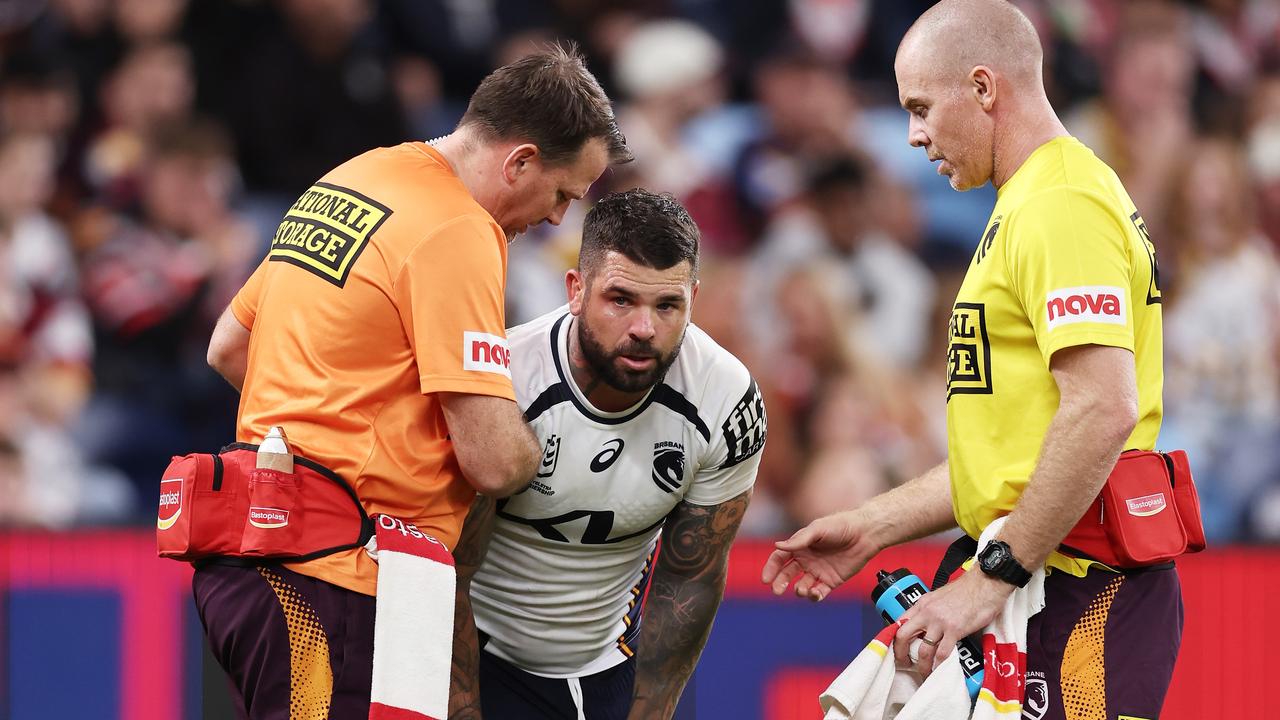
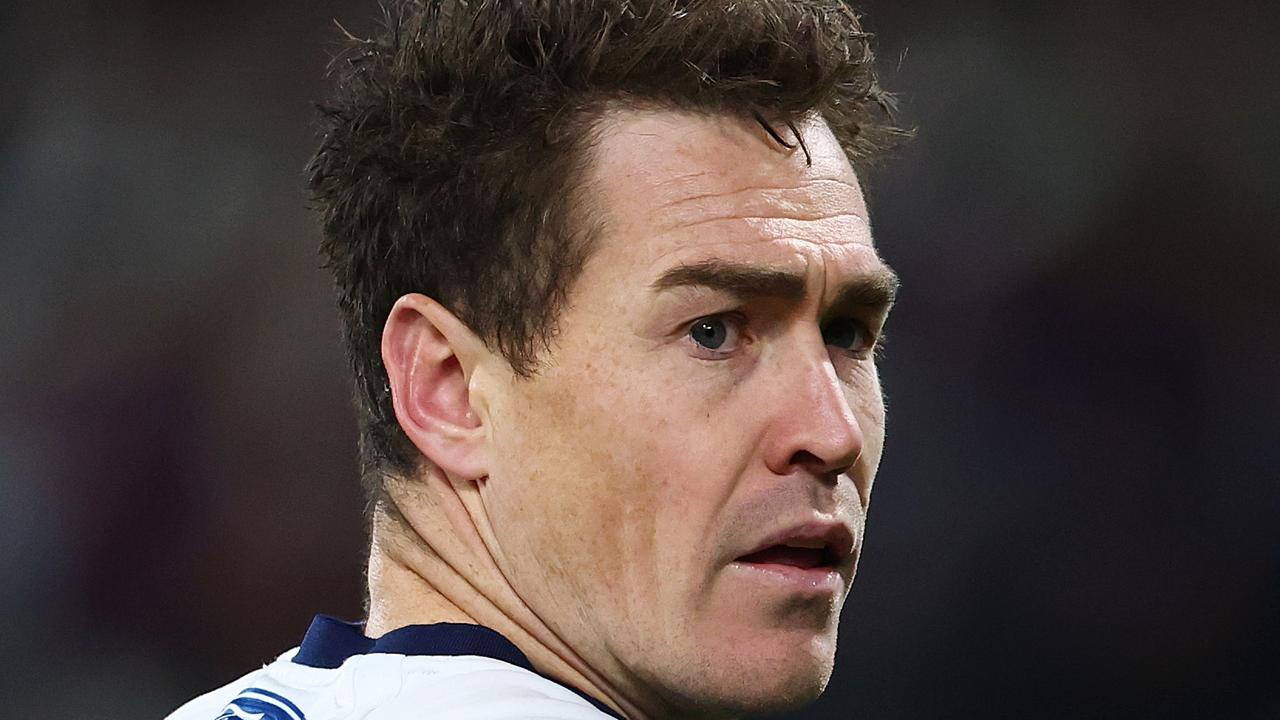
    WELLINGTON, New Zealand — One of New Zealand rugby’s most high-profile leaders will sit out the All Blacks’ most critical upcoming fixtures, after a persistent back injury forced a decision for urgent corrective surgery that will end his 2025 club season early. Scott Barrett, the 32-year-old starting forward and incumbent All Blacks captain, has been ruled out of July’s inaugural Nations Championship test series and the national side’s landmark tour of South Africa and the United States running through August and September, a schedule that includes four highly anticipated matches against the reigning world champion Springboks.

    Barrett has spent months attempting to manage his chronic back issue through non-invasive treatments, but none of the conservative measures delivered the long-term relief the player needed. With no improvement after exhausting all non-surgical options, surgery is scheduled by the end of this week, which will also cut short his current Super Rugby campaign with the Christchurch-based Crusaders.

    Crusaders head coach Rob Penney confirmed the tough news in comments to reporters, noting that Barrett has come to terms with the disappointing outcome. “He’s got his head around it now — a pretty special trip to South Africa that he’s going to miss and some other bits and pieces. But ultimately, he’s just got to get himself right,” Penney said.

    Barrett’s absence comes amid a period of off-season leadership transition for the All Blacks, adding an extra layer of uncertainty to the side’s preparation ahead of their packed calendar. The forward was appointed as the All Blacks’ 81st test captain in 2024, when former Crusaders head coach Scott Robertson took over the national program. But Robertson was unexpectedly relieved of his duties as head coach in January 2025, with former Australia Wallabies boss Dave Rennie stepping into the role to lead the side into the new international cycle.

    Rennie has not yet announced his official choice for captain, and even before Barrett’s injury, speculation had mounted that Barrett would not retain the leadership role under the new coaching regime. Now, three standout players have emerged as the top contenders to replace Barrett as captain for the upcoming series: his younger brother Jordie Barrett, dynamic backrower Ardie Savea, and experienced hooker Codie Taylor.

    For New Zealand fans, the loss of Barrett adds a major challenge to what is already one of the most demanding schedules in recent All Blacks history. The side will kick off the brand-new Nations Championship with three consecutive home tests: against France in Christchurch on July 4, Italy in Wellington on July 11, and Ireland in Auckland on July 18. Immediately after the home series, the team will depart for a combined tour of South Africa and the United States that features four test matches against the Springboks, plus additional provincial fixtures against South African club sides the Stormers, Sharks, Bulls and Lions.

  • Deforestation in Brazil’s Amazon drops to lowest level since 2019

    Deforestation in Brazil’s Amazon drops to lowest level since 2019

    A landmark new report from Brazilian environmental monitoring network MapBiomas has confirmed that deforestation across Brazil’s Amazon rainforest dropped to its lowest annual level in 2025 since consistent recording began in 2019, delivering a key environmental win for the administration of leftist President Luiz Inácio Lula da Silva ahead of national elections this October.

    MapBiomas, a collaborative consortium of leading Brazilian universities, non-profit environmental organizations, and technology firms, released its findings Wednesday. Data shows Brazil lost 985,000 hectares (approximately 2.4 million acres) of native vegetation across all its biomes in 2025, marking a 20.6% decline in total forest and vegetation clearance compared to 2024. While the official count does not include vegetation destroyed primarily by wildfire, the 2025 fire season brought far less extreme destruction to the region after the all-time record blazes recorded in 2024.

    Deforestation reductions were recorded across all six of Brazil’s major ecosystems, with the Amazon seeing the steepest drop of 23.5% year-over-year. MapBiomas technical coordinator Marcos Rosa linked the downward trend directly to sweeping policy changes implemented by Lula after he took office, noting that sharp increases in federal enforcement operations and penalties for illegal logging have corresponded directly with falling clearance rates nationwide.

    Lula has positioned the fight against Amazon destruction as a core policy priority of his administration, after four years of surging unregulated logging under his far-right predecessor Jair Bolsonaro. The Brazilian president has pledged to eliminate all illegal deforestation across the country by 2030, a goal rooted in the global scientific consensus that intact old-growth Amazon forests are critical natural carbon sinks that slow global climate change. Last year, Lula leveraged Brazil’s role as Amazon steward to host the COP30 United Nations climate summit in the northern Amazonian city of Belém, using the gathering to highlight his environmental agenda.

    Despite the historic decline, the report underscores that mass deforestation remains a pressing crisis for the world’s largest rainforest. Even with the slowdown, an average of five trees are cut down every single minute second *[correction: every second*] in the Amazon. The Cerrado, a biodiverse tropical savanna ecosystem located south of the Amazon basin, remained the hardest-hit region, accounting for more than half of all vegetation clearance recorded in 2025. MapBiomas data confirms that agricultural expansion continues to drive nearly 99% of all native vegetation loss across Brazil.

    The progress on deforestation has also been tempered by ongoing criticism from environmental advocates, who have pushed back against Lula’s approval of a controversial large-scale oil exploration project near the mouth of the Amazon River, a development that threatens marine and terrestrial ecosystems in the estuary. With Lula campaigning for a fourth presidential term in October’s general election, the conflicting pressures of environmental protection and economic development look set to remain a central dividing issue in the race.

  • Pete Hegseth’s desperate crusade for masculine validation

    Pete Hegseth’s desperate crusade for masculine validation

    Earlier in 2025, during a closed-door meeting with senior military leadership, then-President-elect Donald Trump posed a sharp question to his inner circle: what would be the outcome of a full-scale military conflict with Iran? While then-Chairman of the Joint Chiefs of Staff General Dan Caine pushed for urgent caution, correctly forecasting that an escalated campaign would push Iran to block the critical Strait of Hormuz—through which 20% of the world’s oil supplies pass—one voice leaped to endorse immediate war: Pete Hegseth, Trump’s self-described informal “Secretary of War.”

    Trump would later recount the exchange at a public press event, noting: “Pete, I think you were the first one to speak up. And you said, ‘Let’s do it, because you can’t let them have a nuclear weapon.’”

    For millions of Americans, military service is rooted in a desire to serve country, secure economic stability, or join a shared community of purpose. But for Hegseth, a long-running Fox News host turned top Pentagon advisor, a hunger for martial glory and a quest to forge a more aggressive masculine identity have always overshadowed all other motivations.

    What many observers overlook is the throughline connecting Hegseth’s early life, his military career, and the current war he championed. After graduating from Princeton University in 2003, he deployed to both Afghanistan and Iraq—two conflicts that ultimately ended in humiliating U.S. defeat. For years after returning home, he used his media platform to defend the Pentagon’s long occupations of both nations, parroting mainstream Republican talking points that brushed aside widespread chaos and civilian death with promises that stable democratic governance was just over the horizon.

    Military analysts and veteran observers say this unyielding zeal stems not from patriotic conviction, but from a desperate search for personal validation after decades of failed foreign policy. Adam Weinstein, a Marine Corps veteran and deputy director for Middle East policy at the Quincy Institute, a nonpartisan Washington-based think tank focused on peace and diplomacy, explains that rank-and-file service members and many junior officers have long accepted the catastrophic failure of the post-9/11 wars. “There’s a deep sense of sacrifice and loss for nothing,” Weinstein says. “And that can lead to fatalistic beliefs, it can lead to Islamophobia. In its healthier form, it can lead to questioning the principles of interventionism and the US foreign policy establishment.”

    Hegseth chose a different path: he has refused any reckoning, either personal or geopolitical, with the failures of the Global War on Terror. Once open defense of the invasions became politically untenable, he shifted to a narrative that avoided any examination of his own military career and instead leaned into extreme rhetoric, increasingly laced with anti-Muslim bigotry, misogyny, and a toxic vision of hyper-masculine militarism.

    As his public profile grew, Hegseth began arguing that the Pentagon itself was weak-willed, insufficiently aggressive, and overrun by incompetent, cowardly leaders—disproportionately targeting women and racial minorities, whom he claims have been unfairly promoted over more qualified white men. His solution was blunt: the U.S. simply needed to fight harder in the Middle East until the mission was complete and what he labels “Islamic extremism” was eliminated entirely. One former colleague noted, “I never got the feeling that he wanted to abandon the Middle East.”

    ### A Childhood Quest for Masculine Validation

    Born and raised in Minnesota, Hegseth was raised in a conservative, religious household and fit the mold of an ideal all-American boy: athletic, devout, well-spoken, and conventionally attractive. But in his 2016 memoir *In the Arena: Good Citizens, a Great Republic, and How One Speech Can Reinvigorate America*, he admitted he carried a core shame: he saw himself as soft, unwilling to pick fights or confront conflict because of deep-seated fear. He hailed his father for his integrity and strong work ethic, but resented that he had not been taught the art of aggressive confrontation—something he saw as the core of true manhood.

    For Hegseth, military service was the obvious path to remedy what he saw as a fatal flaw: he believed it would instill the toughness and masculinity he craved, while also opening doors to social mobility and national prestige. He applied to both West Point, the nation’s most prestigious service academy, and Princeton University, where he competed for an ROTC scholarship, ultimately accepting Princeton’s offer and matriculating in 1999.

    Scholars have drawn a striking parallel between Hegseth’s path and that of another famous Minnesotan Princeton alumnus: novelist F. Scott Fitzgerald. Both were working-class young men who gained entry to the elite Ivy League institution, chafed at its upper-crust elitism while craving its validation, honed their writing voices on campus, and went on to serve in the U.S. Army. Both also struggled with alcohol and turbulent personal relationships, though Fitzgerald was far more reflective about his own flaws than Hegseth has ever been.

    Hegseth has long echoed that unapologetic ambition, stating in a 2015 interview: “If you want something, you go after it – you’re willing to sleep a little less, put up with more, put up with a little insanity and do things you don’t want to do.”

    Even during his time at Princeton, former professors and classmates noted Hegseth had “many faces”: in public, he loudly championed the impending Iraq War and attacked campus feminist groups, but in private settings, he could show nuance and kindness. Today, his former professors say his current public persona does not align with the young man they knew. That disconnect is no accident: his over-the-top, war-mongering posturing during the Trump era bears little relation to either his Ivy League education or his actual military service record.

    Hegseth left Iraq with a Bronze Star, but the decoration was issued “without valor”—a lower-tier award that the *Washington Post* found was “issued somewhat liberally” during the War on Terror, with many enlisted troops joking that it amounted to little more than a “participation trophy” for ambitious officers. His award citation relied on the same empty platitudes the Bush White House used to sell the disastrous invasion to the American public, claiming he had “contributed immeasurably to the success of building a free and democratic nation for the citizens of Iraq”—a claim that is widely acknowledged as fiction decades later.

    ### Building a Political Brand Around War Crime Advocacy

    After returning home, Hegseth built his political profile through work with a network of astroturf veterans’ groups backed by powerful conservative donors, most notably Concerned Veterans of America, which is funded by the billionaire Koch Brothers and advocates for full privatization of the U.S. Department of Veterans Affairs. In 2014, he headlined a 10-city “Defend Freedom” national tour, featuring patriotic rock band Madison Rising and speeches from decorated service members and military families.

    It was on that tour that he connected with Karen Vaughn, a Gold Star mother whose son, a SEAL Team Six member, was killed in action in Afghanistan. Vaughn remains a close ally, saying she supports Hegseth because he prioritizes the voices of people who have experienced combat firsthand: “His friends are the people who fought these wars. They are not the people who sat around white linen tablecloths with glasses of wine discussing them.”

    Vaughn later introduced Hegseth to Eddie Gallagher, a Navy SEAL who sparked national controversy when he was accused of killing unarmed civilians and stabbing a wounded, captive teenage fighter to death. Hegseth seized on Gallagher’s case, along with two other high-profile cases of troops accused of war crimes, to shift the national conversation around acceptable rules of engagement during war. He brashly argued: “These are men who went into the most dangerous places on earth with a job to defend us and made tough calls on a moment’s notice. They’re not war criminals, they’re warriors.”

    Ultimately, Trump sided with Hegseth: he reversed Gallagher’s demotion after he was acquitted of the most serious charges, and issued full pardons to other troops convicted of war crimes. That victory cemented Hegseth’s credibility among a subset of hardline active-duty service members, and established him as the face of the modern Trumpian soldier archetype: white, male, devoutly Christian, and unapologetically aggressive.

    ### The Ideological Roots of Hegseth’s Bellicosity

    Hegseth’s worldview has been deeply shaped by his repeated trips to Israel, which he first visited in 2013. Writing for *National Review* after that trip, he praised what he called “Israel’s sense of purpose,” noting that unlike the U.S., which often hides its wars behind technocratic policy justifications, Israel frames its conflicts in religious and existential terms. “I find myself envious of the gravity and substance of the Israelis’ task,” he wrote.

    For Hegseth, Israel represented exactly the kind of unapologetic military dominance he had long sought for the U.S. in the Arab world. Repeated visits over the following decade reinvigorated both his Christian faith and his belief that aggressive, total war is morally justified. He met with far-right Israeli political leaders, toured military outposts along the northern border, and visited occupied Hebron in the West Bank, and produced a series of pro-Israel documentaries for Fox News’ streaming platform.

    It was during one of these filming trips that he first encountered the Jerusalem cross, a symbol historically associated with the medieval Crusades. He had the cross tattooed on his chest, saying he wanted “to show that my religion is front and center in my life.” Today, his body art is a public manifesto for his worldview: it also includes an American flag, an assault rifle, the phrase “Deus Vult” (Latin for “God wills it”), a Crusader motto that has been widely adopted by white supremacists and was prominently displayed at the violent 2017 white nationalist rally in Charlottesville, Virginia. He also has the word “kafir” — Arabic for “infidel” — tattooed on his right bicep.

    By 2016, Hegseth had framed U.S. national security as inextricably linked to Israel’s security, calling the Obama administration’s historic Iran Nuclear Deal a cowardly betrayal that would allow Iran to destroy both nations. During a 2016 speech in Jerusalem, he pledged that the U.S. would forever “lock arms and shields with all of you in defense of freedom and western civilization.”

    ### Driving the Current Iran Conflict

    It is this long personal and ideological history that goes a long way toward explaining the current U.S. war with Iran. As the effective top leader of the Pentagon under the second Trump administration, Hegseth is a man driven by a deep personal need to erase the humiliation of the failed post-9/11 wars he served in, which he has framed as a personal emasculation.

    Experts and former administration officials say this makes his push for war a deeply personal, ideological project, not a response to any actual imminent threat to U.S. national security. Multiple former Trump administration officials have publicly rejected the push for war, most notably Joe Kent, a former counterterrorism official who resigned his post, explicitly citing that “no imminent threat to our nation” comes from Iran. Even former Director of National Intelligence Tulsi Gabbard and former CIA Director John Ratcliffe have tacitly acknowledged that the war was not launched in response to a concrete, verifiable threat from Iran.

    Today, Hegseth has abandoned any pretense of caution or compassion. As he recently told reporters: “We are punching them while they’re down, which is exactly how it should be.”

    In practice, that has translated to a brutal joint bombing campaign with Israel that has hit civilian targets including a girls’ primary school, killing multiple children, and attacked commercial oil tankers in the Strait of Hormuz, causing massive oil spills that have poisoned regional marine ecosystems. Hegseth has also publicly pledged not to offer quarter to enemy combatants, a direct violation of the Geneva Conventions and international humanitarian law.

    Hegseth has explicitly injected religious ideology into the U.S. military’s ranks, echoing Israel’s framing of conflict in religious terms. He recently told CBS News: “the providence of our almighty God is there protecting those troops, and we’re committed to this mission.” When asked if he sees the conflict as a religious war, he responded: “Obviously, we’re fighting religious fanatics who seek a nuclear capability in order for some religious Armageddon.”

    He has hosted public prayer services at the Pentagon featuring hardline Christian nationalist pastors and prominent Christian contemporary musicians, and official Defense Department promotional videos have featured Bible verses superimposed over combat footage. Military watchdogs have also claimed that senior U.S. commanders have told troops that the war fulfills biblical prophecies about the end times. In recent weeks, a poster featuring Jesus Christ firing a mortar round has been spotted displayed at a U.S. military base in the Middle East, encapsulating Hegseth’s fusion of Christianity, violence, and masculine power.

    In his 2024 book *The War on Warriors*, Hegseth laid out his full vision for remaking the U.S. military in his image, arguing that the force has been “warped and woke” by efforts to expand gender integration, diluting standards to allow women into combat roles while punishing “good soldiers” for misogynistic or offensive tattoos. In Hegseth’s own words, women belong on the front lines only as ink on a man’s bicep.

    This article is republished with permission from TomDispatch, written by investigative journalist Jasper Craven, author of *God Forgives, Brothers Don’t: The Long March of Military Education and the Making of American Manhood*, and a fellow at the Veterans Healthcare Policy Institute.

  • Low cost glasses help India’s poor see a better future

    Low cost glasses help India’s poor see a better future

    For 49-year-old Indian vegetable vendor Tofan Jena, the moment he slipped on a new pair of $2 corrective glasses changed his entire world. After a lifetime of blurry vision that he had accepted as unchangeable, Jena could suddenly make out even the smallest text on his phone screen and see the details of the world around him for the first time. “I can read, I can write, and I can see very well at a distance,” Jena said, still marveling at his new perspective. “I’ll be able to do everything with these glasses.”

    Jena is one of an estimated 1 billion people globally living with uncorrected vision impairment, according to the World Health Organization, a population locked out of educational, economic and daily opportunities simply because they lack access to affordable eye care. In India alone, the International Agency for the Prevention of Blindness calculates that unaddressed, preventable vision conditions cost the country $30 billion annually in lost economic productivity. Data from the non-profit GoodVision, the organization that provided Jena’s exam and glasses, estimates that 550 million people across India require corrective lenses, and 250 million have no access to this basic care.

    GoodVision is a global charity focused on closing the vast global gap in accessible eye care, operating across 12 low- and middle-income countries to bring services directly to underserved communities. In Odisha, the eastern Indian state where Jena lives, the organization runs mobile community screening camps that set up temporary clinics in poor urban neighborhoods and remote rural villages – areas largely overlooked by India’s public health system. At these pop-up sites, local technicians provide free eye screenings, custom-fit glasses for less than $2, and referrals for advanced procedures like cataract surgery for low-income patients. The charity sources low-cost lenses from China and assembles lightweight frames from locally produced Indian metal wire, with a full pair of glasses ready for a patient in just 10 minutes.

    Dozens of residents in Salia Sahi, a low-income district on the outskirts of Bhubaneswar, Odisha’s capital, experienced the same life-changing clarity Jena did during a recent camp. After receiving their glasses, many patients blinked in wonder at a level of visual detail they had never experienced before, or had forgotten over years of uncorrected vision. For 43-year-old shopkeeper Minati Rout, the new glasses let her complete small daily tasks that had become impossible: sorting rice pebbles, threading needles, reading small print. “I will tell my neighbours to get their eyes checked here too,” she said.

    Local optometrist Gopinath Das, who works with GoodVision’s camps, explained that these mobile outreach efforts fill a critical gap for rural communities. “These community camps are extremely important for villagers, because they have no access to eye care,” Das said. “Sometimes they don’t have money, sometimes they don’t even know they have eye problems.” The organization visits more than 400 underserved neighborhoods and villages across India every month, bringing care directly to people who could never travel to urban eye clinics or afford private treatment. For 23-year-old technician Debasmita Behera, the work is both personally and professionally fulfilling: “We are able to provide help to people, and we feel good about it. And I’m also earning.”

    Beyond basic corrective lenses, GoodVision also facilitates low-cost cataract surgery for patients with advanced vision impairment, referring cases to partner hospitals like Bhubaneswar’s Vision Care Hospital. Hospital director Srimant Kumar Mishra says the biggest barrier to care is not cost, but widespread cultural misconceptions. “There is a lot of social stigma, they are afraid… They have a feeling that even if you get old, it is natural that they are not able to see.” GoodVision’s India director Piush Khetan agrees that public education is a core part of the organization’s mission. “In India, we only take things seriously if it’s a matter of life or death,” Khetan said. “So we focus on providing information, we try to convince people of the importance of taking care of their eyes.”

    Maryline Ehlermann, GoodVision’s representative in France, emphasizes that expanding affordable eye care is not just a public health good – it is a high-return global economic investment. Citing global research, Ehlermann notes that treating the 1 billion people living with curable vision impairment would generate an additional $447 billion in annual global economic output. For India, the world’s most populous nation with stark economic inequality, the scale of the challenge remains enormous. But for thousands of low-income Indians like Tofan Jena and Minati Rout, low-cost glasses and accessible community care have already opened the door to a clearer, more hopeful future.

  • YouTuber arrested for allegedly using AI to defame Korean actor

    YouTuber arrested for allegedly using AI to defame Korean actor

    One of South Korea’s most high-profile entertainment stars, Kim Soo-hyun, has been cleared of false, damaging allegations after local authorities arrested a popular YouTube creator accused of fabricating evidence to defame the actor, ending a 12-month scandal that sidelined the A-lister’s career.

    The arrested content creator, Kim Se-ui, operates the channel Hover Lab, which boasts nearly 1 million subscribers. The allegations first emerged in 2024, shortly after 24-year-old actress Kim Sae-ron died by suicide. Months after her death, Hover Lab published what it claimed was evidence that Kim Soo-hyun had entered a romantic relationship with Kim Sae-ron while she was still a minor — claims the veteran actor has vehemently denied from the start.

    Investigators from South Korean police and prosecutors have since concluded that the evidence presented by the YouTuber was entirely manipulated. The purported voice recording of Kim Sae-ron discussing the relationship, they confirmed, was generated using artificial intelligence, and text message screenshots supposedly proving contact between the two stars were altered to fit the false narrative. On Tuesday, the Seoul Central District Court approved an arrest warrant for Kim Se-ui, officially authorizing his detainment. Court officials cited valid concerns that the creator could attempt to destroy remaining evidence or flee the country to avoid prosecution.

    Speaking to reporters outside the courthouse ahead of the warrant being granted, Kim Se-ui rejected all charges against him, claiming the legal document failed to accurately outline basic facts of the case. He also announced plans to file counter-complaints against the police and prosecution teams that requested his arrest.

    The false allegations sent shockwaves through South Korea’s entertainment industry and the general public, as Kim Soo-hyun remains one of the country’s most recognizable figures, with a string of hit drama series and widespread advertising partnerships across the nation. According to police documents cited by South Korean outlet JoongAng Ilbo, the fabricated claims entirely upended the star’s public standing and professional activities, destroying the foundation of his entertainment career. Police also confirmed that Kim Soo-hyun has continued to receive psychiatric care to cope with the stress and damage caused by the scandal.

    The actor has not made any official public appearances since an emotional press conference held in March 2025. During that event, Kim Soo-hyun acknowledged he had dated Kim Sae-ron for one year, but clarified the relationship only began after she reached legal adulthood. “I can’t admit to something I didn’t do,” he told reporters at the time, before filing criminal complaints and civil lawsuits against both Kim Se-ui and Kim Sae-ron’s family for spreading false accusations.

    In an official statement released Wednesday, one year after that press conference, Kim Soo-hyun’s agency said the legal process had finally vindicated the star. “The investigation confirmed that all suspicions and evidence raised by Hover Lab against Kim Soo-hyun were unfounded,” the statement read. It went on to reference the promise Kim Soo-hyun made a year prior: “At a press conference a year ago, Kim Soo-hyun promised, ‘I won’t ask you to believe me. I will definitely prove myself’. The past year has been solely dedicated to keeping that promise.” The agency also extended gratitude to the fans and supporters who stood by the actor throughout the scandal, adding that “the truth has been proven.”