As rising global conflicts — from the political instability in South Sudan to ongoing tensions across the Middle East — push millions of vulnerable children into further hardship, a new partnership between two humanitarian actors is stepping in to address one of the most chronically underfunded needs in crisis response: access to high-quality, trauma-informed education. Announced publicly this Wednesday, the $97 million commitment from the LEGO Foundation will scale up programming run by the International Rescue Committee (IRC), which uses playful learning to help conflict-affected children heal from trauma and build foundational learning skills.
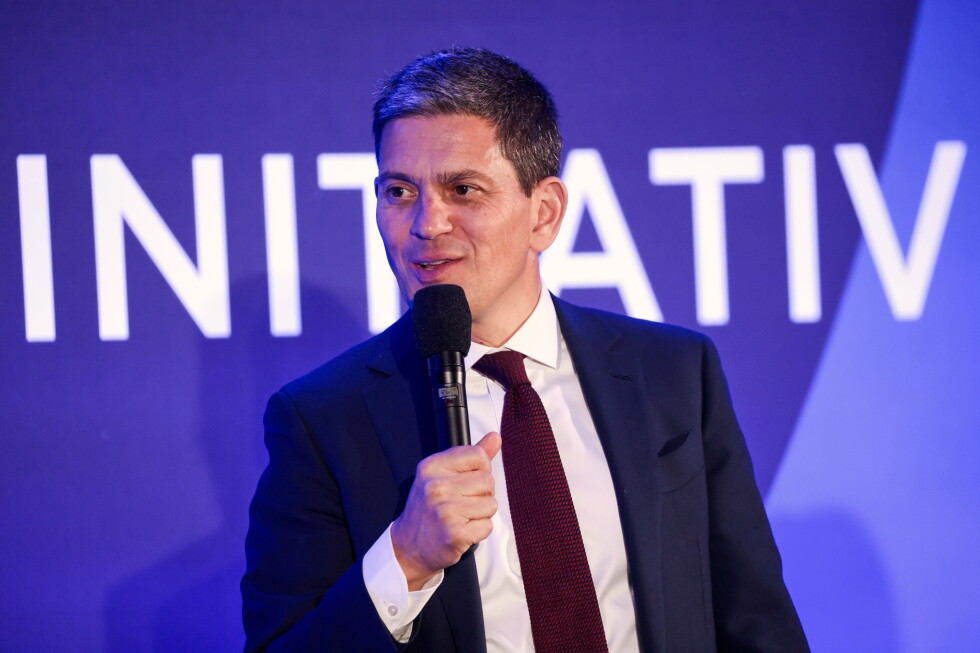
“Children born into conflict have their childhood stolen from them,” IRC President David Miliband shared in an interview with the Associated Press. “But what makes children so remarkable is that when you give them even a small piece of their childhood back, they turn it into extraordinary opportunity. This partnership is about returning that core childhood experience to those who need it most.”
The five-year collaborative initiative aims to reach 5 million children across East Africa and the Middle East, with flexible targeting that adjusts as conflict dynamics shift. LEGO Foundation Chief Executive Sidsel Marie Kristensen emphasized that the program will prioritize children living in the most severe humanitarian contexts, with current candidate countries including Ethiopia, Lebanon, the Palestinian territories, Somalia, South Sudan, Sudan, Syria and Uganda.
Unlike traditional fixed-location grants that can become outdated as crises evolve rapidly, this partnership relies on a truly agile funding model that can redirect resources wherever the need is greatest at any given time. “In the world we live in today, no one can honestly say what will happen tomorrow or even two months from now,” Kristensen noted. “That adaptability is exactly what we need in modern humanitarian response.”
The funding will expand the IRC’s existing PlayMatters program, which trains educators working with children aged 3 to 12 to integrate playful learning techniques into their daily instruction. Rather than mandating a rigid curriculum, the program empowers teachers to tailor their teaching to the specific needs of students who have experienced crisis-related trauma. Program leaders also engage in national policy advocacy, working with local government officials to embed these trauma-informed approaches into national public school curricula.
On-the-ground results from the program have already shown significant impact. At a primary school serving refugees in Uganda’s Nakivale refugee settlement in western Uganda, teacher Sister Kasingye Secunda credits PlayMatters with cutting student absenteeism dramatically. Before the program, low attendance was a persistent problem, compounded by language barriers: many refugee students struggle with both the local language and English, the official language of instruction.
Through play-based activities, students build skills and confidence incrementally: for example, children learn color recognition through a game where they sort and share locally common fruits like mangoes and bananas with classmates. They build public speaking confidence through low-pressure class presentations and develop leadership skills by taking turns guiding small group activities. “Learners actually enjoy the lessons now,” Secunda said. “They are eager to come to school every day.”
PlayMatters also leverages digital and multimedia tools to reach children in hard-to-access areas. A multi-language radio show featuring culturally familiar characters helps children identify and process their emotions across remote communities in Ethiopia and Tanzania, and it reaches flood-prone regions of South Sudan where half the year roads are impassable and in-person schooling is interrupted. Project Director Martin Omukuba says the program is actively expanding these remote delivery models to reach more cut-off communities.
The flexible funding model from the LEGO Foundation allows the IRC to adapt to sudden shifts in crisis contexts, such as when a refugee classroom unexpectedly grows from 25 students to 150, creating unplanned needs for sanitation, nutrition, or other non-education basics that are critical to keeping children in class. Omukuba noted that the foundation trusts the IRC to reallocate funds quickly during emergencies, rather than requiring strict adherence to original budget plans. “We first need to make sure that children are alive,” he said. “We can introduce education once they are stabilized.”
This is not the first collaboration between the two organizations: the LEGO Foundation first partnered with the IRC in 2019 with a $100 million commitment to *Ahlan Simsim*, a co-production with Sesame Workshop that supports children displaced by the Syrian and Rohingya refugee crises. The Denmark-based foundation, which focuses on global early childhood development, has been steadily scaling its investments in conflict-affected contexts. Most recently, it announced a separate $30 million partnership with global funding collaborative Co-Impact to support locally led solutions for learning and wellbeing among crisis-impacted children.
Kristensen says she hopes the new $97 million commitment will inspire broader cross-sector collaboration between governments, civil society organizations and the private sector. That collaboration is increasingly critical as international development aid declines, driven by funding cuts from the United States and multiple European nations, she explained.
Miliband echoed that concern, noting that these cuts have severely stretched the capacity of the global humanitarian system over the past year. He pointed to the ongoing Ebola outbreak in the Democratic Republic of the Congo as a clear example of the short-sightedness of cutting funding for programs that are often labeled as marginal. In the DRC’s Ituri province, the epicenter of the current Ebola emergency, critical sanitation and handwashing programs lost U.S. funding last year during the Trump administration’s restructuring of international development efforts. “We warned at the time what the risk was,” Miliband said. “And sure as night follows day, we end up with an under-detected Ebola outbreak.”
IRC experts frame early childhood development and education not as a luxury for crisis contexts, but as a necessary intervention to counteract toxic stress from trauma that can permanently alter brain development and delay long-term learning. Even before wealthy nations cut their international aid budgets, education was consistently underfunded in humanitarian responses, explained Patty McIlreavy, president and CEO of the Center for Disaster Philanthropy. Too often, “life-saving” assistance was narrowly defined to only cover immediate physical needs, she said, excluding life-sustaining long-term investments like children’s education.
McIlreavy pointed to the new LEGO-IRC partnership as a model for private donors, who often ask how they can make a meaningful impact in complex, protracted conflicts with no clear end in sight. “It’s not our role as philanthropy to fix what’s broken in a country, that’s a political challenge that goes far beyond what we can do,” she said. “But there is so much we can accomplish — even just providing six months or a year of safe, supportive education can change a child’s trajectory.”
This Associated Press coverage of philanthropy and nonprofits is supported through AP’s collaboration with The Conversation US, with funding from Lilly Endowment Inc. The AP retains sole responsibility for all content.