Global financial markets kicked off midweek with mixed movements on Wednesday, as a surge in artificial intelligence-related technology stocks lifted most Asian equity benchmarks to sharp gains immediately after U.S. markets closed out a record-breaking trading session, while crude oil prices retreated amid uncertain progress in talks to end the ongoing Iran war.
The AI-driven investment frenzy that has gripped global markets this year delivered its strongest performance across East Asian markets, where chipmakers and core technology firms saw heavy buying pressure from institutional and retail investors alike. South Korea’s benchmark Kospi index notched an impressive 4.9% jump to close at 8,457.09, marking an all-time record high, with industry giant Samsung Electronics leading the rally with a 7% gain in its share price. Across the Taiwan Strait, Taiwan’s benchmark Taiex index also followed the upward momentum, surging 2.7% on the day.
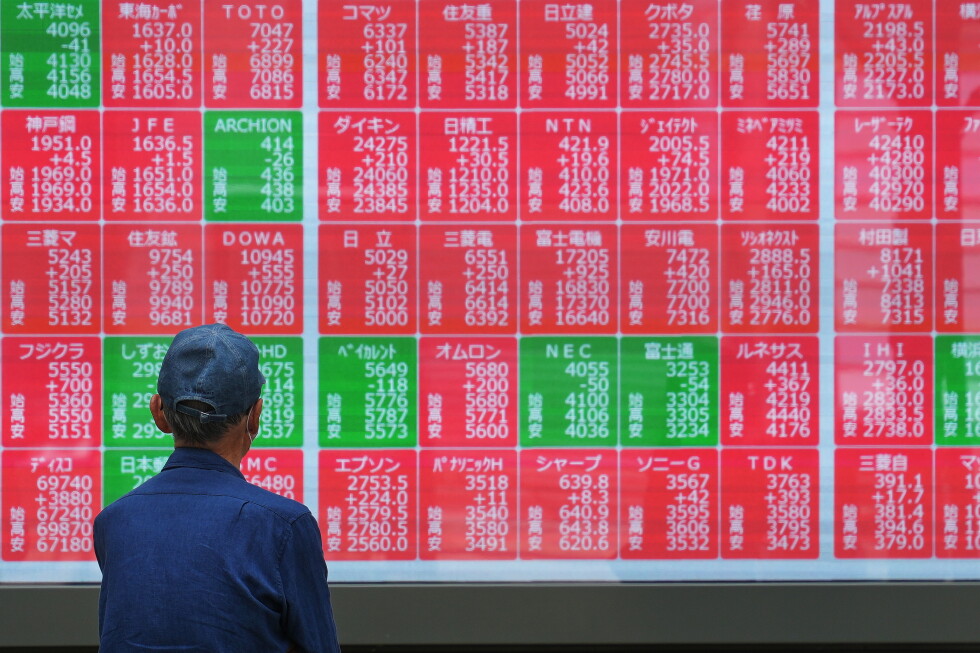
In Japan, the Nikkei 225 index also extended its winning streak, climbing 1.2% to close at 65,816.62 after becoming the first major Asian index to break above the 66,000 threshold during intraday trading. The rally was led by the country’s top semiconductor-related firms: Tokyo Electron, a leading manufacturer of chip production equipment, saw its shares jump 5.9%, while Advantest, a prominent chip testing equipment producer, gained 5.7% by market close.
This wave of tech stock gains across Asia followed a historic rally for U.S. memory chip giant Micron Technology on Tuesday. The company’s shares surged 19.3% after UBS analysts led by Timothy Arcuri more than tripled their 12-month price target for the stock, lifting it from $535 to $1,625. Micron closed the trading session at $895.88, pushing its overall market capitalization past the $1 trillion mark. The Idaho-based firm now joins an elite group of trillion-dollar-plus Big Tech companies that includes Nvidia, Apple, and Microsoft, the latter two of which have already surpassed a $3 trillion valuation. So far in 2024, Micron’s stock has more than tripled, fueled by widespread analyst forecasts of sustained, strong growth in demand for computer memory chips to power new AI infrastructure.
Not all Asian markets finished the day in positive territory. Hong Kong’s Hang Seng Index dipped 0.7% to close at 25,426.92, while mainland China’s Shanghai Composite Index shed a modest 0.2% to end at 4,136.87. Australia’s S&P/ASX 200 recorded a minor 0.1% uptick to close at 8,662.10.
Tuesday’s trading session on Wall Street delivered a fresh set of all-time records for major U.S. indexes, with the S&P 500 climbing 0.6% to 7,519.12 and the Nasdaq Composite jumping 1.2% to hit a new high of 26,656.18. The Dow Jones Industrial Average bucked the trend, dipping 0.2% to close at 50,461.68. The U.S. stock rally came as markets reacted to comments from former President Donald Trump, who said negotiations to end the ongoing war with Iran were “proceeding nicely.” While hopes of a peace deal have repeatedly lifted global markets in recent months, fighting has continued in the region, leaving the ultimate outcome of talks uncertain.
Since the outbreak of the war in late February, oil prices have been a core driver of global market volatility. The conflict closed the Strait of Hormuz, a critical global oil shipping chokepoint, trapping dozens of oil tankers in the Persian Gulf and disrupting crude supplies to international markets, pushing up prices and fueling painful global inflation. On Wednesday, early trading saw crude prices pull back as investors bet that a potential peace deal could reopen the strait and restore normal supply flows. Brent crude, the global benchmark, lost 94 cents to trade at $95.73 per barrel, while U.S. West Texas Intermediate crude fell $1.35 to $92.54 per barrel. Lower oil prices also pulled down yields in the U.S. bond market, easing pressure on equities: the 10-year Treasury yield fell to 4.48% from 4.56% recorded Friday.
Hopes for lower fuel costs lifted shares of companies heavily exposed to energy prices, with U.S. carrier United Airlines gaining 6% and Norwegian Cruise Line Holdings rising 4.9%. Even with these market gains, U.S. consumers remain broadly pessimistic about economic conditions. A Tuesday report showed consumer confidence edged lower in May, though the reading was better than economists had forecast. The downgrade followed a report released the prior week that found U.S. consumer sentiment had fallen to its lowest level on record.
In currency markets, the U.S. dollar saw minor movement, slipping slightly to 159.28 Japanese yen from 159.30 yen, while the euro inched up to $1.1636 from $1.1631.