作者: admin

  • Packers’ Jacobs arrested on domestic abuse charges

    Packers’ Jacobs arrested on domestic abuse charges

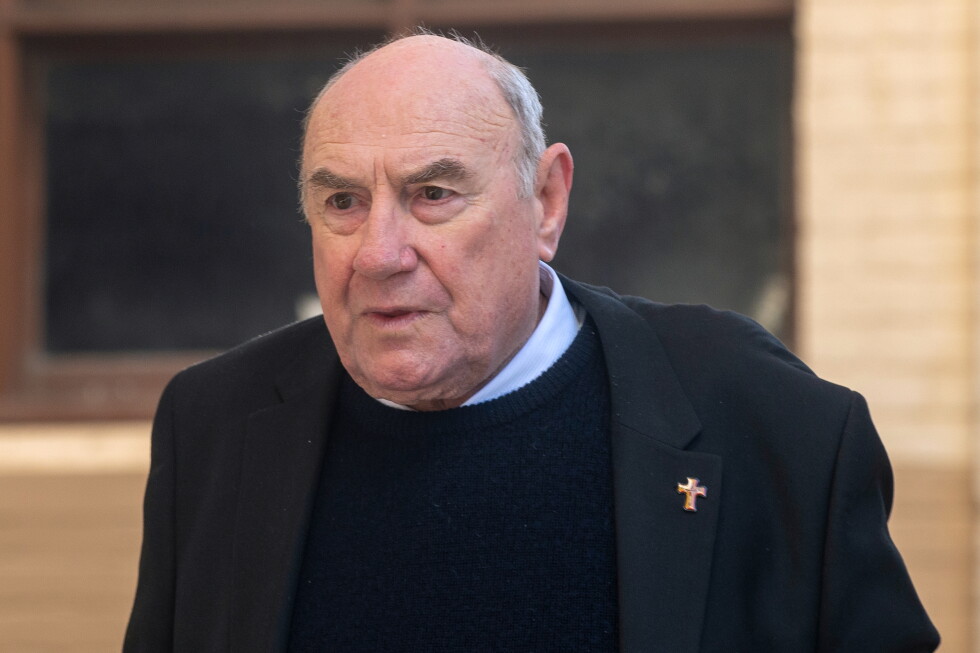
    One of the NFL’s most prominent running backs, Josh Jacobs of the Green Bay Packers, is at the center of a growing legal storm after being taken into custody on five felony and misdemeanor domestic abuse-related charges.

    The case traces back to a disturbance call responded to by officers from Wisconsin’s Hobart-Lawrence Police Department on a Saturday morning. Three days after the initial complaint, the 28-year-old Pro Bowl running back was booked into the Brown County Jail. The charges against Jacobs span five distinct offenses: battery, criminal property damage, disorderly conduct, victim intimidation, and strangulation and suffocation.

    Hobart-Lawrence Police Chief Michael Renkas confirmed the investigation remains active in an official statement, noting that no additional details would be disclosed to the public at this stage of the process.

    Through his legal team, Jacobs has issued a categorical denial of all allegations against him. In a formal statement released by attorneys David Chesnoff, Richard Schonfeld and Clarence Duchac, the running back “vehemently denies” the claims, emphasizing that the case remains in its early investigative stages, with key evidence still not available to the public. The legal team has asked the public and media to allow the judicial process to proceed without premature judgment, calling for fairness and restraint in commentary on the case.

    Both the Green Bay Packers organization and the National Football League have acknowledged the arrest, but have declined to issue substantive comment while the legal process unfolds. The Packers said they are aware of the matter but will not comment on an ongoing legal situation. The NFL confirmed that league officials have been in contact with the Packers organization regarding the arrest.

    Jacobs joined the Packers in 2024 as a high-profile free agent, signing a four-year contract worth $48 million. A veteran of seven NFL seasons, he originally entered the league with the Las Vegas Raiders (formerly the Oakland Raiders) before making the move to Green Bay. Over his career, Jacobs has earned three Pro Bowl selections, in 2020, 2022, and 2024, and led the entire NFL in rushing yards during his tenure with the Raiders. Across his seven seasons, he has compiled 7,803 rushing yards on 1,840 carries and scored 74 total touchdowns. He is currently preparing for his third season with the Green Bay franchise.

  • China executes man for poisoning billionaire linked to Netflix’s ‘3 Body Problem’

    China executes man for poisoning billionaire linked to Netflix’s ‘3 Body Problem’

    Nearly three and a half years after the high-profile poisoning death of a Chinese gaming billionaire whose company secured adaptation rights for one of the world’s most beloved science fiction franchises, authorities have carried out the death sentence for the perpetrator, local Chinese media confirmed this week.

    The convicted killer, identified as Xu Yao, was the former head of a subsidiary at Yoozoo Games, the Shanghai-based entertainment company founded by Lin Qi, a 39-year-old industry tycoon who died in December 2020 just days after being poisoned. Court documents and local reporting outline that the fatal attack grew out of a bitter professional dispute: Xu had played a key role in helping Lin secure the coveted media rights deal for Liu Cixin’s *The Three-Body Problem* with streaming giant Netflix, but was rapidly sidelined from key projects within the company shortly after the deal closed.

    In a calculated plot that put multiple lives at risk, Xu spent hundreds of thousands of yuan — equivalent to tens of thousands of U.S. dollars — to procure lethal toxic substances from online vendors, including alpha-amanitin, a powerful deadly toxin produced by some species of poisonous mushroom. To conceal his plan, Xu rebranded the poisons as everyday consumer products: he molded some into fake probiotic pills, and laced other common workplace items including coffee capsules, drinking water containers, and a bottle of whisky before offering them to Lin and other fellow employees at the firm.

    Multiple other staff members who ingested the tainted substances fell ill, but all ultimately recovered. Lin, however, could not be saved, and he died in a Shanghai hospital just days after the poisoning, shocking China’s entertainment and technology industries.

    *The Three-Body Problem*, Liu Cixin’s landmark three-part sci-fi series, has become a global cultural phenomenon since its original publication in China. Liu made history as the first Chinese author to win the Hugo Award, the most prestigious prize in science fiction, and the series has since been translated into more than 40 languages, reaching millions of readers worldwide. It has spawned a massive growing domestic Chinese sci-fi industry, and multiple high-profile adaptations, including the hit 2024 Netflix original series *3 Body Problem*, which introduced the story to a whole new global audience. Yoozoo Games, through its affiliate Three-Body Universe, holds the official film and media adaptation rights for the franchise.

    After a years-long legal process, Xu was found guilty of murder in 2024, and was executed on May 21, according to official and media reports. On Tuesday, Three-Body Universe confirmed the outcome of the case in an official statement posted to Chinese social media platform Weibo.

    The statement read: “Recently, the case concerning Mr. Lin Qi, the founder of Three-Body Universe, has finally reached its conclusion, and justice has ultimately been served. All of us at the company are deeply grateful for the upholding of justice.”

    As of Wednesday, Yoozoo Games had not responded to additional requests for comment from outside media, and the Shanghai High People’s Court also declined to respond to emailed requests for further details on the case.

  • Australia’s consumer watchdog slaps ban on potentially deadly baby bottle self-feeding devices

    Australia’s consumer watchdog slaps ban on potentially deadly baby bottle self-feeding devices

    Australia’s national consumer protection regulator has enacted a permanent, nationwide ban on all unsupervised baby bottle self-feeding devices, following ongoing safety warnings that the products pose life-threatening hazards to infants.

    The Australian Competition and Consumer Commission (ACCC), the country’s leading consumer watchdog, announced the full ban this week, noting that the devices — which are designed to let babies feed from a bottle without constant adult holding and supervision — put young children at severe risk of choking, aspiration of liquid into the lungs, and suffocation, all of which can lead to permanent injury or death.

    Under the new regulatory order, it is now illegal to manufacture, hold for sale, or supply any of these devices anywhere across Australia. Businesses that fail to comply with the ban, including manufacturers, advertisers, and retail sellers, face substantial financial and legal penalties for violating the new rule.

    ACCC Deputy Chair Catriona Lowe explained that infants lack the physical capability to control the flow of milk from a fixed-position bottle, or remove the bottle from their mouth independently if they experience distress. This developmental limitation means the products present an unacceptable level of risk that cannot be mitigated, she said.

    “This permanent ban makes clear that products which undermine safe infant feeding practices will not be tolerated in the Australian market,” Lowe stated in an official announcement. “Suppliers should be aware that it is now illegal to supply these products in Australia, and penalties may apply for businesses that do not comply.”

    The regulator has also issued a public warning to Australian caregivers, urging anyone currently using these devices to stop immediately. The ACCC emphasized that active adult supervision is a non-negotiable requirement for safe infant bottle feeding, and no automated product can replace this critical oversight.

    The ban covers the full range of products designed for unsupervised self-feeding, including devices that clamp or position a bottle directly in an infant’s mouth, wearable devices that hold a bottle for feeding, and flexible straw-connected bottle systems that allow hands-free feeding. Notably, the ban does not extend to breastfeeding support systems, sippy cups, trainer cups, or straw training cups for older children, which are not classified as unsupervised bottle self-feeding devices.

    Consumer safety advocates have welcomed the ban, noting that multiple informal safety warnings about these products had circulated in parenting communities for years before the formal national regulatory action was taken.

  • First Ghanaians set to be repatriated from South Africa over anti-immigrant protests

    First Ghanaians set to be repatriated from South Africa over anti-immigrant protests

    In the early hours of Wednesday, the first cohort of Ghanaian citizens began their journey home from South Africa, amid growing fears of renewed xenophobic violence sparked by a recent wave of anti-illegal immigration protests across the country. Dozens of buses chartered by the Ghanaian embassy arrived at Johannesburg’s OR Tambo International Airport by 3 a.m. local time, dropping off hundreds of departing passengers spanning all age groups, including men, women, and children. A small subset of travelers was transported separately in a police van, kept isolated from the main group under constant police observation, according to on-the-ground reporting from the BBC.

    This mass repatriation effort comes in response to weeks of demonstrations led by March and March, a grassroots citizen movement pushing for stricter South African immigration reform. The group has set a June 30 deadline for all undocumented migrants to leave the country, a timeline that has stoked widespread anxiety among foreign residents. Among those departing is Rudolph, a Ghanaian small business owner who has operated a hair salon in South Africa for a decade. In a rare interview with the BBC, Rudolph explained that the shifting social climate had made staying in the country untenable. “It’s not comfortable for us to stay here anymore, so we have to go. I think we will find peace at home,” he said, echoing the fears of many other foreign residents. He added that the protests, which originated in Durban before spreading to multiple other provinces, could easily escalate into targeted violence ahead of the deadline, and that he had no plans to ever return to South Africa.

    Ghanaian authorities confirmed that only 300 of the roughly 800 registered citizens would depart on Wednesday, with the remaining travelers undergoing additional security and eligibility screenings before boarding future flights. Officials estimate that roughly 25,000 Ghanaians currently reside in South Africa, a large portion of whom have been affected by the recent unrest. Ghanaian High Commissioner Benjamin Quashie emphasized that the repatriation effort is rooted in the government’s core responsibility to protect its citizens abroad. “The Ghanaian government listened to the plight of its citizens in South Africa, who felt that their lives were in danger, who felt like the economic activity that they were engaging in had come to a standstill, who felt unwelcome in this country, and it is the responsibility of every government to ensure that its citizens are taken care of both home and abroad,” Quashie told the BBC.

    Quashie also outlined the Ghanaian government’s plan to support returning citizens, noting that a comprehensive reintegration strategy is already in place to help returnees reestablish their businesses and livelihoods back home. He added that the effort also aligns with South Africa’s own goals around immigration management: “The government is willing to establish them into whatever business they were doing in South Africa. In a way, we’re also helping the South African economy, because it’s clear that some of them are undocumented. So taking them out of here will let them know that we are not people who condone undocumented people in countries.”

    Political analysts have pointed to upcoming local elections scheduled for November as a potential driving factor behind the recent resurgence of anti-migrant sentiment in South Africa. The country has a bloody history of large-scale xenophobic violence: in 2008, attacks targeting foreign nationals left 62 people dead, and another 12 people were killed in similar unrest in 2019. Organizers of the current wave of protests have maintained that their demonstrations have been entirely peaceful, a claim echoed in recent statements from the South African government. Earlier this month, government officials condemned any criminal targeting of foreign residents while acknowledging that the country faces legitimate challenges around managing undocumented immigration that must be addressed.

  • For one Ukrainian war amputee, rebuilding is painful after a Russian strike killed her husband

    For one Ukrainian war amputee, rebuilding is painful after a Russian strike killed her husband

    In the central Ukrainian city of Kryvyi Rih, 50-year-old Iryna Nakonechna carries a quiet, unbreakable resolve forged in unthinkable tragedy. Last year, a Russian missile strike took everything she once knew: it killed her husband Serhii Nakonechnyi and tore away her left leg, leaving her with lasting mobility damage to her arms.

    In the immediate aftermath of the attack, which struck as the couple enjoyed an unseasonably warm post-dinner stroll near a downtown hotel on March 5, 2025, Nakonechna made a deliberate choice to let go of the life she had shared with Serhii. She cut off her long dark wavy hair, cleared almost every memento—furniture, clothing, personal trinkets, and most photos—from the apartment they once shared. Only one portrait of the couple remains, a quiet anchor to the past while she forges a new future. “Shedding my old identity was the only way I could endure the painful reinvention I needed to build a new life with my prosthetic,” she explains.

    Today, Nakonechna cuts a sharp, vibrant figure: her signature pixie cut frames a face lit by quick, loud laughter, and bold red cat-eye glasses sit atop her nose. But beneath her effervescent wit lies a deep, unspoken grief that is rarely centered in mainstream narratives of wartime resilience. She is one of tens of thousands of Ukrainians—both soldiers and civilians—who have lost limbs to Russia’s full-scale invasion, a growing population whose invisible wounds often go unmentioned.

    The exact number of Ukrainian war amputees remains unknown, but the count climbs steadily every day. Landmines planted across occupied territory, relentless artillery barrages, and ongoing missile and drone strikes continue to inflict catastrophic, life-altering injuries on people across the country. This surge has pushed Ukraine to rapidly expand rehabilitation and prosthetic services, and it has reshaped Ukrainian society at large: prosthetic limbs are no longer hidden, but have emerged as bold, visible symbols of survival and defiance against aggression.

    For Nakonechna, the journey of recovery is both physical and psychological. She still walks with a cane, learning to trust the prosthetic that extends to her upper thigh, and her injured arms leave her unable to lift heavy objects. Every week, she attends an hour-long physical therapy session with Anastasiia Stetsenko, a therapist who is guiding her toward the next milestone: walking without assistance.

    Their sessions follow a gentle but rigorous routine. Nakonechna begins by removing her prosthetic to rest it against the wall, then moves through seated weight lifts timed to her breathing, slow circular rotations of her residual limb to test range of motion, and eventually squats while gripping a ballet barre—one of the hardest movements to relearn. When exercises grow grueling, Nakonechna jokes with Stetsenko, calling her therapist a “demon” and quips that the routine feels like an extreme sport. When challenged to attempt a difficult squat, she laughs and deadpans, “I will respond as my grandson would: Just no.” The room fills with shared laughter, the dynamic between the two women far closer to old friends than clinician and patient.

    The work is not just about building physical strength; it is about rebuilding the confidence to complete everyday tasks most people take for granted: climbing stairs, bending to pick up a dropped item, navigating cracked, uneven city streets, and chasing her 2-year-old grandson Tymofii across a playground.

    That fateful March day stripped Nakonechna of more than her limb and her husband. After the missile detonated, throwing the couple dozens of meters apart, she woke to find herself separated from Serhii, admitted to a different hospital. He died the next day, and she never got to say goodbye. “I wasn’t even at his funeral,” she says quietly. For two months, she endured two surgeries a week, her days blurring into a fog of pain and recovery. By May, she could finally sit up on her own—a small relief, but only the first step of a far longer journey.

    Now, the apartment she once shared with Serhii is almost unrecognizable from its former self. “I had to get rid of everything from the past,” she says. “I had to focus on living my life, even if it was only half the life I had before.” She invited her 77-year-old mother, who lives with dementia, to move in, and builds small moments of joy around their daily routines. The one thing she still grieves is that she cannot lift her grandson into her arms. Not long ago, Tymofii stuck a cartoon sticker of a capybara wearing a prosthetic leg onto her prosthetic—she has never peeled it off.

    A skilled craftswoman, Nakonechna found a new purpose through Superhumans, a modern Ukrainian trauma center that specializes in prosthetics and rehabilitation for war survivors. She began knitting small toy capybaras, a gentle animal that has become an unofficial symbol of resilience for Ukrainian amputees. The trend started when veterans began placing capybara toys and stickers on their prosthetics to put strangers at ease; over time, the fuzzy, playful animal has grown to represent the quiet determination to reclaim joy after utter devastation.

    Nakonechna’s hand-knit capybaras quickly became popular with other survivors, and she spends hours every week working on the toys. For her, the repetitive craft is a form of healing: “When I count the stitches, I think only about the stitches, not about the life that could have been and unfortunately is not,” she says. Her favorite part of the process is assembling the pieces, turning separate bits of yarn into a whole, finished toy—a small mirror of the work she is doing on herself.

    Recently, she notched a small but transformative personal victory: for the first time since her injury, she put on a pair of shorts and went out in public, no longer hiding her prosthetic from the world. The small act marked a huge internal shift. “I accepted myself as I am,” she says.

    For Nakonechna, and for thousands of Ukrainian amputees like her, resilience is not just about surviving. It is about learning to live with invisible wounds, rebuilding an identity from scratch, and finding small, precious moments of joy in a life forever changed by war.

  • Police issue update after schoolboy injured in alleged hit-and-run at Revesby, in Sydney’s southwest

    Police issue update after schoolboy injured in alleged hit-and-run at Revesby, in Sydney’s southwest

    A multi-day investigation into an alleged hit-and-run that left a 12-year-old schoolboy seriously injured has resulted in the driver of the striking vehicle being identified by New South Wales Police, with the case still moving forward as authorities continue their probe.

    The incident unfolded just after 3:20 p.m. on Monday along Milperra Road in Revesby, a suburb located in Sydney’s southwestern corridor. Emergency dispatch received urgent reports that a child had been struck by a vehicle in the westbound lanes between Edgar Street and Mons Road, prompting first responders to rush to the scene immediately.

    Ambulance paramedics provided on-site emergency care to the young victim before transporting him to Sydney Children’s Hospital. As of the initial response, the boy was recorded as being in serious but stable condition, giving medical teams a foundation to treat his injuries.

    Witnesses who were at the location when the crash occurred shared key details with investigators that helped narrow down the search for the vehicle. They told officers the boy was hit by the rear passenger side of an orange-gold Nissan Navara, which was outfitted with a hardtop canopy, a silver bullbar and black wheel hubs. After the collision, the vehicle fled the scene rather than stopping to assist the injured child.

    In the immediate aftermath of the crash, NSW Police launched a public appeal for information to locate the driver of the distinctive utility truck. By Wednesday evening, police confirmed they had successfully identified the person behind the wheel. A police spokesperson shared details of how the identification unfolded, noting that “following inquiries and a public appeal for information, the driver – a 50-year-old man – presented to Bankstown Police Station, and spoke to officers about 6:30 p.m. on Tuesday.”

    While the driver has now come forward and spoken to investigators, police confirmed that formal inquiries into the full circumstances of the incident are still ongoing. Authorities are still asking any member of the public who was in the area at the time of the crash, or who has dashcam or security footage that could provide additional context for the investigation, to contact Crime Stoppers to share their information.

  • Why Trump is using Iran talks to revive the Abraham Accords

    Why Trump is using Iran talks to revive the Abraham Accords

    As U.S.-Iran ceasefire negotiations progress, Washington’s approach to the talks has come under sharp scrutiny from current and former Western and Arab officials, who argue that President Donald Trump’s decision to link the Abraham Accords peace process to a potential deal is a deliberate distraction from what they call a lopsided negotiating outcome favoring Tehran.

    Aaron David Miller, a veteran former U.S. Middle East negotiator now serving as a senior fellow at the Carnegie Endowment for International Peace, told Middle East Eye that Trump is well aware the emerging agreement undermines every core war objective he laid out after launching the conflict against Iran in February. To offset this weakness, Miller says the president is seeking to frame the talks as part of a broader, more ambitious regional breakthrough.

    “This is a typical Trump ploy,” Miller noted.

    The tentative deal currently under discussion would extend the existing fragile 60-day ceasefire between the two countries. Under the proposed terms, Iran would agree to reopen the strategically vital Strait of Hormuz — where the U.S. has imposed a competing naval blockade — in exchange for a temporary waiver on crippling oil export sanctions. Critically, the agreement does not address Iran’s expanding ballistic missile program, which The New York Times reports has already recovered to 70% of its pre-war capacity.

    When Trump launched the U.S. offensive against Iran in February, he offered conflicting justifications for the decision. At various points, he framed the war as an effort to block Tehran from acquiring a nuclear weapon, destroy the country’s conventional military infrastructure, or achieve full regime change in the Islamic Republic.

    In a recent social media post, Trump stated that Iran’s stockpile of enriched uranium would either be transferred to the U.S. for destruction or eliminated at an “acceptable location” through a joint process. Many regional analysts interpreted the second option as a significant U.S. concession, opening the door for third parties such as China or Russia to oversee the process.

    Despite repeated White House claims that a final deal is within reach, the fragile existing truce showed clear signs of fraying this week. On Tuesday, Iran leveled accusations of “flagrant” ceasefire violations against the U.S. after American forces carried out airstrikes targeting Iranian missile launchers and naval vessels, and Tehran vowed to launch retaliatory action.

    A former senior U.S. administration official speaking to Middle East Eye claimed Trump is operating under the incorrect assumption that Gulf Arab states, which were dragged into the conflict and suffered widespread damage from Iranian retaliatory strikes, owe him political concessions in exchange for ending the war.

    “Trump’s pitch on the Abraham Accords rests on a mistaken impression that the countries that he ensnared into a war that led to the bombings of their cities and critical infrastructure owe him a favour to conclude the war,” the former official said.

    Shortly after holding separate calls with the leaders of Saudi Arabia, Qatar and Pakistan, followed by a separate conversation with Israeli Prime Minister Benjamin Netanyahu, Trump publicly called on all three countries — which currently lack formal diplomatic relations with Israel — to normalize ties as part of any broader Iran deal.

    The U.S.-Israeli war on Iran has upended long-standing security calculations for Gulf Arab monarchies, which have relied on Washington for decades for their defense. Even before the outbreak of hostilities, the UAE, Saudi Arabia and Qatar privately lobbied the U.S. against launching an attack on Iran, but they still bore the full weight of Tehran’s retaliation: thousands of Iranian missiles and drones targeted their urban centers, energy infrastructure, and the U.S. military bases hosted on their territory.

    In the immediate aftermath of the outbreak of war, most Gulf states granted the U.S. expanded access to their military bases and permission for overflight of their airspace. According to Reuters, key states including Saudi Arabia and the UAE even directly participated in coalition airstrikes against Iranian targets.

    Still, widespread frustration with U.S. policy has emerged across the bloc, even as internal divisions have deepened. Abu Dhabi has at times pushed for a more aggressive military response to Iran, while Riyadh and Doha have prioritized diplomatic mediation to end the conflict.

    Regional analysts and former U.S. officials note that the war has sparked urgent, high-level internal debates among Gulf leaders about whether they can continue to rely on long-standing U.S. security guarantees, but Trump has shown little willingness to acknowledge these concerns. At the start of the conflict, Trump made dismissive comments about Saudi Crown Prince Mohammed bin Salman, claiming “didn’t think this was going to happen…he didn’t think he’d be kissing my ass…he thought it’d be just another American president that was a loser…but now he has to be nice to me.”

    “The most troubling part of Trump’s approach is that he genuinely thinks these countries owe him if he ends the war,” the former senior U.S. official added.

    One senior Arab diplomat based in the region told Middle East Eye that Trump’s push to tie the Abraham Accords to the Iran talks is also aimed at appeasing Netanyahu, who analysts broadly oppose any end to the war against Iran. With Israel set to hold national elections this fall, framing a ceasefire as a breakthrough expansion of the Abraham Accords could help Netanyahu’s bloc politically at the ballot box, the diplomat explained. The move is also designed to shore up support from pro-Israel Republican hardliners in the U.S. Congress, who have openly pushed back against any peace deal.

    “If it is perceived in the region that a deal with Iran allows the regime to survive and become more powerful over time, we will have poured gasoline on the conflicts in Lebanon and Iraq,” Republican Senator Lindsey Graham wrote on the social platform X after Trump announced a deal was close. Fellow GOP hardliner Senator Ted Cruz has already labeled any prospective peace deal a “disastrous mistake.”

    The original Abraham Accords, brokered by Trump during his first term in 2020, saw the UAE, Bahrain and Morocco normalize formal diplomatic relations with Israel, and the president has repeatedly held up the agreement as his signature foreign policy achievement.

    Netanyahu has also sought to lean on the Abraham Accords to improve Israel’s global image at a time when the country faces growing international isolation over its war efforts. Earlier this month, his office publicly claimed that the Israeli prime minister had made a wartime visit to the UAE, forcing Abu Dhabi to issue an awkward public denial of the claim.

    The Iran war has deepened existing splits among Gulf states over relations with Israel and how to approach Iran. The UAE has moved significantly closer to Israel over the course of the conflict, seeking to build out a new security partnership with the Jewish state. During the war, Israel deployed Iron Dome air defense systems and Israeli military personnel to operate the batteries in the UAE, and Middle East Eye has previously revealed that the two countries have established a joint fund to develop and purchase new advanced weapons systems.

    Conversely, Saudi Arabia — which Trump has lobbied unsuccessfully to normalize ties with Israel since his first term — has grown even more skeptical of Israel as a result of the war. Long locked in a subtle regional rivalry with the UAE, Riyadh has recently pivoted to deepen its own defense partnerships with Turkey, Pakistan and Egypt.

    “The rivalry between the UAE and Saudi means Saudi Arabia is not going to join the Abraham Accords now. If they do normalise, it’s going to be under a different name,” Miller said. “The UAE has already doubled down [on Israel]. But why would any Gulf state tether itself to the most extreme, right-wing government in Israeli history that is in the process of annexing the West Bank and occupying Lebanon,” he added.

  • AFL 2026: Hawthorn coach Sam Mitchell on the divide of Zach Merrett’s failed trade

    AFL 2026: Hawthorn coach Sam Mitchell on the divide of Zach Merrett’s failed trade

    A stunning behind-the-scenes revelation from a recently ousted AFL coach has sent ripples through Australian Rules football, with Hawthorn head coach Sam Mitchell breaking his silence on the bombshell.

    Brad Scott, who left his role as Essendon senior coach earlier this week following a dismal stretch of just one win from 24 matches in charge, dropped the unexpected bombshell during an appearance on the *Agenda Setters* podcast Tuesday night. In the interview, Scott confirmed that he had personally supported trading star Essendon midfielder Zach Merrett to Hawthorn during the last trade period, a move that ultimately fell through and left Merrett at the club.

    The failed trade attempt came amid growing tension at Essendon, linked to the club’s underwhelming on-field performance that ultimately cost Scott his job. Hawthorn had been openly targeting Merrett in a bid to bolster their list and strengthen their premiership push last season, a push that never came to fruition.

    Speaking to reporters Wednesday, Mitchell declined to dive into deep discussion of Essendon’s internal dynamics, noting the timing of Scott’s departure made the situation sensitive. Still, the Hawks coach admitted he found Scott’s public admission intriguing.

    “It was an interesting comment when you hear a coach say he wanted a different outcome than what the football club ultimately went with,” Mitchell said. “It’s not completely unexpected, I suppose, but hearing it laid out publicly like that was interesting. We obviously had a fair bit of interest in Zach at that period of time, and that didn’t come to fruition, which we felt was out of our control. We’ll soldier on with this year, focus on giving ourselves the best possible chance to compete, and look for opportunities to improve our list down the line. The dynamic between how coaches and list management departments work together — it was just interesting, same as everyone else, I thought it made for good TV.”

    Beyond the Merrett trade talk, Mitchell also provided injury updates for his squad, ahead of Hawthorn’s crucial Thursday night clash against St Kilda. The coach remained tight-lipped on the selection status of fan favorites Will Day and Jack Gunston, but opened up on the frustrating injury run of key defender Jack Scrimshaw, who was a critical contributor to Hawthorn’s finals run last season.

    Scrimshaw has been hampered by persistent minor injuries and a dip in form in recent weeks, before suffering a fresh knock to his opposite knee at training. Mitchell said the utility has been left frustrated by the string of setbacks, but remains optimistic that Scrimshaw will return to senior selection in the very near future.

    “He was managing a little bit of knee soreness for a couple of weeks and then ended up falling out of the side,” Mitchell explained. “Then his other knee got a jarring hit at training, so he wasn’t available for AFL selection this week with our match on Thursday. If he gets through the next few days without any issues, he’ll get some game minutes in with Box Hill on Saturday, and should be available for senior selection after that. It’s been a really frustrating block for Jack because he’s such an important player for us, he just slipped out of a bit of form because he was carrying a few niggles, and now he can’t get out on the park. But if he comes through these next few days problem-free, he should have gotten past the worst of it and be back to full fitness soon.”

  • Tributes paid 14yo Bloomsbury motorbike crash victim as community rallies around family

    Tributes paid 14yo Bloomsbury motorbike crash victim as community rallies around family

    A tight-knit rural Queensland community has come together to honor the life of 14-year-old Brayden James McDonald, a beloved local teenager who lost his life to catastrophic injuries sustained in a weekend motorcycle collision near his Bloomsbury home. The tragedy has left residents reeling, but an outpouring of generosity has already raised tens of thousands of dollars to support Brayden’s grieving family during their devastating loss.

    The crash unfolded just after 2:30 p.m. last Saturday on Lindeman Drive, a short distance from Brayden’s property, when his KTM motorcycle collided with a white Toyota HiAce van. Critically injured, the teenager was airlifted to Townsville Hospital for emergency care, but doctors could not reverse the damage of his wounds. He passed away around 24 hours after the collision, on Sunday morning.

    Friends and neighbors remember Brayden as a vibrant, kind-hearted teen with a wide range of passions and a personality that left a lasting mark on everyone he met. A former Army Cadet, he had recently embarked on an exciting new chapter: a school-based apprenticeship training to become a butcher. When he wasn’t learning his trade or volunteering with the cadets, he could be found out on his motorcycle, fishing in local waterways, or entertaining friends with his unforgettable, one-of-a-kind stories.

    Tegan King, a close family friend of Brayden’s mother, launched a GoFundMe fundraising page just days after the accident to cover the teenager’s funeral costs and ease any ongoing financial burdens for the family. In a heartfelt tribute shared on the page, King described Brayden as a gentle, quirky boy with the kindest soul imaginable. “He would give the shirt off his back if you needed it,” King wrote. “He had the kind of personality that made it impossible not to love him. In his 14 short years he lived life to its fullest and made the most of every moment.”

    King added that the accident was an unthinkable, random tragedy. Brayden, she noted, was a seasoned country boy who had been properly trained to ride his motorcycle and knew the local roads better than almost anyone. “It was a freak accident, nobody ever thought this sort of thing would happen,” she said. “We are all still in shock after what happened and don’t really want to believe it is true.”

    The community’s response to the fundraiser has been overwhelming. By Wednesday afternoon, just a few days after the page went live, total donations had already surpassed $32,000, far exceeding initial fundraising goals. King said that Brayden’s mother has been inundated with messages of love and support alongside the donations, and she is deeply grateful for every act of kindness from the community. “She’s been just taking every day as it comes, and she is just so appreciative of all the support,” King added.

    Queensland Police have launched an ongoing investigation into the exact circumstances of the collision. Investigators are asking any members of the public who saw either Brayden’s motorcycle or the Toyota HiAce driving along Lindeman Drive in the minutes before the crash to come forward and share any information that could help with their inquiry.

  • Renewable energy is overtaking traditional power projects across Africa, industry leaders say

    Renewable energy is overtaking traditional power projects across Africa, industry leaders say

    Across the African continent, a profound shift is unfolding in energy infrastructure development, as governments and private investors increasingly pivot away from fossil fuels and large-scale hydropower to prioritize solar, wind, and battery storage projects. This transition is driven by demand for cheaper, more rapidly deployable, and more reliable electricity access to power growing populations and industrial expansion.

    The changing landscape of African energy development came into sharp focus in early May, when China and Zambia announced a $1.5 billion energy package that includes three 300-megawatt projects spanning solar, wind, and coal-fired power. While the inclusion of coal highlights Africa’s ongoing need for consistent baseload power to support unstable grids, the broader trend is clear: countries grappling with soaring fuel import costs triggered by geopolitical tensions like the Iran conflict, inconsistent grid reliability, and rising industrial demand are turning overwhelmingly to renewable energy, which can be brought online far faster and at lower cost than traditional fossil fuel or large hydropower facilities.

    Data from energy research firm Electron Intelligence underscores this momentum. Of the 322 new energy projects announced across Africa in 2025, 173 were solar developments, followed by hydropower at 46, wind at 34, natural gas at 22, and hybrid energy projects at 14. The International Renewable Energy Agency reports that Africa added a record-breaking 11.3 gigawatts of new renewable energy capacity in 2025, three times the volume added in the previous year. South Africa, Egypt, and Ethiopia accounted for the bulk of this growth.

    “Africa is not on the periphery of the global energy transition, it is sitting at its center,” explained Mugwe Manga, climate finance lead at FSD Kenya. “The continent holds the world’s best renewable resources, and the economics have now decisively turned in favor of clean energy.”

    Olamide Niyi-Afuye, CEO of the Africa Minigrid Developers Association (AMDA), noted that the shift goes beyond project numbers to represent a complete strategic rethinking of how energy infrastructure is built. African nations are now prioritizing modular systems that can be deployed quickly and expanded incrementally with flexible financing models, a framework that plays to the strengths of small-scale and distributed solar in particular.

    Plummeting technology costs have been the single biggest driver of this renewable boom. Globally, utility-scale solar costs have fallen by nearly 90% since 2010, while onshore wind costs have dropped roughly 70%. These price declines have made renewables the least expensive option for new electricity generation across most African markets.

    “Renewable energy is now unequivocally the fastest, cheapest, and most bankable way to connect people, companies and economies to the megawatts they need to grow,” said Matt Tilleard, CEO of CrossBoundary Energy, a firm that invests in African renewable projects. Much of the recent growth has come from distributed solar and battery systems, which are installed directly at mines, manufacturing facilities, telecom towers, and residential properties, eliminating the need for connection to overstretched central national grids.

    Official statistics often undercount this distributed growth, Tilleard noted, because traditional counting methods only track capacity connected to main national grids. Data from the Africa Solar Industry Association recorded 23.4 gigawatts of operational solar capacity across Africa by the end of 2025, but Chinese export data shows 58.1 gigawatts of solar panels have been shipped to African countries since 2017, suggesting actual adoption is far outpacing official tracking.

    For investors, renewables hold another key advantage: faster returns on investment and lower exposure to volatile global fossil fuel price shocks. Unlike coal-fired plants, which can take up to 12 years to complete, and large hydropower dams that often require a decade or more of construction, utility-scale renewable projects can generate revenue within 18 months of breaking ground.

    At the Kamoa-Kakula copper complex in the Democratic Republic of Congo, one of Africa’s largest copper mines, CrossBoundary Energy is developing a 233-megawatt solar and battery storage project. Tilleard said the project moved from contract signing to more than 80% completion in just 12 months. “Solar and wind projects are especially attractive at this moment because they combine strong commercial fundamentals with relatively lower investment risk,” Niyi-Afuye added.

    Progressive policy changes across the continent have also accelerated the renewable push. Ethiopia became the first country in the world to ban imports of internal combustion engine vehicles, spurring faster adoption of electric vehicles that in turn drives demand for new clean electricity generation. In South Africa, regulatory changes relaxing caps on private power generation have opened the door to a massive wave of new industrial renewable projects.

    Despite this rapid growth, significant barriers remain. Many African national utilities face deep financial instability, making lenders hesitant to sign onto long-term power purchase agreements. Perceived country risk also pushes financing costs for African renewable projects up to three times higher than costs for similar projects in advanced economies, according to data from the International Energy Agency.

    Multilateral development finance institutions, including the African Development Bank and the International Finance Corporation, have stepped in to bridge this gap, offering concessional loans, credit guarantees, and risk-sharing frameworks to de-risk private investment. Manga argues that the main obstacles to faster expansion are no longer technological or cost-related.

    “What remains is not a question of technology or cost,” he said. “It is a question of finance, political will and preparing bankable projects that will drive demand for power on the continent.”
    This reporting from The Associated Press on climate and energy transition is supported by funding from multiple private foundations, with the AP retaining full editorial control over all content.