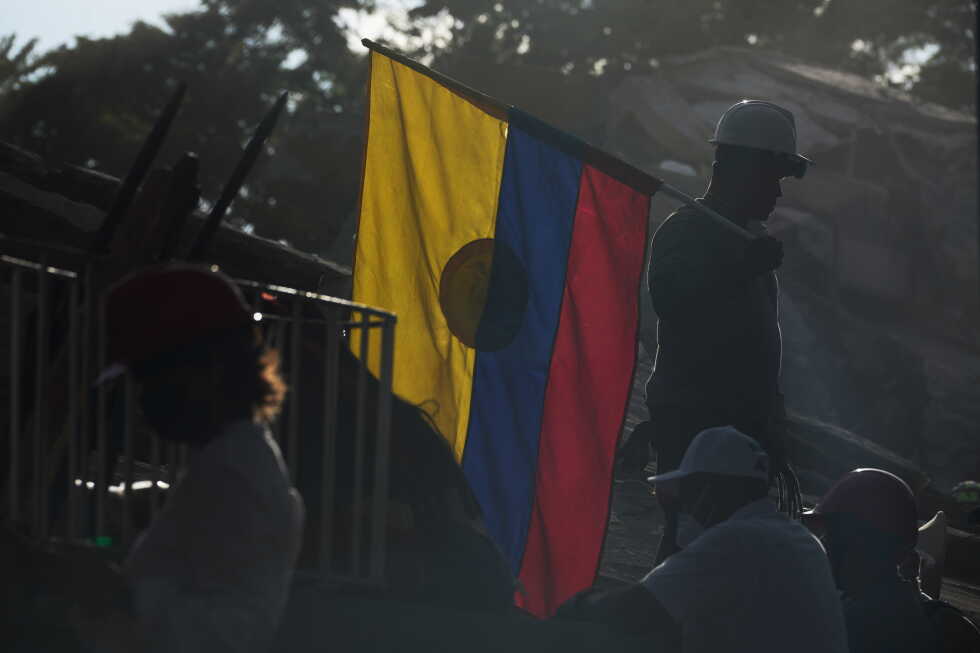
Just days after Colombian President Abelardo de la Espriella took office, a catastrophic 7.4 magnitude earthquake struck western Colombia on Monday, leaving the nation grappling with one of the worst natural disasters in the country’s recent history. Now, as rescue teams wrap up their search for trapped survivors in collapsed buildings, the South American nation turns to the daunting task of rebuilding communities shattered by the quake that has already claimed at least 285 lives and upended the lives of more than 100,000 people.\n\nAccording to official government data, the disaster damaged or destroyed tens of thousands of residential properties, alongside thousands of schools, healthcare centers, and community gathering spaces across more than 400 municipalities. Four major urban centers — Cali, Pereira, Manizales, and Quibdo — bore the brunt of the damage, leaving thousands of residents homeless.\n\nFor 38-year-old Ebert Jonathan Morales, staying at a government-run shelter in Cali, the disaster wiped out nearly everything his family owned. “There is no place to live, we lost everything,” Morales told the Associated Press. He is one of more than 102,000 people displaced by the quake, which has also left nearly 4,000 people injured. While official government data puts the number of missing people in the hundreds, independent private sector analysts estimate that thousands remain unaccounted for. Morales explained that he and his wife and four children will remain at the shelter until state support arrives, saying “The earthquake destroyed several neighborhoods in the city. Many houses were damaged, and buildings collapsed. We are going to stay here until the government gives us some help, some support.”\n\nSimilar stories of displacement echo across affected regions. Olga Castro, a mother of five who is currently staying with a neighbor after losing her home, said “At least we survived, but right now we are practically on the street because we don’t have a home anymore.” In many remote and hard-to-reach areas affected by the quake, official government aid has not yet arrived, leaving residents to rely on volunteer efforts and mutual aid from neighboring communities.\n\nThe disaster has presented an immediate critical test for the new president, who was inaugurated just 48 hours before the earthquake hit. Speaking Thursday, de la Espriella acknowledged the unprecedented complexity of the crisis, announcing a national reconstruction plan that pairs government resources with private sector investment, alongside direct cash subsidies for homeless families. “We will not overcome this tragedy alone as a government,” he said. “We need the private sector to rebuild Colombia together.” The president added that all national and international donations raised for disaster response will be allocated to reconstructing critical infrastructure including hospitals, schools, residential buildings, roads, and airports.\n\nEngineering experts caution that reconstruction requires careful, systematic planning before any major work can begin. Yezid Alvarado Vargas, a construction engineering professor at Bogota’s Javeriana University, noted that a full technical assessment is required to determine which existing structures are safe to occupy, which can be repaired, and which must be demolished and rebuilt from the ground up. “Before even discussing reconstruction, we must guarantee temporary housing, food, healthcare, continuity of basic services and economic support for families who lost their homes or livelihoods,” Alvarado said.\n\nLocal authorities have repurposed public infrastructure including schools, parks, and government buildings as emergency shelters, distributing tents, mattresses, and food to displaced residents. In other hardest-hit areas, residents have set up improvised street-side shelters, while hundreds of volunteer groups continue to deliver aid to the most vulnerable communities, particularly those in isolated regions.\n\nMaría Mercedes Liévano, country director for Save the Children Colombia, explained that many of the most affected regions were already facing systemic crises before the earthquake. “These are isolated, neglected territories, historically lacking in institutional support, already plagued by violence, and now they are hit by an earthquake of this magnitude,” she said. “It’s a crisis on top of a crisis, leaving the population in a situation of extreme vulnerability.” Her organization highlighted particularly severe conditions in Buenaventura, Colombia’s largest Pacific port, and Chocó department, the epicenter of the quake.\n\nAs of Friday, national and international humanitarian aid continues to flow into the country. Multiple foreign governments including Peru, China, the United States, and the United Arab Emirates have pledged tons of emergency supplies and disaster relief. President de la Espriella is scheduled to travel to Quibdo in Chocó and Pereira on Friday to inspect relief efforts and monitor aid distribution, as Colombia begins the long process of recovery from the most powerful earthquake to hit the country this century.
作者: admin
-
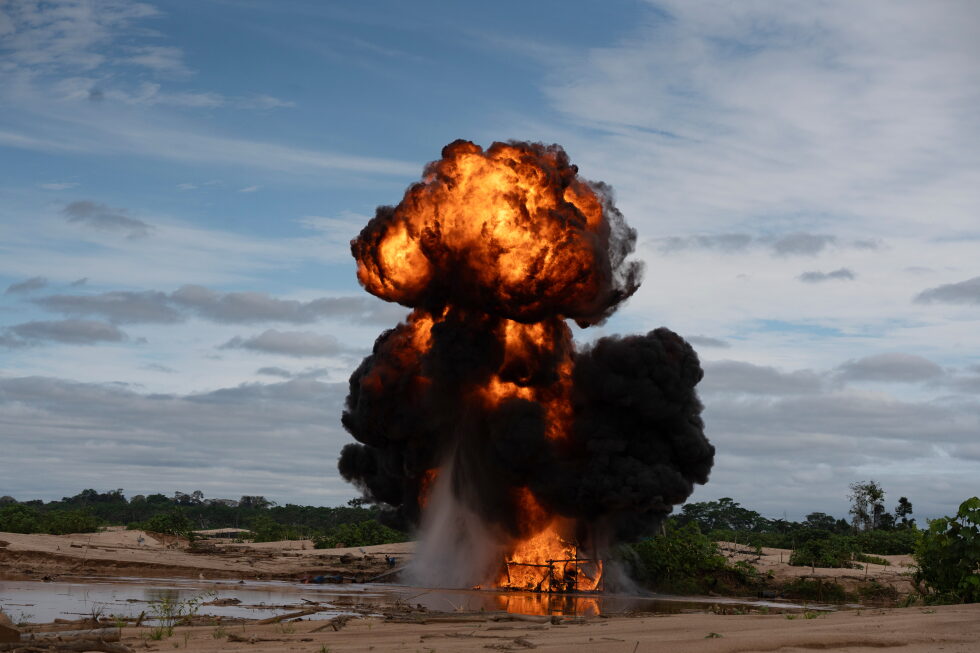
Peru steps up fight against illegal gold mining as activity enters protected Amazon reserve
In the biodiverse Amazon heartland of Peru’s Madre de Dios region, an aggressive new government push to roll back illegal gold mining is underway, with Peruvian Navy special patrols launching multi-day raids deep into protected zones along the Malinowski River earlier this month. On August 11, 2026, eight navy commandos rappelled from a military helicopter into a clearing hacked out of old-growth rainforest by unauthorized mining operations, touching down in a landscape already scarred by the extractive industry. What greeted the troops was a devastating scene: massive craters gouged into the forest floor, filled with murky, polluted water where gasoline and toxic chemicals rested in glistening, contaminated slicks on the surface. Makeshift wooden mining platforms jutted out across these toxic pools, ringed by industrial pumps and thick plastic hoses designed to suck up river and soil sediment to sift out tiny flecks of profitable gold. As patrol members advanced on the site, a handful of miners lingered at the tree line watching the incursion. After the operation’s lead officer fired a single warning shot into the humid Amazon air, the group melted into the dense forest within seconds, leaving their operation and camp abandoned in a rush. Behind the fleeing miners, the navy found a hastily vacated settlement scattered with personal effects and supplies: crushed beer cans and empty liquor bottles littered the ground alongside half-eaten lunches of rice and plantain left in plastic containers, discarded mattresses, work clothes, and mining tools. Freezers, large fuel canisters, and even live chickens and guinea pigs kept for sustenance were all left behind as the miners fled. This raid was one of eight simultaneous deployments, with helicopters ferrying separate patrol teams to distinct drop-off points along the river before lifting off to reach the next target. Illegal gold mining has devastated vast swathes of Madre de Dios, one of Peru’s most ecologically rich regions, leaving behind a moonscape of contaminated waterways and reshaped river systems in the hunt for lucrative gold deposits. Most alarmingly, the activity has pushed steadily deeper into protected Amazon reserves, putting irreplaceable biodiversity and Indigenous communities at severe risk. Mercury, a toxic chemical widely used by illegal miners to separate gold from sediment, has seeped into rivers, accumulated in wildlife, and poisoned local populations, including Indigenous groups that rely on river fish as a primary food source. Edy Reynaldo Dariquebe, a senior official with FENAMAD, the regional Indigenous federation representing Madre de Dios communities, confirmed that criminal networks tied to illegal mining have already established operations near and inside protected Indigenous territories. “Mining is destroying our forests and poisoning our rivers with mercury that ends up in the fish we eat,” Dariquebe explained, noting that contamination spreads far beyond the immediate mining sites to impact communities hundreds of kilometers away. Ronald Flores Yáñez, deputy prosecutor with Peru’s Attorney General’s Office, told the Associated Press that illegal mining operations have advanced as far as military monitoring outposts and crossed into formally protected protected land. “We can confirm today that they have already entered the Tambopata National Reserve,” Flores said during an interview on site. “We are standing inside the reserve right now, and all around us we see hundreds of illegal mining dredges operating.” Peru first launched a large-scale military and police crackdown on illegal mining, dubbed Operation Mercury, in 2019, which successfully reduced unauthorized extraction across much of Madre de Dios. But in recent years, miners have gradually reoccupied territory and pushed farther into protected areas, prompting authorities to ramp up enforcement operations once again. Global Conservation, a U.S.-based environmental nonprofit partnering with Peruvian authorities, outlined that the new campaign will combine satellite surveillance, aerial reconnaissance, and sustained law enforcement raids over the next 12 months to map, target, and dismantle illegal mining camps and infrastructure. Navy Lt. Cmdr. Renato Miranda, who oversaw the August 11 mission, told troops during a pre-operation briefing that the core goal of the raids is to “neutralize and dismantle” all illegal mining activity. On the ground, this means systematically targeting the critical equipment that allows operations to run: pumps, batteries, fuel stockpiles, dredging gear, and all makeshift camp infrastructure. “The most important thing we can do is destroy the primary machinery,” Miranda explained. “And that machinery is the motors.” High-powered industrial engines are the most valuable piece of equipment for illegal miners, making them the most economically impactful target for authorities aiming to raise the cost of restarting operations. Larger mining motors can cost between $30,000 and $45,000 to purchase, and are capable of extracting 30 to 50 grams of gold per day — a haul worth roughly $4,000 to $7,000 at current gold market prices. Over the previous three months, officers told the AP that navy patrols have destroyed approximately 115 motors during near-weekly operations across the region. The remote, hard-to-reach location of most mining camps gives miners advance warning of approaching helicopters or patrol boats, allowing them to flee and often hide valuable motors under sand, behind foliage, or at the bottom of murky mining pools to recover later. To counter this, the navy deploys specialized divers to search the contaminated pools for submerged engines, even though the water is often laced with mercury and other toxic chemicals. When an engine is located, teams attach explosive charges and destroy it on site. During the August 11 raid, one soldier spotted disturbed sand on the bank of a mining pool and uncovered a hidden motor after digging. The engine was dragged to a pile of seized equipment, doused in gasoline, and set alight alongside a discarded mattress and chainsaw. One unexpected discovery, a stray dog abandoned by miners, was rescued by the team, who brought the animal along on the rest of the mission and back to their base after the operation. Across the operation zone, troops used explosives to destroy mining equipment and burned all reusable structures and supplies that could allow miners to reoccupy the camps. A 10-minute boat ride from the first raid site, a second, larger illegal mining camp offered a raw look at daily life for people working in the sector. A full chest freezer stocked with meat, wooden shelves holding kitchenware, and separate sleeping quarters scattered with personal items were all seized before being burned: a handwritten ledger of supply orders, freshly laundered underwear hanging to dry, vitamin bottles, and even over-the-counter pills marketed to boost sexual performance were all destroyed. Before moving to their next target, several soldiers cooked and ate preserved food found in the camp’s freezers. While the industry generates massive profits for criminal financiers, most rank-and-file workers live and labor in extremely precarious conditions. During the operation, one patrol encountered a young woman with her 1-year-old child at a small mining site. Prosecutor Flores told the AP that the woman had traveled to Madre de Dios from Cusco after being rejected from university, was abandoned by her child’s father, and took a job advertising for a cook to support herself, only to end up working for the illegal mining operation. While destroying high-value mining equipment is designed to hit criminal operators in their bottom line and raise the cost of restarting operations, Peruvian authorities acknowledge that enforcement raids alone cannot end the illegal mining crisis. With global gold prices remaining at sustained high levels, extraction remains extremely profitable, meaning operators can easily afford to purchase new engines and rebuild their operations in the same location or shift to a new untouched area of the forest after authorities leave. “Every single day, they advance more and more, and our response is far too slow,” Flores said, noting that a fundamental shift in enforcement strategy is needed. Prosecutors are now pursuing a two-pronged approach to break the repeating cycle of equipment destruction, miner return, and further deforestation: they will continue targeting mining equipment while also pursuing the financial networks that fund the trade, identifying the wealthy backers who put up capital for expensive machinery and tracing the flow of profits from illegally mined gold. “These operations have to be permanent,” Flores emphasized. This coverage of climate and environmental issues by the Associated Press receives funding from multiple private foundations, with AP retaining full editorial control over all content.
-

France’s top court blocks under-15 social media ban, citing constitutional freedoms
PARIS – In a landmark ruling that has upended a high-profile policy effort to shield minors from digital harm, France’s Constitutional Council announced Friday that a controversial law imposing a national ban on social media use for children under 15 is unconstitutional. The court’s official decision found the sweeping provisions of the ban violated fundamental French legal protections for freedom of expression and communication, noting that the legislation failed to put in place adequate safeguards to preserve these core civil liberties.
Just one month prior, France made history as the first European Union member state to enact such a blanket restriction on minor social media access, a move that came amid growing global alarm over the well-documented negative impacts of unregulated social media use on children’s mental health, social development, and personal safety. The legislation, which also included a ban on mobile device use in all high school campuses, passed with bipartisan support through both chambers of the French national parliament.
As one of the final major policy initiatives pushed through by President Emmanuel Macron’s administration before his term concludes in 2025, the law was slated to go into force at the opening of the 2024 academic year in September. However, mandatory constitutional review triggered by the bill’s contested provisions placed its implementation on hold before it could take effect.
In the wake of the court’s rejection, President Macron reaffirmed his administration’s commitment to delivering a valid, enforceable ban by the spring of 2025. In an official statement released shortly after the ruling, Macron said he has directed Prime Minister Sébastien Lecornu to expedite work on a revised proposal that addresses the Constitutional Council’s constitutional concerns while also aligning with broader European Union digital regulatory frameworks. “On this framework, it will fall to the President of the Republic, the Government, and Parliament to put in place all the necessary tools and structures to protect our children from the risks of unregulated social media access before the end of the current presidential term,” Macron added.
-
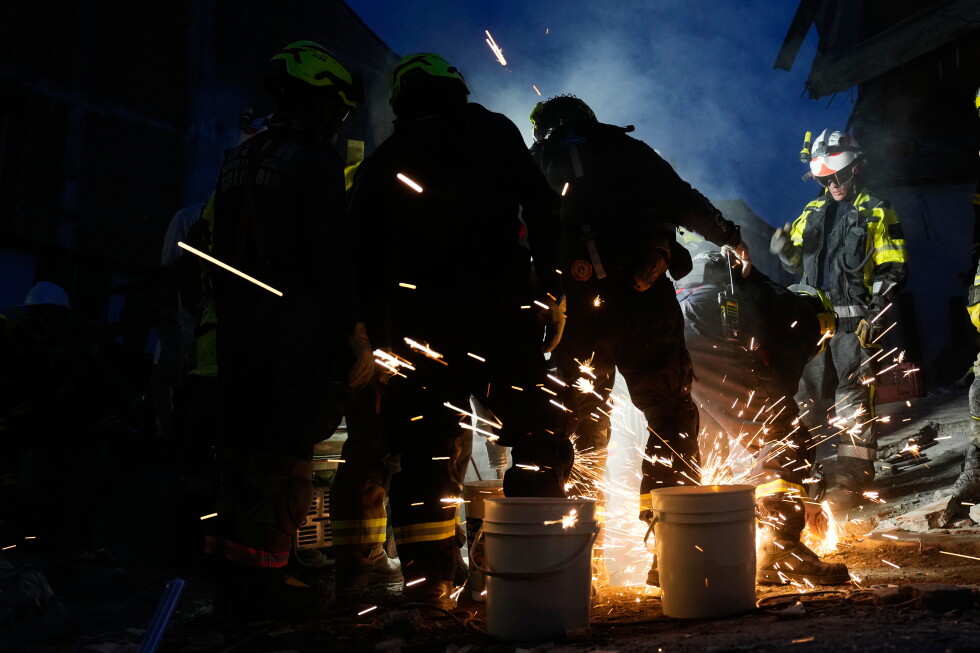
He wandered two quake-shattered landscapes. Now an AP photographer reflects on what his lens saw
In the wake of two catastrophic earthquakes that struck across northern South America, leaving a trail of destroyed infrastructure, fractured communities and lost lives, one seasoned photojournalist has opened up about the ethical and emotional weight of capturing disaster on camera. After two decades documenting breaking news across the region for the Associated Press, Fernando Vergara stepped back this week to share his reflections on working through physical risk and emotional distress, and the delicate balance journalists must strike when bearing witness to human tragedy.
Vergara spoke to AP Thursday while working at a Bogota aid collection center, where donations are being sorted and shipped to survivors of the August 10 earthquake that centered near Pereira, Colombia. He drew direct comparisons between the destruction he documented in Pereira and the damage he witnessed following the late-June earthquakes that hit Venezuela’s northern coastal region.
According to Vergara, the impact of the Venezuelan earthquakes was far more severe. Multiple high-rise apartment buildings collapsed in the heavily populated La Guaira state, driving a far higher death toll than the Colombian event. Photographs from the region show crumpled concrete structures, rescue teams picking through rubble pile by pile, and heartbroken relatives grieving the loss of family members. Vergara recalled the visceral, unshakable details of working in the disaster zone: streets choked with fine dust, the pervasive stench of decomposing bodies lingering in the thick, hot air, and rescue crews working around the clock under brutal, nearly impossible conditions.
In Pereira, by contrast, most damaged structures were low-rise residential buildings between one and three stories tall. Even so, Vergara documented harrowing rescue efforts, including the emotional moment 24-year-old survivor Daniela Largos Sanchez was pulled alive from collapsed rubble the day after the earthquake.
For the veteran photographer, moments like that are the ones he prioritizes capturing amid widespread chaos and grief. In his reflections shared from the earthquake zone, Vergara broke down his approach to ethical photojournalism in the wake of disaster.
“Compared to the earthquake in Colombia, the one in Venezuela was a bit stronger, considering the losses. Venezuela had many tall buildings. A lot of people were living in apartment buildings, and the number of deaths was much higher than in Colombia. Recently in Pereira, the number of deaths are lower. It remains dramatic, but the buildings there were a bit shorter. The damaged houses were one to three stories tall, compared to Venezuela, where the buildings were much, much taller,” Vergara explained.
Describing conditions on the ground in La Guaira, he said: “What I witnessed in Venezuela, walking through the streets in La Guaira, the smell of rot was overwhelming, the dust in the air and the heat made the rescue of those trapped under the rubble much more dramatic.”
Central to Vergara’s practice is a core commitment to respecting the privacy and dignity of people experiencing their worst possible moments. “What is the photograph that I, as a reporter, seek in an earthquake or in a situation of such calamity? It’s important not to disrespect the victims’ families with my photographs. On the other hand, it’s about showing the situation with great sensitivity as it unfolds and to convey a message to people with my photographs,” he said.
Amid the widespread sorrow and loss that define disaster zones, Vergara actively seeks out and captures moments of hope and joy, most of all the miracle of a live rescue. “The most important message is the rescue of a person alive during an earthquake. Seeing someone alive brings immense joy. When a rescue team, firefighters, civil defense, or even volunteers rescue a person alive, everyone embraces with happiness, and that is the happiness I seek to capture with a photograph in an earthquake,” he added.
-

Who are the Chawinga sisters leading Malawi’s bid for Wafcon glory?
Malawi’s Cinderella run at the 2026 Women’s Africa Cup of Nations (Wafcon) has captivated football fans across the globe. As the lowest-ranked side in the tournament, sitting at 153rd in the FIFA global rankings, the tournament debutants have defied all expectations to advance to Sunday’s final against Cameroon, and their astonishing success can be traced directly to one incredible pair: sister strikers Tabitha and Temwa Chawinga.
Between them, the siblings have netted nine of Malawi’s 12 goals throughout the tournament, with 27-year-old Temwa currently tied atop the golden boot race with five goals, alongside Zambia’s Barbra Banda. What makes their combined impact even more remarkable is that both have long compiled impressive goal tallies and titles for some of the biggest professional clubs across the world, long before their breakthrough on the continental stage.
Thirty-year-old Tabitha, the elder of the two, was born in May 1996 in Rumphi, a rural northern district of Malawi. She grew up playing informal football with boys in her village, kicking balls handmade from plastic and paper, and never saw herself as less capable than her male peers. “Growing up, I never saw myself as different from boys,” she told the BBC. “Whatever they did I believed I could.”
Tabitha faced steep pushback from her community and even her family early on. Her mother would beat her for playing, embarrassed by local gossip that claimed Tabitha would never marry or value education. Even her peers told her that women had no place in professional football. But she refused to abandon the sport she loved, and her path to stardom began when she joined DD Sunshine, a top club based in Malawi’s capital Lilongwe. A devout Christian, she frequently credits her faith for carrying her through the hardest stages of her journey.
Her move to European football came by chance in 2014, when an American NGO worker who had trained with DD Sunshine relocated to Sweden and joined third-tier side Krokom Dvarsatts. DD Sunshine owner David Dube suggested the club give Tabitha a trial, and when the side hesitated, Dube even offered to cover her visa and flight costs to make the trip happen. Tabitha left an immediate impression on the Swedish side, who praised her physical strength, sharp dribbling, long-range shooting, and clinical finishing. She made her debut after her 18th birthday, becoming the first Malawian woman to play professional football in Europe, and scored an incredible 39 goals in just 14 matches.
Her career only accelerated from there: she scored 43 goals to earn promotion for second-tier club Kvarnsveden, then claimed the Swedish top flight’s golden boot in 2017. A six-year spell in China followed, where she won three league titles, three golden boots, and two Player of the Season awards. A 2022-23 loan spell at Inter Milan brought another golden boot in Italy’s Serie A, and after that success, she declared: “My goal is to achieve for African people. I need to play for the girls in Africa. They need to see there are women in this world that can play football like men.”
Paris Saint-Germain signed Tabitha next, and in 2023 she became the first Malawian woman to play and score in the UEFA Women’s Champions League. She later moved to Olympique Lyonnais, France’s most decorated women’s side, where she helped the club win back-to-back domestic league titles, and started in last season’s Champions League final, where Lyon fell to Barcelona.
Temwa, born in September 1998 (whose name means “love” in the local Tumbuka language), followed directly in her older sister’s footsteps, and credits Tabitha as the foundational force behind her own success. “She made connections for me to leave Malawi to play abroad, but most importantly has always advised me to fight hard, to know what I want and to pursue it without listening to distracting people,” Temwa told BBC Sport Africa. Tabitha first recommended Temwa to her Swedish club Kvarnsveden, where the pair played together, and when Chinese agents asked Tabitha for referrals for talented strikers, she once again pointed them to her younger sister.
Like her sister, Temwa has built a legacy of prolific goalscoring. She netted 35 league goals in Sweden in 2019, then joined Wuhan Jianghan in China, where she helped the club win four consecutive league titles, including the 2021 championship that she shared with Tabitha. In 2023, she outscored some of the biggest names in men’s football—including Erling Haaland, Cristiano Ronaldo, and Lionel Messi—finishing as the top goalscorer across top global leagues with 63 goals combined for her club and country. “When I found out I was so happy. I didn’t believe it, but it was so amazing,” she said of the milestone.
In 2024, NWSL side Kansas City Current signed Temwa, and she claimed the league’s golden boot in her debut season with 20 goals, followed by 15 goals in 2025 that helped the club earn the top regular season record. She was named league MVP in both of her first two seasons in the United States.
Despite both sisters’ long list of individual and club honors, neither has ever been named African Women’s Footballer of the Year, an award that has eluded them to date. At the international level, they have been the backbone of Malawi’s national team, the Scorchers, for more than a decade: Tabitha made her debut in 2011 and usually serves as captain, while Temwa earned her first cap in 2016 and lifted the team’s first ever regional title as skipper at the 2023 COSAFA Women’s Championship.
Tabitha, who has played in top European competitions for years, said ahead of Wafcon: “I’ve been playing big games in Europe, but I tell the girls ‘Don’t be shy, don’t be scared.’” Those words have inspired Malawi’s historic run: the side opened the tournament with an upset win over 10-time defending champions Nigeria, finished ahead of 2022 semi-finalists Zambia in Group C, came from behind to beat Ghana 2-1 in the quarter-finals (a win that also secured qualification for the 2027 FIFA Women’s World Cup), and beat Algeria in the semi-finals, with both Chawinga sisters finding the back of the net in that match.
Temwa summed up the team’s mindset after the semi-final win: “I’m so happy because a lot of people didn’t give us a chance at this level, but we showed the world that we have a good team.”
Malawi Football Association president Fleetwood Haiya credits recent funding from FIFA for helping grow the women’s program and fuel this success, but both sisters have urged for greater domestic investment in girls’ football across the country. “If we can put money in Malawi to support girls’ football I think there can be so many like me and Tabitha,” Temwa said.
On Sunday, the Scorchers will face three-time tournament runners-up Cameroon, vying to become just the fourth nation to win the Wafcon title, following Nigeria, Equatorial Guinea, and South Africa. If they lift the trophy, the credit will go first to two sisters from humble rural beginnings, who overcame doubt and barrier after barrier to put the small southern African nation on women’s football’s global map.
-

Trump asks Supreme Court to allow ballroom work to continue
A high-stakes legal battle over a $400 million unapproved ballroom construction project at the White House has reached the U.S. Supreme Court, as President Donald Trump’s administration is pushing emergency action to allow work to continue past an upcoming construction halt deadline.
The conflict dates back to October of last year, when the Trump administration moved forward with demolition of the White House East Wing to launch the project without securing required congressional authorization or completing mandatory federal historic and land-use review processes. The National Trust for Historic Preservation quickly filed a lawsuit challenging the project’s legality, arguing that skipping the mandatory review — which includes opportunities for public comment and approval from the National Capital Planning Commission and other regulatory bodies — violates federal law.
Last week, a federal appeals court upheld the lower court’s ruling that ordered construction to pause pending congressional and regulatory approval, with the stop-work mandate set to take effect on August 21. Now, the Trump administration has submitted an emergency application to the Supreme Court, requesting that the construction halt be put on hold while the administration appeals the appeals court’s ruling.
In the emergency filing submitted Friday, Solicitor General D. John Sauer argued that allowing the stop order to take effect when the project is already 65 percent complete would be deeply inequitable, and framed the paused construction as “dangerous.” Sauer also argued that forcing the president to seek congressional approval to upgrade White House security would give the legislative branch improper, dangerous leverage over executive branch safety. He described the impending halt as “construction-by-injunction,” writing that “With the dangerous injunction poised to take effect for the first time on August 21, its stop-work mandate is even more flagrantly inequitable, if not impossible.”
President Trump has defended the project from its launch, arguing that the White House currently lacks a sufficiently large venue to accommodate major national and international events, and that the expansion is critical to bolstering on-site national security. Beyond the ballroom, the administration says the project includes new national security and emergency infrastructure, including hardened bomb shelters and on-site medical facilities for use during crises.
The administration has also pushed back on legal challenges by claiming that no congressional approval is required because the entire $400 million price tag is being covered by private corporate donations, not taxpayer funds.
This ballroom project is not the only controversial infrastructure initiative tied to Trump’s broader plan to reshape Washington D.C.’s iconic cityscape. The president has also overseen a renovation of the Lincoln Memorial Reflecting Pool and has proposed building a massive “Arc de Trump,” modeled after Paris’ iconic Arc de Triomphe. All of these projects have faced repeated allegations that the administration skipped legally required public comment and environmental and historic review processes, claims the president has consistently denied.
-
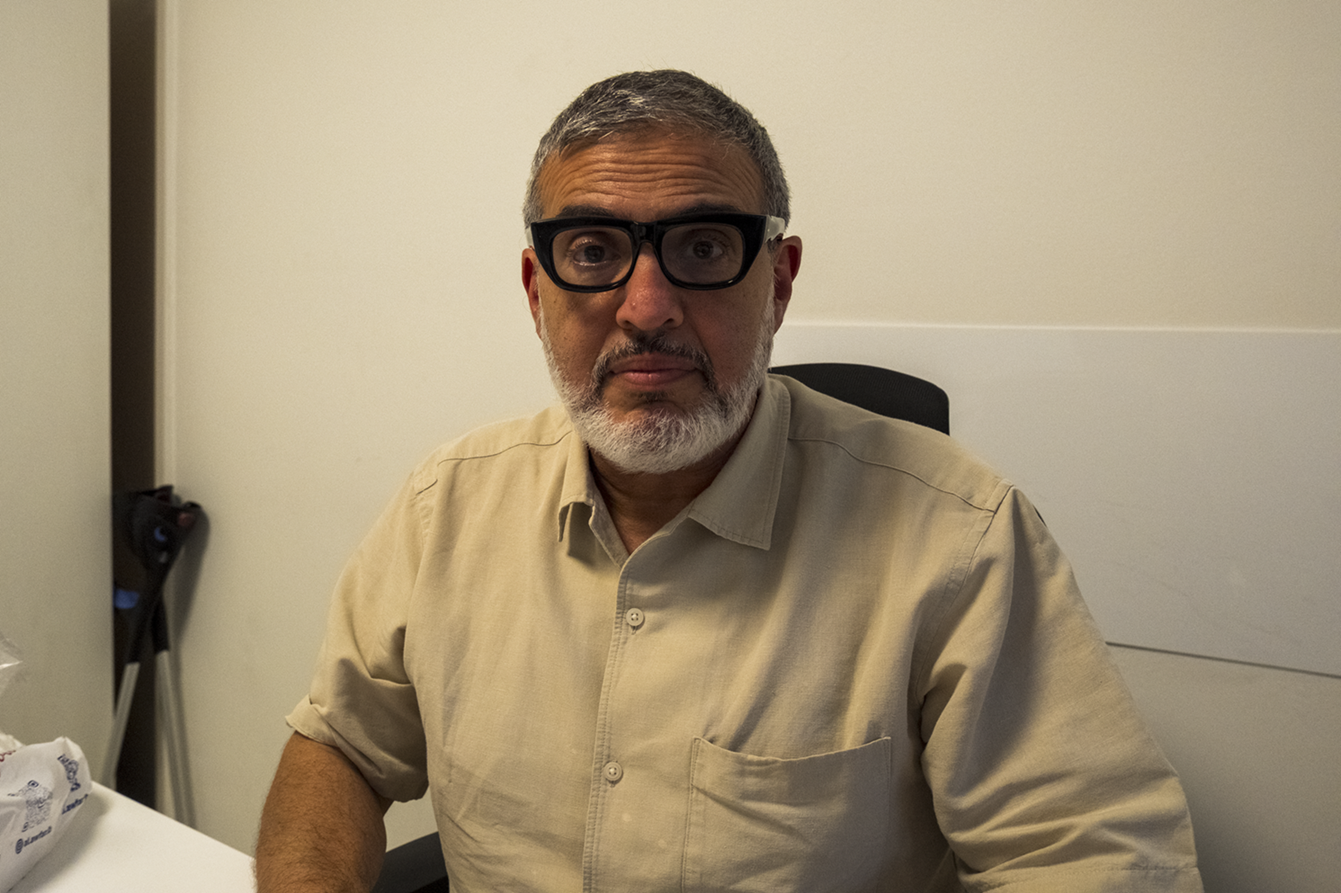
‘They’re all catastrophic’: The paediatric war wounds Dr Abu Sittah tries to heal in Lebanon
BEIRUT, Lebanon — In a sunlit office in central Beirut, prominent British-Palestinian plastic and reconstructive surgeon Dr. Ghassan Abu Sittah leans over a stack of patient files, his weekend operating schedule filled with names that tell a devastating story of Israeli military campaigns across Lebanon and Gaza. All 11 patients waiting for his care are children, each bearing catastrophic, life-altering injuries from ongoing conflict.
Among the cases he reviews are two siblings carrying unexploded shrapnel from the 2024 cross-border war that has only recently begun to trigger dangerous secondary complications. There is a young boy with a partial foot amputation in need of complex reconstruction, another who requires final work on an amputation stump to prepare for prosthetic rehabilitation, and a child with a severe elbow injury that will demand hours of delicate surgery to save the joint from permanent disablement. “And so on, they are all like that… catastrophic,” Abu Sittah told Middle East Eye in an interview.
One of those waiting for their next procedure is 12-year-old Fatima al-Jabal, the youngest of three surviving sisters who escaped death when an Israeli strike flattened their family home in the small mountain village of Libbaya, located in Lebanon’s Bekaa Valley, on March 7. The attack killed Zainab, their 10-year-old fourth sister, whose body was torn apart in the blast and never fully recovered. Their mother, who was severely wounded in the strike, later died of her injuries in a Beirut hospital.
Fatima survived, but she lost an eye, suffered a dislocated jaw and extensive foot damage that has already required multiple surgeries. Now, Abu Sittah plans to remove remaining shrapnel embedded in her face and back to stop recurrent, life-threatening infections.
Days before her upcoming procedure, a Middle East Eye reporter visited the three surviving sisters and their father, 60-year-old Hassan Ali al-Jabal, in their temporary two-bedroom hotel apartment in Beirut’s Hamra neighborhood, where they have stayed while receiving ongoing care at the American University of Beirut Medical Centre. The smell of caramelized onion hung in the air as Hassan cooked moudardara, the traditional Lebanese lentil and rice dish that is his daughters’ favorite. In the corner of the living room, the three girls, still in soft pajamas, sat shoulder to shoulder stringing blue and pink beads into bracelets and phone straps to sell for pocket money, snacking on barbeque-flavored potato chips. Leaned against the balcony wall, a folded wheelchair waited – a reminder that only months ago, all three girls relied on it to move.
When 16-year-old Malak, the eldest sister, instinctively tugged her lavender nightdress down to cover the extensive burns that scar her legs, Hassan gently reassured her there was no reason for shame. Malak suffered the most devastating injuries of the three surviving girls: a traumatic brain injury, multiple compound fractures across her body, and permanent disfigurement that left her reliant on round-the-clock care for months. After months of intensive physiotherapy, she has reclaimed small but vital pieces of independence. “I can now go to the bathroom on my own, so I have improved a lot,” she said, weeks after spending months in intensive care following the strike.
Fourteen-year-old Kawthar now walks with the support of a walker, but an external fixation frame held in place by metal pins drilled into her bone still stabilizes a finger on her right hand and her entire left leg. A thick scar stretches across half her face, a permanent marker of the attack.
“All three have progressed a lot, but they still have a long road ahead and it can take a long time,” Hassan said, as he stirred his pot of lentils and rice. He explained that each girl faces a unique, lifelong set of medical challenges: Kawthar’s leg requires months more of reconstruction to regain function; Malak still carries extensive unhealed back injuries from broken vertebrae, and spent two and a half months unable to move on her own, her skin shredded from shrapnel that required multiple skin grafts to repair. “It was like something was eating off her body because of all the shrapnel,” Hassan said of Fatima’s recurrent wound infections, common for blast injuries where shrapnel carries contaminants deep into tissue.
None of the three girls wanted to speak about the harrowing weeks they spent in intensive care after the strike. But when Hassan teased them about their contrasting personalities – Malak the responsible, caring oldest sister, Kawthar the quiet stubborn thinker, Fatima the rambunctious youngest – giggles filled the small apartment, and for a few minutes, the space felt like any other family home. When he began to recount anecdotes of their quiet life in the village before the strike, the moment of soft warmth held, until he turned to the day he dug his surviving daughters out of the rubble that had been their home.
The smiles faded quickly. A framed portrait of Zainab, decorated with painted flowers, sits on the mantelpiece above the girls’ shared bed. “There is no point in a nice picture,” Hassan said, his voice thick with anger. “People tell me that my daughter is in heaven. I want her here, with me, not in heaven. I raised her for 10 years.” This is not the first time Hassan has lost a family member to Israeli war: his brother was killed during Israel’s 1982 full-scale invasion of southern Lebanon, 44 years to the month before Zainab’s death. The pain of the past has blurred into the present, leaving him struggling to untangle the multigenerational tragedy that has destroyed his family.
For years, Hassan had built a quiet life in the Bekaa Valley village, nursing a dream to build four stacked apartments for his four daughters, so they would always live close to one another. He never once considered leaving Lebanon, he said, until the day the strike hit. Now, he wonders what the future holds. “Kawthar said no. She doesn’t want to live elsewhere,” he said. “It is nice in Lebanon, but you need a future. And wars keep happening. I am 60, so I have lived my life. I don’t know how long I have left.”
Malak, Kawthar and Fatima still long to return to the Bekaa Valley to see their old friends and the home they loved, even as they know nothing will be the same. Israeli military operations and demolitions continue across southern Lebanon, and Israeli officials have repeatedly stated they have no plans to withdraw from territory seized during the 2024 offensive. “We used to love our lives before,” Malak said, her voice carrying a gravity no teenager should ever have to hold. “We were all good students in school… We will certainly go back, carry on, and love life. But, of course, things won’t be the same as before. We want to be a support system to each other and want to go back and divide the work in the house and be like our mum would want us to be.”
The al-Jabal sisters are just three of more than 400 children across Lebanon who have received care through the Ghassan Abu Sittah Children’s Fund, launched by the surgeon in January 2024 to provide free reconstructive care to child war victims in both Gaza and Lebanon. For decades, Abu Sittah – who resides primarily in London – has traveled to conflict zones to treat the most vulnerable victims of war, from the First Intifada in Gaza to the Gulf War, Yemen and Syria.
He says the pattern of pediatric injuries he is treating in Lebanon today is “almost identical” to what he witnessed in Gaza when Israel launched its full-scale military campaign in October 2023. As of August 2026, Israel has killed more than 73,200 Palestinians in Gaza since the offensive began, including more than 1,250 after a May 2025 ceasefire took effect, with thousands more still buried under rubble. Across the Lebanese border, more than 4,330 people have been killed by Israeli strikes since March 2024. Combined, more than 185,000 people across both fronts have been wounded by Israeli military action.
“These children were wounded when Israel bombed their homes… so all of their injuries are either a direct result of the blast wave – shrapnel injuries, burns and tearing of tissue – or they were pulled under the rubble and they have crush injuries,” Abu Sittah explained. “And you rarely get a child with a single injury. It is usually a head injury and a fracture and a burn and other things, and they are all severe.”
Nearly all of his young patients have sustained life-altering injuries that will leave them with permanent disability or disfigurement, he said, with roughly 80 percent requiring intensive care at the time of their first treatment. Saving a child’s life is only the first step of care; ongoing reconstruction will require an average of 12 to 16 surgeries before the child reaches adulthood, as growing bodies require repeated re-intervention: scar tissue and damaged tissue does not grow at the same rate as healthy tissue, leading to complications that require additional procedures as children age.
Even after the U.S.-brokered ceasefire that took effect on April 16, 2024, the number of injured children requiring care continues to climb, as previously undiagnosed complications emerge and delayed care becomes available. Lebanon’s already fragile, heavily privatized healthcare system has been pushed to the breaking point by the crisis, leaving NGOs like Abu Sittah’s fund to fill gaps in care.
For children like the al-Jabal sisters, a ceasefire cannot undo the harm already done, nor does it guarantee safety in the future. Abu Sittah acknowledges that the cumulative weight of working with such profound daily suffering is difficult to process, but he says action is the only antidote to despair. “I deal with it by seeing it within the bigger picture and by being grateful that I have ended up in a junction in my life that I am able to not feel paralysed and not feel like a spectator,” he said. “Being a spectator is probably the worst thing that you can do when you are watching this horror unfold.”
-

Italian police recover stolen Renoir, Cezanne and Matisse worth 9 mn euros
In a major breakthrough for Italian law enforcement, authorities announced Friday the successful recovery of three stolen Impressionist masterpieces created by Auguste Renoir, Paul Cezanne and Henri Matisse, valued collectively at more than 9 million euros. The artworks were stolen in a brazen, lightning-fast heist from the Magnani Rocca Foundation villa, a small museum located near the northern Italian city of Parma earlier this year.
Security surveillance footage published by police reveals the meticulous and rapid planning behind the robbery. Two masked suspects, fitted with headlamps to navigate the property in low light, gained access to the villa by smashing through a ground-floor window. Instead of searching for other high-value targets, the intruders moved directly to the gallery room where the three paintings were displayed, prying them off the walls in seconds. They passed the artworks through the broken window to a third accomplice waiting outside, and the entire group fled the scene before any security response could be mobilized. The entire heist took less than three minutes from start to finish.
The stolen works recovered by police include Renoir’s *Fish*, valued at 6 million euros, Cezanne’s *Still Life with Cherries*, worth 3 million euros, and Matisse’s *Odalisque on the Terrace*, which carries an estimated value of 20,000 euros. The Magnani Rocca Foundation, situated roughly 20 kilometers outside Parma, holds the private art collection assembled by influential Italian art historian Luigi Magnani. The foundation’s permanent collection includes dozens of other iconic works by globally celebrated artists such as Albrecht Dürer, Peter Paul Rubens, Anthony van Dyck, Francisco Goya and Claude Monet, none of which were targeted in the robbery.
This high-profile theft is part of a growing string of brazen art robberies targeting major cultural institutions across Europe in recent years. Just five months before the Parma heist, in October of the previous year, thieves carried out an equally audacious robbery at the Louvre Museum in Paris— the world’s most visited art museum. In that incident, intruders gained access to the museum in broad daylight, stole high-value jewelry pieces worth an estimated $102 million, and escaped in under eight minutes, shocking cultural security agencies across the continent.
-
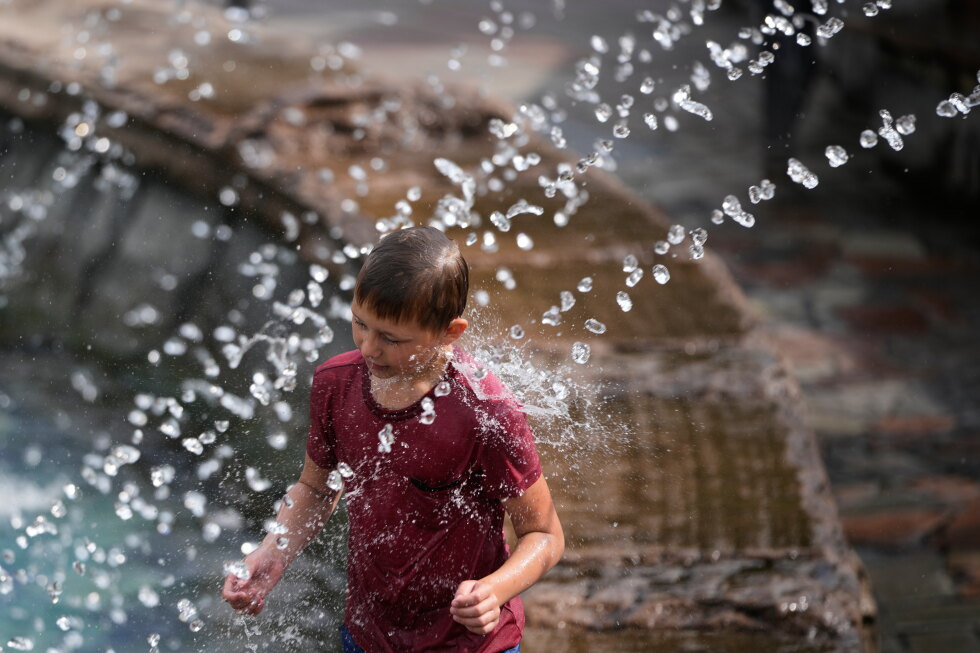
The livin’ is no longer so easy: How carefree dreams of ‘summertime’ are fading in 2026’s swelter
LONDON – For generations, summer has been synonymous with unhurried days, sun-drenched nights and fleeting freedom from work, school and daily obligations. But in 2026, that idyllic vision of summer is fading, replaced by a season defined by extreme heat, climate-driven disaster and constant adaptation to a warming world.
The calendar still marks summer as a seasonal staple, but climate change fueled by fossil fuel emissions has pushed global temperatures to unprecedented heights. Heat-drenched conditions are becoming the new normal, breaking temperature records across every continent. These soaring temperatures are triggering cascading crises: Arctic ice sheets are melting at accelerated rates, severe droughts parch vast swathes of land, wildfires burn with greater intensity across North America and Europe, and stronger, more destructive storm systems form with increasing frequency. For millions of vulnerable people who lack access to air conditioning, paid time off or the means to escape to cooler destinations, the heat poses a direct, daily threat to safety and health. In Asia, the extreme heat has grown so unrelenting that Japan has introduced a new official weather classification for dangerous heat: *kokusho-bi*, or “cruelly hot day.”
This year, it is the romanticized ideal of summer that has withered like parched grass across England. For many people across the globe, the Summer of 2026 has brought a quiet grief for the loss of that uncomplicated seasonal freedom – and the relaxed, carefree version of ourselves we get to be only when we feel safe under the sun.
“I mourn for the way summer used to be,” wrote climate fiction author Debra Denker in a recent essay reflecting on the leisurely afternoons and 1960s-era Fourth of July neighborhood block parties of her youth. “Unless we change the trajectory we’re on, today’s children will never know the gentle and balmy summers of my childhood … I feel sad that they may never know the truly carefree summers that the more privileged among us enjoyed.”
Related extreme heat events are already unfolding across the world this year: oppressive heat and humidity have blanketed much of the U.S. as students return to the classroom, multiple European nations are battling concurrent large-scale wildfires amid record-breaking temperatures, and British firefighters have been deployed in full force to contain blazes on the UK’s hottest day of the year.
No formal meteorological data is needed to confirm that summer 2026 is fundamentally different from the past, and long-held seasonal rituals are being rewritten. Downwind of out-of-control wildfires in North America and Europe, skies turn a hazy orange and the air carries a gritty, acrid taste. Even in Paris, one of the world’s most beloved summer travel destinations, sweltering conditions under the city’s iconic gray rooftops can turn deadly for vulnerable residents. Nights have become a miserable cycle of fitful sleep, cold showers, and opening windows just to close them again to block out urban street noise.
The once-life-giving summer sun now poses a hazard for most of the day, and checking the local air quality index has become a required first step before stepping outside. People have shifted their routines to complete outdoor work and errands early in the morning, staying indoors through the peak heat hours and staying awake later into the cool night. A full day at the beach, or a traditional August European summer holiday, is now less a leisurely escape and more an exercise in risk management.
New polling from the AP-NORC Center for Public Affairs Research finds that far more Americans report that extreme heat has disrupted their travel plans, raised electricity costs, disturbed their sleep, and altered family outdoor activities and daily routines than was the case just two years ago in July 2024. Research from Oxford University, published in July 2026, confirms that intense heat is reshaping daily behavior on a global scale: these routine adaptations to extreme heat are already common across seven of the nations most at risk from heat waves: Brazil, China, France, India, Nigeria, Turkey and the United States.
For many people, this transformed summer is a source of deep discontent. Amber Risebrow, a teacher based in Britain’s Channel Islands, says she longs for the traditional, idyllic British warm season, when sunlight lingers long into the evening. “I wanted the long light evenings and the sunshine and the not-dark-at-4pm of it all,” she shared in a recent Instagram post. “What I did not want was to feel like a rotisserie chicken every single time I stepped outside. Slowly rotating. Gently basting. Questioning my life choices by 10am.”
The data leaves no room for doubt: the long-term trend points to increasingly hot, storm-prone summers. In just one week this summer, extreme heat battered the UK and France, with temperatures climbing close to 40 degrees Celsius (104 degrees Fahrenheit). It marked the fifth major heat wave of the year for the region, where central air conditioning remains rare in most homes. Across the Atlantic, the U.S. National Oceanic and Atmospheric Administration confirmed that July 2026 was the hottest single month ever recorded in the contiguous United States.
Globally, 2026 is currently the third-hottest year on record, trailing only 2024 and 2025, according to official climate statistics. But with five months still left in the year, 2026 has time to overtake those previous records. Scientists note that the combined force of accelerating human-caused global warming and an unusually strong El Niño – a periodic warming of Pacific Ocean waters that drives temperature increases worldwide – makes it increasingly likely that 2026 will end the year as the hottest year ever recorded in human history.
“And it’s not just extreme heat,” Clare Nullis, a spokesperson for the World Meteorological Organization, told reporters in Geneva. “We’re also seeing extreme rainfall, tropical cyclones. So we’re not in holiday mode at all.”
Many people have come to accept that life-threatening, travel-disrupting heat waves and their ripple effects are no longer a one-time anomaly, but the new normal. In response, communities and individuals have adopted a range of adaptation strategies, with many hoping that adjusting to the heat can preserve at least a shadow of the traditional summertime feeling – for now.
Official advisories urging tourists to avoid outdoor activity during the hottest peak hours have become a standard addition to travel guidance from Cambodia to Cambridge, UK. Dog walking is increasingly restricted to dawn and dusk, with governments in high-heat zones warning owners against midday outings that can put pets at risk of heat stroke. Employers and workers have also adjusted: agricultural and construction workers have shifted their schedules to earlier morning hours, and many workplaces now allow remote work when temperatures become dangerously high.
But for low-income and vulnerable workers without access to air conditioning at home, even indoor space offers little relief. Only around 4% of British households have air conditioning, compared to roughly 90% of homes in the United States, U.S. Census Bureau data shows.
This reality makes clear that accessing the old-fashioned summertime bliss of popular imagination has always been a privilege reserved for those with the means to escape the worst effects of heat. In an essay published last year, comedy writer Elizabeth Simone addressed this gap in a piece titled *An Open Letter to the Person Who Asked Me What I’m Doing For The Summer As If I Didn’t Have to Work*, published in the Weekly Humorist. “You do know that summer vacation is an outdated sham, right?” she wrote. “Obviously it’s because of what summer meant back when we were kids.”
Associated Press writer Mari Yamaguchi contributed reporting from Tokyo.
-
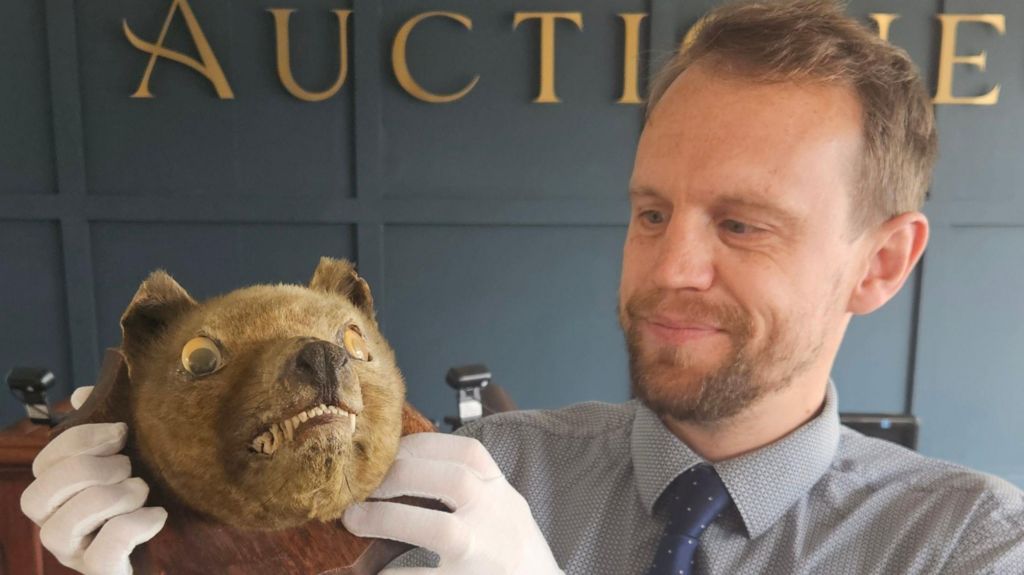
Head of extinct thylacine sells for £60k at auction
A chance £50 purchase at a UK antiques market has turned into one of the most extraordinary extinct species auction discoveries in recent memory, after a item once misidentified as a taxidermy fox head sold for £60,000 when it was confirmed to be a preserved thylacine — better known as the Tasmanian Tiger.
The story began when an anonymous collector picked up the mounted specimen purely for its quirky charm: the previous owner had added novelty googly eyes to the piece, a detail that won over the vendor when they spotted it at the market. It was only when the item was consigned to Auctioneum, a Bristol-based auction house, that specialists began to question its true identity. What they uncovered shocked everyone involved.
Native to mainland Australia, New Guinea, and Tasmania, the thylacine was a unique carnivorous marsupial with physical traits similar to canids. While most populations vanished from Australia roughly 2,000 years ago, a small colony survived on the island of Tasmania into the early 20th century. Decades of systematic hunting, combined with introduced disease and widespread habitat destruction, pushed the species to total extinction. The last known living thylacine died at Hobart Zoo in 1936, and the species was formally declared extinct shortly after.
Today, preserved thylacine specimens are among the most coveted items in global natural history collections. Only 101 taxidermy thylacine specimens are known to exist worldwide, and the vast majority of these are held in major public museums and scientific research institutions. Complete mounted heads like the one sold in Bristol are extremely rare outside of these institutional collections, with even high-quality replicas of thylacine bones and skulls fetching thousands of pounds at auction.
When the specimen went under the hammer at Auctioneum’s Bristol saleroom, it drew immediate global attention from collectors and researchers alike. Auctioneer Andrew Stowe described the electric atmosphere in the room during the bidding. “Bids quickly jumped into the tens of thousands, and simply kept on going up. The room went silent, everyone crowded in to watch. It was an amazing moment to witness,” Stowe said. Even the auction house team was caught off guard by the discovery. “It was quite a shock to discover we were sitting on something so special,” Stowe added. “When we broke the news that it was actually a thylacine, the vendor was in complete shock. Even replicas of skulls or bones sell for thousands of pounds [so] to find a complete item like this, is almost unheard of, especially here in the UK.”
The winning bidder was James Cranfield, a prominent private collector of taxidermy and natural history specimens, who called the acquisition “the find of a lifetime.” In a statement following the auction, Cranfield confirmed he plans to make the rare thylacine head accessible to academic and scientific researchers, ensuring the specimen contributes to ongoing study of the extinct species rather than being kept out of public reach.
The unexpected discovery has reignited public fascination with the thylacine, a species that continues to capture global interest decades after its extinction, with ongoing research exploring potential de-extinction efforts and unconfirmed sightings still reported occasionally in remote regions of Tasmania.