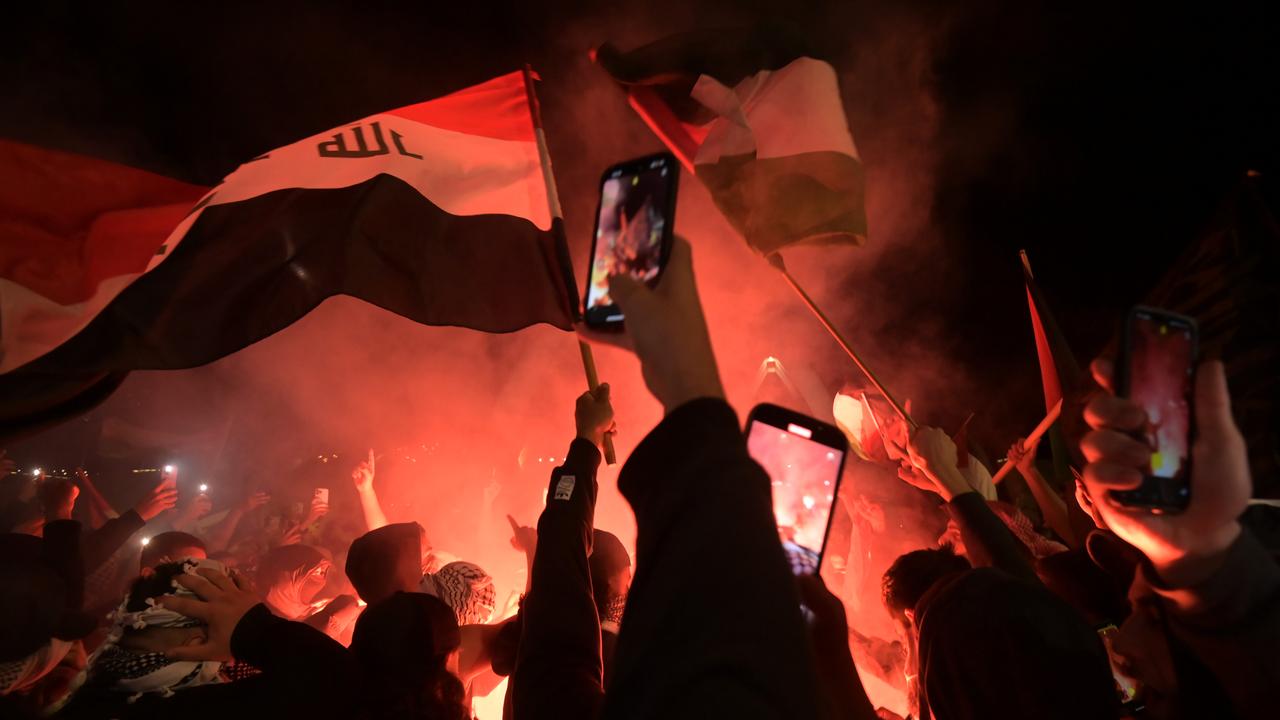
In testimony before a Senate estimates hearing on Thursday, Australia’s Special Envoy on Antisemitism Jillian Segal has drawn a direct link between the police handling of a high-profile post-October 7 protest outside Sydney Opera House and the sharp rise of antisemitic sentiment across the country, arguing the nation could have avoided its current trajectory if the demonstration had been addressed differently. The protest, held on October 9 2023 just two days after Hamas’ surprise cross-border attack on Israel that killed more than 1,200 people, drew hundreds of demonstrators gathering near one of Australia’s most iconic cultural landmarks, in response to both the initial assault and Israel’s subsequent military retaliation in Gaza. According to Segal, multiple participants chanted deeply hateful rhetoric targeting Jewish people during the event, which included the burning of an Israeli flag. While Segal acknowledged ongoing public debate over unconfirmed claims that protesters chanted the phrase “gas the Jews”, she emphasized the demonstration marked an unambiguous turning point where blatant hatred toward Australia’s Jewish community was aired publicly. Segal told the hearing that if law enforcement had adopted a far firmer approach — rather than the protective posture officers took toward demonstrators — it would have sent a clear, uncompromising message that antisemitic speech has no place in Australian public life. “If it had been stopped and people had said ‘this is unacceptable’, and the police instead of protecting those protesters had indeed taken them, even if not arresting them, but asked them to move on … If there had been a completely different policing approach, I do think it would have sent a very different message and possibly a different trajectory,” Segal said. “As I say, you can’t look backwards, but I do see and I think the Jewish community generally, when I’ve spoken to them about it, they see that as a critical moment.” Segal added that the surge in antisemitic incidents across Australia following the October 7 attack caught the nation off guard, after decades of growing complacency built on widespread pride in the country’s multicultural values and commitment to open civic freedoms. “We were caught up in our enjoyment of the freedoms and the Australian values and multiculturalism, and perhaps we’re not as aware of the issue until it really became an issue for us,” she said, noting that her core mandate is to push antisemitism back to the margins of Australian society. The hearing also touched on ongoing tensions over the adoption of the International Holocaust Remembrance Alliance (IHRA) working definition of antisemitism, a widely-endorsed framework that Segal has pushed for nationwide adoption. Earlier this month, two of Australia’s leading public broadcasters, the ABC and SBS, announced they would not adopt the definition, a decision Segal said directly contradicts the policy guidance she has put forward to Australian institutions. “I’m hopeful that, with further discussion, we can talk to the ABC and SBS,” she said. “I have had various meetings with them, but so far I haven’t managed to convince them about it, about these issues. But, you know, I do think that it’s important that the ABC and SBS understand their important role in this country.” On the topic of public sector antisemitism literacy, Segal confirmed that targeted training is currently being trialed for the Australian Public Service (APS), with a focus on delivering tailored education for senior public servants first. She rejected a one-size-fits-all approach to the training, arguing that depth of antisemitism education should be scaled to the role and responsibilities of each public servant, while noting she expects a “significant” portion of APS staff will complete the program once it rolls out fully.
Police crackdown on protest could have put Australia on ‘different trajectory’, anti-Semitism envoy says