In a stark new climate outlook released Thursday, the United Nations’ leading weather and climate authority has sounded a clear alarm: global average temperatures will almost certainly hold at or near record levels between 2026 and 2030, with a high probability that the critical 1.5°C warming threshold set by the Paris Agreement will be breached on a five-year average basis.
Every one of the 11 warmest years recorded in human history has occurred since 2015, and the World Meteorological Organization (WMO) confirmed this long-standing warming trend is on track to continue, with a new all-time hottest year very likely to be logged before 2031. According to the WMO’s official five-year outlook, there is a 75% probability that the average global temperature across 2026 to 2030 will exceed 1.5°C above the pre-industrial baseline of 1850–1900, the ambitious upper limit for safe warming set out in the 2015 Paris climate accords. The forecast puts the chance of at least one single year between 2026 and 2030 temporarily surpassing 1.5°C at 91%, and an 86% chance that one of those years will knock 2024 off its current spot as the warmest year on record.
Leon Hermanson, lead author of the WMO’s *Global Annual-to-Decadal Update*, pointed to a predicted El Niño event at the end of 2026 as a key factor that could push 2027 into record-breaking territory. El Niño is a natural recurring climate pattern marked by warmed surface waters in the central and eastern equatorial Pacific, which reshapes global wind, pressure and rainfall patterns to drive higher global average temperatures. The most recent El Niño cycle already pushed 2023 to become the second-warmest year on record, and lifted 2024 to a new all-time high of roughly 1.55°C above pre-industrial levels. El Niño typically occurs every two to seven years and lasts between nine and 12 months.
The WMO outlook projects that annual global mean near-surface temperatures between 2026 and 2030 will fall in a range of 1.3°C to 1.9°C above the 1850–1900 baseline. While the chance of any single year exceeding 2°C — the less ambitious upper warming limit set in the Paris Agreement — over the next five years is less than 1%, the organization warns that temporary breaches of the 1.5°C threshold will become more common in coming years. It is important to note that the Paris Agreement’s warming limits refer to long-term sustained warming, typically measured over 20 years, so short-term temporary exceedances do not permanently rule out meeting the long-term goal.
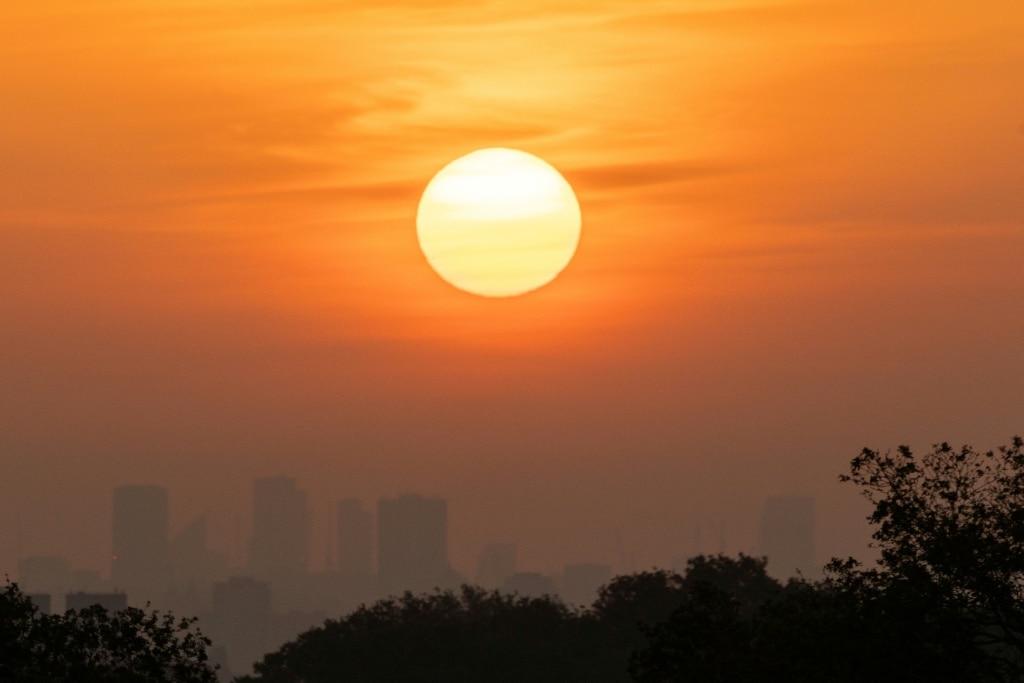
The new forecast arrives as western Europe is already grappling with an early extreme heat event, with a stationary warm air “heat dome” pushing May temperatures past all-time records in both the United Kingdom and France. Beyond global averages, the report highlights disproportionate warming in the Arctic, where average temperatures across the next five Northern Hemisphere winters (November to March) are projected to be 2.8°C warmer than the 1991–2020 baseline — more than three times the global average temperature anomaly for the same period. For precipitation patterns between May and September 2026–2030, the forecast predicts wetter-than-average conditions across the Sahel, northern Europe, Alaska and Siberia, while the Amazon basin is expected to see drier-than-average conditions.
Compiled by the UK’s Met Office at the WMO’s leading center for interannual to decadal climate prediction, the report draws together forecast data from 13 leading climate research institutes across the globe to build its consensus projections.