作者: admin

  • Man cops $45,000 fine for distributing anonymous, illegal election pamphlets targeting Allegra Spender

    Man cops $45,000 fine for distributing anonymous, illegal election pamphlets targeting Allegra Spender

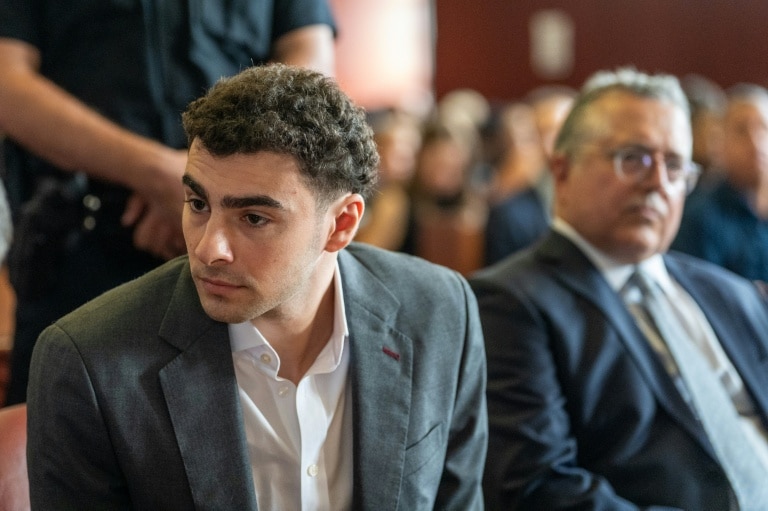
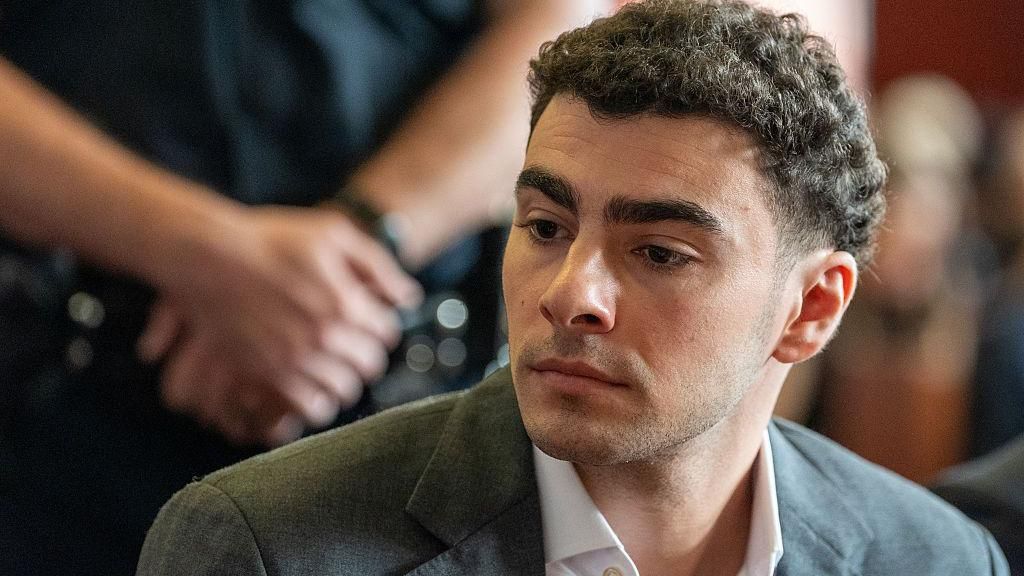
    A New South Wales man has received a substantial combined penalty of $45,000 after admitting to distributing tens of thousands of unauthorised, anonymous election pamphlets targeting sitting independent Member of Parliament Allegra Spender, in a case electoral officials have called one of the most blatant violations of Australian federal electoral law in recent memory.

    Jarrod Davis, a resident of the Wentworth electorate where Spender holds office, was ordered to pay $30,000 in civil penalties by the Federal Court on Thursday, following more than six months of legal proceedings initiated by the Australian Electoral Commission (AEC). In addition to the penalty, Davis was also required to cover $15,000 of the AEC’s legal costs associated with the case, bringing the total financial penalty to $45,000.

    The illegal distribution of pamphlets took place in the lead-up to Australia’s upcoming 2025 federal election, across Spender’s Wentworth constituency. Davis disseminated approximately 47,000 anonymous leaflets, all targeted at the independent MP. According to an official statement from the AEC, the pamphlets failed to include the mandatory authorisation attribution required by federal electoral law, making their distribution a direct violation of national election regulations.

    Spender has publicly condemned the campaign, noting that the anonymous materials spread false, misleading, and deeply offensive claims about her record and policy positions. “This anonymous and misleading campaign is designed to undermine me and to benefit my political opponents,” Spender said in an official statement, adding that the lack of transparency around the pamphlets represented an attack on the integrity of local electoral contest.

    Despite the clear anti-Spender messaging in the distributed materials, the AEC has confirmed that it found no evidentiary link connecting Davis to any registered political party or opposing candidate standing for the Wentworth seat in the 2025 election. AEC Electoral Commissioner Jeff Pope emphasized that the court’s ruling sends a strong message about the importance of transparency in federal election campaign material.

    “Australian voters have a right to know the source of campaign material at a federal election, and today’s result reinforces this expectation as a fundamental aspect of electoral law,” Pope said. Legal observers note that the size of the penalty handed down in this case signals a firm stand by the courts against hidden, unregulated campaign activity that seeks to influence election outcomes without public accountability. The ruling also sets a clear precedent for future enforcement of electoral transparency rules ahead of the 2025 federal poll.

  • Cannabis worth an estimated €4.2m seized

    Cannabis worth an estimated €4.2m seized

    In a major crackdown on illicit drug trafficking in western Ireland, law enforcement agencies have seized a large shipment of cannabis with an estimated street value of €4.2 million (equivalent to £3.6 million) in County Clare. The operation, carried out jointly on Tuesday by An Garda Síochána, Ireland’s national police service, and the Revenue Customs Service, resulted in the seizure of 210 kilograms of suspected cannabis herb. A 40-something male suspect was taken into custody immediately following the raid and continues to be held for questioning as of the latest updates. The seized controlled substances are scheduled to undergo formal forensic analysis to confirm their composition and purity, while active investigations into the broader drug trafficking network linked to this shipment remain ongoing. This seizure marks one of the larger narcotics busts in the region in recent months, underscoring Irish authorities’ continued efforts to disrupt cross-border and domestic illegal drug supply chains.

  • US-Iran tensions spark $45bn wipe-out on Australian sharemarket

    US-Iran tensions spark $45bn wipe-out on Australian sharemarket

    Just days after former US President Donald Trump declared that peace talks between Washington and Tehran were “largely negotiated,” a sudden escalation of hostilities between the two powers sent shockwaves through global financial markets on Thursday, triggering a $45 billion wipe-out of Australian equities and a sharp jump in international crude prices.

    The escalation began when the US launched targeted strikes near Iran’s Bandar Abbas port Wednesday, reportedly targeting the head of the Islamic Revolutionary Guard Corps Navy. The following day, the US confirmed it had shot down four Iranian drones over the strategic Strait of Hormuz and destroyed a Iranian drone control tower. In response, Iran claimed it had carried out a retaliatory strike against a US air base in Kuwait and issued a stark warning of more severe reprisals if US offensive operations continued.

    The sudden flare-up of geopolitical risk immediately roiled regional and global markets. For Australian investors, it was one of the toughest trading sessions in recent weeks: the benchmark ASX 200 plunged 124.80 points, or 1.43%, to close at 8592.90, while the broader All Ordinaries index dropped 125.60 points, or 1.40%, to settle at 8819.60. The Australian dollar also weakened against the US dollar, edging 0.16% lower to 71.22 US cents by market close.

    Nine out of the 11 tracked market sectors ended the day in negative territory, with only consumer-facing segments bucking the broader sell-off trend. The materials sector, which had enjoyed a five-day winning streak leading into Thursday’s session, led the market declines. Major mining stocks all posted heavy losses: BHP fell 1.19% to $60.55, Rio Tinto dropped 2.53% to $183.46, and Fortescue Metals declined 1.18% to $21.78. Gold mining stocks suffered even steeper falls, dragged down by a 1.83% drop in spot gold prices to US$4373 per ounce: Northern Star Resources sank 7.47% to $18.20, while Evolution Mining closed 7.76% lower at $11.65.
    Australia’s major banking group was also caught up in the broad sell-off, with the entire financial sector shedding 1.64% over the session. Commonwealth Bank of Australia led the declines among the big four banks, dropping 2.06% to $161.41, while ANZ fell 1.91% to $34.89, National Australia Bank declined 1.72% to $37.10, and Westpac ended the day down 1.29% at $35.92.

    Geopolitical uncertainty drove a sharp rally in global oil prices, as investors priced in greater risk of supply disruptions through the Strait of Hormuz, a critical chokepoint for 20% of the world’s daily oil shipments. Benchmark Brent crude jumped as much as 4.3% to hit US$98.20 per barrel, while US West Texas Intermediate crude rose 2.56% to US$91.70 per barrel. Tony Sycamore, a market analyst with IG, noted that while the US administration has signaled it remains committed to moving forward with peace talks, markets reacted instantly to the escalation. “This reignited inflation and fuel security fears, while also sending bond yields and the safe haven US dollar higher,” Sycamore explained.

    Against the broader market downturn, two sectors managed to post gains: consumer staples and consumer discretionary stocks. Australia’s two major supermarket chains led the consumer staples rally: Woolworths added 0.92% to close at $34.94, while Coles Group gained 0.75% to end the session at $21.52. Sycamore attributed this outperformance to a better-than-expected national inflation reading released Wednesday, which showed headline inflation rose just 4.2% – lower than market forecasts. “Capitalising on its defensive qualities and coupled with yesterday’s cooler-than-expected inflation reading — which likely gives the Reserve Bank of Australia cover to keep interest rates on hold at 4.35% next month — the Consumer Staples sector emerged as today’s best performer,” Sycamore said. Even with the market turmoil, Sycamore noted that the US is still widely expected to prioritize de-escalation and work toward ending the ongoing regional conflict, leaving the long-term market outlook for now uncertain.

  • Sixteen pupils killed in Kenya school fire, local police say

    Sixteen pupils killed in Kenya school fire, local police say

    A devastating early-morning fire has claimed the lives of 16 students at a public boarding school for girls in Gilgil, a town located roughly 120 kilometers west of Kenya’s capital Nairobi. Local law enforcement confirmed the fatal toll on scene, adding that 74 additional students were being treated for burn and injury-related trauma at area hospitals.

    The blaze broke out at approximately 1:00 a.m. local time Thursday, when all residents of the Utumishi Girls School dormitory were asleep, according to joint updates from Kenya’s national police service and the Kenya Red Cross. The fire quickly spread through an entire three-story dormitory block that housed close to 220 students, leaving chaos and destruction in its wake. Many students trapped on the upper floors of the building were forced to jump from windows to escape the flames, resulting in multiple fractures and severe impact injuries among survivors.

    Emergency response teams, including Kenya Red Cross disaster response units and local police search-and-rescue teams, were deployed to the school immediately after the fire was reported. As of Thursday afternoon, search operations to clear the dormitory wreckage were still ongoing, and officials have not yet determined what sparked the blaze. Local police commander Masoud Mwinyi told reporters gathered at the school that a full formal investigation into the incident is already underway. The entire school campus has been cordoned off to the public, with only family members of students granted access to the compound to identify surviving children or recover the remains of those killed.

    Hundreds of anxious family members gathered outside the school gates in the hours after the fire broke out, gripped by confusion and fear as they waited for updates on their children’s status. Wambui Nderitu, whose niece is a student at the institution, described the chaotic scene for reporters. “When we arrived at the school we were told to queue. Most of us were so worried because we had heard some students had died and others were injured and in hospital,” she said. Nderitu confirmed her niece survived the fire but suffered a broken leg after jumping from the dormitory’s second floor to escape.

    This tragedy is not an isolated incident for Kenya’s boarding school system. Deadly dormitory fires have occurred with alarming frequency across the country in recent years, with safety advocates repeatedly pointing to systemic risks including chronic overcrowding in student housing, outdated fire suppression infrastructure, and widespread non-compliance with basic fire safety protocols as key factors that drive high casualty rates when blazes break out.

    Mwinyi described the incident as an overwhelmingly devastating tragedy for the local community. “It is a sad and saddening situation,” he told assembled parents and onlookers outside the school.

  • ‘Principled’: AFP Commissioner Krissy Barrett defends Ben Roberts-Smith arrest

    ‘Principled’: AFP Commissioner Krissy Barrett defends Ben Roberts-Smith arrest

    Australia’s top federal law enforcement official has publicly outlined why authorities rejected a proposed voluntary surrender from former elite SAS soldier Ben Roberts-Smith, amid growing political scrutiny over the high-profile war crime arrest that has gripped national attention.

    In a defiant address during a Thursday Senate estimates hearing, Australian Federal Police (AFP) Commissioner Krissy Barrett defended the agency’s April decision to arrest Roberts-Smith at Sydney Domestic Airport, pushing back against widespread public and political backlash over the handling of the case.

    Barrett stressed that all investigative and procedural choices made by the AFP and the Office of the Special Investigator (OSI) were rooted in principle, aligned with federal legislation and governance frameworks, and guided solely by evidence – not the notoriety or public standing of any individual.

    “We take an oath that we will faithfully and diligently carry out our duties without fear or favour, without affection or ill will. This is an extremely important point the Australian public can know,” Barrett told the hearing. “The AFP will determine cases on the evidence in front of us, and not because of name, fame, or background of any individual.”

    The hearing comes after days of questioning from Liberal Senator Michaelia Cash, who has challenged law enforcement officials over their approach to the Roberts-Smith case. In her detailed opening remarks, Barrett broke down the operational logic behind arresting Roberts-Smith at the Sydney airport rather than allowing him to turn himself in, or arresting him in the state of Queensland.

    Barrett explained that airports are classified as “sterile environments” with mandatory passenger screening and contained perimeters, factors that make arrest operations far safer for both responding officers and members of the public. Investigators also confirmed they had intelligence that Roberts-Smith had no known permanent address and was actively planning to relocate overseas, eliminating the option of waiting for a voluntary surrender. The choice of Sydney over Brisbane was a collaborative operational decision reached with partner agencies, Barrett added, dismissing widespread media speculation about hidden motives for the location as entirely inaccurate. She also noted that OSI officers were deployed specifically to the airport to provide support for Roberts-Smith’s family members who were travelling with him at the time of arrest.

    Addressing reports that Roberts-Smith had offered to hand himself in voluntarily ahead of the airport operation, Barrett confirmed that law enforcement had ultimately ruled the proposal unworkable. Citing the gravity of the charges against the former soldier – five counts of war crime-related murder, each carrying a maximum sentence of life imprisonment – Barrett said the surrender option was never considered a viable path for the investigation.

    Barrett also addressed unconfirmed reports of sensitive investigative information being leaked to media outlets ahead of the arrest. While she stressed there is no concrete evidence the AFP leaked any details, she confirmed the matter has been referred to the National Anti-Corruption Commission as a precautionary measure. “If the date of the individual’s arrest or other sensitive information was disclosed to anyone in the media, this could be an unauthorised disclosure, and in my view, anyone who disclosed that information should face consequences,” she said.

    Roberts-Smith was granted strict conditional bail earlier this year following his arrest. He has consistently maintained his innocence on all charges, has not entered any formal pleas, and his court proceeding remains ongoing.

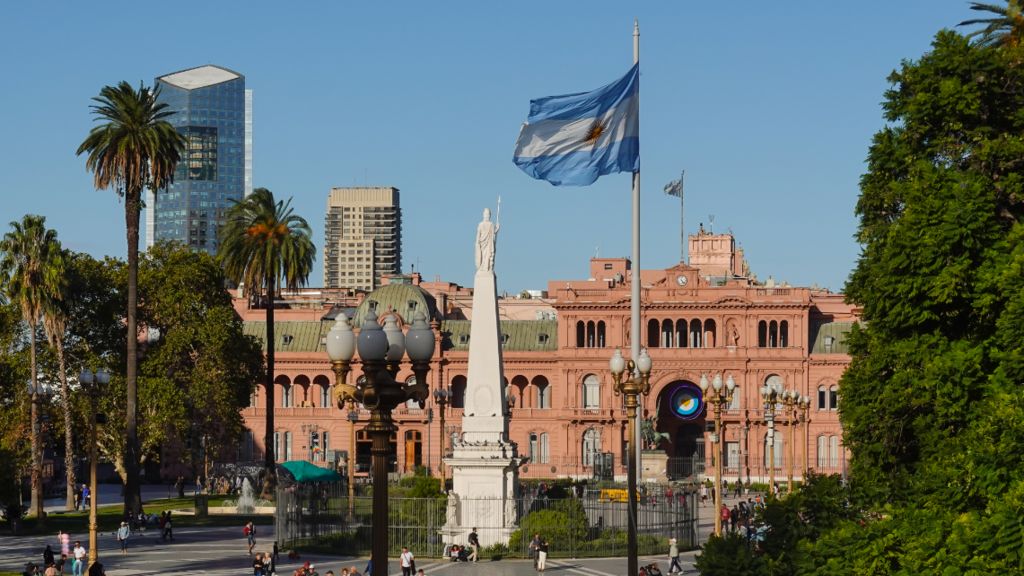
  • Under President Milei’s austerity, disabled Argentines risk losing essential services

    Under President Milei’s austerity, disabled Argentines risk losing essential services

    For millions of Argentines living with disabilities, decades-old specialized therapy and support programs have long been more than just social services—they have been lifelines, opening doors to independence, connection, and personal growth that many could not access anywhere else. For 34-year-old Analía Celis, who lives with cerebral palsy and an intellectual disability, these programs transformed daily life: sports therapy softened the rigid muscle tension that limited her movement, baking gave her a tangible sense of self-reliance she had never known, and painting alongside peers allowed her to build connections when speech was a struggle. Today, that lifeline is being pulled away, a casualty of President Javier Milei’s sweeping austerity agenda that has gutted core funding for disability services across the country.

    Since taking office in late 2023, Milei, whose libertarian, small-government platform has positioned him as a leading figure in the global conservative backlash against liberal institutional norms, has frozen all federal payments to nonprofits and organizations that deliver therapeutic, educational, and social support to people with disabilities. Argentina is home to an estimated 5 million people living with disabilities, and advocates and family members warn that the funding freeze has rapidly dismantled a social safety net once considered robust by Latin American regional standards, stripping vulnerable people of the structured, personalized care they rely on.

    The financial strain has pushed many service providers to the edge of collapse. Martín Lucero, legal representative for Andar, a Buenos Aires-area nonprofit that operates a day support center for people with disabilities in Moreno, says his organization has been forced to sell off vehicles just to cover basic utility costs. Two months ago, Andar cut its free customized shuttle service that brought Celis and dozens of other participants to the center each day, leaving them stranded without access to programming. “The only solution can’t be cutting off a person from a space they need for their development,” Lucero said. “This is a political choice.”

    The nation’s disability support system has long operated on revenue generated by billing state-run insurance programs for services. For years, irregular government payments and reimbursement rates that failed to keep up with Argentina’s sky-high inflation left nonprofit providers with mounting debts. But six months ago, the flow of government funds stopped entirely, turning financial strain into a full-blown crisis. To cut costs, providers have slashed staff sizes, delayed employee salaries, reduced meal portions for program participants, and cut operating hours. While there is no official count of shuttered centers, disability rights groups estimate that up to 50 facilities have closed this year alone, many in remote rural provinces.

    At Andar, which serves 150 participants on its sprawling, park-like campus that includes a soccer field, community vegetable garden, and professional commercial kitchen where participants earn a small monthly wage through a catering service, roughly 30% of enrollees can no longer travel to the center. Therapists warn that without consistent, structured programming, people with disabilities can experience rapid regression in skills and quality of life. For Celis, that regression has already been devastating. Her 74-year-old mother, Clementina Tabares, now has to provide round-the-clock care for her daughter, forcing her to skip her own critical medical appointments. “She wakes up three or four times every night screaming that she wants to go to the farm,” Tabares said, describing how Celis now spends all day in bed, the window covered with a blanket to block sunlight, with rock music blaring to calm her frequent agitation. “She’s shutting herself away. That scares me.”

    For 28-year-old Roman Pontecorvo, an Andar participant who found a love for acting through the center’s programs, the potential closure of Andar would leave him with nothing. “I want to tell the president to look at us, to really see us, to come here and meet us,” Pontecorvo said. “If Andar closes, many of us will be left with nothing. It will be total chaos.”

    Disability rights advocates have pushed for a straightforward solution to the crisis: enacting a disability emergency law passed by Congress last year that would boost benefits that have lost 30% of their value to inflation and guarantee stable funding for service providers through 2026. But Milei has blocked the law from taking effect, arguing that its 0.35% of GDP fiscal cost would undermine his administration’s landmark achievement of a national budget surplus, Argentina’s first after decades of persistent deficits. Milei vetoed the bill last year, saying “using noble causes, they pass laws that drive the nation into bankruptcy,” but Congress overrode his veto. The dispute is now tied up in court, where the government is appealing a May 18 federal court ruling that ordered the administration to unfreeze payments within 72 hours to comply with the existing law. The judge’s ruling noted that “the interruption of treatment generates setbacks in development” for people with disabilities.

    Milei has instead introduced a sweeping new bill that would formally dismantle the existing system of federal funding for therapeutic centers, shifting responsibility to private insurance companies and provincial governments to negotiate payment rates with providers. The legislation would also impose strict new eligibility restrictions, ending federal subsidies for all disabled people except those living below the poverty line with “complete” and “permanent” disabilities. The bill has faced intense backlash from rights groups and is still awaiting debate in Congress.

    The Milei administration has framed its cuts to disability programs as part of a broader effort to root out fraud and waste in federal bureaucracy, echoing the anti-spending rhetoric of ideological allies like the former Trump administration in the United States. Months ago, Argentine officials amplified claims of widespread fraud, even highlighting a bizarre case where a dog’s X-ray was allegedly submitted to falsely secure disability benefits, echoing a similar false claim by billionaire Elon Musk that millions of dead Americans were receiving U.S. Social Security checks. But authorities have never presented evidence of systemic, widespread abuse, and the scale of existing fraud remains unconfirmed.

    Instead, the scandal that has emerged from the disability agency centers on high-level corruption accusations tied to Milei’s own inner circle. Leaked recordings from last year captured Diego Spagnuolo, the former director of Argentina’s national disability agency Andis, alleging that Karina Milei, the president’s sister and closest senior adviser, accepted hundreds of thousands of dollars in kickbacks from pharmaceutical companies seeking federal public contracts. Milei has denied any wrongdoing on his sister’s behalf. As auditing of the agency ramped up, the administration shut down Andis entirely, laying off hundreds of workers and folding disability programs into the Ministry of Health.

    While even critics of the old system acknowledge that greater transparency and anti-fraud reform are needed, they argue that the Milei administration’s goal is not to improve the system but to eliminate it entirely. Last year, the Civic Association for Equality and Justice successfully sued the government after Andis suspended 140,000 disability benefit checks over unproven fraud suspicions. Celeste Fernandez, the group’s co-director, noted that most of the suspended beneficiaries only missed required in-person assessments because the nearest assessment office was hundreds of miles from their homes, and many could not travel or understand the complicated summons. “Dismantling institutions without building alternatives leaves people abandoned,” Fernandez said. “The government is not carrying out a serious reform. It is simply emptying the system.”

  • Australia launches record $1.4B lawsuit against 3M over ‘forever chemicals’ at defense bases

    Australia launches record $1.4B lawsuit against 3M over ‘forever chemicals’ at defense bases

    On Thursday, the Australian government announced a landmark legal action against U.S.-based industrial conglomerate 3M and its Australian subsidiary, seeking more than 1.4 billion U.S. dollars (equivalent to 2 billion Australian dollars) in compensation for widespread toxic “forever chemical” contamination linked to firefighting foams used across national defense sites. The compensation claim, the largest the Australian federal government has ever pursued, stems from per- and polyfluoroalkyl substances, or PFAS, pollution that has affected soil and water resources at 28 defense installations across the country.

    PFAS are a class of synthetic human-made compounds that have earned the nickname “forever chemicals” due to their inability to break down naturally in the environment, leading them to accumulate in ecosystems and human bodies over decades. First widely adopted in the 1950s, PFAS became a staple ingredient in a range of household and industrial products thanks to their unique ability to resist heat, stains, grease, and water. For firefighting teams, PFAS-infused foam became a go-to solution for quickly extinguishing volatile fuel-based fires, making it a standard fixture at military bases and civilian airports globally.

    Australia filed the lawsuit at the country’s Federal Court, opening a high-stakes legal battle between the national government and one of the world’s largest manufacturing conglomerates, which has already confirmed it will vigorously contest the claim. In an official statement responding to the action, 3M pushed back against the allegations, noting that the company never manufactured PFAS on Australian soil and halted sales of the PFAS-containing products in question roughly 20 years ago. The company argues that the Australian Department of Defense continued to use the existing stockpiles of PFAS-laden firefighting foam for almost two additional decades after sales stopped, placing responsibility for the ongoing contamination on the department itself.

    The Australian government, however, accuses 3M of long withholding critical information about the severe environmental and public health risks posed by PFAS-containing foam. Attorney-General Michelle Rowland outlined that the federal government is seeking compensation to cover both past and future costs of addressing the contamination crisis, which has required extensive investigation, remediation, and public health monitoring across affected communities.

    PFAS contamination linked to defense base foam use first made national headlines in Australia in 2018, when the Department of Defense issued an official warning to residents living near Richmond Air Base, located on the outskirts of Sydney. After testing confirmed dangerous levels of PFAS in local groundwater, authorities advised nearby residents to reduce their consumption of locally caught fish and farmed eggs, sparking widespread community concern over long-term health impacts.

    Assistant Defense Minister Peter Khalil shared that the federal government has already spent roughly 920 million U.S. dollars (1.3 billion Australian dollars) on efforts to manage and mitigate the environmental damage caused by the PFAS contamination. To date, remediation teams have removed more than 200,000 metric tons of contaminated soil from affected defense bases and treated more than 13 billion liters of PFAS-tainted water. Khalil emphasized the government’s commitment to holding powerful entities accountable when Australian communities face harm from corporate activity, saying “We are prepared to take on powerful corporations when Australians and Australian communities have been impacted.”

  • AFL 2026: Collingwood to try ‘something different’ with Darcy Moore’s soft-tissue rehab

    AFL 2026: Collingwood to try ‘something different’ with Darcy Moore’s soft-tissue rehab

    AFL side Collingwood is preparing to adopt an unconventional, progressive rehabilitation strategy for its captain Darcy Moore after yet another soft tissue injury sidelined the star skipper, extending what has already been a devastating run of injuries for the club’s leader. Moore sustained a new hamstring injury during last weekend’s match against the West Coast Eagles, an issue that is expected to keep him off the pitch for as long as eight weeks. This latest setback is just one in a long string of health problems for Moore in the 2024 campaign: he already dealt with a pre-season calf injury, hamstring tightness in Round 1, combined knee bursitis and hamstring trouble in Round 3, and a concussion in Round 9. Moore is no stranger to navigating repeated soft tissue setbacks; early in his professional career, he traveled across the globe to Europe to consult leading specialists in soft tissue recovery to address his recurring issues. Speaking to reporters this week, Collingwood head coach Craig McRae acknowledged that the club’s current recovery approach has not worked, and a new path forward is non-negotiable to get Moore back to elite playing condition. “It’s been a frustrating year for him to get on the paddock and then back out on the field,” McRae said. “Clearly we need to do something different because what we’re doing right now – given his body feedback – he’s not capable of doing it at the level which is required. We’ll be progressive around his rehab.” The coach added that this unorthodox approach could include a controlled, limited stint in the Victorian Football League (VFL), Collingwood’s reserve-grade competition, as Moore builds his fitness back up. “We might just weigh up what that means in terms of, ‘OK does he need to train for a bit longer to be fit and available? Does he need to play a VFL game?’” McRae explained. “I don’t know yet, (but) we’ve got to work all that out.” A restricted run in the reserves is not off the table as the club maps out Moore’s comeback, the coach confirmed. Unfortunately for Collingwood, Moore’s injury is not the only bad news the club received this week. The Magpies’ training and medical facility became a revolving door for scans this week, with multiple key players requiring assessment. Veteran forward Jamie Elliott has been ruled out for the remainder of the season after scans confirmed he suffered an anterior cruciate ligament (ACL) injury. Rising young star Nick Daicos also underwent assessment for a sore foot, but McRae delivered positive news on that front: Daicos has been cleared fit to line up against the Western Bulldogs in this weekend’s primetime match. Even McRae himself was caught up in the injury wave sweeping the club, revealing he also underwent scans on a sore shoulder this week. “I think everyone went in for scans this week, I popped in for a couple on my shoulder as well. That (clinic) was a revolving door,” McRae joked. Despite the season-ending injury, McRae added that Elliott remains in good spirits as he prepares for his recovery and reconstruction surgery.

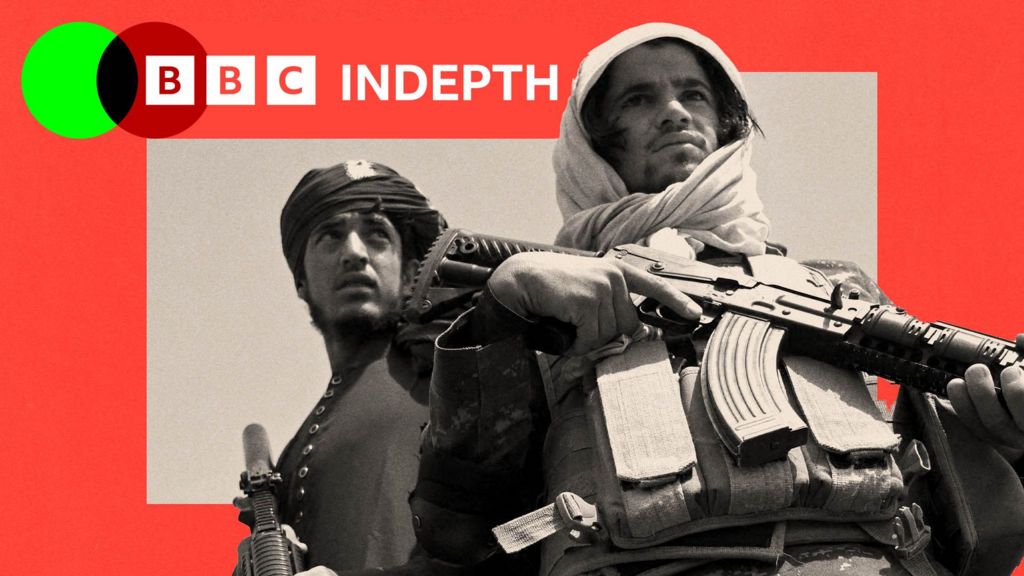
  • Woman charged after ISIS bride return, new evidence, AFP Commissioner says

    Woman charged after ISIS bride return, new evidence, AFP Commissioner says

    Australia’s national top law enforcement official has publicly confirmed that counter-terrorism units are currently running eight independent investigations into women and children with known ties to ISIS fighters, a disclosure that comes amid a fresh wave of repatriations from Syrian detention camps and a high-profile recent terrorism charge.

    Australian Federal Police (AFP) Commissioner Krissy Barrett outlined the scope of ongoing investigations during a Thursday appearance before a Senate estimates hearing, noting that probes are not limited to people who have already returned to Australian territory — a number of subjects of interest still remain overseas.

    The confirmation of the eight active investigations follows the charging of 34-year-old Rayann El Houli earlier the same day. El Houli, who returned to Australia from Syria last year, faces two criminal allegations: entering and staying in a declared terrorist active zone, and formal membership of a proscribed terrorist organization. She made her first court appearance on the same day charges were filed.

    One of the largest ongoing probes, codenamed Operation Howth, centers on three people — one man and two women — who are accused of traveling to Syria between 2013 and 2024 to join the Islamic State terror group. Commissioner Barrett told the hearing that two of the subjects, the women, returned to Australia with their children in September 2025 from the al-Hawl detention camp in northern Syria, a facility that has held thousands of family members of alleged ISIS fighters for years. The third subject, the man linked to the two women, remains imprisoned in a Middle Eastern prison, per police accounts.

    After the two women’s 2025 repatriation, the Commonwealth Director of Public Prosecutions initially concluded there was not enough admissible evidence to bring criminal charges against them. In line with that guidance, the Victorian Joint Counter Terrorism Team — a multi-agency unit made up of local Victoria Police, the AFP, and Australia’s national intelligence agency ASIO — chose to keep Operation Howth active while the women integrated into Australian communities.

    Barrett explained that over the course of the ongoing six-month domestic investigation, and following the repatriation of another four women and their children from Syria just three weeks ago, investigators have obtained significant new evidence that ties back to the original Operation Howth probe, renewing its momentum.

    Beyond Operation Howth, Barrett confirmed that a total of eight separate Joint Counter Terrorism Team investigations are active across the country, targeting family groups that either have returned from Syrian detention camps or still remain outside Australia. She pushed back against any assumptions that delays in filing criminal charges signal that investigations have been abandoned, pointing to El Houli’s charging as a clear example of how probes can take time to yield charges.

    “Any perceived delay in charges does not indicate investigations have ceased. Today’s arrest and charge is a case in point,” Barrett told the hearing.

    The commissioner outlined three core messages the AFP and its partner agencies want to communicate to the Australian public. First, the national force and its counter-terrorism partners remain fully committed to protecting community safety. Second, any alleged victims or witnesses with relevant information are still able to come forward to cooperate with investigations. Third, all individuals who have returned to Australia from conflict zones tied to ISIS remain subject to a broad range of active investigation strategies, regardless of whether charges have been filed yet.

    Since 2019, a total of ten Australian citizens have been charged with terrorism-related and foreign incursion offences linked to travel to conflict zones: seven men and three women. Three of those women were charged earlier this year immediately after their return from Syria, and are currently before the courts facing a series of serious charges, including crimes against humanity and the possession of an individual as a slave.

  • Hacking claims, mismatched answer-sheets: Controversies rock school exam in India

    Hacking claims, mismatched answer-sheets: Controversies rock school exam in India

    For millions of young people across India, national secondary school leaving exams are far more than a simple academic milestone: they act as the critical gateway to competitive university admissions, future career trajectories and long-term socioeconomic mobility. This year, that high-stakes process has been thrown into chaos by a growing scandal over the newly implemented digital evaluation system for the Central Board of Secondary Education (CBSE) Class 12 exams, which serve approximately 2 million test-takers annually. The controversy erupted after one student’s viral social media complaint about a mismatch between his original physical physics answer sheet and the digital version uploaded for grading, triggering a flood of similar allegations from students across the country.

    The system at the center of the dispute, called On-Screen Marking (OSM), was launched by CBSE with the stated goal of reducing human error in manual grading, cutting down on examiner workload, and boosting both transparency and efficiency in the grading process. Under the OSM framework, teachers score physical answer sheets that have been scanned and uploaded to a cloud-based portal, after which a proprietary software automatically calculates the final total marks for each exam. But instead of solving longstanding problems with inconsistent manual grading, students say the new system has introduced a host of new, potentially devastating issues that have tanked their final scores.

    Common complaints from test-takers range from blurry, low-resolution scanned copies of answer sheets that made handwritten responses unreadable to entire missing pages of responses, incorrect cross-subject marking, and widespread mismatches between the original physical answer sheets and the digital copies uploaded for grading. The case that sparked national attention involved 12th grade student Vedant Srivastava, who alleged that his physics answer sheet was entirely swapped for another student’s work after he requested a re-evaluation. Srivastava posted on social media that the scanned copy provided by CBSE featured different handwriting and answers to questions he had never attempted, writing, “I studied for an entire year. I sacrificed sleep, peace of mind, outings, everything for these exams. And now I don’t even know whether my actual physics paper was checked. Do students really deserve this?”

    Srivastava’s post quickly went viral, drawing hundreds of thousands of interactions and prompting thousands of other students to share their own stories of grading errors and answer sheet mismatches. Several days later, CBSE confirmed it had sent Srivastava the “correct copy” of his answer sheet, but provided no explanation for the initial mismatch. Screenshots released by Srivastava after the correction showed handwritten red ink markings on the sheet, which contrasted with the green digital check marks used in the official OSM process, raising further questions about irregularities in the system.

    In response to the growing outcry, CBSE has stated that it remains committed to upholding a “fair and transparent evaluation process” and that all legitimate concerns related to scanned answer books and grading errors will be reviewed by independent subject experts through the board’s official re-evaluation mechanism. As of this week, more than 400,000 students have applied to access scanned copies of their answer sheets, while roughly 1.1 million have requested physical copies for verification. Some students have also reported technical glitches when trying to submit re-evaluation requests, prompting federal Education Minister Dharmendra Pradhan to deploy a team of technical experts from India’s top engineering institutes to support CBSE in resolving technical issues and ensuring a smooth re-evaluation process.

    The CBSE controversy has gained even more national traction because it follows closely on the heels of a major scandal surrounding another high-stakes Indian entrance exam: the National Eligibility Entrance Test (Undergraduate), or NEET-UG, the mandatory entrance test for medical school programs across the country. Allegations of a widespread question paper leak in May led to the full cancellation of the exam for 2.28 million test-takers, a disruption that has been linked to multiple reported student suicides.

    Opposition Congress leader Rahul Gandhi has seized on the twin controversies to criticize the ruling Bharatiya Janata Party (BJP) and Prime Minister Narendra Modi, accusing the government of neglecting India’s youth and calling for the resignation of the federal education minister. Gandhi has claimed the national examination system is rigged, forcing students to turn to social media to seek redress for systemic failures. The education minister has not yet responded to Gandhi’s allegations.

    Compounding concerns about the OSM system are recent security allegations from an ethical hacker who claims he found and exploited critical vulnerabilities in CBSE’s exam grading portal earlier this year. Nisarga Adhikary told the BBC he was able to crack the portal’s master password in February, gaining full access to student answer sheets, personal student records, and examiner accounts. “With that kind of access, one can tamper with the answer-sheets, change marks or even access peoples’ phone numbers and bank details,” Adhikary said. He added that he reported six to seven separate security flaws to India’s Computer Emergency Response Team (CERT-IN), the federal agency responsible for handling cybersecurity incidents, via a series of emails, copies of which have been seen by the BBC.

    CBSE has denied Adhikary’s allegations, stating that no security breaches have been detected on the portal used for official live grading work. The board claimed the URL Adhikary flagged as vulnerable was only a test portal that held no actual student evaluation data, marks, or personal information. Adhikary has pushed back on this claim, saying he was able to view real scanned answer sheets and verify a working examiner’s personal details after accessing the portal. “If this was a test portal, why was this information uploaded on it?” he asked. The BBC has sent formal queries to both CBSE and CERT-IN, and responses are still pending.

    The overlapping scandals have put increased pressure on Indian education officials to address systemic flaws in the country’s high-stakes examination system, with parents and education experts questioning whether teachers received sufficient training and whether the digital evaluation infrastructure was adequately tested before being rolled out to millions of test-takers.