作者: admin

  • A credible and safe path to Chinese financial liberalization

    A credible and safe path to Chinese financial liberalization

    China’s top financial policymakers are currently grappling with a uniquely challenging policy dilemma that sits at the heart of the country’s long-term financial development goals. On one hand, Beijing has made clear its ambition to secure deeper, more integrated access to global capital markets, advance the internationalization of the renminbi, and build a world-class, transparent financial market infrastructure that can earn lasting trust and confidence from international investors across the globe. On the other, history offers a stark warning: decades of financial liberalization across other major emerging economies have repeatedly sparked devastating bouts of financial instability, from catastrophic currency crises to mass capital flight and the permanent erosion of domestic monetary policy independence.

    For decades, China has approached this challenge with a deliberate strategy of controlled caution, observing past crises from the sidelines while opening its financial system at a gradual, self-determined pace. This approach proved critical to shielding China’s rapidly growing economy from external volatility during its foundational decades of economic expansion, helping it avoid the meltdowns that derailed growth in many peer emerging markets.

    Conventional policy discourse on this issue typically frames the choice as an binary one: either accelerate full capital account opening and accept the accompanying systemic risks, or maintain tight controls and accept the long-term constraints that closed systems place on market development. However, both of these dominant frameworks miss the more critical question at hand: the debate should not focus on how open China’s capital account should be, but rather on how the overall system governing cross-border capital flows should be structured to balance openness and stability.

    Brazil offers a particularly instructive case study of the risks of poorly structured capital account opening. Brazil maintains one of the most open capital account regimes in the world, a policy framework that in economic theory should deliver efficient capital allocation and deep, seamless integration with global financial markets. In practice, however, this unstructured openness leaves the country permanently vulnerable to external shocks: every time the U.S. Federal Reserve adjusts its monetary policy stance or global risk sentiment shifts to risk-off mode, massive volumes of capital flood out of Brazil, regardless of the strength of the country’s domestic economic fundamentals. This outflow triggers sharp currency depreciation, sudden domestic financial tightening, and painful economic contractions that hit at the exact moment when the domestic economy is already weakening. Brazil has been trapped in this volatile cycle repeatedly, and the root cause is not the openness of its capital account itself, but its one-size-fits-all structure that does not adapt to changing market conditions. The country lacks a graduated, pre-planned response mechanism, a clear set of adaptive buffers that can soften the blow of sudden shifts in global capital flows.

    China has avoided this harmful cycle to date through the extensive use of capital controls, but this approach carries its own significant costs. A dynamic, attractive investment environment depends on consistent, stable rules and broad-based trust among market participants. Uncertainty around future policy automatically generates a risk premium on Chinese assets, making the country’s financial markets less attractive to global investors than its strong economic fundamentals would otherwise warrant. It also acts as a major barrier to the long-term institutional capital commitments that China actively seeks to attract for its long-term growth.

    Against this backdrop, a new alternative framework has been proposed that reframes the entire debate: the Adaptive Capital Flow Framework (ACFF), developed by Wall Street veteran Sidney Shauy. The core concept of the ACFF is simple and intuitive: it allows for fully free capital movement during normal market conditions, but introduces gradual, proportional, pre-specified adjustments to capital flows as systemic risk levels rise. Rather than halting capital movements entirely or imposing arbitrary restrictions, the framework slows volatile flows in a predictable manner that avoids market panic.

    The framework operates through a composite, data-driven risk measurement tool called the Capital Flow Risk Score (CFRS), which aggregates key indicators including exchange rate volatility, cross-border capital flow velocity, changes in foreign exchange reserves, and broad market stress metrics to classify the current level of systemic risk in real time. As the CFRS crosses pre-defined risk thresholds, pre-planned policy responses are triggered automatically: modest, temporary levies on the most volatile short-term capital flows at the first risk threshold, followed by stronger but still targeted measures at higher risk thresholds. All thresholds, response measures, and scoring rules are published publicly in advance, making the entire system rules-based rather than subject to discretionary policy changes.

    Predictability is the cornerstone of this framework, because investor behavior is shaped not just by the existence of capital controls themselves, but by deep uncertainty about when and how controls will be deployed. In a discretionary control regime, investors cannot anticipate policy shifts, which often triggers panic-driven mass exits and preemptive capital withdrawals – creating the exact sort of capital flow instability that controls are intended to prevent. A transparent, rules-based system reverses this dynamic entirely: when global investors know exactly what policies will be deployed under what conditions, they can adjust their investment planning accordingly, and the transparency of the system itself acts as a stabilizing force for markets.

    The good news for Chinese policymakers is that much of the infrastructure needed to implement the ACFF is already in place across China’s network of financial pilot zones. These existing testing grounds – including the Hainan Free Trade Port, Shanghai Free Trade Zone, Shenzhen’s Qianhai cooperation zone, and the array of cross-border Connect programs in the Guangdong-Hong Kong-Macao Greater Bay Area – create a ready-made, real-world laboratory to test and refine the adaptive framework under live market conditions. The Hainan Free Trade Port already operates with near-full capital account openness, while the Greater Bay Area’s Stock Connect, Bond Connect, and Wealth Management Connect programs already provide structured, closely monitored cross-border capital access for global and domestic investors. The digital monitoring infrastructure needed to track capital flow dynamics and calculate the CFRS is also already operational. What is missing is not the physical or institutional infrastructure, but the overarching framework: a set of explicit, publicly disclosed rules that outline how capital flow conditions will be assessed and how policy will respond as those conditions evolve.

    China has a long, proven track record of managing complex financial transitions through its tested approach of gradualism, targeted experimentation, and structured scaling of successful policies. The Adaptive Capital Flow Framework aligns perfectly with this long-standing policy tradition. It builds directly on the work China is already doing in its open pilot zones, and adds the single element that has held back deeper engagement with global capital: clear, credible predictability for investors, all while allowing China to retain the ability to adjust controls on its own terms when market conditions require intervention.

    For the global investment community, this model offers a clear, compelling path forward. It lets China articulate a clear, transparent vision for its financial opening: here is how our system works, here is our current risk assessment, here is how we will respond if conditions change, and here is the evidence from our pilot programs that the system delivers on its promise of balanced stability and openness.

  • Italy U21 forward Cristian Volpato switching nationality to Australia ahead of World Cup

    Italy U21 forward Cristian Volpato switching nationality to Australia ahead of World Cup

    Four years after rejecting an Australian national team call-up ahead of the 2022 Qatar World Cup, 22-year-old Italian club-based forward Cristian Volpato has finalized a nationality switch to represent Australia’s Socceroos on the global stage, football authorities confirmed this week.

    Born in Sydney, Volpato currently plies his trade for Italy’s Serie A side Sassuolo. Under FIFA’s international eligibility regulations, the switch is fully permitted: Volpato has never featured in a competitive senior international match for Italy’s senior national team, clearing the path for his change of representation. Football Australia announced Friday that the young attacker has already been added to the Socceroos’ pre-tournament training camp in Los Angeles, where the squad is putting the finishing touches to preparations ahead of head coach naming the final World Cup roster by Monday.

    A critical bureaucratic hurdle was cleared this week when Football Australia confirmed it had received an official release letter from the Italian Football Federation, a required step for FIFA to formally approve the eligibility change. This reverses a decision Volpato made back in 2022, when he turned down a Socceroos call-up for the Qatar tournament while playing at Rome’s AS Roma under legendary manager José Mourinho.

    Volpato’s addition comes as Italy’s senior national side once again missed out on World Cup qualification, marking the third consecutive tournament that the four-time world champions have failed to book a spot in the finals. For Australia, Volpato brings young attacking talent to a side that kicks off its 2026 FIFA World Cup Group D campaign on June 13 against Turkey in Vancouver. Six days after the opening match, the Socceroos will face the United States in Seattle, before wrapping up group stage play against Paraguay on June 25 at the home stadium of the NFL’s San Francisco 49ers. In this year’s expanded 48-team World Cup format, the top two teams from each group automatically advance to the round of 32, with the best third-place finishers also claiming spots in the knockout round.

  • When Sue Tilley met Lucian Freud, it changed her life. Now a painting of her could fetch $47 million

    When Sue Tilley met Lucian Freud, it changed her life. Now a painting of her could fetch $47 million

    In a quiet unemployment office in 1990s London, a chance encounter between civil servant Sue Tilley and legendary portrait painter Lucian Freud reshaped the course of both art history and Tilley’s life. This June, one of the most celebrated works born from that collaboration is set to hit the auction block, carrying a staggering pre-sale valuation that could cement its place among the most valuable modern art pieces ever sold.

    Titled *Sleeping by the Lion Carpet*, the 1996 work is the final of four large-scale reclining portraits Freud painted of Tilley. Sotheby’s will offer the 2.3-meter-tall nude piece at auction on June 24, with experts projecting it will sell for between £25 million and £35 million (equal to $33 million to $47 million). For 69-year-old Tilley, who never profited from the multi-million-dollar auction sales of the other portraits Freud made of her, the moment is not about regret—it is about the quiet thrill of earning an unplanned place in art history.

    Grandson of pioneering psychoanalyst Sigmund Freud, Lucian Freud built his legacy as the 20th century’s most acclaimed British portrait painter, celebrated for his thick, textured application of oil paint that captured unflinching, yet warm, depictions of his subjects’ textured skin tones. Over a decades-long career, he painted everyone from Queen Elizabeth II to close friends, family, and fellow creatives, favoring intimate, revealing portraits of people in his personal circle. His reputation has only grown in the years following his 2011 death at age 88, with his works consistently breaking auction records. In 2008, an earlier Freud portrait of Tilley, *Benefits Supervisor Sleeping*, sold for $33.6 million—a then-record price for a work by a living artist. A second Tilley portrait, *Benefits Supervisor Resting*, fetched $56.2 million at auction in 2015, and another of Freud’s works sold for $86 million in 2022.

    Tilley first crossed paths with Freud through her friend, the late Australian performance artist Leigh Bowery, who already modeled regularly for the painter. She recalled the casual rhythm of the sitting process in Freud’s cluttered London studio: long sessions stretched over months, punctuated by endless cups of tea, lively chitchat about the artist’s wild bohemian youth, and leisurely midday lunches. Even Freud’s unorthodox habit of stirring drinks with a used paintbrush, which left flecks of oil on Tilley’s clothes and skin, became a beloved part of the experience.

    Of the four portraits, *Sleeping by the Lion Carpet* holds a special place for Tilley: unlike the other works that required her to lie flat for hours (a position that grew increasingly painful over time), this piece saw her seated upright in a chair, making for a far more comfortable sitting experience. The unapologetically raw depiction of her body has never troubled her, either. “I’m not really vain,” Tilley shared during an interview at Sotheby’s showroom, standing before the towering canvas. “Sometimes I get out of bed in the morning, and I look at my legs and go, ‘Oh, they look just like that painting.’”

    Today, the portrait is part of the collection of British billionaire Joe Lewis, majority owner of Premier League club Tottenham Hotspur, and it is one of dozens of high-value works in Lewis’ collection going up for sale. The entire auction of Lewis’ collection, which also includes iconic pieces by Henri Matisse, Gustav Klimt, and Egon Schiele, is valued at more than £150 million ($201 million). Oliver Barker, chairman of Sotheby’s Europe, calls *Sleeping by the Lion Carpet* Freud’s magnum opus, noting the artist himself viewed the work as the peak of his creative achievement. “The market knows, and it’s very savvy, it wants to go for the best of the best — and this is it,” Barker said.

    While Tilley never received a share of the millions these portraits have generated at auction, and Freud only gifted her a small set of etchings (which she sold to fund a holiday), she holds no resentment. Now retired and living on England’s south coast, she says the greatest reward is the permanent place she has earned in art history. As a young woman, she spent hours poring over art books, fascinated by the interconnected bohemian circles of pre-Raphaelites and Impressionists. Only recently has she realized she now belongs to that same world. “That’s thrilling for me that I’ve achieved my ambition without really knowing it,” she said.

  • WHO chief in capital of Ebola-hit DR Congo

    WHO chief in capital of Ebola-hit DR Congo

    Two weeks after Democratic Republic of Congo (DRC) declared its 17th Ebola outbreak, World Health Organization (WHO) Director-General Tedros Adhanom Ghebreyesus arrived in the Congolese capital Kinshasa late Thursday to coordinate international response efforts to the fast-spreading epidemic. Tedros was scheduled to meet with senior Congolese government officials on Friday, before traveling a day later than planned to the conflict-torn northeastern province of Ituri, the epicenter of the current outbreak.

    The scale of the crisis already far exceeds initial reports. According to the Africa Centres for Disease Control and Prevention (Africa CDC), at least 1,077 suspected cases have been recorded across affected regions since the outbreak was officially announced on May 15, with 246 confirmed deaths to date. The WHO has warned that the true caseload is almost certainly much higher, as the virus began spreading silently before being detected, and the DRC’s severely underfunded health system lacks the laboratory capacity to test and confirm every suspected case quickly enough to slow transmission.

    Health workers have faced steep challenges in containing the outbreak, which has already spread beyond Ituri to two additional DRC provinces and crossed the border into neighboring Uganda, where seven confirmed cases and one fatality have been reported. The crisis is compounded by decades of systemic instability in eastern DRC, a mineral-rich region plagued by persistent violence from dozens of armed factions. Ituri, where the outbreak is centered, remains largely out of government control, with limited access for health teams due to attacks from the Islamic State-affiliated Allied Democratic Forces (ADF) and other local militant groups that regularly target civilian populations.

    Ituri shares borders with North Kivu and South Kivu, two other violence-wracked provinces that have also recorded Ebola cases in the current outbreak. Large swathes of both Kivu provinces are controlled by the Rwanda-backed M23 rebel group, which resumed its insurgency in late 2021 and escalated attacks in early 2023. The ongoing conflict has forced more than a million people in Ituri alone to flee their homes, with hundreds of thousands packed into overcrowded displacement camps on the outskirts of major towns like Bunia. Displaced residents live in extremely cramped conditions with almost no access to clean water or basic sanitation, creating a perfect environment for Ebola to spread rapidly.

    At the Kingonze displacement camp outside Bunia, residents described the terrifying risk of an outbreak sweeping through the camp. “If Ebola comes, we’ll be wiped out as we’re packed like sardines,” said local resident Dorcas Mapenzi. Deborah Nzale, a widow who shares a 32-square-foot tarpaulin shelter with nine family members, added: “We sleep piled on top of each other, with everyone’s sweat. If a single person gets infected here in this camp, everyone will die.”

    Complicating response efforts further, the current outbreak is caused by the Bundibugyo strain of Ebola, for which no widely approved vaccine or targeted treatment currently exists. However, there are glimmers of hope on the horizon: Africa CDC head Jean Kaseya announced Thursday that a targeted vaccine could be available for deployment by the end of 2025. The WHO also confirmed Thursday that its expert advisory groups have approved the launch of clinical trials for existing vaccine and treatment candidates that may prove effective against the Bundibugyo strain.

    In response to the outbreak, neighboring Uganda and Rwanda have already closed their shared borders with the DRC. United States Secretary of State Marco Rubio also reaffirmed this week that the U.S. is implementing rigorous screening measures to prevent Ebola from reaching American soil. Speaking to reporters after his arrival in Kinshasa, Tedros struck a determined tone, telling the Congolese people in an earlier post on X that they are not facing this crisis alone: “That thing can be stopped,” he said.

    Ebola is a highly contagious haemorrhagic fever that spreads through close contact with infected people or their bodily fluids. Over the past 50 years, the virus has killed more than 15,000 people across Africa. The deadliest Ebola outbreak in DRC’s history, recorded between 2018 and 2020, killed nearly 2,300 people out of more than 3,500 confirmed cases.

  • Eight students arrested in Kenya after suspected deadly school arson attack

    Eight students arrested in Kenya after suspected deadly school arson attack

    A devastating early-morning fire at a Kenyan girls’ boarding school has left 16 pupils dead and dozens of families anxiously awaiting updates on injured loved ones, as law enforcement announced the arrest of eight current students suspected of orchestrating the suspected arson attack.

    The blaze broke out in the early hours of Thursday at Utumishi Girls Academy, located in Gilgil, roughly 120 kilometers northwest of Kenya’s capital Nairobi. The fire quickly spread through the dormitory, which housed 135 bunk beds and held hundreds of sleeping students, destroying the upper floor of the building. Initial conflicting reports on the fire’s starting location are still being clarified by investigators.

    In an official statement, Kenya’s National Police Service confirmed that after conducting interviews with surviving students and school staff, alongside a forensic analysis of campus closed-circuit television footage, the eight students were formally identified as persons of interest linked directly to the planning and execution of the fatal fire.

    Detectives traced the suspects, who were among 30 students initially summoned back to the campus for questioning, to their private residences across the country before taking them into custody. Students who had remained in the Gilgil area were also located and detained, with eight ultimately placed under formal arrest. Investigations remain ongoing to confirm the full sequence of events and the exact motive behind the attack.

    This tragedy is far from an isolated incident in Kenya, where boarding school fires have become a persistent, deadly public safety crisis. Just two years prior, a similar dormitory blaze in central Kenya killed at least 21 people. A long-running review of these incidents shows that many have been linked to arson, often attributed to disgruntled students protesting strict school discipline, poor living conditions, or institutional policies. Other fires have been ruled accidental, but systemic failures have repeatedly amplified death tolls across the country.

    Overcrowding in student dormitories, routine non-compliance with basic fire safety protocols — including blocked emergency exits and locked interior windows — have been cited as key contributing factors to the high number of casualties in nearly all major Kenyan school fire incidents. As this story develops, anxious families continue to gather at the school and local hospitals waiting for word on injured students who have begun returning for follow-up care and investigation interviews.

    This is a developing breaking news story, updated by the original reporting team at BBC Africa. Additional details will be released as the investigation progresses, and audiences can access ongoing updates via the BBC News App or by following BBC Africa and BBC Breaking on social media platforms.

  • Indonesians mark 20 years since mud volcano eruption swallowed up entire communities in East Java

    Indonesians mark 20 years since mud volcano eruption swallowed up entire communities in East Java

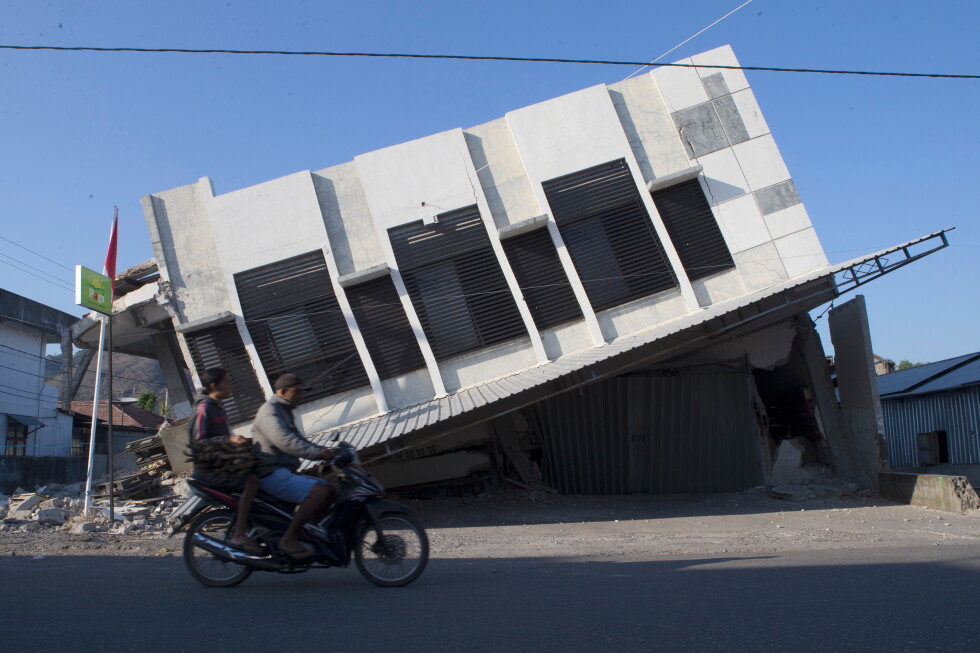
    On Friday, hundreds of residents gathered along the murky shores of the Lusi mud lake in Sidoarjo, East Java, to mark two decades since one of Indonesia’s longest-running environmental disasters displaced tens of thousands and claimed at least 14 lives. On May 29, 2006, scalding hot mud began erupting from the ground in Porong subdistrict, slowly swallowing entire villages, infrastructure, and farmland over the following months. To this day, the mud flow has never stopped.

    Scientific consensus points to commercial gas drilling conducted by local exploration firm PT Lapindo Brantas as the trigger for the eruption. This finding directly contradicts claims made by a senior Indonesian government minister at the time, who insisted the event was an entirely natural geological disaster. The 14 confirmed fatalities from the disaster came months after the initial eruption: one worker died when his excavator toppled off a containment levee in August 2006, and 13 more were killed when an underground gas pipeline stored beneath a holding dam ruptured and exploded that November.

    Decades of efforts by geologists and engineers to halt or even slow the relentless spread of mud have ended in failure. Multiple containment strategies, ranging from the construction of large earthen holding dams to targeted plugging of the eruption vent, have not stopped the flow. Today, the mud lake spans more than 2,700 acres, having engulfed 19 villages across three East Java subdistricts. Even after 20 years, white steam continues to billow from the small central vent, a visible reminder that hot mud is still pushing to the surface, and constant dredging is required to prevent the containment area from overflowing.

    The disaster uprooted tens of thousands of people, who lost not just their homes and livelihoods, but also ancestral land and historic burial grounds. For 55-year-old Sastro, a local resident who goes by a single name like many Indonesians, the disaster destroyed his former career as a factory worker when his workplace was submerged in the 572-hectare main mud sea. Today, he earns a living as a motorcycle taxi driver, shuttling curious tourists who now visit the site, which has evolved into an unlikely regional tourist destination. “As far as I can tell, things have been really tough ever since the Lapindo incident,” he told reporters.

    Shortly after the eruption, then-Indonesian president Susilo Bambang Yudhoyono ordered PT Lapindo Brantas to pay $420 million in victim compensation and fund government emergency response operations. While the company did disburse a small portion of the required funds, the majority of compensation eventually came from public emergency assistance programs. Two decades on, survivors continue to grapple with lingering, unresolved crises: ongoing environmental contamination, unaddressed public health concerns, tangled civil registration issues, and persistent uncertainty about their long-term future, according to Lucky Wahyu Wardana of the East Java branch of WALHI, the Indonesian Forum for Living Environment.

    Wardana emphasized that the decades-long tragedy must serve as a critical warning for national policy. “The Lapindo tragedy must serve as a lesson for the government to stop relying on extractive industries, as the costs of the impact far outweigh the benefits,” he said. “Not only have lives been lost, but children who once lived in the affected areas have lost their future and face health consequences. In addition, many parents have lost their sense of history regarding their origins and hometowns.” The commemoration on Friday brought survivors together to lay flowers, share prayers, and honor the lives and communities that were permanently erased by the unrelenting mud flow.

  • Sudanese medical group accuses paramilitary force of killing 27 in attack targeting civilians

    Sudanese medical group accuses paramilitary force of killing 27 in attack targeting civilians

    CAIRO – A deadly attack on unarmed civilian communities in Sudan has drawn international condemnation after a local humanitarian monitoring group documented the deaths of 27 people, including multiple elderly residents, during one of Islam’s most sacred annual holidays. The Sudan Doctors Network, a non-partisan group that tracks violent incidents across the conflict-torn nation, issued a statement Friday blaming fighters aligned with the paramilitary Rapid Support Forces (RSF) for the Thursday assaults on multiple small villages in the al-Murrah region. This area sits west of Barah town in North Kordofan, one of the war’s most active frontlines, and has been free of any organized military presence from the opposing Sudanese Armed Forces (SAF).

    The attack unfolded on the second day of Eid al-Adha, the “Feast of Sacrifice” celebrated by more than 1.8 billion Muslims worldwide, marking a violent interruption to a holiday focused on peace, community, and ritual. The monitoring group emphasized that the deliberate targeting of undefended civilian villages and the mass killing of residents in this brutal manner represents a clear, unambiguous violation of international humanitarian law. It added that the assault has further exacerbated the catastrophic humanitarian conditions that millions of Sudanese civilians have already endured throughout the 15-month full-scale conflict between the SAF and RSF.

    Tensions between Sudan’s national army and the RSF, which built their power and influence during decades of former authoritarian rule, boiled over into open war in April 2023. What began as clashes in the capital Khartoum quickly spread across the country, with the Kordofan region emerging as one of the conflict’s central battlefields. Fighting across the area has intensified in recent months, with both sides deploying drone technology to strike targets deep behind enemy lines. The RSF and its allied militias currently control most of Sudan’s western Darfur region, as well as large swathes of Kordofan along the border with South Sudan – both resource-rich territories holding extensive untapped oil reserves and profitable gold mines. Control of Barah, a strategic population center in North Kordofan, has been a repeated point of bloody clashes between the two warring factions for months.

    This latest attack comes on the heels of a string of mass casualty incidents across Sudan that have underscored the growing risk to civilians caught in the crossfire. Earlier this month, violent clashes between fighters aligned with the rebel Sudan People’s Liberation Movement-North and the Otoro tribe in South Kordofan left more than 61 people dead, including nine children. Just one week prior, a drone strike on a crowded open-air market in central Sudan killed 28 civilians and wounded dozens more.

    To date, the ongoing Sudanese conflict has officially been linked to at least 59,000 confirmed deaths, a toll human rights organizations and aid groups warn is a drastic undercount. More than 13 million Sudanese have been displaced from their homes, with roughly half forced to flee across international borders, and large swathes of the country are already facing catastrophic famine conditions. United Nations data indicates that more than 30 million Sudanese – nearly two-thirds of the country’s total population – require urgent life-saving humanitarian assistance. Both the SAF and RSF have been repeatedly accused by the United Nations and independent global human rights groups of committing widespread war crimes and atrocities against civilian populations, including systematic ethnic cleansing, extrajudicial executions, and widespread sexual violence used as a weapon of war. Aid access to most active conflict zones across Sudan’s vast territory remains severely restricted, meaning the true human cost of the conflict will likely remain unknown for years.

  • Coroner finds newborn baby’s death after Victorian homebirth was ‘preventable’, care provided was ‘deficient’

    Coroner finds newborn baby’s death after Victorian homebirth was ‘preventable’, care provided was ‘deficient’

    A preventable newborn death following a botched planned homebirth in regional Victoria has prompted a coroner to deliver scathing criticism of two private practicing midwives, whose substandard care directly contributed to the six-day-old infant’s death, according to newly released coronial findings.

    Coroner Dimitra Dubrow handed down her conclusions into the death of the infant, identified only as Baby R, at Victoria’s Coroner’s Court on May 29, outlining a series of critical failures that led to the tragedy that unfolded in August 2022.

    The case traces back to Baby R’s mother, a qualified midwife herself who sought an out-of-hospital birth after a traumatic 2019 emergency caesarean that left her with an intense aversion to hospital deliveries. After her first birth, she experienced a severe postpartum hemorrhage, though her first child survived in good health. For her second pregnancy, she researched homebirth options extensively and was cleared for a planned home delivery by private midwife Elizabeth Murphy, despite multiple clear red flags that disqualified her from the procedure under national clinical guidelines.

    Expert witness Dr. Andrew Woods outlined to the court that the mother carried multiple major risk factors: a previous caesarean birth, a suspected large (macrosomic) baby, a history of postpartum hemorrhage, and a prior traumatic birth experience. All of these factors placed her outside the eligibility criteria for planned homebirth, a conclusion Coroner Dubrow echoed in her final ruling. In hindsight, the second attending midwife, Marie-Louise Lapeyre, also acknowledged that the mother was not an appropriate candidate for homebirth.

    When labor progressed, complications emerged early, but the midwives failed to recognize signs of fetal distress, neglected consistent and appropriate monitoring of the baby’s heart rate, and delayed a critical transfer to a hospital. By 3:30 p.m. the same day, transfer was already long overdue, but the recommendation was not made to the mother, who trusted her midwives and would have agreed to transfer immediately if urged, according to Coroner Dubrow’s findings. It was only when Baby R’s condition deteriorated sharply that the mother was finally transferred to Bendigo Health, where clinicians performed an emergency caesarean. Born in critically poor condition due to perinatal hypoxia (oxygen deprivation), the infant was transferred to Melbourne’s Royal Women’s Hospital, where he died six days after birth.

    In her findings, Dubrow noted another contributing failure: Lapeyre told investigators that fatigue from an overnight birth she and Murphy had attended left her impaired when making decisions during Baby R’s labor, a risk that was left unmanaged by the pair. Dubrow ruled that the intrapartum care provided by both midwives was “deficient” and fell far short of the reasonable standards of midwifery practice. She confirmed that earlier transfer would have resulted in an earlier delivery and almost certainly prevented Baby R’s death.

    Speaking outside court on behalf of the grieving family, lawyer Isabelle McCombe described the profound and ongoing pain the family has carried over the 3 and a half years since Baby R’s death. “This inquest has never simply been a legal proceeding,” McCombe said. “It has involved revisiting our most painful and traumatic experiences; an incredibly gruelling process for the family.” She added that the loss will be a weight the family carries for the rest of their lives, noting that the coroner’s findings have brought a measure of clarity amid the family’s struggle with guilt, anger, grief and pain. “We thank the Coroner and her team for taking the time to understand our baby and the life he never had,” McCombe said.

  • WHO chief lands in Congo to address rare Ebola outbreak amid distrust and insecurity

    WHO chief lands in Congo to address rare Ebola outbreak amid distrust and insecurity

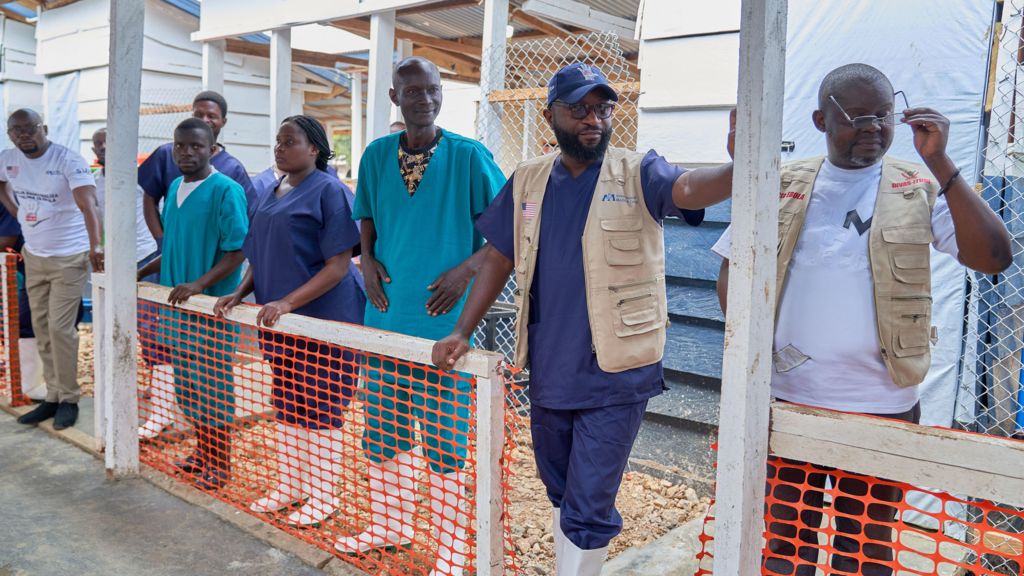
    KINSHASA, Democratic Republic of Congo — As frontline medical teams grapple with cascading challenges ranging from critical equipment shortages to community distrust and active armed conflict, World Health Organization Director-General Tedros Adhanom Ghebreyesus touched down in Congo’s capital Kinshasa late Thursday to personally observe the response to a rare strain of Ebola outbreak.

    In remarks to reporters gathered at Kinshasa’s airport, Tedros emphasized that his in-person visit was intended to send a clear message to affected communities: they are not facing this public health emergency alone. “Issuing directives from a comfortable office in Geneva is simple, but I am asking my staff to work side-by-side with local communities, and asking communities to take steps to protect themselves,” he explained. “My presence here reflects that shared commitment.”

    The outbreak, caused by the Bundibugyo Ebola virus — a subtype with no currently approved vaccine or targeted treatment — has already spread across three northeastern Congolese provinces, centered on Ituri province. As of this week, WHO data records 1,077 suspected cases and 238 suspected deaths across the affected region.

    Frontline response efforts have been severely undermined by a crippling lack of critical supplies. In multiple hard-hit areas, overstretched health workers have even been forced to rely on expired personal protective equipment, including medical masks, when interacting with suspected patients.

    Community tensions have further complicated containment work. Stringent infection control protocols for handling Ebola victims’ bodies directly conflict with long-held local burial traditions, sparking anger among residents that has boiled over into at least three separate attacks on local health facilities. Tedros highlighted two other major barriers to stopping the outbreak’s spread: mass population displacement caused by decades of armed conflict in the region, and widespread acute food insecurity.

    A day ahead of his arrival in Kinshasa, Tedros issued an urgent call for a ceasefire in the conflict-torn northeast, arguing that public health work cannot proceed amid ongoing violence. “We cannot build community trust or isolate infected patients while bombs are falling,” he said.

    Ituri province, located in northeastern DRC near the Ugandan border, has been plagued by sustained violence from the Allied Democratic Force (ADF), a rebel faction linked to the Islamic State, alongside a coalition of ethnic militias. Just weeks ago, early May attacks by the ADF left at least 40 people dead and destroyed dozens of civilian homes in the province.

    The outbreak has also been detected in North Kivu and South Kivu, provinces south of Ituri where the Rwanda-backed M23 rebel group holds control over major urban centers including Goma and Bukavu. Two cases of the virus have already been confirmed among rebel fighters in the region.

    Goma’s main airport, a critical logistical hub that coordinates most humanitarian aid deliveries into northeastern DRC, has remained closed since M23 forces seized the city in January 2025. The ongoing conflict in eastern DRC has already spawned one of the world’s worst humanitarian catastrophes, forcing more than 7 million people from their homes across the region.

    There was some positive development Thursday, however: a shipment of medical aid donated by the European Union arrived in Ituri, the epicenter of the outbreak. Hours earlier, the United States announced an additional $80 million in emergency assistance for the response, bringing Washington’s total commitment to the effort to more than $112 million.

    During his Kinshasa press briefing, Tedros also pushed back against travel restrictions imposed by multiple countries in response to the outbreak, urging nations against implementing broad entry bans. “There are effective ways to manage risk and screen cases without imposing harsh, broad travel restrictions, and as an organization, we do not encourage that approach,” he stated.

    The Trump administration recently drew criticism for its new restrictions: last week, it announced a temporary entry ban for non-US citizens and non-green card holders who have traveled to outbreak-affected nations including Congo, Uganda, and South Sudan within the previous 21 days. On Wednesday, the administration further announced that US citizens exposed to Ebola would be quarantined at a new facility in Kenya, rather than being repatriated to the United States for isolation. Congo’s neighboring countries, Uganda and Rwanda, have also recently closed their shared borders in response to the outbreak.

    Reporting for this story was contributed by Banchereau from Dakar, Senegal.

  • Kenya court halts opening of US Ebola quarantine facility in the country

    Kenya court halts opening of US Ebola quarantine facility in the country

    A Kenyan High Court has issued an interim order blocking the United States from launching a dedicated Ebola quarantine and treatment facility for American citizens on Kenyan soil, a decision that comes after widespread public anger over fears of heightened cross-border infection risks to the East African nation.

    According to a senior unnamed U.S. official, the 50-bed isolation center — whose exact location has never been made public — was set to be staffed entirely by U.S. medical personnel and scheduled to begin accepting patients as early as Friday. The facility was designed to treat and quarantine U.S. citizens who may have been exposed to the ongoing Ebola outbreak centered in the eastern Democratic Republic of Congo, which has also recorded a small number of cases in neighboring Uganda. The official confirmed that an initial team of trained medical staff, fully prepared in proper personal protective equipment use and evidence-based quarantine protocols, had already deployed ahead of the facility’s launch.

    “We’re going to be ready to take care of our citizens as needed,” the official said, noting that Kenya was chosen for its geographic proximity to the outbreak zone, which would allow for timely medical care for exposed Americans.

    The legal challenge that led to the court ruling was brought by the Katiba Institute, a Kenyan human rights organization, which argued in its petition that the unregulated arrangement posed “grave and imminent risks” to Kenya’s public health. Justice Patricia Nyaundi, the presiding High Court judge, ruled that all activities related to establishing, operating or approving any Ebola quarantine, isolation or treatment facility run by a foreign government on Kenyan territory would be suspended until the full case can be heard. The order also bars Kenyan authorities from allowing any Ebola-exposed or infected individuals into the country under the proposed U.S. program.

    As of Friday, Kenya — East Africa’s largest economy — had not recorded any confirmed Ebola cases linked to the current outbreak. Congolese health authorities report the outbreak has already caused at least 220 deaths and more than 900 confirmed infections, while Uganda has recorded seven cases and one death.

    The court’s decision follows days of growing public outcry and fierce criticism from domestic medical groups, after reports of the U.S. plan emerged. Many Kenyans took to social media to express anxiety, questioning whether the country had sufficient biosecurity and containment infrastructure to safely manage potential Ebola cases. The Kenya Medical Practitioners, Pharmacists and Dentists Union (KMPDU), Kenya’s largest doctors’ union, has emerged as the most vocal opponent of the plan, accusing the Kenyan government of conducting secret “backdoor negotiations” with Washington and demanding the immediate public release of all bilateral agreements related to the proposal.

    The union has questioned why Kenya, which is not at the epicenter of the outbreak, was selected to host the facility, and has condemned the plan as a violation of Kenya’s national sovereignty. Echoing widespread claims that Washington refused to accept Ebola patients on U.S. soil, the union stated: “If it is too dangerous for America, it is too dangerous for Kenya.” KMPDU Secretary General Davji Bhimji Atellah said the union “will not sit back and watch Kenya be treated as a containment colony for a lethal pathogen that we did not generate.”

    The union also raised strong objections to plans to staff the facility exclusively with U.S. personnel rather than local Kenyan healthcare workers, warning that it would create a discriminatory “apartheid healthcare model” on Kenyan soil that would not be tolerated. The union issued a 48-hour ultimatum to the Kenyan government, demanding full disclosure of all negotiation details or face a nationwide strike by medical professionals. “Kenya is a sovereign republic, not a geopolitical isolation ward,” the union added.

    Kenyan President William Ruto has not directly addressed the controversy over the U.S. facility, but he addressed broader global health cooperation during a meeting with foreign diplomats in Nairobi on Thursday. “We agreed on the importance of cooperation and avoiding isolationism, recognising that public health threats do not respect borders and require coordinated regional and global action,” Ruto said, adding that “Kenya will continue to act transparently, responsibly, and decisively to protect lives while contributing to regional and global health security.”

    Shortly after Ruto’s meeting, a spokesperson for U.S. Secretary of State Marco Rubio confirmed that Rubio had spoken with Ruto by phone on Thursday. The spokesperson added that the U.S. plans to provide $13.5 million (£10.7 million) in aid to support Kenya’s domestic Ebola preparedness efforts, part of a larger $112 million U.S. commitment to regional outbreak response across Central and East Africa. The Kenyan government has not yet issued any direct official comment on the proposed facility itself.