
As the NRL finals series draws near, South Sydney star Latrell Mitchell has taken a visible step forward in his injury recovery, making an appearance at Monday’s wet weather training session to complete light jogging drills – a development that has injected cautious optimism into the Rabbitohs camp around his potential return this season. However, his teammates have confirmed that a comeback for this weekend’s high-stakes clash against the New Zealand Warriors remains highly unlikely. Mitchell has been sidelined since South Sydney’s Round 11 defeat to the Dolphins on May 15, when a back injury triggered a lingering nerve issue that ultimately spread to cause a persistent calf complaint that has kept him off the pitch for months. Rabbitohs winger Campbell Graham, who is also managing his own calf injury, shared the latest update on Mitchell’s recovery after joining the star playmaker for his light training session Monday. “I can’t see him suiting up this week, and I don’t have a clear timeline for when he’ll be back, but whenever he’s available, we’ll welcome him with open arms,” Graham told reporters. “We only did a short session of jogging and stride outs, and I don’t have a full read on his physical readiness for match play just yet, but there’s definitely still hope he’ll pull through and get back on the pitch this year. It’s really good to see the big fella out there putting in the work – it’s clear he’s one step closer to a possible return. “Any time he can pull on the jersey for us is a win, and I’ve been really impressed with how he’s handled this whole tough period. I know firsthand how demoralizing it can be when you’re stuck on the sidelines, not knowing when or if you’ll be able to play again. It can feel like there’s no end in sight, but Mitchell has handled it like a true professional. He’s stayed in great shape even when he couldn’t do much on-field training, and he’s made all the right choices off the pitch to make sure he’ll be ready the second he gets the green light to return. His hunger to get back out there with the group is a really great example for all of us, too.” Graham is no stranger to the frustration of injury layoffs himself, after a calf injury forced him to miss South Sydney’s Round 23 win against Parramatta Eels. Initially, there were concerns the winger would be sidelined for multiple weeks, but he pushed through to return in last weekend’s critical clash against the Canterbury Bulldogs, a win that has all but locked in South Sydney’s spot in the 2024 NRL finals. “Coming back so soon did carry some risk, but this was such a big game for us, and I knew I had to be out there to help us get the result we needed,” Graham explained. “I’m just glad we walked away with the two points, and even happier that I got through the match without any new issues. “This is going to be an ongoing thing I manage through training load management for the rest of the season, but getting that first match back under my belt was a huge step in the right direction. I have full faith in our club’s medical staff to help me manage this moving forward, so I can stay on the pitch for the games that matter most.”
作者: admin
-

Japan’s economy manages 1.1% growth rate despite headwinds
New government data released Monday shows Japan’s economy recorded slower-than-expected growth in the April-June 2026 quarter, as persistent domestic consumer weakness and geopolitical energy market disruptions offset export gains driven by global automotive and AI-linked semiconductor demand.
Cabinet Office figures indicate that real gross domestic product (GDP), the total adjusted value of all goods and services produced across the nation, expanded 0.3% in the second quarter compared to the first three months of the year. When annualized — a metric that projects what growth would look like if the second quarter’s pace held for 12 full months — the expansion hit 1.1%, a marked pullback from the 2.1% annualized growth recorded in the January-March period.
Domestic demand remained a major drag on overall growth: private consumption, which accounts for a large share of Japan’s economic activity, fell 1.2% quarter-over-quarter. This pullback comes amid persistent cost-of-living pressures that have hit household budgets particularly hard. A sharply weakened yen has raised the cost of imported raw materials and energy, pushing up domestic prices while wage growth has stayed far too stagnant to offset these increases for most consumers.
On the export side, growth slowed to just 0.5% in the quarter, but the sector still delivered critical support to overall GDP. That modest expansion was fueled by sustained global demand for two of Japan’s most prominent exports: passenger vehicles from industry leaders including Toyota Motor Corp. and Honda Motor Co., and semiconductors, where global appetite has surged amid the rapid expansion of artificial intelligence development that requires high-powered chip capacity. The weaker yen has also worked in favor of large Japanese exporters, as it inflates the value of their overseas earnings once converted back to yen. Government consumption bucked the domestic trend, rising 1.6% quarter-over-quarter.
The biggest headwind facing Japan’s economy this year stems from the ongoing war in Iran, which has disrupted critical oil shipping lanes through the Strait of Hormuz. As a resource-poor nation that imports nearly all of its crude oil, Japan is disproportionately vulnerable to spikes in global energy prices. The partial blockage of the key Persian Gulf shipping route, which carries the majority of Middle Eastern oil exports to Asian markets, has pushed up crude prices substantially: Brent crude currently trades around $88 per barrel, up from roughly $65 per barrel a year ago, though prices have pulled back from earlier this year when they surged above $110 per barrel. In response to the market crunch, Japanese authorities have released strategic oil reserves and are working to secure alternative supply routes.
Monday’s growth figures fell short of analyst forecasts, deepening concerns over the trajectory of Japan’s economy this year. On currency markets, the U.S. dollar traded near the 160 yen mark shortly after the data release, hovering just off 159 yen — a level well above the 145 yen exchange rate recorded one year earlier. While the weak yen benefits exporters, it erodes household purchasing power by raising import costs, creating a persistent policy dilemma for Japanese officials.
Political pressure is also mounting for Prime Minister Sanae Takaichi, who has made restarting sustained economic growth a central policy pledge. While Takaichi’s approval ratings remain higher than those of many recent predecessors, they have trended steadily downward in recent months as public frustration over rising prices grows.
Despite the weaker-than-expected second quarter reading, the Bank of Japan recently adjusted its full fiscal year growth outlook upward, raising its projection to 0.6% for the 12-month period ending March 2027, up from an earlier forecast of 0.5%.
-
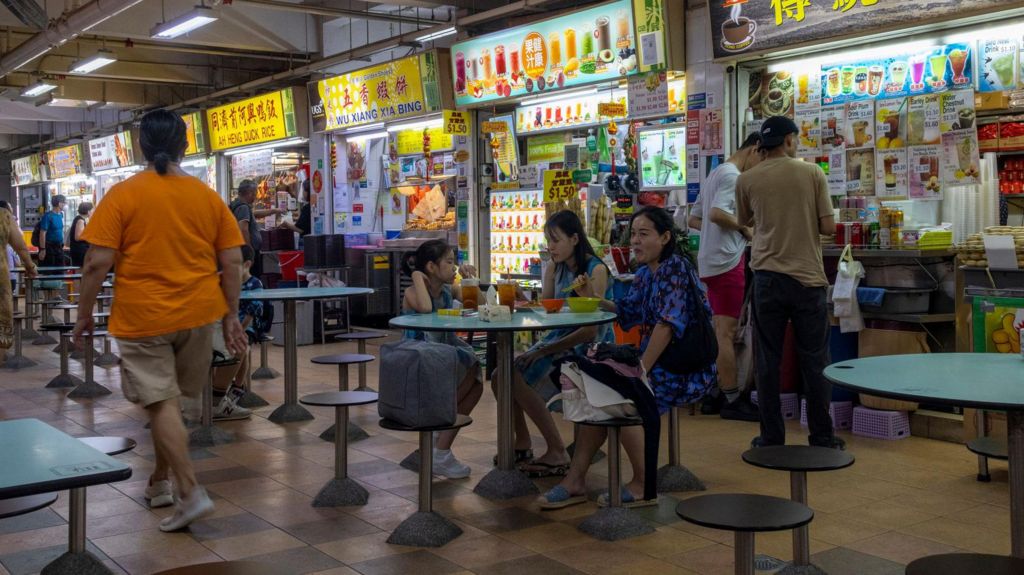
Singapore police investigate assault on elderly man who patted girl’s head
A public assault incident at a Singaporean food court has ignited fierce online debate across the city-state, after security camera footage of the confrontation spread widely across local social media over the weekend.
The incident, which took place on a Saturday at a shopping mall food court, began when a 73-year-old elderly man patted a young girl on the head as he walked past the table where the child was seated with her parents. What started as an apparently innocent, casual gesture quickly escalated into violence: the girl’s father, visibly enraged by the unsolicited contact, launched a physical attack that ended with the elderly man thrown forcefully onto the hard food court floor.
Surveillance footage from the food court, originally published to the social media pages of local stall Bei-Ing Wanton Noodle by the elderly man’s son, quickly went viral after being shared. In the original post, the victim’s son wrote to request public help identifying the attacker, noting that his 73-year-old father already has pre-existing chronic injuries to his legs and hip. Even though the 40-year-old attacker reportedly approached the elderly man after the incident, offered an apology and bought him a drink to make amends, the victim has since developed severe new back pain from the fall. The post emphasized that a simple apology and a complimentary drink cannot erase the physical harm and discomfort the elderly man now endures. In a subsequent update, the victim’s son expressed gratitude to Singaporean police for their rapid response to the case, adding that the family sincerely hopes official investigation will deliver a just outcome.
Public reaction to the viral clip has been overwhelmingly critical of the attacker’s actions. While a small contingent of online commentators has noted that the elderly man should have asked the girl’s parents for permission before touching the child, the vast majority of observers agree that the physical assault was a drastic overreaction to a gentle head pat.
By Sunday night, Singaporean police announced they had successfully identified the 40-year-old man connected to the assault. In an official statement, law enforcement urged the public to avoid spreading unconfirmed speculation about the incident or its surrounding context, asking residents to allow investigators to complete their work and establish an official, accurate account of what occurred.
-

Piastri and Norris harmony ‘wasn’t a given’ after title scrap, says boss
The 2025 Formula 1 season delivered one of the most tense intra-team title fights in recent memory, as McLaren teammates Oscar Piastri and Lando Norris locked horns repeatedly in their pursuit of the drivers’ world championship. Now, as the 2026 season gets underway under groundbreaking new technical regulations, McLaren team principal Andrea Stella has opened up about the surprising shift in the pair’s dynamic, admitting that the strong working harmony they have built this year was far from guaranteed after last year’s on-track clashes.
Piastri, the young Australian driver, held a commanding 34-point lead in the 2025 championship standings for much of the campaign, leading the field across 15 of the season’s 24 races heading into the final round at Abu Dhabi. But a late-season charge from both Norris and Red Bull’s Max Verstappen eroded his lead, leaving Piastri to finish the season third overall, while Norris claimed his maiden world championship title.
The close title fight spilled over into multiple on-track incidents between the two McLaren drivers. Over the course of 2025, the pair collided at four separate Grand Prix venues: Montreal, Monza, Singapore, and Austin, forcing the McLaren team to repeatedly intervene with official team orders and internal guidelines dubbed “papaya rules” to manage their rivalry. Following such a season-long, high-stakes battle that went all the way to the final race, many expected lingering friction to damage the pair’s working relationship heading into 2026.
Speaking at a recent public Q&A event hosted by the team, Stella shared that the opposite has occurred. Far from creating a rift, the 2025 title fight has actually strengthened the bond between Piastri and Norris, both with each other and with the broader McLaren organization.
“An aspect I’m really enjoying about our drivers is the way they’re working together,” Stella told attendees. He noted that while Norris’ positive mindset after claiming his first title was perhaps predictable, Piastri’s response to finishing third after leading for most of the year was far more encouraging than the team could have anticipated. “Instead, (Piastri) has relied even more heavily on the team to accelerate his development, both on and off the track. It wasn’t a given that, after last year, when they found themselves battling for the world title right up to the final race, the harmony they’d built would remain intact.”
Stella also praised both drivers for their rapid adaptability during the turbulent opening rounds of the 2026 season, which is being run under a sweeping set of new technical regulations that have reshaped car design and performance. For every driver on the grid, the shift to the new generation of single-seaters has required major adjustments, not just to driving style but also to how athletes approach understanding and unlocking the full potential of the all-new power units at the heart of the 2026 cars.
“I am very pleased with how our driver line-up is performing in this early part of the 2026 season,” Stella added. As McLaren looks to defend its position as a title contender in the new regulatory era, the unexpected resilience of the relationship between its two star drivers has emerged as an unexpected early strength for the papaya-clad outfit.
-
Winning back walls from gangs, artists fill El Salvador’s towns with color
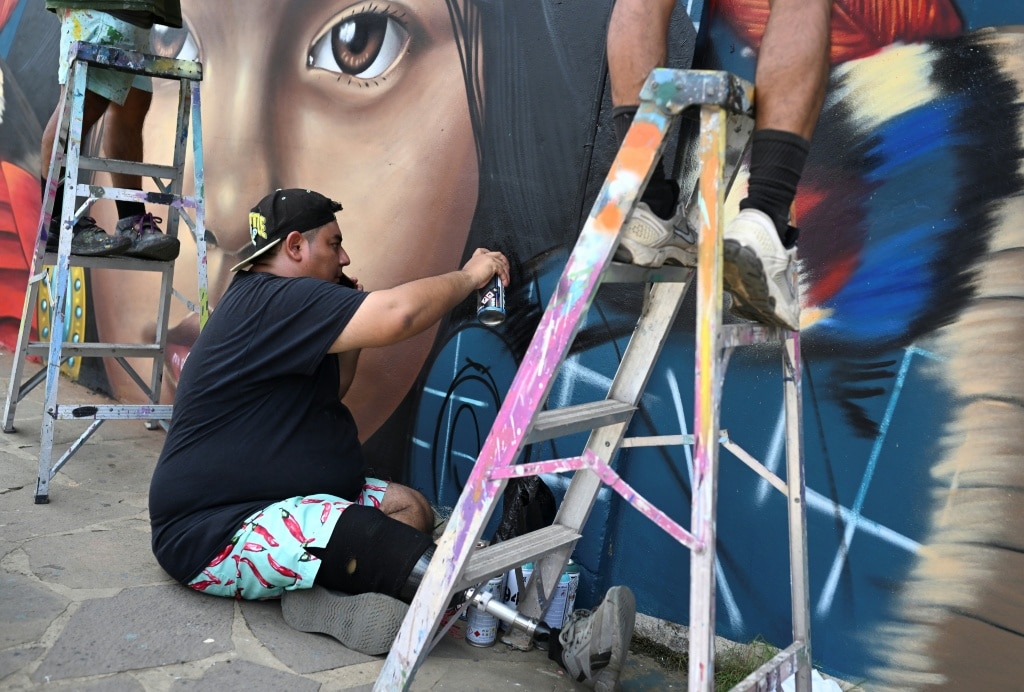
Nestled amid mist-shrouded coffee-growing mountains in western El Salvador, the cobblestone lanes and terracotta-roofed homes of Concepcion de Ataco bear little resemblance to the tense, violence-plagued streets that once defined swathes of the small Central American nation. Today, the concrete walls that gangs once used to mark their violent territorial boundaries are covered in vibrant, sweeping murals: sleek jaguars poised in jungle undergrowth, delicate native wildflowers, pre-Columbian inspired portraits, and colorful tropical birds, all brought to life by dozens of spray paint cans in the hands of local and regional artists.
This transformation is the work of Pigmen Trip, a traveling mural festival now in its eighth year, founded and organized by 31-year-old Salvadoran artist Isaac Sosa. For nearly a decade, Sosa and his fellow muralists navigated the constant threat of gang harassment and violence to bring art to marginalized neighborhoods. Working in gang-controlled zones was once a frightening high-stakes endeavor, but a dramatic nationwide shift in security has opened new possibilities for the movement.
Since President Nayib Bukele launched a sweeping national anti-gang offensive in 2022, gang influence across El Salvador has collapsed dramatically. The crackdown has drawn sharp international criticism, however, with human rights NGOs documenting widespread allegations of arbitrary detentions, extrajudicial violence, and other abuses that may amount to crimes against humanity. Despite these controversies, for many Salvadorans living in former gang strongholds, the decline in gang activity has brought palpable new freedoms.
“With this change, this rebirth we are experiencing as a country…it’s a different atmosphere, more peaceful, more enjoyable, and with greater freedom of expression,” Sosa said. Standing before a fresh canvas of concrete in Ataco, he added: “Years later, we won back the walls from the gangs.” For Sosa, mural painting is far more than public art—it is a magical tool capable of driving deep social transformation, turning symbols of intimidation into canvases that celebrate local identity and community.
Since the festival’s launch, participating artists have created more than 200 murals across the country, bringing together creators from across Latin America, including Colombia, Mexico, Brazil, Peru, and Argentina. For veteran participants like 36-year-old Darwin Flores, the shift in security has transformed every step of the creative process. Before gangs were weakened, painting in so-called “hot zones” required extreme preparation: artists had to verify every detail of their location and their team to avoid running afoul of territorial rules. Now, Flores says he can walk into any neighborhood, even former gang strongholds like La Campanera, without fear.
The new atmosphere has also opened opportunities for emerging creators like 29-year-old Cristian Juarez, who paints with a prosthetic after losing his right leg in an accident 11 years ago. Juarez echoes Flores’s experience: “It wasn’t so easy to paint back then, but now everything is very different.” Standing before his own mural—a striking portrait of a young woman in a feathered headdress—Juarez paused to mourn the many local artists who fell victim to gang violence and disappeared in recent decades.
For long-time residents of the towns hosting the festival, the colorful new murals represent far more than aesthetic change. Cristian Lara, a 50-year-old local merchant, whose home now features a custom mural painted by festival artists, called the work a blessing for his community. “There are new winds of change in El Salvador,” he said, a sentiment shared by the artists who have turned symbols of fear into beacons of hope for a nation rebuilding.
-

SA man secures ‘life-changing’ Keno win, mystery $20m Hervey Bay winner found
Across Australia, three lucky lottery players have recently walked away with multi-million dollar windfalls, transforming their financial outlooks in an instant. The first of these new millionaires, a resident of Royal Park in Adelaide’s inner western district, secured a $1,244,714.30 Keno Spot 10 jackpot, and opened up about the surreal chain of events that led to his win.
The winner shared that he had no inkling of his good fortune until he remembered to check his ticket after leaving the venue. When he pulled up his ticket details online and saw all his numbers matched, he immediately rushed back to the club to confirm the result, which turned out to be legitimate. The winning entry used a set of randomly generated numbers, a choice that ended up netting him one of the biggest Keno prizes in the region this year.
Calling the unexpected windfall completely life-changing, the winner revealed he and his family have already consulted a professional financial advisor to map out long-term plans for the money. “Once it all settles and it feels real, we’ll be able to have more of an idea of what we’ll do,” he explained in an interview after the win.
The winning ticket was purchased at Seven 22, a local community club in Beverley. Club manager Kelli Pearce said the entire venue erupted in excitement when the win was confirmed, with even all the kitchen chefs stepping out to congratulate the new millionaire. Notably, the staff member who processed the ticket initially misread the prize amount as $12,000, only to realize the actual total was more than 100 times that initial estimate.
Meanwhile, hundreds of kilometers north in Queensland, a Hervey Bay woman took home half of a $40 million Oz Lotto jackpot, splitting the top prize with a Hobart man for a $20 million individual payout. The woman checked her ticket while heading to work on a recent Thursday morning, and was stunned when she realized the prize value was far higher than she first thought.
She explained that she stopped at a local store to check her ticket after seeing that an unregistered ticket had won the shared jackpot, and initially thought staff told her she had won $20,000, before noticing a handful of extra zeroes on the screen. The winner called her windfall a massive boost for her entire family, and despite now being a multi-millionaire, she says she has no plans to step away from her job. “I just can’t believe it. I’m not sure I can walk at the moment. My whole body is shaking,” she told reporters moments after confirming her win.
A third winner from Brisbane also claimed a seven-figure prize in the recent Saturday Gold Lotto draw, taking home $1,086,418.14. This winner, who has played the same set of personal lucky numbers for years, said the win came as a complete shock, and he plans to use the money to improve the lives of his family and close friends. “I can do a lot for family and friends … it’ll make life easier for sure,” he said.
This streak of big wins cements Brisbane’s western suburbs as one of Australia’s luckiest regions for lottery players this year: this latest prize marks the fourth major jackpot win in the area in 2024, bringing the total collective winnings for local players to more than $43 million.
-

NSW government reveals ‘nation-leading’ data centre pathway
The New South Wales (NSW) government in Australia has announced a sweeping set of landmark reforms designed to accelerate approval for new data centre projects across the state, conditional on developers meeting rigorous public benefit and environmental standards that protect everyday consumers and local communities. Unveiled on Monday, the NSW Data Centre Policy Framework introduces a streamlined assessment pathway for proposals that align with six core principles, headlined by a requirement for operators to adhere to world-class environmental and energy efficiency benchmarks.
Beyond environmental standards, approved projects will be required to cover all their own infrastructure costs without passing a net financial burden onto residents or local communities. Developers must also fully fund expansions to local water and energy supply networks, deliver upgrades to local community infrastructure and public amenity, invest in domestic supply chains, and commit to ongoing workforce training and local job creation.
NSW already hosts 65% of Australia’s total existing data centre infrastructure and future development pipeline. State government officials argue that continued targeted investment in the fast-growing tech sector has been a key bulwark against economic recession, amid ongoing global economic turbulence triggered by conflicts in the Middle East. Currently, the state is home to 19 operational data centres valued at a total of AU$50.3 billion, with more than 60 additional facilities already under construction.
However, the rapid expansion of the sector has not been without controversy. Proposed and existing projects across NSW have faced significant community pushback in recent years, driven by complaints over excessive noise pollution, environmental degradation, and strain on local public resources. High-profile areas facing community opposition include Katoomba in the Blue Mountains, North Sydney, and Moss Vale. Earlier this year, the NSW Parliament launched a formal inquiry into the sector’s impacts, holding public hearings through July.
NSW Environment Minister Penny Sharpe emphasized that the new framework strikes a careful balance between enabling industry growth and upholding strong environmental protections. “In NSW, this is consistent with where the federal government is at,” Sharpe told reporters. “This is about renewable energy. We’re currently moving our energy system away from coal-fired power stations that are going to be retiring in the next 15 years.” Acknowledging that data centres are inherently large energy users, Sharpe noted that the new regulatory system is designed to manage that demand responsibly. The framework requires operators to develop formal drought contingency plans and prioritizes the use of recycled water for facility operations.
NSW Treasurer Daniel Mookhey echoed the government’s commitment to ensuring the sector supports rather than burdens households. “Data centres need to pay their own way,” he said. “They need to bring additional power and additional water to offset the demand but also to pick up some of the slack that’s otherwise would fall to households.” Under the new guidelines, qualifying projects that meet all six principles will receive a final development assessment within 75 days, a dramatic reduction from the previous timeline that could stretch to two years. The state’s Independent Pricing and Regulatory Tribunal will also conduct a separate review of water pricing frameworks for data centre operators to ensure fair cost allocation.
In a complementary move to advance the state’s technology leadership, the reforms also include plans to establish a new AI Office within the NSW Cabinet Office. The new body will be tasked with strengthening and accelerating the government’s response to both the economic opportunities and regulatory challenges presented by the rapid expansion of artificial intelligence technologies. The package of reforms positions NSW as a national leader in balancing tech sector growth with public accountability and environmental stewardship at a time of accelerating national transition to renewable energy.
-

Sabbath cafe clash lays bare Israel faultlines
On a recent Saturday in central Jerusalem, two competing crowds of Israelis faced off on a sidewalk outside Cafe Basimta, a small coffee shop whose decision to open on Shabbat — the weekly Jewish day of religious rest — has turned it into a flashpoint for decades of simmering tension between the country’s secular majority and growing ultra-Orthodox minority. For Alma Ronen, a 20-year-old soldier who has served continuously on Israel’s frontlines in Gaza and southern Lebanon for more than two years, the confrontation was personal. Dressed in casual civilian clothes rather than military uniform, she came to the counter-protest to demand the simple right to enjoy an outdoor coffee on her day off, pushing back against ultra-Orthodox objections to the cafe’s operating hours.
Since June, weekly protests have become a routine outside Cafe Basimta, which sits just a short distance from an ultra-Orthodox neighborhood. Dozens of ultra-Orthodox men and boys, clad in the traditional modest black garb of their community, march toward the shop each week, chanting “Shabbat!” as they go. Younger protesters often amplify the outrage, screaming and making dramatic gestures to signal their disapproval of the business opening on the holy day. Secular activists have shown up in equal force each week to counter the demonstration: they blow whistles to drown out religious chants, wear provocative pink pins displaying a middle finger, and hold up banners declaring “Our Holy Right to Drink Coffee.”
This public street feud is far more than a local dispute over a coffee shop. It lays bare the deep cultural and political divides splitting Israeli society, just weeks ahead of the country’s October 27 parliamentary elections, which will serve as a critical referendum on Prime Minister Benjamin Netanyahu’s decade-long leadership. For nearly 20 years, Netanyahu — though personally secular — has built his political power on a coalition alliance with ultra-Orthodox parties. As leader of the most right-wing government in Israel’s history, he has steadily expanded the community’s political influence and policy clout across the country.
The most explosive point of tension for secular Israelis right now is the long-standing exemption of ultra-Orthodox students from mandatory military service, a policy that has been expanded under Netanyahu’s watch, and grants generous government stipends for full-time religious study. This exemption has become far more bitter in the year since Hamas’ October 7, 2023 attack, which left Israel in a sustained regional conflict that has stretched its military thin and required widespread service from secular Israelis. “I feel anger in my heart that only some people must go to the army and serve,” Ronen said. “These people only care about their own lifestyle and are not open to any opinion but their own.”
Amit Yair, a 77-year-old secular Israeli waiting in a growing line to order coffee at the shop, echoed that frustration in blunter terms. “The Orthodox are parasites. You can’t say any other word for this,” he said. “All they want is money from the government. They say it’s God’s land but they want to kill everything that is here to make it a Halachic state,” a government ruled exclusively by Jewish religious law.
While the cafe was founded by a supporter of missionary activity aimed at converting Jews to Christianity, a movement widely condemned across Jewish communities, its secular customers say the owner’s identity is irrelevant to their fight. What matters, they say, is the principle of individual choice.
For the ultra-Orthodox protesters, the fight is equally rooted in principle. One protester, who stopped to debate a counter-demonstrator, explained that his community chose to settle in the area to live a religious lifestyle, and public businesses open on Shabbat threaten that way of life. “I don’t want my kids to leave the house and see a coffeeshop open,” he said. “It’s not a matter of not respecting you, but this is attacking my family’s faith. When you say you’re a Jew, that means a commitment.” Most ultra-Orthodox protesters declined to speak to journalists, noting that engaging with media would itself violate the rules of Shabbat.
Demographic and cultural shifts are amplifying this tension, experts say. A 2023 study from the Jewish People Policy Institute found that 53 percent of Jewish Israelis identify as either somewhat or fully secular, and Israeli society has gradually grown more liberal in recent decades: more businesses operate on Shabbat, public transit runs on the holy day in more areas, and LGBTQ rights have gained wider public acceptance. But at the same time, the ultra-Orthodox community has one of the highest birth rates in the developed world, meaning it makes up a growing share of Israel’s total population, shifting the demographic balance sharply in the opposite direction.
Shlomit Ravitsky Tur Paz, head of the religion and state program at the Israel Democracy Institute, explained that public anger toward the ultra-Orthodox has surged because of their role in Netanyahu’s government. The prime minister pushed through a controversial plan to weaken the country’s judiciary last year, and has overseen the ongoing regional war since October 7. “The ultra-Orthodox sit in the government and they are part of the decision to keep the war going, but they’re not paying the price with their children being drafted or the blood of their children,” she said.
Netanyahu’s main opposition challengers, led by former Israeli military chief Gadi Eisenkot, have made ending ultra-Orthodox military exemptions a central campaign promise, tapping into widespread secular anger over the policy. Aya Lewkowicz, an activist with the secular Pink Front movement who traveled from the overwhelmingly secular city of Tel Aviv to support the cafe, summed up the opposition’s position: “Everyone should have the freedom to rest the way they want to rest and not have it be dictated by a small minority that gets backing from the government,” she said.
After hours of noisy confrontation, the ultra-Orthodox protesters departed the area, with plans to return for another demonstration next Saturday. But as the cafe’s standoff gains national attention, the line of secular customers waiting to buy coffee grows longer every week, a quiet signal of how this local clash has galvanized resistance to growing religious influence across the country.
-

AFL 2026: Melbourne midfielder Tom Sparrows turns back on go-home factor
In a major announcement that has shaken up this season’s AFL contracting landscape, star Melbourne Demons midfielder Tom Sparrow has confirmed he will remain at the club after signing a blockbuster five-year contract extension, turning down a lucrative and emotionally charged offer to return to his native South Australia with Port Adelaide.
The 26-year-old, who was part of Melbourne’s 2021 premiership-winning squad, has emerged as one of the league’s most improved players in 2024, a standout contributor for a resurgent Demons side rebuilding under new senior coach Steven King. For months, Port Adelaide had actively courted Sparrow, framing a potential move as a homecoming for the South Australian-born talent that would bring him closer to his roots. But after weeks of speculation, the midfielder has formally committed to his long-term home at Melbourne, choosing to continue building his career in the Demons’ iconic red and blue guernsey.
Melbourne’s list manager Tim Lamb welcomed the news, praising Sparrow’s evolution both on and off the field. “We’re thrilled that Tom has decided to extend his contract and continue his career at Melbourne,” Lamb said in a statement. “Tom has grown into one of the competition’s most impactful midfielders, while also establishing himself as a valued leader within our club. We look forward to seeing what Tom will continue to bring to our program over the next five years.”
The contract call marks the second blow Sparrow has delivered to Port Adelaide in just seven days, adding extra intrigue to the ongoing AFL trade and contracting cycle. For the Demons, the retention of one of their key midfield talents comes as the club fights to lock in a top-four finish on the AFL ladder this season. Melbourne is set to face off against the Western Bulldogs at the iconic Melbourne Cricket Ground this weekend, though the side is widely expected to take the field without key forward Jacob van Rooyen. The young spearhead received a suspension for high contact on Port Adelaide defender Aliir Aliir, ruling him out of the upcoming round clash.
-
As machinery removes rubble, hopes for survivors from Colombian quake dwindle
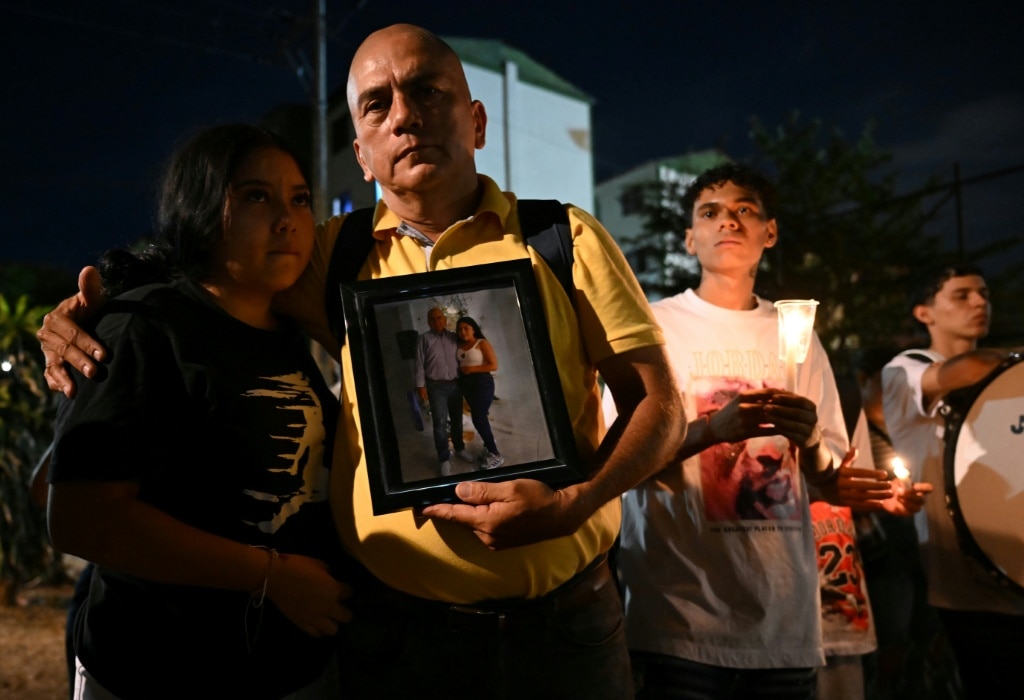
Seven days after a devastating 7.4 magnitude earthquake tore through western and southwestern Colombia, heavy machinery rumbles across flattened urban neighborhoods as rescue and cleanup crews work through rubble to locate any remaining survivors. Even as official prospects of finding people alive under collapsed structures fade, volunteer rescuers refuse to abandon their search, amid a growing national crisis that has already claimed hundreds of lives and left tens of thousands homeless.
The quake, which struck last Monday, has killed nearly 300 people, destroyed thousands of residential and commercial buildings, and left at least 140 residents unaccounted for, according to Colombian government figures. Of the regions impacted, the western city of Pereira and southwestern hub Cali have suffered some of the worst damage. In Pereira, one of the epicenters of destruction, 30-year-old nursing student Andres Cano stood alongside fellow volunteer rescuers clad in orange safety vests and helmets, and acknowledged the grim shift in expectations. “The hope of locating survivors is much lower now,” Cano told reporters. “You feel exhausted, it’s mostly mental fatigue.”
The disaster comes as an early, critical test for Colombia’s new presidential administration: right-wing President Abelardo de la Espriella was sworn in just three days before the earthquake hit. Already, the new leader has moved to secure international support, asking United States President Donald Trump on Saturday to temporarily suspend bilateral tariffs to ease the country’s recovery burden.
Across impacted communities, the scale of displacement remains staggering. Officials confirm nearly 27,000 homes were completely destroyed, leaving thousands of survivors without permanent shelter. Many have been forced to sleep on mattresses and makeshift beds in open public spaces, after evacuating damaged or structurally unsound buildings. To streamline aid efforts, emergency shelters have set up QR codes that allow affected residents to digitally report missing loved ones or property damage. In the hardest-hit urban zones, dangerous buildings at risk of secondary collapse are marked with large red X’s, blocking pedestrian access to avoid further injury.
In Cali, Colombia’s third-largest city, 41-year-old lawyer Jorge Leon stood beside a yellow moving truck loaded with the few belongings he managed to salvage from his ruined home, describing the disorienting pain of losing everything. “It feels like I’m living in a movie or a dream; I can’t quite grasp it,” Leon told Agence France-Presse. “It hurts to have to start all over again.” Cali mayor Alejandro Eder has projected that full reconstruction of the city will cost a minimum of $3.2 billion, a staggering price tag for a country already grappling with economic constraints.
While the Colombian government has already received tens of millions of dollars in emergency aid from international partners including the United States and multilateral institutions such as the World Bank, officials warn that full recovery will take years. On the wall of a collapsed five-story apartment building in one hard-hit neighborhood, official rescuers marked a symbol indicating search operations for survivors had concluded: a red V crossed by a horizontal line. But volunteer teams have rejected calls to stand down, even though global emergency response standards hold that the chance of survival after 72 hours trapped under rubble drops drastically.
Leading one volunteer rescue team called “Valentia” — Spanish for “courage” — 58-year-old university professor Juan Carlos Tabares says his team will keep searching to hold onto hope. “Although we’ve been told that several days have passed, we continue to search for lives because we want to keep hope alive,” Tabares said. As backhoes, cranes and bulldozers continue to clear debris across the impacted region, the quiet resolve of volunteers stands alongside the grief of families who have lost everything, as the country begins the long, slow process of rebuilding.