In a quiet unemployment office in 1990s London, a chance encounter between civil servant Sue Tilley and legendary portrait painter Lucian Freud reshaped the course of both art history and Tilley’s life. This June, one of the most celebrated works born from that collaboration is set to hit the auction block, carrying a staggering pre-sale valuation that could cement its place among the most valuable modern art pieces ever sold.
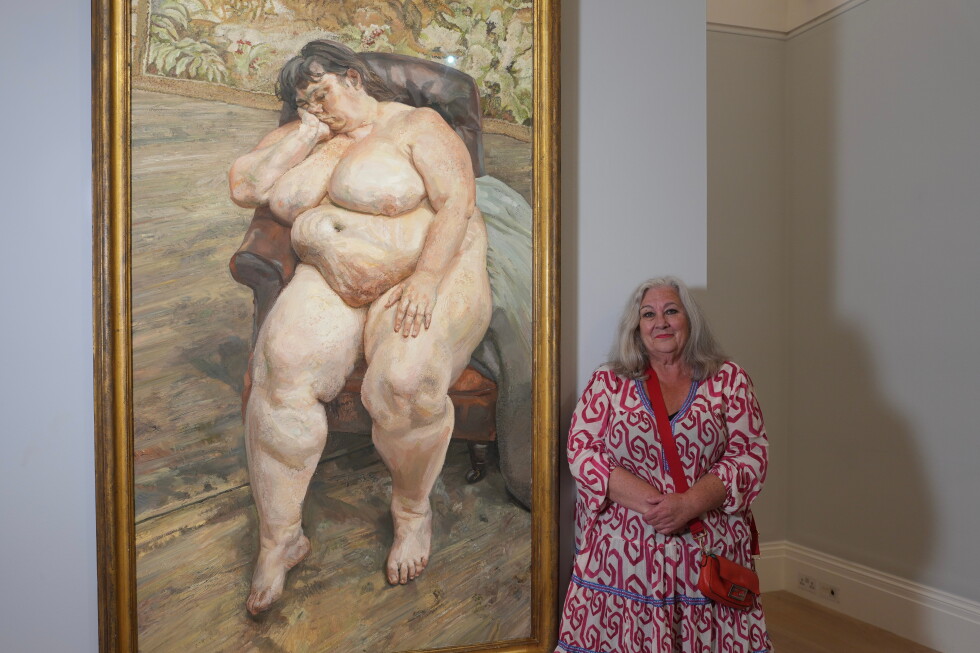
Titled *Sleeping by the Lion Carpet*, the 1996 work is the final of four large-scale reclining portraits Freud painted of Tilley. Sotheby’s will offer the 2.3-meter-tall nude piece at auction on June 24, with experts projecting it will sell for between £25 million and £35 million (equal to $33 million to $47 million). For 69-year-old Tilley, who never profited from the multi-million-dollar auction sales of the other portraits Freud made of her, the moment is not about regret—it is about the quiet thrill of earning an unplanned place in art history.
Grandson of pioneering psychoanalyst Sigmund Freud, Lucian Freud built his legacy as the 20th century’s most acclaimed British portrait painter, celebrated for his thick, textured application of oil paint that captured unflinching, yet warm, depictions of his subjects’ textured skin tones. Over a decades-long career, he painted everyone from Queen Elizabeth II to close friends, family, and fellow creatives, favoring intimate, revealing portraits of people in his personal circle. His reputation has only grown in the years following his 2011 death at age 88, with his works consistently breaking auction records. In 2008, an earlier Freud portrait of Tilley, *Benefits Supervisor Sleeping*, sold for $33.6 million—a then-record price for a work by a living artist. A second Tilley portrait, *Benefits Supervisor Resting*, fetched $56.2 million at auction in 2015, and another of Freud’s works sold for $86 million in 2022.
Tilley first crossed paths with Freud through her friend, the late Australian performance artist Leigh Bowery, who already modeled regularly for the painter. She recalled the casual rhythm of the sitting process in Freud’s cluttered London studio: long sessions stretched over months, punctuated by endless cups of tea, lively chitchat about the artist’s wild bohemian youth, and leisurely midday lunches. Even Freud’s unorthodox habit of stirring drinks with a used paintbrush, which left flecks of oil on Tilley’s clothes and skin, became a beloved part of the experience.
Of the four portraits, *Sleeping by the Lion Carpet* holds a special place for Tilley: unlike the other works that required her to lie flat for hours (a position that grew increasingly painful over time), this piece saw her seated upright in a chair, making for a far more comfortable sitting experience. The unapologetically raw depiction of her body has never troubled her, either. “I’m not really vain,” Tilley shared during an interview at Sotheby’s showroom, standing before the towering canvas. “Sometimes I get out of bed in the morning, and I look at my legs and go, ‘Oh, they look just like that painting.’”
Today, the portrait is part of the collection of British billionaire Joe Lewis, majority owner of Premier League club Tottenham Hotspur, and it is one of dozens of high-value works in Lewis’ collection going up for sale. The entire auction of Lewis’ collection, which also includes iconic pieces by Henri Matisse, Gustav Klimt, and Egon Schiele, is valued at more than £150 million ($201 million). Oliver Barker, chairman of Sotheby’s Europe, calls *Sleeping by the Lion Carpet* Freud’s magnum opus, noting the artist himself viewed the work as the peak of his creative achievement. “The market knows, and it’s very savvy, it wants to go for the best of the best — and this is it,” Barker said.
While Tilley never received a share of the millions these portraits have generated at auction, and Freud only gifted her a small set of etchings (which she sold to fund a holiday), she holds no resentment. Now retired and living on England’s south coast, she says the greatest reward is the permanent place she has earned in art history. As a young woman, she spent hours poring over art books, fascinated by the interconnected bohemian circles of pre-Raphaelites and Impressionists. Only recently has she realized she now belongs to that same world. “That’s thrilling for me that I’ve achieved my ambition without really knowing it,” she said.