作者: admin

  • US, UK and Australia to develop underwater drone technology

    US, UK and Australia to develop underwater drone technology

    At the recent Shangri-La Dialogue security summit held in Singapore, defence leaders from the United States, the United Kingdom, and Australia made a landmark announcement for their AUKUS trilateral defence pact: the three nations will jointly develop next-generation uncrewed undersea vehicle (UUV) technology, a project designed to safeguard critical undersea infrastructure and expand collective military capabilities. Scheduled to deliver functional technology by 2027, the initiative marks the first flagship collaboration under AUKUS’s Pillar 2 framework, which focuses on advancing cutting-edge military technologies beyond the alliance’s nuclear submarine program.

    UK Defence Secretary John Healey confirmed that London will commit £150 million ($201 million) to the UUV development effort, while the total overall cost of the project has not been publicly disclosed. The announcement comes amid widespread criticism that AUKUS has failed to deliver tangible progress on its commitments since the pact was first established in 2021. Addressing these concerns directly, Healey acknowledged that “for too long in Aukus, we talked too much and delivered too little”, but stressed that the current governments of all three nations have shifted the alliance into action.

    Since its founding in 2021, AUKUS has centered on two core pillars. Pillar 1 focuses on developing nuclear-powered attack submarines for the Royal Australian Navy, a historic agreement that will see Australia become only the second nation after the UK to gain access to U.S. advanced nuclear propulsion technology. Pillar 2, meanwhile, is dedicated to collaborative development of advanced military capabilities, including long-range hypersonic missiles, artificial intelligence, and undersea robotics. The new UUV project is the first major program to launch under this second pillar.

    According to a joint statement from the three defence ministries, the UUV program will develop cutting-edge payloads and supporting systems for autonomous underwater vehicles that can carry out multiple core missions: protecting critical seabed infrastructure such as undersea cables and pipelines, conducting intelligence surveillance and reconnaissance, supporting logistics operations, and even carrying out offensive strikes. Healey added that the project will also develop custom sensors and weapons systems for the drones, enabling rapid deployment of advanced battle technology to allied forces, while strengthening deterrence across the Pacific, Atlantic, and High North regions.

    The push to protect undersea infrastructure comes amid growing concerns among Western nations over potential threats to subsea cables, which carry an estimated 99% of global intercontinental data traffic and underpin modern global communications and commerce. Just one month before the Singapore summit, Healey publicly accused Russia of conducting covert operations targeting undersea cables and pipelines in waters north of the UK – an allegation Moscow has repeatedly denied. In late 2024, the UK and Norway signed a dedicated agreement to coordinate monitoring and countering Russian submarine activity in the North Atlantic to protect these critical assets. British officials report that Russian naval presence in UK territorial waters has increased by 30% in recent years, with the UK connected to global communications via around 60 undersea cables.

    Beyond Russian activity, Western officials have also raised concerns over Chinese-linked activity near undersea cables. Chinese vessels have been suspected of damaging cables in waters surrounding Taiwan and off the coast of Sweden, and multiple unexplained cable damage incidents have been recorded in the Baltic Sea in recent years. When asked by reporters at the summit whether the UUV project is specifically intended to counter undersea activity by Russia and China, the three defence ministers declined to comment. They also did not respond to repeated questions about whether AUKUS’s overall pace of progress is sufficient to address emerging security threats.

    For the alliance’s flagship Pillar 1 nuclear submarine program, leaders also pushed back against growing criticism over long delivery timelines. The first purpose-built AUKUS nuclear submarines for Australia are not scheduled to enter service until the 2040s, leading to concerns that Australia will face a capability gap as its existing ageing conventional submarines retire before the new vessels are ready. Australian Defence Minister Richard Marles, speaking ahead of the summit, noted that there is no “plan B” for the program, and that the alliance remains committed to moving forward.

    At the summit, U.S. Defence Secretary Pete Hegseth confirmed that the planned rotation of U.S. and UK nuclear submarines through Australian ports remains on schedule, with the first contingent of U.S. Navy personnel set to arrive in Australia by the end of 2025. Marles added that HMAS Stirling, the Royal Australian Navy base in Western Australia, will be fully upgraded to host the rotational submarine force by the end of 2027, and construction work on a dedicated submarine building yard in South Australia is progressing at the required pace to meet delivery targets for the locally built AUKUS submarines.

  • Liverpool sack manager Arne Slot

    Liverpool sack manager Arne Slot

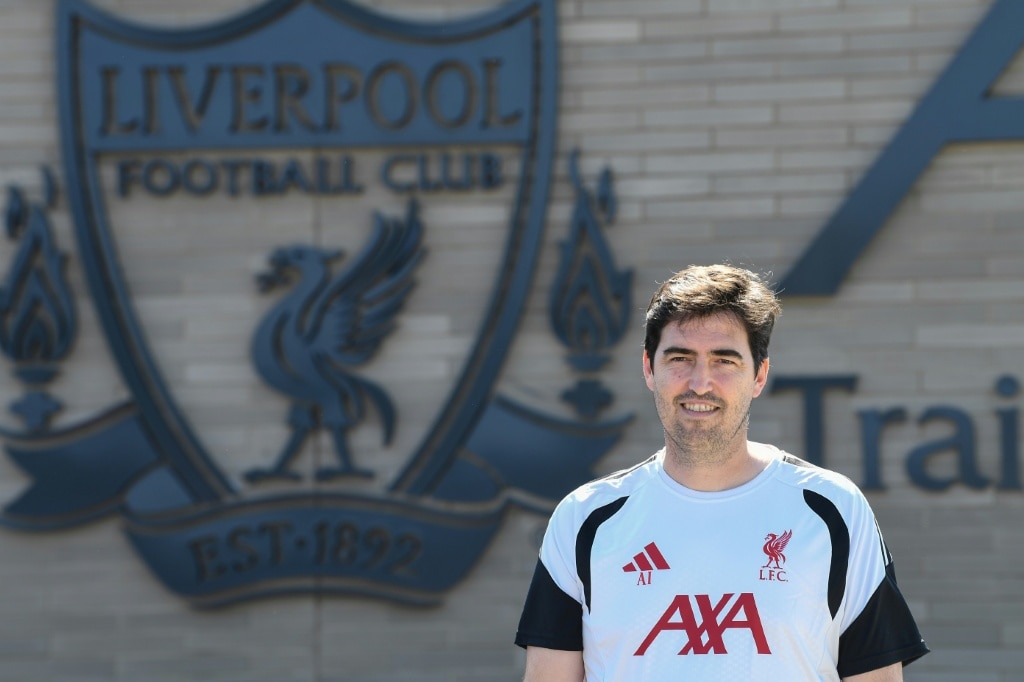
    English Premier League giants Liverpool FC have confirmed that head coach Arne Slot has been relieved of his duties with immediate effect, bringing an end to the Dutch manager’s two-season tenure at Anfield. The decision comes on the back of a catastrophic title defense campaign that saw the Merseyside club slump to a fifth-place finish in the 2024-25 league table, falling well short of the high standards expected by the club and its global fanbase. Growing unrest among supporters boiled over into open criticism of Slot after a string of underwhelming performances across the campaign, while internal tensions have also been reported within the first-team dressing room, with star forward Mohamed Salah identified as the most vocal critic of the manager’s leadership. In an official statement released to the public on Saturday, the club confirmed the sudden managerial change and added that the process to identify and appoint a permanent successor is already underway. Club executives explained that the split was prompted by a belief that the club required a fresh strategic direction to return to title contention. The statement was careful to acknowledge Slot’s contributions during his time at the club, stressing that the dismissal does not undermine the work he delivered or the respect the organization holds for him. “Nor is it a reflection of his talents. Rather, it is indicative of the need for a different approach,” the statement read. Slot leaves Anfield having secured a Premier League title in his first season in charge, and the club closed by thanking him for his service, noting that he and his family will always be welcomed back to the stadium in the future.

  • Minhas’ five-wicket haul on ODI debut earns Pakistan five-wicket win over Australia

    Minhas’ five-wicket haul on ODI debut earns Pakistan five-wicket win over Australia

    Cricket history was made in Rawalpindi on Saturday, where 21-year-old left-arm spinner Arafat Minhas delivered a fairy-tale debut performance to power Pakistan to a five-wicket victory over an under-strength Australia in the opening match of their three-match ODI series. Minhas’ historic five-wicket haul made him the first Pakistani bowler ever to claim five wickets on ODI debut, finishing with sensational figures of 5 for 32 that dismantled Australia’s batting lineup on a spin-friendly dry pitch.

    Australia entered the match already depleted by the absence of three of its top fast bowlers — Pat Cummins, Josh Hazlewood and Mitchell Starc — who all skipped the series to compete in the Indian Premier League and manage pre-existing workloads. Their bowling unit was further weakened hours before the first ball when frontline spinner Adam Zampa was ruled out with sudden neck spasms. Despite the setbacks, Australia won no sympathy from Pakistan’s spin attack, bundled out for just 200 all out in 44.1 overs.

    Pakistan captain Shaheen Shah Afridi read the pitch and sweltering match conditions perfectly after winning the toss, handing Minhas the opportunity to exploit the turning surface. The young spinner did not waste his chance, ripping through Australia’s top order by claiming three wickets in just six overs. He trapped both captain Cameron Inglis and star all-rounder Marnus Labuschagne leg before wicket, before producing a magical delivery that spun away from right-hander Cameron Green to clip the top of his off stump. By the 16th over, Australia was reeling at 68 for 4. Opener Matthew Renshaw top-scored for the side with 61 runs, while Matthew Short added 55, but no other batter could build a substantial innings to lift the team to a competitive total. Abrar Ahmed chipped in with two wickets, and Salman Ali Agha took one to support Minhas’ match-winning spell.

    In response, Pakistan’s chase was anchored by a game-changing 127-run partnership between former captain Babar Azam and wicketkeeper-batter Ghazi Ghori. Babar, recalled to the side after missing Pakistan’s March series against Bangladesh, scored a solid 69 off 94 deliveries, while Ghori notched his maiden ODI half-century with an unbeaten 65. The pair played with patience and discipline against Australia’s spin pairing of Matthew Kuhnemann and Tanveer Sangha, refusing to go for risky extravagant shots that would have derailed their chase. After Kuhnemann dropped Babar shortly after he brought up his half-century, Nathan Ellis eventually clean-bowled the experienced batter, and trapped Ghori leg before wicket soon after — but by that point, Pakistan was on the brink of victory.

    It fell to debutant Minhas to seal the win, and he did so in style: hitting a straight six off Labuschagne to reach the target, finishing the match unbeaten on 18 off 17 balls. Pakistan crossed the line at 202 for 5 in 42.3 overs, taking a 1-0 lead in the three-match series. The match also marked a milestone for Pakistani cricket, as it saw Pakistan become only the third nation in international cricket history to play 1,000 ODI matches, following India (1,075) and Australia (1,020).

    Speaking after the match, Minhas acknowledged the weight of expectation on his debut but said he thrives under pressure. “There was indeed pressure, but I like to enjoy that pressure environment and my focus was on enjoying this opportunity,” he said.

    Captain Afridi praised his young team members, highlighting their performance as a sign of a promising future for Pakistani cricket. “We knew there would be a lot of assistance for the spinners and the spinners delivered. I am very happy for Arafat Minhas. … Ghori is a great player against both spin and pace, so the future of Pakistan looks bright,” Afridi said.

    The series will now move to Lahore for the remaining two matches, scheduled for Tuesday and Thursday.

  • Dead humpback whale brought to shore in Denmark with autopsy set next week

    Dead humpback whale brought to shore in Denmark with autopsy set next week

    For months, the journey of a wayward humpback whale held the German public in rapt attention, as the giant marine mammal repeatedly became stranded in the unfamiliar waters of the Baltic Sea, hundreds of kilometers from its natural North Atlantic habitat. On Saturday, nearly two weeks after the whale’s body was found floating in shallow coastal waters, authorities hauled the carcass onto a beach near the small Danish island of Anholt, closing out a high-profile saga that united animal lovers and dominated regional headlines.

    After the humpback was first spotted off Germany’s northern coastline on March 3, local media turned the animal into an overnight celebrity, giving it two affectionate nicknames—Timmy and Hope—and running rolling live updates and push notifications tracking every shift in its condition. Rescuers launched a months-long effort to guide the lost whale back to open ocean, a campaign that drew both widespread public support and heated debate over intervention strategies. The final push came on May 2, when teams loaded the whale onto a barge and transported it toward the North Sea in a last-ditch bid to return it to its native habitat.

    Twelve days later, on May 14, the whale’s dead body was discovered washed up near Anholt, located in the Kattegat Strait—the wide stretch of water separating Denmark and Sweden that links the Baltic to the North Sea. Its death brought an end to the months-long rescue effort that had captured the region’s imagination.

    Danish outlet News5 broadcast a live stream of the recovery operation Saturday, showing a heavy cable connected to an on-beach truck pulling the massive carcass onto the sandy shoreline. According to the Danish Environmental Protection Agency, a full necropsy will be conducted on the remains next week to pinpoint the exact cause of the whale’s death.

    To this day, researchers still do not have a definitive explanation for why the humpback strayed so far off its migration route into the Baltic Sea, a body of water that does not support the feeding or migratory patterns of this species. Some leading marine biologists have theorized the whale may have lost its way while chasing a school of herring into the region, or veered off course during its annual migration.

  • How did tattoo artists become legal in South Korea?

    How did tattoo artists become legal in South Korea?

    For generations, tattooing in South Korea existed in a legal gray area, forcing skilled tattoo artists to ply their trade in hidden underground studios, cut off from mainstream recognition and legal protections. That long chapter of secrecy has finally come to a close, and now hundreds of tattoo creators from every corner of the nation have converged on the capital city of Seoul to mark a historic turning point for their craft. BBC correspondents on the ground captured the jubilant atmosphere of the gathering, where artists shared their stories of decades working off the grid, displayed their intricate, culturally rooted work, and celebrated the hard-won legal status that opens a new era for South Korea’s tattoo community. The shift to legalization caps years of advocacy from tattoo artists who argued their work is a legitimate form of creative expression, not a regulated medical service as previously classified under South Korean law. For many attendees, the gathering in Seoul is more than a celebration—it is a public declaration that tattoo art has earned its place in the country’s cultural mainstream.

  • WHO chief visits epicenter of the Ebola outbreak in eastern Congo as cases outpace response

    WHO chief visits epicenter of the Ebola outbreak in eastern Congo as cases outpace response

    Amid an unprecedentedly rapid resurgence of a rare Ebola variant in the Democratic Republic of the Congo’s eastern region, World Health Organization Director-General Tedros Adhanom Ghebreyesus traveled Saturday to Bunia, the urban center at the heart of the ongoing outbreak, to assess response efforts and engage with frontline stakeholders.

    The rare Bundibugyo strain of Ebola driving this outbreak has no officially approved vaccine or targeted treatment, putting global and local health teams in an unenviable position as they work to slow transmission. Official WHO data puts the current count at 906 suspected cases and 223 suspected deaths across the DRC, with neighboring Uganda confirming nine cases and one fatality as of Friday, according to Uganda’s ministry of health.

    During his visit, Tedros was scheduled to tour a local Ebola treatment facility, hold talks with provincial and national government leaders, and speak directly to frontline health workers and families directly impacted by the virus. Speaking to reporters Friday after a meeting with DRC Prime Minister Judith Suminwa Tuluka, Tedros emphasized that containing the outbreak requires directing every possible resource to the epicenter. “This is a difficult situation, and we recognize that. But the Democratic Republic of Congo has faced the Ebola virus many times before. We are confident that it can once again bring this outbreak under control,” he noted.

    Fresh international aid has begun arriving in recent days: the European Union dispatched a shipment of medical supplies to Ituri province, where Bunia is located, on Thursday, with additional shipments on the way. The United States also announced an additional $80 million in emergency aid the same day, bringing Washington’s total commitment to response efforts to more than $112 million. On the ground, Associated Press reporters observed that response coordination at Bunia’s Rwampara Clinic and General Hospital has improved, with expanded staffing, additional personal protective equipment and critical medical supplies now in place — even as new patients continue to arrive around the clock.

    Despite these incremental gains, emergency medical groups warn that response efforts are still failing to keep up with the fastest-moving Ebola outbreak recorded in modern history. In a statement released Saturday, Doctors Without Borders (MSF) Deputy Operations Director Dr. Alan Alan Gonzalez underscored the severity of the gap, saying: “Never before has an Ebola outbreak recorded so many cases so soon after its declaration. Nobody knows the true scale and severity of this outbreak.” Gonzalez called for urgent action to expand testing capacity, speed up the deployment of trained response personnel, and secure uninterrupted, consistent access to critical medical supplies across affected areas.

    Multiple overlapping barriers continue to derail response work. Local resentment over strict Ebola body management protocols, which conflict with traditional local burial customs, has already spurred at least three separate attacks on health facilities treating patients, putting frontline workers at extreme risk. Ongoing armed conflict in the region further complicates access: the Allied Democratic Forces, a rebel faction with ties to the Islamic State, and a coalition of ethnic militias carry out regular attacks across Ituri. The outbreak has also spread south to the North Kivu and South Kivu provinces, where the Rwanda-backed M23 rebel group controls major population centers including Goma and Bukavu. Two cases have already been recorded among rebel-held territories there.

    In response to the cross-border spread of the virus, both Uganda and Rwanda have sealed their borders with the DRC, and the Trump administration last week implemented an entry ban on non-U.S. passport holders who have recently traveled to the DRC, Uganda or South Sudan. Tedros pushed back against these restrictive measures Friday, arguing that border closures and travel bans do nothing to stop transmission and actually undermine transparency. “Closing borders, as some countries have done, only discourages transparency. The Democratic Republic of Congo is reporting the situation openly and transparently,” he said, urging governments that have implemented restrictions to reverse course.

    This report was contributed to by AP reporters based in Dakar, Senegal and Bonn, Germany.

  • Four more men freed from flooded Laos cave

    Four more men freed from flooded Laos cave

    In a remote mountainous region of central Laos, a dramatic 10-day rescue operation has resulted in the safe extraction of four men who were trapped underground after flash floods flooded a narrow cave system, Thai rescue officials confirmed Thursday. The four survivors emerged from the dangerous cave network a full 24 hours after rescuers pulled a fifth man to safety last week.

    The group of seven, all Lao nationals, had ventured deep into the interconnected tunnels of the cave in Xaysomboun province in search of gold deposits on May 20. Within hours of entering, sudden flash floods surged through the cave, collapsing access routes and cutting the group off from the outside world, leaving them stranded in total darkness hundreds of meters from the entrance.

    Rescue teams, including highly trained specialist divers, were deployed immediately to the remote site, but their efforts were hampered by extremely challenging conditions. The cave system is not only extremely deep but also remarkably narrow, with some passageways measuring just 50 centimeters, or 20 inches, wide. Tight spaces and ongoing water hazards slowed progress as search teams worked systematically through the winding tunnels.

    By Wednesday, rescuers had located five alive members of the original group. Following the successful rescue of the first man on Wednesday, the remaining four were brought out to safety on Thursday. Even as rescue teams celebrate the successful recovery of the five survivors, the operation continues: two members of the original group remain unaccounted for, with search teams continuing to comb the cave system for any sign of the missing men.

  • Rescuers work to free 4 men who remain trapped in flooded Laos cave and search for 2 still missing

    Rescuers work to free 4 men who remain trapped in flooded Laos cave and search for 2 still missing

    In a remote, rugged stretch of central Laos, an international team of rescue specialists is racing against harsh conditions to pull four surviving trapped villagers out of a flooded cave system, 10 days after flash floods cut off their exit. One of the five men found alive earlier this week was successfully evacuated to safety on Friday, capping days of dangerous preparation, as crews continue searching for two other missing villagers who remain unaccounted for.

    The chain of events that led to the crisis began last week, when a group of seven local villagers entered the remote cave in Xaisomboun Province, roughly 120 kilometers north of the capital Vientiane, in search of valuable minerals. Unexpected flash floods rushed through the cave system, sealing off the only exit and trapping the entire group. Only one man managed to escape the rising waters quickly enough to alert local authorities to the emergency, setting the large-scale rescue effort in motion.

    Three days ago, rescuers made a hopeful breakthrough: they located five of the six remaining trapped men alive, identified only by their first names: Khamla, Mued, Ee, Ing and Laen. Crews immediately delivered life-sustaining supplies to the stranded men, including clean drinking water, soft food and thermal foil blankets to ward off hypothermia in the cool, damp cave environment. Despite the aid, on-site footage shows the men’s health and physical conditions have continued to decline after more than a week trapped underground.

    Friday brought the first major success of the operation. After months of preparation and hours of careful navigation through the cave’s flooded passages, crews extracted the first survivor in an operation that took roughly 30 minutes. On-site videos captured the tense moment of his emergence: the man exited the cave’s dark water alongside an expert cave diver, gasping for air before slowly pulling himself through a narrow, partially flooded passageway. When he finally reached stable ground, he struggled to stand steadily on unsteady legs. Rescuers noted he had suffered injuries to his hands, quickly wrapped him in a thermal blanket to stabilize his body temperature, and assisted him to a waiting medical team. A second video showed the man being helped out of the cave’s main entrance, a headlamp strapped to his forehead, supported by two rescue workers as he moved into the care of waiting medics amid a crowd of on-site responders. It has not been publicly confirmed which of the five identified survivors was the first to be evacuated.

    Crews decided to hold off on evacuating the four remaining surviving men on Friday, as they determined the men were not yet physically ready to make the dangerous journey out. Instead, rescue teams worked overnight and through Saturday to drain more flood water from the cave system, with the goal of completing the extractions of the remaining four survivors later the same day. One participating Thai cave diver, Norrased Palasing, reaffirmed the team’s commitment in a Facebook post Saturday, writing “One person has made it out safely, and we will not stop until the remaining four make it home too.”

    The rescue effort has drawn international support and expertise. Local Laotian rescue teams have been joined by specialist responders from neighboring Thailand, as well as crews from Japan and Malaysia, with additional specialists from Indonesia, France and Australia also arriving at the remote site. Notably, many of the participating Thai divers and rescue leaders took part in the dramatic 2018 Tham Luang cave rescue, which successfully extracted 12 trapped schoolboys and their soccer coach from a flooded northern Thai cave, giving the team extensive experience in complex underground cave rescues.

    Even with this expertise, the operation remains extraordinarily high-risk. In a video recorded just an hour before the first evacuation began on Friday, Thai rescuer Kengkaj Bongkawong of the Metta Tham Rescue Kalasin detailed the extreme challenges crews face inside the cave. The rescue’s forward operating base is set up in a large chamber deep inside the cave, which can only be reached by navigating more than 200 meters of twisting, narrow passages with sharp jagged rock walls, most of which are fully submerged. From that staging area, divers must complete an additional 30-meter dive through a fully flooded tunnel to reach the chamber where the survivors are trapped.

    “To dive in a cave, there are issues with the temperature, narrow areas, control of movement, and managing the panic of the survivor, which will be difficult, but we have to do it,” Kengkaj explained. The greatest danger comes when guiding untrained survivors through zero-visibility flood waters, a task that carries significant risk of disorientation and panic for both the survivors and the rescue team. To prepare, divers have spent days training the trapped men in basic diving safety: on-site footage shows Norrased Palasing and Finnish diver Mikko Paasi walking the men through how to use diving breathing equipment, emphasizing the critical rule of breathing only through the mouth while underwater.

    Alongside the effort to extract the four remaining survivors, crews are also preparing to search deeper into the cave system for the two missing villagers. Kengkaj said teams plan to explore a section of the cave 20 to 25 meters beyond the chamber where the five survivors were found, a region that is even more deeply flooded than the area where the men were trapped. “That area has a lot of water. The water goes there because it’s even deeper than this place,” he noted.

  • President of Myanmar’s military-backed government visits India

    President of Myanmar’s military-backed government visits India

    On Saturday, the head of Myanmar’s military-aligned administration launched an official diplomatic trip to India, a critical regional partner for the Southeast Asian nation, with a packed agenda of high-level talks focused on deepening bilateral cooperation. This trip marks Min Aung Hlaing’s first visit to neighboring India since he was inaugurated as Myanmar’s president in April, following a widely criticized election that opponents argue was carefully staged to cement the military’s ongoing authoritarian hold on national power. His most recent prior trip to India took place in 2019, when he served as the country’s military chief.

    Myanmar state-controlled MRTV confirmed that Min Aung Hlaing, accompanied by a delegation of senior cabinet members, departed Naypyitaw, Myanmar’s capital, on Saturday morning. The delegation landed at Gaya International Airport in Bihar, an eastern Indian state located close to Bodh Gaya, one of the most sacred pilgrimage sites for Buddhist communities worldwide. Over the course of the visit, Min Aung Hlaing is scheduled to hold formal meetings with India’s top leadership, including President Droupadi Murmu and Prime Minister Narendra Modi, as well as senior government officials and leaders of Indian business associations. The talks are expected to cover opportunities to expand collaboration across economic, religious, cultural and social sectors, alongside plans to inspect key joint infrastructure projects in the region.

    For decades, New Delhi has maintained open diplomatic and economic ties with Myanmar’s successive military-backed governments, a policy that has continued even after the 2021 military coup that ousted the elected civilian government led by Aung San Suu Kyi. Following the coup, Western nations imposed sweeping economic and diplomatic sanctions on the junta, after military forces launched a brutal crackdown on political opponents that escalated into a nationwide armed conflict and a massive humanitarian catastrophe.

    Geopolitically, Myanmar holds major strategic importance for India’s regional security agenda. The two countries share a 1,643-kilometer land border and a contiguous maritime boundary in the Bay of Bengal. For years, New Delhi and the Myanmar military have collaborated on cross-border security operations and intelligence sharing to counter separatist insurgent groups that operate along their shared frontier. India currently also hosts tens of thousands of Myanmar refugees, most of whom have fled escalating violence in Myanmar’s northwestern Chin State and other conflict-wracked regions.

    Despite the diplomatic and security rationale for the visit, the decision to host Min Aung Hlaing has drawn sharp criticism from pro-democracy and human rights activists, who warn that the trip will grant undeserved international legitimacy to a junta accused of widespread human rights abuses. In a pre-trip emailed statement released Friday, Yadanar Maung, a spokesperson for activist group Justice For Myanmar, called Min Aung Hlaing a war criminal waging a campaign of terror against the people of Myanmar, and condemned India’s choice to welcome him. Yadanar Maung noted that India has a long history of supporting Myanmar’s military through official training programs and deep economic ties, and called on New Delhi to reverse its policy. “India must change course, stop awarding false legitimacy to the junta, stop profiting from the military’s campaign of terror against the people, and instead support the Myanmar people who are struggling and sacrificing daily for federal democracy,” the statement read.

  • Migrant amateur teams in Greece get into World Cup spirit before new EU border measures take effect

    Migrant amateur teams in Greece get into World Cup spirit before new EU border measures take effect

    As the 2026 North America World Cup prepares to kick off, a unique, people-centered version of world football has already wrapped up its competition in the heart of Athens, Greece. Far from the glitzy mega-stadiums and luxury hospitality suites that will define the upcoming three-nation tournament, this grassroots gathering unfolds on cramped practice pitches tucked into dense urban neighborhoods, where spectators press against chain-link fences and the beat of live music drifts out onto surrounding residential streets.

    Named the Kypseli Mundial after the vibrant central Athens district that hosts it, this tournament is built on a simple but powerful mission: to bring together migrant, refugee and local Greek players through a shared love of football, and to challenge rising anti-migrant sentiment across the country. Unlike the official World Cup, national teams that failed to qualify for the North American tournament are well represented here: amateur players with roots in Albania, Afghanistan, Cameroon, Guinea, Mali, Nigeria, Sudan and dozens of other nations take the field to represent their home communities.

    The timing of the 2026 tournament carries heavy symbolic weight. Just one day after the official World Cup kicks off on June 11, the European Union will implement sweeping new stricter migration and asylum rules, which include tougher border enforcement, faster deportation procedures, and Greek government plans to relocate migrant detention centers to offshore facilities in African nations. For many of the participating migrant players, this policy shift has been a growing source of anxiety, making the Kypseli Mundial a welcome, joyful escape from political uncertainty.

    The tournament was founded three years ago by Moussa Sangare, an Ivorian migrant living in Athens, who launched the event to break down fear and mistrust between local Greek communities and migrant populations. Greece has long stood on the frontline of irregular migration into the European Union, and was the epicenter of the 2015 refugee crisis. While irregular border crossings have dropped sharply over the past decade, anti-migrant rhetoric and policies have gained traction, with the Greek government ramping up border security and vowing to increase deportations.

    Sangare, who worked tirelessly throughout the tournament coordinating schedules, welcoming teams, creating social media content and cleaning up pitches after matches, explained the core vision behind the event. “People are often afraid of migrants, but we wanted to change this narrative,” he said. “Interacting with migrants and second-generation migrants and doing things together: People change their minds through experience. For us, this tournament is like a mini–World Cup in Greece.”

    That spirit of connection is visible across every pitch. One field, located near the archaeological site of Plato’s Academy where ancient Athenians first debated the meaning of citizenship, offers a sweeping view of the Acropolis in the distance, weaving the country’s ancient legacy of open debate into the modern-day event. On match days in Kypseli, supporters wave flags from their home countries, volunteers lead open-air drumming circles, and African pop music blares over portable speakers as coaches yell instructions and fans cheer on their teams.

    For the amateur players, the tournament is a rare chance to step outside the grueling daily routines that define many migrant working lives in Athens. Most participants work long, low-profile hours in restaurant kitchens, hotels, construction sites and delivery roles across the city. Amissi, a Malian midfielder who works in a local factory assembling water heaters, called his first participation in the tournament a point of pride after his semifinal match.

    Amelie Nguedia, a player with roots in Cameroon, echoed that joy. Even though Cameroon did not qualify for the official World Cup, she brought her full energy to the Kypseli tournament, dancing onto the pitch before kickoff to the delight of her teammates. “Coming to play here is a real pleasure,” she said. “We aren’t professionals, but we love participating.” She added that she would be cheering on Ivory Coast in the official World Cup this summer.

    Over five weeks of competition, 21 teams battled for the title, with Nigeria taking home the men’s championship and local Greek neighborhood club Fostiras Kaisarianis claiming the women’s trophy. Head referee Chara Vogiatzidaki emphasized that the tournament’s impact goes far beyond the final scoreboard. “There are so many countries and different cultures, and I think the main goal is to show respect for all communities,” she explained. “There are some teams that are technically very advanced, and others that are less so. But the important thing is that all the teams have the mindset of enjoying themselves. That’s really beautiful.”

    Across every match, the festive, collaborative spirit won out. Though games were competitive, there was little hostility between teams and fans. Hard tackles drew shouts from the sidelines, but rival supporters traded jokes and shared laughs across the fence dividing the stands. For a few weeks, political tension and policy uncertainty were set aside, replaced by the universal language of football that unites people across every border.