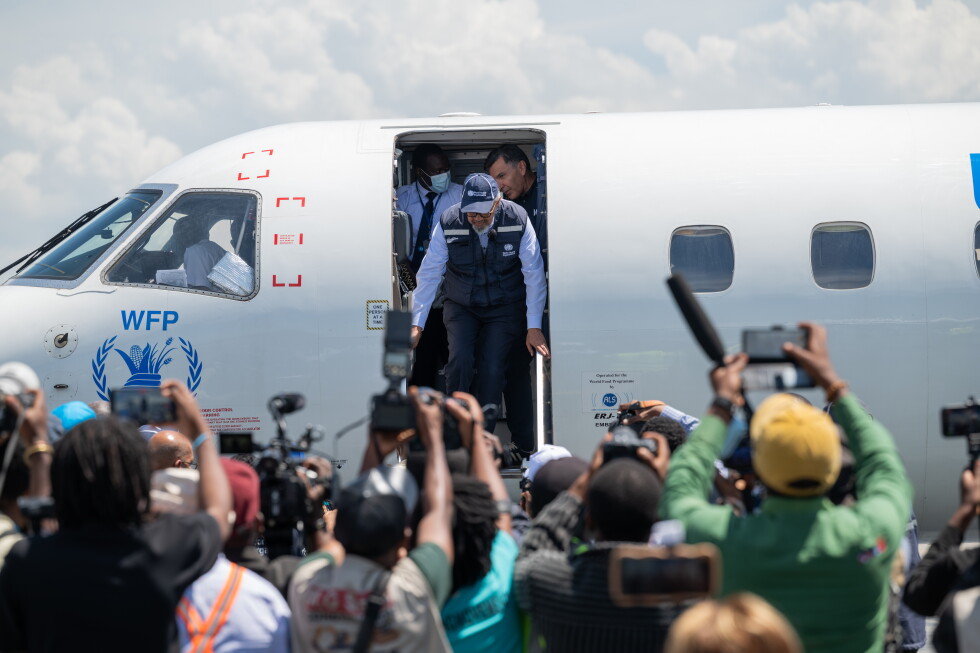
Amid an unprecedentedly rapid resurgence of a rare Ebola variant in the Democratic Republic of the Congo’s eastern region, World Health Organization Director-General Tedros Adhanom Ghebreyesus traveled Saturday to Bunia, the urban center at the heart of the ongoing outbreak, to assess response efforts and engage with frontline stakeholders.
The rare Bundibugyo strain of Ebola driving this outbreak has no officially approved vaccine or targeted treatment, putting global and local health teams in an unenviable position as they work to slow transmission. Official WHO data puts the current count at 906 suspected cases and 223 suspected deaths across the DRC, with neighboring Uganda confirming nine cases and one fatality as of Friday, according to Uganda’s ministry of health.
During his visit, Tedros was scheduled to tour a local Ebola treatment facility, hold talks with provincial and national government leaders, and speak directly to frontline health workers and families directly impacted by the virus. Speaking to reporters Friday after a meeting with DRC Prime Minister Judith Suminwa Tuluka, Tedros emphasized that containing the outbreak requires directing every possible resource to the epicenter. “This is a difficult situation, and we recognize that. But the Democratic Republic of Congo has faced the Ebola virus many times before. We are confident that it can once again bring this outbreak under control,” he noted.
Fresh international aid has begun arriving in recent days: the European Union dispatched a shipment of medical supplies to Ituri province, where Bunia is located, on Thursday, with additional shipments on the way. The United States also announced an additional $80 million in emergency aid the same day, bringing Washington’s total commitment to response efforts to more than $112 million. On the ground, Associated Press reporters observed that response coordination at Bunia’s Rwampara Clinic and General Hospital has improved, with expanded staffing, additional personal protective equipment and critical medical supplies now in place — even as new patients continue to arrive around the clock.
Despite these incremental gains, emergency medical groups warn that response efforts are still failing to keep up with the fastest-moving Ebola outbreak recorded in modern history. In a statement released Saturday, Doctors Without Borders (MSF) Deputy Operations Director Dr. Alan Alan Gonzalez underscored the severity of the gap, saying: “Never before has an Ebola outbreak recorded so many cases so soon after its declaration. Nobody knows the true scale and severity of this outbreak.” Gonzalez called for urgent action to expand testing capacity, speed up the deployment of trained response personnel, and secure uninterrupted, consistent access to critical medical supplies across affected areas.
Multiple overlapping barriers continue to derail response work. Local resentment over strict Ebola body management protocols, which conflict with traditional local burial customs, has already spurred at least three separate attacks on health facilities treating patients, putting frontline workers at extreme risk. Ongoing armed conflict in the region further complicates access: the Allied Democratic Forces, a rebel faction with ties to the Islamic State, and a coalition of ethnic militias carry out regular attacks across Ituri. The outbreak has also spread south to the North Kivu and South Kivu provinces, where the Rwanda-backed M23 rebel group controls major population centers including Goma and Bukavu. Two cases have already been recorded among rebel-held territories there.
In response to the cross-border spread of the virus, both Uganda and Rwanda have sealed their borders with the DRC, and the Trump administration last week implemented an entry ban on non-U.S. passport holders who have recently traveled to the DRC, Uganda or South Sudan. Tedros pushed back against these restrictive measures Friday, arguing that border closures and travel bans do nothing to stop transmission and actually undermine transparency. “Closing borders, as some countries have done, only discourages transparency. The Democratic Republic of Congo is reporting the situation openly and transparently,” he said, urging governments that have implemented restrictions to reverse course.
This report was contributed to by AP reporters based in Dakar, Senegal and Bonn, Germany.