作者: admin

  • Oscar-winning Star Wars editor Marcia Lucas dies aged 80

    Oscar-winning Star Wars editor Marcia Lucas dies aged 80

    The film community is mourning the passing of legendary Hollywood editor Marcia Lucas, the Academy Award-winning creative mind behind the original *Star Wars* saga, who died at the age of 80. Lucas, whose career reshaped the art of film editing and blazed a trail for women in the industry, passed away Wednesday at her Rancho Mirage, California home, surrounded by family, following a battle with metastatic cancer.

    Born Marcia Griffin in 1945 in Modesto, California, Lucas launched her entertainment career as a film librarian before rising to become one of the most respected editors in 1970s Hollywood. She married *Star Wars* creator George Lucas in 1969, and went on to contribute to many of his early landmark projects, including *THX 1138* and *American Graffiti* — the latter earning her first Academy Award nomination for editing. Beyond her work with George Lucas, she also collaborated extensively with acclaimed director Martin Scorsese on a run of iconic 1970s features, among them *Alice Doesn’t Live Here Anymore*, *Taxi Driver*, and *New York, New York*.

    Lucas’ most celebrated contribution came with 1977’s *Star Wars* (later retitled *A New Hope*), where she shared the Oscar for Best Film Editing with co-editors Richard Chew and Paul Hirsch. While her work largely happened behind the camera, her impact on the early *Star Wars* franchise is widely regarded as foundational to its success. George Lucas himself publicly credited her with structuring the massive, complex Death Star final battle sequence, a sequence that wove narrative plot into an aerial dogfight in a way that had never been attempted before. “Nobody really has ever tried to interweave an actual plot story into a dogfight, and we were trying to do that,” George Lucas told *Rolling Stone* shortly after the film’s 1977 release, noting Marcia brought the 40,000 feet of raw pilot footage into a cohesive, thrilling sequence. Beyond that iconic battle, she infused the original trilogy with sharp narrative clarity and unexpected emotional depth that turned the space saga into a global cultural phenomenon.

    Lucas returned to the franchise for two more installments, 1980’s *The Empire Strikes Back* and 1983’s *Return of the Jedi*. In her personal life, she and George Lucas adopted daughter Amanda in 1981, before their 14-year marriage ended in divorce in 1983. She later married Tom Rodrigues, a production manager at Skywalker Ranch, and the couple had a second daughter, Amy.

    In a statement released Friday to U.S. media, Lucas’ family remembered her as both a revolutionary artist and a beloved presence. “A true trailblazer for women in film and one of the most influential editors in cinematic history; she helped redefine what film editing could be,” the statement read. “Her influence on film is indelible, but those who knew her best will remember the way she made life feel more vivid, more beautiful, more fun and more full of love. Her work was known for its emotional intelligence, rhythm and humanity — a rare ability to find the truth of a scene and bring heart, momentum and clarity to the screen.”

    Lucas herself once summed up her approach to her craft in a comment shared by Lucasfilm: “I have an innate ability to take good material and make it better, and to take bad material and make it fair.”

    Tributes have poured in from across the film and *Star Wars* communities following news of her death. Lucasfilm said in a statement Saturday that it was “deeply saddened” to learn of her passing, adding that it “joins the global filmmaking community in mourning the loss of Marcia Lucas.” Mark Hamill, the actor who originated the role of Luke Skywalker in the original saga, also shared a remembrance, writing that he and his wife Marilou were “deeply saddened by the loss of our lifelong friend. Not just a gifted, innovative artist, she also happened to be a genuinely nice person. Smart, funny and just plain fun to be around. Thankfully, her memory lives on and we will never stop missing her.”

  • ‘No-one feels safe now’: Residents of Romanian city hit by drone share fears

    ‘No-one feels safe now’: Residents of Romanian city hit by drone share fears

    For many Romanians, the full-scale Russian invasion of Ukraine has stopped being a distant conflict unfolding across a border. It has arrived on their doorsteps, leaving a gaping hole in an apartment building and a population gripped by anxiety over future attacks. The incident in the northeastern Romanian city of Galati, which occurred in the early hours of Friday while most residents were asleep, marks the most severe incursion of the war into NATO and European Union member Romania since Russia launched its full-scale invasion in 2022. On Saturday, reporters climbed 11 stories to the building’s damaged roof, where a jagged, two-meter wide concrete puncture from the downed drone was covered with a temporary plastic tarp. The blast sparked an immediate fire that left the apartment directly below the roof heavily damaged, and a mother and her teenage son were hospitalized with bruising and minor burns. Disaster experts and local residents have emphasized that the outcome could have been far deadlier: the drone struck the building’s concrete lift shaft, which absorbed the majority of the explosion’s force. If the strike had hit a residential side of the structure, an entire floor or more could have been destroyed. Costel Patrichi, the building’s resident manager, described the chaotic morning of the incident. Just before 2 a.m., his phone buzzed with an official air threat alert warning that an unidentified drone was moving toward the city from the nearby Ukrainian border, located only a few dozen miles away. Seconds after the alert arrived, a deafening explosion shook the entire building. Like many Galati residents, Patrichi expressed deep frustration at the failure of Romanian air defenses to intercept the incoming drone. “They told us we are protected by NATO, not to worry. But look where we are now!” he told reporters. He added that the strike has shattered any sense of safety for local residents: “Now I’m afraid. If I go back to my flat tonight, I will sleep with fear. Because this could happen again.” This pervasive sense of vulnerability echoes the constant fear that Ukrainian civilians face nightly, as Russian attack drones regularly target residential infrastructure across the country, killing civilians and destroying homes. But for Romania, a NATO member, the strike represents a dangerous new escalation of the war. Moscow has repeatedly denied any connection to the drone, with Russian President Vladimir Putin claiming there is no evidence linking the weapon to Russian forces. But Romanian officials have pushed back firmly against these denials, confirming the drone is a Russian-produced Geran-2, also widely known as a Shahed. Romanian President Klaus Iohannis told the BBC that the identification is unambiguous: this was a Russian drone, matching the design of another unexploded Russian drone that crashed in Romanian territory just four to five weeks prior. The drones in the region are part of a sustained Russian campaign targeting key Ukrainian Danube River ports, which serve as a critical export hub for Ukrainian grain. On the day of the Galati strike, Romanian defense officials tracked a swarm of 43 Russian drones moving west along the border. According to Iohannis, one of the drones was damaged by Ukrainian air defenses, veered off course, and crossed into Romanian territory before striking the apartment building. NATO allies have formally condemned the incident, calling Russia’s conduct in the war reckless and blaming Moscow’s unprovoked aggression for the incursion. But the international response has been marked by deliberate caution, as leaders work to avoid a direct military confrontation between nuclear-armed Russia and the 31-member alliance. Bucharest government officials confirmed that they briefly considered invoking Article 4 of the NATO treaty, which would trigger an emergency collective security consultation, but rejected the move to prevent widespread public panic. The more drastic step of invoking Article 5 – NATO’s collective mutual defense clause, which defines an attack on one member as an attack on all – has not been put forward for discussion, as no alliance member has accused Russia of launching a deliberate attack on Romanian territory. In response to the strike, Romania has ordered the closure of a Russian consulate in the Black Sea port city of Constanta as a formal diplomatic warning. Iohannis noted that the next step in Romania’s planned diplomatic escalation would be the expulsion of Russia’s ambassador to Bucharest, but no such move has been ordered as of yet. Bucharest has also called on NATO to accelerate the delivery of promised additional air defense equipment to Romania’s eastern border region, and the Romanian government has moved forward with plans to acquire its own fleet of attack drones, including future joint development projects with Ukrainian defense firms. The European Union has also accelerated work on a new round of economic sanctions targeting Moscow. For residents of Galati, diplomatic maneuvers and sanctions have done little to ease the constant sense of danger. Adrian, a local resident who surveyed damage to his family’s apartment in the struck building, called the incident “insane”, noting that the strike occurred in a dense residential neighborhood in the middle of the city. “No-one feels safe now,” he said. Adrian placed full blame for the incident on Russia and Vladimir Putin, adding that existing international sanctions have done little to deter Russian aggression. “But I don’t think the sanctions are enough,” he said. “Because they could take everything from Russia, and they would still attack.” As the war enters its fourth year, the risk of the conflict spilling beyond Ukraine’s borders into neighboring NATO territory is higher than it has ever been, and ordinary Romanians on the front lines of the border region are left living with the constant possibility of another strike.

  • Ebola spread in DR Congo ‘alarming’, charity warns, as WHO chief visits worst-hit area

    Ebola spread in DR Congo ‘alarming’, charity warns, as WHO chief visits worst-hit area

    Two weeks after the Democratic Republic of Congo officially declared an Ebola outbreak, international medical and public health authorities are sounding the alarm over an unprecedented rate of spread that has outpaced current response efforts. The epicenter of the outbreak is the northeastern Congolese province of Ituri, where transmission has already outstripped every recorded early-stage Ebola event in modern history.

    In a public statement released Saturday, Dr. Alan Gonzalez, deputy director of medical humanitarian organization Médecins Sans Frontières (MSF), described the unfolding situation as deeply alarming. “Never before has an Ebola outbreak recorded so many cases so soon after its declaration,” Gonzalez emphasized, adding that frontline MSF teams on the ground have observed that response operations have not yet matched the speed of the virus’s advance. He warned that the full extent of the crisis remains unclear: hundreds of test samples from suspected patients are still backlogged and unprocessed, even as new potential infections are reported every single day.

    Gonzalez also outlined significant logistical barriers delaying critical containment work and aid delivery, pointing to widespread border and airport closures as major disruptive constraints. These challenges compound long-standing issues created by ongoing armed conflict in the region, which the World Health Organization (WHO) has repeatedly flagged as a major barrier to mounting an effective response.

    As of the latest updates, more than 1,000 suspected Ebola cases have been recorded across DR Congo, with at least 246 confirmed deaths linked to the outbreak. The virus has also spilled over the country’s northern border into neighboring Uganda, where nine confirmed cases and one fatality have been reported to date.

    Over the weekend, WHO Director-General Dr. Tedros Adhanom Ghebreyesus traveled personally to Ituri to oversee and assess local containment efforts. Speaking after his arrival, Tedros explained that the WHO delegation was in the province to evaluate response progress and address unmet needs that are slowing control work. He called for greater engagement of local communities in outbreak response, noting that residents have on-the-ground knowledge that is critical to successfully curbing transmission. “They understand the problems better and they know the solution as well,” he said of local populations.

    One of Tedros’ first official stops during the visit was the National Institute for Biomedical Research laboratory in Bunia, Ituri’s provincial capital, where all samples from suspected Ebola patients are now processed. Local health authorities confirmed that the newly operational local testing facility can deliver confirmed results to care teams within 24 hours, a major improvement that allows clinicians to quickly isolate infected patients and initiate life-saving care. Prior to the opening of this lab, samples had to be transported more than 1,500 kilometers to Kinshasa, DR Congo’s capital, for testing — delays that put communities at greater risk of further spread and cost vulnerable patients critical care time.

    The current outbreak is caused by Bundibugyo, a rare strain of Ebola for which no widely proven vaccine currently exists. The virus has an average case fatality rate of roughly one-third, meaning approximately one in every three infected people will die from the disease. Like all Ebola strains, Bundibugyo originally circulates in wild animal populations, most commonly fruit bats; human outbreaks typically begin when people come into contact with or consume meat from infected animals.

  • ‘I will sleep with fear’: Romanians shaken after block of flats hit by drone

    ‘I will sleep with fear’: Romanians shaken after block of flats hit by drone

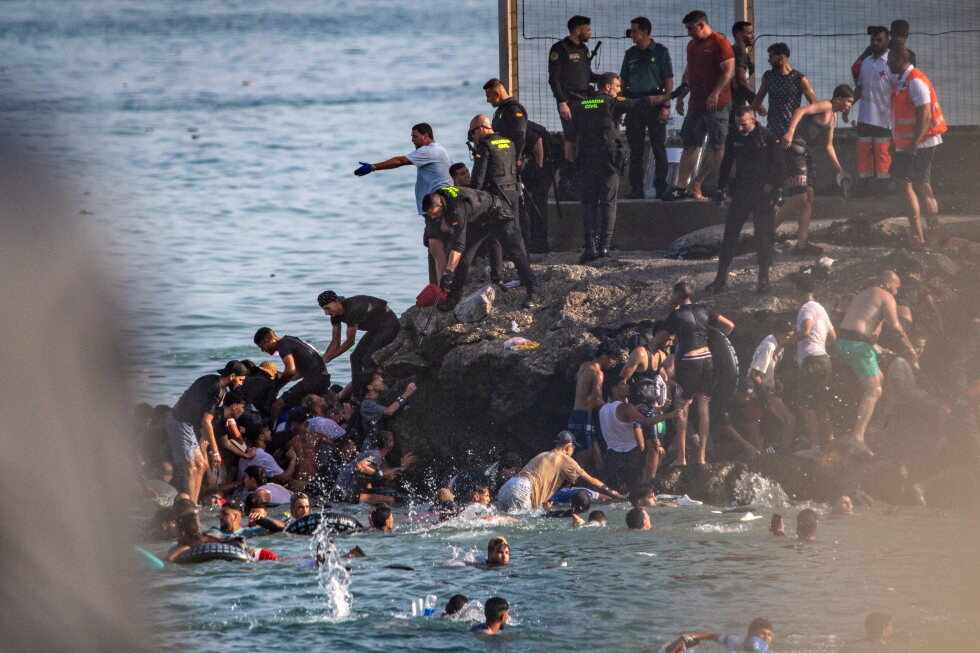
    On Friday, a Russian drone crashed into a residential apartment block in Romania, triggering a destructive blaze and leaving two people with injuries, according to official statements from Romanian authorities. The incident has sent waves of anxiety and unease across local communities, with many residents saying they now face an uncertain future marred by constant fear of further attacks. One local resident summed up the widespread mood of trepidation, saying, “I will sleep with fear” going forward. The strike comes amid heightened regional tensions following months of cross-border drone and missile incidents linked to the ongoing conflict in Ukraine, which shares a long border with NATO member Romania. Emergency services were quick to respond, extinguishing the fire and launching an investigation into the exact origins of the drone and how it crossed into Romanian territory. Romanian officials have yet to release a full public account of the strike’s trajectory, but the incident has already sparked renewed discussion among NATO allies about reinforcing eastern flank security to deter further accidental or intentional incursions into alliance territory. For residents of the affected building and surrounding neighborhoods, the immediate impact has been deeply personal, with many displaced from their homes and left grappling with property damage and emotional trauma.

  • Colombia accuses Ecuador of ‘deliberate interference’ in general elections

    Colombia accuses Ecuador of ‘deliberate interference’ in general elections

    BOGOTA – A sharp diplomatic dispute has erupted between neighboring Andean nations Colombia and Ecuador just 24 hours before Colombians head to the polls to choose their next president, with Bogota formally rejecting Ecuadorian President Daniel Noboa’s recent pledge to scrap tariffs on Colombian imports as a blatant violation of international sovereignty.

  • ‘Decided on moments’: PSG, Arsenal in knife-edge Champions League final

    ‘Decided on moments’: PSG, Arsenal in knife-edge Champions League final

    The stage is set in Budapest’s Puskas Arena for one of the most tightly contested UEFA Champions League finals in recent memory, as defending champions Paris Saint-Germain prepare to lock horns with England’s Arsenal this Saturday, in a game widely billed as a battle that will be decided by split-second moments rather than pre-match form.

    With contrasting playing styles set to collide, PSG brings an explosive, high-octane attacking line-up against an Arsenal side that has built its tournament run on rock-solid defensive organization. Ahead of the kickoff, PSG manager Luis Enrique downplayed the tag of pre-match favorite, insisting the 90-minute showdown would be decided by tiny margins. ‘There are no favorites going into this European final,’ he said. ‘The difference will be in the details.’

    While bookmakers do rank the Ligue 1 title holders and defending champions as slight favorites, analysts note this final is the hardest to predict since Real Madrid’s iconic 2018 win over Liverpool. For Arsenal, the occasion carries extra weight: the club ended a 22-year wait for the English Premier League title this season, and is now chasing its first ever Champions League crown, 20 years after its last final appearance ended in a defeat to Barcelona in Paris.

    Arrived in the Hungarian capital in relaxed form, the Gunners’ squad took a casual stroll through Budapest on Saturday morning to beat the summer heat, with good news on the injury front: right-back Jurrien Timber, who had been a major doubt for the clash, recovered in time to make the match day squad, named to the bench alongside striker Viktor Gyokeres. Manager Mikel Arteta opted to start Kai Havertz in the attacking line for the final. The game’s earlier kickoff time — 6pm local time, two hours earlier than recent finals — is seen as a potential advantage for PSG’s fast, physically demanding pressing style.

    Arsenal’s tournament campaign has been defined by defensive resilience: the Gunners enter the final unbeaten in this season’s Champions League, having kept nine clean sheets and conceded only six goals. The widespread expectation is that Arteta’s side will drop into a deep defensive block and look to capitalize on set-piece opportunities against the French side. PSG winger and Ballon d’Or winner Ousmane Dembele acknowledged the challenge Arsenal poses, saying: ‘They’re strong pretty much everywhere, whether it’s in attack or in defence, and they’re dangerous on set-pieces as well, everybody knows that.’

    PSG also got a key fitness boost ahead of kickoff: both Dembele and right-back Achraf Hakimi were named in the starting line-up after shaking off minor fitness concerns in the lead-up to the final. While Arsenal has played significantly more matches this season than PSG, winger Bukayo Saka rejected suggestions that fatigue could play a deciding role. ‘A game like this is not going to be decided on minutes, it’s going to be decided on moments,’ the England international said.

    Both sides carry historic motivation to lift the trophy. For PSG, a win would secure back-to-back Champions League titles, a feat only Zinedine Zidane’s Real Madrid has achieved in the modern era, when the Spanish club won three consecutive titles between 2016 and 2018. It would also make PSG the first French club to win multiple Champions League trophies, marking a historic milestone for French club football.

    For Arsenal, a first Champions League crown would cap a redemptive season for the club, honoring generations of Arsenal players who never reached the pinnacle of European football. Club icons have reached out to the current squad to offer support: former captain and Invincibles legend Patrick Vieira sent a personal good luck video to current skipper Martin Odegaard, who called the message a special moment. ‘This stage was one I had hoped to reach for my whole life,’ Odegaard said. ‘When I started playing football with my friends, on the little pitch next to my house, I was dreaming of this moment.’

    Thierry Henry, the club’s all-time leading goalscorer and part of the 2006 final squad that lost to Barcelona, also sent a personal message to Saka on Friday. Tens of thousands of Arsenal fans have traveled to Budapest, many without match tickets, to cheer on their side, packing the city’s famous ruin bars and tourist hotspots. Henry is among the high-profile Arsenal supporters in the city for the final.

    Security has been ramped up for the occasion, with almost 4,000 police officers deployed for the match — the largest security operation in Hungarian history. The build-up to the game has remained largely peaceful, apart from a minor scuffle between fans in Budapest’s seventh district on Friday night, which police are currently investigating.

    A win for Arsenal would also make history for English football. After Aston Villa lifted the Europa League title and Crystal Palace won the Conference League this season, an Arsenal Champions League triumph would mark the first time a single country has won all three major UEFA men’s club trophies in the same season since 1989-90, when Italy achieved the feat with AC Milan, Juventus and Sampdoria claiming the three trophies respectively.

  • Italy bans Kanye West and Travis Scott concerts over security concerns

    Italy bans Kanye West and Travis Scott concerts over security concerns

    In a decision that marks the latest in a string of performance cancellations for controversial rapper Kanye West (now legally known as Ye), Italian authorities have blocked two scheduled July concerts headlined by West and fellow rapper Travis Scott in the northern city of Reggio Emilia, citing urgent public order and safety concerns.

    The announcement came Friday from Prefect Salvatore Angieri, following a formal request from Reggio Emilia’s local Jewish community to scrap West’s planned appearance. Community leader Nicoletta Uzzielli had pushed local officials to scrap the event and replace it with a performance that would center music as a unifying, inclusive force for all people.

    West has sparked global outrage over the past three years for a repeated pattern of antisemitic, racist, and openly pro-Nazi rhetoric, a controversy that already led to the UK government barring him from entering the country earlier this year. The two cancelled Reggio Emilia shows, scheduled for July 17 and 18 at the city’s RFC Arena, were set to feature West and Scott alongside a roster of major A-list acts including The Chainsmokers, Rita Ora, and Swedish House Mafia.

    In an official statement, the regional prefecture outlined the multiple factors that guided its final call. Among the top considerations were the wave of concert cancellations for West already implemented across other nations, and the very real threat of large-scale counter-demonstrations targeting the event. Officials also noted that the close scheduling of the two back-to-back events, combined with projections of massive crowds gathering at the venue, created additional unmanageable public safety risks.

    Travis Scott, the co-headliner of the events, has also faced ongoing intense scrutiny over his role in the 2021 Astroworld Festival tragedy in Houston, Texas, where a crowd surge during Scott’s headline set left 10 attendees dead between the ages of 9 and 27, and injured thousands more when panic spread through the over-capacity crowd pressed against the stage.

    The Italian cancellation is just the latest domino to fall in a series of scrapped shows for West this year. Last month, London’s high-profile Wireless Festival was called off entirely after West, the announced headline act, was denied entry to the UK amid widespread public backlash over his inflammatory remarks. West’s pattern of problematic comments dates back to 2022, when he posted on social media that he would go “death con 3 On Jewish people”, and in May 2023 he released a track titled *Heil Hitler* and sold merchandise emblazoned with swastikas.

    Following the UK entry ban, cancellations quickly spread across mainland Europe. In mid-April, West announced the Marseille stop on his European tour would be postponed “until further notice”, with French media reporting at the time that Interior Minister Laurent Nuñez was actively moving to ban the scheduled June 11 show. That same month, a planned June 19 concert at Poland’s Silesian Stadium in Chorzów was also cancelled, with venue officials citing unspecified “formal and legal reasons”.

    West has made recent attempts to rebuild his standing in mainstream entertainment after stepping back from public view. In January, he published a lengthy apology in *The Wall Street Journal*, claiming “I am not a Nazi or an antisemite” and asserting “I love Jewish people”. He also attributed his past harmful comments to his bipolar disorder diagnosis, writing that he had “lost touch with reality” during the period when the remarks were made.

  • Medical or a PR exercise? Why presidents get annual check-ups

    Medical or a PR exercise? Why presidents get annual check-ups

    For decades, the annual physical examination of the sitting U.S. president has evolved into far more than a routine health check—it is a tightly choreographed political ritual that sits at the intersection of public accountability, national security, and perceptions of executive power.

    Today, amid the election of two of the oldest presidents in American history back-to-back, public and political scrutiny of these check-ups has reached a fever pitch. The conversation traces back to a long-running tradition: every modern U.S. president makes the short trip from the White House to Walter Reed National Military Medical Center for a yearly physical, a practice as much about projecting political vitality as it is about tracking personal health. “Americans historically have wanted masculine, vigorous presidents,” explained Dr. Matt Dallek, a political historian at George Washington University. A clean bill of health, released publicly, is one of the most visible ways a commander-in-chief can demonstrate they are physically and mentally capable of holding the most powerful office on Earth.

    This dynamic has been central to former president Donald Trump’s public image, even as he approaches his 80th birthday. Just weeks out from turning 80, Trump completed his 2026 annual physical, and the White House subsequently released a memo from his personal physician declaring the president in “excellent health” with strong cardiac, pulmonary, neurological and overall physical function. The document confirmed Trump is “fully fit to carry out all duties of the commander-in-chief and head of state”, though it did include a recommendation that he increase regular exercise and adjust his diet to lose weight. The memo also publicly released Trump’s full vital statistics: standing 75 inches (191cm) tall, he weighs 238 pounds (108kg), has a resting heart rate of 73 beats per minute, and a blood pressure reading of 105/71 mmHg. It addressed recent public speculation about visible bruising on Trump’s hand, attributing the marks to minor soft tissue irritation from frequent handshaking and his daily aspirin use for cardiovascular prevention, and noted Trump’s lifelong abstinence from tobacco and alcohol. Shortly after the results were released, Trump posted on his Truth Social platform that “everything checked out perfectly.”

    Even so, questions about the transparency and reliability of presidential health disclosures have persisted for more than a century, long before the current era of advanced age in the Oval Office. Unlike many public officeholders, U.S. presidents face no legal requirement to release full medical records, and they are protected by the same federal health privacy laws that apply to all American citizens. This has allowed for deliberate concealment of serious health crises throughout history: in 1919, President Woodrow Wilson suffered a devastating stroke that left him largely incapacitated for the final year of his term, with his wife effectively stepping in to make major presidential decisions while his physician and staff covered up the full severity of his condition. Decades later, Franklin D. Roosevelt’s paralysis from polio was consistently downplayed by White House officials, who hid his reliance on a wheelchair from the public until his death in office in 1945.

    It was not until the 1960s, during Lyndon B. Johnson’s administration, that any U.S. president formally publicly announced the results of a routine physical. That shift came in the wake of President John F. Kennedy’s assassination and amid rising Cold War tensions, when questions about a leader’s fitness to govern took on new urgency. In the 1970s, President Gerald Ford went a step further, overruling his own physician’s objections to release partial medical details to the public. “I feel fit as a fiddle. Getting healthier every day,” Ford told reporters after his 1976 check-up, noting he swam daily to maintain his physical condition. Still, gaps in transparency have continued to spark controversy decades later: President Ronald Reagan only publicly announced his Alzheimer’s diagnosis five years after leaving office, leading to widespread ongoing speculation about his cognitive state during his second term in the White House.

    Medical ethicists argue that even modern disclosures cannot be taken at face value, because presidents are free to select which information to release to the public. “If I were the public, I would ignore that information (released by the White House) entirely,” said Dr. Jacob Appel, a medical ethicist at New York’s Mount Sinai Hospital and presidential health historian. “The president can cherry pick what looks good, and what doesn’t look good.” Beyond political posturing, Appel notes that full transparency also carries national security risks: any health details released to the American public are also accessible to foreign adversaries, giving potential opponents insight into a sitting president’s vulnerabilities.

    In recent years, the conversation around presidential health has been drastically amplified by the trend of older leaders holding office. After a generation of relatively young commanders-in-chief—Bill Clinton was 46 at inauguration, George W. Bush was 54, and Barack Obama was 47—the U.S. has elected two of the oldest presidents in its history in rapid succession. Trump was 70 when he first took office in 2017, and 78 when he began his second term in 2025. Joe Biden, who held office between Trump’s two terms, was 78 when he was inaugurated and 82 when he left office, making him the oldest sitting president in U.S. history. During his 2024 annual physical at age 81, Biden joked with reporters, when asked if there were any concerning health issues the public should know about: “Well, they think I look too young.”

    That era of older presidents has “turbocharged” public interest in annual physical results, Dallek said. “The scrutiny of Biden and Trump because of their age operates in a totally different plane. The concerns in the media, in the public, the debates that happen about whether they’re fit to serve, those debates get intensified.” Biden’s declining fitness became a central issue during the 2024 presidential campaign, ultimately forcing him to drop out of the re-election race. After Trump took office for a second term, Trump and congressional Republicans seized on a new tell-all book that alleged Biden White House staffers covered up the true state of Biden’s health to push claims of a deliberate cover-up. A Biden spokesperson pushed back at the time, arguing “evidence of aging is not evidence of mental incapacity.”

    Now, Trump faces the same level of public scrutiny over his own advancing age. Polling conducted before his 2026 physical shows a majority of Americans harbor doubts about his health and cognitive fitness. A Washington Post-ABC-Ipsos poll released in early May found that 59% of respondents do not believe Trump has the mental acuity to serve as president, while 55% doubt his physical health is sufficient for the role. A separate poll from the Economist and YouGov found that nearly half of all Americans believe Trump is too old to hold the Oval Office.

  • Sabalenka, Osaka set up French Open clash, Gauff eyes second week

    Sabalenka, Osaka set up French Open clash, Gauff eyes second week

    The 2025 French Open is heating up amid a lingering Paris heatwave, with Saturday’s third-round play producing one of the most anticipated round-of-16 matchups in recent Grand Slam history, alongside shocking upsets and breakthrough runs that have reshaped both the men’s and women’s draws.

    World number one and top women’s seed Aryna Sabalenka kicked off the day’s standout results with a commanding 6-0, 7-5 victory over 53rd-ranked Daria Kasatkina, wrapping up the 76-minute contest to secure her spot in the fourth round. After blitzing through the opening set without dropping a game, Sabalenka found herself in an early break deficit in the second set, but fought back to seal the win. Speaking on court after her victory, the 28-year-old Belarusian credited her resilience through tough moments, as Roland Garros wraps up the final day of a heatwave that has blanketed Paris since the tournament kicked off.

    Sabalenka’s win sets up a high-stakes fourth-round showdown with four-time Grand Slam champion Naomi Osaka, a matchup between two players who have each claimed four major titles: two Australian Opens and two US Opens apiece. While Sabalenka has defeated Osaka twice already in the 2025 season, Osaka holds the edge in major meetings—she beat Sabalenka in the same round at the 2018 US Open, the first of her career Grand Slam wins.

    Osaka, the tournament’s 16th seed from Japan, earned her place in the fourth round after a grueling three-set battle with 18-year-old American starlet Iva Jovic, 7-6(7/5), 6-7(3/7), 6-4. The match was defined by dominant serving from both players, with the first two sets settled entirely by tiebreaks. Osaka secured the decisive break of Jovic’s serve in the 10th game of the final set to close out the win. The result marks a career milestone for Osaka, who had never advanced past the third round at Roland Garros before this year’s tournament. “I was a lot calmer than in my first matches… In a Slam the further I get the calmer I am. It’s such an honour to be here. It’s the furthest I have ever been here,” Osaka said after her win.

    In a politically charged third-round matchup, Ukraine’s Oleksandra Oliynykova lost 7-5, 6-1 to Russian opponent Diana Shnaider, after Oliynykova accused Shnaider in pre-match comments of accepting funding from a company that supports Russian war crimes and liking social media posts from pro-war propagandists.

    Defending women’s champion Coco Gauff, the tournament’s fourth seed, will look to join Sabalenka and Osaka in the second week when she faces off against Austria’s Anastasia Potapova in Saturday’s later action, targeting a spot in the tournament’s fourth round.

    On the men’s side of the draw, the bracket remains wide open after the shocking early exits of top seed Jannik Sinner and 24-time Grand Slam champion Novak Djokovic. Italian 10th seed Flavio Cobolli sent a clear message to the rest of the field with an emphatic 6-2, 6-2, 6-3 victory over American Learner Tien on Court Philippe Chatrier, wrapping up the win in just one hour and 45 minutes. Cobolli, who is now set to face Zachary Svajda for a spot in the men’s quarter-finals, said he is focusing on one match at a time amid widespread talk of a first-time Grand Slam champion this year. “I want to think match by match. That’s the way that I want to think this week,” Cobolli said. “I know that… for sure we will have a new Grand Slam champion, but I don’t want to think about this. For sure I have now another tough match.”

    American world number 85 Zachary Svajda continued his dream Grand Slam run, upsetting 25th seed Francisco Cerundolo of Argentina 6-3, 6-4, 3-6, 4-6, 6-3 to secure his spot in the second week. The 23-year-old had never advanced past the second round of any major tournament before this year’s French Open, marking his first run into the second week of a Grand Slam.

    Saturday’s closing action will see Canadian fourth seed Felix Auger-Aliassime face off against American 31st seed Brandon Nakashima in the night session on Court Philippe Chatrier, while 17-year-old rising French home star Moise Kouame will take on Chile’s Alejandro Tabilo on Court Suzanne Lenglen as he looks to extend his breakout run at the tournament.

  • Vingegaard on verge of Giro glory after powering to penultimate stage

    Vingegaard on verge of Giro glory after powering to penultimate stage

    One step away from writing his name into road cycling history, Team Visma-Lease a Bike’s Jonas Vingegaard delivered a dominant mountain performance to claim victory in the Giro d’Italia’s penultimate stage on Saturday, putting his first overall title at the three-week Grand Tour all but out of reach.

    The 29-year-old Dane, a pre-race favorite and two-time Tour de France champion, has been a class of the field at this year’s Giro, overcoming an early-race illness to win five stages and build an insurmountable lead heading into Sunday’s ceremonial final lap around Rome. Barring an unprecedented catastrophe on the flat, largely ceremonial route through the Italian capital, Vingegaard will become just the eighth rider in cycling history to secure the sport’s triple crown: overall victories at all three of road cycling’s Grand Tours (the Giro d’Italia, Tour de France, and Vuelta a España). He will join legendary figures including Eddy Merckx, Bernard Hinault, and Italian great Vincenzo Nibali in the exclusive group.

    Saturday’s decisive stage was centered on two grueling 14.5-kilometer climbs to the summit finish at Piancavallo, where Vingegaard turned a comfortable general classification lead into an unassailable advantage. When the main peloton reached the first ascent, a breakaway group had already built a four-minute advantage at the front of the race. By the start of the second climb, that gap had shrunk to just over two minutes, and Vingegaard launched his decisive attack a little more than 10 kilometers from the finish line.

    He first pulled clear of the main chasing pack, then easily distanced his closest overall rival, Austria’s Felix Gall, who could not match the Dane’s power on the upper slopes of the climb. Vingegaard then surged past the remaining remnants of the early breakaway to cross the line first, extending his lead over Gall to more than five minutes in the general classification. Gall will head to Rome as the clear second-place finisher, with no realistic path to overturning that gap on the flat final stage.

    In the race’s secondary classifications, Italy’s Giulio Ciccone secured the blue Mountains classification jersey with his performance on Saturday, capping a standout performance in the hills. This marks the third Grand Tour mountains classification title of Ciccone’s career, adding to his 2019 Giro mountains win and his 2021 Tour de France polka-dot jersey victory.

    Beyond his imminent first Giro title, Vingegaard’s performance this week has set the stage for what is already shaping up to be one of the most anticipated battles in modern cycling at July’s Tour de France. Vingegaard is targeting a rare Giro-Tour de France double this season, a feat only a handful of riders have pulled off in modern cycling history. His top rival, Slovenian superstar Tadej Pogačar, skipped this year’s Giro to focus on the Tour, and the head-to-head between the two Grand Tour greats is expected to be one of the most fiercely contested battles in the 111-year history of the race. Vingegaard’s dominant performance at the Giro, even while recovering from early-race sickness, has cemented his status as the man to beat when the Tour gets underway in July.