作者: admin

  • I moved from Ethiopia to Shetland – and I’ve brought the coffee with me

    I moved from Ethiopia to Shetland – and I’ve brought the coffee with me

    Nestled in the rugged Shetland archipelago off the northern coast of Scotland, the small island of Whalsay has long been home to a beloved local tradition: honesty boxes, unstaffed roadside stalls stocked with everything from fresh farm eggs to homemade baked goods. In a charming new twist on this community custom, a recent addition to the island’s lineup of stalls offers something far out of the ordinary – hand-roasted Ethiopian coffee, brought to the 1,000-person community by Netsanet Sori, an Ethiopian immigrant who goes by the nickname Netsi.

    Sori’s connection to coffee runs deeper than a simple love of the drink. Raised on her family’s small-scale coffee farm in the rural Ethiopian highlands, coffee has been woven into her daily life since early childhood. Tragically, she lost her mother at a young age, and was raised by her grandmother and great-grandmother on the farm, an experience that forced her to mature quickly. “How I was raised there, compared to here, it’s completely different,” she reflected in an interview.

    After nine years living and working in Orkney, another northern Scottish island group, Sori relocated to Whalsay in October 2025. Even thousands of miles from her native home, she has never lost touch with her roots. She imports raw green coffee beans directly from the family farm where she grew up, turning her lifelong connection to the crop into a way to share Ethiopian culture with her new Scottish neighbors. For Sori, this project is about more than just selling coffee – it is a way to preserve tradition for the next generation. “It’s very important to me and I will teach my children about it as well,” she said.

    In Ethiopia, coffee is far more than a morning pick-me-up: it is the center of a daily community ritual, traditionally led by women, that brings neighbors together. “Neighbours and villagers gather once or twice in a day to share information, good news or bad news, and love,” Sori explained. “It’s also about community belonging. If you make a coffee, you can’t drink it alone. You have to share what you have and help others.”

    Sori’s process mirrors the traditional methods she learned growing up, with only small adjustments for modern convenience. When raw, pale green beans arrive at her Whalsay home, they carry a soft, earthy scent before roasting. She cleans the beans by hand, then roasts them in a single pot, shaking the container constantly over heat to ensure an even roast. As the beans cook, they deepen into a rich chestnut brown and release fragrant oils – a sign, Sori says, of high-quality, well-roasted coffee. While traditional Ethiopian roasting uses a manual mortar and pestle to grind finished beans, she now uses a small electric grinder to speed up the process for commercial sales.

    Before moving to Whalsay, Sori only roasted small batches for herself, friends, and local charity events during her time in Orkney. But after settling into her new home, she realized there was an unmet demand for artisanal, small-batch roasted coffee across Shetland. “After a little research, I realised that nobody else is roasting coffee like this in Shetland, so I thought I can do it,” she said. “It’s worked brilliantly. People seem to really like it.”

    Local residents have embraced Sori’s unique offering wholeheartedly. Ingrid Sutherland, a Whalsay local and self-described coffee lover, first tried the beans at a community Christmas fair and has been a repeat customer ever since. “I’m a bit of a coffee drinker, I love a good cup of coffee in the morning – real coffee, not instant, so I was just blown away with how cool it is,” Sutherland said. She added that the convenience of the honesty box model fits perfectly with island life: “It’s local as well, so I can just nip along the road and get a bag, rather than going out of the isle. We have plenty of egg boxes and cake fridges here in Shetland, but we didn’t have a coffee box. It’s fantastic to have a coffee box here.”

  • Israel plants flag on medieval castle, pushes Lebanon ground operation

    Israel plants flag on medieval castle, pushes Lebanon ground operation

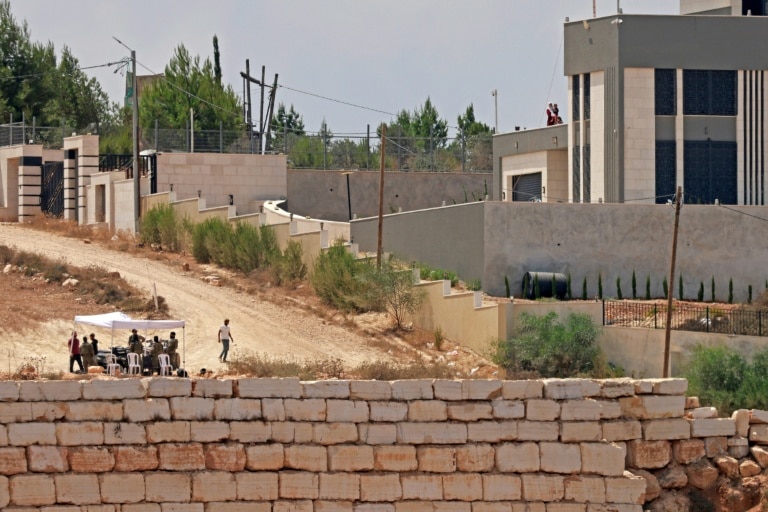
    In a significant escalation of its cross-border conflict with Hezbollah, Israeli forces have raised the national flag over the medieval Beaufort Castle in southern Lebanon as part of a broader expansion of ground operations deeper into Lebanese territory, official announcements and on-the-ground reporting confirmed Friday.

    Agence France-Presse correspondents on site observed the Israeli banner flying above the centuries-old fortress, with the sound of artillery shelling echoing across the surrounding hills and plumes of smoke rising from nearby areas. The site holds deep strategic and historical significance for both sides: it served as a key Israeli military base during the country’s 22-year occupation of southern Lebanon that ended in 2000, and it was the site of a famous 1982 battle during the First Lebanon War.

    Israeli Defence Minister Israel Katz confirmed the capture of the strategic high point in a social media post Friday, timed to coincide with the annual commemoration of Israeli soldiers killed in the 1982 First Lebanon War. “Forty-four years after the heroic Battle of Beaufort, and on this day commemorating the soldiers who fell in the First Lebanon War, our troops have returned to the summit of Beaufort and once again raised the Israeli flag there,” Katz wrote. He added that under the direction of Prime Minister Benjamin Netanyahu and his own leadership, the Israel Defense Forces (IDF) had crossed the Litani River and seized Beaufort Ridge, a position that provides sweeping panoramic views of southern Lebanon and northern Israel’s Galilee region. “This is one of the most important strategic points for defending the communities of the Galilee and safeguarding the security of our forces,” Katz noted.

    The advance on Beaufort came alongside a mass evacuation order issued by the IDF for all civilian areas south of the Zahrani River, a waterway located roughly 25 miles north of the Israel-Lebanon border, north of the Litani River. The military warned it is conducting targeted operations against the Iran-backed Hezbollah armed group, which has launched near-daily attacks on northern Israel since the outbreak of the Israel-Hamas war in 2023. “Anyone present near Hezbollah elements, facilities, or combat means endangers their life. Any building used by Hezbollah for military purposes may become subject to targeting!” IDF spokesman Avichay Adraee wrote in a social media statement.

    On Saturday, the IDF confirmed that a large contingent of ground troops had launched offensive operations to push its forward defense line deeper into Lebanon, with operations expanding into additional areas of the southern part of the country. Lebanese Prime Minister Nawaf Salam has condemned the expanded offensive as a deliberate “scorched-earth policy and collective punishment” targeting Lebanese civilians. “It is destroying towns and villages, and forcing their inhabitants into exile,” Salam said, urging an immediate ceasefire to halt the violence.

    The military escalation comes amid ongoing diplomatic efforts to de-escalate the conflict, with U.S.-brokered security talks between Israeli and Lebanese military delegations held in Washington Friday, with additional political negotiations scheduled for next week. Salam acknowledged that the outcome of the negotiations remains uncertain, but called the diplomatic track “the least costly path for our country and our people.”

    A nominally binding truce between Israel and Hezbollah was supposed to enter into force on April 17, but the agreement has been almost universally violated by both sides. Each side accuses the other of daily breaches of the ceasefire, using the other’s attacks to justify retaliatory strikes. The U.S. statement issued after Friday’s talks made no public mention of the failed truce, only noting that “productive military-to-military discussions” would lay groundwork for next week’s political negotiations. Hezbollah has repeatedly voiced firm opposition to direct bilateral talks with Israel.

    On Saturday, Hezbollah announced it had launched multiple coordinated attacks targeting northern Israeli positions and engaged in direct ground clashes with IDF troops in several towns across southern Lebanon, including Zawtar al-Sharqiyah, Yohmor al-Shaqif and Dibbine. The group claimed Israeli forces had “not yet succeeded in taking control of the towns” amid the fighting.

    The IDF reported that more than 25 projectiles were fired from Lebanese territory into northern Israel on Saturday, triggering air raid sirens in the northern cities of Karmiel and Safed — the first time sirens have sounded in those urban centers since the April truce went into effect. Public broadcaster Kan released user-generated footage showing rockets falling into the Mediterranean Sea off the coast of Nahariya, a northern Israeli coastal city near the border, forcing panicked beachgoers to flee the area.

    On Sunday, the IDF confirmed that one Israeli soldier had been killed a day earlier in a Hezbollah explosive drone attack, pushing the total number of Israeli military personnel killed in operations in Lebanon since early March to 25. According to Lebanon’s Ministry of Public Health, Israeli attacks across southern Lebanon have killed more than 3,371 Lebanese people since March 2, the vast majority of whom are civilians.

  • France detains hundreds of rioters after Paris Saint-German wins Champions League

    France detains hundreds of rioters after Paris Saint-German wins Champions League

    In the wake of Paris Saint-Germain’s dramatic penalty-shot victory over Arsenal in the 2025 UEFA Champions League final in Budapest, celebrations across France quickly devolved into widespread violent unrest Saturday night, leaving seven police officers injured and sparking more than 400 detentions nationwide, French Interior Minister Laurent Nuñez has confirmed.

    The chaos unfolded as tens of thousands of fans poured into public spaces across the country immediately after the final whistle. In Paris alone, roughly 20,000 supporters packed the iconic Champs-Élysées near the Arc de Triomphe, where crowds initially marched through tree-lined avenues, setting off celebratory flares and sounding vehicle horns. But the festive atmosphere quickly soured when small splinter groups split off from the main gathering, engaging in targeted vandalism, arson, and clashes with law enforcement.

    According to the Paris Police Prefecture, rioters damaged storefronts, set both rubbish bins and private vehicles on fire, and one small faction even attempted to force entry into a police station in Paris’ upscale 8th Arrondissement. The would-be attackers were quickly dispersed by responding officers, authorities confirmed. Nuñez called the outbreak of violence “absolutely unacceptable”, noting that unrest was recorded in roughly 15 French cities in total. As of Sunday morning, law enforcement had taken nearly 400 people into custody across the country, with almost 300 of those detentions occurring in the capital.

    Notably, this is not the first time a PSG Champions League victory has been marred by large-scale unrest. After the club claimed its first Champions League title in 2024, more than 500 arrests were made nationwide, and 201 people were injured in Paris alone. Despite the widespread violence that followed Saturday’s final, French officials have confirmed that pre-planned official victory events will proceed as scheduled. Thousands of fans are expected to gather for a public celebration Sunday afternoon at the Champ de Mars, the large public green space located just steps from the Eiffel Tower. Following the public gathering, the entire PSG squad will travel to the Elysee Palace for an official reception hosted by French President Emmanuel Macron.

  • Fan rides across 30 countries from Australia to reach Isle of Man TT

    Fan rides across 30 countries from Australia to reach Isle of Man TT

    For most motorsports fans, standing on the iconic Isle of Man TT course is a lifelong fantasy. For Melbourne-based rider Jodie Rogers, that dream became a tangible reality this year, after a 14-month solo expedition spanning 26,700 miles across 30 countries that tested her grit, adaptability and love of the open road.

    Rogers, who only picked up off-road motorcycling in 2023 and describes herself as a non-expert rider, set out from Australia in March of last year on her trusty Honda CRF. Her route took her across sweeping deserts, jagged mountain ranges, and remote international borders, winding through Southeast Asia, China, Central Asia, the Middle East, and eventually into Europe. When winter closed in, she stored her motorcycle in Ireland, then returned five weeks ago via Japan to resume her trek, with the legendary Isle of Man TT always marked as the primary destination on her itinerary.

    Along the way, Rogers faced a litany of unexpected challenges: mechanical failures that stranded her in remote regions, dangerous high-altitude passes, and forced campouts in far-from-ideal locations. One of her most memorable stops came on the Afghan-Tajik border, when floodwaters swallowed a river crossing and left her stuck between Taliban positions on one side and Tajik government forces on the other, with her bright green tent pitched squarely in the no-man’s land in between. Even amid that tension, Rogers took the incident in stride, noting that for every obstacle thrown her way, she has always found a way forward.

    Far from being a lonely slog, Rogers says her journey has been filled with human connection that transformed her worldview. After going through difficult personal experiences in the past, the trip restored her faith in humanity; she rarely feels isolated on the road, meeting kind, generous people at every stop along her route. Her first major overland trip, after cutting her teeth crossing Australia’s Simpson Desert, took her to Vietnam and the Indian Himalayas — and that experience sparked a desire to keep exploring beyond her home country’s borders.

    Now, after 244 days on the road before her winter break and weeks of additional travel to reach the Irish Sea island, Rogers says arriving at the TT still feels surreal. “I kind of can’t believe I’m actually here,” she said, describing the moment she stepped onto the island as a “pinch me” experience. The atmosphere at the event, she says, is nothing short of electric: the roar of superbikes screaming past, the wind tearing through your hair, the scent of fuel hanging in the air as riders shift through gears approaching tight corners is an exhilarating feeling that cannot be replicated anywhere else.

    During the TT’s two-week racing schedule, Rogers is camping in Onchan and is set to take part in the event’s Legacy Lap on May 31. But even after checking the Isle of Man TT off her bucket list, her global adventure is far from over. This entire expedition is just one phase of an ambitious seven-year plan that will see her ride through the rest of Europe, across Africa, throughout North and South America, and across New Zealand before she eventually returns to Australia. When asked what she plans to do after circling the entire globe on two wheels, the intrepid rider laughed and quipped, “I might have to go to the moon or something.”

  • Japan defence minister denies militarism, criticises China’s ‘huge arsenal’

    Japan defence minister denies militarism, criticises China’s ‘huge arsenal’

    On the final day of the 2026 Shangri-La Dialogue defence summit in Singapore, Japanese Defence Minister Shinjiro Koizumi delivered a pointed rebuke of Beijing’s accusations that Tokyo is pursuing a path of “new militarism,” turning the tables to cast China’s rapid military expansion and lack of transparency as the primary source of international concern.

    Koizumi’s remarks marked one of the sharpest public responses from Tokyo to date, coming in the wake of repeated criticism of the military buildup spearheaded by Japanese Prime Minister Sanae Takaichi, who took office in October 2025. A week ahead of the summit, Chinese Ministry of National Defence spokesperson Jiang Bin had issued a stark warning, claiming that “the grey rhino of a remilitarised Japan is gathering speed” and urging the global community to coordinate efforts to contain Japan’s resurgent militarism.

    Long-running friction between the two powers is rooted in Japan’s World War Two invasion of China, a historical rift that continues to shape modern diplomatic relations. For Japan, the current military expansion marks more than a decade of consistent growth in defence spending: the country has broken annual defence budget records for 12 consecutive years, with its latest cabinet-approved budget topping 9 trillion yen ($57 billion), putting Tokyo on track to hit its target of devoting 2% of GDP to military expenditure.

    Addressing an audience of regional defence officials — including representatives from Asian nations that suffered Japanese occupation during World War Two — Koizumi framed Japan’s military upgrades as a responsible and necessary step. “It is only natural that every country, including Japan, updates its defences to meet new challenges and to contribute to peace in the region,” he stated, promising that Tokyo would maintain “a high degree of transparency” and sustain open dialogue with global partners. “What are we developing these capabilities for? And based on what thinking? Japan will move forward while making a clear explanation to the international community.”

    Directly pushing back on the new militarism label, Koizumi said the claim was “nothing further from the truth.” Pointing obliquely to China’s arsenal, he argued: “There’s a country that has a huge arsenal of nuclear weapons and strategic bombers. Japan has neither of these weapons. And yet Japan is labelled with ‘new militarism’. Isn’t it strange?”

    After his keynote address, a Chinese military delegate pressed Koizumi on whether Japan would issue a formal apology to World War Two victims across China, South Korea, and Southeast Asia. Koizumi sidestepped the apology question, instead doubling down on criticism of Beijing. “China continues to increase its defence spending at a high level and is rapidly expanding its military capabilities across a wide range of areas without sufficient transparency,” he said, adding: “China’s external approach and military activities are matters of serious concern for Japan and the international community.” Despite the sharp exchange, he noted that “Japan’s door is always open” for diplomatic communication with China.

    The question of official apologies for wartime atrocities has remained a persistent sticking point in bilateral relations for decades, with Beijing repeatedly rejecting past Japanese apologies as insufficient. Notably, Koizumi’s own father, former Prime Minister Junichiro Koizumi, issued multiple formal apologies for Japan’s wartime aggression during his tenure.

    Since taking power, Takaichi has advanced sweeping changes to Japan’s post-war security framework. Beyond expanding the defence budget, her administration plans to invest in new surface-to-ship missiles and land- and underwater-deployed unmanned drones. Tokyo has also recently relaxed regulations to allow the export of lethal weapons to foreign nations, a move designed to strengthen Japan’s domestic defence industrial base, and is set to revise key national security policy documents by the end of 2026.

    Most controversially, Takaichi has pushed for amendments to Article 9 of Japan’s constitution, the landmark pacifist clause that formally renounces war as a tool of state policy. Tensions between Tokyo and Beijing hit a new high in November 2025, after Takaichi stated that Japan could deploy its Self-Defense Forces in response to a Chinese attack on Taiwan, drawing fierce pushback from Beijing.

    Takaichi’s security shifts have also deeply divided Japanese public and political discourse. While supporters argue that increased defence capabilities are critical to deterring potential aggression from China, critics warn that the moves will inflame regional tensions and abandon the post-war pacifism that has been a core pillar of Japanese national identity for 80 years. In recent months, large-scale anti-war protests have swept across the country, with some demonstrations ranking among the largest Japan has seen in decades.

  • Japan defence chief takes swipe at China at security meet

    Japan defence chief takes swipe at China at security meet

    Asia’s premier annual defence summit, the IISS Shangri-La Dialogue, kicked off in Singapore Sunday with sharp rhetorical friction between Japan and China, as Tokyo’s top defence official pushed back against Beijing’s accusations of rising Japanese militarism. Japan’s Defence Minister Shinjiro Koizumi used his platform at the closed-door, high-profile gathering to deliver a veiled rebuke of China, as Tokyo presses forward with a sweeping overhaul of its post-World War II security posture.

    Under current Prime Minister Sanae Takaichi, Japan has accelerated its shift toward a far more proactive defence policy, backed by long-standing U.S. encouragement to move away from the pacifist constitutional framework that has guided its military policy for nearly 80 years. This shift has drawn consistent and harsh criticism from Beijing, which has repeatedly labeled Tokyo’s evolving stance as a dangerous turn toward “new militarism” that threatens regional stability.

    Koizumi rejected these claims outright in his address. “Nothing could be further from the truth,” he told delegates, before framing a pointed comparison: “Think about it. There is a country that has a huge arsenal of nuclear weapons and strategic bombers. Japan has neither of such weapons. And yet, Japan is labelled ‘new militarism’. Isn’t it strange?” While he did not name China directly, the reference was clear to all in attendance. International defense estimates indicate China possesses hundreds of nuclear warheads and has undertaken a rapid, large-scale expansion of its military capabilities over the past two decades.

    Diplomatic tensions between the two major Asian powers have been elevated since last November, when Takaichi suggested Japan could take military action if China attempted to seize control of Taiwan, the self-governing island democracy that Beijing claims as an inalienable part of its territory. Koizumi doubled down on Tokyo’s concerns Sunday, arguing that China’s military buildup has proceeded “without sufficient transparency” and that its regional military activities represent “a matter of serious concern for Japan”.

    In contrast, Koizumi stressed that Japan’s own military modernization, which includes expanding capabilities in artificial intelligence, unmanned defense systems, cyber security, and space defense, is being carried out “with a high degree of transparency”. He added that Japan’s decades-long track record as a peace-loving nation is a proven fact recognized by the international community, and that “this fact will not be shaken by false claims”. Koizumi also noted he regretted that China had declined to send its top defense leadership to the summit, meaning no bilateral meeting between the two nations’ defense chiefs could be held this year. For the second consecutive Shangri-La Dialogue, China sent a lower-level, scaled-back delegation without its incumbent defense minister Dong Jun.

    Beyond his address, Koizumi held bilateral talks with Philippine Defense Secretary Gilberto Teodoro on Sunday, where the two allies confirmed plans to transfer retired Japanese Abukuma-class destroyers and TC-90 aircraft to the Philippines during Japan’s 2027 fiscal year. The Philippines has sought to acquire the decommissioned Japanese vessels for years, sending a military inspection team to review the ships in 2025.

    This defense cooperation comes amid deepening security ties between Tokyo and Manila, both of which have growing territorial and strategic disputes with Beijing in the South China Sea. The two leaders announced they would move forward with talks on intelligence sharing and open maritime border coordination — a step Beijing has already condemned as an illegal violation of its broad, contested territorial claims in the region.

    Teodoro echoed Koizumi’s criticism of Beijing in comments after the meeting, stressing that Manila would never compromise its territorial integrity and sovereignty, a commitment enshrined in the country’s constitution. He drew a sharp contrast between the Philippines’ democratic system and what he called “some autocratic systems where the mandate comes from above, dictated down.”

    Teodoro’s comments came as China’s People’s Liberation Army Southern Theater Command announced it had carried out new combat readiness patrols in the waters and airspace around Scarborough Shoal, a contested feature at the center of a years-long sovereignty dispute between Beijing and Manila. In its statement, the Chinese command called the patrols an “effective countermeasure to cope with all sorts of rights-violation and provocative acts” around the shoal, which it claims is an inherent part of Chinese territory.

    An international arbitration ruling issued in 2016 overwhelmingly rejected Beijing’s sweeping territorial claims to nearly the entire South China Sea, but Beijing has continued to ignore the ruling and expand its military and paramilitary presence in contested areas of the strategic waterway, through which trillions of dollars in global trade passes annually. The Shangri-La Dialogue, now in its 23rd year, brings together top security officials, defense leaders, and policy experts from more than 45 nations to discuss pressing regional security challenges.

  • The Australian helping to return stolen English church artefacts

    The Australian helping to return stolen English church artefacts

    Half a world away from the English countryside, an 80-year-old Sydney-based solicitor with a lifelong passion for heraldry has pulled off a remarkable feat of historical restitution: tracking down and securing the return of two stolen centuries-old artefacts taken from parish churches in Norfolk and Hertfordshire. Richard d’Apice, an active member of both the UK and Australian branches of the Heraldry Society, spotted the items by chance while browsing online auction listings, turning his decades of specialized hobbyist knowledge into a win for cultural preservation.

    d’Apice has long been drawn to the study of heraldic symbols, particularly those connected to funeral memorials, and says he makes a point of exploring every open church he encounters during his travels. That curiosity translated to online browsing last December, when he came across a painted wooden panel listed for sale by UK-based Dreweatt Auction House. His specialized training let him spot that the piece was out of place: ecclesiastical heritage items almost never get formal permission to be removed from church property, so seeing a 17th-century heraldic panel up for public auction immediately raised red flags.

    After weeks of targeted research, d’Apice cross-referenced details of the panel with historical records, confirming it was first documented in an 1812 issue of *The Gentleman’s Magazine* as a memorial to George Cordell, a figure who served in the royal households of three successive British monarchs. The panel, valued at roughly £3,000, had been stolen from St Leonard’s Church in Flamstead, Hertfordshire back in 1996. Once d’Apice verified its origin, he reached out directly to the church’s rector and wardens to alert them to the impending sale.

    Church officials confirmed the item matched their 1996 theft report, which had already been filed with police and added to the Art Loss Register, a global database tracking stolen cultural property. With the official documentation in hand, the auction house pulled the panel from its sale schedule, and arrangements were made to return it to its rightful home. A public unveiling ceremony is scheduled for June 4 at St Leonard’s, as a highlight of this year’s Flamstead Arts Festival, which runs through June 7. d’Apice will travel from Australia to attend the event and personally unveil the restored memorial.

    The Hertfordshire recovery was not a one-off coincidence: it came only a short time after d’Apice helped track down a second stolen artefact, a 19th-century funeral hatchment, the diamond-shaped heraldic panel that memorializes a deceased individual, stolen from St Margaret’s Church in Felbrigg, Norfolk. That piece, which honors Cecilia, the widow of 19th-century MP William Windham who died in 1824, had been listed for sale by Sworders Fine Art Auctioneers in Stansted Mountfitchet, Essex.

    Following d’Apice’s tip, Essex Police’s rural engagement team launched an investigation and recovered the hatchment from a private seller who had purchased it in good faith roughly 20 years prior. The artefact was officially returned to St Margaret’s last October. “It was recovered from the seller, who had bought it in good faith around 20 years ago. Then, happily, I was able to deliver it safely back to its legal guardians,” explained PC Dane Wyatt, the rural engagement officer who led the handover. Sworders Fine Art Auctioneers also confirmed they were proud to support the restitution effort, welcoming the chance to return the piece to its original home.

    For d’Apice, the dual recoveries are not just a personal win for his hobby, but a reminder of a growing threat to UK ecclesiastical heritage: rampant theft of historical items from rural churches that has slowly eroded collections of irreplaceable cultural objects across the country. He emphasized that the Art Loss Register has emerged as a critical tool in fighting this trend, allowing owners to prove rightful ownership and recover stolen property across the global art and antiquities market.

    “It feels wonderful to know my extensive knowledge and research had been put to good use, and the items were now back to where they belong,” d’Apice said in an interview. “I’m excited to know the memorial board has been returned to the place it’s been for hundreds of years.”

    This report originates from BBC Beds, Herts and Bucks, which invites audience members to submit local story tips via multiple digital platforms, including BBC Sounds, Facebook, Instagram and X.

  • Iran war forces farmers seek fertilizer alternatives from cow dung to compost

    Iran war forces farmers seek fertilizer alternatives from cow dung to compost

    Geopolitical upheaval in the Middle East has sent shockwaves through global agricultural markets, sending chemical fertilizer prices soaring and pushing smallholder and commercial farmers alike across multiple continents to accelerate a shift toward organic and bio-based alternatives. For farmers in Senegal, one of West Africa’s most food-dependent nations, the impact of tensions around the Strait of Hormuz has been felt almost immediately after U.S. missile strikes on Iran earlier this year. Since the outbreak of conflict in late February, domestic fertilizer prices in the country have jumped 40%, creating an unprecedented crisis for small-scale producers reliant on imported agricultural inputs.

    Abou Sow, a Senegalese farmer who made the switch from chemical fertilizers to organic compost eight years ago, has been far better insulated from the price shock than many of his neighbors. Today, he leads a grassroots movement urging local farmers to source manure from regional livestock herders and teaches hands-on composting techniques, pointing to wriggling earthworms in finished compost as a key marker of nutrient-rich soil. “We can’t afford to wait for a ceasefire,” Sow said. “It’s simply too risky to depend on imported chemical fertilizers when global supply chains are so unstable.”

    The disruption stems from Iran’s control over the Strait of Hormuz, a critical global shipping chokepoint that impacts both natural gas supplies – a core input for chemical fertilizer production – and global maritime trade. Data confirms the scope of the crisis: the Gulf region accounts for 30% of all globally traded chemical fertilizer, and the World Bank’s global fertilizer price index has recorded a 50% price increase since tensions escalated. The global food security community has sounded the alarm, with Maximo Torero, chief economist at the United Nations Food and Agriculture Organization, warning “the clock is ticking very hard” as risks to global food supplies mount.

    Beyond easing supply chain dependency, experts note that a global shift away from chemical fertilizers carries major environmental benefits. The production and application of synthetic fertilizers generate substantial greenhouse gas emissions, the primary driver of anthropogenic climate change. In contrast, organic and natural fertilizers sequester carbon in soil and reduce the water pollution caused by chemical runoff from agricultural lands. “It’s good for the planet because you’re weaning food production off fossil fuels,” explained Susan Chomba, a member of the International Panel of Experts on Sustainable Food Systems, an independent global think tank.

    Senegal, which imports 125,000 tons of chemical fertilizer annually, illustrates the uneven nature of the transition. While Senegalese Agriculture Minister Mabouba Diagne has stated the government secured enough chemical fertilizer for the current growing season, many farmers report that supplies are increasingly hard to access on the ground. Farmer Aliou Fall blames the U.S. for the crisis, arguing “He [Donald Trump] brings war to the world and he doesn’t even think about it. Now farmers are suffering.”

    For Sow, proximity to a regional sheep-rearing community has kept his compost supplies steady: he applies six tons of organic compost to his fields each year, avoiding the sticker shock of synthetic inputs. But access remains a major barrier in remote rural areas, where sourcing and transporting large volumes of manure is logistically and financially unfeasible. Sow warns that without broader support, some vulnerable smallholders may be forced to abandon their fields entirely this growing season.

    Industry-backed alternatives are already gaining traction across the continent: biofertilizers, which contain naturally occurring bacteria and microorganisms that help crops draw essential nitrogen from air and soil, offer a scalable solution. A growing number of African firms now produce commercial-scale compost from municipal organic waste, turning discarded food scraps into nutrient-rich fertilizer. In response to the crisis, the Senegalese government announced a program in April to subsidize and distribute 30,000 tons of organic fertilizer to smallholders, but Sow argues the support is far from sufficient to meet growing demand.

    Systemic barriers continue to slow the global transition, experts note. The Organization for Economic Co-operation and Development estimates that governments around the world spend $700 billion annually on agricultural subsidies, with the vast majority directed toward supporting synthetic fertilizer production and distribution. This policy landscape keeps chemical fertilizer artificially cheap and makes sustainable alternatives less cost-competitive for producers. “You’re incentivizing the wrong sort of products,” Chomba said of the current subsidy structure.

    The trend toward alternative fertilizers is playing out across major agricultural economies globally. In Brazil, one of the world’s top exporters of soybeans, coffee, sugarcane, and beef, more than 80% of all chemical fertilizer is imported, leaving the sector extremely exposed to global price shocks. Luis Barbieri, founder of the Brazilian Folio Institute that connects farmers and agricultural researchers, reports that fertilizer prices in the country have risen 50% since the outbreak of the Iran conflict. “Whenever we have a war, farmers’ use of biofertilizers is turbocharged,” Barbieri said.

    Notably, chemical fertilizers have long been less effective in Brazil’s tropical climate: high temperatures and heavy rainfall accelerate runoff, reducing their impact on crop yields. Brazil’s state-run agricultural research corporation Embrapa reports that the country’s biofertilizer sector grew 15% between 2023 and 2024, and flexible national patent laws allow smallholders to produce their own biofertilizers on-farm at a fraction of the cost of imported synthetic alternatives. The pace of transition varies widely, however: in Mexico, progress has been glacial, due to persistent government subsidies for chemical fertilizer and a lack of public funding for sustainable alternatives, according to Gerardo Noriega, a research professor at the Autonomous University of Chapingo and one of Mexico’s leading advocates for organic fertilization. Even so, Noriega predicts the current global crisis “may force (farmers) to adopt organic fertilizers more quickly than they had imagined.”

    In India, another major agricultural economy that imports 60% of its fertilizer from the Gulf region, the central government has launched a national push to scale natural farming. In the southern states of Telangana and Andhra Pradesh, more than 1.7 million farmers have already shifted to natural systems that rely on on-farm organic inputs rather than commercial synthetic fertilizers. Manohara Chari, a farmer in Telangana, now produces jivamrita – a nutrient-dense fertilizer blend made from cow dung, cow urine, flour, soil, and jaggery – to replace the synthetic products he used for decades. “We do not depend on companies,” Chari said, explaining the self-sufficiency of the natural farming model.

    Earlier this year, Indian Prime Minister Narendra Modi launched a national mission to scale natural farming across the country, setting a target of cutting chemical fertilizer use by 50% within the coming years. The Indian government has already spent heavily to subsidize imported chemical fertilizer and secure alternative supply chains to offset the Gulf disruption, but agricultural scientists report growing farmer interest in low-input natural farming since the conflict began. “There’s certainly been more interest this year in natural farming, especially after the Middle East conflict began,” said G.V. Ramanjaneyulu, an agricultural scientist with the Center for Sustainable Agriculture. Many farmers are now setting aside test plots on their land to trial natural methods before committing to a full transition.

    The shift to natural farming does require additional on-farm labor and a multiyear transition period as soil health regenerates, and farmers say government policy remains misaligned to support the change. Chari argues that redirecting even a small share of existing chemical fertilizer subsidies to support natural farmers would drive a much faster, broader transition across the country. The current global supply crisis, producers and experts agree, has created an urgent opening to reorient global agricultural policy toward more resilient, sustainable systems that benefit both smallholders and the climate.

  • Venice’s growing flamingo population finds refuge in recovering wetlands

    Venice’s growing flamingo population finds refuge in recovering wetlands

    VENICE, Italy — For generations, the iconic pale pink flamingo has been absent from local Venetian vocabulary, a quiet reflection of how recently these striking birds have made the Venetian Lagoon their home. Today, that narrative is shifting dramatically: flamingo numbers in this storied coastal ecosystem have hit all-time highs, as large-scale wetland restoration projects create new viable habitats that could soon support the first permanent, self-sustaining nesting colony in the region’s modern history.

    Flamingos, which have long established major nesting sites in Spain and France, first began appearing in the 550-square-kilometer Venetian Lagoon in the early 2000s. Initially, sightings were largely limited to remote fishing valleys and tidal mudflats along the lagoon’s outer edges, with almost no encounters in the canal-laced historic center that draws millions of global tourists each year. That pattern has shifted sharply in recent years, however. Last year’s official ornithological census counted nearly 24,000 wintering flamingos in the lagoon — an increase of 8,000 from the previous year’s total.

    “This count cements the Venetian Lagoon as one of the most critical wintering grounds for flamingos across their entire European range,” explained Alessandro Sartori, a leading ornithologist who monitors the lagoon’s bird populations weekly by boat. Over 90% of the counted flamingos currently congregate in the northern lagoon, where large expanses of intact natural salt marsh and semi-natural traditional fishing valleys provide abundant food sources. These managed embanked wetlands, however, have also created occasional conflict between the feeding birds and local fishing activity.

    Sartori has spent years searching for signs of successful nesting, a milestone that would confirm the establishment of a self-sustaining local colony. Two previous attempts in 2008 and 2013, in northern lagoon fishing valleys, ended in devastating setbacks: a severe hailstorm killed dozens of young birds, halting early colonization efforts. That could change soon, thanks to a landmark EU-backed wetland restoration project focused on rebuilding eroding salt marshes in the isolated southern lagoon, located beyond Venice’s historic center and the Marghera industrial port.

    Once, nearly half of the entire Venetian Lagoon consisted of natural salt marshes, known locally as *barene* in the Venetian dialect. Today, salt marshes make up just 7% of the lagoon’s total area, with only half of that remaining habitat naturally formed. Decades of erosion, accelerated by the dredging of shipping channels for the Marghera industrial port in the 1960s, has pushed the lagoon toward a worrying transition: without intervention, it could eventually degrade into an open marine bay, according to conservation leaders.

    The 23.6 million euro ($27.5 million) five-year WaterLANDS project, led in part by local conservation group We Are Here Venice, aims to reverse that trend by rebuilding salt marsh habitats at a scalable scale. Beyond creating new feeding and potential nesting grounds for flamingos, restored salt marshes deliver major climate benefits: they trap carbon dioxide, the primary greenhouse gas driving climate change, and buffer the lagoon against the impacts of rising sea levels. “This project is designed to prove that we can reverse centuries of erosion and change the trajectory of the lagoon,” said Jane da Mosto, executive director of We Are Here Venice.

    Conservation teams working on the southern lagoon project have already documented clear signs of increasing flamingo activity, from scattered pink feathers to regularly feeding flocks. Sartori has already observed a dramatic jump in flamingo numbers in the restored southern wetlands: over the past three years, counts have grown from just a handful of birds to between 300 and 400 during peak wintering periods. “Our hope is that just as flamingos have established nesting colonies in other parts of the Mediterranean, they will find suitable breeding ground right here on these restored barene,” Sartori said.

    Beyond conservation gains, the arrival of Venice’s pink newcomers offers a new opportunity to reframe the city’s ecological identity, adding a layer of natural significance to its already well-known historical and cultural heritage. While casual flamingo sightings remain rare for most tourists — the birds favor remote, shallow tidal reaches that require careful navigation through shifting channels, and they scatter quickly when disturbed by human activity — Sartori predicts that flamingo watching will become an increasingly popular sustainable activity as populations grow, with occasional sightings already possible from the shores of the popular lagoon islands of Murano and Burano. He emphasized that any wildlife viewing must prioritize the birds’ safety, with visitors maintaining a safe distance to avoid disrupting their feeding and resting routines.

    The Associated Press’ climate and environmental reporting is supported by funding from private philanthropic foundations, with AP maintaining full editorial control over all content.

  • American allies warn division weakens deterrence in calls for global unity to meet new threats

    American allies warn division weakens deterrence in calls for global unity to meet new threats

    At the annual Shangri-La Dialogue, hosted by the International Institute for Strategic Studies in Singapore, senior defense officials from U.S. allied nations have converged to stress the urgent need for collective solidarity amid shifting transnational security threats and growing friction between Washington and its long-standing partners. The calls for unity came one day after U.S. Defense Secretary Pete Hegseth used the forum’s opening to renew the Trump administration’s sharp criticism of Western European allies for failing to meet defense spending commitments. Hegseth, echoing President Donald Trump’s longstanding harsh rhetoric against the North Atlantic Treaty Organization, went further Saturday, accusing European capitals of being distracted by hollow globalist discourse around the rules-based international order, weakening their own militaries, and opening borders without sufficient security safeguards. He argued that international rules hold no weight without credible hard power to enforce them.

    While Japanese Defense Minister Shinjiro Koizumi publicly praised Hegseth for the U.S.’s continued commitment to Indo-Pacific security, he joined other allied leaders in underlining that robust global coalitions remain irreplaceable for countering modern threats. In a clear push against the risk of growing rifts between the U.S., Europe, and like-minded partner nations, Koizumi told attendees: “Division weakens deterrence, unity strengthens deterrence.” He warned that any fractures in the alliance bloc would be exploited by adversarial powers, arguing that now is the moment to deepen, rather than scale back, cooperative defense efforts.

    Koizumi also addressed recent geopolitical friction between Tokyo and Beijing over Japan’s landmark shift in defense policy. Last month, the cabinet of Prime Minister Sanae Takaichi scrapped a decades-long ban on lethal weapons exports, the most significant break from Japan’s post-World War II pacifist framework to date. China has decried the move, with Foreign Ministry spokesperson Guo Jiakun vowing that Beijing would “resolutely resist Japan’s reckless moves toward a new type of militarism.” Rejecting this accusation outright, Koizumi framed it as deeply ironic in his English remarks at the conference. “Think about it, there is a country that has a huge arsenal of nuclear weapons and strategic bombers,” he said. “Japan has neither of such weapons, and yet Japan is labeled new militarism. Isn’t it strange?” The Japanese defense minister also called out China’s choice not to send its top defense official to the dialogue, noting that genuine transparency emerges only through open discussion and diplomatic engagement.

    Other allied defense leaders echoed Koizumi’s emphasis on collective action, while largely aligning with Hegseth’s core argument that the rules-based international order requires hard military backing. Speaking to reporters on the conference sidelines Sunday, Australian Defense Minister Richard Marles agreed that rules must be underpinned by credible power, but added that a strong, shared rule of law is more vital today than at any point in recent history. For middle powers like Australia, and for smaller nations globally, Marles noted that a rules-based system is the only framework that guarantees sovereign agency. “This is a collective challenge and it demands a collective response, which is actually what the rules based order is all about,” Marles said, adding that cross-national alliances remain the bedrock of regional security.

    Netherlands Defense Minister Dilan Yesilgöz-Zegerius expanded on this point, noting that contemporary conflicts no longer stay contained within regional borders. “A war in Europe involves drones from Iran, soldiers and ammunition from North Korea and various types of support from China,” she observed. “The lesson is clear: regional tensions are no longer regional. Our security is interconnected.” Yesilgöz-Zegerius warned that if middle and small powers fail to coordinate their action, they risk being sidelined from decisions that shape their own security, but unified coalitions allow them to uphold global stability. Even as international law faces widespread violations, she argued, the international community must not abandon shared norms. “The fact that international rules are being violated does not mean we should abandon them,” she said. “On the contrary, it means we must defend them more constantly and more courageously. International law may be imperfect, but history teaches us that the alternative is far worse.”