作者: admin

  • WHO chief hails 5 Ebola recoveries as a new treatment center opens in eastern Congo

    WHO chief hails 5 Ebola recoveries as a new treatment center opens in eastern Congo

    BUNIA, Democratic Republic of Congo – On a Sunday visit to this Ituri provincial capital at the center of an ongoing rare Ebola outbreak, World Health Organization Director-General Tedros Adhanom Ghebreyesus announced a small, hopeful milestone: five patients have successfully recovered from infection with the Bundibugyo virus, a rare strain of Ebola with no approved vaccine or specific treatment.

    Tedros made the announcement during the official inauguration of a new Ebola treatment facility in Bunia, noting that four of the recovered patients would be discharged on the day of his announcement, with a fifth having been released two days prior. The first confirmed recovery of a Bundibugyo patient in this current outbreak was documented by WHO just two days earlier, a breakthrough that health officials are emphasizing to counter widespread public fear around the often-fatal virus.

    “Of course, we’re still working on developing targeted vaccines and treatments, but that doesn’t mean that people cannot recover from Ebola,” Tedros told attendees at the opening event. He stressed that early care seeking is critical to survival, urging community members to access medical support immediately after developing symptoms. “If you come to health facilities when you have symptoms, you can get the support and recover, so the key is to come forward as early as possible and to get the necessary support,” he added.

    As of the latest official counts, the outbreak has recorded 906 suspected cases and 223 suspected deaths across the Democratic Republic of Congo. The outbreak has already spilled over into neighboring Uganda, where the Ugandan Ministry of Health confirmed nine cases and one death as of last Friday.

    Despite the opening of new treatment infrastructure and the arrival of additional international aid, the virus is still spreading faster than public health responders can contain it, medical aid organization Doctors Without Borders (MSF) warned in a statement Saturday. The group called for urgent expansion of diagnostic testing, faster deployment of trained outbreak response personnel, and guaranteed consistent access for medical supply shipments into affected regions.

    Response efforts face two major layers of security and community barriers. First, long-running local conflict over access to health measures: local residents have expressed intense anger over mandatory Ebola body management protocols, which conflict with traditional local burial customs. This public frustration has boiled over into at least three separate attacks on local health centers, putting response teams at severe risk. Second, widespread armed conflict across eastern Congo has further disrupted operations. In Ituri, the Islamic State-aligned Allied Democratic Forces rebel group carries out regular attacks, while to the south in the North Kivu and South Kivu provinces – where the outbreak has also been detected – the Rwanda-backed M23 rebel militia controls major urban centers including Goma and Bukavu. Two cases have already been recorded in areas under M23 control.

    To overcome these barriers, Tedros emphasized that sustained community engagement is non-negotiable for a successful response. “We can stop this Ebola and anyone who has it can also recover. But the rule … is this thing is everybody’s business and every citizen should be involved,” he said.

    Local health leaders echoed the call for collective action while leaning into the recent recovery news to reinforce public hope. “The final message we would like to share with the Ituri community is that there is hope,” said Pierre Akilimali, Incident Manager at Congo’s National Institute of Public Health, during the treatment center’s inauguration. “With the symptomatic treatment that we are currently providing, we are seeing patients recover.”

    Davin Ambitapio, a senior doctor at the new Bunia facility, added that the outbreak is far from insurmountable with coordinated support. “We truly have hope. The virus here is not as complicated as those we have dealt with in the past, and with the support of all our partners, we believe we will be able to bring this outbreak under control as quickly as possible,” he said.

    Reporting for this story was contributed by Banchereau from Dakar, Senegal.

  • Hundreds arrested and dozens of police injured after Champions League riots in France

    Hundreds arrested and dozens of police injured after Champions League riots in France

    Paris Saint-Germain’s historic penalty shootout win over Arsenal in the 2026 Champions League final was overshadowed by widespread violent unrest across France overnight Saturday, leaving one person dead, 219 fans and civilians injured, and 57 police officers hurt in chaotic clashes that forced authorities to deploy thousands of additional security personnel for Sunday’s planned victory parade.

    French Interior Minister Laurent Nuñez confirmed that eight of the 219 injured people remain in serious condition following the violence, which erupted within minutes of the final whistle as thousands of fans flooded central Paris’ iconic Champs-Élysées boulevard. Authorities reported that 780 people have been taken into custody in connection with the unrest, with more than 450 still held in detention as of Sunday morning.

    Tragedy struck on Paris’ peripheral ring road, where a person was killed during an incident after rioters attempted to block the route. Video footage from the capital captured widespread disorder: fans lit flares and fireworks in city streets, set electric bicycles ablaze, and smashed the glass storefront of at least one retail shop. As crowds became unruly, police were forced to deploy tear gas to disperse violent groups, while public transit services including buses, regional trains, and rail lines were severely disrupted across the capital.

    The violent turn of post-match celebrations echoed identical unrest that followed PSG’s Champions League victory in 2025, which also resulted in fatalities. For this year’s match, French authorities had already pre-deployed thousands of officers to prevent a repeat of last year’s chaos, but violence still broke out across the city. In response to the overnight unrest, an additional 6,000 police officers have been mobilized to secure Sunday’s scheduled victory parade, which will pass through the Champ de Mars at the foot of the Eiffel Tower before a formal reception hosted by French President Emmanuel Macron for the team.

    In a public address on Sunday, Nuñez emphasized that security forces would maintain a hardline stance against rioters. “We are a great country that upholds public order. We allow freedom of assembly, but we do not tolerate excessive violence and disorder,” he said. The minister drew a clear distinction between peaceful celebrating fans and agitators: “The vast majority of people who came out to cheer on their team did so peacefully, and their celebrations went without incident. But there are other individuals — not PSG supporters, many of whom did not even watch the match — who come only to cause trouble and disrupt public order. We are here to stop them, and our response is very firm.”

    The unrest drew swift political criticism from opposition figures, including far-right leader Marine Le Pen, who took to social platform X to denounce the violence. “Only in France does a football club’s victory spark riots,” Le Pen wrote. “Only in France does everyone feel compelled to lock themselves in their homes on the evening of a victory to avoid being confronted with violence.”

    As of Sunday morning, the city remains on high alert ahead of the official victory procession, with authorities urging fans to remain peaceful and respect public order rules during the celebration.

  • Scotland’s former leader rejects blame for estranged husband’s embezzlement of party funds

    Scotland’s former leader rejects blame for estranged husband’s embezzlement of party funds

    LONDON – In a fiery public address amid growing political pressure, Scotland’s former First Minister Nicola Sturgeon has firmly rejected any responsibility for the embezzlement of hundreds of thousands of Scottish National Party (SNP) funds by her estranged husband Peter Murrell, insisting she will not apologize for crimes she says she had no part in. Murrell, who served as the SNP’s long-serving chief executive, entered a guilty plea last week to charges of stealing more than £400,000 (equivalent to roughly $540,000) from the pro-independence party during his tenure. Prosecutors confirmed the stolen funds were used to fund a luxury personal lifestyle far beyond Murrell’s official compensation. Speaking in an interview with the BBC on Sunday, Sturgeon said she felt deeply betrayed by Murrell’s actions, and again denied any prior knowledge of the ongoing financial fraud that has rocked the nearly 20-year ruling party of Scotland’s devolved government. “I am not responsible for the crimes that my former husband committed,” Sturgeon stated emphatically. “I’m not going to apologize for somebody else’s crimes.” Sturgeon’s interview was a direct response to widespread public and political skepticism that she remained unaware of Murrell’s illicit activities, with critics across the UK political spectrum challenging her long-held claims of ignorance. This high-profile embezzlement case has amplified long-simmering public concerns about political accountability across the United Kingdom, coming on the heels of a string of parliamentary and party scandals that have steadily eroded public trust in governmental institutions at every level. Beyond questions of knowledge, critics have repeatedly challenged Sturgeon’s decision to retain Murrell as SNP chief executive after she took over the party leadership in 2014. In a rare concession, Sturgeon acknowledged that the choice to keep him in the senior role was an error, saying “Of course, with hindsight, I wish that I could go back and take a different decision.” Murrell’s guilty plea brings the first major legal conclusion to a five-year police probe into the SNP’s internal finances. The party, which has led Scotland’s semi-autonomous devolved government for nearly two decades, has centered its political agenda on campaigning for full Scottish independence from the United Kingdom. The SNP was already roiled by internal crisis in 2023, as public reports of unaccounted finances and plummeting party membership numbers split the party’s leadership. Sturgeon, who led Scotland’s devolved government for eight years, announced an abrupt resignation as First Minister in February 2023, a move that left political observers confused. At the time, she said her decision to step down came from a personal conviction that it was the “right time to go,” with no outward signs of the impending scandal that would soon emerge. Just one month after Sturgeon’s resignation, Murrell stepped down from his 20-year post as SNP chief executive, taking blame for intentionally misleading journalists about the severity of the party’s membership decline. Police took Murrell into custody at the couple’s shared Glasgow residence in April 2023. Sturgeon herself was arrested in connection with the investigation in June 2023, but police later cleared her of any wrongdoing related to the embezzlement scheme.

  • Ceasefires by other means

    Ceasefires by other means

    When the week began, the tentative ceasefire between Iran and the United States looked far less like a concrete step toward lasting peace and more like a drawn-out negotiation over the core political purpose of the conflict itself. By week’s end, that surreal, muddled state of affairs had not changed.

    Over the course of the week, Tehran accused Washington of continuing offensive military strikes, while U.S. officials maintained all their actions were strictly defensive in nature. Rumors of a proposed 60-day ceasefire extension circulated alongside official denials, conflicting counterclaims, and fierce disputes over control of the Strait of Hormuz, the blockade of Iranian ports, and the conditions under which commercial shipping could resume regular operations through the strategic waterway.

    As frontline fighting has tapered off, the underlying political stakes of the conflict have been thrown into sharp relief. Ceasefires are often dismissed as nothing more than temporary pauses in violence, but their true function is to reveal the moment when military force has hit its political limits. As military theorist Carl von Clausewitz famously argued, war is simply the continuation of political dialogue by other means; a ceasefire fits squarely within that framework. It is the turning point when leaders begin to question whether continued force still advances their core goals, or whether escalating violence now threatens priorities they value more.

    This question is uniquely fraught in the current conflict because Washington’s core objectives have never been clearly defined. At different turns, the conflict has been framed as a deterrence campaign, a punitive operation, a pressure campaign targeting Iran’s nuclear program, and a maritime crisis centered on Hormuz. While these goals overlap, they demand different approaches to warfare and do not align on a single core political end state — and crucially, they also require very different types of ceasefire agreements. A ceasefire after a punitive operation requires claiming that deterrence has been restored. A ceasefire ending a maritime crisis needs tangible arrangements that shipping companies and maritime insurers can trust. A ceasefire emerging from nuclear pressure requires a structured sequence of diplomatic talks. A ceasefire tied to regime change demands far larger, far less sustainable concessions.

    Historical analysis shows that durable ceasefires almost always emerge from one of three conditions: the warring parties have reached a military stalemate, fighting has opened a viable path for diplomatic negotiation, or continued conflict has begun to undermine the very political project it was intended to advance. Three landmark 20th century conflicts — the 1950–1953 Korean War, the 1973 Yom Kippur War, and the 1980–1988 Iran-Iraq War — illustrate this pattern: conflicts only end when military force can no longer deliver the political outcomes leaders initially sought.

    The Korean Armistice Agreement was a ceasefire born of exhausted ambition. The war began when North Korea launched a forceful attempt to reunify the Korean Peninsula by force, expanded after the U.S.-led coalition shifted from repelling the invasion to rolling back communist control in the North, and shifted again when China entered the war to prevent that outcome. By 1953, after three years of catastrophic human and material loss, frontline positions had stabilized close to where the conflict started. The armistice simply formalized a reality the battlefield had already made clear: neither side could impose reunification at a cost it was willing to continue paying. Though the armistice never evolved into a formal peace treaty — its greatest limitation — that same ambiguity is what gave it its remarkable durability. It reduced large-scale violence by accepting that the core political question of Korean unification would remain unresolved. The Korean Peninsula has remained in a state of frozen conflict for 70 years, managed across a demilitarized border and maintained by deterrence, and the ceasefire has endured precisely because it demanded less from political negotiation than the war demanded from military force.

    This same dynamic is playing out in the current standoff between Iran, the U.S., and Israel. All three sides still retain the capacity to inflict significant damage on one another, yet none can convert that damage into a stable, widely accepted political outcome. Israel can launch strikes to degrade Iranian military capabilities; Iran can retaliate, disrupt global shipping, and raise the cost of regional instability for its adversaries; the U.S. can deploy overwhelming air and naval power in the region. But the core question is no longer whether any side can hurt its opponents — it is whether additional harm will improve the political position of the party inflicting it.

    This is where the U.S. position becomes particularly precarious. Air and naval power are politically feasible for Washington in a way that a full ground war with Iran is not. That does not mean a ground invasion is imminent, or even likely, but it does mean that any further escalation of the conflict is politically far harder to pursue. If Washington’s goal is simply deterrence, limited strikes may be sufficient. But if the goal is to force lasting changes to Iran’s behavior, secure the Strait of Hormuz on terms acceptable to Tehran, or negotiate a durable nuclear agreement, the military tools currently available start to look far less decisive. The U.S. retains vast overall military capacity, but the share of that capacity that is politically usable shrinks as its stated objectives expand.

    The 1973 Yom Kippur War offers a separate, more hopeful lesson. In October 1973, Egypt and Syria launched a surprise attack on Israel, shattering the confidence Israel had gained after its 1967 victory and restoring Arab strategic initiative through force. While Israel ultimately recovered its military position, the early shock of the attack transformed the political landscape of the conflict. It created significant risks, including the threat of direct superpower escalation, but it also opened a new path for diplomatic negotiation. The ceasefire mandated by UN Security Council Resolution 338 quickly led to formal negotiations, disengagement agreements, and U.S.-led mediation. In this case, the structure of the ceasefire gave all sides room for diplomatic compromise: Egypt could frame the war as a restoration of Arab national honor after the 1967 defeat; Israel could frame the outcome as survival and successful military recovery; the U.S. could turn a dangerous regional crisis into an opening for diplomatic progress. The ceasefire became more than a temporary pause because it gave every party a way to frame restraint as a political victory. While it did not resolve the deeper Arab-Israeli conflict, it broke years of diplomatic deadlock and created meaningful progress where the status quo had stagnated.

    This is the most optimistic reading of the current proposal for a 60-day ceasefire extension. The 60-day timeframe itself is less important than what the parties choose to build within it. If the extension creates a structured process that links progress on Hormuz access, port operations, shipping safety, sanctions relief, oil exports and nuclear negotiations into a cohesive diplomatic sequence, the ceasefire can become a meaningful political tool. If these issues remain disconnected bargaining chips, the temporary pause in fighting will struggle to gain lasting traction. The region has already seen too many instances where violence halted just long enough for all sides to regroup and resume confrontation. A genuine, effective ceasefire needs to do more than reduce conflict intensity; it needs to open a path toward resolution.

    The 1980–1988 Iran-Iraq War offers the third critical lesson, particularly for understanding Iran’s current calculus. When Iraq invaded Iran in 1980, Iraqi leaders expected the newly established revolutionary Iranian state to be weak and disorganized. What followed was eight years of brutal, grinding war defined by survival, nationalism, and ideological mobilization for Iran. For the Islamic Republic, national endurance was tied to the legitimacy of the revolution, so accepting a ceasefire in 1988 was an acutely painful political step. Ayatollah Ruhollah Khomeini’s famous description of the agreement as drinking from a “poisoned chalice” captured the deep humiliation of ending a war that had been sanctified by years of sacrifice.

    Even so, Iran ultimately chose to end the conflict. The regime did not abandon its core ideology, but it recognized that continuing the war threatened the state and the revolution itself more than ending it would. This remains a useful correction to common misperceptions of Tehran’s decision-making. Ideological regimes can be deeply pragmatic when regime survival is at stake, even if they frame that pragmatism in the language of national dignity, endurance, and resistance. This dynamic is already visible in current Iranian politics, where the ultra-conservative Paydari faction continues to push for maximalist demands in ceasefire negotiations. Even with these internal divisions, however, pragmatic considerations are likely to win out. For Iran, a ceasefire can be both publicly humiliating and strategically necessary, both outwardly defiant and privately pragmatic.

    This lesson applies directly to Iran’s current position, even if circumstances have shifted. Tehran can use its control over Hormuz, proxy forces, missile and drone technology, and a strategy of attrition to make the war extremely costly for its adversaries, and it can withstand punitive strikes far better than many of its enemies expect. But it also must prioritize regime survival, protect access to critical economic resources, and avoid a escalation that unites a broad international coalition against it. As the conflict spreads to disrupt global shipping, raise energy prices, deepen the impact of sanctions, and increase domestic economic strain, Tehran must increasingly confront a choice: does continued confrontation strengthen the regime, or does it trap it in an uncontrollable conflict that threatens its long-term stability?

    Israel faces a version of the same question. It can continue striking Iranian assets across the region, maintain its freedom of operation in theaters where Iranian-aligned forces are present, and justifiably claim tactical gains from these strikes. But tactical success still needs to be converted into a sustainable strategic outcome. If Israel’s core goal is to restore deterrence against Iran, the ceasefire gives it a framework to declare its message has been delivered and end large-scale operations. If the goal is to force deeper, systemic changes to Iranian behavior, however, Israel will need a prolonged campaign and far greater military and political commitment from the U.S.

    The U.S. faces the biggest stakes in this dynamic, because its objectives in the conflict have always been the most poorly defined. The current U.S. administration can claim that its use of force pushed Iran to the negotiating table, and that claim holds partial truth. But if the ceasefire requires reopening Hormuz, relaxing port blockades, allowing resumed Iranian oil exports, and returning to nuclear diplomacy, the outcome will look less like coercion producing total surrender and more like coercion producing a negotiated bargain. That could still be a positive outcome — it is simply a different outcome than the rhetoric of total punishment suggests.

    This context frames the debate over the proposed 60-day ceasefire extension. The agreement will ultimately be judged by what it clarifies: if it makes U.S. objectives clear, restores reliable commercial transit through the Strait of Hormuz, and opens a credible path back to nuclear diplomacy, it can become a serious political tool for de-escalation. If it leaves core objectives undefined, with Iran and the U.S. continuing to trade accusations and Israel maintaining an independent tempo of strikes, the temporary pause will amount to little more than an acceptance of ongoing risk, not a path out of the conflict.

    The history of ceasefires is valuable because it helps avoid focusing on the wrong question. The core issue is not whether the warring parties trust one another — they do not, and they do not need to. The Korean Armistice endured for decades without reconciliation between the two Koreas. The 1973 Yom Kippur ceasefire succeeded because diplomacy quickly gave the pause clear direction. Iran accepted a ceasefire with Iraq because continuing the war had become more dangerous than ending it. In every case, a durable ceasefire emerged only when military force had reached the limit of its political usefulness.

    For global markets and businesses, the immediate challenge is the persistent lack of clarity around the political objectives of the ceasefire. Energy prices, maritime freight costs, insurance premiums, sanctions risk, and regional investment all become nearly impossible to price when the conflict shifts unsteadily between deterrence, nuclear pressure, maritime security, and regime change without settling on a single core goal. Markets can adapt even to negative outcomes when a clear end state is visible. They struggle greatly when core objectives keep shifting, especially in a conflict centered on the Strait of Hormuz — a narrow waterway whose stability impacts global oil supplies, inflation, aviation, insurance, and economic confidence far beyond the Gulf region.

    Tracking meaningful signals will remain difficult as political objectives continue to shift, but there are key practical indicators to watch. A genuine ceasefire extension will quickly show up in changes to shipping patterns, declining insurance premiums for Hormuz transits, improved port access, shifts in official sanctions rhetoric, and a more constructive tone in nuclear diplomacy. Washington’s public messaging will matter because global businesses need clarity on whether the ceasefire is part of a narrow, limited bargain or a wider campaign of pressure on Iran. Iran’s behavior in and around the Strait of Hormuz will matter because commercial confidence depends on more than just formal legal access to the waterway. Israel’s military actions in theaters with Iranian-aligned forces will also matter, because escalation in one area can quickly undermine a ceasefire agreed in another. Behind all these indicators sits a larger question: will the U.S. succeed in restoring stable security order in the Gulf, or will the conflict once again demonstrate that the region’s current security framework continues to generate avoidable crises that threaten global economic stability?

  • Emiliano Martínez’s mind games: From childhood tricks to FIFA’s code for goalkeepers

    Emiliano Martínez’s mind games: From childhood tricks to FIFA’s code for goalkeepers

    As the 2026 World Cup across the United States, Mexico and Canada approaches, all eyes are turning to Argentina’s polarizing star goalkeeper Emiliano “Dibu” Martínez — a player whose competitive fire and provocative on-pitch tactics have made him a national hero to some and a divisive figure to others.

    Long before lifting the 2022 FIFA World Cup trophy in Qatar, Martínez’s signature style of unsetting opponents began to take shape in his youth. Growing up playing in tournaments in the seaside resort town of Mar del Plata, south of Buenos Aires, Martínez already showed the unconventional competitive streak that would define his career. One of his earliest coaches, Jorge Peta, revealed that even as a child, if Martínez felt he was not being challenged enough by opposing forwards, he would intentionally give up loose rebounds to draw more shots on goal. Peta also noted that the young goalkeeper was already known for his constant chatter to throw attackers off their game.

    Martínez climbed to global stardom through an unlikely path. As a teenager, he left Argentina without ever playing a match in the country’s top domestic division to join English Premier League side Arsenal. For years, he struggled to earn a starting spot with the London club, bouncing between loan spells at lower-division English sides including Oxford United, Sheffield Wednesday, Rotherham United and Reading. It was not until the COVID-19 pandemic that Argentine senior national team manager Lionel Scaloni took a chance on the relatively unknown keeper, handing him his senior international debut in a 2022 World Cup qualifier against Chile in June 2021. From that first cap, the starting position in Argentina’s goal belonged exclusively to Martínez.

    It did not take long for Martínez to prove his worth on the big stage. In the 2021 Copa América semifinal against Colombia, he set the tone for his penalty shootout dominance by telling Colombian defender Davinson Sánchez “I am sorry, but I will stop you, bro” before saving three penalties to carry Argentina to the final, which they would go on to win. Two years later at the 2022 World Cup in Qatar, Martínez turned this psychological gameplan into global legend. In the heated quarterfinal match against the Netherlands, dubbed the “Battle of Lusail”, Martínez used his imposing 6-foot-4 frame and signature distraction tactics to save penalties from Virgil van Dijk and Steven Berghuis, celebrating his stops with a viral dance that would later be imitated by children across Argentina.

    His most iconic performance came in the 2022 World Cup final against France, a back-and-forth classic that saw Kylian Mbappé score a late hat trick to force a penalty shootout. Martínez stood firm, saving Kingsley Coman’s opening penalty, then used a classic distraction tactic against Aurélien Tchouaméni: he tossed the ball away from the penalty spot to break the Frenchman’s concentration, and Tchouaméni sent his shot wide. His late point-blank save on Randal Kolo Muani in extra time will go down as one of the most clutch defensive stops in World Cup history, securing Argentina’s third world title. But alongside his heroic saves, the tournament also brought controversy: his over-the-top celebration after winning the Golden Glove award for best tournament goalkeeper drew widespread criticism from across the global soccer community.

    That controversy has followed Martínez throughout his career. His go-to strategy of psychological warfare against penalty takers has not only divided fans and pundits, but also prompted rule changes from the sport’s global governing body. In the wake of the 2022 World Cup, FIFA introduced a formal code of conduct for goalkeepers during penalty shootouts, banning tactics meant to distract kickers, including delaying attempts and verbal intimidation. In 2024, the governing body suspended Martínez for two South American World Cup qualifying matches over offensive behavior and violations of fair play principles during fixtures against Chile and Colombia.

    Critics of Martínez’s conduct include some of the biggest names in soccer. Legendary former Manchester United and Ajax goalkeeper Edwin van der Sar and iconic Italian manager Fabio Capello have publicly questioned his sportsmanship, while 1998 French World Cup winner Emmanuel Petit has even suggested the Aston Villa shot-stopper seek professional help to control his on-pitch emotions. For his part, Martínez says outside criticism has no impact on his approach to the game.

    “What people think doesn’t affect me. They can have all their opinions, good or bad, but I know who I am, the kind of person I am,” Martínez told ESPN in a May 2025 interview. “Off the field, I’m a dad, a husband, a son, but on the field, I just want to win, nothing else.”

    Argentina’s coaching staff has stood firmly behind their goalkeeper, who enters the 2026 World Cup as a established starter for Aston Villa, fresh off winning the 2024-25 UEFA Europa League title. Despite fracturing the ring finger on his right hand during the Europa League final against Freiburg, Martínez is cleared to play in Argentina’s opening Group J match against Algeria on June 16, where the side will also face Austria and Jordan in their bid to become the first men’s team in 60 years to win back-to-back World Cups.

    Scaloni has made clear he values Martínez’s on-pitch contributions above any off-field criticism over his personality. “Everything else is part of his personality, and that’s that. We focus on the purely sporting aspect,” the manager said.

    Even with the controversy, Martínez’s popularity among Argentine fans remains unmatched: on the eve of the 2026 tournament, his No. 23 jersey is one of the best-selling in the country, second only to Lionel Messi’s iconic No. 10. Messi himself has called Martínez “fundamental” to Argentina’s success, and named him “one of the best goalkeepers in the world.”

    Looking ahead to the tournament and his legacy, Martínez says he is focused not just on winning another title, but on revitalizing interest in goalkeeping among young Argentine players. “The most important thing we take away from this is that Argentina will have many goalkeepers in the future,” Martínez said. “The love for goalkeeping has returned.”

  • South Africa made to look like fools after World Cup visa issues, says minister

    South Africa made to look like fools after World Cup visa issues, says minister

    Just weeks before kicking off their first World Cup finals appearance in 16 years, South Africa’s men’s national football team has been plunged into chaos by last-minute visa issues that have halted their travel to pre-tournament preparations in Mexico. The administrative mishap has sparked swift condemnation from the country’s top sports official, who is demanding immediate answers and accountability from the nation’s governing football body.

    The incident came to light after South Africa’s national public broadcaster SABC reported that an “administrative bungle” left several squad members without processed travel visas ahead of their planned departure. No additional details on how the error occurred or how many players were affected have been released to the public as of yet.

    In a series of posts on the social platform X, South African Sports Minister Gayton McKenzie made his frustration clear. He confirmed that he has formally requested a full written report from the South African Football Association (Safa), the governing body responsible for the national team’s logistics, and called for disciplinary action against whoever is responsible for the misstep.

    “We are being made to look like fools,” McKenzie wrote, adding that the entire visa and travel debacle is not only deeply embarrassing for the country but also grossly unfair to the players and coaching staff who have spent months preparing for the global tournament. Safa has not yet issued any public statement or response to the minister’s demands.

    The squad, widely known by its nickname Bafana Bafana, was scheduled to travel to Mexico this week to face Jamaica in a warm-up friendly this Friday, a critical final tune-up match before their World Cup opener. The 2026 expanded World Cup, co-hosted by Mexico, the United States and Canada, will see South Africa face the host nation Mexico in their first group stage match on June 11.

    South Africa is one of 10 African nations qualifying for the expanded 48-team 2026 World Cup, marking the country’s first trip to the tournament finals since it hosted the global event back in 2010. The Jamaica friendly is supposed to be Bafana Bafana’s final opportunity to fine-tune tactics and build match rhythm ahead of the high-stakes competition, making the travel delay all more problematic.

    The travel chaos comes on the heels of a underwhelming final home warm-up match for the squad last Friday, which ended in a goalless draw against Nicaragua. South Africa missed a penalty in the match, which multiple sports reports described as disappointing. The result stretched the national team’s current winless run to four consecutive matches, adding another layer of concern ahead of their World Cup debut next month.

  • Ukraine hits Russian energy targets and denies striking Kremlin-occupied nuclear plant

    Ukraine hits Russian energy targets and denies striking Kremlin-occupied nuclear plant

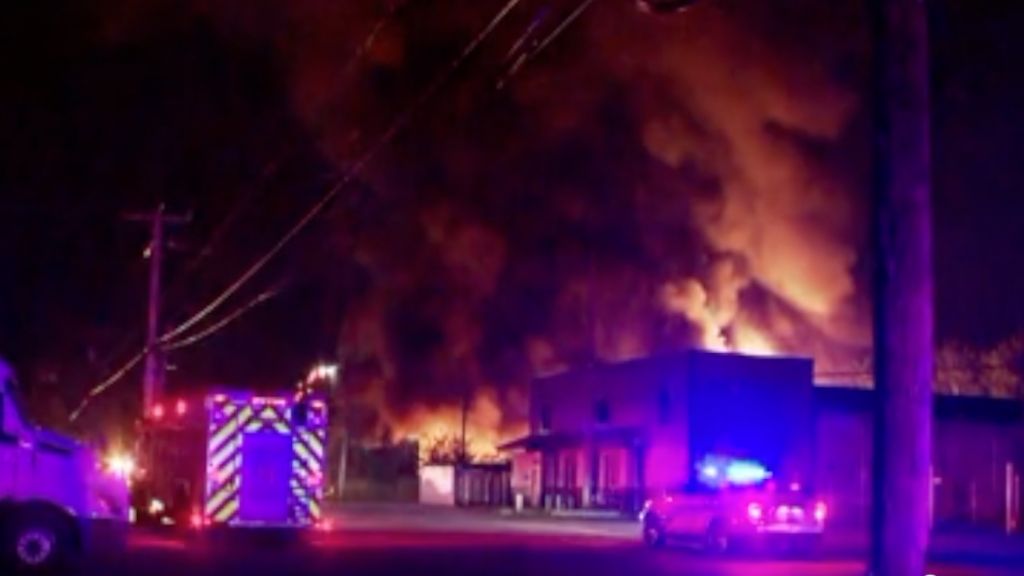
    Overnight attacks targeting Russian energy infrastructure marked a sharp escalation in cross-border strikes between Russia and Ukraine over the weekend, with Kyiv confirming successful hits on key fuel facilities while firmly rejecting Moscow’s accusations of an attack on Europe’s largest nuclear power station. Russian regional officials confirmed Sunday that descending drone debris sparked an inferno at a fuel storage depot in southwestern Russia’s Rostov Oblast, prompting emergency evacuations of nearby residential neighborhoods. A separate wave of drones inflicted damage to civilian infrastructure in neighboring Saratov Oblast, with independent Russian media outlet Astra reporting large flames engulfing a major oil refinery in the region’s capital city, also named Saratov.

    In a rare public confirmation of cross-border action, Ukraine’s General Staff acknowledged Sunday that its unmanned aerial vehicles successfully targeted the Saratov refinery, igniting a large-scale blaze that remains under assessment for total damage. The statement noted the facility, owned by Russian state-owned energy giant Rosneft, produces gasoline and diesel for domestic and military use, and has been a key supplier fueling Moscow’s full-scale invasion of Ukraine that launched in early 2022. Ukrainian officials have repeatedly justified stepped-up attacks on Russian oil, gas and refining infrastructure in recent months, arguing the energy sector generates billions in revenue to fund the war effort while also producing fuel for Russian military vehicles and equipment.

    Alongside the confirmed energy strikes, the weekend brought renewed tension over the Russian-occupied Zaporizhzhia Nuclear Power Plant, a facility that has been the site of repeated safety scares since Russian forces seized it in the opening weeks of the 2022 invasion. Russia’s state nuclear operator Rosatom claimed Saturday that a Ukrainian kamikaze drone detonated after piercing the exterior wall of the turbine hall for the plant’s sixth power unit. Rosatom CEO Alexei Likhachev called the incident a deliberate, pre-planned attack by Ukrainian forces, though he stressed no critical core equipment was damaged in the blast.

    Ukraine’s military swiftly dismissed the accusation as another disinformation propaganda effort, stating it had not launched any strikes targeting the plant and remains strictly committed to upholding international humanitarian law, which prohibits intentional attacks on civilian nuclear infrastructure. The military added that no offensive operations or weapons fire were conducted along the segment of the front line nearest the plant at the time of the reported incident. The Zaporizhzhia plant, which remains under Russian occupation close to active front lines in southern Ukraine, is one of four Ukrainian regions Russia has attempted to formally annex, a move that has not gained recognition from the global community.

    Rafael Grossi, director general of the International Atomic Energy Agency (IAEA), the United Nations’ nuclear watchdog, posted Sunday on social media platform X that he holds serious concern over the reported incident. Ukraine’s state nuclear regulatory agency has called for the damage alleged by Russian authorities to be independently verified by IAEA inspectors, who have maintained a permanent monitoring presence at the plant since 2022 to mitigate nuclear safety risks. Repeated shelling near the plant since the Russian occupation sparked global fears of a catastrophic nuclear accident, with Moscow and Kyiv repeatedly trading blame for deliberate strikes on the site.

    In a parallel wave of Russian strikes overnight into Sunday, Russian forces launched nearly 300 drones across Ukrainian territory, according to Ukraine’s Air Force. Air defense crews successfully intercepted and downed 212 of the incoming unmanned aerial vehicles, while 14 managed to reach their intended targets. Falling drone debris was reported in five separate locations across Ukraine. Russian strikes sparked fires at an apartment area in the central Ukrainian city of Dnipro and at an oil refinery in the western Rivne region, local Ukrainian authorities confirmed. Oleksandr Koval, head of Rivne’s regional military administration, reported no casualties at the refinery, with emergency response teams already on site working to contain the blaze.

    The cross-border strikes come as Ukraine continues to ramp up pressure on Russian energy supplies amid a grinding war that has stretched into its fourth year, with Kyiv actively lobbying Western allies for additional air defense systems and long-range strike capabilities to counter Russian offensive operations.

  • Colombia votes in presidential election that could redefine relations with US

    Colombia votes in presidential election that could redefine relations with US

    Colombia is entering a critical electoral moment on Sunday, as millions of voters head to the polls to select the country’s next president, wrapping up a campaign defined by deep domestic division and months of tense diplomatic friction between the outgoing left-wing administration and the U.S. government under former President turned incumbent Donald Trump.

    Outgoing Colombian President Gustavo Petro, who is term-limited and cannot run for re-election, has spent months locked in public sparring with Trump over a range of divisive issues, from bilateral drug policy to Washington’s long history of intervention in Latin America. Petro has thrown his full political weight behind his preferred successor, Iván Cepeda, who is running against two prominent centre-right challengers: Abelardo de la Espriella and Paloma Valencia. As of pre-election polling, Cepeda holds a narrow lead over de la Espriella, but no candidate is on track to secure the outright majority needed to win the contest outright, making a June 21 run-off vote almost certain.

    Voting opened at 8 a.m. local time (1 p.m. GMT) and will conclude at 4 p.m. local time, with results expected to trickle in through the evening. The outcome of this election carries sweeping stakes for both Colombia’s domestic future and its international posture: a win for Cepeda would lock in the Petro administration’s existing progressive agenda, while a centre-right victory would likely trigger a sharp pivot back toward closer security and diplomatic alignment with the United States.

    Cepeda has run on a pledge to continue the outgoing government’s flagship “total peace” policy, an initiative that sought to negotiate ceasefires and long-term settlements with the armed insurgent groups and criminal gangs that have long controlled large swathes of Colombia’s territory and dominated the multi-billion dollar cocaine trade. The policy has faced harsh criticism in recent years, however, as many negotiated talks have stalled or collapsed entirely, leading to a sharp resurgence in armed violence across the country. A 2025 report from the International Committee of the Red Cross confirmed that civilian casualties from armed conflict in Colombia reached a 10-year high last year, underscoring the urgency of the next government’s response to security challenges.

    By contrast, Cepeda’s centre-right opponents have vowed to abandon the negotiation strategy entirely, promising a full military crackdown on all armed groups and drug trafficking networks if they win power. The campaign has unfolded against a grim backdrop of persistent political violence: one local candidate was fatally shot during the campaign season last summer, and last week de la Espriella was forced to speak from behind bulletproof glass during a public rally in Medellín, a stark reminder of the risks facing political figures in the current climate.

    The diplomatic rift between Petro and Trump has dominated the national conversation throughout the campaign. The capture of former Venezuelan President Nicolás Maduro by U.S. forces in January left Petro as one of the last remaining left-wing leaders in Latin America who openly opposes the Trump administration’s regional agenda. Trump has repeatedly attacked Petro over cocaine production, accusing him of failing to stop the flow of Colombian cocaine into U.S. communities. At one particularly heated moment, Trump called Petro “a sick man who likes selling cocaine to the United States” and implied that Colombia could be targeted for U.S. military intervention next.

    Trump’s criticisms are partially backed by data: the 2025 United Nations World Drug Report recorded that cocaine production in Colombia has surged to all-time record highs during Petro’s time in office. Petro has pushed back against these claims, arguing that his government has seized more illicit drugs than any previous Colombian administration, and disputes the United Nations’ methodology for counting production. While the two leaders appeared to repair their public relationship during a White House meeting in February, where Trump referred to Petro as “terrific”, the underlying tensions between the two governments have shaped the campaign’s core ideological divides.

    Cepeda has echoed Petro’s core stance on U.S.-Colombia relations, insisting that Colombia must maintain its full sovereignty and refuse to become a “vassal state” to Washington. Even so, regional policy observers note that longstanding anti-drug cooperation between the two countries has continued uninterrupted through even the most heated public disputes. For their part, de la Espriella and Valencia have both promised to immediately restore the close security alliance with the U.S. that they argue the Petro administration has eroded.

    As voters cast their ballots on Sunday, the entire world is watching: the result will not only determine how Colombia addresses its ongoing spiraling violence and drug trade, but will also reshape regional geopolitics at a moment of heightened U.S. influence across Latin America.

  • I moved from Ethiopia to Shetland – and I’ve brought the coffee with me

    I moved from Ethiopia to Shetland – and I’ve brought the coffee with me

    Nestled in the rugged Shetland archipelago off the northern coast of Scotland, the small island of Whalsay has long been home to a beloved local tradition: honesty boxes, unstaffed roadside stalls stocked with everything from fresh farm eggs to homemade baked goods. In a charming new twist on this community custom, a recent addition to the island’s lineup of stalls offers something far out of the ordinary – hand-roasted Ethiopian coffee, brought to the 1,000-person community by Netsanet Sori, an Ethiopian immigrant who goes by the nickname Netsi.

    Sori’s connection to coffee runs deeper than a simple love of the drink. Raised on her family’s small-scale coffee farm in the rural Ethiopian highlands, coffee has been woven into her daily life since early childhood. Tragically, she lost her mother at a young age, and was raised by her grandmother and great-grandmother on the farm, an experience that forced her to mature quickly. “How I was raised there, compared to here, it’s completely different,” she reflected in an interview.

    After nine years living and working in Orkney, another northern Scottish island group, Sori relocated to Whalsay in October 2025. Even thousands of miles from her native home, she has never lost touch with her roots. She imports raw green coffee beans directly from the family farm where she grew up, turning her lifelong connection to the crop into a way to share Ethiopian culture with her new Scottish neighbors. For Sori, this project is about more than just selling coffee – it is a way to preserve tradition for the next generation. “It’s very important to me and I will teach my children about it as well,” she said.

    In Ethiopia, coffee is far more than a morning pick-me-up: it is the center of a daily community ritual, traditionally led by women, that brings neighbors together. “Neighbours and villagers gather once or twice in a day to share information, good news or bad news, and love,” Sori explained. “It’s also about community belonging. If you make a coffee, you can’t drink it alone. You have to share what you have and help others.”

    Sori’s process mirrors the traditional methods she learned growing up, with only small adjustments for modern convenience. When raw, pale green beans arrive at her Whalsay home, they carry a soft, earthy scent before roasting. She cleans the beans by hand, then roasts them in a single pot, shaking the container constantly over heat to ensure an even roast. As the beans cook, they deepen into a rich chestnut brown and release fragrant oils – a sign, Sori says, of high-quality, well-roasted coffee. While traditional Ethiopian roasting uses a manual mortar and pestle to grind finished beans, she now uses a small electric grinder to speed up the process for commercial sales.

    Before moving to Whalsay, Sori only roasted small batches for herself, friends, and local charity events during her time in Orkney. But after settling into her new home, she realized there was an unmet demand for artisanal, small-batch roasted coffee across Shetland. “After a little research, I realised that nobody else is roasting coffee like this in Shetland, so I thought I can do it,” she said. “It’s worked brilliantly. People seem to really like it.”

    Local residents have embraced Sori’s unique offering wholeheartedly. Ingrid Sutherland, a Whalsay local and self-described coffee lover, first tried the beans at a community Christmas fair and has been a repeat customer ever since. “I’m a bit of a coffee drinker, I love a good cup of coffee in the morning – real coffee, not instant, so I was just blown away with how cool it is,” Sutherland said. She added that the convenience of the honesty box model fits perfectly with island life: “It’s local as well, so I can just nip along the road and get a bag, rather than going out of the isle. We have plenty of egg boxes and cake fridges here in Shetland, but we didn’t have a coffee box. It’s fantastic to have a coffee box here.”

  • Israel plants flag on medieval castle, pushes Lebanon ground operation

    Israel plants flag on medieval castle, pushes Lebanon ground operation

    In a significant escalation of its cross-border conflict with Hezbollah, Israeli forces have raised the national flag over the medieval Beaufort Castle in southern Lebanon as part of a broader expansion of ground operations deeper into Lebanese territory, official announcements and on-the-ground reporting confirmed Friday.

    Agence France-Presse correspondents on site observed the Israeli banner flying above the centuries-old fortress, with the sound of artillery shelling echoing across the surrounding hills and plumes of smoke rising from nearby areas. The site holds deep strategic and historical significance for both sides: it served as a key Israeli military base during the country’s 22-year occupation of southern Lebanon that ended in 2000, and it was the site of a famous 1982 battle during the First Lebanon War.

    Israeli Defence Minister Israel Katz confirmed the capture of the strategic high point in a social media post Friday, timed to coincide with the annual commemoration of Israeli soldiers killed in the 1982 First Lebanon War. “Forty-four years after the heroic Battle of Beaufort, and on this day commemorating the soldiers who fell in the First Lebanon War, our troops have returned to the summit of Beaufort and once again raised the Israeli flag there,” Katz wrote. He added that under the direction of Prime Minister Benjamin Netanyahu and his own leadership, the Israel Defense Forces (IDF) had crossed the Litani River and seized Beaufort Ridge, a position that provides sweeping panoramic views of southern Lebanon and northern Israel’s Galilee region. “This is one of the most important strategic points for defending the communities of the Galilee and safeguarding the security of our forces,” Katz noted.

    The advance on Beaufort came alongside a mass evacuation order issued by the IDF for all civilian areas south of the Zahrani River, a waterway located roughly 25 miles north of the Israel-Lebanon border, north of the Litani River. The military warned it is conducting targeted operations against the Iran-backed Hezbollah armed group, which has launched near-daily attacks on northern Israel since the outbreak of the Israel-Hamas war in 2023. “Anyone present near Hezbollah elements, facilities, or combat means endangers their life. Any building used by Hezbollah for military purposes may become subject to targeting!” IDF spokesman Avichay Adraee wrote in a social media statement.

    On Saturday, the IDF confirmed that a large contingent of ground troops had launched offensive operations to push its forward defense line deeper into Lebanon, with operations expanding into additional areas of the southern part of the country. Lebanese Prime Minister Nawaf Salam has condemned the expanded offensive as a deliberate “scorched-earth policy and collective punishment” targeting Lebanese civilians. “It is destroying towns and villages, and forcing their inhabitants into exile,” Salam said, urging an immediate ceasefire to halt the violence.

    The military escalation comes amid ongoing diplomatic efforts to de-escalate the conflict, with U.S.-brokered security talks between Israeli and Lebanese military delegations held in Washington Friday, with additional political negotiations scheduled for next week. Salam acknowledged that the outcome of the negotiations remains uncertain, but called the diplomatic track “the least costly path for our country and our people.”

    A nominally binding truce between Israel and Hezbollah was supposed to enter into force on April 17, but the agreement has been almost universally violated by both sides. Each side accuses the other of daily breaches of the ceasefire, using the other’s attacks to justify retaliatory strikes. The U.S. statement issued after Friday’s talks made no public mention of the failed truce, only noting that “productive military-to-military discussions” would lay groundwork for next week’s political negotiations. Hezbollah has repeatedly voiced firm opposition to direct bilateral talks with Israel.

    On Saturday, Hezbollah announced it had launched multiple coordinated attacks targeting northern Israeli positions and engaged in direct ground clashes with IDF troops in several towns across southern Lebanon, including Zawtar al-Sharqiyah, Yohmor al-Shaqif and Dibbine. The group claimed Israeli forces had “not yet succeeded in taking control of the towns” amid the fighting.

    The IDF reported that more than 25 projectiles were fired from Lebanese territory into northern Israel on Saturday, triggering air raid sirens in the northern cities of Karmiel and Safed — the first time sirens have sounded in those urban centers since the April truce went into effect. Public broadcaster Kan released user-generated footage showing rockets falling into the Mediterranean Sea off the coast of Nahariya, a northern Israeli coastal city near the border, forcing panicked beachgoers to flee the area.

    On Sunday, the IDF confirmed that one Israeli soldier had been killed a day earlier in a Hezbollah explosive drone attack, pushing the total number of Israeli military personnel killed in operations in Lebanon since early March to 25. According to Lebanon’s Ministry of Public Health, Israeli attacks across southern Lebanon have killed more than 3,371 Lebanese people since March 2, the vast majority of whom are civilians.