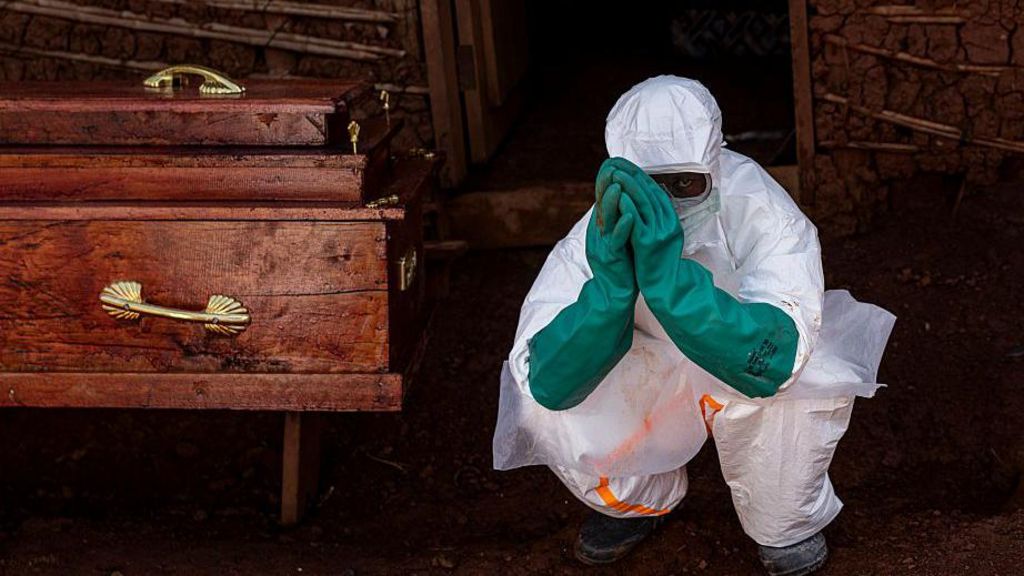
A rapidly spreading outbreak of a rare, lethal strain of Ebola, the Bundibugyo species, has sparked an urgent global push to develop targeted vaccines, with three leading research and industry groups racing to deliver viable candidates to stem a crisis that has already claimed nearly 250 lives. Public health experts warn this outbreak, which emerged undetected in a conflict-stricken region of the Democratic Republic of Congo (DRC) with severely limited healthcare infrastructure, could become the most devastating Ebola event on record, rivaling the 2014–2016 West African crisis that killed more than 11,000 people.
As of the latest update, more than 1,000 suspected Bundibugyo Ebola cases have been recorded in the DRC, with nine confirmed cases already detected in neighboring Uganda, raising fears of cross-border spread. Unlike the more common Zaire Ebola strain, for which an approved vaccine already exists, Bundibugyo is one of six known Ebola species that has only caused two documented outbreaks in history, and no licensed countermeasures currently exist for it.
The Coalition for Epidemic Preparedness Innovations (CEPI) is providing funding to all three ongoing vaccine development projects, with CEPI CEO Dr Richard Hatchett emphasizing that “every day counts” in the race to contain the virus. Each project leverages different cutting-edge vaccine technologies, many refined and proven during the global COVID-19 pandemic, to target the unique glycoprotein structure on the surface of the Bundibugyo virus.
The International Aids Vaccine Initiative (IAVI) is leading one effort, adapting the existing approved Zaire Ebola vaccine to target the new strain. Preclinical testing in non-human primates has already shown promising results: the modified candidate rapidly primes the immune system and delivered nearly 100% protection against Bundibugyo. IAVI president and CEO Dr Mark Feinberg noted that while early data leaves his team optimistic about the vaccine’s potential, the candidate currently remains seven to nine months away from entering human clinical trials, though researchers are working aggressively to shorten that timeline. Feinberg echoed widespread public health warnings, saying the outbreak “is clearly threatening to be as severe an outbreak as [the 2014–2016 West African event], if not even worse”, making vaccine development an urgent global priority. That assessment aligns with warnings from medical charity Médecins Sans Frontières, which has described the situation as “deeply alarming”, noting the outbreak has already produced more confirmed cases in its early stages than any previous Bundibugyo event.
A second candidate is being developed by US pharmaceutical giant Moderna, which is drawing on its mRNA technology that enabled rapid vaccine development during the COVID-19 pandemic. Moderna CEO Stéphane Bancel said the company would “move with urgency and scientific rigor to support the response and help bring a potential vaccine closer to the communities that need it most”.
The third candidate is being developed by the University of Oxford, which also adapted its established viral vector vaccine platform – first used at scale for COVID-19 – to create a new targeted Ebola vaccine. The Oxford team projects their candidate will be ready for human clinical trials in just two to three months, a significantly faster timeline than the IAVI project.
While all three candidates are designed to train the human immune system to recognize the Bundibugyo glycoprotein, they use distinct technological approaches: IAVI’s candidate uses a live, harmless engineered virus that displays the Ebola glycoprotein to teach the immune system to recognize the threat, while both Moderna’s mRNA vaccine and Oxford’s viral vector vaccine deliver a small fragment of genetic code that instructs the body’s own cells to produce the glycoprotein, triggering an immune response. Differences in how these technologies activate the immune system may impact the level of protection they provide or the number of doses required, so all candidates will require rigorous testing in human clinical trials to confirm safety and efficacy. The outbreak has already drawn widespread concern from global health bodies, with World Health Organization director general Dr Tedros Adhanom Ghebreyesus noting that a safe, effective Bundibugyo vaccine would not only help control the current crisis but also strengthen global preparedness for future outbreaks of this rare but deadly pathogen.