作者: admin

  • Watch: World Cup teams start arriving in North America

    Watch: World Cup teams start arriving in North America

    The countdown to one of the world’s biggest sporting events has entered its final stretch, with participating national teams beginning to arrive in North America as the 2026 FIFA World Cup nears its opening kickoff.

    As delegations stepped off their planes over the past 48 hours, the scope of preparations for the month-long tournament has been on full display. While a number of squads opted for coordinated, sharp matching suits to mark their official arrival, other teams outfitted every member with identical branded green carry bags, holding essential gear and documentation for the duration of their stay. The unified attire and coordinated equipment have already sent a clear signal of team unity, even before players take to the training pitches for their first on-site practice sessions.

    Hosted jointly across three North American nations – the United States, Canada and Mexico – this edition of the World Cup marks the first time the tournament has been held across three countries, and the first time it has expanded to 48 competing teams. With just days remaining until the opening match gets underway, the arrival of the squads is shifting the event from months of planning and infrastructure preparation to the on-field competition that fans across the globe have been anticipating for years. Local organizing committees have confirmed that all arrival protocols, security arrangements and team accommodations are fully operational, ready to welcome the world’s best football talent and the hundreds of thousands of traveling supporters set to follow them.

  • Protesters clash with police in Chile’s capital over President Kast’s education cuts

    Protesters clash with police in Chile’s capital over President Kast’s education cuts

    On a busy Wednesday in the Chilean capital of Santiago, a large-scale demonstration against President José Antonio Kast’s sweeping education budget cuts and broader austerity agenda descended into violent clashes between thousands of demonstrators and law enforcement. The outpouring of public anger marks the most significant domestic pushback yet against the ultraconservative leader’s fiscal agenda, which he launched immediately after taking office on March 11.

    Kest’s administration has made aggressive fiscal consolidation a core policy priority, pledging to slash a total of $6 billion in public spending over an 18-month period to shore up Chile’s national fiscal accounts. To hit this ambitious target, the government has imposed an approximately 3% across-the-board budget reduction on all federal government ministries, with education services facing notable cuts that have mobilized educational communities across the country.

    The backlash to the austerity plan has extended far beyond Chile’s traditional opposition parties, with even some moderate factions within Kast’s own governing coalition voicing public criticism of the rapid and deep spending cuts. Wednesday’s demonstration was coordinated by the Confederation of Chilean Students, with formal backing from a broad coalition of allied groups, including the national Chilean Teachers’ Union, secondary school student associations, and multiple national feminist organizations.

    What began as an orderly, peaceful march through central Santiago quickly shifted as tensions boiled over, leading to open clashes between protesters and police. To clear the gathered crowds, law enforcement deployed tear gas and high-pressure water cannons, while a subset of demonstrators responded by throwing rocks and other projectiles at officers. The unrest disrupted daily life across the capital, leaving major downtown streets blocked and forcing the temporary closure of multiple downtown subway stations.

    Protest leaders accused the administration of intentionally provoking the unrest to create a pretext for a harsh crackdown on dissent. “The government sought to provoke this, to create this situation to justify repression,” Mario Aguilar, head of the Chilean Teachers’ Union, told reporters on the scene.

    Beyond opposition to education cuts, demonstrators also gathered to protest Kast’s controversial National Reconstruction bill, a wide-ranging legislative package branded a “mega-reform” by political observers. The bill is designed to cut state spending, attract private sector investment, and stimulate long-term growth for the Chilean economy, but critics argue it will erode public services and reduce protections for working Chileans. The legislation already passed the Chamber of Deputies in late May and is currently scheduled to move to the Senate for its next round of debate.

    For young Chilean students who made up a large share of the protest crowd, the cuts represent a direct threat to access to affordable education. “They want to silence us, but we are not going to stop,” said 21-year-old student Magdalena Correa. “They’re taking away our resources and rights, and we have to fight back.”

    As of Wednesday evening, neither Chilean national police nor senior Kast administration officials had issued an official statement responding to the clashes or the protest. However, reporters on the ground from the Associated Press confirmed that at least a dozen protesters were arrested during the unrest, and multiple people—both demonstrators and officers—sustained injuries in the clashes.

  • More Israelis leaving country than arriving: Press review

    More Israelis leaving country than arriving: Press review

    Over the past two years, Israel has confronted a cascade of interconnected political, security and demographic challenges, alongside an unexpected milestone in its defense export industry, according to multiple official findings and leading Israeli media reports.

    First, a new demographic study commissioned by Israel’s parliament has uncovered a troubling net emigration trend that experts warn poses a long-term strategic risk to the country. Data published by Israeli outlet Ynet this week reveals that more Israelis have left the nation than have returned in recent years, with a dramatic acceleration of this outflow following the outbreak of the Gaza war in October 2023. Between 2022 and 2024 alone, more than 210,000 Israelis emigrated — a sharp jump from the annual average of roughly 40,000 recorded between 2009 and 2021. Over this two-year period, the net outflow of citizens hit 140,000.

    Most alarmingly, the departure rate is disproportionately high among the country’s most highly skilled young demographics, the core of Israel’s technology and knowledge-driven economy. Of all recent emigrants, 48% fall between the ages of 20 and 44, a group that makes up just 32% of Israel’s total population. In terms of educational attainment, 33.2% of emigrants hold a bachelor’s degree, 21.5% have a master’s degree, and 3.7% hold a PhD. Graduates specializing in high-demand fields including mathematics, computer science and physics are particularly overrepresented among those leaving. The study also notes that a slight majority of 2024 emigrants — 52% — were born in Israel. Knesset member Gilad Kariv of the opposition Democratic Party emphasized that the exodus of tomorrow’s leading scientists and entrepreneurs, leaving at a rate far exceeding their share of the population, constitutes a clear strategic threat to Israel’s long-term future.

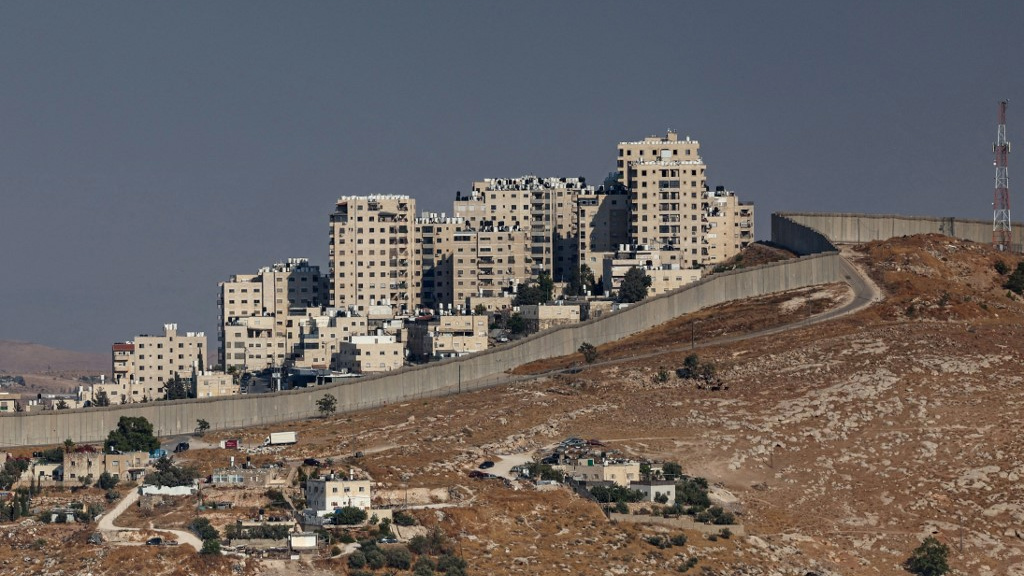
    In a separate development related to Israel’s military leadership, Ynet confirmed that Yisrael Shomer, head of the Israel Defense Forces Operations Division, has been removed from his senior post amid an active investigation into sexual misconduct involving a subordinate. Shomer, who had been widely tipped for promotion to lead either the IDF Personnel Directorate or the West Bank Command, was ousted over the alleged inappropriate relationship with a junior service member. This dismissal comes nearly 11 years after a controversial 2015 incident in which Shomer shot and killed 17-year-old Palestinian Muhammad Ali Kosba in the occupied West Bank town of al-Ram. Kosba, who was shot three times including once in the head while fleeing after allegedly throwing a stone at Shomer’s armored vehicle, became a symbol of excessive military force after the killing was captured on camera, sparking widespread international criticism that delayed Shomer’s promotion at the time. No criminal charges were ever filed, however, as the Military Advocate General closed the case in 2016. The IDF characterized this week’s dismissal as a response to clear moral violations.

    On the political front, Prime Minister Benjamin Netanyahu’s already fragile right-wing governing coalition is facing a growing threat of collapse, centered on a long-running dispute over military conscription exemptions for ultra-Orthodox Jewish men. Aryeh Deri, leader of the ultra-Orthodox Shas party and a decades-long ally of Netanyahu, has publicly held the prime minister responsible for the growing rift, accusing him of putting coalition unity at serious risk over the failure to pass the desired exemption legislation. The crisis came to a head this week when the Knesset held a vote on self-dissolution, after Dov Lando, spiritual leader of Degel HaTorah (one of two factions making up the ultra-Orthodox United Torah Judaism party), ordered his party’s lawmakers to support the dissolution motion in protest of Netanyahu’s handling of the conscription issue. Deri warned in closed-door discussions, as reported by Israel’s Channel 13, that UTJ lawmakers are willing to defect to form a left-wing government if new elections are held, adding that one senior UTJ figure is already actively working to bring such a center-left coalition to power. While Deri confirmed he personally would not join a left-wing administration, the warning aligns with recent opinion polling that puts Netanyahu’s current right-wing bloc on track to win only around 50 of the Knesset’s 120 seats — 11 seats short of the 61-seat majority required to form a new government.

    Against this backdrop of domestic political and demographic unrest, Israel’s defense export sector has hit an unexpected all-time high. The Israeli Defense Ministry announced this week that total arms sales revenue reached a record $19.2 billion in 2025, marking a 30% increase from the previous year’s figures. According to reporting from Haaretz’s economic affiliate TheMarker, sales to countries that signed the Abraham Accords — the United Arab Emirates, Bahrain, Morocco and Sudan — have surged dramatically, rising from just 3% of total Israeli arms exports in 2023 to 15% in 2025. More than half of 2025’s total revenue, approximately $10 billion, came from direct government-to-government arms deals. Regional export shifts show that European purchases fell from 54% of total sales in 2024 to 36% in 2025, while sales to Asia and the Pacific rose from 23% to 32% over the same period. Smaller export volumes were recorded for North America, Latin America and Africa. By product category, missile, rocket and air defense systems made up 29% of total revenue, while sales of surveillance and optronic systems jumped from 6% in 2024 to 22% of 2025 sales. Overall, Israeli arms exports accounted for 12% of the country’s total $160 billion in national exports in 2025, up 4.5 percentage points from 2022 levels. Defense Minister Israel Katz celebrated the record figures, attributing the growth to the combat experience and proven capabilities of the IDF and Israeli security forces operating across Gaza, Lebanon, Iran and Yemen.

  • Henry Nowak murder: What we know about how the events unfolded

    Henry Nowak murder: What we know about how the events unfolded

    An 18-year-old first-year university student lost his life in a senseless, violent random encounter in Southampton in December 2025, with newly released CCTV, police bodycam footage, 999 call transcripts and judicial sentencing remarks shedding full light on the tragic sequence of events that led to his death.

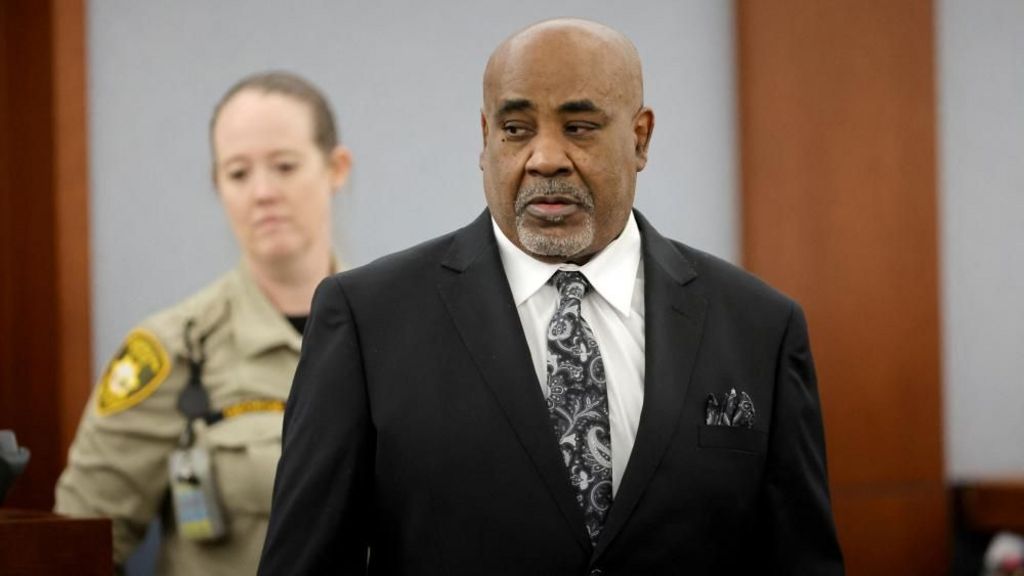
    Henry Nowak, just a few months into his university studies, was killed on his journey back to his off-campus student accommodation on December 3. His killer, 23-year-old Vickrum Digwa, was found guilty of murder in late May 2026 and sentenced to life imprisonment with a mandatory minimum term of 21 years behind bars.

    The night’s timeline is clearly laid out through the recovered CCTV footage. At 20:30 GMT, Nowak was recorded entering the lift at his university halls of residence, dressed in a white shirt, tie and quarter-zip fleece and carrying a bottle. He adjusted his hair in the lift mirror before exiting, walking to a local convenience store to purchase a drink, and then continuing on to The Hobbit pub, where door staff checked his identification at the entrance. Internal pub footage captured him moving through the venue, passing a small group in the beer garden before heading back out onto the street. By 23:07, CCTV shows Nowak walking back toward his accommodation, passing a group of pedestrians along a street lit by streetlamps before increasing his pace to jog down the road.

    During Digwa’s sentencing hearing on June 1, Judge William Mousley KC outlined the fateful chance intersection of the two men’s paths. Nowak was traveling north along Belmont Road, which brought him to the junction of St Denys Road – the street where Digwa resided. Digwa was walking south along the same road at exactly the same time, creating an entirely random meeting. Judge Mousley confirmed that Nowak was alone, carried no weapons, and was not intoxicated: post-mortem testing found his blood alcohol level was below the legal limit for driving in the UK.

    As a Sikh, Digwa carried a required religious kirpan knife sheathed at his belt, which Judge Mousley noted is a strict obligation for observant Sikhs. However, Digwa was also carrying a second, larger dagger, a tradition tied to his membership in the Nihang Sikh order – a practice that is not a required religious obligation. Nowak noticed the larger blade and began filming it on his mobile phone, before asking Digwa if he was a “bad man”, according to the judge’s recounting. Digwa responded by confirming he was “a bad man” and seized Nowak’s phone.

    No witnesses other than the two men saw the immediate confrontation that followed, but Judge Mousley laid out the logical and evidence-based conclusion of events: “It would not be unreasonable to conclude that Henry would have wanted his phone back, believing it had been stolen from him or that he had been robbed.” In the ensuing scuffle, Digwa pulled the larger dagger from its sheath and deliberately stabbed the unprotected student in the chest. He went on to stab Nowak three more times – two additional wounds to the upper leg – and the judge noted that the initial stab wound had such a devastating impact that Nowak never had the chance to raise his hands to defend himself from further attack.

    Footage recorded by Digwa himself shows Nowak desperately fleeing the attack, climbing a residential fence, scrambling onto a communal waste bin before falling onto a car parked in front of the neighboring property. Rather than calling for emergency aid, Digwa continued to film the mortally wounded teen as he suffered, ignoring his desperate pleas for help.

    Roughly 25 minutes after Nowak was captured on CCTV heading home, Digwa’s brother, Gurpreet Digwa, placed the 999 emergency call. He falsely told operators that Vickrum had been the victim of a racial assault by Nowak, telling the handler, “He’s physically attacked my brother. We’re Sikhs, we wear turbans and he’s just attacked my brother.” When asked if weapons were involved, Gurpreet claimed none had been used, but conceded that Nowak required medical attention. The 12-minute call ended with the emergency handler confirming that police and an ambulance would be dispatched immediately to the location.

    Seven minutes after the call was placed, at 23:37, the first police officers arrived at the scene. Police bodycam footage shows four people standing on a residential driveway, with Nowak collapsed on the ground. Digwa repeated his false claim to responding officers, telling them Nowak had racially abused him. Just 71 seconds after officers arrived, Nowak was clearly heard on the bodycam footage repeating that he had been stabbed, saying “I can’t breathe” seven times. Despite this, by 23:38, officers had handcuffed Nowak and placed him under arrest, reading him his Miranda rights before calling for an ambulance a minute later and starting cardiopulmonary resuscitation.

    Judge Mousley confirmed that the severity of Nowak’s injuries meant his death was unavoidable, even if emergency medical treatment had been administered immediately. Less than four hours after he was recorded leaving his halls of residence on that Saturday night, Nowak was pronounced dead.

    Five days after the killing, on December 8, Vickrum Digwa was formally charged with murder and possession of a bladed article in a public space. He was convicted of murder by a jury on May 28, 2026, and sentenced three days later to life imprisonment with a minimum of 21 years to serve before eligibility for parole.

    Additional reporting for this story was provided by Marina Costa, covering policing in Hampshire and the Isle of Wight.

  • Israeli study finds starvation in Gaza was result of deliberate policy

    Israeli study finds starvation in Gaza was result of deliberate policy

    Two years into the war that began in October 2023, a new study from an Israeli genocide scholar has upended the Israeli government and mainstream media’s repeated denials, concluding that the widespread starvation ravaging the Gaza Strip was the result of deliberate, pre-planned state policy.

    Authored by Shmuel Lederman, a researcher specializing in genocide studies, the report titled *Data for Denial: The Smokescreen Behind the Starvation of Gaza* was published last month by the Forum for Regional Thinking at Jerusalem’s Van Leer Institute. Lederman told Middle East Eye he launched the research in response to what he calls pervasive denial across Israeli society of the humanitarian catastrophe unfolding in Gaza, a pattern he says aligns with public responses to historical cases of mass violence.

    “There is a thirst for denial,” Lederman explained, noting that most Israeli citizens seek to frame the Israeli military’s actions in Gaza and the broader occupied territories as entirely morally justified and free of systemic abuse. A separate August 2025 investigation from Israeli news outlet Walla corroborates this pattern of denial, confirming that mainstream Israeli television outlets routinely minimize or erase coverage of Gaza’s starvation crisis entirely.

    Lederman’s study pushes back against the belated, limited acknowledgement of food insecurity that emerged in some Israeli circles by mid-2025, where commentators framed starvation as an accidental, isolated bureaucratic miscalculation rather than a product of intentional state decision-making. Drawing on core principles of famine research, which holds that hunger is driven not just by total food availability but by equitable access to food, the scholar documents how Israeli policy systematically stripped Palestinians of access to sustenance. Restrictions on the entry of aid, fuel, and cooking gas, the deliberate destruction of critical food infrastructure including bakeries, and repeated disruption of humanitarian operations all combined to create catastrophic levels of food deprivation.

    The study’s core conclusion leaves little room for ambiguity: Gaza’s starvation is the product of “deliberate planning, experimentation, and manoeuvring around the humanitarian ‘red line’”, designed in large part to manage mounting international pressure on Israel throughout the course of the war.

    A central point of contention in public debates over Gaza’s hunger has been the number of daily aid trucks required to meet the enclave’s basic needs, a metric that Israeli officials have repeatedly manipulated to downplay the crisis. COGAT, the Israeli military body responsible for civil administration in occupied Palestinian territories, claimed in August 2025 that just 80 daily aid trucks would be enough to meet Gaza’s population’s needs, a figure that was widely repeated by sympathetic Israeli researchers and journalists.

    This claim has been rejected by nearly every independent and international body: human rights organizations, UN agencies, and even the administration of former U.S. President Joe Biden disputed the number. The Biden White House estimated roughly 250 trucks per day were required to avoid mass hunger, while international humanitarian organizations put the necessary number between 500 and 600. What is more, COGAT’s own past data undermines its current claim: in 2008, when Gaza’s population was 1.5 million people, 500,000 less than its current population, COGAT itself stated 178 trucks per day were needed to meet basic needs. As recently as last month, Israeli newspaper Israel Hayom reported that COGAT urged the Israeli government to cut aid truck entries to 250 per day after an October 2025 ceasefire, claiming that level met basic needs. For Lederman, this revelation is an implicit admission that the earlier 80-truck claim was a deliberate falsehood: “In practice, this is an admission of starvation,” he told MEE, speaking after COGAT released its post-report statement.

    Lederman traces the origins of Gaza’s starvation to the very start of the war in October 2023. For the first five months of the conflict, until March 2024, Israel allowed only a tiny fraction of the recommended number of aid trucks into the Strip, rapidly deepening the food crisis. UN agencies, human rights groups, and on-the-ground Palestinian testimonies all documented extreme food shortages during this period, with women and children bearing the brunt of the deprivation.

    In May 2024, mounting U.S. pressure following Israel’s deadly assault on Rafah forced Israel to allow more commercial trucks into Gaza, but the government simultaneously restricted access for humanitarian convoys. Last month, Wala also revealed that 11 major Israeli supermarket chains won an exclusive tender to supply food and aid to Gaza, generating hundreds of millions of shekels in profit. Lederman argues that this privatization of aid delivery created a profit-driven monopoly that actively worsened the humanitarian crisis, allowing a small number of connected actors to enrich themselves, often in coordination with Israeli authorities, while the vast majority of Gazans go hungry.

    While U.S. pressure produced a brief easing of the crisis, Israel reversed course in October 2024, slashing aid shipments back to minimal levels. By March 2025, Israel imposed a full blockade on all food and humanitarian aid entry, pushing Gaza over the edge into full-scale famine. In August 2025, the Integrated Food Phase Classification (IPC), the UN-backed global body that monitors hunger, officially declared famine in Gaza City.

    The report also reveals that even as COGAT publicly disputed international warnings about growing hunger, the agency privately warned the Israeli government as early as 2025 that Gaza was on the brink of catastrophic famine. Despite this internal warning, the Israeli government pressed ahead with its policy to advance a clear strategic goal: using starvation as a tool to pressure Palestinians to relocate south out of northern and central Gaza, and ultimately to leave the territory for third countries. This tactic aligns with the controversial “voluntary emigration” plan publicly backed by both the Israeli government and former U.S. President Donald Trump. Lederman cites the creation of the U.S. and Israeli-backed Gaza Humanitarian Foundation (GHF) as further evidence of this strategy, writing: “Severe food deprivation in Gaza that would compel Gazans to travel to aid distribution centres was not a ‘mistake’, it was part of the plan.”

    Beyond the immediate humanitarian catastrophe in Gaza, the study frames the territory as a testing ground for a new model of population control through hunger. “Over the past two and a half years, Gaza has served to a large extent as a testing laboratory not only for methods of warfare, but also for the architecture of starvation and the management of a population through deprivation,” the report reads. Lederman warns that the implications of this experiment will extend far beyond Gaza’s borders, noting that while starvation has been used as a weapon of war in other recent conflicts, few if any cases have so systematically and openly undermined the long-standing international norm banning the practice.

    Lederman also emphasizes the shared responsibility of the United States, under both the Biden and Trump administrations, as well as other Western governments, for enabling Israel’s policy, arguing that their diplomatic and military support made the starvation campaign possible. He warns that Israel’s tactics will spread to other conflicts around the globe, as other actors feel empowered to adopt similar methods, shielded from criticism by charges of Western hypocrisy. “What Israel did in Gaza will not stay there, it already has not remained there,” Lederman said. “Therefore, this is not only a struggle against what Israel did to the Palestinians in Gaza, but a global struggle against these kinds of actions.”

  • ‘Crazy’ phone call between Trump and Netanyahu complicates Iran talks

    ‘Crazy’ phone call between Trump and Netanyahu complicates Iran talks

    A high-profile rift between U.S. President Donald Trump and Israeli Prime Minister Benjamin Netanyahu has rocked Washington’s diplomatic efforts with Iran, marking the latest chapter in a long history of friction between Israeli leaders and sitting U.S. presidents.

    The conflict erupted following an Israeli strike on Lebanese territory that triggered a sharp backlash from Tehran, which threatened to walk away from ongoing talks with the U.S. The development represents a major setback to Trump’s core goal of exiting the unpopular U.S.-Iran conflict, while also putting the future of the Strait of Hormuz — a critical global shipping artery — at risk as the U.S. works to broker a extended ceasefire and open negotiations over Iran’s nuclear program.

    When pressed by reporters about an Axios report claiming he called Netanyahu “effing crazy” and accused the prime minister of ingratitude during a tense Monday phone call, Trump did not deny the outburst. Speaking to the *Pod Force One* podcast in an interview that aired Wednesday, Trump clarified: “I wouldn’t say angry. I was a little bit perturbed at his constantly fighting with Lebanon, you know.” He quickly added that he holds affection for Netanyahu, saying “I like Bibi a lot. And I work very well with him.”

    Netanyahu downplayed the tensions, framing the disagreement as a routine difference common between close allies. “Sometimes we have, as in the best of families, you have these tactical disagreements,” he told CNBC in a Wednesday interview. “We always find a way to work them out, and we do so as great friends. We can disagree in the morning and be in agreement by afternoon.” Despite the repeated public disagreements between the two leaders, Netanyahu has long called Trump the “greatest friend” Israel has ever had in the White House.

    Regional and foreign policy experts warn the public clash reflects deeper misalignment between U.S. and Israeli priorities, nearly 100 days after the two nations launched joint strikes on Iranian targets in late February. Brett Bruen, a former U.S. diplomat and president of crisis communications firm the Global Situation Room, told the BBC that Netanyahu has a well-documented pattern of pursuing his own agenda regardless of input from Washington. “Trump… decided to take the plunge with him, and is now learning a really hard lesson about what happens when you get into war with a pretty mercurial leader that has an agenda which doesn’t always align with your own priorities,” Bruen explained.

    While both leaders share the core goal of blocking Iran from developing a nuclear weapon, their priorities diverge sharply on Lebanon. Israel has pledged to continue targeting the Iran-backed Hezbollah militia even as U.S.-Iran talks progress, while Iran has made a full ceasefire that includes Lebanon a non-negotiable condition for continued negotiations.

    The friction comes as public opinion in the U.S. has shifted sharply against longstanding American support for Israel. A Pew Research Center poll published in April found that 60% of U.S. adults now hold a negative view of Israel, up from just 42% before the 2023 Hamas war began. Even prominent conservative figures have broken ranks, with some publicly claiming that Israeli lobbying pushed Trump into launching the war with Iran — a claim both the White House and Netanyahu’s office deny.

    Joe Kent, former director of the National Counterterrorism Center, resigned in March over the issue, saying “we started this war due to pressure from Israel and its powerful American lobby.” In response, leading pro-Israel lobbying group the American Israel Public Affairs Committee accused Kent of pushing “old antisemitic tropes.”

    Some analysts argue that Trump has political incentives to distance himself from Netanyahu to appeal to growing anti-war and critical voices among the U.S. electorate. “I think there is a political necessity now to create daylight between Israel and the US,” Bruen noted. “Whether it’s in Lebanon or in Gaza, there are things that Netanyahu has chosen to do which are politically problematic even for Trump or the Republicans.”

    Trump’s current frustration with Netanyahu is far from unprecedented: the Israeli prime minister has a decades-long track record of clashing with sitting U.S. presidents from both parties. He had a well-documented public fight with Bill Clinton over implementing the Oslo Peace Accords, and his relationship with Barack Obama collapsed entirely after he delivered a 2015 speech to Congress criticizing Obama’s Iran policy without coordinating with the White House first. His relationship with former president Joe Biden also soured after Netanyahu publicly claimed the U.S. was withholding military ammunition, drawing sharp criticism from White House officials who called the comments “vexing” and “deeply disappointing.”

    Natan Sacks, a U.S.-Israel relations expert at the Washington-based Middle East Institute, told reporters that Netanyahu has a long history of tense negotiations with U.S. leaders. “He is a very difficult negotiator, not just in terms of being tough, but in terms of being very suspicious,” Sacks said. Even so, Sacks noted that Trump and Netanyahu have largely enjoyed a warm relationship: Trump broke longstanding diplomatic norms on Middle East policy, a shift that aligned closely with Netanyahu’s goal of rewriting regional rules to more aggressively confront Iran and its allied militias.

    It remains unclear whether this latest public disagreement will cause lasting damage to the bilateral relationship between the two leaders. “It’s potentially significant. We don’t know if it was a one-time event or a harbinger of broader things,” Sacks said. “I would not rule that out. The president has changed his mind about many people in the past.” As thousands of civilians flee southern Beirut and traffic grinds to a halt across the region, the rift has left the future of the ceasefire, nuclear talks and global energy security hanging in the balance.

  • Three dead in Royal Navy helicopter crash

    Three dead in Royal Navy helicopter crash

    A fatal training accident has claimed the lives of three Royal Navy service members after their Merlin Mk4 helicopter crashed on Sourton Down near Okehampton, Devon, in the early hours of the morning.

    Emergency response teams were first alerted to the incident at approximately 3:45 BST, with a major incident formally declared 15 minutes later. Seven fire engines from six local stations were deployed to the remote crash site, located near Dartmoor’s Okehampton battle camp, a well-used training ground for Commando Helicopter Force crews. By 13:30 BST, the main stretch of the A386 between the A30 and Fowley Cross had been reopened, though the A30 eastbound exit slip road remained closed to allow investigation work to continue.

    Local residents, familiar with routine military training traffic in the area, described hearing unusual sounds from the aircraft before the crash. One local resident named Paul, who lives in a nearby hamlet, said he was woken by the extremely low-flying helicopter, which sounded irregular. Another resident, Julie Ricketts, who lives across the valley from the crash site, called the incident devastating, noting “They were only training. It’s just very, very sad for the families.” By the afternoon, local members of the public had begun leaving floral tributes near the site to honor the fallen personnel.

    Senior military and political figures have quickly issued statements of condolences following the tragedy. The Princess of Wales, who holds the honorary position of Commodore-in-Chief of the Fleet Air Arm, said she and Prince William were “holding their families and friends in our hearts” following the loss. The BBC understands the royal couple will contact the bereaved families directly in the coming days, while King Charles III is also aware of the incident and will send private messages of sympathy to the next of kin.

    General Sir Gwyn Jenkins, head of the Royal Navy, described the crash as a devastating shock to the entire naval community. “My deepest condolences go out to the families, friends and loved ones impacted by this tragedy,” he said. Prime Minister Sir Keir Starmer called the fatal crash “utterly tragic” on social media platform X, while Defence Secretary John Healey said he was “devastated by the loss of three service personnel.” Local MP Sarah Dyke, who represents Glastonbury and Somerton, added that her thoughts were with the victims and their grieving families.

    The crashed aircraft was confirmed to be a Merlin Mk4, a variant of the Royal Navy’s Merlin helicopter fleet that entered service in 1999. The Mk4 variant is operated by the Commando Helicopter Force out of RNAS Yeovilton in Somerset, with 25 of the aircraft currently in service supporting Royal Navy operations. The area around north Dartmoor between RNAS Yeovilton and RNAS Culdrose, where the older Mk2 anti-submarine variant is based, is a regular training route for military helicopter crews. This is not the first fatal incident involving the Merlin Mk4: in September 2024, another Mk4 ditched in the English Channel during a training exercise, killing Lt Rhodri Leyshon. A 2004 crash at RNAS Culdrose left five crew members injured, with two trapped in the wreckage.

    An official investigation into the cause of the crash has been launched immediately. The UK Civil Aviation Authority confirmed the Defence Accident Investigation Branch (DAIB) will lead the probe into the circumstances of the incident, while local police continue to support on-site investigation work. The Royal Navy confirmed that the next of kin of all three deceased personnel have been informed, and have requested privacy to grieve before any further details are released to the public.

  • Australia on brink of recession as ‘date night economics’ bites households

    Australia on brink of recession as ‘date night economics’ bites households

    Australia’s ongoing cost-of-living squeeze is forcing profound shifts in consumer behavior, with young Australians and renters leading a nationwide pullback in non-essential spending that is rippling through small businesses and the broader national economy. The cutbacks, which have even seen millennials ditch regular date nights to stretch shrinking household budgets, are being framed as an early “date night economics” warning sign by insolvency firm Jirsch Sutherland, which argues official economic data is lagging far behind the real stress being felt across the country.

    Chris Baskerville, a partner at Jirsch Sutherland, notes that traditional aggregate economic data takes months to compile, leaving policymakers and analysts blind to the immediate financial anxiety shaping household choices today. When consumers grow fearful of future economic conditions, they immediately shift into precautionary savings mode, slashing all spending that is not strictly essential to daily life. This pullback is not evenly distributed: the heaviest burden is falling on millennials, renters, and workers in trade, labour-intensive and construction roles, who face the sharpest increases in core living costs.

    Baskerville’s on-the-ground observations across multiple sectors point to growing pressure that has not yet shown up in official statistics. In recent client interactions, he has documented stress in real estate, hospitality, freight, construction and individual healthcare workers, with the full impact of these headwinds still unfolding. Small family-owned businesses are among the most vulnerable, he says: when consumers close their wallets, these enterprises, which rely on steady discretionary spending to keep operating, are hit immediately. The collapse of a single small business does not just impact the business owner – it places financial strain on entire families, including children who depend on that enterprise for income.

    To cope with soaring costs, Australian households now strictly prioritize only non-negotiable expenses: mortgage or rent payments, utility bills, fuel, insurance and groceries. All other spending, from entertainment to dining out, gets cut first. Data from the Australian Financial Security Authority backs up the growing stress: personal insolvencies, cases where individuals can no longer meet their debt obligations, have risen 6.2% year-on-year to 3,161. For businesses, the squeeze is even more complex: they are grappling with simultaneous pressures of weakening consumer demand, sky-high operating costs, and increasingly aggressive debt collection action from government bodies including the tax office. Many small business owners are now dipping into personal savings or running up balances on unsecured credit cards just to keep their doors open. This has blurred the line between personal and business finance for many operators, meaning household financial stress and business distress now feed directly into one another.

    These warnings come after the Australian Bureau of Statistics released latest GDP data showing the national economy grew just 0.2% in the March quarter, bringing annual growth to 2.5%, down from 2.6% at the end of 2024 (corrected from the original article’s typo 2025). Economists warn that the data already shows a slowing economy, and it does not yet reflect the full impact of recent interest rate hikes and escalating geopolitical conflict in the Middle East between Israel and Iran.

    HSBC chief economist Paul Bloxham says the Australian economy has already absorbed a series of negative shocks that began hitting in the second quarter of 2024, sharply weakening consumer sentiment and near-term activity indicators. He predicts GDP will contract in the June quarter, as the combined impact of the Middle East conflict, rising interest rates, and recent federal budget pressures weigh on growth. The risk of two consecutive quarters of declining GDP – the common definition of a technical recession – is growing rapidly.

    KPMG chief economist Brendan Rynne echoed the gloomy outlook, noting that Australia’s economy has slowed to a near-standstill with no near-term growth catalyst on the horizon. For years, global demand for Australian goods, particularly natural commodities, drove economic prosperity, with rising export volumes and prices boosting national income. Today that dynamic has shifted: the ongoing Middle East conflict has delivered a negative terms-of-trade shock that hits Australia and most other non-major oil producing nations hard.

    Russel Chesler, head of investment and capital markets at global investment firm VanEck, went further, warning that Australia could be on the cusp of a damaging stagflation regime, defined by simultaneous low growth, high inflation, and rising unemployment. “Australia could now well be entering a stagflation regime of low growth and high inflation,” Chesler said. “GDP is falling while unemployment is rising and inflation is surging.”

  • From butterflies to breast milk, Uber’s list of lost items reveals wild backseat discoveries

    From butterflies to breast milk, Uber’s list of lost items reveals wild backseat discoveries

    A ankle monitor, an industrial meat slicer, a container of expressed breast milk, and a sealed package of live butterflies – these are not punchlines to a absurdist comedy sketch, but some of the weirdest items left behind in Uber vehicles over the past year. To mark the 10th anniversary of its annual Lost & Found Index, the leading US rideshare platform has released its decade-end roundup of the most unusual, unexpected, and culturally telling items forgotten by riders across the country.

    For 2026, New York City claimed the unenviable title of America’s most forgetful major city, with Sunday taking the crown as the day of the week when riders are most likely to leave belongings behind in backseats. Beyond this year’s rankings, the 10th anniversary edition of the index doubles as a retrospective of changing cultural trends across the past decade, turning the collection of lost items into an unofficial pop culture time capsule.

    “From AirPods becoming an everyday essential that’s constantly left behind, to vaccine cards and cloth face masks dominating lost item reports in 2021, Ozempic pens turning up in backseats in 2025, and viral Labubu plushies claiming a spot on this year’s list, the Lost & Found Index has become an unexpected time capsule of the past decade,” Uber explained in an official press release.

    As the dominant player in the US rideshare industry, Uber handles a staggering volume of lost item reports every year. Per 2024 market data from Bloomberg Second Measure, Uber controls 76% of the US rideshare market, far outpacing rival Lyft and smaller competitors. That massive market share translates to more than one million phones reported lost in Uber vehicles in just the past 12 months alone.

    This year’s roundup of the 50 most unique lost items includes a lineup of deeply unusual belongings that range from the surprising to the slightly shocking: George Washington University hospital discharge papers, a textured portrait of Jesus embellished with rhinestones, a two-pound container of blue raspberry Gushers candy, a set of partial teeth wrapped in tissue, 20 pounds of duck sausage, medical pelvis implants, a child’s prosthetic eye, and a signed group photo of 1970s pop icon Donny Osmond, among many others.

    Looking at 2026’s top trends in lost items, vapes and e-cigarettes, viral Labubu plush dolls, all types of dental items (including gold grills and cosmetic veneers), and Croc sandals were the most commonly forgotten unique belongings over the past year.

    The index also looks back at the most headline-grabbing unique lost item from each year the project has run: a live lobster in 2017, finalized divorce papers in 2018, a raw salmon head in 2019, a lanyard emblazoned with the phrase “virginity rocks” in 2020, an oversized oil painting of Kate Middleton in 2021, 500 grams of high-end caviar in 2022, a live toy poodle (accompanied by a frantic note that read “MY DOG IS IN THE CAR!!!”) in 2023, a prosthetic fake butt in 2024, a taxidermied rabbit in 2025, and a full 75-gallon fish tank in 2026.

    To coincide with the 10th anniversary of the Lost & Found Index, Uber announced it will roll out a streamlined, updated lost item reporting process to its mobile app, with a full national launch scheduled for the end of 2026. The new feature is designed to make it faster and easier for riders to reconnect with belongings they left behind.

  • 11 years after one teen’s death sparked massive Argentine protests, a new case shakes the nation

    11 years after one teen’s death sparked massive Argentine protests, a new case shakes the nation

    Eleven years after the brutal 2015 killing of 14-year-old pregnant Chiara Páez sparked the first massive Ni Una Menos (Not One Woman Less) protests that grew into a landmark gender-based violence movement across Latin America, Argentina is once again roiled by collective fury over the death of another teenage girl.

    The latest wave of outrage traces back to 14-year-old Agostina Vega from the central Argentine city of Cordoba. On May 23, Vega traveled to the home of a family acquaintance to pick up a birthday gift for her mother. What should have been a routine errand ended in unspeakable violence: preliminary autopsy findings confirm she was sexually assaulted before being hanged and dismembered with a kitchen knife. Her remains were discovered in a drainage ditch one full week after she went missing, and peaceful vigils demanding answers quickly escalated into violent clashes between demonstrators and local law enforcement.

    As the nation prepares for the annual Ni Una Menos gathering in downtown Buenos Aires scheduled for Wednesday, public anger has surged beyond the case itself, targeting the administration of libertarian President Javier Milei. Since taking office, Milei – an ally of former U.S. President Donald Trump – has centered gender policy in his overlapping cost-cutting and culture war agendas. He has publicly dismissed the global feminist movement as “a ridiculous and unnatural fight,” pushed to remove the legal classification of femicide from Argentina’s penal code, and slashed funding for nearly all government programs that support survivors of gender-based violence.

    Disputes over data collection have added fuel to the controversy. Argentina’s Supreme Court reported a 12% drop in registered femicide cases last year, down to 200 from 2022. But human rights and gender justice advocates universally reject this statistic as misleading, arguing the decline reflects deliberate underclassification driven by the government’s ideological agenda, not an actual reduction in gender-based killings. This year alone, the leading human rights organization Center for Legal and Social Studies has recorded 63 officially registered femicides, but independent activists have compiled a list of more than 100 women killed in 2024, saying most are mislabeled as general homicides.

    “To stop calling femicides by their name, to deny the existence of gender violence — it’s an attempt to rewind the past 20 years,” explained Natalia Gherardi, director of the Buenos Aires-based Latin American Team for Justice and Gender. “I hope this reaction generated by Agostina’s case, what we show in the streets, will be enough to counter the desire to move backward.”

    Critics have also slammed local authorities for gross mismanagement of Vega’s case. According to family lawyer Gustavo Vaca, Agostina’s relatives filed a missing person report the morning after she disappeared, but more than 80 hours passed before a statewide child abduction alert was issued. Security camera footage confirmed Agostina traveled to the home of Claudio Barrelier, a 33-year-old family friend and ex-boyfriend of Agostina’s mother, a fact confirmed by a taxi driver the very day after her death. Yet police delayed raiding Barrelier’s home for three days; the family alleges law enforcement prioritized managing potential fan violence during a major regional soccer match in Cordoba that day.

    Barrelier, the primary suspect in custody, has denied all charges. Shockingly, public records show he was arrested just one year prior for abducting a young woman, but was released on $3,500 bail after just 20 days in detention. When confronted with widespread accusations of investigative delay, lead prosecutor Raúl Garzón caused further outcry by stating authorities “are not engaging in any self-criticism.” Local Security Minister Alejandra Monteoliva has also refused to formally classify the killing as a femicide, a designation that carries a mandatory life sentence in Argentina, far harsher than penalties for general homicide.

    Gender justice advocates argue proper classification is not just a semantic issue: it is foundational to effective prosecution, prevention, and survivor support. “If we don’t name the specific form of violence, if we don’t recognize it, then we can’t understand the problem in all its dimensions, and we can’t create policies to prevent and combat it,” said Lucila Galkin, director of the gender and diversity program for Amnesty International Argentina.

    Milei’s systematic rollback of decades of gender policy progress has drawn sharp condemnation from across the global rights community. Last year, speaking at the World Economic Forum in Davos, Milei argued that classifying femicide as a distinct crime illegally makes “a woman’s life worth more than a man’s”, and his justice ministry quickly introduced legislation to remove the category from the penal code. While that bill has not advanced, the administration has prioritized a new measure that would increase penalties for women who falsely report gender-based violence, which is currently awaiting congressional debate.

    Since taking office, Milei has dissolved Argentina’s national women’s ministry, shuttered the country’s anti-discrimination agency, eliminated nearly all support programs for gender violence survivors, banned gender-inclusive language in all official government documents, and cut all funding for gender sensitivity training for public school students and state employees. One of the most consequential cuts eliminated the Acompañar program, which previously provided 350,000 women annually with financial aid equivalent to six months of minimum wage to help them leave abusive relationships. The national 24-hour hotline for survivors lost two-thirds of its budget and half its staff last year, and the federal free legal assistance program for domestic violence and sexual assault survivors has been fully dismantled.

    Against this backdrop, this year’s annual Ni Una Menos protest at Buenos Aires’ Plaza de Mayo, outside the National Congress, carries unprecedented urgency. Agostina Vega’s family has confirmed they will join a parallel protest in Cordoba, marching under the Ni Una Menos banner – the same movement that once positioned Argentina as a regional leader in gender equality policy and action. Galkin notes that Vega’s killing has reanimated a movement many thought had already won its core policy battles, forcing the nation to confront a rollback of hard-won gains.

    “I think this femicide, which caused so much pain, so much shock, also mobilized us, reminded us that this is a problem concerning all of society,” Galkin said. “We are being forced to have conversations about issues we thought we had agreed on, a topic that we thought had been settled.”