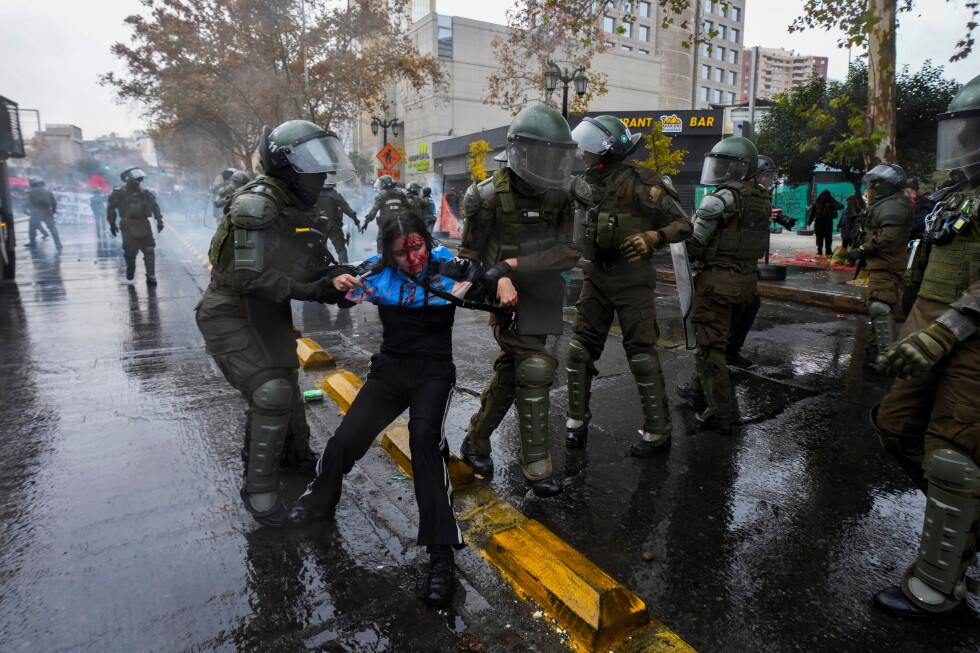
On a busy Wednesday in the Chilean capital of Santiago, a large-scale demonstration against President José Antonio Kast’s sweeping education budget cuts and broader austerity agenda descended into violent clashes between thousands of demonstrators and law enforcement. The outpouring of public anger marks the most significant domestic pushback yet against the ultraconservative leader’s fiscal agenda, which he launched immediately after taking office on March 11.
Kest’s administration has made aggressive fiscal consolidation a core policy priority, pledging to slash a total of $6 billion in public spending over an 18-month period to shore up Chile’s national fiscal accounts. To hit this ambitious target, the government has imposed an approximately 3% across-the-board budget reduction on all federal government ministries, with education services facing notable cuts that have mobilized educational communities across the country.
The backlash to the austerity plan has extended far beyond Chile’s traditional opposition parties, with even some moderate factions within Kast’s own governing coalition voicing public criticism of the rapid and deep spending cuts. Wednesday’s demonstration was coordinated by the Confederation of Chilean Students, with formal backing from a broad coalition of allied groups, including the national Chilean Teachers’ Union, secondary school student associations, and multiple national feminist organizations.
What began as an orderly, peaceful march through central Santiago quickly shifted as tensions boiled over, leading to open clashes between protesters and police. To clear the gathered crowds, law enforcement deployed tear gas and high-pressure water cannons, while a subset of demonstrators responded by throwing rocks and other projectiles at officers. The unrest disrupted daily life across the capital, leaving major downtown streets blocked and forcing the temporary closure of multiple downtown subway stations.
Protest leaders accused the administration of intentionally provoking the unrest to create a pretext for a harsh crackdown on dissent. “The government sought to provoke this, to create this situation to justify repression,” Mario Aguilar, head of the Chilean Teachers’ Union, told reporters on the scene.
Beyond opposition to education cuts, demonstrators also gathered to protest Kast’s controversial National Reconstruction bill, a wide-ranging legislative package branded a “mega-reform” by political observers. The bill is designed to cut state spending, attract private sector investment, and stimulate long-term growth for the Chilean economy, but critics argue it will erode public services and reduce protections for working Chileans. The legislation already passed the Chamber of Deputies in late May and is currently scheduled to move to the Senate for its next round of debate.
For young Chilean students who made up a large share of the protest crowd, the cuts represent a direct threat to access to affordable education. “They want to silence us, but we are not going to stop,” said 21-year-old student Magdalena Correa. “They’re taking away our resources and rights, and we have to fight back.”
As of Wednesday evening, neither Chilean national police nor senior Kast administration officials had issued an official statement responding to the clashes or the protest. However, reporters on the ground from the Associated Press confirmed that at least a dozen protesters were arrested during the unrest, and multiple people—both demonstrators and officers—sustained injuries in the clashes.