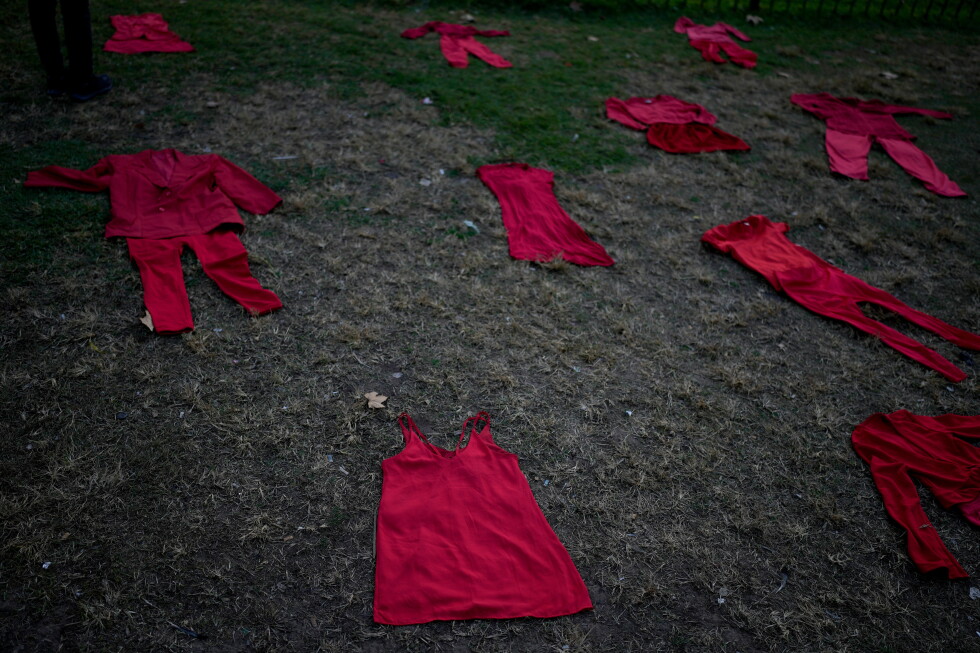
Eleven years after the brutal 2015 killing of 14-year-old pregnant Chiara Páez sparked the first massive Ni Una Menos (Not One Woman Less) protests that grew into a landmark gender-based violence movement across Latin America, Argentina is once again roiled by collective fury over the death of another teenage girl.
The latest wave of outrage traces back to 14-year-old Agostina Vega from the central Argentine city of Cordoba. On May 23, Vega traveled to the home of a family acquaintance to pick up a birthday gift for her mother. What should have been a routine errand ended in unspeakable violence: preliminary autopsy findings confirm she was sexually assaulted before being hanged and dismembered with a kitchen knife. Her remains were discovered in a drainage ditch one full week after she went missing, and peaceful vigils demanding answers quickly escalated into violent clashes between demonstrators and local law enforcement.
As the nation prepares for the annual Ni Una Menos gathering in downtown Buenos Aires scheduled for Wednesday, public anger has surged beyond the case itself, targeting the administration of libertarian President Javier Milei. Since taking office, Milei – an ally of former U.S. President Donald Trump – has centered gender policy in his overlapping cost-cutting and culture war agendas. He has publicly dismissed the global feminist movement as “a ridiculous and unnatural fight,” pushed to remove the legal classification of femicide from Argentina’s penal code, and slashed funding for nearly all government programs that support survivors of gender-based violence.
Disputes over data collection have added fuel to the controversy. Argentina’s Supreme Court reported a 12% drop in registered femicide cases last year, down to 200 from 2022. But human rights and gender justice advocates universally reject this statistic as misleading, arguing the decline reflects deliberate underclassification driven by the government’s ideological agenda, not an actual reduction in gender-based killings. This year alone, the leading human rights organization Center for Legal and Social Studies has recorded 63 officially registered femicides, but independent activists have compiled a list of more than 100 women killed in 2024, saying most are mislabeled as general homicides.
“To stop calling femicides by their name, to deny the existence of gender violence — it’s an attempt to rewind the past 20 years,” explained Natalia Gherardi, director of the Buenos Aires-based Latin American Team for Justice and Gender. “I hope this reaction generated by Agostina’s case, what we show in the streets, will be enough to counter the desire to move backward.”
Critics have also slammed local authorities for gross mismanagement of Vega’s case. According to family lawyer Gustavo Vaca, Agostina’s relatives filed a missing person report the morning after she disappeared, but more than 80 hours passed before a statewide child abduction alert was issued. Security camera footage confirmed Agostina traveled to the home of Claudio Barrelier, a 33-year-old family friend and ex-boyfriend of Agostina’s mother, a fact confirmed by a taxi driver the very day after her death. Yet police delayed raiding Barrelier’s home for three days; the family alleges law enforcement prioritized managing potential fan violence during a major regional soccer match in Cordoba that day.
Barrelier, the primary suspect in custody, has denied all charges. Shockingly, public records show he was arrested just one year prior for abducting a young woman, but was released on $3,500 bail after just 20 days in detention. When confronted with widespread accusations of investigative delay, lead prosecutor Raúl Garzón caused further outcry by stating authorities “are not engaging in any self-criticism.” Local Security Minister Alejandra Monteoliva has also refused to formally classify the killing as a femicide, a designation that carries a mandatory life sentence in Argentina, far harsher than penalties for general homicide.
Gender justice advocates argue proper classification is not just a semantic issue: it is foundational to effective prosecution, prevention, and survivor support. “If we don’t name the specific form of violence, if we don’t recognize it, then we can’t understand the problem in all its dimensions, and we can’t create policies to prevent and combat it,” said Lucila Galkin, director of the gender and diversity program for Amnesty International Argentina.
Milei’s systematic rollback of decades of gender policy progress has drawn sharp condemnation from across the global rights community. Last year, speaking at the World Economic Forum in Davos, Milei argued that classifying femicide as a distinct crime illegally makes “a woman’s life worth more than a man’s”, and his justice ministry quickly introduced legislation to remove the category from the penal code. While that bill has not advanced, the administration has prioritized a new measure that would increase penalties for women who falsely report gender-based violence, which is currently awaiting congressional debate.
Since taking office, Milei has dissolved Argentina’s national women’s ministry, shuttered the country’s anti-discrimination agency, eliminated nearly all support programs for gender violence survivors, banned gender-inclusive language in all official government documents, and cut all funding for gender sensitivity training for public school students and state employees. One of the most consequential cuts eliminated the Acompañar program, which previously provided 350,000 women annually with financial aid equivalent to six months of minimum wage to help them leave abusive relationships. The national 24-hour hotline for survivors lost two-thirds of its budget and half its staff last year, and the federal free legal assistance program for domestic violence and sexual assault survivors has been fully dismantled.
Against this backdrop, this year’s annual Ni Una Menos protest at Buenos Aires’ Plaza de Mayo, outside the National Congress, carries unprecedented urgency. Agostina Vega’s family has confirmed they will join a parallel protest in Cordoba, marching under the Ni Una Menos banner – the same movement that once positioned Argentina as a regional leader in gender equality policy and action. Galkin notes that Vega’s killing has reanimated a movement many thought had already won its core policy battles, forcing the nation to confront a rollback of hard-won gains.
“I think this femicide, which caused so much pain, so much shock, also mobilized us, reminded us that this is a problem concerning all of society,” Galkin said. “We are being forced to have conversations about issues we thought we had agreed on, a topic that we thought had been settled.”