作者: admin

  • Senate Republicans axe $1bn for Trump’s new White House ballroom

    Senate Republicans axe $1bn for Trump’s new White House ballroom

    A months-long deadlock on a key US immigration spending bill has broken after Republican lawmakers removed a controversial $1 billion funding allocation earmarked for security upgrades tied to President Donald Trump’s planned new White House ballroom, clearing the way for the Senate to move the legislation forward.

    The $1 billion request for U.S. Secret Service security enhancements tied to the construction project was submitted after an April shooting at a Trump-attended hotel gala. Trump has long maintained that the expanded ballroom is a critical upgrade to accommodate large-scale official state events and modernize outdated security infrastructure, and he has repeatedly claimed the entire construction project would be covered exclusively by private donations.

    When finalized, the reconciliation bill will allocate approximately $72 billion to federal immigration agencies, including Immigration and Customs Enforcement and U.S. Border Patrol. Democrats had fiercely pushed back against attaching the White House security funding to the immigration legislation, a position that was ultimately upheld by the Senate’s procedural rulekeeper.

    On Wednesday, the Senate voted 53-45 to advance the legislation to the floor debate stage. Lawmakers will now consider the bill and propose amendments before holding a final vote, a process that is expected to extend for several hours and potentially bleed into Thursday. If the bill passes the full Senate, it will next move to the House of Representatives for consideration before it can be transmitted to President Trump for his signature.

    Democrats have uniformly opposed Trump’s plan to construct a large new ballroom on the site of the demolished White House East Wing. The removal of the funding from the immigration bill marks a clear procedural setback for the project, though the long-term impact on construction timelines and financing remains uncertain.

    Progress on the bill, which had been stalled for months, faced an additional hurdle over a separate controversial proposal: a $1.8 billion “anti-weaponisation fund” put forward by the Department of Justice to compensate individuals claimed to have been harmed by government overreach. Critics across the political spectrum have decried the fund as an unaccountable slush fund designed to payout Trump’s political allies, including the rioters who stormed the U.S. Capitol in 2021 in an attempt to block the certification of former President Joe Biden’s election victory.

    During testimony before lawmakers on Tuesday, Acting Attorney General Todd Blanche confirmed the Department of Justice would abandon plans to establish the fund, but refused to provide a written commitment of the decision. Speaking to reporters shortly after, Trump indicated the proposal had not been fully scrapped, noting he would “have to ask the lawyers” about the way forward.

    Republican Senator Thom Tillis of North Carolina has announced he will introduce standalone legislation to permanently block the creation of the fund. Other GOP lawmakers have also issued sharp criticism of the proposed fund, and congressional Democrats have confirmed they are also preparing their own legislative measures to prohibit its establishment.

  • ‘He won’t travel with us’: Roosters to welcome back Kangaroos star, but they’ve lost a winger for the trip to Canberra

    ‘He won’t travel with us’: Roosters to welcome back Kangaroos star, but they’ve lost a winger for the trip to Canberra

    The Sydney Roosters are heading into Friday night’s blockbuster clash against the Canberra Raiders with a mix of bad news and a massive boost for their backline, confirming that Australian Kangaroos representative winger Mark Nawaqanitawase is set to make his long-awaited return from a season-disrupting injury, just as inspirational comeback story Cody Ramsey is abruptly ruled out of the trip with an illness.\n\nNawaqanitawase has not taken the field since Round 9, when he suffered a severe syndesmosis injury that required surgical intervention and forced him to withdraw from a potential debut with the New South Wales Blues State of Origin side. But after completing a full, contact-heavy training session on Wednesday, the dynamic winger has passed all final fitness tests to be available for selection against the Raiders.\n\nHis comeback arrives at a critical time for the Roosters, who have already been without veteran starting winger Daniel Tupou in recent weeks. Roosters head coach Trent Robinson confirmed the positive update on Nawaqanitawase’s availability, noting that Wednesday’s session was the final hurdle to clear for his return. “Yesterday was the real test for us to make sure that he was right to tick off everything he needed after that syndesmosis injury. It’s looking good for him to play tomorrow,” Robinson told reporters.\n\nThe electrifying winger brings a unique attacking spark to the Roosters lineup, combining creative playmaking with a lethal finishing ability that has made him one of the most exciting young talents in the National Rugby League. Still, Robinson emphasized that the club’s game plan remains rooted in collective effort rather than relying on one individual to turn recent fortunes around. “In some areas he brings a creativity and a finish that’s really important. He’s a high-quality player,” Robinson said. “But then in other areas, that’s just a team concept rather than an individual that’s going to change it. It’s a whole-team concept, so no individual coming in or out is going to change that. It has been a collective.”\n\nNawaqanitawase will slot into the starting right wing position, a spot that was set to be filled by Ramsey – who is now forced to miss the clash just weeks after completing one of the most anticipated comebacks in recent rugby league history. Ramsey, who was sidelined for 1337 days recovering from a serious long-term injury, had already produced one of the feel-good stories of the 2025 NRL season with his return to the top flight. However, Robinson confirmed the club only learned of Ramsey’s illness roughly 30 minutes before speaking to media, ruling him out of travel and selection for the fixture. “Cody’s actually a bit crook. We only just found that out sort of half an hour ago, so he won’t travel with us,” the coach added.\n\nBeyond the backline selection news, the Roosters’ main focus in training this week has been fixing a costly ball control issue that has derailed their last two outings. Against the Melbourne Storm last Saturday, the side coughed up 18 unforced errors and managed just one try on the night, following on from a 14-error performance in a Magic Round loss to the North Queensland Cowboys. A visibly frustrated Robinson addressed the errors directly with his playing group in the sheds after the Storm loss, and this week the squad has prioritized tightening up their completion rates on the training paddock.\n\n“The first thing is to discuss it, and then the second thing is to do it at training,” Robinson explained. “That’s a really key part of the game is talking about it, but training it, and then it’s up to us to perform that tomorrow night. It’s not the single focus, either. You want to improve that, and we’ve been pretty good at that this year. The last two games has not been what we wanted, So we talk about it, practise it, and then go out and do it.”\n\nThe 2026 NRL rule changes have placed unprecedented emphasis on retaining possession and territorial control, making reliable ball handling more critical than ever for title contenders. The Roosters have long built their identity on an expansive, attacking style of play that has sometimes come with higher error counts, but Robinson says the squad has already proven this season that it can balance elite attacking movement with high completion rates. Citing a standout performance against Manly where the side posted a 96% completion rate and only one unforced error, the coach said his side is capable of fixing the recent slump ahead of Friday’s kickoff.\n\n“I think we’ve shown that we can do both,” Robinson said. “I go back to the Manly game where it was sort of about 96 per cent completions. I think we had one error in that game, and there’s been others throughout that period where we’ve been able to do both. We’ve been able to score points but then also control the ball, and that’s the game. That’s pretty clear what’s needed in the game, and our job is to go out and get it done.”

  • Germany blames Russia for ‘bitter defeat’ in UN Security Council bid

    Germany blames Russia for ‘bitter defeat’ in UN Security Council bid

    In a surprising outcome that has sent ripples through global diplomatic circles, Germany failed to secure one of the two rotating Western European and Others Group seats on the United Nations Security Council in Wednesday’s vote, marking a stinging diplomatic setback for the country’s ambitions to play a more prominent role in global governance. The winning candidates for the two-year terms starting in 2027 were revealed as Portugal, which earned 134 votes, and Austria, which secured 131 votes, while Germany only collected 104 backing ballots from UN member states. Three other countries — Kyrgyzstan, Trinidad and Tobago, and Zimbabwe — also won election to the 15-member body in concurrent voting for the remaining rotating seats.

    The UN Security Council, the only UN organ empowered to pass legally binding resolutions covering everything from the imposition of international sanctions to the authorization of military interventions, comprises five permanent veto-wielding members — China, France, Russia, the United Kingdom, and the United States — alongside 10 rotating non-permanent members elected on a regional basis to two-year terms.

    Senior German figures have been quick to offer explanations for the unexpected defeat, with senior lawmaker Johann Wadephul labeling the result a “bitter defeat” for the nation. In his post-vote analysis, Wadephul argued that Germany’s unwavering public support for Ukraine in its conflict with Russia directly contributed to the loss, noting that Moscow has actively worked to turn global opinion against Berlin’s Security Council bid. “It is no secret that Russia stirred up sentiment against Germany,” Wadephul stated, adding that Germany’s clear-cut positions on high-stakes global issues are not shared by all 193 UN member states.

    Beyond the fallout from the Ukraine war, Wadephul also cited Germany’s long-standing commitment to supporting Israel amid the ongoing Middle East conflict as another factor that cost the country critical votes. “The fact that Germany must always assume a special responsibility for Israel in the Middle East conflict may also have cost votes,” he explained. He also acknowledged that Germany’s late entry into the race for the rotating seat created additional obstacles for its campaign.

    To date, Russia has not issued any public response to German claims that it lobbied against Berlin’s Security Council candidacy.

    The failed bid comes as a particularly sharp embarrassment for German Chancellor Friedrich Merz, who has centered his political brand on a pledge to restore and elevate Germany’s standing on the global stage following a series of domestic political challenges. Opposition critics have seized on the result to argue that the defeat highlights Merz’s weakened position at home and failed diplomatic strategy abroad, leaving him beleaguered on the domestic front and embarrassed internationally.

    Despite the setback, Merz struck a measured tone in his public remarks after the vote, congratulating Austria and Portugal on their successful campaigns and reaffirming Germany’s long-term commitment to multilateral cooperation. “This result does not alter the tasks we face at the United Nations. Germany remains a reliable pillar of the multilateral system,” Merz said, emphasizing that Berlin would continue to uphold its international responsibilities even without a seat at the Security Council table.

  • World Cup fans barred from bringing water bottles into stadia

    World Cup fans barred from bringing water bottles into stadia

    Just months ahead of the historic 2026 FIFA World Cup co-hosted by the United States, Canada, and Mexico, global soccer governing body FIFA has implemented a sudden, controversial policy shift that will bar spectators from bringing their own refillable water bottles into match venues, forcing attendees to purchase overpriced bottled water inside stadiums, sports outlet The Athletic first reported Wednesday.

    The policy reversal marks a sharp departure from FIFA’s publicly released stadium guidelines as recently as one month ago, which explicitly permitted fans to carry empty, transparent reusable plastic water bottles of up to one liter into grounds. The updated code of conduct, however, has been amended to outright prohibit all reusable water containers, removing the prior allowance entirely.

    In an official comment to Agence France-Presse, a FIFA spokesperson defended the last-minute rule change as a safety-focused adjustment, noting that multiple host stadiums already enforce similar bans on outside bottles for their own local events. “FIFA is committed to protecting the health and safety of all players, referees, fans, volunteers, and staff,” the organization’s statement read. “FIFA made the decision to prohibit bottles to prevent risk and injury to players and attendees. Outside bottles are already prohibited at several of these venues for safety considerations, and FIFA is applying this consideration across its tournament stadiums.”

    FIFA also sought to address concerns over access to hydration, confirming that multiple cooling and hydration resources including misting stations, portable fans, dedicated hydration points, and cooling tents will be positioned across all stadium precincts. The organization added that the price of bottled water sold inside venues will match the pricing used for other major events held at the same stadiums, though it did not disclose specific price points.

    The new rule has been introduced despite urgent warnings from climate and health experts that extreme heat at many open-air World Cup venues could pose significant public health risks for attendees. A recent analysis published by climate research group World Weather Attribution last month projected that 26 of the tournament’s 104 total matches will be played in conditions where the Wet Bulb Global Temperature (WBGT) — a composite metric measuring heat stress that accounts for air temperature, humidity, wind speed, and solar radiation — will exceed 26 degrees Celsius, a threshold linked to increased risk of heat-related illness.

    This is not the first time FIFA has faced criticism over water bottle bans at major events held in North America. During the 2025 FIFA Club World Cup hosted in the U.S., attendees publicly complained about searing, dangerous heat inside venues after being barred from bringing their own water into the grounds, echoing the same concerns now being raised ahead of the 2026 World Cup.

  • New Delhi hotel blaze kills 21, including foreigners

    New Delhi hotel blaze kills 21, including foreigners

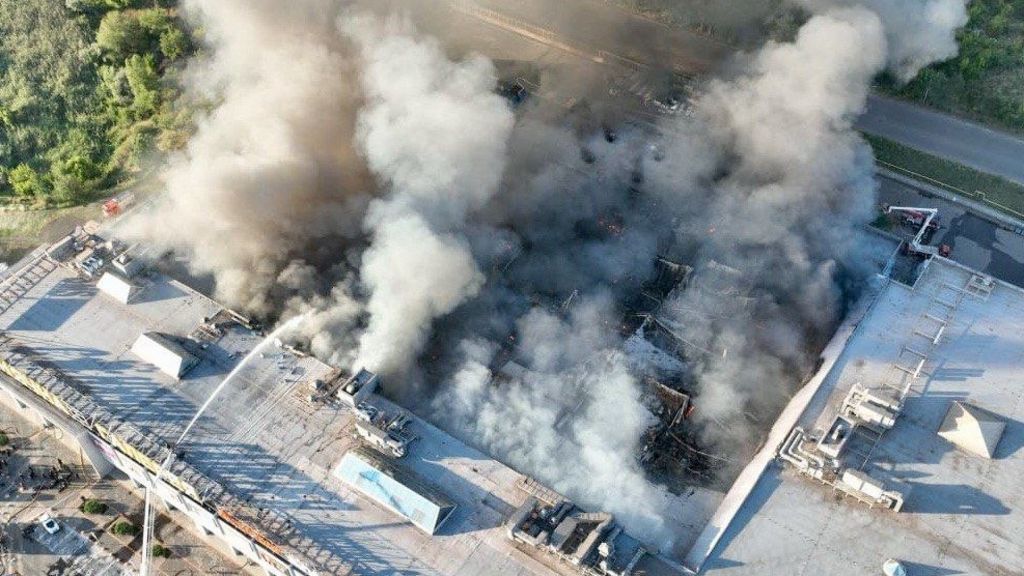
    On a Wednesday morning in a crowded residential neighborhood of South New Delhi, a devastating fire tore through the Flourish Stay bed-and-breakfast, leaving at least 21 people dead and dozens more injured, in one of the deadliest urban blazes to strike the Indian capital in recent years. Local law enforcement and news outlets confirmed that a large share of the fatalities were foreign nationals, most hailing from Central Asian and African nations, many of whom had traveled to New Delhi to access affordable medical care in the city’s world-renowned healthcare hubs.

    Footage broadcast on major Indian television networks captured the scale of the emergency: bright orange flames bursting from the multi-story building, thick plumes of acrid black smoke billowing into the sky, and trapped guests on upper levels leaping onto hastily placed mattresses that local residents dragged from a nearby bedding store to cushion their falls. Eyewitness Mohammad Anees, one of the first locals to respond to the crisis, told Agence France-Presse that five women successfully jumped to safety on the improvised landing pads before first responders fully arrived on scene.

    By the time the blaze was fully contained eight fire engines that responded to the emergency, more than 40 injured guests had been transported to local hospitals for emergency care. A spokesperson for a nearby medical facility confirmed that eight of those patients remain in critical condition as of initial updates. Officials confirmed that 47 guests were registered at the hotel when the fire broke out.

    In the wake of the tragedy, senior Indian officials have offered condolences and launched a full investigation into the incident. Prime Minister Narendra Modi’s office released a statement calling the loss of life “tragic”, extending formal condolences to all families who lost loved ones in the blaze. India’s Ministry of External Affairs has confirmed it is in constant contact with the embassies of the affected foreign nations, and is providing all necessary consular assistance to affected parties. Junior Foreign Minister Kirti Vardhan Singh shared the update via the social platform X, noting that the government remains committed to supporting all those impacted.

    Preliminary investigations are still ongoing, and the exact origin of the fire has not been confirmed as of yet. However, local lawmaker Satish Upadhyay told reporters that initial site assessments found the hotel only had a single entry and exit point, and lacked adequate fire safety infrastructure and ventilation. Upadhyay added that a formal public inquiry will be launched, and any individual found to have violated safety regulations or be culpable for the tragedy will face immediate arrest.

    This latest deadly fire has once again drawn attention to India’s persistent gap in public fire safety regulation. Fatal building fires are a recurring crisis across the country, driven by chronic underinvestment in firefighting infrastructure, lax enforcement of basic safety codes, and widespread non-compliance among small commercial properties. Electrical short circuits, caused by poorly maintained and outdated wiring, are the leading cause of fire-related deaths in India, and officials have not ruled out that this mechanism triggered the New Delhi blaze.

    The incident is the latest in a string of deadly fire tragedies to strike India in recent years. In March of this year, a fire at a state-run hospital in eastern India killed 10 critically ill patients who were trapped in the facility. The deadliest previous blaze in New Delhi dates back to 2019, when a fire at an unregulated factory building in Old Delhi killed 43 workers who were sleeping on the premises overnight.

  • Authorities warn of World Cup ticket, merchandise scams

    Authorities warn of World Cup ticket, merchandise scams

    As excitement builds for the 2026 FIFA World Cup, the first expanded 48-team iteration of the world’s biggest football tournament set to kick off across 16 host cities in the United States, Mexico and Canada on June 11, cybercriminals and offline fraudsters are exploiting widespread fan enthusiasm and sky-high official ticket prices to run a growing wave of scams, law enforcement and cybersecurity researchers have warned.

    The tournament, which will feature 104 matches over the course of the competition, has already faced widespread criticism over its official ticketing structure, with record-high prices pushing many casual and passionate fans out of the market for official entry. This gap has created a perfect opportunity for malicious actors, who have built a sprawling network of fake platforms targeting fans searching for discounted tickets and official merchandise outside of FIFA’s accredited sales channels. Experts note that this large-scale, pre-event scam operation has become the “new normal” for major global sporting events.

    Last week, the FBI issued an urgent public warning, flagging more than 30 fraudulent domains crafted to mimic FIFA’s official website. These sites, which use deceptive URLs including “fifa-ticket.live” and “fifaworldcup26.sale”, are designed to either steal sensitive personal and financial information from visitors or sell non-existent tickets that fans will be unable to use at the tournament.

    Singapore-based cybersecurity firm Group-IB has uncovered an even larger coordinated scam operation, identifying more than 4,300 fraudulent domains registered since August that falsely claim affiliation with FIFA. Researchers added that more than 300 of these fake sites are operated by a single Chinese-speaking actor, and the majority of the domains remain dormant for now, primed to activate as the tournament draws closer and demand for tickets surges.

    “Scammers exploit fan excitement, limited ticket availability and the fear of missing out, knowing people may lower their guard when an opportunity feels exclusive or time-sensitive,” Justin Miller, associate professor of practice of cyber studies at the University of Tulsa, told Agence France-Presse. “Cybercriminals follow attention, urgency and money, and the World Cup sits at the intersection of all three. It has become easier for increasingly sophisticated bad actors to imitate trusted brands than it is to break through modern digital security systems, which is why these lookalike sites have become so common.”

    The fraudulent platforms are built with surprising sophistication, closely replicating the layout and branding of FIFA’s official ticketing portal, complete with official World Cup branding and logos from FIFA’s official payment partner Visa. Many feature fully functional interfaces that let visitors browse match schedules, select seats, and proceed through checkout, making it hard for casual fans to spot the deception.

    An AFP review of dozens of now-removed social media advertisements found multilingual campaigns hosted on Meta platforms that directed users to scam ticketing pages like “fifa.house”. Romania-based cybersecurity firm Bitdefender also recently detected 55 active football-related scam ad campaigns on Meta’s platforms, which not only promoted fake tickets but also non-existent official merchandise and limited-edition collectibles.

    A Meta spokesperson said the company has already begun implementing safeguards, adding pop-up warnings for Facebook users searching for World Cup tickets. The company also confirmed it has dismantled a network of accounts linked to spoofed FIFA sites that promoted fake gambling content.

    Beyond ticket and merchandise scams, some bad actors have expanded their operations to target job seekers hoping to land temporary roles at the tournament. These scams use names and profile photos stolen from real FIFA employees on LinkedIn to create fake recruitment offers, with one actual FIFA staff member publicly warning about the identity theft on the professional platform back in April.

    Offline fraud is also on the rise ahead of the tournament. On Monday, Toronto police announced they had seized more than 16,000 counterfeit World Cup jerseys and flags, alongside two fake replica World Cup trophies, in a recent raid.

    Authorities across all three North American host countries have issued coordinated guidance for fans, urging anyone planning to attend the tournament to only purchase tickets and merchandise through FIFA-verified sales channels, double-check website URLs for subtle typos or unusual domain extensions, and approach seemingly too-good-to-be-true offers on social media with extreme caution.

  • Bayeux Tapestry to be moved in secret to British Museum: minister

    Bayeux Tapestry to be moved in secret to British Museum: minister

    One of Europe’s most iconic medieval cultural artifacts, the 11th-century Bayeux Tapestry that chronicles the 1066 Norman Conquest of England, is set to make a historic journey from its permanent home in the French town of Bayeux to London’s British Museum for a major exhibition opening this September. French Culture Minister Catherine Colonna confirmed the unprecedented loan in a Wednesday press conference in Paris, noting that the landmark arrangement was agreed by President Emmanuel Macron to strengthen ties between France and the United Kingdom.

    To safeguard the fragile 70-meter embroidery, which has already sustained more than 24,000 stains, 9,000 holes and 30 tears after nearly a thousand years of existence, every possible protective measure has been put in place. The exact travel date will remain undisclosed to the public for security reasons, and the artifact will be transported in a custom-built shock-absorbent container specifically engineered to minimize vibration and absorb harmful impacts. Officials revealed that experts completed a full trial run last month using a full-scale replica of the tapestry to test the logistics of the move, with a second round of testing carried out in April.

    A newly published culture ministry study of the April trial found that the specially designed crate can absorb up to 96 percent of force from any major impact encountered along the entire route. While Minister Colonna acknowledged that absolute zero risk can never be guaranteed for any cross-border movement of ancient art, she emphasized that this relocation has undergone more pre-transport testing, protocol development and risk assessment than any single artwork relocation in modern history. She compared the custom crate to a carefully prepared cradle for a newborn baby, rejecting recent suggestions from skeptical experts that the French cultural authorities have acted incompetently in approving the move as “particularly unfair.”

    After its exhibition run at the British Museum concludes, the Bayeux Tapestry will return to France in late 2027, at which point it will undergo a long-planned major restoration project that was delayed to accommodate the cross-Channel loan.

  • NASA ends mission after loss of Mars probe

    NASA ends mission after loss of Mars probe

    After six months of uninterrupted silence from its pioneering Mars explorer, NASA announced Wednesday that it is formally ending the Mars Atmosphere and Volatile Evolution (MAVEN) mission, a groundbreaking deep space initiative that reshaped scientific understanding of the red planet.

    Launched and inserted into Martian orbit in 2014, MAVEN was originally designed to complete its scientific objectives in just one to two years. Against all expectations, the hardy spacecraft far outlived its projected lifespan, continuing to deliver groundbreaking data for more than a full decade until it suddenly lost contact with mission control on Earth in December 2025.

    While NASA officials confirm the probe is believed to remain in stable orbit around Mars, repeated attempts to reestablish communications have failed, forcing the agency to accept the loss of the vehicle. The US space agency also confirmed it will launch a full investigation into what caused the communications outage and eventual loss of the spacecraft.

    Over its 11 years of operation, MAVEN delivered transformative insights into Martian atmospheric science that have redefined the field. Astrophysics professor Shannon Curry, who has been part of the MAVEN science team since its early days, called it the “best Mars mission ever” in comments to reporters Wednesday. The probe’s core contribution was unpacking the complex process of atmospheric escape—the gradual leakage of gaseous compounds from a planet’s atmosphere into outer space.

    Curry emphasized that thanks to MAVEN’s data collection, scientists now hold a more comprehensive understanding of atmospheric escape on Mars than on any other planet in the solar system, including our own Earth. “Mars serves as an incredible natural laboratory for understanding rocky planet atmosphere,” she added, noting that the mission’s findings will benefit planetary science research for decades to come.

    Tiffany Morgan, head of NASA’s exploration programs, echoed that assessment, noting that MAVEN’s work “profoundly advanced our understanding of Mars’s atmosphere, climate history, and habitability.” Beyond its core scientific mission, MAVEN also played a critical practical role, functioning as a reliable communications relay between Earth and the rovers and landers NASA has deployed to the Martian surface. That role will now be taken over by other active Mars orbiters currently operating around the planet.

  • Argentina’s World Cup title defense draws a frenzy in Kansas City as Messi nurses a hamstring strain

    Argentina’s World Cup title defense draws a frenzy in Kansas City as Messi nurses a hamstring strain

    As the FIFA World Cup approaches, defending champions Argentina have turned Kansas City into the center of global soccer attention, drawing massive crowds of fans and overwhelming media interest wherever the squad goes — even thousands of miles away from the tournament’s host cities.

    Hundreds of local fans have gathered daily outside the national team’s luxury downtown hotel to catch a glimpse of their favorite stars, and Wednesday’s media-open training session at Major League Soccer side Sporting Kansas City’s facilities drew hundreds of journalists from across the globe. All eyes are fixed squarely on legendary forward Lionel Messi and his 25 teammates, who are preparing for their 2026 title defense run.

    La Albiceleste will kick off their title defense campaign against Algeria on June 16 at Kansas City’s Arrowhead Stadium. Head coach Lionel Scaloni unveiled his final 26-man tournament roster last week, a squad built around Messi — who will turn 39 in less than four weeks — that retains 17 holdover players from the 2022 Qatar World Cup final side that defeated France to claim the trophy.

    The biggest cloud hanging over the pre-tournament camp is Messi’s ongoing fitness issue. The eight-time Ballon d’Or winner has been struggling with muscle fatigue and a mild strain in his left hamstring, and the Argentine Football Association has confirmed that his recovery timeline remains tied to ongoing clinical and functional progress. Current indications suggest he will almost certainly miss the team’s upcoming pre-tournament warm-up friendlies. On Wednesday, Messi arrived at the training ground after the rest of his squad and only completed light, isolated conditioning work on the side of the pitch. No Argentine players or coaching staff were made available to speak to reporters during the open session.

    The majority of the Argentine squad arrived at their Kansas City base on Sunday aboard a custom charter flight from Buenos Aires that pays homage to the nation’s storied World Cup legacy. The flight was numbered 1978, a reference to Argentina’s first World Cup title win over the Netherlands, and the Airbus A330 was decorated with special livery featuring the national team’s iconic light blue and white stripes, with Messi’s legendary number 10 printed on the aircraft tail. Messi joined the squad separately, arriving on a private charter from Florida just a few hours after the main group landed.

    Upon arrival, the full roster was greeted by hundreds of cheering local fans waiting outside the Origin Hotel, a warm welcome that was shortly followed by a classic Midwestern summer surprise: overnight tornado warnings sent sirens blaring across the city as a severe storm swept through the region. Strong wind and torrential downpour damaged security infrastructure, knocking down multiple temporary tents and perimeter fences set up for the team’s stay.

    For local soccer officials, hosting the defending World Cup champions is a milestone event that still feels surreal. “When they pick you as their training site for defending the World Cup, and this is where they are for the next — you know, hopefully through the end of the tournament — it’s surreal,” said Jake Reid, president and CEO of Sporting Kansas City, who attended Wednesday’s open training alongside local dignitaries including Kansas City, Missouri Mayor Quinton Lucas. “When they landed on Sunday, it started to get real for sure.”

    Kansas City’s central geographic location in the United States has made it a popular pre-tournament base camp for competing nations, even with the region’s unpredictable summer weather. England had initially hoped to train at Sporting Kansas City’s current first-team facilities, but Argentina received priority placement as defending champions, forcing the Three Lions to shift their training sessions to the club’s former primary facility at Swope Soccer Village when they arrive next week. Other high-profile nations have also chosen the Kansas City metro for their pre-tournament preparations: the Netherlands will train at the home of top National Women’s Soccer League side Kansas City Current when they arrive next week, while Algeria has set up its base at the University of Kansas, roughly 30 minutes west of Kansas City, where the African side will have access to brand-new soccer training facilities.

    To beat the region’s notoriously hot and humid summer weather, Argentina has adjusted its training schedule to hold sessions in the evening. While temperatures have remained mild in the low 80s (Fahrenheit) so far, heat indices regularly climb into triple digits this time of year. All six World Cup matches scheduled to be held at Arrowhead Stadium — four group-stage ties and two knockout-round fixtures — will also be played under lights at night for the same reason.

    Reid emphasized that hosting the defending champions is a transformative event for the Kansas City sports community, even before the arrival of the other four competing nations set to base themselves in the region over the coming weeks. “I mean, we’ve had a helicopter flying ever since (Argentina) got here. That should tell you this is a big deal, right? ” he said. “I think for Kansas City to have Argentina here — and we’re not even talking about the other teams that are going to be here in the next couple of weeks — it’s a massive deal.”

  • Oil ‘powder keg’: Trump says Hormuz blockade may last all summer

    Oil ‘powder keg’: Trump says Hormuz blockade may last all summer

    On Wednesday, former U.S. President Donald Trump offered a cautiously upbeat outlook on negotiating an end to the ongoing conflict with Iran — a conflict widely characterized as an illegal war initiated under his leadership — even as he conceded that the standoff could stretch on for multiple additional months.

    During an interview with *The New York Post*, Trump was asked whether the current U.S.-led blockade of Iran would remain in place through this year’s Labor Day, which falls on September 7. Responding to the question, Trump stated, “I don’t know. I mean, I think it could be, but I think it’s unlikely.” He went on to assert, “I think this will resolve itself fairly quickly.”

    For months, Trump has leveraged incremental hints that the conflict could wrap up imminently as a tool to prevent global oil prices from surging to catastrophic levels, even as the war drags on with no clear end in sight. While the Trump administration has repeatedly maintained that a previously agreed ceasefire remains in effect, new developments have shattered that narrative: CNN reported Wednesday that Iran launched retaliatory strikes against U.S. military bases stationed in Kuwait and Bahrain, after U.S. forces fired a Hellfire missile at a Botswana-flagged oil tanker en route to an Iranian port.

    Al Jazeera further confirmed that Iran’s retaliation included drone and missile strikes targeting Kuwait’s international airport, which left one civilian dead and dozens more wounded. The fresh escalation has amplified already grave warnings about the fragility of global oil markets, particularly amid the ongoing closure of the Strait of Hormuz, a critical chokepoint for global crude oil supplies.

    Days before the latest exchange of fire, prominent oil industry analyst Patrick De Haan issued a stark warning that oil prices are on the cusp of a sharp upward spike if the Strait of Hormuz remains blocked. De Haan explained that U.S. petroleum stockpiles, which have been drawn down at an unprecedented rate since the outbreak of the war, are set to hit their lowest level in more than 20 years. In a public social media post, De Haan wrote: “US distillate inventories will likely fall under 100 million barrels for the first time in over 20 years, exacerbated by high exports due to the closure of the Strait of Hormuz. This is a powder keg waiting to go off if a deal to reopen the strait doesn’t happen soon.”

    Ryan Cooper, an analyst with *The American Prospect*, echoed that warning in an analysis published Wednesday, noting that the emergency strategies global governments have relied on to cap oil prices — most notably coordinated releases from strategic petroleum reserves — are fast approaching their limits due to crippling supply constraints. “As storages dwindle and run out, the only way to match demand to supply will be for the price to rise high enough to destroy something like 10 to 20% of global oil consumption,” Cooper wrote. He added that because much of global oil demand is driven by non-negotiable, essential use cases that are largely insensitive to price shifts, benchmark crude prices could surge past $150 per barrel.

    Such a price jump would not only send gasoline and diesel costs soaring for consumers around the world, Cooper added, but would trigger corresponding price increases for nearly every goods category, as almost all products rely on oil for transportation or as a raw material for plastic production.