作者: admin

  • Trump 24-karat gold coin approved by hand-picked federal panel

    Trump 24-karat gold coin approved by hand-picked federal panel

    A federal arts commission has unanimously approved the design of a 24-karat gold coin featuring President Donald Trump, intended to commemorate America’s 250th anniversary this Fourth of July. The controversial coin depicts Trump with his fists pressed against a desk in a pose derived from an official White House photograph.

    The U.S. Commission of Fine Arts endorsed the design following a presentation by the U.S. Mint, despite apparent conflicts with federal regulations that typically prohibit living presidents from appearing on U.S. currency. The issuance proceeds under the authority of Treasury Secretary Scott Bessent, who holds discretionary power to authorize proof gold coins.

    Commission Vice-Chairman James McCrery not only moved to approve the design but enthusiastically recommended maximizing its dimensions, suggesting a potential diameter of up to three inches—significantly larger than the standard quarter dollar’s sub-one-inch width.

    This development occurs against a contentious backdrop: Trump replaced the commission’s entire membership with allies last year, while Democratic Congressman Ritchie Torres of New York previously proposed legislation—the Trump (The Restrict Ugly Money Portraits) Act—specifically designed to prevent presidents from issuing currency bearing their own likeness. The bill failed to advance through Congress.

    If minted as expected following Bessent’s anticipated order, Trump would become only the second U.S. president after Calvin Coolidge to appear on coinage during his lifetime. The U.S. Mint has declined to comment on the proceedings.


  • US-backed airstrikes leave Ecuador border communities in fear

    US-backed airstrikes leave Ecuador border communities in fear

    A controversial military operation along the Ecuador-Colombia border has generated serious allegations of human rights violations against local communities, with residents reporting bombings, home burnings, and detainee abuse. The offensive, conducted with United States support, targets drug cartels that have transformed Ecuador from one of Latin America’s safest nations into a major cocaine transshipment hub.

    Eyewitness accounts from border villages describe a scene of devastation following March military actions. José Peña, 66, recounted hiding in bushes as Ecuadoran military helicopters approached before an explosion ‘shook everything’ and destroyed the farm where he worked. Visual evidence gathered by journalists shows three buildings reduced to rubble with scorched zinc roofing twisted among debris, dead animals scattered across properties, and charred vegetation.

    The operation, dubbed ‘Total Extermination’ by President Daniel Noboa’s administration, targets Border Commandos guerrillas and other groups controlling smuggling routes connecting Colombian coca fields to international markets. However, residents insist security forces targeted civilian properties rather than drug production facilities, with community leader Vicente Garrido emphasizing these were ‘homes where we farmers live.’

    Disturbing allegations of detainee abuse have emerged, with 26-year-old Gilson Vargas describing being arrested with coworkers, blindfolded, kicked, and threatened before being transported to a military base. Lawyer Lina María Espinosa reported clients describing torture methods including near-drowning and electric shocks. While Ecuador’s government maintains its targets were part of illicit networks, it has not directly addressed specific abuse allegations.

    The cross-border implications escalated when Colombian President Gustavo Petro alleged an unguided bomb fell into Colombian territory, which soldiers subsequently destroyed. Human Rights Watch has documented abuses since Noboa declared an internal armed conflict, though the government rejects these claims. The situation illustrates the complex challenges of combating sophisticated drug trafficking operations while protecting civilian populations in border regions.

  • Gas shortage caused by Iran war may push India back to dirtier fuels

    Gas shortage caused by Iran war may push India back to dirtier fuels

    A significant energy crisis is unfolding across India as shipping disruptions stemming from the US-Israel conflict with Iran severely constrict supplies of liquefied petroleum gas (LPG), experts confirm. The strategic Strait of Hormuz, a critical maritime chokepoint handling approximately one-fifth of global oil and gas transit, has seen halted ship movements since the conflict erupted on February 28th. This bottleneck is responsible for nearly half of India’s LNG imports and the majority of its LPG shipments, creating immediate domestic shortages.

    In response to the supply squeeze, the Indian government has implemented emergency measures. The federal administration has sanctioned an additional 48,000 kiloliters of kerosene beyond regular quotas to support low-income households through public distribution systems. Simultaneously, the environment ministry has authorized restaurants and hotels to temporarily utilize biomass fuels—including firewood, dried crops, animal manure, fuel pellets, kerosene, and coal—for one month, prioritizing remaining LPG supplies for household and essential sector use.

    This represents a dramatic reversal for a nation that has dramatically expanded LPG usage through government programs, replacing traditional biomass and kerosene. Government data reveals kerosene production plummeted from 7.5 million tonnes in 2014-15 to under one million tonnes in 2023-24, highlighting the scale of this energy transition. With 60% of its LPG imported, India now ranks as the world’s second-largest LPG importer after China.

    The crisis has triggered visible behavioral changes across different socioeconomic segments. Reports indicate surging sales of firewood in certain regions and increased demand for cow dung cakes in others—both traditional biomass fuels. Energy experts warn that this temporary shift could have severe public health consequences, as burning these alternatives releases carbon monoxide, nitrogen oxides, and fine particulate matter linked to serious heart and lung diseases.

    Nandikesh Sivalingam, Director of the Center for Research on Energy and Clean Air, noted that urban households might face greater exposure to shortages due to fewer immediate alternatives, potentially driving increased electricity demand for cooking. However, India’s electricity grid remains heavily coal-dependent, with coal providing nearly 79% of domestic energy in 2023-24 according to government statistics.

    Longer-term solutions exist but face scalability challenges. Vibha Dhawan, Director General at The Energy and Resources Institute in Delhi, highlighted solar cooking systems and solar photovoltaic-powered electric devices as technologies that could reduce fossil fuel dependence while supporting India’s clean energy transition. Despite these alternatives, experts concur that coal remains the most readily available fallback option in the immediate term, potentially reinforcing India’s existing coal-centric energy infrastructure.

  • 3 men are charged with conspiring to smuggle US artificial intelligence to China

    3 men are charged with conspiring to smuggle US artificial intelligence to China

    Federal prosecutors in Manhattan have unsealed indictments against three technology executives accused of orchestrating an elaborate scheme to illegally divert advanced Nvidia server systems to China, circumventing U.S. export control regulations. The alleged conspiracy, which operated between 2024 and 2025, involved sophisticated methods to conceal the unlawful transfer of cutting-edge computing technology.

    Among those charged is Yih-Shyan ‘Wally’ Liaw, 71, a U.S. citizen serving as senior vice president and board member of Super Micro Computer Inc., who was apprehended Thursday in California alongside Ting-Wei ‘Willy’ Sun, 44, a company contractor. A third individual, Ruei-Tsang ‘Steven’ Chang, a Taiwan-based sales manager for the firm, remains at large according to law enforcement authorities.

    The elaborate operation allegedly utilized fabricated documentation, staged equipment to deceive audit inspections, and employed intermediary corporations to obscure the true destination and clients of the sophisticated computing systems. Court documents reveal the conspirators directed executives at a Southeast Asian company to place orders exceeding $2.5 billion for servers manufactured by San Jose-based Super Micro Computer, with at least $510 million worth of systems ultimately being rerouted to Chinese entities after assembly in the United States.

    This case emerges against the backdrop of intensifying technological competition between the United States and China, particularly in the field of artificial intelligence. Nvidia’s advanced processors have become critical components for AI data centers, positioning them as strategically significant technologies with potential national security implications. The U.S. government has maintained restrictions on exporting these high-performance chips to China, with both the Biden and Trump administrations implementing controls aimed at preserving American technological advantages.

    In response to the allegations, Super Micro Computer issued a statement emphasizing that the indicted individuals’ actions violated company policies and compliance protocols. The firm noted its cooperative stance with governmental investigators and reaffirmed its commitment to adhering to export control regulations. Similarly, Nvidia released a statement underscoring strict compliance as a top priority and highlighting the effectiveness of enforcement mechanisms against unlawful technology diversion.

    The case highlights the ongoing challenges in regulating the transfer of strategically sensitive technologies even as Nvidia’s market valuation has soared to unprecedented heights, recently reaching $4.3 trillion despite the absence of Chinese market sales in its revenue projections.

  • NSW government to retire 1800s wings at Goulburn prison housing Naveed Akram

    NSW government to retire 1800s wings at Goulburn prison housing Naveed Akram

    The New South Wales government has announced a major overhaul of its correctional system, beginning with the retirement of the 140-year-old maximum-security wings at Goulburn Correctional Centre. Opened in 1884, these Victorian-era facilities rank among the state’s oldest operational prisons and will be phased out to enhance safety conditions for both staff and inmates.

    The reforms will not affect the adjacent Goulburn Supermax facility—which houses high-risk offenders including alleged Bondi gunman Naveed Akram—or the minimum-security prison. Approximately 170 inmates convicted of serious crimes including murder and sexual assault will be relocated from the aging complex.

    Corrections Minister Anoulack Chanthivong emphasized that the changes are part of a broader strategy to modernize NSW’s prison infrastructure. ‘As inmate numbers rise, we are ensuring our staff have the safest possible workplaces and that those in custody are housed in facilities that meet contemporary standards,’ Chanthivong stated.

    The transformation extends to Silverwater Women’s Correctional Centre in western Sydney, where two specialized units will be transferred to Dillwynia Correctional Centre. The Mental Health Screening Unit and Mum Shirl Unit, currently operating in facilities criticized for dilapidated conditions and ligature points, will be moved to modern accommodations better suited for high-needs female inmates.

    Corrective Services NSW Commissioner Gary McCahon confirmed that impacted staff will be offered redeployment opportunities within the state’s correctional system, with additional incentives available for those considering relocation. The reforms aim to align prison infrastructure with the department’s commitment to operating ‘safe, secure and humane prisons’ while improving working conditions for correctional officers.

    The announcement comes amid heightened security concerns following the February cancellation of a family visit to Akram after prohibited items, including a knife, were discovered in his family’s vehicle. The alleged perpetrator of Australia’s deadliest terrorist attack remains housed at the Supermax facility alongside other high-profile criminals including terrorists and organized crime figures.

  • Exclusive: How Hezbollah rebuilt while its enemies declared it dead

    Exclusive: How Hezbollah rebuilt while its enemies declared it dead

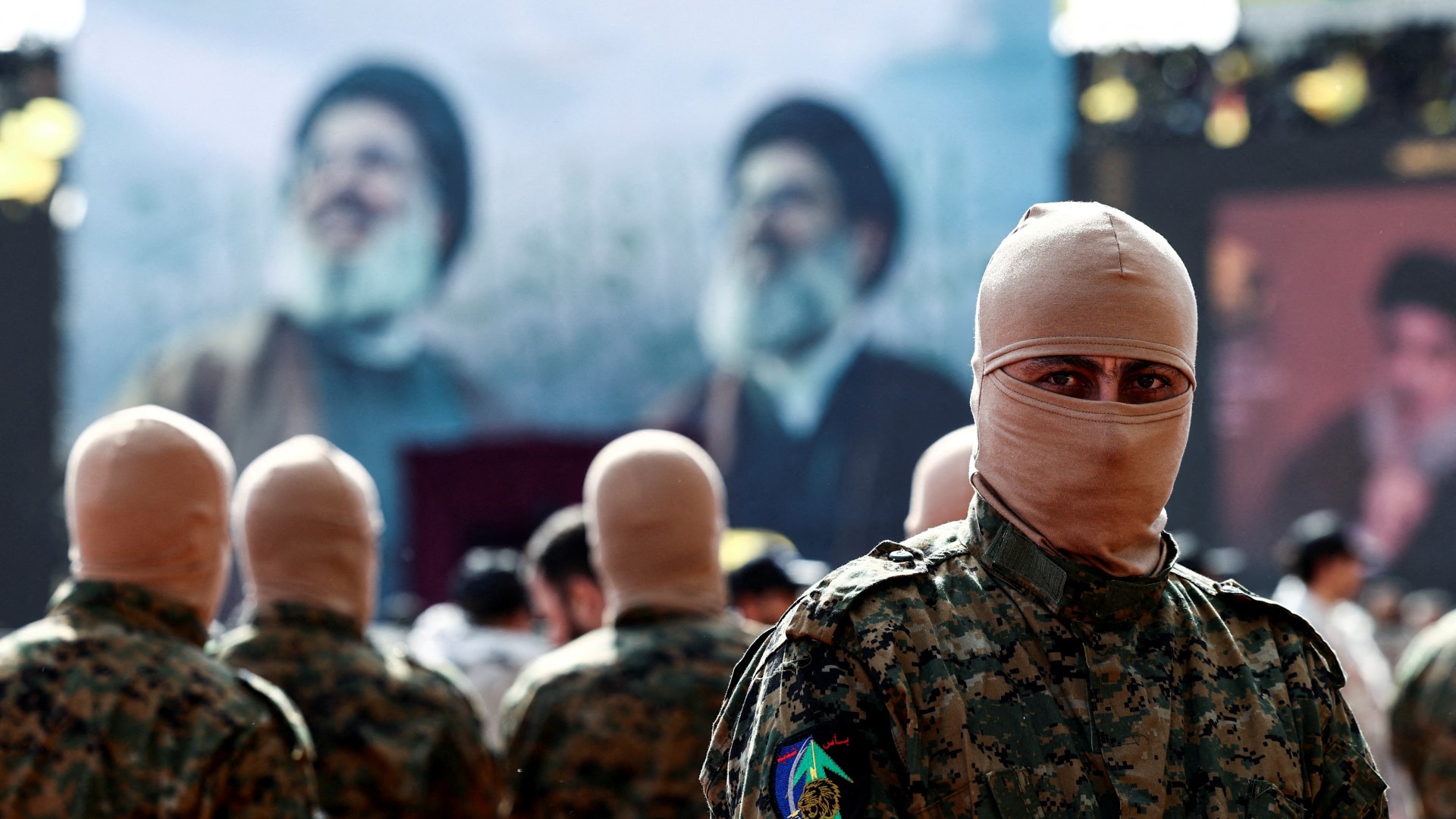
    Contrary to widespread assertions from Israeli, American, and Lebanese government officials that Hezbollah had been permanently crippled, the Lebanese militant organization has demonstrated remarkable resilience and strategic recovery. Emerging from a devastating 15-month conflict that concluded with a November 2024 ceasefire, Hezbollah has not only reconstituted its military capabilities but has returned to active warfare against Israel with renewed intensity.

    Multiple sources familiar with Hezbollah’s internal recovery process reveal that the organization interpreted the ceasefire not as a permanent resolution but as a critical operational pause to rebuild for inevitable future conflicts. Despite Israeli Prime Minister Benjamin Netanyahu’s claims that the campaign had set Hezbollah back “decades” and eliminated its leadership, the organization immediately began comprehensive reconstruction efforts beginning November 28, 2024—just one day after the ceasefire took effect.

    The rebuilding operation was both extensive and methodical, focusing on restoring pre-October 2023 capabilities through a combination of Iranian support, local manufacturing, and strategic resource allocation. By mid-December 2025, military commanders reportedly informed leadership that reconstruction of recoverable assets was complete, though some advanced systems—particularly air defense capabilities—sustained irreversible damage.

    Hezbollah’s recovery was particularly impressive given the organization’s devastating losses during the conflict. Israel’s September 2024 pager bombings that wounded dozens of members, followed by targeted airstrikes that eliminated top leadership including Secretary General Hassan Nasrallah, had left the organization “blinded, scattered and broken” according to one source. The steadfastness of frontline fighters provided surviving leadership the critical breathing space needed to regroup and reorganize.

    The organization implemented significant tactical adaptations in response to intelligence vulnerabilities, abandoning compromised communication networks for more secure “basic and primitive” methods including human couriers and handwritten notes. Structurally, Hezbollah moved away from its conventional army model toward a more decentralized “Mughniyeh spirit” doctrine featuring semi-autonomous units operating with broader scenario-based guidance rather than constant direct command.

    Despite public claims of Lebanese army control south of the Litani River and government assertions of achieving a “state monopoly on arms,” Hezbollah gradually reestablished its presence through smaller cells and individual cadres operating with patience and concealment. The ceasefire period, which saw approximately 400 Lebanese killed in ongoing Israeli strikes, represented not genuine peace but an actively contested phase where both sides positioned for the next confrontation.

    Hezbollah’s renewed military capabilities became unmistakably evident in early March 2026, when the organization launched approximately 60 drones and rockets followed by similar volleys in subsequent days, with missiles reaching as far as southern Israel’s Ashkelon region. The organization that many had written off as defeated has demonstrated它不仅恢复了持续火力能力,还在黎巴嫩和以色列领土上重新部署了战斗人员,对以色列施加压力。

  • Zev Serebryanski avoids further jail over child sexual abuse of Manny Waks in a Melbourne synagogue almost four decades ago

    Zev Serebryanski avoids further jail over child sexual abuse of Manny Waks in a Melbourne synagogue almost four decades ago

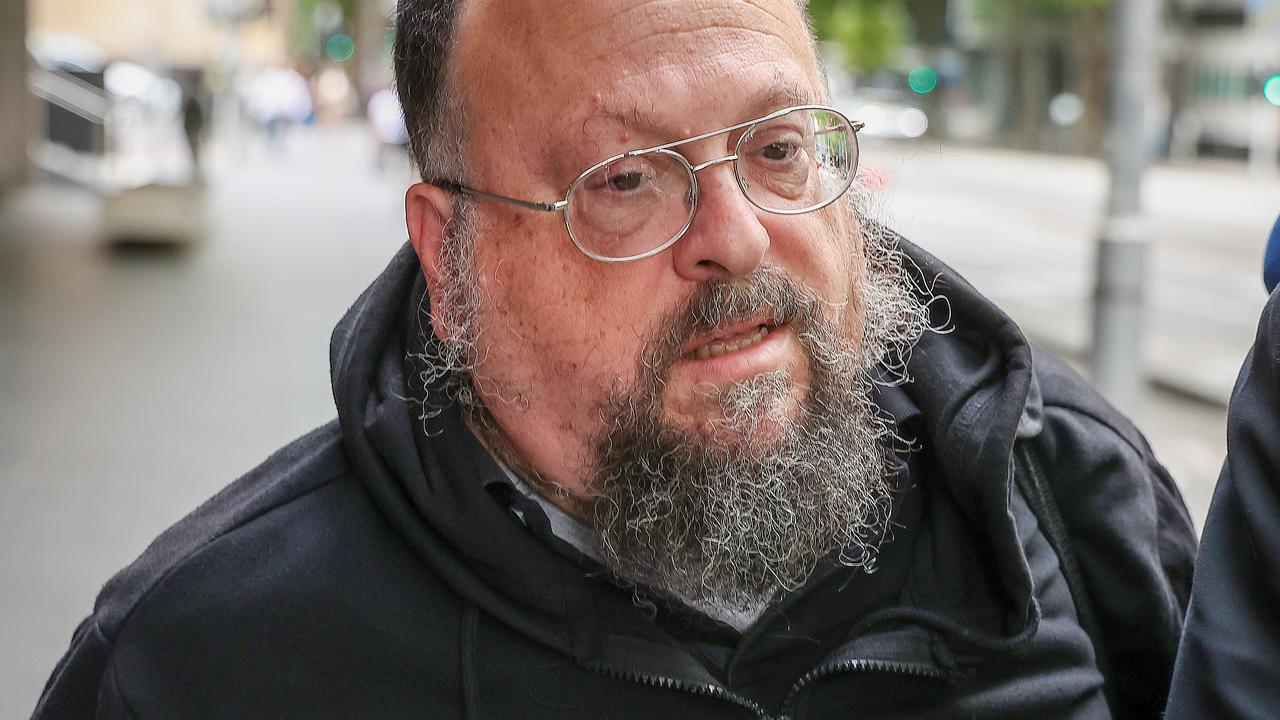
    In a landmark ruling that has ignited intense public debate, a convicted child abuser has been released from court despite a jury’s guilty verdict on four serious charges. Zev Serebryanski, 62, received a 22-month prison sentence in Victoria’s County Court, but 19 months were suspended for three years. With credit for three months already served in a New York prison during extradition proceedings, Serebryanski departed the courthouse a free man.

    The case stems from sexual assaults committed nearly four decades ago against Manny Waks, who was between 10 and 12 years old at the time, at Melbourne’s Yeshivah Centre—an institution serving the city’s ultra-orthodox Jewish community. Now a prominent advocate for survivors of child sexual abuse, Waks testified that Serebryanski followed him to an upstairs area during a religious festival in the late 1980s and assaulted him in a women’s bathroom.

    Critical evidence emerged from a 2017 documentary investigation where Serebryanski was secretly recorded outside his New York apartment making what Judge John Kelly described as “damning admissions” and “stock pedophilic justifications” for his actions. In the footage, Serebryanski claimed he was “infatuated” with the young victim and merely followed his lead.

    Judge Kelly acknowledged the profound damage caused by child sexual abuse, calling it “an attack on innocence,” while recognizing the lifelong impact on Waks. The court heard multiple character references portraying Serebryanski as a respected community member, and the judge cited the defendant’s restrictive upbringing as contributing to his emotional immaturity at the time of the offenses.

    Despite the conviction, Serebryanski’s lawyer shielded him from media questions as they exited the courtroom. Waks, who has become an internationally recognized advocate for abuse survivors, stated that his primary goals of justice and accountability had been achieved through the conviction itself, regardless of the final sentence.

  • Displacement, bombs and air raid sirens weigh on Mideast Eid celebrations

    Displacement, bombs and air raid sirens weigh on Mideast Eid celebrations

    Across the Middle East, the joyous festival of Eid al-Fitr, marking the end of Ramadan, has been profoundly subdued by the ongoing regional conflict and severe economic pressures. For millions of Muslims from Lebanon to the Gulf states, celebrations are replaced by anxiety, displacement, and financial strain, casting a long shadow over what is traditionally a time of feasting, family gatherings, and religious observance.

    In Lebanon, the convergence of a pre-existing economic collapse and the spillover effects of the war has extinguished any semblance of festivity for many families. Aziza Ahmad, a 49-year-old resident, exemplifies this reality. Her small apartment, now also sheltering displaced relatives, is a world away from celebration. With her husband’s income as a car washer insufficient, she has resorted to selling pastries, none of which her own family will eat, to make ends meet. ‘There’s nothing to celebrate,’ she stated, highlighting the absence of joy where financial survival is the paramount concern.

    The climate of fear extends beyond Lebanon’s borders. Wealthier Gulf nations, traditionally perceived as stable havens, are now on high alert. These states have become targets in a cycle of retaliatory strikes, prompting significant security measures. Kuwait has instituted a temporary ban on public gatherings, including concerts and weddings. The United Arab Emirates has mandated that Eid prayers be held indoors for security, a stark deviation from normal practice. In Bahrain, the daily routine is punctuated by air raid sirens warning of potential drone and missile threats. This pervasive sense of insecurity has led residents like Juhi Yasmeen Khan in Dubai to opt for subdued, intimate family gatherings instead of grand celebrations.

    For Palestinians in occupied East Jerusalem, the spiritual core of Ramadan has been severed. The Israeli closure of the Al-Aqsa Mosque compound, Islam’s third holiest site, has left a deep void. The familiar vibrant decorations and bustling crowds in the Old City are absent, replaced by quiet, empty streets. Despite these overwhelming challenges, a spirit of resilience persists. Some families, like that of Maryam Abdullah in Bahrain, are determined to maintain tradition, however modestly, as an act of defiance and normalcy, believing that the current turmoil will eventually pass.

  • FIFA planning for World Cup to ‘go ahead as scheduled’ amid Iran uncertainty

    FIFA planning for World Cup to ‘go ahead as scheduled’ amid Iran uncertainty

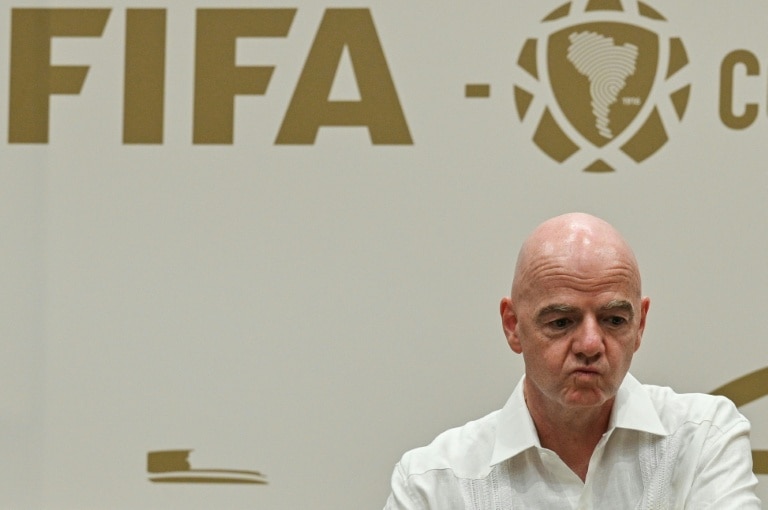
    FIFA President Gianni Infantino has reaffirmed the organization’s commitment to staging the 2026 World Cup according to its original timetable, despite mounting uncertainty surrounding Iran’s participation in the tournament. Speaking during a virtual FIFA Council meeting from Zurich on Thursday, Infantino emphasized that preparations continue for all 48 qualified teams to compete in the spirit of sportsmanship.

    The confirmation comes amid geopolitical tensions affecting Iran’s planned involvement. The Iranian football federation, led by president Mehdi Taj, has formally requested to relocate its group stage matches from United States venues following recent military actions involving U.S. and Israeli forces against Iranian interests. Iran is scheduled to face New Zealand and Belgium in Los Angeles and Egypt in Seattle during the group phase.

    Taj clarified that while Iran intends to boycott playing in the United States, the team remains committed to World Cup participation if matches are moved to either Canadian or Mexican venues. Mexican President Claudia Sheinbaum has already expressed willingness to host Iran’s matches if necessary, demonstrating flexibility among host nations.

    Infantino acknowledged FIFA’s limitations in resolving international conflicts but stressed the organization’s dedication to leveraging football’s unifying power. “Our thoughts are with those suffering from ongoing wars,” he stated, “and we remain committed to using the World Cup as a platform for building bridges and promoting peace.” The federation has initiated formal discussions with FIFA regarding potential venue changes, though no decisions have been announced regarding the relocation request.

  • New FIFA ruling boosts prospects for women coaches

    New FIFA ruling boosts prospects for women coaches

    In a historic decision aimed at reshaping the technical landscape of women’s football, FIFA has enacted revolutionary regulations requiring all teams in its organized tournaments to employ female head coaches or assistant coaches. The groundbreaking mandate, approved during Thursday’s council meeting, represents the most significant structural intervention to address gender disparity in coaching roles within the sport.

    The sweeping reform applies across all youth and senior tournaments, national team competitions, and club championships under FIFA’s jurisdiction. The policy will make its competitive debut at September’s Under-20 Women’s World Cup in Poland, followed by implementation in the Women’s Champions Cup, the 2027 World Cup in Brazil, and the inaugural Women’s Club World Cup in 2026.

    FIFA’s strategic initiative directly confronts the persistent gender imbalance that has seen coaching positions remain predominantly male-dominated despite the sport’s exponential growth. At the 2023 Women’s World Cup, a mere 12 of the 32 head coaches were female—a statistic that highlighted the urgent need for systemic intervention.

    Jill Ellis, FIFA’s Chief Football Officer and former World Cup-winning coach of the United States national team, emphasized the critical nature of this development. “The current representation of women in coaching remains insufficient despite the game’s progress. These regulations, complemented by targeted development programs, constitute vital investments in both present and future generations of female coaches,” Ellis stated.

    The comprehensive framework extends beyond head coaching requirements, mandating at least two female staff members on the bench—including the compulsory coach—and requiring the inclusion of at least one woman within each team’s medical staff. This multifaceted approach aims to create sustainable pathways for female technical leadership while ensuring women’s visibility in decision-making roles throughout the sport’s ecosystem.